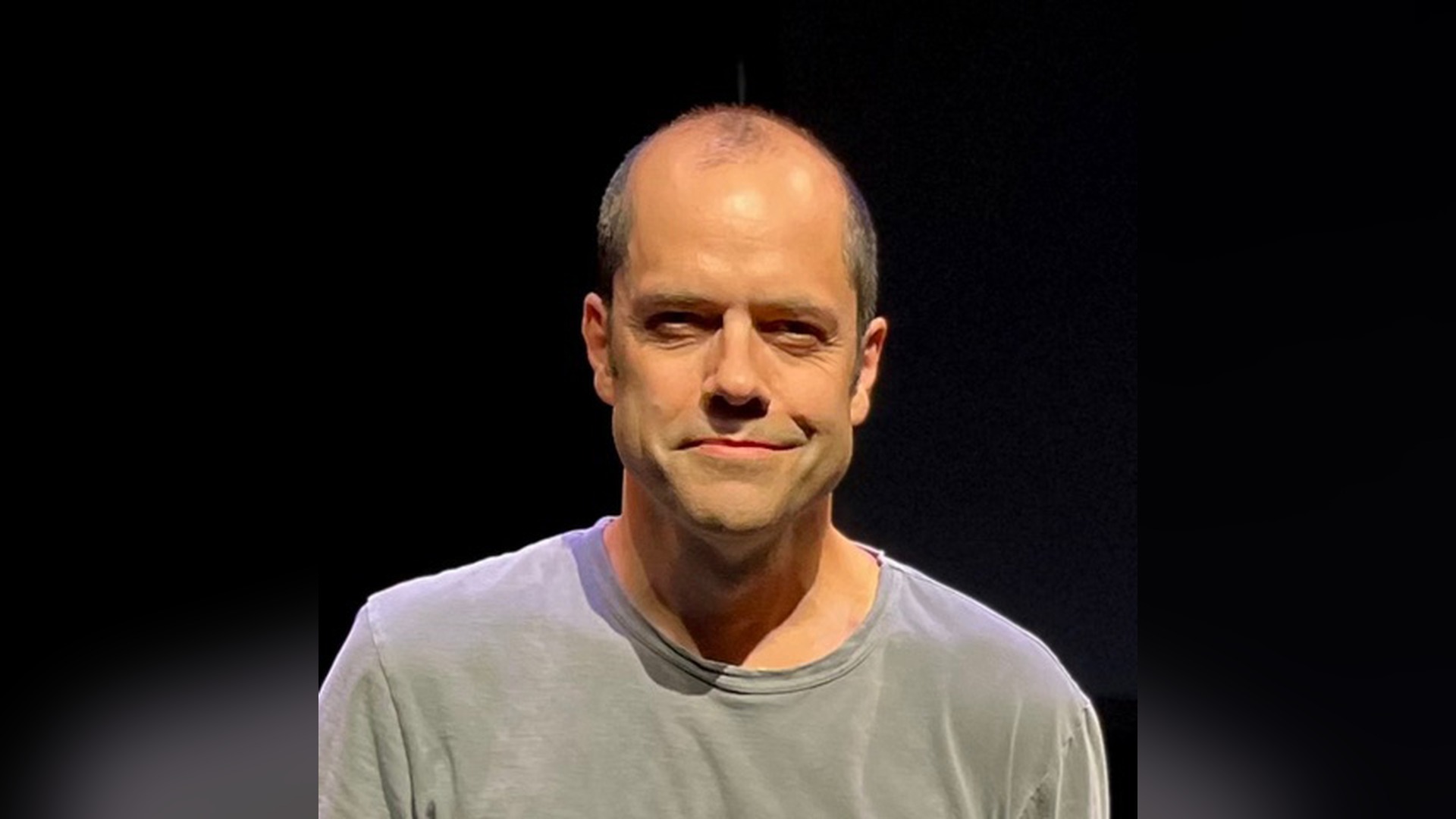
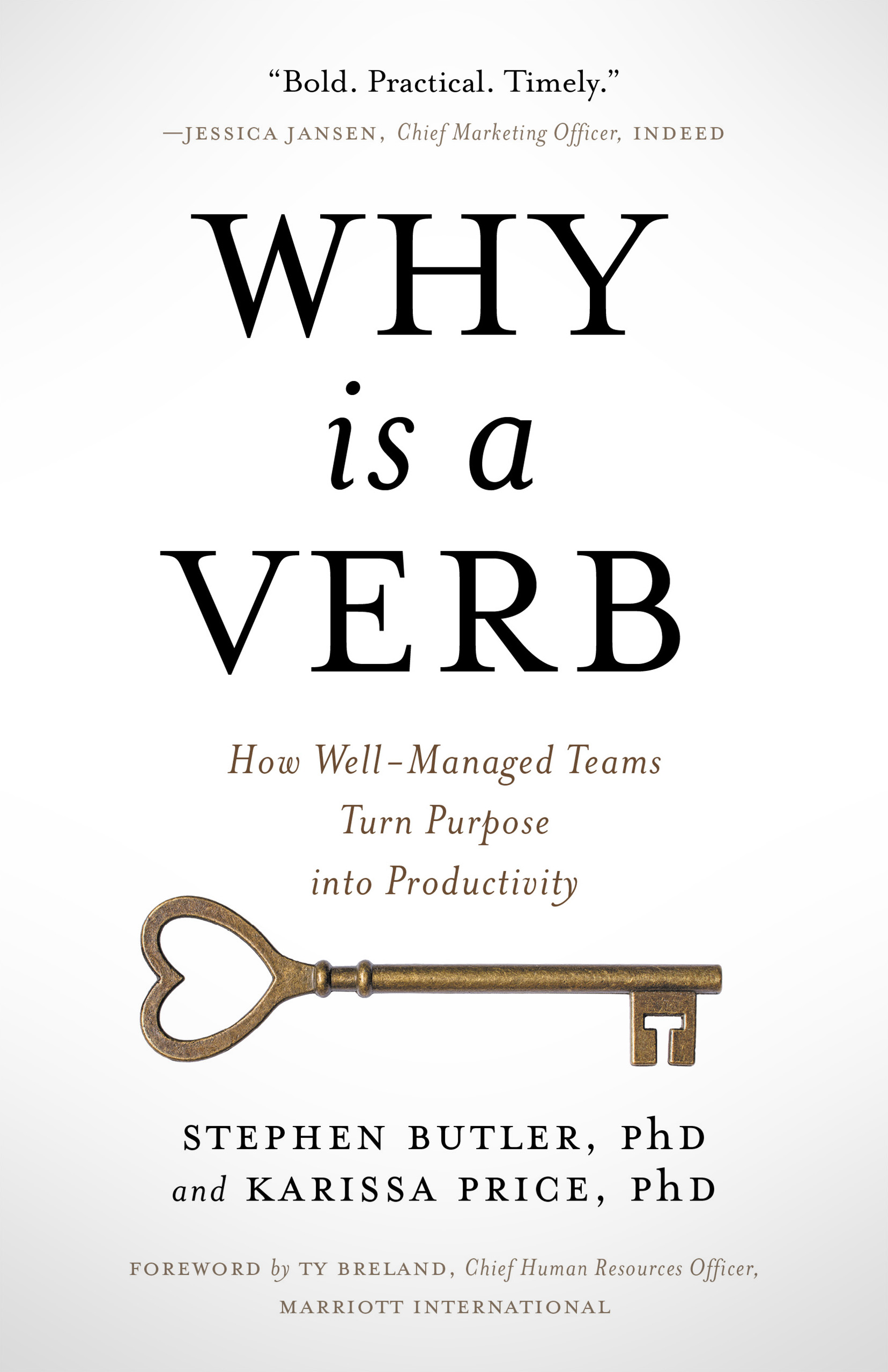
Stephen Butler's Why Is a Verb Was the Bridge to a Head of AI Role and a Globally Featured TEDx

“That’s where everything suddenly shifted in terms of, oh, OK, this book has done what it needed to do. It had been the bridge to this person who is already funded and building this thing.”
Stephen Butler · Coauthor, Why Is a Verb
Stephen Butler trained as an economic historian, started his career at Boston Consulting Group, and came back to consulting to find his clients all stuck on the same problem. He and coauthor Karissa Price wrote Why Is a Verb to fix it, and told Scribe at the outset that they were not trying to sell copies. They were building a platform for the idea, and it ended up carrying them to a Marriott foreword, a globally featured TEDx, and a head of AI role at a company whose founder had read the book.
The gap he set out to close
Butler studied economics at McGill, did a PhD at Cambridge on the foundations of the thinking that became Adam Smith, and started his career at Boston Consulting Group. After a run as an executive and a few years as a tech CEO, he found himself advising Canadian growth companies in the 50 to 100 million dollar revenue range, all with the same complaint: weak productivity. A 2018 UK study he cites put the average employee on task just shy of three hours out of an eight hour day.
The other half of the problem was at the top. Senior leaders were working far too hard, and the distance between how engaged the C-suite felt and how engaged the front line felt was enormous. Then McKinsey published the number that gave the book its spine.
“So five out of six senior leaders feel that they’re purposeful in what they’re doing. One out of six of everyone else. That’s what McKinsey, you know, called the purpose gap. And for us, that was a paradox.”
— Stephen Butler, Coauthor, Why Is a Verb
He was blunt about why he thought he and Price could close it where others had not. A lot of the writing on purpose at work, he says, was being produced by people with no business experience and no frontline experience. He had just come out of the top chair.
The woman who could not hear herself play
Clip · Stephen Butler on the woman who could not hear herself play · 59s
The story that ended up on the cover of the book came from a young woman at a consumer packaged goods company in central Canada.
“I like to tell a story here that we put on the cover of the book from a young woman that I worked with several years ago in central Canada, a CPG company, and actually cite her as well in the TEDx who complained that she felt like a musician who had a great instrument and knew that she knew the music, but couldn’t hear herself play. She had no speaker. She had no headphones, no way to sort of understand.”
— Stephen Butler, Coauthor, Why Is a Verb
That is most people at work, he argues: shuffling deliverables off a desk into some other part of the building with no idea whether any of it moved the needle. The manager’s job is to close that loop, and the book breaks it into three layers, an iceberg of constant discovery that consolidates into moments of learning and occasionally surfaces as impact. Which is where the title comes from.
“our purpose, our why, it’s not something we figure out in a room through an exercise with a bunch of whiteboards and then say, okay, that’s it. I need to make myself fit that.”
— Stephen Butler, Coauthor, Why Is a Verb
The real title of a book is its subtitle
Clip · Stephen Butler on what the Scribe editors taught him about titles · 17s
Of everything the process taught him, this is the lesson he volunteered first, unprompted, in the middle of answering a different question.
“one of the things we learned from the Scribe editors that we worked with is that the real title of the book is not the title, it’s the subtitle of the book”
— Stephen Butler, Coauthor, Why Is a Verb
Theirs reads How Well-Managed Teams Turn Purpose into Productivity. It is the sentence that tells a manager whether this book is for them.
The book was not the product
Clip · Stephen Butler on why the book was never the product · 64s
Butler and Price were running an advisory firm they founded together. Butler is direct about the ceiling every advisory firm hits: feasibility and repeatability are solvable, scalability is where it breaks, because you cannot scale yourself and you cannot be in several places at once. When Scribe asked what they were trying to do with the book, the answer was not sales.
“one of the learning pieces was that the book was not the product”
— Stephen Butler, Coauthor, Why Is a Verb
What they wanted was reach into organizations where the ideas could change how people were managed.
“we’re not trying to ship lots and lots of books, right. We’re trying to build a platform for getting this idea out there into the world.”
— Stephen Butler, Coauthor, Why Is a Verb
The foreword they did not have when they met Scribe
They started the process without one. It came out of their own network, and the person who said yes runs human resources for one of the largest hospitality companies in the world.
“we didn’t have a foreword for the book when we first met Scribe, but through our network, we ended up with the chief human resources officer at Marriott named Ty Breland, this incredible leader who said, yeah, this is what we do. I’m putting my name on this.”
— Stephen Butler, Coauthor, Why Is a Verb
That set the bar for who else the book might reach. His question after Breland signed on was how many more people like him were out there in large organizations.
The bridge to a head of AI role
Clip · Stephen Butler on the door the book opened · 60s
Butler and Price gave talks on the book wherever they could, including to a virtual group of commercial real estate thinkers in California. A founder in the Bay Area had read the book and heard one of those talks.
“she said, actually, what you’re talking about is exactly what I’m trying to build with, I’ll just call it product X, something out of its stealth mode.”
— Stephen Butler, Coauthor, Why Is a Verb
She was already funded and building it. He is now head of AI at that company. The next turn is the one that shows what he took from the first book: he wrote nine chapters of his next book specifically as the natural language context the platform needed, then built the product on top of it. He calls that manuscript the Intel inside of the system.
The TEDx they had already earned
Clip · Stephen Butler on why the process is the point · 85s
Most TEDx talks draw about 4,000 views. Butler’s was globally featured by the TEDx team and, by his own count, landed around 30,000. He is precise about why the talk existed at all.
“that was only possible because of the work we had done on the book. We weren’t showing up to play without having done the thing.”
— Stephen Butler, Coauthor, Why Is a Verb
The thing he is most grateful for in the whole process is not a deliverable. It is having had someone to think with.
“I don’t know how people write books on their own, right? Like I am, I’m a coauthor by nature, right? I need to, I mean, you can get the impression from this conversation. I really value the interaction of talking it through with someone.”
— Stephen Butler, Coauthor, Why Is a Verb
The dividend nobody mentions
Butler has friends who published nonfiction with traditional presses, and he has compared notes with them on how the work actually got done.
“I’ve got friends that have basically published books with traditional presses and we’ve compared notes [...] on how we work with Scribe versus how they worked with their presses on nonfiction books, exactly the same.”
— Stephen Butler, Coauthor, Why Is a Verb
The difference he names is distribution muscle on titles the publisher has already decided will sell. What he thinks gets undercounted is what the author walks away holding. He wrote his second book himself, laid out the pages and structured it without help, because he had already been shown how.
“what makes you a first-time author is that you’re going to be a second time, maybe a third time. I think that’s a dividend from working with Scribe that a lot of people may not fully appreciate.”
— Stephen Butler, Coauthor, Why Is a Verb
What he says about Scribe now
Clip · Stephen Butler on brand, values, and why he refers people · 28s
Asked at the close what he wanted to leave the conversation with, he went to optimism about AI, and then to the company that published him.
“it was interesting to see Scribe go through its transformation a couple of years ago, what came through was the power of brand and brand, not simply in the sense of, you know, a promise or work that someone’s done creatively, but a real set of values that you guys embody. I think the world needs more scribes.”
— Stephen Butler, Coauthor, Why Is a Verb
“We were delighted to have found you guys. And we’ve already made two or three efforts to push people your way.”
— Stephen Butler, Coauthor, Why Is a Verb
Ready to Write Your Success Story?
Join 1,600+ authors who have published with Scribe Media and transformed their careers.
Schedule a Consult
Course
Write and Publish Your Best Possible Book
Six modules. 28 lessons. Everything Scribe has learned helping 2,000+ authors, organized into the same process we use with our professional clients.
A Wall Street Journal Bestseller
The Scribe Method
No catch, just everything you need to write, publish, and own your book.