Why Nonjudgment Matters Most in the Dental Chair

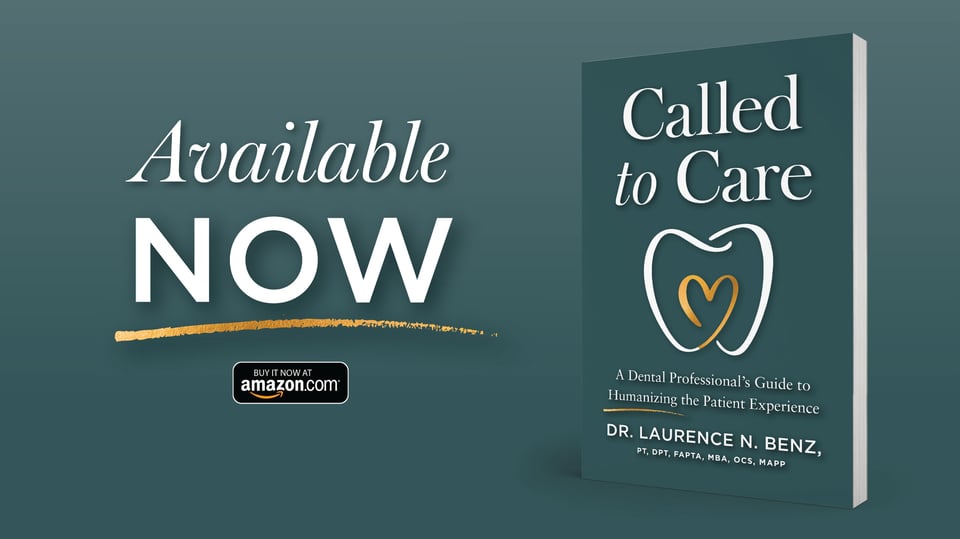
The following is adapted from Called to Care by Dr. Laurence N. Benz.
Diane has been sitting in her car in the clinic parking lot for eleven minutes. She’s a forty-three-year-old high school vice principal who manages crises for a living. Yet right now, she can’t get out of the car.
The last time she saw a dentist was seven years ago. What she remembers isn’t the drilling. It’s the look. A flicker that crossed the hygienist’s face when she opened Diane’s chart and saw the gap in visits. It lasted less than a second, but it said, You should know better. No one spoke those words. None were needed.
When Diane finally walks in, she isn’t just a patient with probable periodontal disease and a cracked molar. She’s a person carrying seven years of shame, silently asking: Will you see me, or only what I’ve let happen to my teeth?
Empathy Is a Family of Skills
In healthcare, empathy is the ability to put yourself in another person’s shoes without judgment. It’s the engine of what’s known as a high-quality connection, the space where patients share their fears and a skilled provider can discern what goes unsaid.
I break empathy into four components every member of the dental team can practice: cognitive empathy (understanding what the patient is thinking), emotional empathy (feeling something of what they feel), prosocial concern (acting on that understanding), and nonjudgment. In dentistry, I’d argue nonjudgment matters most. It looks like the hygienist who sees a seven-year gap in the chart and shows nothing on her face but interest.
Your Patients Are Reading Your Face
Research on mirror neurons shows that watching someone experience something activates the same neural circuitry in the observer. Your emotional state is contagious. If you walk into the operatory carrying impatience or distaste, your patient’s nervous system reads it before you say a word.
Language works the same way. Phrases like “You should have come in sooner” or “Let’s see how bad it actually is” aren’t cruel, but they activate shame. And patients who feel judged stop telling you things, then stop showing up. Compare that with: “I’m glad you’re here. Let’s figure out where we are and build a plan from here.” Same clinical honesty. No moral weight.
The dental chair makes all of this harder. Patients lie back, can’t speak, and look up at a masked face. So we have to compensate on purpose. Sit at eye level before the chair goes back. Remove the mask during conversations. Narrate what you’re doing. Offer a hand signal so patients know they can stop at any time.
Diane’s Second Chance
At the new clinic, the receptionist stands and says, “You must be Diane. I’m so glad you’re here.” The hygienist sits across from her, not above her, and says they’re not there to judge, only to help. Diane talks. They agree on a gentle visual exam and a hand signal.
She might get little more than a conversation that day. That isn’t a failed appointment. That’s a high-quality connection. She’ll come back.
…
For more advice on building patient trust through empathy in dentistry, you can find Called to Care on Amazon.
DR. LAURENCE N. BENZ, PT, DPT, FAPTA, MBA, OCS, MAPP, is the founder of Confluent Health and CEO of the Dental Care Alliance. A nationally recognized leader in private-practice physical therapy and occupational medicine, he has received numerous industry honors and is a Catherine Worthingham Fellow. Dr. Benz serves as chair of the University of Louisville Board of Trustees and sits on the boards of the University of Louisville Athletic Association and UofL Health. His service also includes time as a US Army captain in the Army Medical Specialist Corps, during which he was awarded the Meritorious Service Medal.

Lex Statzer
Lex Statzer, Publishing and Marketing Lead at Scribe Media
Ready to Write Your Book?
Scribe has helped 2,000+ authors turn their ideas into published books. Schedule a free consult to get started.
Schedule a Consult