Better Than an MBA: How Julie Newman's Book Became Her Strongest Career Lever
✨ Episode Summary
Julie Newman, chief engineer at Impulse Space and a mother of three, wrote Pull, Don’t Push after sitting through one more girls-in-STEM event that sent the wrong message. She wrote it for the educators and outreach coordinators who run those events, published it in 2023, and says the book has become “one of the strongest levers on my career success”. Her own accounting: “it has had an absolutely absurd ROI.”
The book paid for itself before it was even published. She listed the upcoming publication on her resume while making a job jump, which produced multiple offers and “a salary bump of over $60,000”, more than she invested in writing it. It also opened stages at teacher conferences, aerospace events and a Navy recruiters forum. The line she leaves other authors with: “writing a book and working with Scribe was better than me getting a master’s. It was better than me getting an MBA”
⭐ Top Moments
- The book paid for itself before it was published. Julie had finished the manuscript when she made a job change, and put the anticipated publication date on her resume. “And that alone was one of the most popular lines on my resume.” The result: “I had multiple offers and they fought over me. And so in a single jump, I ended up with a salary bump of over $60,000 from making this jump, which like was multiple, was more than I invested in writing the book.” A later employer found her “partially because of my book” and, in her telling, saw more leadership potential because of it. Her own math across the years: “I have averaged a year over year return of a 15% raise.”
- A book beats a master’s degree, an MBA and a PhD. Asked what she would tell the 2019 version of herself, Julie did not hedge. “What I keep coming back to is writing a book and working with Scribe was better than me getting a master’s. It was better than me getting an MBA, would way better than me going and getting a PhD.” Her reason is differentiation: “if I just went and, you know, gotten a master’s in electrical engineering, that’s not really a big bump on, you know, having an undergraduate degree in electrical engineering. But if I go have a degree and then I go write this book, that’s very different.”
- A note from a student who became an engineer. A few years after the book came out, a girl Julie had spoken to at an event sent her a LinkedIn message. “I’m just starting my mechanical engineering degree at Berkeley. And I wanted to say thank you.” Julie remembered her: the student had not known what an engineer was and thought she needed astrophysics to build satellites. Julie’s reaction: “I just immediately started crying because it’s like, OK, that was the whole point.”
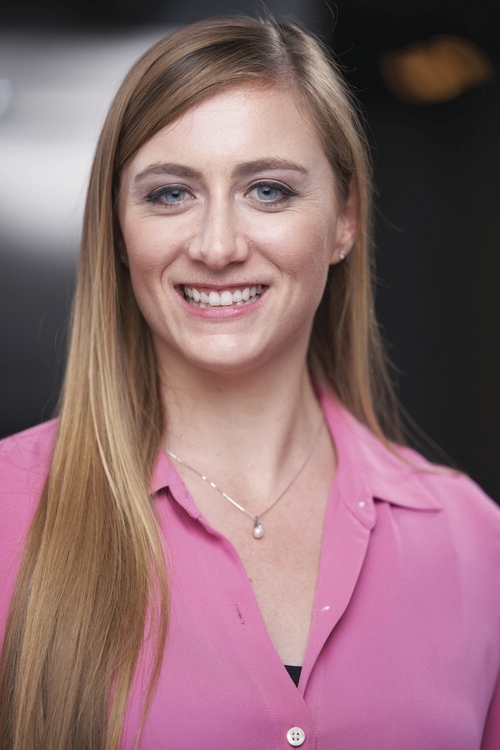
Julie Newman
Julie Newman is an electronics engineer who has worked at Boeing, NASA’s Jet Propulsion Laboratory, and SpaceX. She is a passionate advocate for women in engineering and cares deeply about the future of the industry. Julie serves as a board member for the Engaging Girls in STEM program with the Los Angeles County Office of Education and has been volunteering in STEM outreach for more than a decade. For more information about Julie and her initiatives, visit
★ Scribe Case Study
Better Than an MBA: Julie Newman’s Pull, Don’t Push Became Her Strongest Career Lever
Julie Newman wrote Pull, Don’t Push to change how girls hear about engineering. Three years on she calls it better than an MBA, with an absurd ROI and a $60,000 salary ju…
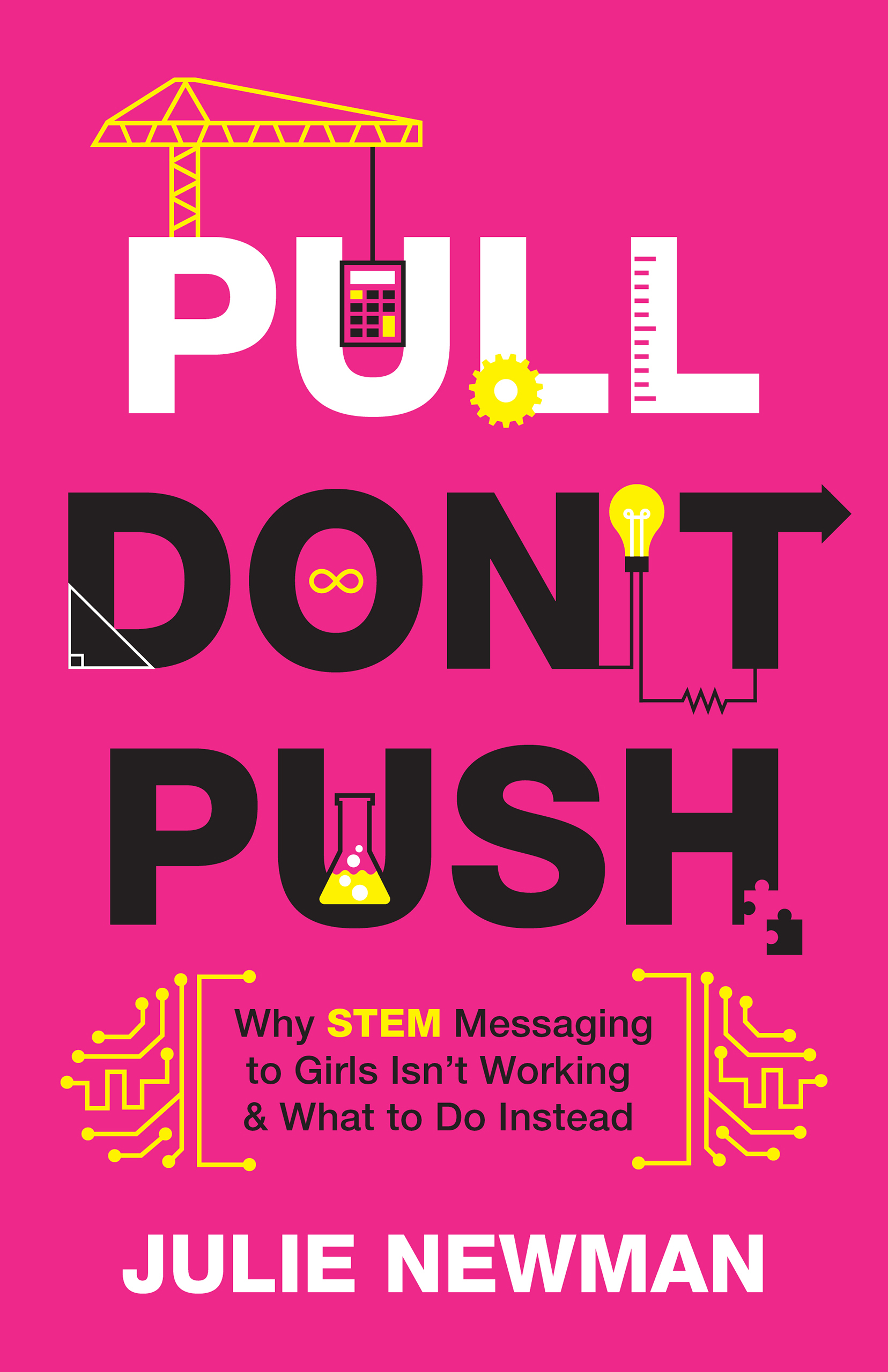
📚 Books by Julie Newman
Transcript
Eric Jorgenson: Three kids, bore on the way, chief engineer, and you found time to slot author into that over the last couple of years.
Julie Newman: I did. And you know, becoming an author was one of the best things that's ever happened to me.
Eric Jorgenson: Well, that's incredible because you're not short of amazing things happening to you. Why do you say that?
Julie Newman: You know, the genesis of this book was really doing it just to get a message out. So I didn't really look at it as like the start of a business or something of that nature. And what it has then turned into is really this calling card within my industry as an engineer, where it's the proof point that I am a good communicator, and it's the proof point that I can talk to complex topics well. And you know, as at the very beginning, having the book and being the author in the room is a very unique thing. And that just gives extra kudos. So as I've progressed through my career and made a few different job jumps, it has had an absolutely absurd ROI. And I had no concept that I was like, Oh, yeah, it'll be nice. And it has turned into probably one of the strongest levers on my career success.
Eric Jorgenson: That's incredible. Because I think, you know, it's not like this book is about how to be a chief engineer at Impulse Space, right? Like the message of the book is just, it is focused on women and girls in STEM, right? Which obviously is a subject near and dear to your heart. But how did you decide to write this book in the first place? What was the original impulse if it, you know, you're surprised by the result that it had?
Julie Newman: Yeah. So it's funny. I feel like it's a little bit of a, you know, superhero villain story starting almost in a way. I, for many years, had done a lot of STEM outreach events. And these are fun. They're great. You know, go talk to kids and talk about what you do, which is super fun, because kids get so excited about anything cool you're working on and space is easy to talk about. And I had been to so many events that I started to see the patterns. And I listened to so many speakers, and seeing so many panels happen and the questions that the kids would ask. And what I realized was that there were really these very damaging undercurrents to a lot of that narrative. And it was really one event that just was the final straw for me. And there was a speaker who, by all accounts, was a phenomenal speaker, like very, very good, very good ability to speak, had been on, you know, real, real television and the like, was a math professor, you know, very poised and everything. And she spoke for, I don't know, 30 minutes, 45 minutes. And the longer this presentation went on, the more angry and angry I got, because what I was doing was I was feverishly writing down notes that then turned into the book later, feverishly writing down notes of like, hey, you're saying this phrase, but it's being interpreted by the kids as this. And what I felt was through that one presentation, and it was something that I'd seen so many times before, the girls that were in the room listening to that presentation were less likely to choose STEM than the ones that weren't there. And of course, the whole point of the event is that the girls are there to get excited, learn new things, and potentially see if STEM is for them.
Eric Jorgenson: That's so, that's very interesting. Yeah, tell me more.
Julie Newman: Yeah, yeah. So I, honestly, I went home with probably like eight pages of notes. I was super frustrated and I was just fuming about this and realizing how I had seen this problem for so long and it finally just all clicked. And so what happened was I went straight to the organizer of the event and I was like, hey, I will be your keynote next year. Like it was, it was not an ask. I basically just declared it. He's a good personal friend. So he was like, oh really? You'd do it? That's great. And I basically spent the next year turning that keynote into what would be the best and most effective by all research standards event to help the girls in that audience really learn what they needed to learn in order to potentially pursue STEM. And the biggest misunderstanding that the kids have and that the educators and the outreach coordinators that the book is really written for, the biggest misunderstanding they have is that STEM is all one homogenous thing. When in reality, the vast majority of careers are in engineering and that's the area that's least understood by the educators. They know science, they know math. You know, every kid goes through a middle school and high school with all of those and they can name all the different disciplines in science. But if you ask the same thing for engineering, the kids really don't know what it is, they have no interaction to it. And then the teachers as well, really the educators have such little interaction and understanding of what engineers actually do.
Eric Jorgenson: Incredible. That is one of those things that's like extremely obvious once you hear it, but, you know, yeah, kids spend over 80% of their waking time with teachers who know nothing on average about engineering.
Julie Newman: Yeah, exactly. And, you know, you can't really blame them for that either. It's just a lack of of knowledge. You can't pick something to be passionate about if you've never heard about it. Right.
Eric Jorgenson: Yeah. So what were the things that if you if you remember any that that person was getting wrong, like what was because I'm sure they had the best of intent, right? Like they were they were there for a reason. They were trying to do the right thing. Like, what were they getting so wrong that was clear to you?
Julie Newman: Yeah. So the main issue with their message and truthfully, it was also the thing that was the scariest to write in the book is what I'd refer to as like a culture of victimhood. So it's often that these girls in STEM events right in the audience is these middle school or high school or girls. And then the message that they would constantly come back to is saying things almost as blatant as everyone thinks that women don't belong in STEM. And they would just say that you're like, I wonder what the kids will take from that statement. So let's say women like girls like you don't belong in STEM, but we're here to tell you that you can do it anyways. Like not an inspiring message when you take just one second to think about it. You just told them, hey, everyone thinks you don't belong here and we're going to try and convince you that you should do it even though it's going to be hard and not fun. And things like, you know, constantly telling the martyrdom stories of women from a hundred years ago who did have a very legitimately hard time because they were one of one hundred people in their in their field. And, you know, it was it was all new and different. But that was often over a hundred years ago. They keep going back to these examples that are so dramatically out of date that even by today's standards, you know, 20 years ago is out of date. You know, the entire field of, you know, software engineering and computers is only something like 30 years old at its height. So there isn't even someone to point to for that field, for example.
Eric Jorgenson: Yeah, that's a great that's a great it's a great reframe. And I really like the idea of like a rage book. I don't this is probably like not quite a fair characterization. But yeah, it's just it is sometimes so much easier to write when you're rebutting something that's like really wrangling you. Like if you feel like you could just like absolutely give a rant about the I just love this as a as a point of inspiration.
Julie Newman: Yeah, it definitely it started as a rant. I would definitely agree with that. And it that ended up becoming just effectively one chapter of the book in the end. So for those of the listeners, flip to chapter four, you'll know what I'm talking about. But the yeah, the biggest piece then to, you know, those are the negative messaging. And that's what the the title is actually for. So poll don't push that there's all this messaging that's really trying to push girls into STEM and say, you should do it because it's important or you should do it because other women haven't been allowed to or things of that nature. When in reality, one of the biggest messages that was missing from both this event that happened and everyone I'd seen before is the lack of detail about around engineering. And fundamentally, engineering is so inherently attractive to many, many girls that just explaining that to them is enough to make the event effective. Just just giving them the definition, helping them understand what a career in engineering could look like. And frankly, that's so much more fun and positive to talk about. So I like to refer to that as more of the poll messaging. So rather than shoving them through the door to get them there, you're kind of like, hey, it's really great over here. We have a lot of fun. We do cool stuff. We make satellites and rockets and airplanes and all this cool stuff. We just basically change the world. It's really cool. If you want to do it, you can. And what do we all know about like teenagers? We try and tell them to do something. They will not do it. But if you say, oh, hey, you know, if you just want to be in the most lucrative career that's really stable and you work on cool stuff with cool people with lots of flexibility, you know, you might think about this career. And that's just a message that absolutely zero percent of the time I had ever seen in any event ever. And by then I'd been to 50 plus different Girls on STEM events.
Eric Jorgenson: Yeah, it's so it's it is like so tragic that it's funny how often we set out to accomplish something and have the exact opposite of the intended effect by tackling it like two directly rather than sitting back and thinking a little bit about it and being just a little bit.
Julie Newman: Yeah.
Eric Jorgenson: So the issues of the, you know, the student. Yeah.
Julie Newman: Yeah. Yeah. You know, as an engineer, I, you know, I wouldn't normally be thinking about something like marketing or messaging is a little bit atypical, but it's like so blatantly obvious, like marketing 101, like highlight the good things. Don't don't only ever talk about the bad stuff of the phrase I often come back to, which have in the book, there is, you know, take a proof point of the Navy and everyone knows what's probably never hasn't been the official slogan, but the line of join the Navy, see the world right. That's inspiring. That's cool. And it's not join the Navy, have a really hard time on a boat for a while and never see land. You know, it's just it. Why on earth would you would you lead with the second one when the other one is so much more interesting? Yeah.
Eric Jorgenson: Nobody wants you in the Navy, but you should join anyway.
Julie Newman: Right. Exactly. I don't think I don't think the recruiters would do that. And actually, you know, that's been one of the really fun things to come out of the book is I have done now a lot of speaking more towards like the educators and recruiters and the higher level. So I've actually gone and spoken to the Navy recruiters forum that goes out to high schools and lets them know about careers in the Navy, a lot of which are engineering. And I have to say they had sharper initial assessment than many of the other groups. They they're a little more focused on having good messaging than many others.
Eric Jorgenson: Yeah, it's probably, you know, a tougher sell. And so you would expect them to have thought about it more.
Julie Newman: They've had to, you know, they're actually accountable for their outcomes, which is something that can be very hard to track in this field, truthfully, to see where kids end up and what worked. You know, the pipeline is something like eight to 10 years long at a minimum. If you're going to see someone from middle school, high school, go through education and get messaging and then go to college and then get into a career, that's a very slow feedback loop, which is very, very hard to learn from. And, you know, that's what, again, really led to this book is is not for the girls themselves. This book is for the educators and the people interacting with the kids, because frankly, you know, absolute hearts of gold in all of the educators. But they are so busy and overworked and often flying by the seat of their pants, so to speak. So it's no wonder they default to a lot of these messages that everyone else is saying, because if everyone's saying, then they should be good. But in writing this book, I was really scared that I'm coming in and saying, hey, you're doing something wrong. That's a very hard message to write a book towards, which is kind of where I didn't have the expectation that this would be a big moneymaker. Like selling books to teachers is really not really not where you're going to make significant royalties on books. But it was just the importance of the message that really mattered. And I was so afraid that the response to it. But in the end, I've gotten the exact opposite. It's been so, so uplifting that many of the educators, they'll come to me. And it's so funny, rather than rather than being like, oh, you're you're not acknowledging all these problems people have had in the past and you're explaining it wrong. A lot of them come to me and they're like, wow, this is all so obvious now that you just wrote it. And I find that like the biggest compliment is like just the fact that I put the string of words together, they're like, oh, yeah, I should change everything. That's a really good point.
Eric Jorgenson: That's incredible. That's fantastic. Yeah, let's let's keep unpacking sort of the the impact of the book, because I think there's probably like a few different categories that it falls into. And that's all very interesting. So sticking with this. Yeah. How has your sort of speaking your impact like change your advocacy, your efforts in this part of your life over the last few years now that the book has been out?
Julie Newman: Yeah, absolutely. So I'll split it between one more the direct point of the book and then some of the more direct to me aspect to it. But as far as yeah, the book itself, it really did open a lot of doors for speaking. That was one thing that I kind of expected a little bit more, but it was very quick to happen very well. So I had the opportunity. I've gone and spoken at a lot of teacher conferences, a lot of different events for, you know, school programs and the like, and also still a lot of events to the kids, because that's always fun. You don't get away from it. And so things like the National Science Teachers Association, you know, National Conference, a few different conferences also got tangentially to picked up for some aerospace conferences. So a really fun piece has been to serving as a moderator and, you know, a coordinator for a lot of these speaking events. There weren't directly, you know, the purpose of the book, but I'm in engineering and I just proved that I can talk. So that has actually led to a lot of really fun interactions as well. On the impact of the kids side, like I mentioned, it's really hard to measure that loop, right? So I wish I could have quantitative data. I'll say I probably am one of the experts in the world on U.S. education data for STEM pipeline. At this point, there's a lot of data and analysis and references in the book, but if you can't go on statistics, you go to stories. And so I do have a few really good examples that have really stood out. The first one was actually just a few years after the book had come out, I got a fun LinkedIn message from a girl, actually. She's like, hey, you may not remember me, but I just wanted to let you know that you talked to me at an event in this year and I'm just starting my mechanical engineering degree at Berkeley. And I wanted to say thank you. And I think she found me easier probably because the book was out there. But frankly, I got that at just such a fun time and I just immediately started crying because it's like, OK, that was the whole point. And I remember her specifically because she did not know what an engineer was when I talked to her. She thought she needed to go into physics or astrophysics when really what she wanted to build was satellites. And she wanted to work for JPL and go explore the solar system. And she learned that, oh, actually, I can pick a what sounds like a more broad degree, but actually will allow me so much more ability to be effective in that field. And it was just so heartwarming. And then I had another really fun interaction, too, of the same thing where I was my company was doing like a recruiting event. And so there was like an industry happy hour we had advertised and I was going to be one of the companies, one of the people there. And a young woman walked up to me when was like, hey, do you remember me? I'm like, no, that's a trap.
Eric Jorgenson: It's always a trap, right?
Julie Newman: But she was another one where she had been at one of our early events. I've been running the same Girls in STEM event with the L.A. County Office of Education for the last 10 years. Yeah, this next year will be our 11th year. And so we're finally seeing, you know, the alumni situation. So she had been at our events, had gone to college, had graduated from college. I think she was actually also a mechanical engineer, funny enough, and then was now working in the aerospace industry in Los Angeles, which is quite a hub for aerospace, and saw me at this event and came to the event just to come talk to me. And it was super pleasant. And now she's here. I'm hoping one of these days I can hire her and just be too fun. But yeah, just those little examples, right? You'll never know all the different times it happened. But if you have a few proof points, you know that it's working. And by this point, I've done, you know, just from that one event, we have about 300 girls every year going through it. And we've been doing it for 10 years. So there's at least, you know, getting up to some pretty substantial numbers. And even if we're only helping a few of them per year, so to speak, that makes it very worth it.
Eric Jorgenson: Yeah, I mean, it's so I talk a lot about kind of the concentric circles around a book of like, for everybody that's heard of your book, and then everybody who's impacted by your reputation, that the book is affected, all the way down to like, the stories that you hear of the individual people. And you know, that that one actual interaction, there's probably 100 stories. You never hear exactly like that. Yeah, there's just too much friction, or they never close the loop or whatever. But you get multiplying that out and feeling those warm and fuzzies is fantastic.
Julie Newman: Oh, yeah. And, you know, I gotta say, too, especially with kids, the follow ups horrible. If anything, that that that probability is much higher compared to if I were talking to adults.
Eric Jorgenson: Yeah, well, it's it's and it's really this is a great example of the long game to that, you know, the seeds you planted in it with a 12 year old 10 years ago, without even really knowing it have grown and affected, you know, the big decisions that they make in their life, the path dependencies that they're choosing. And now, you know, 10 years later, you see them come around. It's fantastic.
Julie Newman: Yeah, exactly. And they all say the same things of the stuff that's all in the book of why engineering is attractive. And that's one of the main messages I try to get across in there is helping the teachers understand why someone would want to be an engineer, because it's kind of split in the book. And it was something that scribe really helped me in in figuring out how exactly to communicate it. The different aspects of things like money and stability, work life balance and a fast track, creativity and fulfillment are really fun one. And just going through sort of the different avenues of what makes for a good career, you know, there can be the more personal gains, there can be your impact on the world and making a difference. And then also the the different, you know, nitty gritty pieces of it, so to speak.
Eric Jorgenson: I mean, I think it's a timely message, too, because this is one of the big takeaways I hope people would would get from my book of Elon. And frankly, to some extent, the anthology of biology as well is that like. People who take the time and effort to build things that have never been built before are are the ones pulling the plow of civilization forward, like these are extremely important. And the more things we automate with like software and robotics, the more the bigger percentage of us should move toward those frontiers and be working on engineering and science and, you know, entrepreneurship and like the creation of of new things and solving unsolved problems, which is essentially what engineers are doing.
Julie Newman: Yeah, absolutely. I've I've loved those. I've loved your books, too. So it's been really exciting to to do this podcast because, you know, I've already I haven't read the one you just said, but the almanac and of all and the book of Elon have been phenomenal. Yeah.
Eric Jorgenson: And I like I really I admire the the effort that you put into reaching kids, because I think I think, you know, adults don't change their mind. And like in general. Yeah. And it's really hard to get a career change for as a 30 year old. But it's it's really, really impactful to take some really quality time to talk with somebody in middle or high school who's making these decisions that are going to affect the road they're on for the rest of their life.
Julie Newman: And that has been one of also, you know, kind of the pulling of the heartstrings things that keeps happening to me with this book is, you know, it's one thing to talk to the educators, they chose education. Wonderful. The kids, they're still figuring their stuff out. But the number of women my age and older who have come and said, I read your book. And if I had read this or heard your message when I was a kid, I would have become an engineer. Like the number of women who come and say, wow, I had no idea this was the case. Like I would have been a great engineer. I had all the seeds of being a great engineer when I was little and no one ever mentioned it. That just breaks my heart. So many of them. And it's so funny as you find many of them in engineering adjacent careers. So they'll end up in, you know, the finance or business section of a big engineering company, or they'll end up in, you know, things like recruiting engineers. Yeah, yeah. Or recruiting engineers or law doing things like that are very technical on the patent side of things that is just so common that they got so close, but they never had just that little bit to help them make the jump.
Eric Jorgenson: My wife would have been an incredible engineer. I know this with absolute certainty. Like I can tell by how she's a crafter that borders on small scale manufacturing and like utterly meticulous and it just know that she would have been excellent.
Julie Newman: Yeah, yeah. It's the detail oriented, the high communication, the ability, the teamwork capability. All of those are just, you see them so much more frequently that we could have so many more engineers.
Eric Jorgenson: Yeah. And with more engineers, the whole world is cooler and better and more exciting.
Julie Newman: Yeah, I keep coming back to one of the biggest risks for humanity is not having enough engineers. And I think I'm doing my part on that. Hopefully, thanks for writing your books. I think those are doing some of their part too. Those are very adjacent to engineering and really the optimism on engineering, which is really fun. That's what's really, really interesting on things like the book of Elon and a lot of the phraseology that you see in there is a lot of it is very much the, well, problems are problems. We're here to solve them. And at the core, engineers love solving problems. And the not getting beat down by challenges that come up and realizing that the whole point is the mountain to get past it. And the whole point is to find a better way, so to speak, is something that is the engineering mindset at the end. Like that's the ethos.
Eric Jorgenson: Yeah. And I found it took me a long time to sort of see this pattern, unfortunately. But now that I've seen it, like so many of the people whose lives I admire or who I admire them as people, whether they're professionally engineers or not, they have those engineering skill sets. They just end up being really high agency. They're creative problem solvers. They're handy. They know how to like break things down and figure them out. And they find these kind of like creative, elegant, often unconventional solutions. Great farmers are usually good engineers because they like find new and better ways to do things. You know, gardeners, people who just like working on their house consistently, watching families with an engineer and how they construct their families and their routines and their habits and like manage their kids. Like all of those things are just like those skills and that worldview bleeds over into everything about your life.
Julie Newman: Oh, it's so funny that you say that, too, because my husband's also an engineer. And so the two of us, we've got three kids right now and actually have twins on the way. So we'll be five kids.
Eric Jorgenson: Oh, congratulations.
Julie Newman: Thank you. It's very true. It bleeds over into the rest of your life, too. It's hard to be a good engineer at work and then not also build great systems that make your family function better. And it's funny because him and I are working on the next book, which is going to be largely the application of engineering to help you be more effective at home and do more things with kids than you did without them.
Eric Jorgenson: Oh, I love this. This is a fantastic idea. Yeah, you can impact the overall birth rate with that one. It's just like lowering the burden of larger families.
Julie Newman: Yeah, it doesn't have to be that hard. And again, it's all about problem solving at the end. But going back, so some of the other advantages for the book. So going to the more personal side of just directly for me, like I mentioned, when I wrote the book, it was largely to really get an important message out and really to state it in a way that was in a long enough form that people could get past the initial rejection right to it, which is a very, very fun, fun piece. And I feel like I personally learned a lot in that process of like figuring out how to be a better communicator and how to articulate things in a really powerful way. But more on the direct personal side of things, like I mentioned, the ROI on this book was huge for me. It paid for itself before it was even published, I would say. So I, while making a job jump, I was on my resume, I said that I was going to be publishing it because it was I had actually finished up to manuscript, which means 50% of the way there, and then editing and whatnot. And so I said that I have an anticipated publication date. And that alone was one of the most popular lines on my resume. And I talked about it so much. And that was just such an exciting piece that made me stand out amongst a big job field. And then it meant I had multiple offers and they fought over me. And so in a single jump, I ended up with a salary bump of over $60,000 from making this jump, which like was multiple, was more than I invested in writing the book. And that was the first one. Then I made another job change with another big raise and a big title. And they found me partially because of my book and saw me as the more leadership potential because of that. And then even in my most recent jump over to impulse space, again, the fact that I have published a book and I can communicate is really core to the thesis of being a chief engineer. I have to be able to span disciplines. I have to be able to explain hard topics and I have to be able to communicate to people. And so that was really also, again, a strong proof point. And the fact that I'd done so many speaking engagements and things just makes me a very attractive candidate for roles like this. So I went and did the math, of course.
Eric Jorgenson: And- I love it.
Julie Newman: For over my career with the, you know, since the book was written and plus the one slightly before the book even came out, I have averaged a year over year return of a 15% raise. So every year, you know, an average would be a couple percent, maybe 5% if you're really killing it. But with these different job jumps and with the impact from the book, which you can't attribute all of it, but I can attribute a pretty good significant amount to it, has been, yeah, 15% year over year since for about the last, yeah, probably about eight years, I would say. Like six to eight years of the precursor stuff to it. And then the current.
Eric Jorgenson: And this book, I mean, you were published in 2023. So as we record this in 2026, it's only actually been out for three years.
Julie Newman: Yeah.
Eric Jorgenson: So it's been out for three years. For a while. Yeah.
Julie Newman: Yeah. Out for three years. And I started it in 2020. And the event I told you about was in 2019.
Eric Jorgenson: Okay. I love this. I mean, that's fantastic. It is really, it's interesting, you know, in a field of great engineers in an engineering company, it absolutely makes sense that, you know, those, the filter for leadership roles is actually much more about communication, recruiting, leadership, coordination, and your ability to kind of represent the company outside of it gets more and more important, the higher you go.
Julie Newman: It's absolutely true. Actually, before the book even happened, and part of why I was excited that I knew it would help me with more speaking was I had the opportunity. I sat down with a director of NASA JPL. I got an award that's named after him. So the most important thing was I got to have lunch with him and like talk for a long time. And he gave me a piece of advice that has really stuck with me ever since, which was, I asked him, what was the most surprising thing about his job, right? As being the director of a NASA center. And he came up through as an engineer. He actually had started in the exact group that I was in at the time too, which was a really fun analog. And he said, the thing that was most surprising to him as a leader of a NASA center was how important speaking was. And that he had wished that he'd started earlier on becoming a good speaker. And I took that and I was like, okay, I don't know what it's for yet, but I will get better at speaking. I will be on stage. I will be comfortable. I'll know how to talk. I'll be able to smile and move my hands and things. And that really helped carry to it because that sort of led me to then really up my STEM outreach stuff because that's just free practice. And it's also for a good cause. And then that led to the book and then the book led to more speaking. And then now it really put me in a position where it makes sense for me to be someone who can represent a company or who can be on stage and talk about it articulately or who can be a leader in the room for a company.
Eric Jorgenson: Yeah, and you find out probably as you go through your speaking career that if you can speak in front of 13 year olds, you can speak in front of anybody.
Julie Newman: Oh, yeah. Elementary kids, especially. They will deadpan. Actually, yeah, the elementary kids will just, they'll look like they're just dying.
Eric Jorgenson: And that's probably best case scenario.
Julie Newman: Like the middle schoolers will be like this and then they'll come up and be like, this is the best talk I've ever seen. And you're like, what? So you have to learn to talk to a room of incredibly disinterested looking people, especially with, you know, Gen Z stare nowadays. They do not. They're not an active participant in the audience, which, yeah, it gets a lot of speakers. That's actually something I warn the women that I invite to these events to speak to the kids. I warn them like, hey, when they look really disinterested and they're not talking to you, just ignore it. They're fine.
Eric Jorgenson: How did you, I know this is a couple of years back, somewhere between 2020 and 2023 now, but how did you decide to use Scribe and what did the actual like mechanics of working through your first draft look like?
Julie Newman: Yeah, so funnily enough, it was also very early on. I was introduced to Scribe before it was called Scribe. I went to a conference and Tucker Max was speaking and it was called Book in a Box at the time and explaining this concept of like, hey, you know, so many people have good ideas and they have such a hard time getting it out that it kind of was the seed that got planted of, oh, one day I'll write a book. And that is definitely my advice is there's no reason one day needs to be a long time in the future. One day can be very soon. But it was really with this event, the frustrating event and coming up with the messaging and preparing for a keynote, I basically prepared for an entire book in the process. Like I did a year of research and then I have to give the credit to my husband though. He was like ready and waiting. He like saw this all happening and then he had gotten the Scribe book and then after I did that presentation, he's like, hey, you know, this would make a really good book and like maybe you should reread the Scribe book. And that was really it. And from then, I just immediately, I only talked to you guys. I went straight to you and I was like, this will be the one. Like I want the handholding. I know it's more important that this book get out and that it get out faster than like I, you know, do it without help. You know, there's no gold medal for it being harder and taking longer. The point is to get the book out there. And that was a line that really stood out in the Scribe method of like, think of the disservice you're doing in delaying your own book. Because there are so many people you could help, but if the book isn't out yet, you're not helping them.
Eric Jorgenson: Yeah. Don't die with your best ideas in your head. And you know, this is just, we exist to lower the friction of externalizing your most important ideas and getting them out into the people's heads. You need them. And you're an incredible example of, you know, how many people you've helped by just sharing these ideas. And yours is so high leverage because you're helping the helpers. And so if you can, you know, every teacher that you talk to is maybe a hundred, maybe a thousand kids per year that like get a different message.
Julie Newman: Exactly. And so that made the forcing function of get it out faster so much more important to me. The whole time is every time, you know, that's the other piece of advice to you give to people who are thinking of being an author is it will be really hard and you will go through all the stages of grief while trying to write this thing and you just have to get over it and just finish the thing. You know, I am so confident that the next book will be, take me half as long as the first book and the one after that will take half as long. And most of that is not going to be because any of the mechanics are different, but just the emotional labor associated with writing a book is something you just have to get through. I don't think any explanation really tells you how to get over it, or at least I haven't seen one, that it's kind of, you just have to learn by doing and learn by getting through it that you'll have that anxiety. You'll be like, oh, I could help so many people if I could just focus and get through this one chapter and stop, you know, getting stuck on this one concept I want to do differently and just move past it.
Eric Jorgenson: Yeah. Yeah, it's a very interesting, like, I agree completely. Once you've made it through it once, you're like, I've made it through this maze. I can make it through it again. I can run it faster with less stress. And the output is just as important and just as impactful, critically. And so, yeah, seeing that curve come down, it is a little addicting. Like, I definitely feel a momentum build.
Julie Newman: I bet. I'm sure you've seen that, especially.
Eric Jorgenson: Yeah, yeah. It's really, yeah, I'll be, I'm on my fourth now, about every two to three, every three years, basically, right now. So, but yeah, it is fun. And when you're getting the kind of feedback you're getting on these books, it's just so, it's hard to not want to keep doing that.
Julie Newman: Oh, yeah. Exactly. Once you get the taste, all of a sudden, you're like, oh yeah, that is a really good concept. Oh yeah, people would really appreciate that. Oh, maybe I should write the book. And then all of a sudden, you have too many books to write.
Eric Jorgenson: Not too few. Yeah, it's way easier to come up with the next ideas than it is to get the books out the door. Way easier. It's a 10 to 1. So you said, there's no reason someday can't be today. You said, yes, it's going to be hard, but just get through it. Is there any other advice you have for somebody who's like, in your kind of shoes, your 2019 version of Julie?
Julie Newman: Yeah. So especially in my industry, a lot of people think about going and doing a master's degree or a PhD or an MBA or something of that nature. And what I keep coming back to is writing a book and working with Scribe was better than me getting a master's. It was better than me getting an MBA, would way better than me going and getting a PhD. And that's so counter to what most people would think. And even with this being a book that is not even directly like me being an engineer, right? It's about the field of engineering and helping people get into it. This book has been just so much more impactful. I think there's a few different reasons. One, it is different from what other people do. So if I just went and, you know, gotten a master's in electrical engineering, that's not really a big bump on, you know, having an undergraduate degree in electrical engineering. But if I go have a degree and then I go write this book, that's very different. And actually, the value of that is so much more obvious in hindsight than it was at the beginning. The other piece too is, again, going and doing it before you're ready, before you should. Because, you know, I was writing this book in my 20s. And, oh, you don't go write a book like early on when you're not a career author in your 20s. You go, you wait until you're 50 and you're all done at the end and then you can go back and explain. And what I've been coming back to more and more is the idea that, you know, we all love the Walter Isaacson books. We all love these anthologies of these, you know, the full story front to back. But if you make it all the way to the end of the story, then the value to people now is actually less. So what we would love to read is, you know, the book of Elon when he was 35. Like, what was that? Because if that was published now, that would be the best seller, right? Of here's what he was thinking then and here's how you get to... Now that it's 30 years later, we can look at that and we can say, oh, wow, like it all made sense in the end. But the reality was he was being effective then and he was having the impact then. And now with, you know, the seas of time and memory changing and the landscape changing, actually trying to explain what he was doing at 35 can be hard because the world is different and he is different and our memories aren't perfect. And so that's an idea I keep coming back to and I hope it really will sit with some of your readers is you only have to be a few years ahead of other people to really help them. That's something that I feel like I've heard a lot of like online people talk about. But especially so in some of these cases, right? Many of the great books that come out of Scribe will be helping people with a business or helping people, you know, in some of these different fields. And the answer is you don't have to be the person who's been doing it for 50 years and is the top of the top of the top to help someone who is, you know, just starting out or to help someone who's five years younger than you, right? The advice of just hand it, you know, to the next person in line is so much more valuable than trying to like toss it all the way to the beginning. And I say that even as someone who's focused on like stuff for kids, which is funny.
Eric Jorgenson: Yeah, yeah. I think it's really hard. You know, I think it's it's great to have mentors that are that are at the end of their career because they have a perspective. But it's also really helpful to have a mentor that's like just five to 10 years ahead, because they're just. It's still very fresh for them. And and they dealt with a very different, they navigated a very different version of their 20s, let's say, or college set of decisions than the person who's at the end of their career is just everything was different or enough was different that. And it's been 50 years since they made those decisions that, you know, it might be a little fuzzier. So I love that. And to your point, the version of this that I say all the time is like. You know, a lot of people have the perception that you write the book at the end of the career, you know, when you're you're writing your memoirs. But it's actually if you look, a lot of times the book is an inflection point in someone's early career. And it turns out that they wrote, you know, especially in the investing world or the engineering world or in your case, you know, in your career, it's like, yeah, it changed the trajectory of my career. Yeah, people forget how many books are written when they're, you know, 30 or 35.
Julie Newman: Yeah, exactly.
Eric Jorgenson: Love it. This has been exceptional, Julie. Thank you so much for for taking the time and for doing this and being you. Where should people go to find you to learn more? Where can they like attend a talk? Where can they do you write? Do you do you post?
Julie Newman: Yeah, so the best way to find me is my website, JulieJNewman.com. I might also write on LinkedIn and LinkedIn is kind of the best space for me right now. So Julie underscore J underscore Newman or just search for me. There's only a few. And I think you'll find me. It's the same picture as the back of my book. But yeah, the the big piece will be sometime coming up here, coming out with another book that I think will help a lot of people as well. You know, again, back to that problem, solving optimism, bringing engineering into making your life better, not just in the career itself. So stay tuned. Follow me on LinkedIn. You can sign up for the newsletter on the website for that.
Eric Jorgenson: And if you have teachers or engineers or educators or administrators or counselors or camp coaches, anybody, get them a copy of Pull Don't Push. I love I love this book. I love this message. I'm so grateful that you you're taking time out of your very busy and important career engineering satellites to help the next generation and teach us how to teach them that engineering is important and powerful and important.
Julie Newman: Yeah. And one more quick plug to to those readers that do pick it up. I do a lot of speaking, as you might have mentioned, might have heard through this. I'll do both online and the occasional in-person event. I love speaking, you know, to rooms of educators, because, again, it's it's helping teach the teachers. And that has such an impact. And it's something that they absorb very readily. They're they're almost trained for learning, you say, and really have appreciated the concepts of the book. So happy. Please feel free to reach out. My contact info is on the website or you can get me on LinkedIn.
Eric Jorgenson: OK, thank you so much, Julie. Appreciate it.
Julie Newman: Thanks, Eric.
Want to Write Your Own Book?
Scribe has helped over 2,000 authors turn their expertise into published books.
Schedule a Free Consult