Julie Newman: Episode 1181
Read the full transcript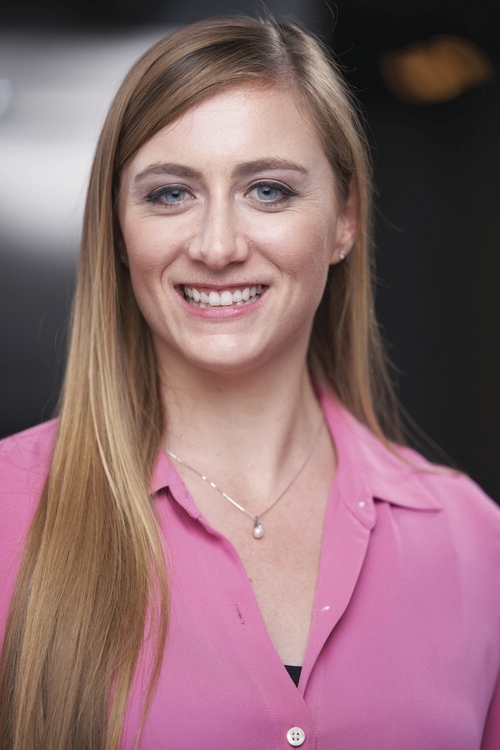
Julie Newman
Julie Newman is an electronics engineer who has worked at Boeing, NASA’s Jet Propulsion Laboratory, and SpaceX. She is a passionate advocate for women in engineering and cares deeply about the future of the industry. Julie serves as a board member for the Engaging Girls in STEM program with the Los Angeles County Office of Education and has been volunteering in STEM outreach for more than a decade. For more information about Julie and her initiatives, visit
★ Scribe Case Study
Better Than an MBA: Julie Newman’s Pull, Don’t Push Became Her Strongest Career Lever
Julie Newman wrote Pull, Don’t Push to change how girls hear about engineering. Three years on she calls it better than an MBA, with an absurd ROI and a $60,000 salary ju…
📚 Books by Julie Newman
Transcript
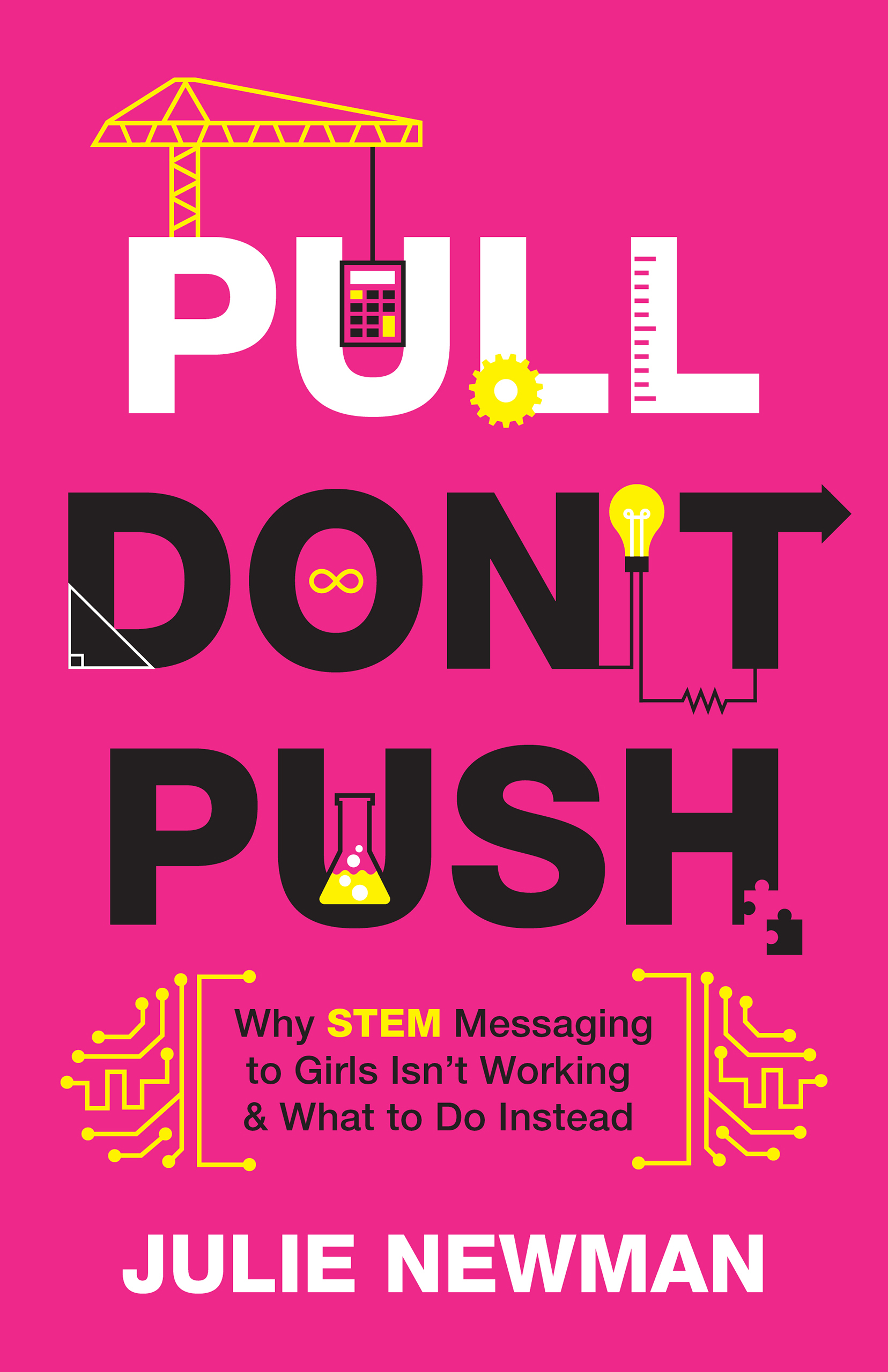
[0:00:22] HAB: You need to hear the bad news first. The results of STEM outreach to girls hasn't improved in 20 years. The good news, my next guest will tell you why, and how to fix it. Currently dated narratives push girls away in fear and blind spots, resulting in missed opportunities to pull them in. While efforts to increase diversity in science and mathematics have succeeded, outreach has largely ignored engineering. Welcome to the Author Hour podcast. I'm your host, Hussein Al-Baiaty. I'm joined by author, Julie Newman, who's here to talk about her new book called Pull Don’t Push: Why STEM Messaging to Girls Isn't Working and What to Do Instead. Let's flip through it. Hello, friends, and welcome back to Author Hour. I'm here with a special guest. Her name is Julie Newman. Julie, thank you so much for joining me today. I'm really excited to talk about you and your wonderful new book called Pull Don't Push. How are you feeling today?
[0:01:30] Julie Newman: Doing great. Thanks so much for having me. I'm really excited to be here.
[0:01:33] HAB: Yes. I got to tell you, when I was doing a little bit of research about you, and poking around the internet, I was blown away as I shared a little bit earlier. I immediately – when I find remarkable people like yourself, I immediately send them to like my nephews and nieces because they inspire me and I think they're like beautiful human beings. They always love those little texts and things that I send them. I'm just – you started off, this was earlier this morning. You started the morning off really strong. One of my nieces is getting ready to go into university, and she's trying to figure out what to do. So I know your work will sort of enlighten her path, so I just want to say thank you for that. Yeah.
[0:02:15] Julie Newman: Absolutely. Connecting the content with girls like your niece who can utilize it to really learn all the information they need, to pick a really good path for them. That's what we're here for.
[0:02:28] HAB: Yes, I love that. Your book is filled with so many beautiful experiences and stories. But before we get into that, I would love for you to share a little bit about your personal background, perhaps where you grew up, and what got you on this remarkable path of becoming not only an engineer, but someone who is working at NASA, and SpaceX, and all the remarkable things that you've done. I want to know who inspired that or what inspired that. That's beautiful to me.
[0:02:59] Julie Newman: Yeah, absolutely. Growing up, I had interests in a lot of things like most kids. I super – I enjoyed school, I liked my classes in general, and then I like doing sort of crafty projects and things in school. That sort of grew into – I didn't actually know the word engineering, but knowing where I am now and what the problem I'm trying to solve is that, honestly, a lot of girls don't hear the term engineering and so they don't know to even look into it. Growing up, I expressed a lot of the interests that really align with a future engineering career, but no one was using the word. Just going back to the beginning, I grew up in San Diego, California, had two older brothers, lovely parents who were super supportive, grandparents that lived next door. Really a wonderful time growing up. One of my biggest activities, when I was younger, was a science competition called Science Olympiad. This is a nationwide competition where there's a bunch of different events centered around sciences, and actually engineering things, even though it is called Science Olympiad and engineering is nowhere in the title of any of them. But building things like little robots, or model airplanes, or model rockets. That was my jam when I was little and really my entire extracurricular activity through both middle school and high school.
[0:04:35] HAB: That's amazing, yes.
[0:04:37] Julie Newman: Yes, it's a fabulous organization. One of my top blurbs on the back of the book is Jenny, who runs the organization today nationwide, absolutely love them. I'm actually now a volunteer for them too, and so I’ll be flying out there for the nationals competition in a month.
[0:04:52] HAB: So fun. What a full circle too.
[0:04:56] Julie Newman: Yes, exactly. The point of this book really is to give back and to make sure that more girls do learn about engineering and make sure that they can make those connections. Because in all honesty, we look at the current landscape and engineering – you look at the sciences, and everyone here is like, "Oh, we need to get more women into STEM. We need to get more women in STEM." Most people read into that and think it's scientists, right? What does a scientist look like? All those sorts of things and that's great. But if you look into the numbers of it, actually, we're already essentially 50% in most science disciplines. But by comparison, if you look at engineering; engineering, the workforce is still at 14% women. In all honesty, when you look at it, the characteristics of a career in engineering really align very well with what girls say they want out of careers, and it's just that they don't know that they can find that in engineering.
[0:05:56] HAB: That's really powerful. In your opinion, what are those blind spots then in STEM, specifically around outreach? I know you talk a little bit about this in your book, which I thought was really cool. Those outreach efforts that result in those missed opportunities to pull those girls in. Where is the communication not happening and where can we strengthen that?
[0:06:16] Julie Newman: Absolutely. The classic I like to point to is, all the kids have science classes in school, but very, very few of them have an engineering class, right?
[0:06:27] HAB: Yes.
[0:06:28] Julie Newman: So to that nature, they don't, they simply don't interact with it. But the strongest thing that we can do in this domain is the extracurriculars, is particularly these outreach events that are targeted whose goals, their stated goals are to help more girls find themselves in careers in STEM for their futures. These events can be so effective, and we've seen that – I work with the LA County Office of Education. We have an annual event called Engaging Girls in STEM Program, where we invite hundreds of girls from the local school districts. What we do is help them interact with professional women in STEM, and less largely a lot of engineers. The irony is that we push a lot of girls towards the sciences, and in reality, there's more than double as many jobs in engineering for them than there are in the sciences. Not to mention that girls really in today's market are a really hot commodity when it comes to having companies want to hire them into these roles. It's because they excel at them, and it's a really good fit for them.
[0:07:43] HAB: Yes, that's really powerful. I mean, I think in the idea of positioning the messaging in a way that gets through, like – I think a lot about how, for example, I was reading a few articles last week about just how TikTok looks different than it does for us here in the US, than it does in China, for say. I know you've heard these stories before, but it's not just TikTok. It's just our social media in general, and how we've sort of positioned men, women, girls, boys, just all the different elements in where we've seen. I'll be honest, as a young Arab kid growing up in America, and very artsy. I was like, that is how I communicated with people for a long time was art. One of my teachers brought me – I was literally in fifth grade, I barely spoke good – I came to America when I was in third grade and I didn't know any English, right?
[0:08:39] Julie Newman: Oh, wow.
[0:08:39] HAB: One of my teachers because I was obsessed with drawing, and I would just doodle throughout class, because half the time I didn't know what the hell is going on, to be honest. She was so cool in that she brought me this piece of paper that just said, "Write a book competition." It was an illustrative, whatever, it was just this national – I didn't even know that it was national. I thought it was just homework. You know what I mean? I literally made this book, drew out these kids, and character, and all these things. She even went ahead and submitted it for me. My book got chosen as like top 100 – it was crazy.
[0:09:16] Julie Newman: Wow. Congratulations.
[0:09:17] HAB: Thank you. I was very young, and I didn't know what was going on. But that opportunity would have not happened had I not had someone sort of show me the way, at least put the piece of paper in front of me. "Take this home," those kinds of things. Then when I grew up, I started speaking at different high schools and middle schools because I wanted to see people like me who look like me and sound like me also go in front of a class and show the kids in the back who are refugees and immigrants, that they too can start doing things, going architecture school, go into graphic design. It was just like, how can you present?
[0:09:53] Julie Newman: Yeah. I love that so much.
[0:09:55] HAB: Yes. Like for me, it was all about who you see do that thing can inspire you. We want to see in-person talk to in-person who we could potentially be. Because then, you kind of see yourself in them. I love your positioning and that we want to get these girls around who they can be like, who they can look up to. That is really powerful. Can share a little bit about that? Can you tell me a story about maybe a woman who was successfully around you, in your life, in your career that kind of helped you get to thinking about STEM? I know you're obviously already involved, but someone that really pushed that out of you, if you will in your career.
[0:10:38] Julie Newman: Yes. I really want to bring it back to the importance of these role models, and the surprising impact that one interaction can have. You had your teacher helped you with this one task, and that really helped you along this path. That's why I wrote this book for – it's not a book written to the girls. This is a book written to the teachers, to the outreach coordinators, to the school administrators, the museum coordinators, all that good stuff. These are the people where their efforts – if they can get the marketing right, they can have such an exponential impact on all of the kids that they interface with. That's why this book really is written as helping teach the teachers so that they can be effective. I see when I interact with so many volunteers, and I have so many great friends who – their career, right? I'm an engineer coming in and volunteering. But for all of these teams, where it's their career is running these outreach events. They are in their working blood, sweat, and tears, and they care so much. What I want to do is to help them so that they can work smarter and not harder. It's no fun to have to work, and work, and work, and not see the outcomes of it. To give you some stories. We've been running these events and I have been involved in so many different outreach events. That's what led to writing this book was, I saw what worked and what didn't. Then I took that and I went deep into all of the academic research, that none of our overworked, and underfunded, and not enough time organizers have the time to read, because a lot of it's so hard to digest. When you actually can take that information out, and putting it in a readable format, like I'm doing in the book, engineering just falls right out of all of the data. It falls right out of what girls say they want when it's framed in the right way. For instance, you brought up creativity. When you were younger, creativity was so important to you. To be truthful too, that was very true for me when I was little. I actually also, I really liked arts and crafts style things. I really liked building things. I loved cutting out things in paper and making little origami stuff or whatnot. Engineering is actually an incredibly creative path. That's something that never gets spoken to. It's a career that is all about creative problem-solving, working in teams, and really taking on these interesting challenges that help you.
[0:13:26] HAB: I love that so much. Yes. I just deeply resonate. Yes.
[0:13:31] Julie Newman: When you frame it like that, exactly. Again, getting back to the motivation for writing this book, I saw too many outreach events where they would focus on the negatives. That statement of what engineering is, that's something that people can get behind. That's something that gets them to look into it more, which is what we really care about the most. But if instead you go in and say, "Everyone thinks that girls can't do STEM, and we're here to tell you that that's wrong, and you can totally do whatever you want."
[0:14:06] HAB: Right. That framing.
[0:14:08] Julie Newman: The number of events, where that's the first sentence they say to a group of a hundred girls. And you wonder why some of the events really – they can't see a measurable impact at all. When you focus on the positives and help give the highlights of why you would want to look into it, then that's what resonates. I was at one of our events a couple of years ago, and I was the keynote speaker for this event. I was, of course talking to a lot of the topics in the book. This is actually predated me starting to write the book by about a month, was this particular presentation. But afterwards, and after speaking through the concepts in the book, it was actually a teacher who came up to me afterwards and she said, "Julie, absolutely loved your presentation. I never thought about it that way. Truth be told, I should have been an engineer. If I had seen your presentation when I was their age, I think I would be an engineer today.”
[0:15:15] HAB: Wow.
[0:15:16] Julie Newman: That's also who I'm writing the book for, is I don't want there to be more women like her who, knowing the information realizes that it would have been a great field for them that they would have really enjoyed, but then to never have some sort of happy accident or interaction bring them there.
[0:15:34] HAB: That's so powerful.
[0:15:35] Julie Newman: By contrast, I also have a really lovely story. This is actually something that came up during COVID. I've spoken to so many girls, I can't keep track of them all anymore. Although I've had plenty of emails back and forth with a number of them. But one in particular stood out, I had talked to her at an event. She was really interested in space things and of course, my entire career is in space things. After talking to her, I gave her the quick breakdown of, if you want to work on these things, don't become a scientist, become an engineer because there's a 10 to one ratio of engineers working on space things compared to scientists. Probably more than that even. But that was at least the statistic I was able to pull out of NASA at the time. I got a LinkedIn message out of the blue, just even years later, I think from her event, and she just said, "Hey, I came across and found you again. I just wanted to let you know that we spoke a few years ago, and I remember talking to you about thinking about which college major I wanted to pick. I'm enrolled to start a degree in mechanical engineering this fall."
[0:16:44] HAB: Let's go. I love that so much.
[0:16:47] Julie Newman: Yes. That was while I was writing the book too. So I printed it out, I've had it on my wall ever since. It was just the sweetest thing. We get so many of those success stories with these events, formatted in the way that I talk about in the book. You can have those really good one-on-one interactions that get people on the path to being able to discover for themselves if it makes the most sense for them.
[0:17:16] HAB: Right. That's just one of the young women who reached out and decided that she was going to reach out, and just kind of say thank you. Think about all the others that are maybe shy to.
[0:17:27] Julie Newman: They never did.
[0:17:27] HAB: But also made that choice, you know what I mean? In the back of their minds, you are the reason. I think that is for me personally hands down is one of the most addicting things in life and it's the most beautiful, selfless things, but also very selfish things, because you're out there talking about your life, and all these things. But it also deeply resonates with someone who is trying to figure out how to make a decision and how is really just – it's just the information, and how it's positioned to you. I love that so much because that's how you get the messaging across. Obviously, you're leading with your heart, and of course, sharing these stories that are so cool. I mean, how cool is it that –
[0:18:12] Julie Newman: Yes. Well, I love my job. I get to work on such cool things. It's fun to be able to talk about those things. I guess we never got into it. We got on a different track. But for my background, I did – it was actually when I was picking my college major that I finally really understood the word engineering and ended up picking electrical engineering. I went to Caltech, here in Pasadena, studied electrical engineering, had a fabulous time, made great friends, did some really cool and fun things. Spent some summers doing research, worked at SpaceX, then went and worked at the NASA Jet Propulsion Laboratory, JPL. That's the NASA center that is famous for the Mars rovers and many other things. But often, that's the one that people know the most about. While I was there, I got to work on some great projects. First was an Earth satellite that launched this past year, SWOT, surface water, and ocean topography. A giant satellite that's looking at ocean height very precisely to work on climatology bottles.
[0:19:21] HAB: Amazing. That's so cool.
[0:19:24] Julie Newman: Yes. After that, had the wonderful opportunity of working on a mission to Jupiter. This is the Europa Clipper mission, be orbiting Jupiter, particularly looking at a moon of Jupiter, Europa that we believe is one of the places in the solar system, we're most likely to find life if it's off of Earth. I designed, and shepherded, and built, and led a team in the radar instrument on that spacecraft. Just the sense of, I had this built and I'm holding in my hands this piece of electronics, a circuit board with parts on it, and I'm holding it now. But then, it's going to one day be millions of miles away floating around Jupiter. It's absolutely phenomenal. That's something I get to do because I'm an engineer. It's just this sense of fulfillment that I like to speak to it. One of the engineers I highlight in the book, this is Donna Shirley of JPL. She worked on many Mars missions, many things, wrote some really great books about engineering, and her time at JPL. One called Managing Creativity, actually. She has a chapter in her book, it's titled – and I just think it's so beautiful. She's like, "What do you do after you've been to Mars?" She had effectively explored Mars because she was an engineer, she worked on these rover programs. It's just that sense of achievement and that sense of wonder that is something that comes out of an engineering career, particularly – in aerospace, it's easy to talk to, but so many other industries, the same impact. Imagine if you were the engineer that works for a biotech or pharmaceuticals company, and you developed some drug that can save people's lives, or you made the next piece of medical technology in hospitals. Or you made a better water treatment plant design, that means that less people in an underserved area will die of illnesses. It's those really large-scale impacts that speak to why so many of us choose engineering.
[0:21:51] HAB: Yes. I have to say, you have a very boring life, and it's just insane. You don't do anything.
[0:22:00] Julie Newman: I didn't even make it to my current job too.
[0:22:01] HAB: Please share.
[0:22:03] Julie Newman: Worked on the mission to Jupiter, and then now, I work at the Boeing Company as an engineer. I started working on the space launch system rocket, which also did finally launch and biggest rocket ever flown. That was a nice title to be able to put on the resume. For that, I can point on the rocket where the box that the team I was leading, the box we designed, where it goes. That's just insane. I have two jobs now. I work directly under our chief engineer for all commercial satellites, really across different programs. Working on things like engineering culture, which is also a very fun thing that resonates very well with the girls, and I talk about a bit in the book. Then, I'm also now a chief engineer on one of our satellite programs. This is a satellite for an Indonesian communications company, and a giant, $100 million plus satellite. The body of it is the size of a school bus, and it will be orbiting the Earth, hopefully later this year.
[0:23:14] HAB: Absolutely remarkable. I mean, I think those things where you take that arts and crafts all the way to the most extreme level, which is that journey in which you've been on of just continuously exploring your creativity. I think every human being is an artist, we are all artists, and I think creativity is how we solve the problems that we're interested in. I think that's the thing that I – for me, coming from a refugee camp, and then studying architecture in the United States was like, probably how you went from just tinkering with things, and wires, and stuff at school to working on this thing on Jupiter. It just feels like a leap, but there's a journey in between that leap. For me, studying architecture, it was like, I wanted to solve the refugee crisis. I thought about housing because that was how I was impacted as a young person, but in how to propel your energy, your creative energy towards problems that we have in our society and our culture, socios, whatever it is. It's how do you apply this creativity and what tools do you sort of start to fashion in order to create opportunities to solve problems? Is the creativity – is the essence of art, I think. It doesn't matter if you're looking at a canvas or looking at a bunch of wires. You both got to figure something out at the end of the day.
[0:24:51] Julie Newman: Exactly. Yes. Yes. It's different constraints. Architecture in particular is one of those things that is just a hair's breadth away from being an engineer.
[0:25:02] HAB: Hundred percent, yes. It means to say like great architects are actually really good engineers.
[0:25:07] Julie Newman: Are actually good civil engineers, exactly.
[0:25:10] HAB: Exactly, 100%. Yes.
[0:25:13] Julie Newman: The number of girls who have told me, "Oh, yes. I want to do architecture." I'm like, "Okay. Do you know what civil engineers do?" They've never heard of it. They already, they come over, and they're like, "Yes, I really want to build skyscrapers and bridges." I'm like, "Okay, you need to learn about this career."
[0:25:32] HAB: Yes, I love that. Because living inside all of us is the mark that we want to make in the world. It is truly people like you who come along, whether it's through a book or a talk or you coaching one of their teachers. That helps us, the young people get the opportunity to see our world differently through that information. It's kind of back down to what you're trying to express throughout your book, which I love, is the messaging. Can we talk a little bit real quickly here, just a little bit about how you've turned that negative sort of story starting point into something positive? Maybe a piece of advice that you would give to people out there who want to open that conversation up with a student of theirs, or whatever it may be. What is that piece that you would want to part with?
[0:26:24] Julie Newman: Right, yes. Certainly, first and foremost is focus on the positives. Really, it actually comes down to the title of the book. The book is called Pull Don't Push: Why STEM Messaging to Girls Isn't Working and What to Do Instead. In that Pull Don't Push, we want to be pulling the girls in, enticing them with all the good information so they can do it for themselves. We don't want to be pushing them towards a path. These are all – they're all individuals, and we talk about statistics, and the girls as you know, a population group. But at the end of the day, they're each making the best decision for them as an individual, just as one girl wanting to have a career and a life that she's going to love. To that point, just put yourself back into the mindset of being a middle schooler, or a high schooler. You don't have all the information, and you know that you don't have all the information, but you also don't know how to ask about it. Part of the messaging that works is helping to give them a little bit of a framework of what to think about. Some of that is the phrase, it's follow your passion. That's horrible advice because you can't be passionate about something you don't even know anything about. Also, following your passion like, well, okay, you can be passionate. I'm passionate about sitting on a beach in Hawaii with a pina colada. But that's not a career, right? Through the book, some of the topics I bring up are some of the more pragmatic ones and the things that come out very well in the balance when you look at engineering careers. One of those touchier subjects, and which actually, when you look into the research is the single most effective piece of information you can give the girls to help them consider engineering. That touchy subject is money. No one wants to touch it with a 10-foot pole, but it is so incredibly valuable. For anyone who's willing to bring it up, and we do find that with some of our – we call them ambassadors, our professional women in engineering who volunteer at these events. If you look at – there's a really good study out of Georgetown University, where they did a very large dataset, a comprehensive study about, here are the degrees that people got, and here's what their earnings are now. Then they ranked them just one to 1000 of who's making the most money as a median. Nine out of the top 10 are all engineering degrees.
[0:29:07] HAB: Of course, that's amazing.
[0:29:09] Julie Newman: Yes. Money is not a reason to pick a career, but it's also something that's worth considering.
[0:29:17] HAB: Right. It's right up there with air. I mean, it's that important. I mean, it's what we're all thinking about.
[0:29:24] Julie Newman: Exactly. That's why you have a career, is to get paid, in addition to hopefully having something you enjoy. When we have a speaker up there, and she says, "Yes, I'm a hiring manager. Right now, I am hiring engineers out of school, just their four-year degree, no graduate education, four years of college, and I'm hiring them in at $100,000 salary."
[0:29:47] HAB: Incredible.
[0:29:48] Julie Newman: That's just insane.
[0:29:50] HAB: That's incredible. Yes, it's life-changing.
[0:29:51] Julie Newman: That’s starting your career at double the median, and you're only going up from there.
[0:29:56] HAB: Right, and doing something fulfilling, like doing something that you are passionate about. And here's the thing about what you were saying earlier. In architecture school, one of my favorite professors used to tell me, he's saying, "Form follows function." I love that so much, and I'm sure it applies to some degree or other parts of industries. But what I also found, later on, is that passion follows purpose. Purpose is really like – I feel like is this octopus that's connected to your abilities, what you're good at, what you're interested in, what you think is cool, what you want to do. It's all of those things compacted together. Once you tap into that, and really understand and trust it, then you can be really passionate about those things inside of the purpose.
[0:30:45] Julie Newman: Exactly, yes.
[0:30:45] HAB: Which then, the byproduct, of course, is saying, "I'm an engineer" or "I'm an artist" or whatever that external sort of tagline is. But you get to do X, Y, and Z with these abilities, right? It's like being superhuman and having abilities, and then not using that. It sucks. You know what I mean. I feel like, that's one thing. I always – I do not want to use my artistic abilities. If you take that away from me, that's taking away who I am. You can't have it.
[0:31:19] Julie Newman: Yes. It feels so good to be utilizing all of your skills. That is something, again, going back to another one of my favorite studies. If you look at SAT scores, and here, we're talking statistics, obviously. It's not true for every girl or boy. But if you look at SAT scores, boys who do very well on the math section of the SAT, there isn't actually a strong correlation for how well they do on the other sections. However, for girls who do very well on the math section, it's also highly correlated with them doing very well on the verbal section. What that means is that, statistically as a group, girls tend to be more well-rounded, so to speak. They're good at communicating and they're good at the more technical things. When we look at that, understandably, they want a career where they can utilize both of those skill sets. If the only thing they hear about is a scientist or an engineer, "Oh, they're just sitting in a room by themselves all day doing math problems." That's not true at all. In reality, engineering is so collaborative. But if they only see like, "Oh, if I want to use my collaboration and my analytical, my communication, I should be a lawyer or I should go be a doctor." It's understandable why they're choosing those paths, because that's where they see their skill sets being utilized. The irony is that an engineer who's not good at communication is a horrible engineer. We need more engineers who are good at communication.
[0:33:00] HAB: I would also argue, if you're not good at communication, you would be horrible at anything.
[0:33:05] Julie Newman: At most careers, yes, exactly.
[0:33:06] HAB: At most careers, yes. Engineering specifically, yes. Definitely. It's so collaborative.
[0:33:10] Julie Newman: Yes. The irony is that we see those, all those boys that got high math scores, they go into engineering or something like that. Then the girls, only some of them do. It's because, they're seeing their skills that's going to be utilized there. But in reality, those girls with the high communication skill and the good math scores, they're going to dominate all of the kids without good communication.
[0:33:35] HAB: Yes. Honestly, I'm talking to an example of that. I feel like –
[0:33:41] Julie Newman: Thank you.
[0:33:41] HAB: It's not every day that I get to talk to one, a scientist and an engineer, someone who has worked deeply into really fascinating work. One of my favorite YouTube channels, I'm big on YouTube, I love YouTube. One of my favorite YouTube channel is the NASA channel, or the SpaceX. Usually, I'll go on there and just kind of poke around. I've been obsessed with astronomy for a long time. I feel like it's deeply, deeply woven into my heritage coming from the Middle East.
[0:34:08] Julie Newman: Yes. Absolutely.
[0:34:09] HAB: I just feel like it's one area that I've always wanted to explore. I especially sort of smack myself sometimes for not exploring it more in college. But at the same time, I get to talk to someone who is involved in that world but yet have a beautiful conversation. You're not using crazy language that I don't understand. You're very human, down to earth. That is obviously woven with your ability to communicate, and how obviously you're able to lead teams and organizations to do remarkable things. Of course, getting up there and speaking, giving back your time, which is so powerful. But I got to celebrate you for a second, because let's be honest, you do all these difficult things. But then there's a whole difficult thing over here, which is writing a book. I got to ask you about that. What was your favorite part of pulling this book together? What did you learn from this journey?
[0:35:01] Julie Newman: What I learned is that, yes. Sometimes working on the book was harder than little rocket engineering.
[0:35:08] HAB: Rocket science, yes.
[0:35:11] Julie Newman: Oh, goodness. Yes. Yes. I have such a profound respect for every person who has ever written a book now.
[0:35:20] HAB: Yes, me too. It's gut-wrenching.
[0:35:25] Julie Newman: It's just such a different style, right? It's just such high-density information. When we're in a world that has so much low-density information, now, and a lot of the YouTubes, TikToks, and BuzzFeeds.
[0:35:36] HAB: Yes, it's too fast.
[0:35:37] Julie Newman: Yes. When you're working on limited time, and you need a solution that works, that is where books like these come in. That's what I wrote the book for. You can read this in a couple of hours, and it can give you the tools you need. Actually, half of the book is filled with appendices of template emails and template questions to ask panelists, and a template speech, and handouts, and all this good stuff, which will also be available on the website, and that I want utilized. People have already used and told me that they're super helpful makes it so much easier, and it guarantees that their programming is effective. But yes, I think some of the hardest parts on the book for sure, it's a labor of love. I went into this as – it was particularly, it was during COVID, so we couldn't host many of our events anymore. They're all very heavily in-person and they're much more effective in-person. This was sort of my volunteering, while I couldn't go out and do these things in person, and so really was a labor of love. One of the most fun things too, which I realized, I'm going to have to write another book for now, was actually recording the audiobook. I'm the narrator on the audiobook, which is on Audible. That was just so fun. I wrote the book as if I was talking directly to our coordinators and educators. It was just so fun to actually speak it out loud in the way it was meant to be digested.
[0:37:16] HAB: Love that so much, because your voice resonates deep. Honestly, just hearing you speak, it just – I'm so glad you did the audiobook, because we all – for me, I learn through hearing. I'm not very – I'm a good visual learner, and I'm a good – I can hear information and digest it well, but I'm not great at reading it, and remembering it. Again, knowing myself, knowing how things work, I'm glad you did that, and your voice is very powerful. I'm glad you live with that. I got to ask you one last question before I let you go. That is, what is the one thing you hope that your readers walk away with, what's that feeling you hope to evoke?
[0:37:55] Julie Newman: I want my readers to feel like they can really make a difference and that it's because of them. If we can get people to adopt the strategies I lay out in this book, we could get millions more women into STEM careers within the next decade. I think that's really powerful, that each person who reads this book will contribute to that massive global shift in the state of STEM, so to speak. It's just one event, one conversation, one real helping at a time. I want them to get away that it's all about pull don't push. Just bring the girls in, show them what all the good things are, and don't push them away. Don't scare them with dated narratives. Don't make them feel like they're anything less, because they're all wonderful, and so many more of them would make great engineers than ever learn now. I just hope that we can increase those numbers, and I know that we will. We've seen strategies work and just implementing them on a larger scale, and making it easier. Just use the templates. They were made to be used and made to make your life easier. I just, you know, it really is the readers of the book, you can make so much impact, and I want to give you those tools.
[0:39:23] HAB: Beautiful. Julie, it has been just an absolute pleasure having you on the show today. Thank you so much for sharing your stories and of course, your experiences with me. I've had just the privilege of just hearing not only your stories but really how incredibly passionate you are about what you do. It shows through everything you're doing. I'm grateful that you're here with us, sharing your work, inspiring others, of course, to continue that work and there's just nothing better than that. The book is titled, Pull Don’t Push: Why STEM Messaging to Girls Isn't Working and What to Do Instead. Besides checking out the book, where can people find you, connect with you, and reach out?
[0:40:05] Julie Newman: Yes, absolutely. Best place will be going to the website, juliejnewman.com. Sign up for the newsletter and we'll keep you connected on all the new content as it comes out. Then also, LinkedIn, same name, find me on LinkedIn, very active on there.
[0:40:24] HAB: Thank you so much, Julie. Congratulations again. This is going to be a fantastic book and I'm sure it'll create such a huge impact. Hopefully, the next wave of remarkable women will take us way beyond our solar system as well.
[0:40:39] Julie Newman: Absolutely. Thank you so much.
[0:40:42] HAB: Thank you all so much for joining us for this episode of Author Hour. You can find Julie's book called, Pull Don’t Push: Why STEM Messaging to Girls Isn't Working and What to Do Instead right now on Amazon. For more Author Hour episodes, subscribe to this podcast on your favorite subscription service. Thanks for joining us. We'll see you next time. Same place, different author.
Want to Write Your Own Book?
Scribe has helped over 2,000 authors turn their expertise into published books.
Schedule a Free Consult