Food 5.0: How We Feed the Future, From Biotech to AI
✨ Episode Summary
Robert Saik grew up on a mixed family farm, the grandson of Ukrainian farmer immigrants, built one of North America’s largest agriculture consulting firms, and now builds AI companies. Food 5.0: How We Feed the Future, which he wrote with Scribe and launched in August 2019, became a Best of Amazon book. His books carried him to keynote stages from Lisbon and Madrid to Australia and South America, and Food 5.0 positioned him as an expert witness, twice, before the Canadian House of Commons agriculture committee.
In this episode of Author Hour, Robert joins Eric Jorgenson to talk about the predictions in his book that have held up since 2019, why he wrote for a 30-year-old single mom trying to feed her family, how he talked the book into existence on walks with his writer at Scribe, and why he believes readers will keep paying for genuine human ideas in an age of AI.
“The book actually positioned me as a significant expert in agriculture, and I’ve appeared twice now to the Canadian House of Commons Standing Agriculture Policy Committee as a witness.”
⭐ Top Moments
- A witness to national policy. “The book actually positioned me as a significant expert in agriculture, and I’ve appeared twice now to the Canadian House of Commons Standing Agriculture Policy Committee as a witness.”
- Keynotes around the world. “And I’ve always been a keynote speaker and the books really propelled me around the world. So I ended up giving keynote speeches in Portugal and Lisbon and Madrid. Florida, Australia.”
- The book called it in 2019. “So the first line of the book is when you woke up this morning, did you worry about a plague? And the second line of the book was, did you worry about war? And the third line of the book is, did you worry about famine? So this was pre-COVID, pre-Russia’s invasion of Ukraine, and pre-famine that happens because you have geopolitical instability.”
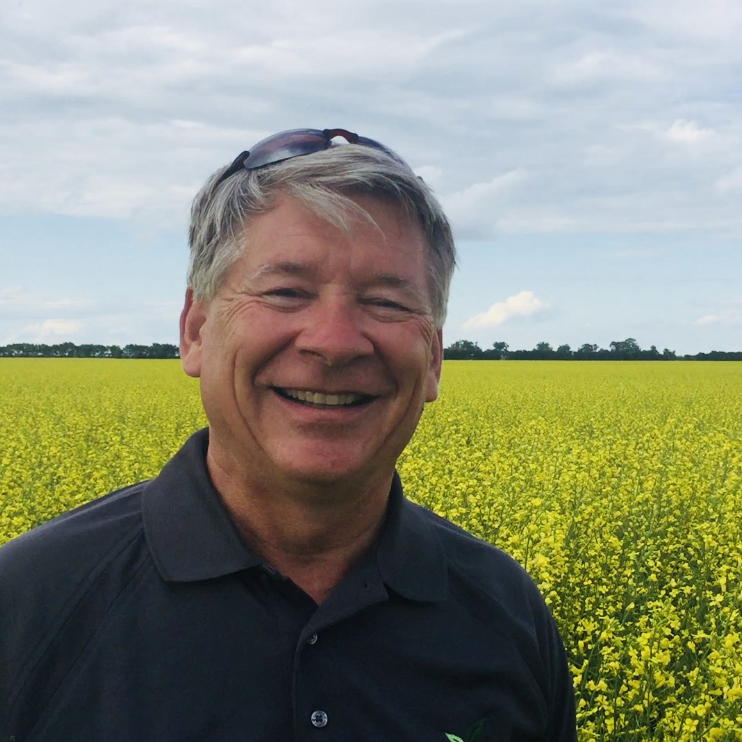
Robert Saik
Robert Saik has more than forty years of experience as a Professional Agrologist, entrepreneur, and international agriculture consultant, working with clients ranging from Nigeria's Minister of Agriculture to Bill Gates. A Distinguished Agrologist and self-described agriculture futurist, he has founded more than fifteen companies across farming, agri-retail, distribution, media, and agricultural technology, including the Agri-Trend and Agri-Data group of companies, which was acquired by Trimble. He was named Canadian Agri-Marketer of the Year in 2014, and his TEDx talk, Will Agriculture Be Allowed to Feed 9 Billion People?, has been viewed more than 150,000 times. In Food 5.0, he takes readers from the muscle era of farming to a future in which the convergence of sensors, robotics, and machine learning makes sustainable agriculture achievable.
★ Scribe Case Study
Robert Saik's Food 5.0 Made Him a House of Commons Witness and Carried Him to Keynotes Around the World
Agriculture entrepreneur Robert Saik wrote Food 5.0 with Scribe. It became a Best of Amazon book, carried him to keynotes worldwide, and made him a House of Commons witne…
📚 Books by Robert Saik
Transcript
Eric Jorgenson: Robert, pleasure to have you. Why don't you give us a little bit of your back story, your background, your expertise before we jump into the book? What led you to write a book?
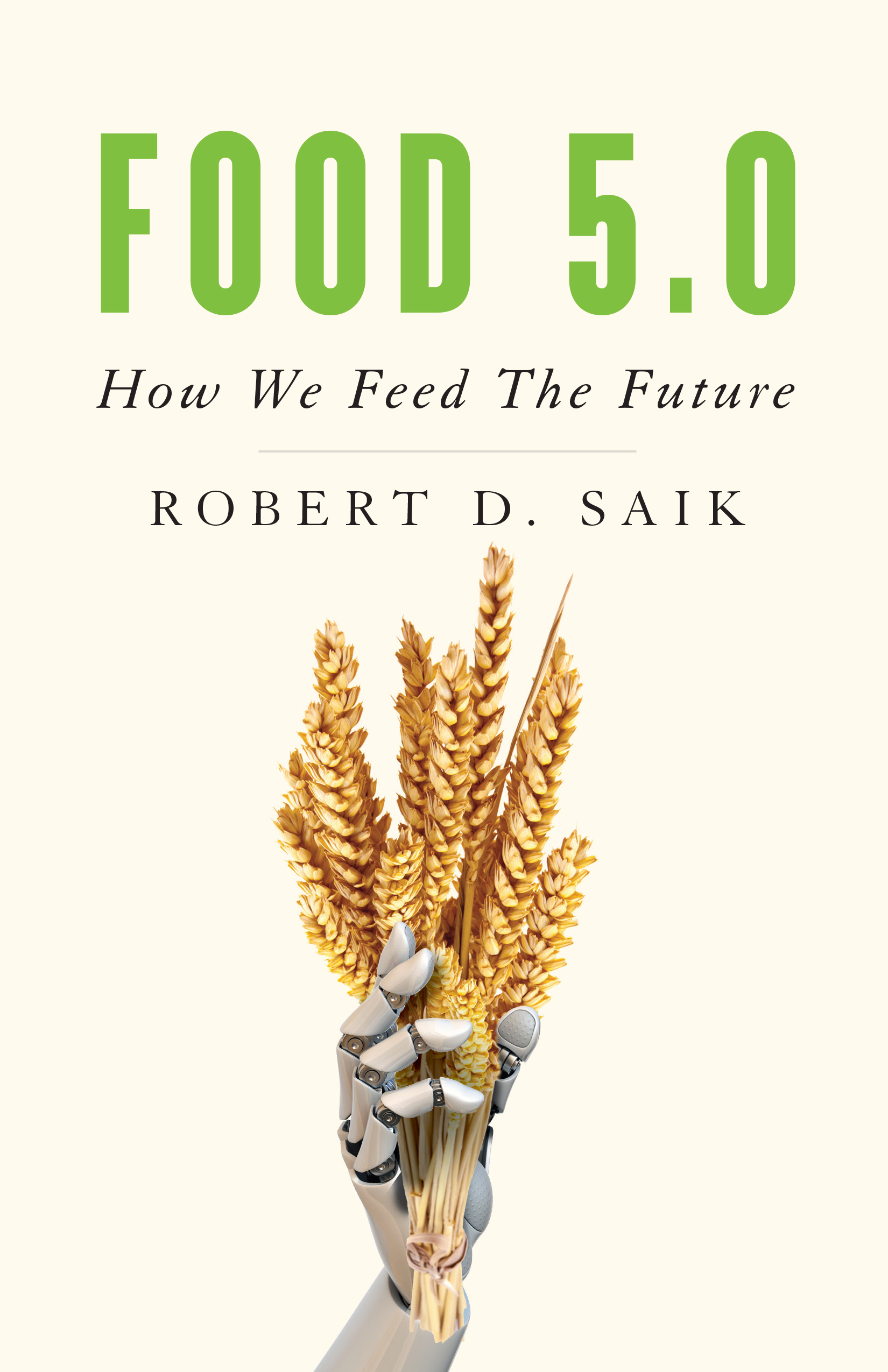
Robert Saik: Well, the book I wrote, I've written too. This one is Food 5.0, How We Feed the Future. And I come by my roots, honestly, both sets of grandparents were Ukrainian farmer immigrants. And I'm second generation agriculturalist from the old country. And I wanted to talk about agriculture and technology and where it's headed. And it's, you know, food's important to everybody. Everybody is an opinion. Not all of them have the facts. And so that's what I wanted to write a book about.
Eric Jorgenson: Incredible. What was the transition between, had you been literally just farming your own farm and then decided that you were frustrated with people sort of misunderstanding? What was the, I imagine there was a lot of steps in between there.
Robert Saik: Yeah, you know, I grew up on a family farm, a mixed farming operation with cattle and cropping and all kinds of livestock, graduated with a degree. And I think I'm starting my 13th company, 15th company right now in the AI sector right now. So I've had a, I've had a, I think I've had nine careers in the agricultural sector that I counted. I do have a shares in a farming operation in Uganda, north of Kampala towards Gulu and the Congo. And I've traveled the world working with agriculture, still work with about 20 farms directly. And these are all commercial sized operations. And I've been doing that for 15 years and built one of the North America's largest agriculture consulting firms that I finally, this is a 20 year journey. And I sold that in 2018, it was retired for eight days, became CEO of a robotics company and sold that in 20 months. And now I'm building an AI companies. Yeah. So farming background technology, you know, the virus called entrepreneurialism, all that stuff.
Eric Jorgenson: Yeah. When I imagine there's very few people who can sort of just show up in the agriculture industry knowing what it needs, right? Like these, there's a lot of incredible technology that might have a huge impact, but unless you have a deep understanding of the day-to-day and the constraints and the trade-offs and the, you know, the challenges of environment and margin and timing, that is very difficult for somebody outside the industry to really solve problems.
Robert Saik: Well, you said at one point to me that you come from a small family farm.
Eric Jorgenson: Small, small, like, yeah, barely, barely profitable, let alone commercial, but you know, enough empathy to understand how, how difficult it is.
Robert Saik: You understand the complexities of insects moving in or disease moving in. And, you know, right. Those are the realities of agriculture. So that's really what I wanted to touch on. And I wanted to, you know, lead us through a discussion around historically where we came from and then where we're going and where we're at today. And so the book, Food 5.0, How We Feed the Future is remarkably on the mark.
Eric Jorgenson: I think it's exciting to record this now. The book's been out for six years, seven years, pretty close.
Robert Saik: No, no, not that long. So I, well, yeah, no, that's right. Yeah. I'm, time flies. It's true. We, I'm, yeah, time flies. I'm, we launched the book in August of 2019. And so when you, so here's the book. So, but in August of 2019, and I want you to remember that it was 2019. Okay. So the first line of the book is when you woke up this morning, did you worry about a plague? And the second line of the book was, did you worry about war? And the third line of the book is, did you worry about famine? So this was pre-COVID, pre-Russia's invasion of Ukraine, and pre-famine that happens because you have geopolitical instability. So the book is remarkably accurate in terms of where my thinking was at, at the time, and kind of Notre Dame-ous in a lot of ways, because I predicted two out of the three things, and I think we'll see all three transpire, actually.
Eric Jorgenson: Yeah. Tragically, it is, I give you a lot of credit. It's very difficult to put down, you know, hard predictions about the near future in writing because people, you know, can pick it up and test you very soon. And, you know, seven years is enough to start really being in the thick of, have these predictions come true? Are they headed in the right direction? And from what I understand, you really hit the ball out of the park on a number of these predictions. That is your second book, right? So the first book was The Agriculture Manifesto. Then you've got Food 5.0. Tell me about sort of the first book and that initial author transition, like, just give me the...
Robert Saik: So the first book I would call a booklet. I just wanted to get my thoughts down. So The Agriculture Manifesto, 2014, 10 Key Drivers That Will Shape Ag in the Next Decade. So then you can go back and see how accurate I was in terms of the 10 Key Drivers. I really wanted to spend, and I did, the beginning of the book really discussing three letters, GMO and biotechnology, which I spent a good chunk of the book on. And then I went all the way through the bioengineering and the segmentation and sensor 3D printing and ultimately artificial intelligence in the 2014 book. Again, predicting where agriculture was going to be by 2024, again, fairly accurate about where agriculture ended up. And then Food 5.0 was really, and we're going to talk about writing a book here, Eric. So my avatar or my target audience for the book was a 30-year-old single mom living in the city with a couple of kids trying to feed her family, trying to understand what was going on with food, and should she feel guilty about buying food? And so I wanted to paint a picture of where agriculture came from and where we are today. So I took us through the genesis of agriculture through the era of muscle, through the era of machine, through the era of chemistry, through the era of biotechnology. And then the last half of the book kind of deals with where we're at today, which is convergence. And that includes the convergence of remote sensing technology, satellites, biotech, and of course, AI. And so that's what I wanted to do is give somebody a context of where we came from and where we're going and how we're dealing with agriculture, given the technologies and the constraints that we're dealing with in agriculture today.
Eric Jorgenson: So where does this convergence take us? What is the sort of summary view that you have of the future of ag?
Robert Saik: Well, you know, we talk a lot these days in the media about AI and robotics and stuff like that. It's going to be a long time before we'll see the disintermediation of farmers based on AI and robotics. Now, that's not to say I was a CEO of a robotics company. And, you know, getting autonomous machines working in the field is not that difficult. I mean, we can do it. The problem is moving the vehicles between moving the robots between fields, because then you got insurance and regulation and all this kind of stuff. So the barriers to autonomy at farm level are not that high. I think we can get through a lot of them. But there is so much out of the control of an individual on a day to day basis. Like I had, you know, my garden and I just harvested it the other day before the snow came. We had snow already and, you know, it got hit with hail. So right across the road, my farmer buddy just got his crop hammered with hail. Well, how do you deal with that? And and the vagaries of weather and the vagaries of markets, like somebody wakes up in the morning and says something politically and all of a sudden the markets shift on you and you hadn't been planning on that. So convergence really, to me, is about taking advantage of the technologies that are coming down the pipe. And when I go to events like Abundance 360 with Peter Diamandis, I'm one of the few agriculture people in the room and I'm always thinking, OK, how are flying cars, how are drones going to affect agriculture? How are we going to take advantage of these technologies? That's, Eric, where my brain goes.
Eric Jorgenson: Yeah, I love that. And I imagine it's far from most people's first idea, you know, the the way that our food is produced is fortunately and unfortunately very abstracted away from most people's daily life. I mean, maybe they go to a farmer's market, but they certainly don't go to the farm. So it is very important to have people like you thinking about how to bring them.
Robert Saik: I love to have these conversations with people about food. I ask people, especially in large urban centers, do you buy organic? And they go, oh, yeah, we buy organic. I said, why? And they go, oh, it's healthy. Or for you. OK, why? Well, because they don't use chemicals, they don't use pesticides. So. Well, how do organic farmers control insects and disease on their crop and then their faces just go blank, because if it was just as easy as putting an organic sign at the end of the field, so this field is organic, all bugs and diseases, please stay away. Well, that'd be easy. But the fact is that it doesn't happen that way. And organic farmers, just like conventional farmers, end up using pesticides to control insects and diseases. They just happen to be organic pesticides. And they're not quite as effective. And you have to put on more. But that's the way, you know, the spin is. And so I like to I like to try to I used to preach a lot, Eric. And what I what I like to do now is ask questions like I just did. You buy organic. Why is it safer? Why is it safer? And then you you dig back and you scrape the paint and you find out that very few people actually have a really good understanding of the practicalities, the pragmatism of agriculture.
Eric Jorgenson: Yeah. So how did your goal change between the first book and the second book? They both sort of strike me as like a little bit predictive and a little bit, you know, that the Agriculture Manifesto and then for Food 5.0, you said your avatar, your target reader was was this sort of urban, you know, mom just to educate her about what's going on in this world that's so far away from her own. Tell me about like that process. Is that a result of conversations that you had of people that you meet? How does this.
Robert Saik: Actually began with my own family, with one of my daughters, because the daughter was not allowing her, my granddaughter, to eat some stuff. And I go, what's that all about? And so I'm going, well, that's whack. So so I wanted to write, you know, I wanted to write a book that that talked directly to my 30 year old daughter with my granddaughters. And so that that's one of the one of the impetuses. But, you know, again, it's it's an important thing. And it's and you've got policies that are designed in urban centers that affect the rural community. And much of these policies, like I don't know if you watch Clarkson Farms and on Netflix, but it's a fantastic show. And Jeremy Clarkson just pointed out that this last year he left 200 acres unplanted because he could not pencil out a profit on wheat or barley in the UK. And this is because of policies that are generated by people in London that have never stepped foot on a farm. And I think it's important to have these pragmatic discussions about agriculture. So that's, you know, that's kind of why I wrote the book. And that's why I got another one in my head.
Eric Jorgenson: Yeah, well, I love Clarkson's Farm. I think it's one of the greatest shows. It's it's just perfect, like funny and heart and relaxing and beautiful, like the scenery of the show is incredible. And it is, you know, there's a there's a pill in the peanut butter that's like very interesting for people that are really far away from agriculture. And even if you're close to it, it's just, yeah, it's wonderful.
Robert Saik: If you're if you're a farm, if you're a farm background person, you just frickin burst out laughing. Thanks. You know, yeah, it's really, really enjoyable. I really encourage people to watch it. It's fun.
Eric Jorgenson: Yeah, yeah, yeah. Strong endorse. So so tell me about this third book that's that's rattling around in your head. You're right around schedule. You've been every five years so far.
Robert Saik: Yeah, I guess I never thought about that. But it's I think I think it's going to be about the interface between technology, especially artificial intelligence and and the blue collar sectors of agriculture and heavy equipment. I add the last part, heavy equipment, because there's so much going on today with the with GPS guidance and sensor technology inside of tractors, combines, et cetera. And it's not only about agriculture, but it's also today this morning I started out having a discussion about the rental business in the Netherlands and and the heavy equipment sector over there. So I think that we're going to see a fairly large influence of technology on the equipment and the agricultural sectors. But I don't think it'll be as disintermediated as a lot of other sectors. In fact, if you look at a graphics about the impact of AI on specific industries like grounds maintenance, like construction, like agriculture, they are in terms of job displacement quite low when you compare it to administration, accounting, legal, finance, et cetera. FinTech is going to get hit hard. But, you know, agriculture, I I'm kind of excited, actually. I think that ag could actually make really good use of some of these tools.
Eric Jorgenson: Yeah, it does feel like the the physical world is sort of overdue. You know, the last 30 years have been primarily software and computing innovation. And now that is kind of making its leap into robotics and autonomy and, you know, that physical intelligence of materials.
Robert Saik: Yeah, that that crossover material science and artificial intelligence into physical being physical bots, robots, that's going to be an interesting thing to watch. I think that's going to be amazing in the next five to 10 years. In fact, we just built we built a house and and we we put a station in for a robot in the house.
Eric Jorgenson: Oh, cool.
Robert Saik: Very cool.
Eric Jorgenson: Yeah, yeah. What is the is that related to the AI company that you are working on now?
Robert Saik: Yeah, the company that I have is well, the company is T1, named after the brand that my dad had on the farm and T1 Technology Corporation has built a technology called visorpro.ai and visorpro is a solution for the aftermarket. Think the service and maintenance side of equipment dealerships. And so we're operating in Canada, the United States and Australia. And I'm looking to branch out into the EU right now. So it's a it's a startup, a lot of money going out. And slowly we're getting to the point where we'll cash flow and that'll be good.
Eric Jorgenson: Very cool. Tell me about what you hoped would happen once you got these these books out into the world and some of the effects that you felt. What are the doors that open? What unexpected good things have happened?
Robert Saik: Well, first of all, the the book I even I was working with a scribe. She was out of Italy. She one of your people and and she was actually on an organic olive farm. So we had these wonderful. And when when the process of of the book was I talked it, I walked it into existence. So I would have a phone on and I'd be talking to her and I said, I want to do it. We do a chapter on this. And and she would basically record everything. And I literally walk the book into existence because I'm a I'm a I'm a talker rather than a writer like at the computer. But we I remember she she said, oh, that's quite a rant. And so we carved out these components called Rob's Rants in the book. And and and here's one short one. I'm always amused when I come across ideologically driven people professing that we should somehow go back in time to a simpler agriculture where you were one with the land and you worked with the soil with your bare hands. I know two things. That kind of agriculture will not feed a twenty fifty population. And I know for sure they have never harvested half an acre of potatoes by hand. So so it has. So, again, the the idea of of getting your thoughts out and what happened as a result of that is the book actually became both books actually became became best of Amazon books. And I've always been a keynote speaker and the books really propelled me around the world. So I ended up giving keynote speeches in Portugal and Lisbon and Madrid. Florida, Australia. So South America. So, yeah, it it allowed me to have a platform even still today. In the next two months, I have a number of keynote speeches. Again, the book has been pretty good in terms of its relevance even today. So it's it's taken me and it's created. I've had a lot of TV interviews and publication, a lot of podcasts just like this. People want to know. And so you put yourself out there as an expert and, you know, you take take some heat from the haters. But at the same time, I tell people you don't believe me. Do your own research work, you know. So, yeah.
Eric Jorgenson: Yeah, it's it's really remarkable, you know, if seven years in that this is still sort of paying dividends. I mean, it's it's an incredibly well reviewed book. You got I'm looking at it right now. Four point three stars on one hundred and fifty six review. That's a lot of reviews and a high star rating for that review count. How do you how do you use the book in your in your keynotes? Are you like do you bring you gift copies? They go in gift bags. Do you does the event buy them for people?
Robert Saik: I'm just I'm discussing a two day event in February and with a company that wants to change how they're relating to their farm customers. They want to elevate the discussion beyond just the sale of products to a higher level of thinking. So they're going to bring me in for two days. Of workshops, companies going to buy a copy of the book for all the attendees, which would be cool. So that's that's great. I I didn't count on, you know, the book necessarily being a lucrative venture on its own. It has been OK. And I still get some checks every month from Amazon. But you're not going to you know, you're not going to buy a lot of Starbucks with it. But the the thing is done is is the posture, what is done for my positioning has been good.
Eric Jorgenson: Yeah. And when you include, you know, the speaking and the invitations and the workshops and things like that, you have a broad definition of ROI is what I generally tell tell authors. What about some of the, you know, the qualitative impact that you hope to have? Like, do you feel like you've reached your your target reader? Have you, you know, has your daughter read it?
Robert Saik: Yeah, my kids read it. I think that's one of the areas that I probably missed in the equation and and maybe need to concentrate a little bit more on. I didn't probably. Well, again, I got lots of things on the go in my life. And but one of the things that would have been good to leverage more back in the day was search engine optimization. Today is probably AI engine optimization. That all being said, the book actually positioned me as a significant expert in agriculture, and I've appeared twice now to the Canadian House of Commons Standing Agriculture Policy Committee as a witness. So I've appeared twice to the House of Commons to help formulate national policy. Probably add to do with the book, you know.
Eric Jorgenson: Fantastic. Love it. And I love the, you know, the walking it into existence. I feel like a lot of people picture writing a book as like desk drudgery. And, you know, your point of, you know, if you get a scribe, you've got a creative partner, you got somebody who's recording and taking notes and helping you formulate these ideas. You know, you just pop in some air pods and go for a walk and have somebody ask you questions and you you riff. You have the conversation you've had 10,000 times in your life. You know, the book is in your head. You just need somebody to sort of sit there with a catcher's mitt and catch it as it comes out.
Robert Saik: Yeah. And then to be able to reframe what I just said into kind of different verbiage so that it resonates more, it's easy for a technocrat, for anybody in any given field to get too technical, which is, again, why the the persona that I'm writing for is so important. You want to write for that 30 year old single mom with a couple of kids. And, you know, that was I kept that in mind the whole time.
Eric Jorgenson: Yeah. What has been your biggest moment of celebration about the book throughout, maybe through the creative process or maybe with it being out in the world? What was like the peak moment for you?
Robert Saik: Well, we have in the agricultural sphere, we have all kinds of events. And I was on the committee of an event in Owls, Alberta, called Ag Smart, and they rented a significant theater. And so the theater was full. And when I launched the book, I launched it actually in front of my audience, The Hood. And so we had, you know, 300 people and in the audience and I was able to sign the book. And it was that was a pretty cool day, you know?
Eric Jorgenson: Yeah.
Robert Saik: We had our politicians out there and stuff like that.
Eric Jorgenson: That was neat. Yeah. Very cool. Yeah. It's funny how often that that moment is a physical gathering, right? Even if it's a small one, even if it's a coffee shop book launch or something. But, you know, hundreds of people in a theater that are like your crew. That's a really that's a really cool like makes it tangible, especially when, you know, you've spent years working on this thing and it captures decades of experience. Like it's a good culminating moment. It is. Yeah. This is probably going back a little bit now. But do you recall how you found and decided to use Scribe?
Robert Saik: Well, I belong to a program called Strategic Coach. Every 90 days, I review my life. And I've been doing that for 30 going in my 33rd year. Back when my hair was your my hair was your color. So I've been going there. So I've only missed I think I've only missed one or two sessions in 33 years. So every 90 days, I review my life. And I believe there was somebody at Strategic Coach talking about we we have lots of discussions at Strategic Coach about entrepreneurs writing books. And there is so much wealth of knowledge inside the heads of entrepreneurs. I mean. Yeah, my book is about food 5.0, but there's so much about management and about in, you know, about wisdom that you've learned over the years, how many times you've proverbially stepped on a rake and you're not going to do that again. And, you know, there's there's so many opportunities for entrepreneurs. And I'm sure it was at a strategic coach session where I heard about Scribe and and that's where I reached out and engaged you guys.
Eric Jorgenson: One of the two founders, Tucker Max, was quite close with Dan Sullivan.
Robert Saik: And there we go. That's it.
Eric Jorgenson: So that would that would definitely do it.
Robert Saik: Yeah, it would have been Tucker. Yeah, that's right.
Eric Jorgenson: Thirty three years for you. That's a that's a real run. I don't know how old Strategic Coach is, but I can't imagine it's, you know, 50.
Robert Saik: Yeah, no, I mean, I would have been early in and I think he's been coaching for 36, 37 years, so I was pretty. Dan Sullivan says I'm the perfect candidate, a slow learner with money. So he likes slow learners. But, you know, it's been good, you know, from a standpoint of that whole ability to think about your thinking is something that a lot of people don't do. And I'm forced to do it every quarter, I think about my thinking. And so, you know, the book is a part of that for sure.
Eric Jorgenson: Yeah, yeah. Being able to zoom out and and I know assume that part of that process is sort of figuring out what are all the things you want to achieve or do in your life and trying to get the puzzle pieces in the right order, figure out which one makes others easier. And a book is, you know, a lot of times we say it's a force multiplier on everything else that you're doing.
Robert Saik: So, yeah, you're charging me up right now, even as we're talking, because I, you know, I'm going to get at this next book, but the conversation is charging me up again. It's good.
Eric Jorgenson: Good. Yeah. I mean, especially when when all you got to do is go for a walk and, you know, go for it and rant in a book is the outcome. Rob's rant. Yeah, yeah, yeah. Maybe that'll be your your final book is just a compilation of all the all the rants from all the books.
Robert Saik: I'm sure I'll have an audience of about three. Yeah.
Eric Jorgenson: But those are three very important people. And, you know, those ripples go a long way. OK, Rob, if you had somebody who was in your shoes maybe 10 years ago, a little more now, actually, they were sort of flirting with writing a book. It's somewhere on their list, but they haven't really made the full commitment to make it a project that they have decided to dedicate themselves to. What do you say to those people? What do you recommend?
Robert Saik: Well, I don't think my path was all that wrong. I mean, I I started out with the Agriculture Manifesto. You can see it's a booklet. It's just it's just a booklet. It's it's what is it, 50, 60 pages long? I mean, 80 pages start out without start out with a booklet and just get some stuff down and get comfortable. But when I moved to the Food 5.0, I mean, the Food 5.0 is a full full page, regular sized book. And it it was the first one. Actually, the booklet was fairly well received. People liked it. And that gave me the confidence to move on to the next level. So, you know, a journey of a thousand miles starts with the first step. And it's just take that first step and decide you're going to do it. I think that we live in a in a time right now where the. AI technology can take your ideas and expand upon them, but I I think we need to be super cautious because people aren't paying money to get AI's ideas. They're getting money. They want to hear genuine human content. So I think, you know, as much as you want to fall back on allowing AI to do the writing, I think you might lose a lot of your tone and your personality in that. And so I'm thinking, Eric, very hard about that right now. How much do you allow AI to take your ideas and run with them? And then you've got to be careful of how many other people's ideas are going to come into that. So I like to think that as I'm working on the next book, it would be an original work, probably augmented by better fact checking than maybe I've done before because, of course, I have access to it. So I think that there's a there's a picture that was painted by Leonardo da Vinci of God and Adam. Do you remember that? And they were touching the touching fingers. Not quite, but real close. Not quite, not quite right. And at the last strategic coach session, it says in a world where intelligence is abundant, the differentiator will be imagination. And so if you think about those those if you think about intelligence and imagination, the spark happens in between. The spark happens in between. And I think that's where the human being and the imagination can exist. And I think that's a tremendous opportunity for people who have imagination to get that down into the format where other people can gather it like a book.
Eric Jorgenson: Yeah, yeah, yeah. I love that and believe deeply in that sort of giving back to the human conversation, like capturing everything that you've worked so hard to learn in your life and giving it back, putting it down, capturing it, even though you don't necessarily know immediately who's going to use it. You just never know who you're going to reach and how you're going to reach them over the fullness of time. We're still reading books that are hundreds and thousands of years old.
Robert Saik: I'm reading, I'm going to Poland in about 10 days and I'm reading the book Poland by James Michener for the second time. It's, you know, written back in the 80s. And it's fascinating because the history and it's such a cool way to get yourself grounded in the country you're going to go visit, you know, and yeah, yeah, love it.
Eric Jorgenson: Where would you send people to follow along, read the books, stay tuned if you got, I don't know, a newsletter, any of your speeches coming up?
Robert Saik: You know, I suppose LinkedIn is the best place for Robert Saik. I've got a website, robertsaik.com and most of my entrepreneurial activities are at robertsaik.com. I used to be quite active on X, not so much. And yeah, I think that's kind of it right now. I don't have the bandwidth to just really do a lot more. I have thought about setting up my own, I've set up my own medium and my own scribe channel, but really the website robertsaik.com. And then the books are available on Amazon. So The Agriculture Manifesto and Food 5.0, How We Feed the Future on our Amazon. So yeah.
Eric Jorgenson: Amazing. Thank you so much. We'll link all that below for listeners to link up with you. And I hope to run into you at an abundance event or something and, you know, learn more about this. I'll have to dial up some of your podcasts or your audio book and download more. This has been fascinating. I wish we had much more time.
Robert Saik: Well, it's been good. I always enjoyed talking about the creative process. And that's what this discussion has been about. And it's good. It's a good thing to talk about.
Eric Jorgenson: Thank you. Thank you so much, Robert, for doing what you do and for writing books about it and for being here with us today. Appreciate you.
Robert Saik: Thanks for your time, Eric.
Want to Write Your Own Book?
Scribe has helped over 2,000 authors turn their expertise into published books.
Schedule a Free Consult