Robert Saik: Food 5
Read the full transcript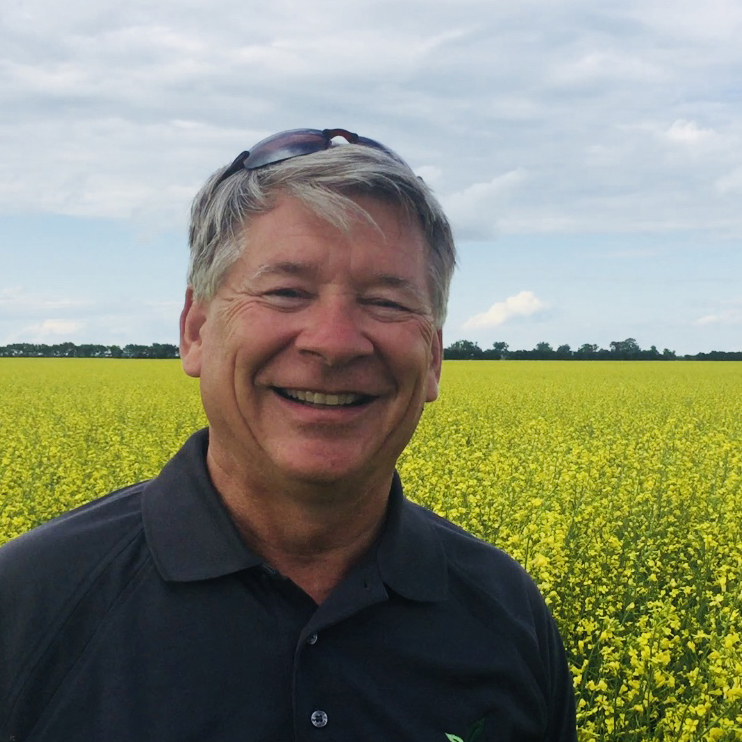
Robert Saik
Robert Saik has more than forty years of experience as a Professional Agrologist, entrepreneur, and international agriculture consultant, working with clients ranging from Nigeria's Minister of Agriculture to Bill Gates. A Distinguished Agrologist and self-described agriculture futurist, he has founded more than fifteen companies across farming, agri-retail, distribution, media, and agricultural technology, including the Agri-Trend and Agri-Data group of companies, which was acquired by Trimble. He was named Canadian Agri-Marketer of the Year in 2014, and his TEDx talk, Will Agriculture Be Allowed to Feed 9 Billion People?, has been viewed more than 150,000 times. In Food 5.0, he takes readers from the muscle era of farming to a future in which the convergence of sensors, robotics, and machine learning makes sustainable agriculture achievable.
📚 Books by Robert Saik
Transcript
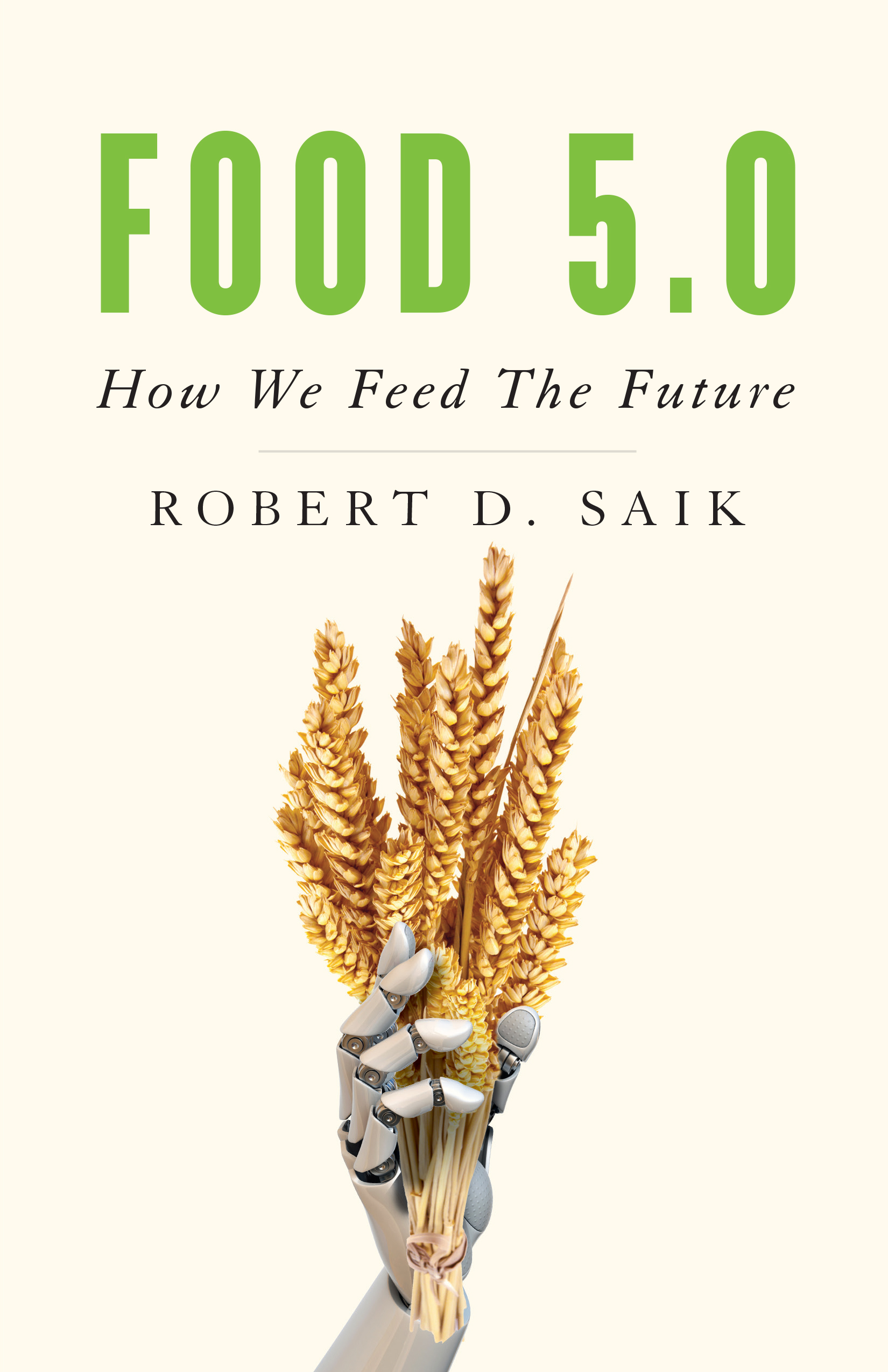
[0:00:18] CH: What’s up everybody? You are listening to Author Hour, the show where we interview authors about their new books. Today’s episode is with Robert Saik. He’s the author of Food 5.0. Now, food has become the new religion. While denominations like paleo and vegan and organic debate which is the right way, Robert believes that we’re ignoring a truth that effects all of us; that in order to support a population of nearly 10 billion people by 2050, agriculture must become infinitely sustainable. That’s what this episode is about. In order to feed the world, we have to grow 10,000 years' worth of food in the next 30 years, which means farmers worldwide must increase tier food production by 60 to 70%. In this episode, Robert is going to break down how that’s done. Now, Robert has 40 years of experience as a professional agrologist. He’s been an international consultant who has worked with everyone. From Nigeria’s minister of agriculture to Bill Gates, the billionaire philanthropist. Robert’s been hailed as an agriculture futurist with unparalleled insight into where the industry is headed. He is the CEO of DOT Farm Solutions, which supports farmers adopting autonomous robotics in broad acre agriculture. And he’s also the founder of AG Viser Pro, a platform that Uber-izes knowledge and wisdom, enabling farmers to instantaneously connect with agriculture experts worldwide. It’s a phenomenal episode, here it is, Robert Saik.
[0:02:09] Robert Saik: I think the pivotal moment of my life really came in the Middle East. I was working in the sulfur industry. Canada produces a lot of elemental sulfur from the petroleum industry that is then turned into fertilizer and we had to developed a process that was being investigated by some people in United Arab Emirates. And I was working in the United Arab Emirates, so we were invited and by sheik and we went into United Arab Emirates and one of the most strange things that I’ve ever encountered in my life was in a field of irrigated tomatoes where we were working with drip irrigation and using sulfur fertilizer to ameliorate the soil, in other words, to cause water to move into the soil in a good fashion and our fertilizer would help to do that very nicely, flocculates the soil and on the other side of the trees.
[0:03:06] CH: Flocculate?
[0:03:08] Robert Saik: Pardon me?
[0:03:09] CH: Did you say flocculate? I’ve never heard that word.
[0:03:12] Robert Saik: Yeah, flocculate means to loosen up soil, to make soil so that it can hold water. It’s a term that’s in agriculture and there was a row of irrigated trees that were there. And on the other side of the road, there’s a dirt road and in the dirt road, there were stakes down the middle of the dirt road with a rope separating the dirt road in half and I asked what the rope was for and one of the workers told me, “well, that’s where we line up the trucks, so we divide the trucks up on either side of the road.” And I said, “ well, for what?” They said, “well, that’s where we dump the tomatoes.” I went, “what do you mean dump the tomatoes?” I said, “we’re growing the tomatoes here, what do you mean dump the tomatoes?” On the other side of the road in a big hollowed out area in the desert, there were just these hundreds of thousands of pounds of tomatoes and I said, “I don’t understand, why are they there?” And he said, well, “we get paid to grow tomatoes, we don’t get paid to sell them.” That was one of the strangest moments of my life and at that point in time, I realized that a lot of the world didn’t make sense. So, these guys were getting paid to grow tomatoes, I was flown other to help them grow nice tomatoes, but they didn’t sell them, they just had an activity and ultimately, somebody else was paid to import tomatoes into the country and it was the most bizarre thing I’d ever seen. And I remembered that at that time, I had four young children and my family is back in Alberta, Canada and I looked at – I just thought, “well I don’t know what I’m doing here. I don’t know why I’m doing this.” At that moment, I made a decision to come back and to start building my own companies that would reshape how we worked with farmers and how we can provide support and leadership to agriculture. From my perspective, that moment in the desert where I’m growing tomatoes and in the other side of the road, they’re dumping tomatoes in the desert, which is very strange story and you can’t make that stuff up, Charlie, that was my pivotal moment that really led me on a journey to provide clarity and start to provide leadership in the agricultural sector.
[0:05:18] CH: Wow. Yeah, that is really bizarre. So, you’ve written another book before this, Rob. How is this book, Food 5.0 different? What is the update that you have for readers?
[0:05:35] Robert Saik: In the first book, The Agriculture Manifesto: 10 Key Drivers that will Shape Agriculture in the Next Decade, which I wrote in 2013, 2014. That book was really about silos of technology that were going to hit agriculture and it was written for the largely for the farming community. Food 5.0, How We Feed the Future is different in a few ways. Number one is, it was written for an urban audience, more so than a farming audience and so my mental image of who I wrote the book for was a 33-year-old mom in a city with some kids that she’s working and raising. So, the book, Food 5.0, How We Feed the Future was written for an urban audience and it also covers the five iterations of agriculture. I take you through a journey from the era of muscle and I cover of the first four iterations in the first part of the book and the second part of the book is really about convergence and whereas in the first book, I talked about technologies as an isolation. We live in a time now where all the technologies are smashing together, we’re converging on the farm. To reshape the farm in ways that urban people just simply do not understand and is happening at a break neck pace and farms are far more sophisticated, far more advanced than people realize.
[0:07:06] CH: Wow, okay. So, let’s pretend I am an urban listener and I’ve got other things I’m thinking about. You know, I’ve got bills to pay, I got my job, I’ve got my kids, why should I really care about Food 5.0. What are the stakes for me?
[0:07:26] Robert Saik: Well, the first thing Charlie is you should realize that by reading the book 5.0, you’re going to realize and learn a lot about food production and a lot about marketing. For example, most of the time, when you see the Non-GMO butterfly sticker on a food label, most of the time, that’s a lie. It’s lying to you. And the reason that I say that Charlie is because, when you see a non-GMO butterfly logo on pasta. There is no genetically engineered pasta, when you see a non-GMO sticker on maple syrup or you see a non-GMO sticker on spinach or you see a non-GMO sticker on avocado oil, all of that is deception. Because there is not genetically engineered avocado oil. Those stickers are pulling dollars out of your pocket based on fear and false marketing and the other one would be an example of organic where you would think you’re buying organic food because it has not pesticides. Well, that’s ridiculous. Of course, there’s pesticides used in organic production; they just happen to be organic pesticides. And again, this is something that people don’t seem to rationalize in their head. The book talks about food production in various different kinds of regimes or systems. The first thing that I’m trying to do in the book is I’m trying to reduce your fear of when you're shopping in the grocery because you don’t need to be fearful of food and it comes from lack of understanding about how food is grown and the integration of science in agriculture. And secondly, I’m trying to educate the consumers as to how much deception there is on food shelves.
[0:09:11] CH: I couldn’t agree more with what you just said. There is - the labels on food. It’s almost staggering how much they can sort of manipulate reality to the benefit of the company.
[0:09:27] Robert Saik: But labels are interesting. I mean, people who have celiac disease are genuinely sensitive to gluten and fair enough, there is an example of a label that does some good. However, it’s taken to the absurd at times when you see a – a gluten free lettuce or gluten free rice. So, at times, labels are important because they protect the health, but when they start to spin the story that’s untrue or false or creating unnecessary fear. I mean, how many of the listeners right now are fearful of GMO’s, they don’t know what it is, they don’t understand the science, they think that because there’s a non-GMO sticker on this bottle of avocado oil, somehow, that’s better than a GMO avocado. There is no GMO avocado and even if there was, you shouldn’t be afraid of it. This is one part of the book Charlie. It’s just one part.
[0:10:25] CH: Got you. So, let’s talk about the first part of the book and get into the era of agriculture. You have the five areas which are muscle, the machine era, the chemistry era, genetic engineering and then finally convergence, which is where we are now or that’s where we’re going to be.
[0:10:47] Robert Saik: That’s where we are now and we’re headed in, we’re just moving into the convergence era right now.
[0:10:52] CH: Got you. What are some of the key points you want listeners to take away from this first part of the book?
[0:10:59] Robert Saik: Well, the first part of the book is a journey through the era of muscle. So, you know, call it 10,000, 12,000 years, ever since we started to really have agriculture by moving from hunter gatherer to agriculture, where we raise crops and livestock, that was initially the era of muscle. Whether it was man or oxen or horse, that was an era that we lived in for millennia and it was a very brutal and harsh world that really didn’t start to see change until the 1800s when mechanization came in. There’s a lot of people out there who talk about and preach that we should be one with the land and all this kind of stuff. That’s fine, but when you, if you’ve ever tried to harvest half an acre of potatoes by hand, you soon realize the era of mechanization beats the crap out of harvesting something by hand. And then when you move that into discussion about we could talk about farms of consequence, farms that produce the bulk of our food, it causes you to think. And so, the era of muscle is a romanticized era that really can’t feed the world and if you’re farming and your farm is a muscle farm then you're really a subsistence farmer. That’s not where we want people and it’s not how we feed people, it’s now how we feed the future.
[0:12:31] CH: Talk to me a bit about 5.0. Let’s go in a little bit deeper. What do you want people to really know about convergence where we are now and what do you want them to take away?
[0:12:44] Robert Saik: Well, again, we started in the era of muscle, we moved to the era of machine which people would grasp pretty quickly, the era of chemistry is really the year of Haber Bosch or the fertilizer process and chemistry that we used starting in the mid-50s in agriculture. But the earliest chemistry actually was organic chemistry. So organic pesticides such as pyrethrin from chrysanthemums, they still use today as an insecticides or elemental sulfur or Bordeaux mixture, which is sulfur with slaked lime that they use in organic production. That’s the era of chemistry and the fourth iteration is the era of biotechnology, the era of genetic engineering, which actually is the era of less chemistry, used to grow crops.
[0:13:32] CH: Mind if I pause you there?
[0:13:34] Robert Saik: Yeah, no.
[0:13:34] CH: Because less to produce food? That’s surprising.
[0:13:39] Robert Saik: Well, again, people think that genetic engineering is synonymous with more chemical use, that’s exactly the opposite. And the greatest example I could give to you is the reduction of insecticide use because we have a genetically engineered BT corn or cotton or soybeans. We don’t use indiscriminate spraying of insecticides anymore because genetic engineering allows the plant to build up its insect resistance inside the plant and so we don’t have to use indiscriminate pesticides. Glyphosate is all over in the news right now. However, when you compare weed control in the 70s or 60s or even the early 80s. We put pounds on ground of active ingredient to control weeds and crop and today thanks to glyphosate, we’re using a pop can over a football field. And that is a story that most people don’t understand. And so, when you talk about GMO or genetic engineering, it doesn’t result in more active ingredient per acre to grow a crop. It results in less, much less active ingredient per acre. A quick update for you Charlie, is like cotton. Cotton in one time took up to 24 pounds of active ingredient per acre to grow a cotton crop and fight all the bull worms and all evils and all the pests associated with cotton. We are down to four pounds of active ingredient per acre. And so that’s all because of genetic engineering. Again, people don’t know these things.
[0:15:24] CH: Why don’t we know them? I mean I know we live in an era of sensationalist news and fear mongering and everything, but it seems surprising that they wouldn’t know that dramatic of a decrease in chemistry.
[0:15:39] Robert Saik: Well we have social media that is prevalent and there are lots and lots of people out there fear mongering about food and if you scrape away and scrape away and scrape away a lot of it is backed by people who want to charge more for food. They’re telling and selling a story of the consumer. If you take Danone for example, they talk about non-GMO dairy products. Well, every cow of it eat something has to de-nature the corn in its four stomachs, it’s rumen system. So how does a corn whether it is GMO or non-GMO, how does that affect the yogurt? It doesn’t. It’s a label and so if you are going to try to charge extra money to a mom who’s convinced that she is going to pay extra money for this non-GMO yogurt, you better create a fear story around it and that is what is being done in the marketplace.
[0:16:37] CH: You know this really resonates with me Rob because I had a very intelligent science minded friend school me on GMO’s and I had totally bought into the fear around them and wanting to purchase organic and stay away and it puts you on edge. And I was so thankful to him for doing exactly what you’re doing, which was just dispelling all of these myths and I don’t know if you could even call them lies, but dispelling these myths and giving me a much greater – Yeah, distortions, giving me a much greater sense of peace with food and I’d imagine it’s very frustrating to know what you know and to see people who are on edge and terrified giving the wrong thing to their kids when you know that it’s actually, “hey, it is actually perfectly safe.”
[0:17:36] Robert Saik: You know the book really has two central themes to it. One is that, regardless of your food religion whether you are a vegan or a paleo or an organic or regenerative or agro-ecological, whatever that means or conventional or GMO or non-GMO. At the end of the day in the next 30 years we have to produce 10,000 years’ worth of food. Every area on the planet has got to increase food production 60 to 70% and so as long as we have people on the planet Charlie, we have to ensure that agriculture’s infinitely sustainable. And when you consider the sustainability issues around agriculture, they would come down to soil, water use efficiency, greenhouse gas balance, animal welfare and everybody misses the most important one, which is farm viability because without farmer viability, you do not have sustainability. And so, the book talks about what are the factors in terms of our evolution of agriculture that lead towards infinite sustainability? Because that is the important thing. Set your religion aside and let us have a discussion around the science of soil and health and what would make soils healthy. Well, reduction and tillage would make soils healthy. So, as an organic producer, how do you keep weeds out of your soil? Well, you have to use a lot of tillage in most organic situations. Well, what does that do to soil and what does that do to long term sustainability and how does that compare to a pop can over a football field? In terms of greenhouse gas balance and reduction of tillage, improving soil health, how do all of those things all stack up? Let us have a conversation around the science and not the rhetoric.
[0:19:36] CH: So, part two of your book is particularly fascinating. This is the thing that I think is going to have the greatest impact and influence on people and I mean I know; you have done this for 40 years. You have worked with everyone from Nigeria’s minister or agriculture all the way to billionaire philanthropist Bill Gates, who is very active in the space of feeding the future. I want listeners to pick up a copy of Food 5.0 so that they can actually really dive into this part and take it all in, rather than just getting a soundbyte. However, I do want to give them a little bit to chew on, pardon the pun, what would you say is the big idea in part two? I know you gave a bit of a summary just now, but what do you really want people to take away from part two?
[0:20:25] Robert Saik: What people don’t realize is that at farm levels, especially farmers of consequence and what I mean of that is farms that produce 80% plus of our staple food. The statistic bantered around a lot is that 2% of the 370 million people in Canada and in the United States, 2% are farmers. That’s totally incorrect. They may be hobby farmers, but farmers of consequence actually are 0.2%. This morning as I tape this with you, I am sitting in an office in Northern Saskatchewan on a 14,000-acre grain farm. And this is a farm of consequence, they make their living from farming. They produce a tremendous amount of food. And the number one constraint, Charlie, at farm level is qualified farm labor. We cannot find enough machinery operators to operate the equipment. Yesterday I was with the Rural Bank of Canada who was talking about an estimation in the next 10 years, we’re going to be short 123,000 workers in the agricultural sector and it will cost our country Canada 11 billion dollars in GDP, lost GDP because we don’t have qualified workers. So, one of the areas in the second part of the book that I want to talk to the readers about is convergence and I am CEO of a robotics company called DOT and DOT is autonomous robotic farming for broad acre agriculture. DOT is named after the owner’s mother, Dorothy, who is a multi-tasker. and so, we’re bringing DOT into the marketplace and it is an example that you cannot have DOT working on a farm unless you have a convergence of technology. You need to have great cellular connectivity. You have to have internet connectivity. You have to have GPS and GIS. GPS guidance that you use in your car. You have to have GIS, geographic information systems. You have immense computing power. You have eyes on the robot, which are folder metric of cameras. You have radar and LiDAR and then you have what we are moving right now, which is machine learning, which is part of artificial intelligence, which you hear a lot about. And those things are all mashing together in one technology called DOT for example. So, there’s an example of where I want to take the readers of the book is to understand the degree of sophistication at farm level today. It is not uncommon for farmers to have four or five computer monitors in the cabs of their tractors or combines right now. That’s is not uncommon at all.
[0:23:18] CH: The book is Food 5.0. I’ve got a couple more questions for you Rob. The first one is, you’ve been doing this for four decades now. What is your proudest accomplishment or the thing that you are most thrilled the impact that you’ve made, what would you say that is?
[0:23:35] Robert Saik: Well, starting in 1997 through to I began building an organization called Argi-Trend and Agri Data, which was a data platform. And we built that organization to provide leadership to farmers through agri-coaches and these agri-coaches were independent consultants. So basically, I provided the framework and built the leadership team and the data structure to provide leadership to farmers through agri-coaches. We have hundreds of agri-coaches through North America. Working with thousands of farmers on millions of acres and we were looking to expand that and locked eyes with Trimble, the Silicon Valley company out of California and we sold Agri-Trend to Trimble. Our data system now is global in 15 languages, which gives me an immense amount of pride and the legacy of Agri-Trend was all of these independent coaching businesses all over North America that now continue to provide leadership to farmers. Since then, in addition to being CEO of Dot, I launched a brand-new company last week called AGvisorPro and AGvisorPro is really built on the legacy of Agri-Trend and it is the uberization of knowledge and wisdom. In other words, we provide instantaneous connectivity between farmers and experts in real time. So, my proudest thing I think I’ve done in my career is to build an organization that’s really influenced millions of acres of farmland and really change the mindset of a whole lot of people, foundationally on agriculture, dealing with agronomy, dealing with position agriculture, dealing with data. That was pretty cool and now I am onto the next iteration.
[0:25:25] CH: That’s amazing. Gosh, I am sure many listeners feel the way I do, which is thank the Lord people like Rob exists and are working on this problem! So, two final quick questions, the first is what is the best way for listeners to either follow you or potentially connect with you if they want to learn more or dive into this industry?
[0:25:48] Robert Saik: Yeah, I think the simplest ways just to go to my personal website, which is robertsaik.com and on Twitter is just @RSaik. So just @RSaik on Twitter. I am pretty active on both of those platforms. The website will give you a deep dive into my biography and the work that we’ve done and the number of enterprises I am involved in. I am partners in a 5,300-acre farm in Uganda. So, I have a pretty good idea what is going on in Uganda, Kenya, Nigeria, those parts of the world and as well as Ukraine, Russia, Brazil, Argentina and Australia. So, people following can go to that website.
[0:26:38] CH: Perfect and the final question is give our listeners a challenge. What is one thing or idea that they can take from your book and have a positive impact on their life this week?
[0:26:51] Robert Saik: I think that urban people need to reach out to a farmer and I am not disparaging against small acreage or farmers that are on the edge of cities and stuff, but I would encourage your listeners, our listeners to reach out to a farmer of consequence. Somebody who is like this operation today lingering farms, the 14,000 acres, three generations raising four children in rural Saskatchewan, making a living here. I see so much pain in the eyes of farmers today because they work so hard and the risks are so great at farm level and it is noble work and yet the media is vilifying this family farm because somehow, they are trying to what? Poison the world? It’s preposterous and so the pain I see in the eyes of farmers today because we are always proud in the work we do and now if you are a large farming operation, people label you as some kind of an industrial corporate farm when you are really a family, running a corporation that happens to be farming. And so, I would encourage the listeners to reach out to a farm just go to Twitter handle and go #farmer and talk to a farmer, talk to somebody who is farming. Learn more about agriculture production and where your food comes from and that’s really why I wrote the book. I hope that people pick up Food 5.0, How we Feed the Future and really learn how we will feed this future.
[0:28:29] CH: The book is Food 5.0. You can get it on Amazon now. Rob, thank you so much for being on the show and for doing the work you do.
[0:28:38] Robert Saik: Glad to be on the show, Charlie, and thanks for the interview.
[0:28:42] CH: Thanks again to Robert Saik for being on the show. You can buy his book, Food 5.0, on Amazon.com. Be sure to check out authorhour.co for show notes and a transcript of this episode and take a second to leave us a review on iTunes. It means a lot.
Want to Write Your Own Book?
Scribe has helped over 2,000 authors turn their expertise into published books.
Schedule a Free Consult