Marie Wiese: You Can't Be Everywhere
Read the full transcriptMarie Wiese
Marie Wiese is a marketing strategist and the founder of Marketing CoPilot, with more than thirty years of experience in the technology industry. She is the author of You Can't Be Everywhere, which won a Gold Stevie Award for Best Business Book, and she was named Executive of the Year in the marketing category at the same awards. A member of the Forbes Agency Council, she helps businesses become savvier marketers by setting clear goals, using data to inform their content, and making the most of social media.
📚 Books by Marie Wiese
Transcript
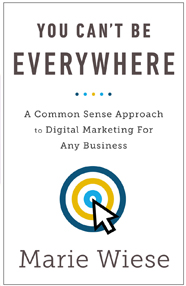
[0:00:28] Charlie Hoehn: You’re listening to Author Hour, enlightening conversations about books with the authors who wrote them. I’m Charlie Hoehn. Today’s episode is with Marie Wiese, author of You Can’t Be Everywhere. Do you feel frustrated because your website just doesn’t convert visitors to buyers? That’s what Marie helps companies with. She believes that there are five key things that every website has to have in order to get people to buy. One of the examples Marie gives is Casper.com. And she breaks down why their marketing is better than every other mattress company in the industry. By the end of this episode, you’ll be able to avoid the big traps that lead to business and product failures. If you’re selling anything online, or you’re running a company, you don’t want to miss this episode. Now, here’s our conversation with Marie Wiese. All right, well Marie Wiese, if you had to pick a drink or a cocktail to go along with your book You can’t be Everywhere? What would that be?
[0:01:38] Marie Wiese: What an awesome question. I have just been taking bartending classes and I’ve become quite the mixologist. I’m not that great yet but I like to fancy myself a great cocktail maker. I’m going to get the name wrong so I apologize, I think it’s The Devoni, anyways, yes. It would be an elder flower syrup mixed with probably gin and some lime and topped with prosecco.
[0:02:09] Charlie Hoehn: Wow.
[0:02:09] Marie Wiese: Yeah, how do you feel about that?
[0:02:11] Charlie Hoehn: That is the best answer I’ve gotten so far. You know, I asked one author what his drink would be and he said water and it just took me so much by surprise that he said that, I was like, that’s a refreshing answer. But this tops that for sure. The Devoni?
[0:02:29] Marie Wiese: Yeah, actually, I will, I have it posted on my Instagram account, I’ll go back and refresh my memory at what the — but I remember, I was making this cocktail when I was right working on a particular chapter. I feel that was appropriate. To be honest, it’s an old school cocktail, it’s not newfangled, it’s been around for a while, I think it had its days even back in the 20’s and I think the reason I’m saying that even though it sounds kind of complicated, it’s not. Because a lot of what I have in the book is just common sense kind of old school marketing applied to a digital era.
[0:03:05] Charlie Hoehn: Yeah. If I went to a bar and I ordered the Devoni, would I get a blank stare from the bar tender?
[0:03:13] Marie Wiese: I don’t know, it depends, if you were in New York City, probably not. Maybe if you were in the hooters in Gurnee Illinois, maybe.
[0:03:23] Charlie Hoehn: Right. Thankfully I’m not there.
[0:03:28] Marie Wiese: Yes.
[0:03:29] Charlie Hoehn: All right, Marie, I’m curious about your personal transformation, I want to go to the moment where you realized you were facing this problem and that ultimately resulted in your can’t be everywhere. Do you remember a particular moment or period in your life that started laying down the foundation for this book?
[0:03:56] Marie Wiese: Yes, I can tell you very specifically that moment. Funnily enough, that moment was probably the days and weeks after 9/11 and I know that seems odd but I’ll tell you quickly the story leading up to that. I had left a large corporate job with one of the major banks in Canada which also owns a bank down in the united states and I was working in a corporate job in the late 90’s in Corporate banking and I got recruited from there to go join what was essentially my first entrepreneurial experience and it was not a startup but it was a software company in growth mode and the company was filling out its management roster and I was brought in a sales and marketing function. I was part of the team that helped the company raise about 25 million dollars to start building out the business plan and the company down in the US market particularly on Wall Street. A bunch of things happened in the evolution of being part of that team and part of that job. A perfect storm of the .com meltdown in the late 90’s, early 2000’s. 9/11 which devastated some of our anchor clients down on Wall Street so that what we were doing to do proof of concept and test out the product down there kind of fell apart overnight. The preferred shareholders wanting their money back. There was sort of a fire sale of the company and in that experience and in that moment, I realized as vice president of sales and marketing that there was not a great structure A for, confirmation of value proposition within the business, it was just this hype and run up to what was going on in the text sector of everything has huge multiples because it’s technology. To realizing as the head of marketing that there really wasn’t a foundation that could be laid down to properly implement a solid B to B marketing plan that was just based on a series of tactics. As I was exiting form that experience and wanting to start my own business, that’s what laid the foundation for what is the framework that you need really to help a business launch, grow and evolve. Particularly from a marketing perspective and it wasn’t just throwing money at it was going to help, it had to be a foundation that could be constantly tested and evolved and that’s when my journey began and it was really interesting because at the time, it was when the internet was really starting to take off as an important business tool and the business to business sector. People would say to me in the late sort of 2009 and 2010, 2011. Nobody goes to my website before they buy anything. They’ll never look at my website, I’m not an ecommerce company so my website’s irrelevant. Even as late as that and then suddenly this huge tipping point happened with social media gaining in popularity and a whole bunch of things and suddenly business owners were coming to me saying, “Oh my gosh, my website’s terrible, how do I fix this problem.” That’s where the foundation of what I had been doing all along really started to pay off in the structure that could be brought to new age marketing and that’s in that journey of doing workbooks and workshops and teaching people the methodology and putting it all together, that’s when I had really started to realize I needed to document it as a book but I had two or three failed attempts before I got to the book that you're seeing now which was great because failure always teaches you things. That’s sort of how all of this came about.
[0:07:48] Charlie Hoehn: Okay. I want to rewind a little bit. After 9/11 happened, you kind of saw through the bubble so to speak, you saw through the hype that surrounded tech and everything sort of fell apart. You started this new company right? Where you were focused more on delivering value for business to business and being able to get their businesses online, am I saying that right?
[0:08:16] Marie Wiese: That’s correct, yes and the main take away for me from the last sort of full time job I’ve had which was that technology company experience was that without a solid value proposition, without a really solid how we’re going to describe the product and get it to market without a really solid plan which it is now evolved to be a solid digital strategy. That was the journey I started to travel which helped me document process and then help me be able to tell the story in this book.
[0:08:48] Charlie Hoehn: Got it, some people, when they hear the phrase value proposition, it makes them cringe a little bit because it sounds like a business school phrase right? Or can you explain what you mean by value proposition and what you would actually do to prove that something has value?
[0:09:06] Marie Wiese: That’s a great question and when I run workshops at the beginning of the process. Here’s how the world works today. I am a buyer looking for either something for myself personally or something for my business and the first thing I will likely do if I haven’t asked a colleague or gotten a referral is go online and start searching for information to help me in the buying decision making process. When I see something and I search for something and I land somewhere in this world we live in today, we have eight seconds or less to compel somebody to want to take a next click and do something. Generally that has to be anchored around why should I do it, why should I buy it, why should I care about this? At the end of the day, that is value proposition. Whether that’s a value proposition as a result of an ad word campaign, as a result of a home page, whatever. You have a very limited time in this day and age to get somebody to say why should I choose this, why should I pick this? I think a lot of companies don’t do a good job when you hit the home page of their website of saying, this is why you’re going to stay here and this is why you’re going to choose me or at least short list me. My definition, my personal definition of digital marketing is, it’s about reaching out to people in a human way online to see if your value proposition resonates with them. It’s reaching out to people in a human way online to determine if they will choose you. That choose you doesn’t necessarily mean I’m going to buy from you right this minute but do I want to start a relationship with you to get to know you and understand why I might buy from you down the road. I think it’s very simple, it’s very basic but a lot of people forget this because they’re caught up in the glitz and glamour of online stuff and the new age of what we’re doing today, they’re forgetting the human element of this.
[0:11:05] Charlie Hoehn: Give us an example then of either someone you’ve seen or someone you’ve worked with or a company that did a terrible job of this at first and then you guided them to a better, more human place where their value proposition or I like to think of it as their story, in their brand, what do you see within — I think it’s the first three to five seconds. Eight seconds is pretty generous with today’s attention span so can you give us the before and after of what you’ve seen of a good example?
[0:11:41] Marie Wiese: Yeah, I’ll use one that isn’t terribly sexy, we work with businesses who sell to other businesses, a lot of people in technology manufacturing professional services, it’s stuff that’s complicated and maybe not completely easy to understand at first blush but we were working with a company that manufactured casters. Imagine a piece of equipment that has to be moved from point A to point B, it needs wheels on it. This company had been around for a long time and it had a patent on a pretty interesting technology solution within the caster itself. When I first started working with them, all they wanted to do was have this website with product information about casters and driving people to say do you need casters? The real value in what they offered was understanding the design of a product and providing a caster solution that made that product overall much better and so I’ll give you an example of a product. The product was a hospital bed. Imagine you’re a hospital worker and you have to move this hospital bed from point A to point B and it doesn’t move well and it gets stuck. It isn’t mobile enough because of the caster design. They would work with people manufacturing these types of products to ensure that they thought about the movement of the product and the caster itself. All this traffic is going to their website of people wanting to put 50 casters in a cart and check out, much like you would on home depot’s website and it was all the wrong people, it was the wrong audience and it was a bunch of people that they didn’t really want to talk to because these people didn’t really care about the design of products, they just wanted cheap casters. After working through the value proposition, why should I buy from you? Working through a really good sound key word strategy around it, we were then able to completely change the conversation to the ergonomics of good design and we started to talk to the market place about that and create content around that and ergonomics, guide to ergonomics in the work place, it wasn’t about the casters anymore, it was about what happens to a worker when they hurt themselves because something doesn’t move properly. We changed the story and by changing the story, it changed the audience who came to them and it changed the human ability to say I’m interested in this. This isn’t just about a cheap product, it’s about understanding the whole process and we were able to do a really great job with this company in bringing the right types of customers to want to buy from them because we changed the story and the value proposition.
[0:14:19] Charlie Hoehn: Is it fair to say that it went from being all about the product to being all about the customer?
[0:14:27] Marie Wiese: Absolutely, you're bang on. That’s exactly it.
[0:14:30] Charlie Hoehn: Okay. What are some — you don’t have to name names but well actually, it would be more interesting if you named names. What are companies you see now that are not doing this well or are doing this exceptionally well?
[0:14:46] Marie Wiese: I’ll use a couple of examples and I think most companies today can do a much better job of being customer centric as supposed to product centric and I guess one of the ones who I’ve seen involved over the years that I think was always features and functions and there was even an ad campaign around this. Apple went head to head with Microsoft and kind of accused them of being all about the product and not about the outcome of what you can do with it. I think that’s probably one of the best examples today of companies that have taken completely different approach to that problem where apple is very customer centric around the vision of what you're going to do with their products and Microsoft is very much about features and functions. I’m seeing some really interesting businesses evolve today, particularly that are starting out as online business and the one that I’m really impressed with right now of what they’re doing and I think this is a great example for people to check out is Casper. Who would have thought you could have built a business around selling mattresses online? But they’ve done that and they’ve done it successfully by raising awareness, by talking about what it means to get a good night’s sleep and tying themselves to the story of sleep and getting a good night’s sleep and people who are talking about sleep, like you know, Arianna Huffington and her book Thrive. They’ve connected with some pretty important content strategies to get the awareness of the fact that they sell one mattress, they’ve invested a lot of engineering time to figure out how to create the best mattress. They ship it to you in a really unique way and if after a hundred night’s sleep you don’t like it, you just send it back. This is not just an interesting delivery of the product but the process of how they’ve marketed it, the value around what they’re describing and what you get for it and the way in which they talk about the product is really interesting. I think it’s a great thing, it’s a great example that we can look to say, what can our company learn from that? I think that’s a great one where that’s about the customer, not about the product itself.
[0:16:55] Charlie Hoehn: Yeah, let’s actually look at it and talk about it. I’m looking at Casper.com right now, the main headline is really good actually, it’s live the dream, the perfect mattress, sheets and pillow for everyone. The call to action is shop the mattress and I mean, it’s clear that the product is a mattress, it’s a unique shot. What on here where it’s a unique product photos. What on their website really stands out to you that a normal mattress company would be screwing up?
[0:17:28] Marie Wiese: Well, actually, what really stands out for me is what’s happening not on the website and they could have done what other retailers do which is to really just mass blast and mass market locally. Come buy our mattresses, this weekend we’ve got a promotion, 20% off, come in store, buy the mattress now, you’ll also get a box spring but they’ve chosen not to do that, they’ve chosen not to try to be everywhere with this broad message and hope that somebody goes, “Oh I need a mattress, I’ll come in.” They’ve been very purposeful in what they’re doing outside of the website and as I mentioned, they’re connecting themselves in their story with places where people are talking about sleep and the importance of sleep and the value of sleep as a health issue. You’re finding from their ad targeting and what they’re doing in social media and where they’re attaching themselves to stories online is all in and around that very specifically and the assumption, being that if somebody cares enough to be doing research on sleep, that they’ll likely get to a point where they’ll talk about their sheets, pillows and mattresses. Instead of just mass blasting adverting about buying a mattress, they figured out the right places to be. I think that is then what drives back to a very solid website and a very solid strategy on that website. It’s what’s happening outside the website that’s very interesting.
[0:18:57] Charlie Hoehn: That’s fascinating.
[0:18:59] Marie Wiese: yeah, I think you know, here’s what I’m seeing and I think the bottom line for any business small or large is that competition today is fierce and instantaneous, there’s a lot of clutter, it’s hard to break through the clutter and it’s very difficult to get somebody to say I want to learn more, I want to understand. How often do you see learn more on a website and how often is that button actually clicked because if you haven’t set up the story and the point properly at the beginning, nobody’s going to want to learn more. It’s really about taking micro steps in the value proposition journey to get somebody to take the next step and say yes. It doesn’t move from point A to B anymore of you know, I need a mattress, here’s my choices, I’ve bought this. There’s just so much research and information that people are doing and ways that people are going to search and check for this and it’s very interesting trying to carve that out. It’s also frustrating for a lot of businesses. A lot of people have a very difficult time with this and so that’s why I hope that the methodology and the process that I’ve described in the book will give people some guidance and just give them some comfort knowing that there is a different way to tackle it and not feel like it’s overwhelming to try to boil the ocean and be everywhere.
[0:20:27] Charlie Hoehn: Yeah, this is a huge temptation of every single author I talk to is to have their book be everywhere when it’s released. I spoke to an author just the other day where I was really frustrated trying to explain that it’s far better to show up in somebody’s social media feed or their inbox or in conversation 10 times for a thousand people than it is to show up once in front of a million. That was a really difficult message to get through. How do you reel businesses in telling them, look, you can’t be everywhere, how do you fixate on the key people, their customers, that they really need to focus on?
[0:21:17] Marie Wiese: First and foremost, by doing a buyer persona and a buyer journey map about what the customer’s actually doing in the decision making process and in the path to wanting to purchase something, not enough marketers and companies have used this in the past and I think they’re really starting to understand the importance of this. Secondly with data and this is another area where I think enough, there isn’t enough marketers or companies really going back to data. Often times, we get asked as an example, you know, I want to rip apart my website, I want to blow it up, I don’t like it, it’s not working, I want to change it and the first thing I say to them is, what is it that you expect your website to be doing right this minute and how is it working right now and what data do you have to back that up? When you start to dig in, you help people really understand whether they are in the right frame of mind or understanding the process to make a change and I always say to people, don’t make any changes until you have really good clarity on what you’re trying to accomplish and how you’re going to track and measure whether you’ve accomplished it. I think that in the example you just used, the same thing can be applied. If you get in front of a million people once, what do you expect to happen as a result of that? Do you expect people to go to the website, do you expect people to buy the book, do you expect people to like you, hear about you, understand you?
[0:22:45] Charlie Hoehn: Their expectation by the way is always — it’s going to put me on the New York Times bestseller list and then all this amazing things are going to start happening to me, the world’s going to be the path to my door sort of thing.
[0:22:57] Marie Wiese: Right. The question I ask people when they are under that illusion is, if you went out for coffee with somebody and they asked you to marry them when you were out for coffee, would you do it?
[0:23:08] Charlie Hoehn: Well, probably not.
[0:23:11] Marie Wiese: You know, I speak a lot at events and I always ask that question and nobody puts their hand up, they’re like no. Well, you know, you don’t propose on the first date. If somebody’s going to make an investment in your book when they’ve got a million other choices they can make, they’re going to have to get to know you, you’re going to have to earn their trust and they’re going to have to get to know you. What are you doing on the path to getting to know you? Because just hearing about you once, unless what you're offering is just so killer that they just don’t have a choice. There’s a couple of authors in the past few years who’s title of their book or what I’m going to call their value proposition was just so compelling because it was either new or it kind of blew the doors of in old paradigm or whatever that yeah, people paid attention and they wanted to get it faster then maybe they would if there was other things. You know, those are outliers, those are few and far between, there’s not a lot of JK Rowling’s out there really at the end of the day. What we’re left with is having to get to know people and build relationships. That has to be done over time in a very strategic ways because you aren’t going to have the time, money and resources and author to be everywhere.
[0:24:26] Charlie Hoehn: Right. I want to ask you, what would you tell a business in terms of they have to get to know people and build relationships, here’s your strategy and then what would you tell an author to do if the strategy is look, you have to get to know people and build relationships with all your readers. How do businesses and authors go about in doing that?
[0:24:52] Marie Wiese: Well, I work with a lot of small and medium sized businesses so I’ll use that as an example because I know that often times, large corporate entities might have a slightly different approach to this but when I talk to people and I say, their website as an example, what do you want your website to do for you and they say well, I want people to land on it, I want them to contact me and I want them to buy from me. I say okay, well it’s a line from point A to point B, it’s not direct, the buyer journey bounces all over today and you know, how many calls are you getting on a monthly basis and it usually is anywhere from zero to maybe 20 and then I ask a question. Of those who are qualified buyers and I try to dissect it that way because what I’m trying to show people is, there’s a series of things that have to happen and you can use your website today for those steps to happen. Maybe the first step is just compelling content that somebody wants to download and it’s gated. Or maybe the first step is you’ve been actively — active editorial calendar and a really great message on a theme like the ergonomics of good design. Somebody wants to sign up for that and see what you have to say and what you’re going to write about over the next few months until they take a next step. Figure out what kinds of things you can be offering on your website or in your web presence that is more than just, are you ready to contact us? Because in our own lives, we probably know that the last thing we want to do when we’re making a purchase is talk to a sales person. We’re probably trying to self-serve and self-educate. Try to figure out what those points are where somebody’s self-serving and self-educate and serve that up in a way and a great example of this that I give to all my clients is — When a buyer is thinking about making a purchasing decision, whether it’s something small, whether it’s something large, there’s sort of five or six main questions that go through their mind. What is this, why would I choose this, is this for me, how would it work, what does it cost? Can I afford it? A lot of B to B companies and a lot of companies that I work with are terrified to have any kind of pricing conversation on their website. Now, I’m not saying that you need to put a price list up but if the third, fourth or fifth question in somebody’s mind is, what does it cost, can I afford it? Why would you not have that conversation some way, shape or form? A lot of people just forget that because they’re terrified, they think, no, you got to come to me first before I’m going to talk about price. Even car companies who I think become very sophisticated marketers online in the last five to seven years because they’ve had to out of necessity. They haven’t had a choice. You know, there’s a lot of car companies now who you can pick and choose your model, put it in the shopping cart and figure out what it’s going to cost before you ever walk into a dealership. I think Hyundai was probably the one who broke the model on that because they recognized that that was an important conversation so if we just make our cars cost what they cost and get rid of this whole thing that buyers quite frankly hate which is the haggling at the card dealership. Then we can present that information in a transparent way. I think one of the most important things that people are forgetting is that consumers today care about transparency, honesty and pricing is part of that conversation. I mean, just something even as simple as that in getting to know people. I think that’s important. I think for authors, I had a very smart man who worked with me at the beginning of the process and I highly recommend everybody finding someone like this, if they’re going to write a book. The book outline is so important because the book outline is what sets the stage for who is this book for, who am I actually going to market it to, who is going to care about this book? I appreciate that authors have something to say, they’re driven to write a book, it’s not for everyone, it’s every difficult but without starting there, instead of starting with the big idea, I’ve got this great idea, I want to write this book. Don’t start there. Because at the end of the day, it’s not really about the book. It’s about the marketing and therefore, start with who is this book for and why would they want to read it? Even if it’s only one person that you’ve modeled the content for and then you build the strategy around that one person and how you can go find more of them, that’s what’s going to make you successful. I think you’ve already hit the nail in the head thinking you’re going to write a book because you got this great idea and it’s going to be an immediate best seller is less than 1% of the market today. So do not start there..
[0:30:13] Charlie Hoehn: I totally agree with you, what I’m curious about Marie is did you ever struggle with that yourself? I mean, this is your first book, you can’t be everywhere, have you made things that you were thinking purely in terms of hey, this is an idea I had, I wanted to make it and then retrofitting who the customers going to be and why they’re going to care?
[0:30:35] Marie Wiese: Absolutely. I think I mentioned and I’m happy to share this that I failed the first two attempts or three attempts at this.
[0:30:43] Charlie Hoehn: Yeah, tell us about those?
[0:30:45] Marie Wiese: The reason I did is because I started out by writing quite frankly a text book, It was a how to, the very first attempt was as an eBook and each chapter was really on a monthly basis to my community on a topic that I thought was important in creating a framework for your marketing plan, your marketing strategy. It was targeted at business owners who were afraid to buy marketing services. It was why marketing fails and what you can do about it. That was the name of the book and this was the way I created the format for it. Over time, I got enough feedback via my blog and what I was doing in email marketing to recognize that people thought it was interesting and they liked what I had to say and it was prescriptive but they weren’t prepared to do it. They kind of acknowledged that I was right but just so what? You’re right, now what do I do? That led me to the next step of creating a series of workbooks and going out and teaching through workshops, the methodology and getting people ramped up on it and so I completely rebooted everything to be this series of workbooks and workshops. And then, it led me to say, wait a minute. People want to consume this type of thing as a story and yes they want to know what can I but they want to hear the story behind it, the thoughts behind it, the anecdotes that went with it because those seem to be the things that resonated really well when I was doing workshops with people and that’s then what led to the book. But even then when I arrived at the title of the book and what I wanted the book to be, I hadn’t done that work around but who is this really for and why will they care? And that’s where you really need to land quickly if you’re going to start to write and go through the effort of putting a book together because without that, you will struggle after the fact.
[0:32:33] Charlie Hoehn: Wow, I just want to thank you for having this conversation. It’s not over but from where I am personally in starting up a new endeavor I’m realizing how much this is missing from that and how important it is to go through. So just on a personal level, thank you for reminding me of this. It’s so important.
[0:32:56] Marie Wiese: Well I work with a lot of really staged companies and startups at a place outside of Toronto, Canada called The Innovation Factory and there’s a lot of really smart talented people all over the world. I’m particularly proud to be Canadian and think that we do an amazing job of developing things in this country but we’re not very good at sales and marketing. So we build things and as I like to say and I’ve spent 20 plus years in technology sector, we build things and we throw them over the wall to see who wants them and that’s not the way to go about it. Even if you’ve identified the gap in the market and there’s a need that’s missing and you’ve identified that gap. There’s still a ton of work to do to say who is it the person who actually needs this so therefore how should this be packaged? How should this be marketed? And the sooner you can figure out even the steps to be taking as a startup, the better because you’ll save yourself so much time, money and aggravation. Now it’s not cut and dry, it’s tricky and lord knows it’s very hard work and lord knows that building a product or service is a lot of hard work and if it was easy then everybody would be doing it but the sooner you can wrap your head around that even from a framework perspective, the better because it will make your success bigger in the end.
[0:34:17] Charlie Hoehn: Yeah so how much bigger has it made your success? You started off with text books that people didn’t really care about all that much then you taught workshops where people loved the stories and now you can’t be everywhere, what has the difference been between the three formats?
[0:34:34] Marie Wiese: Well even sometimes I have to take a dose of my own medicine and I was so excited when the book was published and I was holding it in my hand and I can see the finish copy but then it suddenly dawned on me because some really great advisers and people that I have been working with sort of pointed out to me, “So now the hard work starts” now the real journey begins. I’m like, “What do you mean?” they said, “Well now you have to do the heavy lifting to market it”. “And this is just the first one, you’re probably already thinking about your second book and, and, and.” It just kept going and suddenly I’m like, “Oh this is the journey now.” You feel like when you are creating something like a book that’s very definitive and you’re going to hold it in your hand, that’s the sprint to get to the finish line. Yeah but then the hard work starts and so I have to understand that and take a dose of my own medicine and say, “Okay now I’ve got to do the heavy lifting”. I am excited about that. I’m in a certain stage in my life where I can spend a little bit more time on this and for me this is a vision of my next 10 years as work and my work life but that’s the way I am seeing it. The next ten years and that might seem exhausting and overwhelming to people but you have to see it as a long term play. It’s not a short term home run by any mean.
[0:36:03] Charlie Hoehn: Of course. So tell us more about the long term play and the heavy lifting like what are you currently doing for book marketing? What’s working? What’s not working?
[0:36:13] Marie Wiese: Well I have to say that I’m a writer, I’m a visual person, I like to read stuff, obviously I wrote a book but we’re really seeing a lot of interest and pick up just through podcasting and things like that. So I’ve really sat down to think through my overall strategy and I am rebooting mariewiese.com which is the website that currently supports the book in speaking. We’re coming up with a bunch of new ideas around how we want to represent the content. But also new ideas of how we want to reach out to other people so that they’ll share the content or its value from them to be using the content in their network and so really that idea of the sharing economy and making that work, I am spending a lot of time on right now to figure that out and in the process of doing so, have been working with a gentleman who spent years in the traditional publishing industry and talking to him about how we helped authors. We’d like to do some work helping authors as well market what they’re doing and how to business, business writers specifically and how they get from point A to point B in their journey.
[0:37:24] Charlie Hoehn: Cool. So you mentioned you are seeing your interest through podcasting and figuring out how people can share this content. The top two ways that people find books are through a recommendation from someone they know and trust and number two now is podcast. So if you’re focusing on those two areas, that’s about as good as you can do.
[0:37:49] Marie Wiese: Well thank you, I’m glad to hear that and the whole podcast thing and kind of opening my eyes to it came about when a gentleman who I had talked to about the business of how you put together a podcast, it hadn’t occurred to me how important that content is to the person you’ve reached out to because now they can use it in a number of different ways and I think again, you have to reboot your thinking about a lot of these things. We tend to be very self-centered as individuals. In everything we do it’s “what is it for me?” is always the first thing that’s jumping to your head even when you land on a homepage of a website. What’s in it for me, why should I click here, what should I do next? But you have to think about what’s in it for the other person and I think that that as much I sometimes moan about social media because I think it’s time consuming and you can waste a lot of time doing the wrong thing. What social media at its core has helped us understand is the true form of sharing and what’s in it for the other person. That’s again what’s in it for the customer, the sooner we get our head wrapped around that, the more successful we’ll be.
[0:39:01] Charlie Hoehn: Can you explain what you mean by that? How is social media really revealed that?
[0:39:06] Marie Wiese: People who do extremely well in social media as a tool to extend their network and extend their story are true sharers. They are not seeing it as a broadcast mechanism and a couple of years ago and I even wrote a post Is social media in a business setting a waste of time? because I would get these business owners coming to me saying, “Oh yeah, we’ve got a Twitter account but we don’t get any leads from it” and I have to stop them and say “But that’s not the purpose of Twitter and social media”. If you don’t have a hierarchy for what these tools should be doing for you about awareness, understanding, connection, if you’re just seeing it as “Oh I am not getting any sales from Twitter then yes you are going to fail and yes that is not going to work for you and so just an older generation as well. To be fair, I think some of this is a little bit generational of what traditional marketing tools they might have used and what new ones have come about, they saw it as mass marketing. You have to step back and say, “No this is about sharing and connecting with people and getting to know people and seeing what they’re up to and sharing what they have to say and that’s how you are successful but if you just see it as a broadcast platform you are going to fail.
[0:40:23] Charlie Hoehn: Totally, what you just said reminded me of one of my all-time favorite books, Give and Take by Adam Grant. Have you read that book?
[0:40:31] Marie Wiese: I haven’t. I have to write that one down. That sounds interesting.
[0:40:35] Charlie Hoehn: It’s amazing. It was one of Oprah’s favorite books, one of Amazon’s top books of the year when it came out. New York Times, Wall Street Journal, all wrote about how great this book is and it blew me away because the basic premise of the book is that there are three types of people generally speaking. There are takers, matchers and givers and takers are only concerned with themselves. They’ll step on you on their way up the ladder. There are matchers who are much more concerned with reciprocity so an eye for an eye, if you give something to me I’ll give something to you but it will mostly be equal and then there are givers who are people who just give, give, give and don’t expect as much in return and the fascinating thing about this book is that givers are both the least successful and the most successful and takers tend to be just slightly less successful than them because they are only concerned with themselves. But a lot of takers end up shooting themselves in the foot because their behavior is not sustainable because eventually matchers will recognize that, “Hey that person is a taker” no longer will they get anything in return and so what you’re talking about is the dynamic that broadcast marketing used to be which was take basically. We would put our message in front of you and you will buy from us. It doesn’t work that way anymore and the people who are at the very top, who are going to win. And continue to win are the people in the companies that are true givers or like you call them sharers and connectors. I like to think of them as givers. What’s fascinating about the book is it shows the situations where givers tend to get destroyed. In certain industries if you go into charity type work, social work, being a teacher in a neighborhood that’s been destroyed by things like poverty and too much of the population being sent to jail and stuff like this. It’s an environment where a giver can never thrive and so givers have an extraordinarily high rate of burn out. It’s a fascinating book but anyway, I think that’s what the premise of what you’re hitting upon here is being a giver is what leads to thriving in this new age of marketing.
[0:43:15] Marie Wiese: Yeah, I think you’re bang on and I think being a giver who knows how to weed out takers really quickly is important and that’s just a savvy understanding of what you’re seeing and what you are consuming and I think the most recent I would say construction of marketing that we’ve witnessed came post second world war when demand…
[0:43:43] Charlie Hoehn: We invented teenagers?
[0:43:44] Marie Wiese: No but when demand outweighed supply. We didn’t have a lot of supply post second world war and things started to get manufactured in a mass production way and we had people being able to advertise refrigerators and everybody would want one and so that’s where our most recent understanding of the marketing paradigm has come from but we have to blow that up really fast because now supply outweighs demand. There’s a million ways to solve a problem these days and therefore and I love what you are saying about the philosophy behind these three types of people and just recently I was talking to somebody about givers and takers. I forgot there was this middle category of matchers and so I appreciate you bringing that forward and I am interested in this book because I think it’s really important to figure out quickly as an organization which one are you and which one are you as a sales and marketing organization. Because I work with way, way, way too many companies who are over weighted on the sales side. They’ve got five sales people and nobody in marketing because they just want to take. They want to take those leads, they want to sell something, they want to get out there, they’re commissioned structure is based on just getting out there and selling things and seeing who wants it now but if they could turn that around a little bit and be more about matchers and givers. And that’s what content marketing does, it allows you to share in a real way and test and measure who cares about that content. This is where businesses have to evolve too and they have to evolve quickly or they are going to die and if they don’t evolve to this idea of the makeup of their sales and marketing organization and a mix of those things, I am not saying that sales people are no longer needed. I think sales people are incredibly valuable but at the right time in the buyers cycle. And at the right place in the lead generation process but if that’s all you’re doing, you’re going to burn out your audience really fast.
[0:45:44] Charlie Hoehn: Yeah, it’s much more relational now than it’s ever been and being nurtured by these businesses and really feeling connected to the people behind them is more important than ever it seems.
[0:45:57] Marie Wiese: Yeah.
[0:45:58] Charlie Hoehn: So I want to go back to what are you currently doing for your book marketing? What are you doing to share and connect and be plugged into the conversations that people are having where they can start saying, “Oh have you read You Can’t be Everywhere?”
[0:46:15] Marie Wiese: Well last fall I worked on a training project for lack of a better word, with a gentleman out of Denver, Colorado. Really nice guy names Jason Connell.
[0:46:27] Charlie Hoehn: Oh man, he is one of my best friends.
[0:46:30] Marie Wiese: Oh my gosh, you’re kidding? Okay well how ironic, I did not know that. I didn’t see the connections there in social media. So my daughter works in our business. She graduated from university and started working in the business in digital marketing and I thought this would be a great project for the three of us to work on together that Jason would lead us through the process of building a speaking business for yourself and I’ve always loved public speaking. I get great feedback from people around the topics I present of which tent to be more prescriptive than storytelling and I am learning how to change that up a little bit because I always feel like if the person doesn’t leave one of my presentation saying, “Oh these are three things I could go back to the audience and start working on” I feel like failed someone. So I have to get over that. That’s a bit of my own problem so Jason was outstanding in helping us organize ourselves around the business of speaking. Because it really is, you’ve got to sell that as a solution to people and we really want to ramp up the speaking side of things because we know that when we go out and speak and we always donate 50% of the proceeds of the book that we sell at an event to the charity that is probably the best connected with where we are speaking. So we try to make it a little bit social enterprises from that perspective. We will build a workshop around the book. If somebody wants it, I have the health sciences foundation hired me to present the book and concepts in the book and teach the group how to do a few things from the book in a morning workshop where they bought 40 copies of the book, put it all together for the team and then we asked for reviews and feedback after the fact and again, that was all built into a workshop. I think that works really well. My book is a book for other businesses and solopreneurs. So we go out to a lot of small business events and we try to speak at that level and the speaking leads to book buying leads to coming to talk to us about our methodology whether they do it themselves or whether they want help. So for me it’s very purposeful in what it is doing for my business. If the next book I am going to write that I’ve already worked on the outline for and I’m excited about it because I have spent a lot of time working in women’s issues over the years. I’ll approach in a very different way and it will be about creating stories that other people can share and I will probably spend a lot more time in the social media side of things with that particular book than I have done with this but in this case, speaking and now what I’ve stumbled on in a really nice way is that the extension of speaking is podcast and how podcast can help with it. So I think all of those things together have helped me with the book a lot.
[0:49:25] Charlie Hoehn: Yeah, that sounds great. It sounds like you are doing quite a lot. How much has having this book affected the quality of those workshops, of the speaking, how much has it even affected your business? Is there a clear measurable ROI or is it hazy or what?
[0:49:46] Marie Wiese: I’m going to admit that it’s a little bit hazy right now and that’s because I think you really have to go through a full 12 month cycle to assess properly and I’m not quite at the 12 month mark. I won’t be until next October and I think by next October and I say that because I often times tell people to build their plan around what the sales cycle is based on the product or service that they sell and a lot of companies we worked with, there’s a long sales cycle that ranges anywhere from three months to 12 months to 18 months. In my own business, our sales cycle is easily 12 months by the time somebody has heard of us, gotten to know us, figured out they need us, brought us in to do a proposal actually kicked off a program. So I am going to give myself 12 months to really assess but I would say that personally, this is something I’ve wanted to do for a long time and I am very excited and proud of the fact that after a couple of failed efforts, I figured out how to do it and so I am very proud of that. I think that it creates a lot of credibility for us. We are in a very competitive space. Anybody can hang out a shingle and say they’re in marketing or say they are in digital marketing and the one I…
[0:51:03] Charlie Hoehn: Yeah including people who live in their parent’s basement.
[0:51:07] Marie Wiese: Yes and even a couple of years ago, it just kills me to see people positioning themselves as social media experts which really just meant they had their own Facebook and Pinterest account and it didn’t mean that they understood. Our process and methodology can be applied to that but they never had a structure and I even had lots of clients who came to me and said, “Yeah we hired a social media person. We didn’t get anything for it.” I’m like, “Yeah, no kidding because you were looking at it the completely wrong way.” So I am very proud of that that I think that it really does set us apart from what is going on out there and if that’s for you as a business and you think you want to approach this differently, great. If you still think getting an SEO consultant from India will help you rank on page one is going to change the results in your business, then go for it but that’s not us and so I really think it has helped articulate our differentiation.
[0:52:04] Charlie Hoehn: Yeah, so what’s been your favorite reader stories? Somebody who told you “I read your book and I made these changes and this is what happened”?
[0:52:13] Marie Wiese: A lovely woman who I had a lot of respect for, she’s a business coach and over the years, we have shared. I love what she writes on leadership, she’s always loved what I have written on digital marketing. She was so excited when I told her I was writing the book. She was probably one of the very first people to buy the book online. She went and bought it, she read it. She started applying it to her own website then she asked me to come and speak at her business. She has a little networking group of about 12 people and every single person in the group bought the book and then she came back to me afterwards after I’d presented and said, “I went back and did these three things as a result of what you told me and it’s really helped me focus my content strategy” that makes me happy. I know that’s one person but that just makes me so happy when I hear that and she basically said to me, “Everything you say just makes sense” and that makes me very happy.
[0:53:14] Charlie Hoehn: Yeah, I’ve said this in another episode I think which is if you’re a reader and you read a book that made a difference to you, tell the author because they have no idea and they have put in a lot of work to get that idea to you. So those make such a huge difference in people’s lives and the same with the people listening to this podcast, if you get something out of it tell Marie, tell her.
[0:53:41] Marie Wiese: Yeah, sorry to interrupt you but I was just going to say absolutely and if you are someone who is nervous or worried that, “Oh they’ll never read what they wrote” or they won’t respond, yeah absolutely I can’t tell you how many times I’ve reached out to someone and sometimes I don’t hear back but nine times out of ten, somebody responds and says, “Thank you for sharing that. That’s really good information” or “I’m really glad you noticed that” and again, that’s what you should be doing.
[0:54:14] Charlie Hoehn: Yeah, there are very few people in this world who won’t do that. They have to be A list celebrities or whatever or politicians who don’t care who just want to have a one way conversation but most normal people will be happy to answer that. So Marie, what is a parting piece of advice that you have for other authors or aspiring authors that you’ve learned?
[0:54:43] Marie Wiese: Well I go back to what I said earlier, if you have an idea or you think you would like to write a book or you think you’ve got something to share with the world, I highly, highly, highly recommend doing an outline first and foremost to figure out who it’s for and I read a great book on writing and I’m going to forget her last name so this isn’t very good of me to reference it and not know but the book is called Bird by Bird.
[0:55:10] Charlie Hoehn: Anne Lamott.
[0:55:12] Marie Wiese: Anne Lamott. I was going to say Anne and I was going to forget her last name and she has just the best piece of advice I’ve ever heard is sit down with an outline and if it’s completely overwhelming to you about how to even get started is to visualize that one person who you want to write this for. Visualize that one person who you think could really benefit from what you’re writing. Put a picture of the one on your desk if you have to. And by visualizing that one person and being very clear on their attributes and who it’s for, pretty good chance that there is a lot more people out there like that person who’s going to want it as well but just focus on that one person who you’re going to write for and why you’re writing it and structure it and do that work first before you jump in and start writing chapters or headings or whatever because I think that that will guide you in your path. There was a moment when I was writing my book that I got lost and confused. I could have released my book a lot faster but I second guessed myself and when I was doing that, I went back to that one person and it helped me make decisions.
[0:56:16] Charlie Hoehn: And when you went back to them what was the conversation you had?
[0:56:19] Marie Wiese: I didn’t even speak to them. I just went back and visualized why I was writing it for them and when I told you that story about the coach who was using my stuff, it was like the Maggie’s of the world. That’s what I wanted and so it helped me make decisions faster and stopped second guessing myself and saying no it should be this. This is how they should do it and this is what I want at the beginning and end and this is how I want this to line up. So then I just got on with it and stopped being a nervous Nancy and just got on with it.
[0:56:47] Charlie Hoehn: I think that is such fantastic advice. Now it’s making sense to me why my first book that I wrote that I released as a short e-book, I didn’t think much of it when I was writing it except that I was picturing my friends to ask me the same questions over and over and I was tired of explaining the answer and so I wrote what started off as a blog post to them, answering their questions and it just went on a 17 page rant and then it kept going and going but it was for them. I think you are totally right to not — you don’t even realize you are doing it as a writer and an author is you’re trying to reach everybody in your head when you are trying to write this declaration to the world rather than the one person who you know who is real and speaking directly to them because there are a lot of people just like them out there. So I think that’s fantastic advice.
[0:57:50] Marie Wiese: Yeah and it goes against our nature sometimes especially as marketers that we think, “Well that’s not going to work because I am trying to reach as many people as possible” but by being everything to everyone, you are nothing to no one. You have to be something to one person and that’s why I love Anne Lamott’s book. I just think the way she tells a story and how she sums it up on her own insecurities and what that means as a writer. They are really special books that she has written. I highly recommend it to anybody thinking of writing start with a book like that. Stephen King’s book on writing is also really good.
[0:58:27] Charlie Hoehn: Both classics, yeah. Cool well Marie this was great. How can our listeners reach out and thank you or just follow your work?
[0:58:36] Marie Wiese: Well a couple of ways I’ll make it easy, mariewiese.com. So my last name is Wiese and just remember that rule I before E except after C. mariewiese.com is my website where you can download the first chapter of the book for free if you want to provide an email address and that’s also where you can leave a comment or a note. The book is available on Amazon as both paperback and e-book and our company is Marketing Copilot, marketingcopilot.com and in the book they’ll be references for things like make sure you do customer score card. Make sure you do keyword strategy and there are workbooks available on marketingcopilot.com to guide you when the step is make sure you have a buyer persona when you are figuring out the buyer journey and you will be able to get resources free on marketingcopilot.com.
[0:59:35] Charlie Hoehn: Yeah and if you go to marketingcopilot.com, you’ll also get 20% off of Box Spring and a mattress so check that out there as well.
[0:59:46] Marie Wiese: I don’t know about that but okay.
[0:59:50] Charlie Hoehn: Many thanks to Marie Wiese for being on the show. You can buy her book, You Can’t Be Everywhere on Amazon.com. If you’re enjoying Author Hour, please be sure to leave us a review on iTunes or send your favorite episode to a friend. Thanks again for listening to Author Hour, enlightening conversations about book with the authors who wrote them. We’ll see you next time.
Want to Write Your Own Book?
Scribe has helped over 2,000 authors turn their expertise into published books.
Schedule a Free Consult