Monisha Bhanote: Episode 1006
Read the full transcript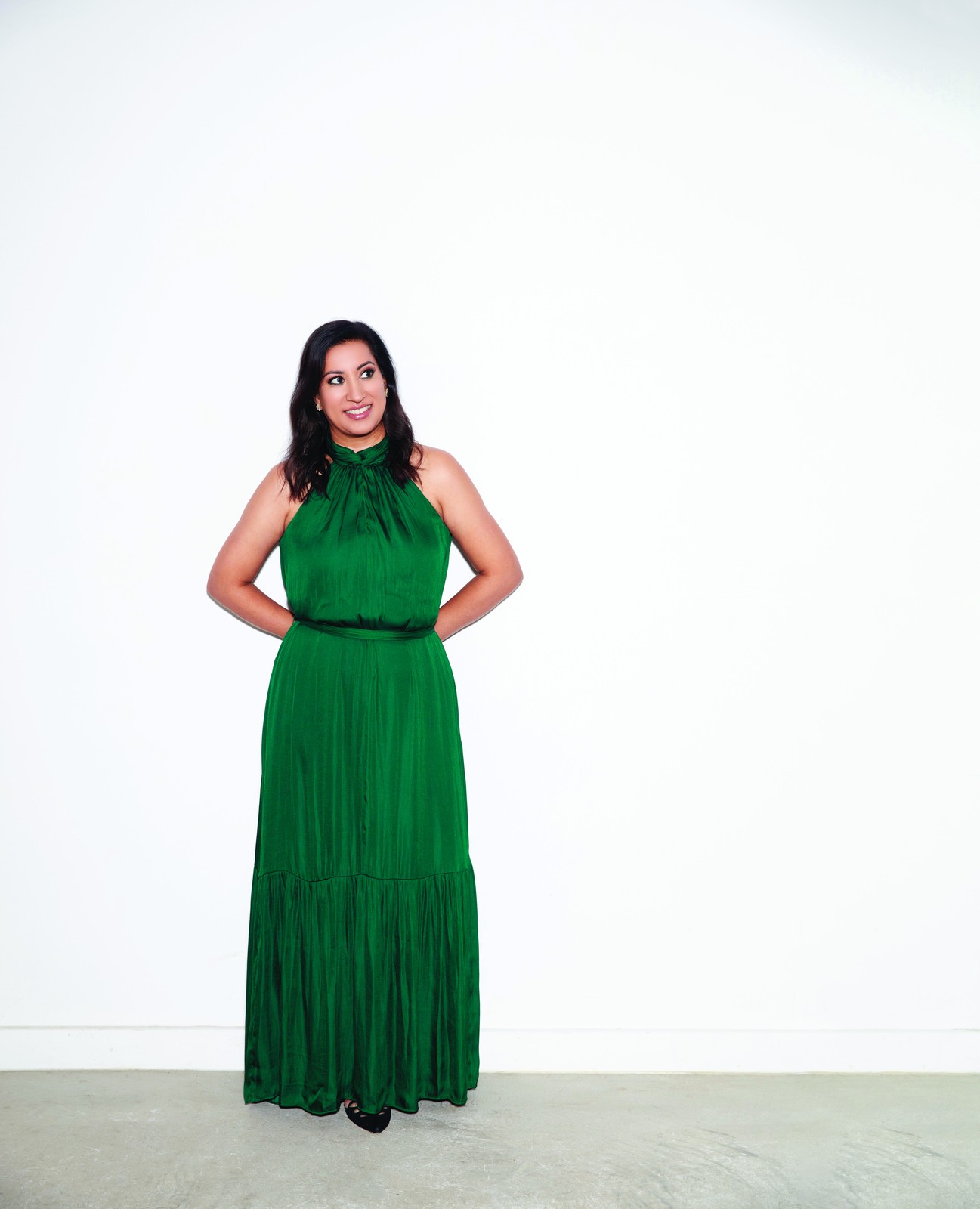
Monisha Bhanote
Monisha Bhanote, MD, FCAP, ABOIM, is one of the few quintuple board-certified physicians in the nation. She combines ancient wisdom with mind-body science to naturally bio-hack the human body through her expertise as a cytopathologist, functional culinary medicine specialist, and integrative medicine doctor. Known as the Wellbeing Doctor, Dr. Bhanote has diagnosed over one million cancer cases, provides health programs at DrBhanote.com, and leads wellness workshops and retreats worldwide. Featured in Shape, Reader’s Digest, and Martha Stewart Living, Dr. Bhanote serves on several clinical advisory boards and is a go-to health and wellness expert for Healthline, Psych Central, and Medical News Today.
📚 Books by Monisha Bhanote
Transcript
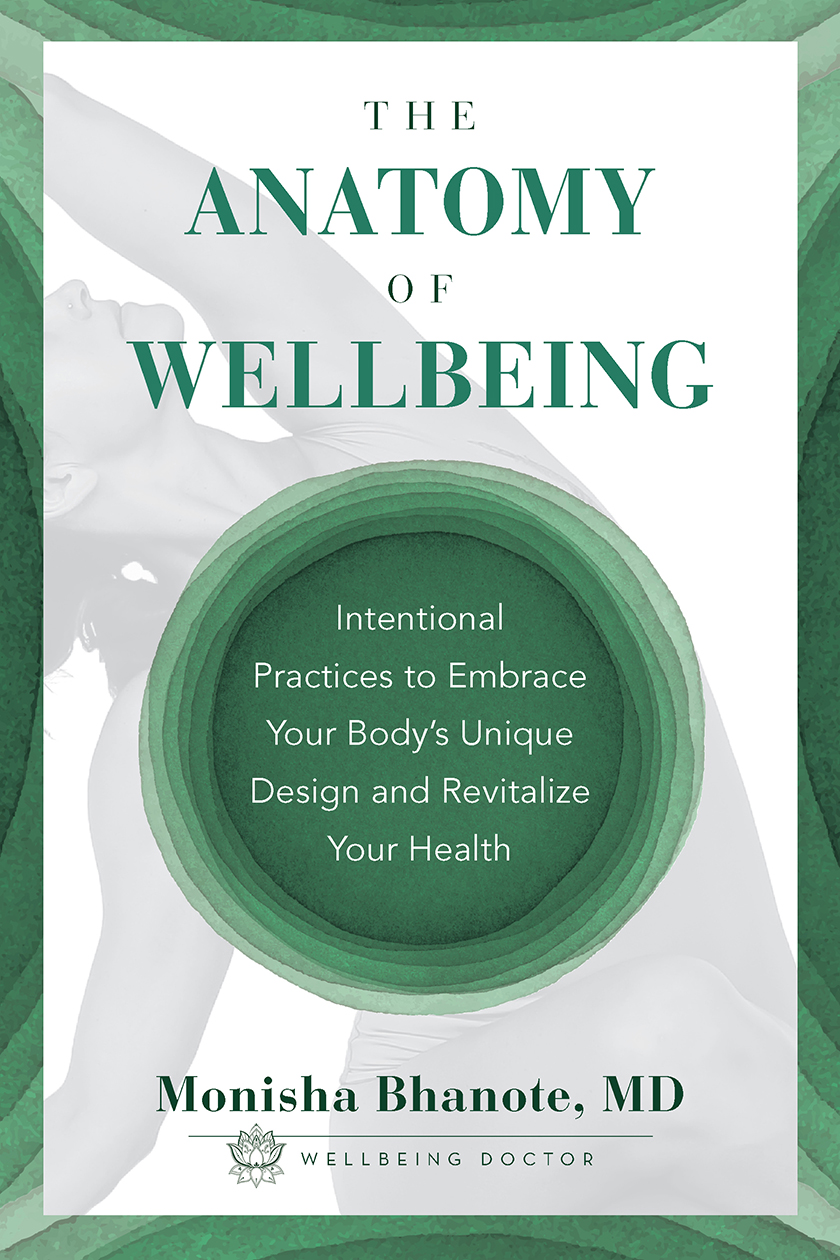
[0:00:31] DA: Cell care is self-care. No one knows your body better than you and if you want to improve your health, it’s time to turn off autopilot and listen to your body. Every day, you have the opportunity to maintain the health of your body’s cells or compromise their functionality and when you realize your wellbeing is non-negotiable, you could become more intentional about what you do every day. In her new book, The Anatomy of Wellbeing, Dr. Monisha Bhanote invites you to take care of your mind, body and spirit for maximum wellbeing. Perhaps you want to improve how your body functions or rewire mindless habits, no matter your health concerns or end goals, the book will provide the tools to design a lifestyle tailored to your needs based on ancient wisdom, mind-body science and actionable insight. Hey listeners, my name is Drew Applebaum and I’m excited to be here today with Dr. Monisha Bhanote, author of, The Anatomy of Wellbeing: Intentional Practices to Embrace Your Body’s Unique Design and Revitalize Your Health. Monisha, thank you for joining, welcome to The Author Hour Podcast.
[0:01:42] Monisha Bhanote: Thank you so much Drew, for having me here today. I’m looking forward to speaking with you.
[0:01:46] DA: Monisha, help us kick off the podcast, can you give us a brief rundown of your professional background?
[0:01:51] Monisha Bhanote: Yeah, so I am a conventionally trained medical doctor but I’ve had a not so straight path in my career. So I did start out taking care of patients in the conventional hospital care system, which I think it was both disappointing both for myself fand for my patients because nobody was actually getting better. I would see them month after month and give them the same prescriptions, look at my same notes, when we were actually handwriting notes and we don’t have them in an electronic medical record and it just was like, I know I can do more and from there, I kind of started looking at what were the aspects that I could really feel like I was helping individuals. So my journey went into pathology, which is the study of the human body on a deep cellular level, looking at how the inner workings of the body are, the tissues, the organs, the blood, pretty much everything inside your body and I spent so many years doing that and then I’m like, “Okay, wait a minute. We have all these diseases, we know what’s going on and quite a few of these are preventable. So why are we not focusing on prevention as supposed to treatment?” and then that took me into my current journey.
[0:03:09] DA: So why was now the time to share this story? Have you just seen enough and you want to, you know, spread what you’ve learned or were there other inspirational moments out there for you?
[0:03:19] Monisha Bhanote: So I believe my inspirational moments were really in the fact that we have so much power over our health but we tend to kind of give it away with the reliance that, “All right, when we get sick, there will be a medicine to help us” and that’s certainly true. You know, when you get sick or you have some chronic disease, there will be a medicine that will help your symptoms, but what if you could prevent a lot of these chronic diseases from coming on? And me, being the person that was looking at all your biopsies year after year like, imagine going in for reflux disease and every year they’re checking your esophagus or checking whatever they need to examine and giving out your medication and then sending you off, what if you could actually reverse that? So you wouldn’t need to be on chronic medications for your entire lifetime, which come with their own host of side effects. I thought to myself, “Well, people don’t really think about that” right? It’s a possibility, so why not share that possibility?
[0:04:19] DA: So when you decided, “Okay, I’ve seen this enough, I want to educate everybody” you know, are you writing this book for people who are you know, currently feeling it or as you mentioned, just anyone who is looking for prevention as well?
[0:04:33] Monisha Bhanote: It’s really for both because prevention is the best medicine. It is very costly and painful to be sick once you do have a chronic disease. So ultimately, I would love for, you know, younger people to really take control of their health and go, “All right, this is how my body works, this is how I can make it work optimally.” “You know, this is hurting my body, this is really helping my body” and really, taking a deeper look in themselves and then the people who are dealing with chronic disease, knowing that they actually can do things every day to improve their health. So really, a combination of both.
[0:05:09] DA: So I want to dig into the book and you actually mentioned this right in the beginning is that, every patient who has come to your office has a story and they’re all unique and some of it has to do with like, their bodies, some of it their habits, sometimes it’s from their lifestyle but in the end, what are they all looking for?
[0:05:25] Monisha Bhanote: At the end of the day, I think we all want to be well. We want to be happy, we want to, you know, be free of pain and I think you know, understanding that we can go off of autopilot, we tend to live on autopilot and really not be intentional with how we’re showing up in the world. So I think if you take a moment to go, “All right, is this really helping me get to where I want to get to?” even if it is a professional area that you want to get to, is pulling those all nighters really helping you or could maybe a good night’s sleep help you even more?
[0:06:00] DA: So when you’re helping either educate for prevention or treating folks who come in, are you giving them a one size fits all solution? You know, eat more vegetables and go for a walk or is there sort of an individual plan for everybody.
[0:06:15] Monisha Bhanote: Yeah, there is no one size fits all. We all live very different lives, we all have different personalities, we all have different capabilities, we all even have different genes, right? So you really want to get into what is the thing that’s going to help you most? And a part of that is looking at your body, looking at yourselves, looking at your genetic makeup. You know, I have some individuals who trying for years to lose weight and they go to hit trainings and CrossFit and you know, all these really, really tough stuff and they’re not losing weight. They’re putting on weight as supposed to, “All right, let’s look at what your body can handle and what your genes want you to do” and if those genes want you to just tackle 60-minute walks every day, which are a lot easier on your body and then your weight comes off, wouldn’t that be great to know?
[0:07:07] DA: So what is the deal? In an age where there’s so much information out there, how is conventional healthcare really failing at educating these folks that they don’t know the way forward or they got into this mess in the first place?
[0:07:22] Monisha Bhanote: I think it goes even further back than conventional healthcare, right? Because what we know is, really, what our parents tell us and what we learn in school and what our friends tell us and nowadays, what social media tells us, right? So it’s not just conventional healthcare that’s failing us, it’s the whole system is, right? So we kind of need to wake up to that and be like, “Okay, there’s got to be a better way and if there is a better way, what is that way?” and kind of look at it, examine it, and question it. I always tell my patients, “If something does not feel right, question it.” Ask why do you need this, do you really need this? Is there going to be a side effect to it? Will it actually help me?
[0:08:02] DA: You actually have, throughout the book, a hashtag called “Cell Care.” So I would love for you to just give us your definition and a breakdown of what you mean by cell care.
[0:08:14] Monisha Bhanote: Great question, Drew. So cell care is my little play on self-care, really. So you know, everybody’s very familiar with self-care and just taking care of your mind, your body, your spirit, how you take care of yourself. But I’m somebody who has looked at trillions of cells, human cells and watched them transform either into you now, just being healthy cells or clearly, abnormal and the worst of abnormal is you know, cancerous cells and there’s different things that happen in there. In the change of our DNA, sometimes we think that if you don’t have bad genes or you don’t have a genetic mutation that, “Oh, you won’t get that disease.” Well, we have a lot of lifestyle things that can happen that can change our cells. So cell care is really taking care of the makeup of your human body, right? We are made up of cells, we are made up of so many different kinds of cells. You know, we have thyroid cells, we have heart cells, we have muscle cells, all of those cells require ingredients and what I find is, most people are depleted of those elements, nutrients, ingredients, what you might call them. If we can nurture that and take care of that, imagine how much better our body would work, how clear our mind would be, how our muscles wouldn’t ache but we’re not really focused there, we’re not giving that to our body.
[0:09:43] DA: There’s one more definition I want to ask you about as well because I think it’s incredibly interesting. You talk about health span as well, instead of we all know about lifespan everyone talks about. So what is health span?
[0:09:56] Monisha Bhanote: First, let’s go back to lifespan. We are able to live longer, thanks to conventional medicine, right? However, do we have a healthier life if we lived longer? And that’s where health span comes in. Are we living longer as healthy individuals? And the answer is, no because most people are on not one, not two, a lot more medication than you think. Now, we’re seeing people in their 30s with chronic diseases that we really shouldn’t have these in our 30s and then of course, you go down that path of taking those medications for those chronic diseases and then by the time you end up in your 60s, 70s, you are on a handful of medications and you didn’t know why you started what when and if you should still be taking them. That is where focusing on our health span, and then therefore our self-care is vital to really living our best life, you know, the whole longevity plan of it and reversing disease, preventing disease.
[0:10:58] DA: I am actually glad you mentioned this next topic as well because we are hit just as a society these days with more ads than ever before, whether we realize it or not, just by the amount of time we spend on our phone and we see all of these health experts now. Everybody is a health expert and we see all of these health products coming, thrown at us. So what can folks do to really combat seeing what is real from these ads and understanding who is actually the real expert?
[0:11:29] Monisha Bhanote: That’s a great question Drew. So one, when you are listening to any commercial on a medication, definitely see the little disclaimer at the bottom that says, “Side effects include this, this, this and this” and one of the worst being death, right? So that is required to be there if there is any side effect that has been documented. So definitely pay attention to that but not only pay attention to it, ask your doctor about it because interpreting scientific literature is not easy. So you definitely want to talk to your doctor and if your doctor doesn’t know, find another doctor. So anything you’re taking or putting in your body, you should know why you’re taking it. I have plenty of patients, they’re like, “Oh, I don’t know why I’m on that med” and I’m like, “But you’re taking it, you are refilling it. You know the doctor that put you on it, why did they put you on it?” they’re like, “I don’t know.” So definitely question it. This is really about you taking control of your health, same thing with lab tests. Many people go get their blood work drawn every year and they’re like, “Oh, I didn’t get a phone call, so I just thought it was normal” and I’m like, “Well, it’s not normal. Here is this, this and this” and they’re like, “Oh but my doctor didn’t tell me that.” I mean, you have to take control of your health, you know? So question everything and don’t be afraid to. I think doctors for some time have really been placed on this ivory tower and at the end of the day, like I said, if we go back to what do we all want to do, we all want to be well, feel well and perform at our best, right? So that works both for the patient and for the doctor but we got to help each other out. We got to work as a team. Other things patients can do is, you know, it is not about having one doctor, having an entire healthcare team is always very helpful. In the sense of incorporating some of these integrative providers, like maybe you do have an integrative and functional medical doctor that talks to your conventional family practice doctor that also communicates with your acupuncturist that communicates with your physical therapist. So think of your body really getting tuned in with the help of so many people because they are there to help.
[0:13:45] DA: You say that, building on the health span, that your journey towards health, happiness and wellbeing isn’t just a temporary change. This isn’t a crash diet, this is a lifelong practice, and so towards the end of the book, you actually put a four-week plan in place for folks to get started. Can you talk about just where we start and what are the first steps we do in that four-week plan?
[0:14:09] Monisha Bhanote: So the four-week plan really comes from the culmination of all the chapters before that, which is talking about the different aspects of wellbeing. You know, there is eight core aspects that I really walk you through and that’s starting with your mindset. If your mindset is not in a place where you are ready to change something in your life, guess what? It won’t change. So we start with mindset. We really get into how the body works, how it’s an ecosystem and how you can’t just go to the gym and workout really, really hard and then eat poorly and expect the body to work the way you want it to. How everything is super interconnected, what foods your body needs, you know, without really focusing on dieting and excluding foods, let’s focus on what the body needs and what the cells need to function because I will tell you, most people are walking around depleted. I know that from very intense blood work and then we talk about exercise. You know, the body at the end of the day is meant to move. So a sedentary life has been shown over and over again to have adverse outcomes. How we sleep is probably one of the most important factors and people are not sleeping well these days. So definitely, we get into sleep and then all the toxins that we’re exposed to. Some are surprisingly, you know, from our childhood like it’s just all around us and then our living space, how are we living, how are we taking care of our home, how are we taking care of the air that we breathe, the things that we have control of. Some we don’t, I understand that but what we do have control of, that’s where I really take you in this book and then that four-week plan helps you prioritize what is the first, maybe second thing you might want to change and how could you possibly change it. Because a big part of the book is really going from mindless habits and incorporating intentional lifestyle rituals and in each chapter, I lead you through what rituals you may want to pick and choose from that feel right for you, and that’s where that four-week plan comes in is really helping you create that and then you build on it and you know, you might start out with improving one little aspect and guess what? That has a snowball effect because then you’re like, “Oh, this feels really good. I am going to ad this” and then you’re going to add this.
[0:16:35] DA: What impact do you hope the book will have on a reader and are there any immediate steps that you hope they’ll take either during or after finishing the book?
[0:16:46] Monisha Bhanote: Well, I really hope that the reader will go, “Wow, okay. Now I actually can do something about my health. I actually have the power to do it. I don’t need to just sit back and wait until I get old and feel like I am in pain or get a disease that I can prevent it.” that’s what I’m really hoping they will do and then the ones who are dealing with a chronic disease, I want them to know that, once again, that power is within them. If they are willing to look at these different aspects of their life and really rebuild their lifestyle into a healthier lifestyle, into a more sustainable lifestyle, then they have a real good chance of increasing that health span.
[0:17:32] DA: You also have a website and so can you tell folks first, you know, what the website is and then what they could find there?
[0:17:40] Monisha Bhanote: My website is my name, it’s drbhanote.com, and on the website, they’re going to find a wealth of health information. So they will find a number of articles on how the human body works, how to improve their mindless negative habits, where you’re going to find toxins, then they are also going to find a number of curated articles that I have worked with some online publications. Very well-known online publications to curate because the biggest thing is, there is a lot of information out there and there is a lot of misinformation out there. So I am very careful to curate what I put on my website to make sure that it is evidence informed.
[0:18:23] DA: Well Monisha, you know, we just touched on the surface of the book here. We didn’t even go into digestion, you talk so much about those hidden toxins and how important sleep is but I just want to say that sharing these tips so folks can live a healthier life is no small feat. So congratulations on having your book published.
[0:18:41] Monisha Bhanote: Thank you so much Drew, it’s been absolutely my pleasure speaking with you today. I really hope that people take a look at the anatomy of wellbeing because even from the title, the purpose of that is that our human body, the anatomy, we have a structure and what I am showing you is really the inner workings of that structure and at the end of the day, I want you to have good health and I want you to really, your nature and your essence be good in a good way.
[0:19:11] DA: I’ll have that you know, I will let all the listeners know that there is a supplement section there as well and just hold back because I filled out my Amazon cart to the brim and made some purchases after reading the book. I’m looking forward to those coming in and I just want to say that this has been a pleasure. I am excited for people to check out the book. Everyone, again the book is called, The Anatomy of Wellbeing, and you could find it on Amazon. Monisha, besides checking out the book, besides checking out your website, is there anywhere else where readers and listeners can connect with you?
[0:19:38] Monisha Bhanote: Absolutely, I am on social media @drbhanote, so it’s just my name and that’s both on Instagram, Facebook and LinkedIn. You can find me there and drbhanote.com is the main place you’re going to find me.
[0:19:38] DA: Well Monisha, thank you so much for coming on the show today and best of luck with your new book.
[0:19:56] Monisha Bhanote: Thank you very much Drew.
[0:19:58] DA: Thank you for joining us for this episode of Author Hour. You can get Dr. Monisha Bhanote’s new book, The Anatomy of Wellbeing, on Amazon. Also, you can also find a transcript of this episode and all of our other episodes on our website at authorhour.co. For more Author Hour, subscribe to this podcast on your favorite subscription service. Thank you for joining us, we’ll see you next time. Same place, different author.
Want to Write Your Own Book?
Scribe has helped over 2,000 authors turn their expertise into published books.
Schedule a Free Consult