Ben Brennan: Badass IT Support
Read the full transcript
Ben Brennan
Ben Brennan is an IT consultant and former psychotherapist who combined his computer-repair skills with a background in interpersonal communication to specialize in improving IT support departments. He is the creator of the QSTAC IT experience management tool and has consulted for major technology firms. He is the author of Badass IT Support, a customer-centered approach to hiring, training, and running high-performing IT support teams.
📚 Books by Ben Brennan
Transcript
[0:00:16] Charlie Hoehn: You’re listening to Author Hour, enlightening conversations about books with the authors who wrote them. I’m Charlie Hoehn. Today’s episode is with Ben Brennan, author of Badass IT Support. You know what? This music isn’t really appropriate, let’s change it to something a little more badass. There we go, if you’re not technologically savvy, then calling the IT department can feel like your worst nightmare. Ben believes you can transform your IT team into rock stars who everyone at the company loves. Ben has consulted for the top tech firms in the US including Box, Twitter, Yahoo, Jawbone and AOL. By the end of this episode, you’ll learn the simple shifts you can make to revolutionize your IT department. Now, here is our conversation with Ben Brennan.
[0:01:20] Ben Brennan: I did a few things before IT, I was a psychotherapist, I didn’t mention that I was a janitor in Germany, I did outdoor education at Austin, I was an unpublished writer and I was unsigned singer, traveling through Guatemala for a year. I did a bunch of low paying things that I was mediocre at, that sound cool but when you’re poor, we’re not as cool as they sound for sure. Anyway, I got to the point where when I moved to san Francisco, I was dating this creative executive, was making high six figures, I was living in a co op and making like $40 a month and I was so f’ing poor, I could not tell you. You eat like butter and noodles and then you run out of butter and you’re just eating noodles and salt, you know? That kind of poor, not super healthy, as you can imagine. At that point, my friend who is this amazing guy that I used to hang out with in high school, he was like, “I never thought about this, why don’t’ you just get into IT ,” and like, I tried to google IT to see what IT was and IT is a surprisingly hard word to google because it’s IT. Even googling IT did not, and this is a real story, it did not help. What is it? Information technology. I’m like, okay, that helps. I change my search terms, I didn’t know rejects.
[0:02:33] Charlie Hoehn: you were getting the results of the Stephen King Novel?
[0:02:36] Ben Brennan: No, I was getting the results of every single website in the world that has the word “it” in it. Maybe google has improved their algorithm but I will tell you, googling “it” 10 years ago was not very fruitful. He’s like, “It’s information technology,” it’s like, “What is that?” “Just fucking come,” and so he was working out this amazing place called Pivotal Labs and let’s just say he embellished my credentials a bit and got me a contracting gig and I was an artist so I knew Max really well, right? I come on and I get this first job in IT and it was amazing. 25 bucks an hour, like catered breakfast and lunch, right on Market Street in san Francisco, I was blown away, I could not believe it, I mean, I made more in a day than I did pretty much the whole month after taxes, right? Just incredible and really, the problem was, I also had to fix computers, which I didn’t know how to do. I went back to Google this time, not trying to google it but learning problems. Basically I was like, “Okay, this is my ticket, I have failed at like 19 things in my life, I’m 30,” which is different from you because IO know I love your story because you actually accomplished more like in your first four years before your first kind of crisis of identity. Then like, I still have accomplished. It’s kind of different paths but hopefully we end up in the same place no matter what.
[0:03:53] Charlie Hoehn: Yeah, the quarter life crisis.
[0:03:55] Ben Brennan: It’s a long way to the top if you want to rock and roll. Exactly. My plan was, I’m like, I’m not losing this job, this is fucking great. My life as a level one help desk guy is, this is a dream come true. I just basically ran around and ask people what was broken, wrote it down, you know, five or 6 PM, went home and from 6 PM to midnight, just googled everything, learned how to fix it and came back that morning was like, “Hey, I fixed your shit, here you go,” and then I went through for seven hours and got like 10 more problems and went home, googled it for six hours, learned how to fix it and it was funny because it was kind of like, working so hard on cheating for a test that you accidentally learned the material. It was hilarious. Before I was done, I still thought it was a hack and my friend was like, “Dude, you’re like really good at your job now.” Like what? In total imposter syndrome but he was like, “No dude, I think somehow you actually became an IT guy, fucking great.” I think that was really what got me into IT. I mean, to this day, I’m making really good money and I’m doing really well but to this day, every single morning, no bullshit, I wake u and do a gratitude meditation and almost like four to five times a week, my job and my career is one of them because I didn’t earn it. I had zero plan. My number one plan at that time was writing poetry on Fisherman’s Wharf for like $10 a person. Investing in like a typewriter and doing that. I had downloaded the Starbucks application, no offense to Starbucks baristas but I downloaded it like 10 times, I downloaded it finally and saw that – in Chrome, Starbucks parentheses 9 and I was like, fuck man, I got to get a new plan, quick.
[0:05:37] Charlie Hoehn: How many other IT support people have a similar path? Are you an anomaly, are you an exception or there are others who have kind of landed themselves in that role and they’re like, I’m going to learn on the fly?
[0:05:50] Ben Brennan: I think I’m a more common story than I ever thought, at the time, I felt like totally an anomaly but it’ s not a special story at all, the beauty of it is, in IT support particularly, you don’t need a degree, you don’t need experience, you really just need to know how to troubleshoot and these days, what are you troubleshooting? You’re troubleshooting consumer electronics, iPhones and MacBooks, you know, you’re doing stuff that your little cousin could do. I think, these days, especially if you have social intelligence, I’ve seen outsiders come up, get a foot in the door in IT like companies like Twitter or Box or Yahoo and go on to make a lot of money doing IT or other things.
[0:06:25] Charlie Hoehn: When you say, a lot of money, how much are you talking? I don’t know what IT people make.
[0:06:30] Ben Brennan: Right, it depends on where you live, right? In generally, I’d say like, you know, your starting IT salary is around 50k. Which for me at the time was amazing but you know, I’m not in the millennial whatever but really quickly, you can get up to a hundred and the cool thing about IT is the bar is so low, it’s like, IT companies sucks ass so much at companies, like if you have social intelligence and like half a brain, you can move up the charts quick.
[0:06:58] Charlie Hoehn: Yeah, why does it suck? Is it because people who are attracted to the profession, unlike you, you clearly are a social person and you have social intelligence. Would you say the majority of them are just not socially adept at all and so they kind of rub people the wrong way?
[0:07:15] Ben Brennan: I think that’s true in some of the cases but to be honest, a lot of them are really well meaning and smart people who you go out and have a beer with them and they’re really awesome but they’re not really motivated to be cool. I mean, granted like some of these guys are the old school version of you know, I’ve never talked to a girl before in person. But these days, I mean, you know, it’s kind of cool to be a nerd, everyone looks – Steve Jobs is like the most recent like god, like a Greek god that we all worship.
[0:07:40] Charlie Hoehn: He’s like nerd Jesus, basically in Silicon Valley.
[0:07:43] Ben Brennan: He is. You’ve got nerd Jesus and all these other people. Elon Musk, right? Super hero.
[0:07:51] Charlie Hoehn: Super nerd by the way. If you look at pictures of him in his PayPal days, you’re like, no way this guy is going to dominate the world.
[0:08:00] Ben Brennan: and if you look at pictures of girls he’s dated, you’d be very surprised knowing how much of a nerd he is. But I guess he has a billion dollars. On paper, at least. Anyways, it’s really the system too, right? People aren’t really motivated to be their selves at work. It is a hard job. I didn’t realize this until I started consulting because I worked at like fun startups where I got to build the team from scratch so I just hired, you know, my artist friends and we just ran IT. When I had the consult and work for like bigger, like old school IT wards, it sucked man. The whole system was geared towards, who can crunch the most tickets, you know, they had all these metrics, they have like conferences and books and certifications, they’re all pointless. I came in with zero experience and I’m already better than you in one year. That shows you that you have a problem. I mean, to answer your question, yeah, there are the people that are like, we call them neck beards that aren’t really good at talking to people but frankly, a lot of people in IT are awesome, they just aren’t – their job sucks so much that you know, it’s annoying and you can’t help them from being grumpy.
[0:09:05] Charlie Hoehn: Before we kind of dive into what’s in the book. I’m curious, did you include any of your Fisherman’s Wharf type poetry in the book itself?
[0:09:14] Ben Brennan: I actually did not, that’s a shame. I just got the layout today, it’s about to go to a print so I don’t think it will have time but maybe if anyone reaches out to me, we meet in person, I will be happy to write a poem for you personally in the book, it can technically be in your copy.
[0:09:30] Charlie Hoehn: Excellent. How confident were you going into that, that you could earn some money doing poetry, like were you pretty comfortable doing poetry at that time?
[0:09:39] Ben Brennan: Yeah, right before that, I had been a traveling musician for a year in a country where they don’t even speak English. Very often, you know, sometimes it would be an awesome gig but very often it would be like, a shit gig that people haven’t even showed up yet but you still have to play so I just make shit up. I got really good at freestyling and just making things up on the fly, that was kind of my – one of my super powers has been able to freestyle lyrics. I was pretty confident, I could have been at or slightly below the poverty level with my poetry.
[0:10:08] Charlie Hoehn: It truly is a super power. Nothing blows people’s minds faster than making up a good song on the spot.
[0:10:14] Ben Brennan: I love it, that was my talent for – when I worked at Twitter, we had this thing called Twitter’s Got Talent, you know, where it’s just like a talent show for the employees. That was my talent, I said that I could solve any problem in 30 seconds through the majesty of song. It was a big hit. People would just say like I’ve got a problem and t hen I would just like – I setup there with my guitar and did a little cute song and I feel pretty good at it. I will tell you, it doesn’t pay as well as you know, 19 seconds of – it’s fun.
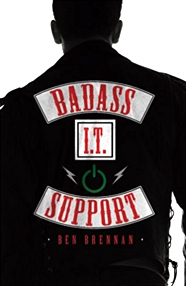
[0:10:40] Charlie Hoehn: Right, let’s talk about your book which I’d mentioned before we started recording has the greatest title in cover I’ve seen I a while. For something that it could have been called anything else and could have looked totally plain and boring but it is exciting to look at, Badass IT Support. What do you think is the main idea that you really want people to take away from this book? Who’s it for and what’s the main idea?
[0:11:07] Ben Brennan: Yeah, I think it’s for, really, I hope that it’s entertaining and fun for anyone to read, that’s why we kind of put a leather clad biker on the front cover and called it Badass IT Support. You know, we wanted to try to convey that this is not your typical IT manual but I mean, really, my target focus was CIO’s and IT executives, not because they’re hot shit but because I think if I can change their minds and really show them what IT support can be, it can roll downhill and really effect the whole organization and make everyone’s jobs easier and make everyone have more fun at work.
[0:11:43] Charlie Hoehn: What can IT be?
[0:11:45] Ben Brennan: IT can be really fucking awesome, right? In IT, you have the ability to do amazing things. Like, for a lot of people, IT is – let me start at the beginning, right? IT has a rough reputation for good reason and you don’t know anything about IT, if you’ve never worked in corporate America, ask a roommate or ask someone in your spin class, you know, what IT is like. The responsible range from they suck to I didn’t even know we had an IT department, you know, It’s like, it’s just a necessary evil and for CIOs, a lot of times it’s a necessary evil too, you know, they’re worried about fending off the Russians and keeping cyber attacks from happening and DDOS attacks happening, you know, denial of services, this is where they – someone decides to setup a bunch of computers and at your network and just – it’s like simply when you have taken down your website. CIO’s are worried about a lot of big shit and the last thing that they really care about too much is the quality of their help desk or how friendly their IT support is but that said, all they hear about in these executive meetings is how the CEO’s assistant in or somebody else is the executive assistant was treated poorly or someone was rude to their marketing leader or something, right? It’s like, it’s the most customers facing part of IT but like the least important in a lot of ways. Basically fixing this problem makes it awesome and the way we fix it is just to be cool, right? I spent years in the service industry where I worked for tips and so, how do you please a customer, you know? You just be cool about it, you know, treat everyone nice, have fun, you know, it’s like everything. I learned that from being in a band too, the audience had more fun when we had fun, right? In IT, we just put up art on the walls, we crank up some cool music and we listen to our customers and ultimately, what the book does is it teaches you ways to listen to your customers and teaches you how have real actionable data that turn your customers into the judge of your success versus you. You know what I mean?
[0:13:40] Charlie Hoehn: Yeah, why don’t IT people do this now?
[0:13:43] Ben Brennan: I think you know, we’ve gotten a few companies to do it but in general, there’s just such a history of not doing this and there’ a system setup where they don’t have a lot of power to make changes. You know, that’s another reason I’m angling for the CIO’s because IT doesn’t have a lot of respect in the companies, you know, it really doesn’t.
[0:14:00] Charlie Hoehn: How come?
[0:14:01] Ben Brennan: I think it’s from years of frankly, not being good at our jobs, you know? As IT professionals. The bible for, we talked about Steve Jobs being the, whatever, the IT Jesus or the tech genius or whatever. For IT support guys, they have a bible and it’s called, ITIL. That stands for information technology, infrastructure library which was originally going to be the title of my book but I changed it. If that even worked. No, but they call it ITIL and the whole industry, no shit, is focused around this and it’s super boring, it’s process driven, it’s like a whole religion with all these dogmas about how you crunch tickets and how you handle things and it doesn’t even – it barely mentions like the customer experience, it’s just like – here’s how you do it and everyone is just in love with ITIL. I was like, that’s fascinating because I think it sucks, I wasn’t alone, right? I remember, I was talking with some guys at Square and they showed me Jack Doors, he made him put on the resume when they were small, must be allergic to ITIL. You know, for their IT managers, I was like, I’m not crazy, this is stupid. I looked into it just on Wikipedia, it was invented in like the 80’s by the British government, the most – possibly the most uptight organization of all times and this is what people run in IT with and I think nobody really cared enough to change it and the reason me and my friends did so well in IT was because we had failed at other areas in life so we came into IT and we’re like. Dude, we can make this fucking awesome. It’s like walking into a boring party and we’re like, “My god dude, we’re going to about to make this shit blow up. This shit is going to blow up, this is so easy.” The bar was so low that once we started doing awesome shit, word spread and then we have jobs for life.
[0:15:43] Charlie Hoehn: Yeah, tell me about like how to get started implementing these stuff, you talk about in the book, you have to start with defining a vision for what badass IT support looks like, is this different from company to company?
[0:15:59] Ben Brennan: It can be in a sense but one thing I share in the book is that everyone has mission statements and core values, if you have this as your one mantra, you will succeed. This is what we do at Yahoo, this is what several other companies that I found works too. Badass customer experience is always priority number one. If you drill that into your employees and into your leadership, and to your company too. A badass customer experience is always priority number one. It influences all your decisions. If you really get on board with that and everyone’s on board with that, there are no arguments. You know, should we do this thing that’s awesome for us or do these thing that’s awesome for our customers? Well, a badass customer experience is priority number one so let’s take care of them first and worry about us later.
[0:16:40] Charlie Hoehn: Can you tell me a story about a badass customer experience?
[0:16:43] Ben Brennan: Yeah, I actually can, there’s so many of them, this is why I’m still in IT because as unsexy as a job as it can be like when you’re doing it right, it’s so fun. I’ll tell you a couple, this is my favorite thing to talk about. One of my favorite’s at Jawbone. I worked at Jawbone, it was my second job so after I did the job where I kind of faked it till I made it and cheated so much that I learned how to be an IT guy, you know, I was able to get my own job. She’s like, sweet, I go to jaw bone which is a consumer electronics company, they made like the jam box, those Bluetooth earbuds, they made the UP, this is back when they were just Bluetooth earpiece company. They’re tiny, like 45 people, nothing, you know? Right after I landed and landed the job, all of a sudden they blew up, they got a shit ton of sequoia venture capital, you know, started building the UP and the Jawbone and we were in hyper growth, the company quintupled in a year or two. Anyways, I went from like, my first job was a startup in hyper growth with a bunch of EC money. I was the only guy. They only need one at first so I got to hire a bunch of people under me, that was also my first IT management gig. Anyways, my first job was to move everyone from Windows to Mac. You know, which was great for me because I hated windows anyways. You know, we go through and we make a big deal about it, we image the machines which just means that we get it ready to use for on a corporate network, we put them back in the packaging, we take big red bows, we put them on everyone’s desk, you know? We’re having a blast like our team at Jawbone was so fun. But what happened shortly thereafter was cause for concerns. Apple came out with this computer that you might remember called the MacBook Air. This was a sexy, shiny, thinner than ever computer that was a total piece of garbage. One USB port, I think like maximum 64 gigs of storage maybe, no backlit keyboard, it was confusing, it was hard to figure out how to turn it on and if you were an executive in Silicon Valley, you had to have one yesterday, you cannot like showing up at a meeting without a MacBook air, that week would be like showing up with like a cellphone holster. Yeah, totally.
[0:18:43] Charlie Hoehn: It was like a status symbol?
[0:18:44] Ben Brennan: It means you were in it, it would be like driving up to the parking lot and not be in a Tesla, if you didn’t have a MacBook air, that’s how important it was, right? Anyways, obviously, if you’re badass IT support, you know, your executives have to have one. We were friends with the apple business team, we’re like, okay, we’re getting – we had two CEO’s which was awesome but in this case, it was annoying. Our two founders, right? We had our founder Haas in san Francisco and we had a cofounder Alex who was in the UK. We get the email, hey, obviously, we need MacBook Airs yesterday, please let them know when they’ve arrived and ready to go, like “Okay,” we call our guys, you know, we get them delivered and then we reached out to Alex who is in the UK, we’re like, “Man, when do you need that?” He’s like, “Actually, I’m leaving for Asia tomorrow so I guess you guys probably can’t get it but it would be really cool if you did.” We were like, “Shit, right? What do we do?” I mean, I was talking to my friend and we were like, “Yeah, we’re going to do this fine, we’ll figure it out.” We call our girlfriends, you know, cancelled dinner, I go and I start imaging and configuring Alex’s MacBook air before he went on this big trip and then my buddy gets on the phone and on the internet and just called all of his contacts in courier services to figure something out. He came into the room and I’m like, I’m typing furiously trying to get all these email loaded and shit like that and figure out how to get all his email on a 64 gig hard drive with the shittiest – anyways, it wasn’t fast either, the MacBook Air. Anyways, I’m getting all that stuff in and he comes in and he’s like, “There is a service that will pickup a package, drive it on to the tarmac in SFO and put it on the last FedEx plane leaving.” I’m like, “No way, how much is it?” He’s like, “It’s fucking expensive.” And I’m like, “So we’re going to do it?” He’s like, “Yeah, we’re going to do it.” So, this was amazing. Now I’m like working faster, he calls it up, “Can you have it ready in 20 minutes,” and I’m like, “I guess so.” I’m working like crazy, 18 minutes later, ping, the elevator door opens, you know, this greasy pony tail guy with a biker motorcycle helmet comes in, picks up the thing, we hand it to him, we’re like, “You’re going to make it?” He’s like, “Yeah, no problem.” If you’ve ever been on the 110 and seen like the motorcycle splitting lanes, that’s the only way that this guy did it. It would be an unbelievable story how fast he got to SFO unless you’ve been on that road and you’ve seen those guys fly by everyone.
[0:21:04] Charlie Hoehn: Yeah.
[0:21:04] Ben Brennan: I swear, it was like less than – it was like 18 minutes later, both of our phone’s like, because of course we had notifications, “Your package is on route London,” and we’re like, “No way.” You have to beat the time zones there too, right? I’m sorry, this is a long story but it was so fun.
[0:21:20] Charlie Hoehn: No, don’t apologize, by the way, what you’re describing is truly badass IT some more.
[0:21:27] Ben Brennan: I thought so, we just did it because it was dope, we just needed to do it, right? We send it, it’s across time zones because reminding you, we’re in California and that shit has to go east. Somehow it gets there and then I get a number, you know, the +44 on my caller ID, I pick it up the next day, you know, probably hungover as shit. It’s Alex and he was like, “Dude, I don’t know how you guys did this but fucking awesome, thank you, you guys are” – he probably said badass or awesome or whatever but like, we’ll say he said, “You guys are fucking badass.” It really stuck with me, because first of all, it’s awesome like for your second job to get like props from the founder. Second of all, it was awesome, I still can’t believe that service even exists, you know? It was dope and what I try to tell people now, I always remember that story, you’re not badass when you say you are, you’re badass when your customers say you are. ACDC. ACDC’s not badass because they said, listen to this badass song, they played that riff and everyone else said it was badass and t hat’s I think one of the core messages in the book is it’s not – you don’t get to decide when you’re awesome. Every IT company in the world says - has the word world class somewhere in their offering, right? Providing, world class support. That word is fucking meaningless. If your customers say that you’re badass, then you are, they get to choose, not you.
[0:22:50] Charlie Hoehn: Absolutely, totally agree. You know, as you were describing that story Ben, which was a great story by the way. It’s fun.
[0:22:56] Ben Brennan: It was definitely one of those, like, I mean, there’s a million days where you go to work and just untangle Ethernet cables all day but that was a fun one.
[0:23:09] Charlie Hoehn: Author Hour is sponsored by Book in a Box. For anyone who has a great idea for a book but doesn’t have the time or patience to sit down and type it out, Book in a Box has created a new way to help you painlessly publish your book. Instead of sitting at a computer and typing for a year, hoping everything works out, Book in a Box takes you through a structured interview process that gets your ideas out of your head and into a book in just a few months. To learn more, head over to Bookinabox.com and fill out the form at the bottom of the page. Don’t let another year go by where you put off writing your book. Well I was just thinking like how awesome it would be to have a badass IT support service where it’s guys wearing leather jackets, driving around on Harleys from place to place kind of like the Geek Squad does but this is badass. So it’s edgy.
[0:24:15] Ben Brennan: Charlie, no bullshit, we have that. It’s called my special ops team. So props to my special ops team based out of New York City. So we have this ragtag group of New Yorkers, it’s like a boy genius, the nerdiest dude that you have ever met in your life. It’s like this 40 year old Polish guy with every network certification ever done and this Puerto Rican guy who is also related to half to - half our New York office is very New York in the sense that it’s all Polish and Puerto Rican. So our Puerto Rican guy, Jessie, so we’ve got Jessie, Martin and Sean and they’re literary our special ops team. That’s what it says on their business card and they fly all over the country and sometimes the world and fix shit for us like they don’t have to be sitting at a desk. I think one of them is in Boston today, three of them are going to Dallas, they love going to Florida so they all go to Florida when they get a chance but they are a crazy bunch of drinking, super smart guys that just come in and blow everyone’s mind and leave and they are hilarious. This is how awesome they are like I’m a musician so one time they were in Chicago doing something and on eBay I found a Fender Rhodes piano if you know what those are like 72 and hard to find in good condition but that shit is like hard to shop and I was like, “Hey guys, you don’t have to do this because I am your boss’s boss but I’ve got this piano I need and it’s only set up for delivery that home pick up, any chance you can go and pick up a 300 pound piano for me?” No, it’s like 85 pounds and they did it and it arrived two days later and after their shift and they’re amazing. I agree with you like the badass, we call it special ops but it is a thing. So you’ll be happy to know that and I wanted you to know.
[0:25:58] Charlie Hoehn: Awesome and I can’t wait until it dominates the Geek Squad because I’ve always thought that is such a terrible name for something that could be perceived as valuable but when you call it the Geek Squad it just diminishes the people.
[0:26:12] Ben Brennan: So what should we name it? What do you think it should be called?
[0:26:14] Charlie Hoehn: I mean Badass IT. I think if you can retain the badass in it, you could call it whatever you want but as long as it maintains the image of your cover and retains the spirit of the story that you just told I think that would be pretty sweet.
[0:26:30] Ben Brennan: Dude, I love it. So they can all wear leather jackets, they have to have their motorcycle license, they could come in with a bunch of cables hanging from their thing and just fix everything?
[0:26:40] Charlie Hoehn: Blasting AC/DC as they arrive, you should be like, “Who the hell are these guys? Oh that’s our IT team,” you know?
[0:26:46] Ben Brennan: All right, now can I have that idea is that free?
[0:26:48] Charlie Hoehn: Take it.
[0:26:48] Ben Brennan: Awesome.
[0:26:49] Charlie Hoehn: Take it, it’s your idea.
[0:26:51] Ben Brennan: But it sounds super cool, you’ll definitely some credits for that.
[0:26:54] Charlie Hoehn: Awesome, so yeah just one percent of the company would be great. So thank you for the advisory role. So at the end of your book, you talked about transforming your team into a badass support organization. You have the easy part, the hard part and the fun part. Can you just quickly walk us through what that looks like?
[0:27:15] Ben Brennan: Exactly. So the book really kind of scares me because the book gets way better as it goes. So like the first chapter is like the least exciting chapter I think.
[0:27:24] Charlie Hoehn: When we start off the weak and strap them.
[0:27:27] Ben Brennan: Yeah, I remember finishing and I wouldn’t say it’s weak but I remember but no it is. It is, no I am just kidding. I remember finishing it and I was like and this is not a humble brag or whatever but my father in law had flown us into Italy and I was skipping these – it was over Thanksgiving and I was skipping all these day trips to go see whatever to sit there on this gorgeous villa and finish writing my book and I finished writing it and I read the chapter. I just written the the last chapter and I was like, “Wow I am inspired by my own writing. This is amazing!” and then I read chapter one I’m like, “Oh it needs some work,” so I had to rewrite the whole thing again but the good news is if you stick with the book it gets better. So the last part –
[0:28:02] Charlie Hoehn: Sort of like Shawshank Redemption.
[0:28:04] Ben Brennan: Exactly, it’s like The Shawshank Redemption of IT books for sure. So the last part of the book is cool because it’s more like, “Here’s the real shit. Here’s what you do” so the easy part is the strategy rights itself. So I could have shared it in the book like a way to come up with our data driven strategy from your customers. Usually IT strategy is like six IT guys sitting around the table deciding what in their beautiful well rounded minds, what people in marketing or sales or creatives want. Like they come up with a strategy based on what they think their customers want and I came up with a great idea which is like, why don’t we just ask the customers what they want and skip that step, right? So I found that when you base your strategy on what you think your customers think is dope versus what you think is dope, they tend to respond better to it and yeah, it was novel. I mean I didn’t think of it right away either, it took me a few years. It was funny, I was like, “Well you know it’s so hard guessing what’s going to happen”. I’m like, “Maybe we could just ask them what they want and then do it,” and then it’s like –
[0:29:05] Charlie Hoehn: I know, the irony is like every entrepreneur and business owner has to learn that the hard way too. It’s not an intuitive thing, oddly enough and as soon as you say it you’re like, “Well yeah, duh,” but no one does it. Very few people are really good at listening.
[0:29:19] Ben Brennan: Yeah, it’s totally true and the funny thing, speaking of intuitively, it’s so important to listen because very often the best ideas are counter intuitive, you know? Because like in IT when you’re building a strategy you’re like, “Okay well, obviously we want people to have these awesome tickets from IT” to have this cool formatting and you know, they want us to have these cool prize drawings and stuff and then counter intuitively turns out they don’t even want to talk to IT. They want to do their jobs and have shit that works and so it’s amazing what you find. I remember when we started implementing this at Yahoo when we’ve really asked our customers, we found out so much low hanging fruit that no one had ever thought of. Like it turns out, our biggest feedback was people were not saying, “Hi,” when people walked in. So our IT guys were so focused on their jobs, when you walk in for help they would ignore you until it’s your turn. But then when it was your turn, they were like super nice and friendly. In their eyes, they were like, “Well you know people know that you’re giving focus to that person you’ll be with them,” but I’m like, “Dude going to IT is weird if you’re not in IT,” you guys look weird, you have a weird reputation and so based on that feedback, we trained everyone and this was a very short training. Say hello when people come in and our scores went up like 10 points. And it was funny, I never would have thought of that and it turns out that was a biggy and it just showed the power of listening to what people say, asking your customers first and like you said, they’re the experts. Sorry famous entrepreneur who has the world’s best idea, the customers are the experts at what’s going to be cool.
[0:30:52] Charlie Hoehn: Yeah, basic service but again not intuitive. So you have the easy part which is you talked to your customers, you have them help you basically write a badass strategy for them. Now the hard part comes down to firing, hiring and managing culture, right? So can you talk a bit about that?
[0:31:11] Ben Brennan: Yeah, that’s really easy to talk about because it’s the one thing in the book I’m not an expert in. I mean hiring, firing and managing culture, I was a psychotherapist. I’ve spent 5,000 hours talking to people about their feelings. I still everyday have to work on managing culture. You know I’d always worked at startups with hyper growth where we were doing nothing, we were hiring 50 employees a week. When I started at Yahoo and started consulting for these big companies, I went through my first round of layoffs and I was like, “Oh this sucks,” you know? You have to choose people and then you have to talk to people and this is their livelihood. This is like returning the Air Jordan’s they bought their kids for Christmas because they just got laid off in December. You know this is real life shit and it’s really hard. So basically I tried to give an overview and say, “Here’s how to hire, here’s how to fire and when to fire,” and the good news is the one nugget and piece of value that I think comes from this chapter is encouraging people that sometimes firing people is the best thing you can do for your company. You know as a leader it’s hard. I’ve got like 50 or 60 guys under me whose livelihood depends on conversations I have, you know? I negotiate, I help them get raises, I pay the rent and I take that very, very seriously and so, when it’s time to fire someone, it could be hard. I’ve even include a flow charge just to make it easier but when it’s time to get rid of somebody if someone’s negative, I really let people know in this book. Get rid of them yesterday, put down the book, call HR and get rid of them and really try to give people a big picture. When you are firing someone you’ve worked with for two years, it can be hard but if you step back and think about the 11 other people on your team that will be better off and we’ll make more money and enjoy their lives better if that person is gone, then it helps.
[0:32:51] Charlie Hoehn: Yeah, I completely agree and all the – I mean there’s tons of research on this stuff that shows if you’ve got one bad apple, it brings down every single person they interact with. So letting go of that one negative person. So how do you know when they’ve hit the threshold of them like when you do know, “Okay this is now problematic”?
[0:33:10] Ben Brennan: Right, basically you talk to your team and find out, right? The cool thing is when you’re doing badass IT, you start to get close to your team because if you have ever been on a winning team it’s really fun and there’s a lot more celebration and a lot more happy hour drinks, you know? So you get to know your people but you have to ask them and you have to be connected and you have to frankly just like hear the conversation behind the conversation, you know? The real conversations are always not what’s talked about in the meeting but what people are texting underneath the table, you know? You need to really find out about that and just be like, “Listen dude, I am trying to lead the team, what’s really going on?” And the keyword is just negativity. If someone is not doing good at their job, whatever, maybe their boyfriend broke up with them or their cat passed away it’s understandable if they are going through a rough patch. But if it’s negativity, to be honest, if you’ve established the reputation of being a negative person at work, you need to update your LinkedIn and go find another job and start fresh because that stuff does not go away.
[0:34:04] Charlie Hoehn: Yeah, it really can be so frustrating when you are working on a consistent basis with somebody who opens and closes with negativity or complaints like man, it’s like driving with the emergency brake on. It’s hard.
[0:34:20] Ben Brennan: Yeah, I mean there is so many analogies right? It’s like in real life, it’s like your relationships in real life. It’s not even just a work thing, right?
[0:34:26] Charlie Hoehn: Yeah, totally. You don’t want to be around somebody who’s negative or cynical. It just makes it tough so I’m with you. Okay, so we covered the easy part, the hard part, let’s talk about the fun part. What does that entail?
[0:34:38] Ben Brennan: This is the best part. So this is what makes it all fun and I didn’t start doing badass IT support because I knew about this stuff, I learned this over time. I did this just because I thought if you are going to be an IT why not be really dope and have a blast doing it, right? It turns out that paid well too, right? But as I systematized it and learned over time, I started winning with bigger and bigger companies and the fun part is just building dope shit and paying it forward. You know, when I came to Yahoo, it was hilarious. They had whatever like let’s face it, IT was how you would expect a 20 year old IT company to be. You know IT at that company was like if you needed IT support, you had 30 minute, 40 minute wait times on phone and chat. You couldn’t email because they decided to take email away as an option. So they were removing channels of support. So basically you had no choice but to literary wait. There is no voicemail so you had to find a time where you can wait for 45 minutes hopefully and talk to somebody.
[0:35:35] Charlie Hoehn: I just picture, do you watch the show Silicon Valley?
[0:35:38] Ben Brennan: Totally, yeah.
[0:35:39] Charlie Hoehn: Yeah, like in the four season where in the room underneath where there’s just guys sitting at their desk and they’re all pale and you walk by them and they’re turn at you like they’re in a zoo or like they’re golem or something.
[0:35:54] Ben Brennan: Dude, exactly. That was like it can get to that level of creepiness. Silicon Valley if you have ever worked in tech startups you have to know it’s not far off.
[0:36:02] Charlie Hoehn: That’s why it’s so good.
[0:36:03] Ben Brennan: But yeah, in the bowels of that data center or whatever like in Silicon Valley that’s how it can be. So like I said, the fun part is like building dope shit and at Yahoo we have to start off with I was like, “Why can’t people email?” I hate that it was in the 2010 and I was fighting for email. We should be fighting to get rid of email. We had to go to email first just to start innovating. So dude, we’re like in the 90’s here so I am like, “Okay”. You know I had to almost get in a brawl with this tall guy with braces who’s so pissed at me like I thought his braces would fly off. And it was hilarious. It was my first week at the company and I’m like, “Dude you guys are like hell bent on not being good at your jobs.” And it wasn’t their fault. It was just years of bad management. When shit rolls downhill what are you going to do? Like spend every day fighting the powers that be as a low level IT guy, you know? I was stupid enough to do that just because I didn’t know any better but it doesn’t make a lot of sense, right? So we slowly started doing just fixing that and becoming more customer centric and we got rid of a lot of the negative people to be honest and now that same team is doing awesome shit. Like we have a mobile app where you can just pull out your phone and click and be talking to IT instantly. You can look at your tickets on your mobile app. We are working on bots and AI, bringing that in as a new channel. We’ve got this really cool team, our special ops team actually is going to be working on the voice activated conference room. So hopefully they can get that going where you can just walk in and say, “Yo, start the meeting,” or, “Let’s do this,” or whatever. You know like cool shit that’s building dope shit and I think that’s why a lot of people got into IT in the first place. It wasn’t to crunch tickets. It was like, “Let me see if I can build this cool app,” or whatever but I think the coolest fucking thing about badass IT support and the most fun part is paying it forward and I think I mentioned to you before, I did not start out in IT. I started out very low. I remember literary the first time in my life being 30 years old and driving, figuring out as a white college educated male how to apply for food stamps. It was very humbling man. This is not my proudest moment, you know? But you figure out how to get through it and I was motivated to really make something of myself whether it was selling poetry on Fisherman’s Wharf or working at Starbucks. My friend got me a job at IT and I just worked my fucking ass off and now, I have an amazing career that pays more than I ever thought I would more than anyone in my family has ever made. I’ve got 50 or 60 guys under me that I’m able to get them paid more and I’m able to make their career something fun. Whether you’ve dreamed of being an IT guy for your whole life or whether you just failed at something or a bunch of things like I did, and fell ass backwards into it and I think that we create a cool place to work and I hope more companies will adopt this and just turn your IT support. It’s easy, read the book, it’s super easy, it’s free. And you start listening to your customers and you create this badass army of IT professionals, like everyone gets more money. Everyone gets more Air Jordan’s for Christmas, your kids get fancier braces, they can go to private schools if you want, you know? It creates this awesome thing and I think I mentioned to you, every single day I wake up into a gratitude meditation and four, five times a week the number one thing on that list is the fact that I have a career. I pulled it out of my ass and it was the result of a lot of people caring about me when I had no plan and I just feel so lucky dude. My wife is a resident, I am able to pay her bills. I am able to have dogs and a house. That was never in the fucking cards for me man. I didn’t earn it, I got lucky and I worked my ass off and I love paying it forward. When you meet other people like you and like me who weren’t quite sure how to be an adult and they have their first cool boss and you’re like, “Hey dude just stick with me here. We are going to fix your salary. In the meantime, you go out and do your thing. Let’s find out what you’re good at.” It feels so good to pay it forward because I never thought I would have anything to pay forward.
[0:39:49] Charlie Hoehn: I love that. Thank you for sharing that Ben and could you finish up that nice little – it wasn’t a rant but it was a nice like, how far you’ve come, can you finish that up with a story you told me before we started off when you emailed your friend and asked them for help?
[0:40:08] Ben Brennan: Right, so this came when I just finished with grad school and I had no idea what I was going to do and I guess this was supposed to be a therapist like a licensed professional councilor they call it. I could not find a job, I was living in college station Texas with my old college roommate, who I was three months behind in rent. I was eating peanut butter and jelly and you ran out of bread and you are eating just peanut butter and jelly without the bread. And then just the peanut butter much like the noodles thing I did in Berkeley. And anyways, it was really fucking depressing you know? I was three months behind, you don’t feel like much of a man at that point whatever it means to be a man. You just don’t feel great about yourself and then I meet this guy who’s like a Harvard psychiatrist. So he went to Harvard Medical School, he’s got the Harvard hoodie that he wears everywhere, super cool dude. His name was Adam and my friend introduced me to him and I’m like, “Oh this is awesome. This guy is going to be my fucking ticket.” Like he knows everyone in town. He’s totally going to hook me up with a job. This is dope like this is the stuff you read about and so I played cool during lunch with him and then afterwards I email him and I just put it on the line. I’m like, “Adam listen man, it was great meeting you. I’m in a bad place dude, I have zero money. I have no connections, I owe Keith three months of rent, I am not doing good man. I was just wondering do you know anyone and any ideas about how to get a job in the city? I know you know a lot of people. I’m just bearing my soul now, I appreciate it, anything you could do would be great.” I sent that and then I go probably eat some peanut butter with no bread or whatever. I wasn’t doing a lot at the time and then you know I see, I think it was probably like next day or whatever. I’ve seen an email come back from Adam, I’m like great, I click on it and you know all it said was, “It’s a long way to the top if you want to rock and roll. Adam.” I was like, “Fuck dude.” At that time dude, I don’t remember if I think I had too much childhood issues to cry but if I could cry, I would have fucking cried at that time. It’s funny to this day, it’s a source of power and a talisman, it is something that I carry around and I remember it but I would tell you, it was not my favorite email. It neither paid the bills nor made me feel good and all I could think of was like, “You fucking dick!” But meanwhile, you go through, life is hard. You don’t get with it and he knew that and I don’t know if he just had a pre to natural understanding of how life worked as a psychiatrist or if he was just being lazy but I remember it to this day and it’s my motivating factor. That’s why that’s my favorite AC/DC song or one of them just because it is a long way to the top if you want to rock and roll dude. Tough shit, oh I’m sorry. First of all, this guy was from the Barrio like super low, like in Brian, Texas way outside like history of gangs and he went to Harvard, so I guess he knew what he was talking about but I was like, “Shit!” At the time, let’s just say I went to a dark place and leave it at that.
[0:43:06] Charlie Hoehn: Oh man, well I normally kind of wrap up by asking authors to give our listeners a challenge but I think that’s a great challenge. It’s to remember it’s a long way to the top if you want to rock and roll. How can our listeners get in touch with you and follow your journey?
[0:43:24] Ben Brennan: Okay, you can go to badassitsupport.com.
[0:43:27] Charlie Hoehn: Great URL.
[0:43:28] Ben Brennan: Thank you or benbrennan.com, whatever is easier to remember. I’m sure I will be cross promoting by the time this podcast comes out or if you are a Twitter person you can follow me @why which is one of the benefits of working at Twitter at an early stage. There are a lot of cool handles floating around so.
[0:43:48] Charlie Hoehn: What is the coolest Twitter handle you’ve seen?
[0:43:50] Ben Brennan: Oh my god, I will tell you exactly. So when you worked at Twitter, people would reach out to you all the time especially if you have a cool handle and they’d be like, “Dude, give me your handle,” they will offer you like $10,000 for @why. Obviously, it’s against terms of service and you probably get fired for doing it. This kid was so cute and he was bugging me, it was like, I don’t know how I’ll be able to – by head, it was stand, he’s probably like 14. He was like bugging me all the time. I want your handle, you got to give me your handle, it’s so much. His handle was like Timroney06_, or whatever, you know? He kept on bugging me but I kind of liked his spirit for bugging me. I’m like okay, I talked to Aaron who is this guy that at the time like, basically, you could get your friends and family a cool twitter account, you could go through and find like one that people have been squatting on for six years and never using, you can bump them. I was searching through that list and I’m like, “Shit, I can’t believe I’m giving it to this guy. I found, @cats. I was like, “Fuck man, I can’t believe I’m giving this to this kid I don’t know.” That’s the ultimate internet Twitter handle that’s –
[0:44:50] Charlie Hoehn: My god, yeah.
[0:44:51] Ben Brennan: He went from – his shit went from two followers to like thousands and he was like posting like daily cat – I don’t know who owns it now but like, if it is that kid, you could look it up and tweet it @cats and ask him if he’s the guy that Ben got him the handle for.
[0:45:05] Charlie Hoehn: You handed that young man a career.
[0:45:07] Ben Brennan: That was the plan too, you know? Try to do well for the kids but I think that was one of my favorite ones. I will say one more too, there’s a girl named Lindsey Shower who was the director of internal communications for Twitter to work with us and one of the amazing, hilarious girls in the world. But like when you join the company or whenever you speak out like in all hands, it was Twitter so they wouldn’t announce your name. They would announce your handle. It was funny, every time she spoke, the CEO of the company went out to say, now, it’s shower time with this update. Lindsey Shower, her handle was shower time which I thought was hilarious.
[0:45:44] Charlie Hoehn: That’s awesome.
[0:45:45] Ben Brennan: Special props to showertime and to @cats.
[0:45:47] Charlie Hoehn: Awesome, Ben, this has been such a fun interview, thank you man.
[0:45:50] Ben Brennan: Dude, this is a blast Charlie, I can’t tell you how much fun – you’re amazing man, this is seriously a fun experience so thank you for taking the time, this was a blast.
[0:45:58] Charlie Hoehn: My pleasure. Many thanks to Ben Brennan for being on the show. You can buy his book, Badass IT Support on Amazon.com. Thanks again for listening to Author Hour, enlightening conversations about book with the authors who wrote them. We’ll see you next time.
Want to Write Your Own Book?
Scribe has helped over 2,000 authors turn their expertise into published books.
Schedule a Free Consult