Tofe Evans: Everyone Has a Plan Until Shit Hits the Fan
Tofe Evans
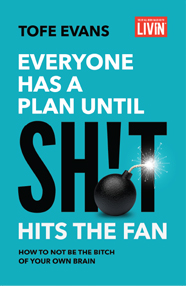
Tofe Evans is an endurance athlete, keynote speaker, and thought leader on practical resilience. After battling heavy depression and anxiety, he found his way out through endurance and gratitude, and since 2015 he has completed dozens of extreme events for charity, including 100-mile ultramarathons, an ultramarathon down Mount Everest, and a 24-hour treadmill challenge. He teaches others to prepare mentally before crisis strikes rather than be overwhelmed by their own minds. He is the bestselling author of Everyone Has a Plan until Sh!t Hits the Fan.
★ Scribe Case Study
Inside Tofe Evans’ Quest to Improve the Self-Worth of the World
Tofe Evans is on a mission to improve the self-worth of the world by writing Everyone Has a Plan until Sh!t Hits the Fan. Read his journey.
📚 Books by Tofe Evans
Transcript
[0:00:28] Charlie Hoehn: You’re listening to Author Hour, enlightening conversations about books with the authors who wrote them. I’m Charlie Hoehn. Today’s episode is with Tofe Evans, author of Everyone Has a Plan Until Shit Hits the Fan. Shit can happen to anyone, whether it’s a life-threatening situation, a death in the family or a business gone bust. In this episode, Tofe will give you the tools to mentally prepare yourself to weather any storm and Tofe should know, the endurance career he embarked on literally saved his life. He believes in rising above your personal turmoil by conquering your own mind. By the end of this episode, you’ll be better prepared for whatever life throws at you. Now, here is our conversation with Tofe Evans.
[0:01:23] Tofe Evans: This started about four years ago, to be honest dude, I was struggling really badly with like depression and anxiety. The thing was, I was never that kind of person, I remember at school, yeah, I got bullied a fair bit at one stage but throughout 2014, I was travelling actually, and I literally came throughout a bunch of setbacks with relationships, with friendships, with business stuff going on, with finances, it was just a conglomerate of things. It ended up becoming too much for me. I wasn’t diagnosed with depression or anxiety or anything like that. It became like a tidal wave and it just kind of took over me and when I look at it now, the incidents, everything that led up to that really heavy point, it was – they’re not even that bad, it’s just what I did with my thinking. I kind of started validating my self-worth, it just felt like I just didn’t see the point in it. It came to a point where it’s like, there’s 7.6 billion people, however many people there were at the time and I realized I probably don’t even need to be here. It really did just become too much and I didn’t know how to deal with it. I was coping with it with hard drugs and alcohol and self-harm and prescribed medication at one stage. I was seeing different doctors around the world. I didn’t know how to fix it, as a male, I was essentially masking. I didn’t like who I was as a person anymore so I thought, I would just write myself off and I was looking at it now, it was probably like, you know when you put like a Mentos in the coke bottle, that was me, or a volcano, it’s just going to erupt any second like an active volcano and the thing with the volcano, it’s very chaotic for everyone around you. I was living in an egocentric paradigm, thinking I had it worse than everyone else. It wasn’t until ages when I realized when I snapped out of it that I am not the only person that goes through adversity. I’ve got friends that are amputees and they’re always smiling. How the hell? When you look at it and it’s like, how the hell are they always smiling? For me, there was a very strong pivot, like, pivotal moment in my life where almost became too much and that’s when like an OD felt like the announcer and then that’s all I could ever think of, six months after that. I remember those as one time dude where it’s like I gave myself exposure therapy, People deal with like depression anxiety differently so first of all, depression is kind of like, when you’re living too far in the past and anxiety’s being too far in the future. When you care about everything and you don’t care about everything at all, when they’re working together, it’s a pretty terrible feeling and the anxiety, having a constant worry and the depression just wanted to, it’s just everything. All I wanted to do, I think when the depression came in, it was – all I wanted to do was sleep. I remember at the time, I felt so lethargic and I needed to get out of the house and I remember I went to this one picnic table. Like, at a park near my house and I’m just sitting there and I don’t even realize about like, it’s as if the table was like this white pine timber and then by the time I left, it was like a saturated mahogany. I was absolutely a mess and I don’t even realize and I come home and I’m getting pretty deep here, I was just kind of over everything. I remember Googling ways to kill myself and like I can attest to this, I don’t know of the exact same sites are up. Some of the sites are like big, bold letters going, “PLEASE DO NOT GO THROUGH WITH THIS.” I can’t even touch the screen anyway because it’s just saturated with tears. I thought these moments only ever happened to rock stars but it’s actually very prevalent in the world, it’s just – There is so much stigma attached to it that at the time, I had no idea what mental health was, I thought, people just through the term around but someone who is an advocate and a spokesperson in the field, it’s actually a lot more prevalent than I thought. That was a very pivotal moment of my life.
[0:05:43] Charlie Hoehn: Thank you for sharing that first of all. Second, suicide, I mean, in at least in the united states has become the number on killer. I mean the CDC, it kills more people than car accidents and the trend is really sharp. Hey, it’s Charlie interrupting the podcast just to say, I was actually wrong about that statistic. Suicide is the number two killer for Americans in the age range of 15 to 34. That’s all I wanted to say, back to the show. What’s surprising to me about this Tofe is actually, Australia, where you live, it’s considered one of the top countries in the world in terms of taking care of people who are struggling with mental health issues.
[0:06:35] Tofe Evans: Yeah.
[0:06:37] Charlie Hoehn: As a person in the states who knows this field fairly well, I’m pretty surprised by that. Did you feel the stigma was so strong down there because you were a male, did you feel it was just unique to you, what is it like in your country? I guess is what I’m asking. There’s still obviously a stigma.
[0:06:58] Tofe Evans: Yeah, it’s actually just as strong – it’s becoming like hopefully, it’s becoming more of a household name. For example, you know something’s big, I know something’s big when my parents know about it, right? I’m having this conversation with mum and dad and they’re like, asking me if I know what Uber is and I was like “Yeah, nine years ago dude, where the hell have you been?” For me, it’s slowly becoming a bit of a household name because trying to make more awareness around – in the mining industry, it is Insane. I think the stats are like 20 men commit suicidal a week because with mental illness in men, they don’t want to open up. It’s like it’s been passed down through like folklore to don’t do it, don’t cry, all this kind of stuff. What I’ve found is, Australia is just as bad as like America with the stats. Maybe the per capita as supposed to how many happened because we have like 13 times less the population in the states but I figured out that any first world country, the rate of suicide is relatively high and what I’ve come to realize, when – especially in Australia, in the town I’m from, on the Gold Coast, it is so beautiful. Fine enough, it is raining but 300 on average, it was a sunny day, 300 days of the year it’s like really sunny but it is raining right now. I think that’s why they call it the Gold Coast. I think that’s where they got the name from but we have like amazing weather, we have about 80 beaches, we have access to anything and everything, we have the mountains just nearby. There’s nothing that the Gold Coast doesn’t have, it’s beautiful and the thing is, the moment you have to struggle for something, when you have everything, adversity hits you on a whole new level. I’ve noticed when I was going to a lot of developing third world countries, the people that aren’t fortunate are the most grateful people I’ve ever met. I remember, in Nepal or Papua New Guinea or in the favelas of Brazil. The people have nothing but they’re so grateful and so giving and so generous to the point where you go, “How the hell is this possible?” They know what it’s like to have nothing, so they don’t want to impede on anyone and they just – all it comes down to is the fundamentals in life dude, it’s food, shelter, water, family and like I said, your very close friends. Everything else is just a bonus, everyone, especially in Australia, I’ve been to America many times, there is almost like a correlation because they’re first world countries but everyone is so focused on certain material items that they don’t have or they’re focusing on what they’re missing, as supposed to what they have already. I think when you have too much going on in life, it starts retracting and you kind of want to be a minimalist, I’m not saying remove everything but it comes back to the food, shelter, water, the family, like for example, my car hasn’t have aircon for two years because I’m always reinvesting it into like my business and that I’m just grateful to have a car and it is the hottest time of the year, it is absolutely humid in the place that I’m from. I’m just grateful to have a car. My laptop is almost gone on its 10 year anniversary, still running, just grateful to have a laptop even though it isn’t the best laptop. I remember there’s this one race I did in 2016, it was like a 70 mile race and this is my first ever experience running at that distance and it was running into the night and like 6:30 PM and so we’re running past midnight and I remember, eight hours in, I’m absolutely just wrecked. We came across like a bridge full of homeless people and I remember, they’re sleeping like molly thin cardboard boxes and my first thought is “Do you reckon they’ll move over so I can have a quick nap?” That’s a pretty massive thing for person who is comfortable. But, at the end of the day, of that race, I’m just grateful to have a bed and when you do this, even like a marathon or even a half marathon or 10k, when just go balls to the wall, you finish these races and all you care about – you’re hungry so you don’t care what food you have, as long as you have food in the stomach. You don’t care, it’s time to go home, you don’t care what car you have, you just need a ride home, you don’t care what – especially the ones where you run for like – very, for very long hours, you get home and you just pass out, you don’t care what bed you have. I think in the world of today where we have access to everything, people aren’t embracing enough grit and grit is like the proponent to resilience and resilience is the proponent to good mental health. There is almost like a direct correlation there, especially with first world and developing third world countries.
[0:11:39] Charlie Hoehn: Yeah, it’s very true and I mean, there’s very clear data showing that as soon as this first world countries start exporting their culture, there’s a rise in mental illness in those cultures too. Stuff like teen suicide and it’s very tightly drawn together and I completely agree with you, there’s a culture of being so individualistic. You get wrapped up in your own self, in your own rumination of what you don’t have, or what you messed up in the past, or how grim the future is going to be based on where you currently are. You just totally lose sight of everything that you do have. Even if you have nothing, you’re still breathing, you’re still alive and we forget that. At what point Tofe, did you start to transform, when did you have your first breakthrough? I know the process of overcoming anxiety and depression is not always a clean “Aha” type moment or breakthrough but if you can point back to one, what would it be?
[0:12:59] Tofe Evans: I’m going to go early on. When I started running, what I was talking about before, when I had depression and anxiety. I’m being too far in the past, too far in the future, I’m not actually being anywhere in the present. I’ll get to the end of my day and I’m just so tired and like, I didn’t even know what I did that day because I didn’t live in the present at all. I didn’t live in the now. I’m not trying to sound like a Zen Buddhist or anything, when I was running, when I was learning to push mental blocks in training or in a run, it was almost like a direct correlation with life and being in the moment of, all I was caring about was where my feet were going. I was just focusing on my feet, dude, they could have been like a category five hurricane going off in my city for all I know and I wouldn’t even know. Because I was just – for me, all I was caring about was foot placement and that kept me focused on that mental awareness in that present. I’ve literally just applied that, just adopted that mentality to life. I feel like endurance and life is a direct correlation almost. That was the first pivotal moment. At the end of the day I’m actually grateful for all the terrible tough times I had to go through because I would not even be having this conversation with you right now then.
[0:14:19] Charlie Hoehn: That’s true. I think this is the hardest part to keep in mind when you’re going through these serious troughs in your life is, a lot of people who think they know what anxiety is, who are like, “I have so much anxiety right now” or they haven’t an experienced it to the depths that it can go sometimes. The hardest thing to keep I mind is it gives you some super powers that you get to carry with you going forward. You have enormous amounts of compassion for other people who struggle after. You have sympathy for people who are going through dark times and it’s no longer – you’re able to better care for others, after you get through it yourself because you’ve learned to take care of yourself.
[0:15:13] Tofe Evans: Yeah.
[0:15:15] Charlie Hoehn: It’s a gift in a lot of ways, going back to what you were saying about gratitude, even the experience itself of suffering has a huge silver lining. In your book, you have a section called “Rewiring Automatic Neural Pathways And Mind Hacks.” Talk to me a bit about those, what are those about?
[0:15:38] Tofe Evans: Yeah, sure. When it comes down to neuro linguistic programming, I’m going to have – you’ve got audio people, you’ve got visual, your kinesthetic and you’ve got audio visual. Now, I can hit the main three ones but I knew this was going to come and you’re going to have people that are very, they’re analytical and they’re going to go – I can hit everyone emotionally because I’m a kinesthetic person I can hit everyone visually because the way I explain it is the framework is through a diagram and through voice. Voice is so powerful and you know this. But, everyone who is analytical is going to go “Tofe, that’s all well and good but how do I know your methods work, right?” I literally collaborated on this book with – I found experts in the field so a doctor in psychology worked with me with this book. I had one of the top human behaviors, not only in America but in the world. It was a bunch of neuroscientist and that that I was working with, making this book. That entire chapter, the vernacular is starting to sound a little bit different, it’s almost like, you can just tell the psychology behind of it. Within neuro pathways, when we come across a tough situation, it’s fear versus trust, you got to pick one or the other. 99.9% of the world is living with fear and autonomy, essentially, what you have to do is start rewiring your neural pathways so fear is becoming your best friend. I’m not saying fearless but fear, less. In the sense that when we start saying no to everything, there is a point when you can start saying no to things but you got to get in the rhythm of start saying yes, so you start to prime your brain to take on things. There was, I remember talking with Jodie and asking her these really thought provoking questions I’ve come across and then she was explaining them to me. I was getting to a point where I could just do something and just tackle it straight on. She said, “You’ve skipped a process in the brain literally because you’ve put yourself through enough like fearful things on purpose and endurance that it’s like, you're telling the narrative in your brain going, it’s all good,” Essentially, I’m just making fear my best friends by putting myself through simulated adversity so the fight or flight isn’t as bad and now it becomes first nature as supposed to freaking out of everything. I used to be that guy, I didn’t know how to handle fear and now I’ll go for it because I’ll see opportunity that comes from it.
[0:18:26] Charlie Hoehn: Author Hour is sponsored by Book in a Box. For anyone who has a great idea for a book but doesn’t have the time or patience to sit down and type it out, Book in a Box has created a new way to help you painlessly publish your book. Instead of sitting at a computer and typing for a year, hoping everything works out, Book in a Box takes you through a structured interview process that gets your ideas out of your head and into a book in just a few months. To learn more, head over to Bookinabox.com and fill out the form at the bottom of the page. Don’t let another year go by where you put off writing your book. Give me an example of before. What’s the situation where you would freak out, when you would be that guy?
[0:19:16] Tofe Evans: Asking a girl out on a date? Like something as simple as that.
[0:19:19] Charlie Hoehn: Well, that’s not that simple. I think everybody gets nervous in those.
[0:19:22] Tofe Evans: That’s true.
[0:19:24] Charlie Hoehn: Is there a simpler one?
[0:19:25] Tofe Evans: Yeah, sure, closing a business deal, I know that one can be very scary. It was even signing up for anything. Just doing anything new, like for me to do all these endurance races, like some big ones too, it almost looks psychotic. The distances and for me, I look at it like a win/win when I do them because I can bring in good for charity. What I’ve seen before, there’s been some pretty life threatening situations where I go, “It’s all good bro,” this is what I’m telling in my mind. I start to make it a habit, how I do it is by doing something, with the mind hacks, there are, I think I’ve got 10 mentioned in there and one – a really good one is “What’s the worst that can happen?” That six worded sentence is so powerful, that’s perspective right there. You go into realization going, whatever the situation may be, I’ve got some pretty powerful ones where that worked and I go, “Well, I don’t have to go to war today, I don’t have to get surgery…” It’s just remembered, this one event I did for charity last year and it was like a double marathon on a paddle board. The board sponsors go, “You can train with us if you want” and I remember driving to training Monday morning for like three weeks. I didn’t have much preparation for this event and I’m thinking, “What the hell are they going to think of me?” These guys that I train with, that I’m training with, again, are like some of Australia’s best paddle boarders, they go to Japan, all over the world to win championships. I’m just this guy that’s just out there to train with them and I’m not going to be able to keep up with them. So it’s like, when you do anything on the first time, you just think negative, we think negative, we think worst case scenario because the brain is primed, it’s like that clever ancestral brain that goes back to thousands and thousands of years ago, that’s just – for example, a common thing as we mentioned that if your ancestors, when they got ostracized from the tribe, they got kicked out and then there’s a chance there’s a lot of tigers after us.
[0:21:33] Charlie Hoehn: That’s a hardcore fear, yeah.
[0:21:36] Tofe Evans: Nowadays if our friends or family ever were to betray us, it is still like as if there’s a lion or tiger after us because it’s been passed down through ancient history.
[0:21:46] Charlie Hoehn: It’s massively traumatic and it can stay with you for decades, that experience.
[0:21:51] Tofe Evans: Yup, it’s crazy that humans, like since the first person to where we are now, we are so technologically advanced. The fact that we can do this, have this conversation on the other side of the world. It is so crazy that it’s hard to fathom that this is more advanced than 40, 39 years ago when they were – all the technology just trying to get man on the moon. It’s hard to quantify how much we’ve progressed, it’s insane. How we deal with fear and our thinking has only changed a slight fraction, we’ve literally gone from one extremes to the other from malnutrition to obesity. Like back in the day, hunter gatherers go, whoever is the team leader and heads the meeting and goes, “All right guys, we got all these food and water and drink, eat what you can because we don’t know when we’re going to eat again, seize the moment.” Nowadays, it’s like, “I’m hungry, I need to eat.” But there’s like a million shops near my house. With my philosophy in life, it is like an amalgamation of philosophies. As much as I love stoicism, which is that rewiring your pathways. Like delayed gratification. I’m trying to break stoicism in men in particular because like straight history, all the men are the ones who are creating the wars. It’s unfortunate but it’s true.
[0:23:12] Charlie Hoehn: We’re the maniacs, yeah.
[0:23:14] Tofe Evans: All the shootings like that unfortunate one that happened in Florida recently despite color I think it’s all men, all the destruction, all the warders are men. It’s ego, massive eago and testosterone issues. It’s like, “I’ve got the biggest dick” “No, I’ve got the biggest dick” it’s like “Come on guys, what the hell?” And you guys are thinking about yourselves and now millions of people are going to get hurt either physically or emotionally, or you’re going to destroy them. So there is a time in men, I am trying to break stoicism in men because there’s a time to be tough and there’s a time to be vulnerable, right? And I say it to all my male friends if you need to cry just get it out of your system because I always use the analogy of a bottle of water that weighs about a pound but if you were to hold onto it for 24 hour straight, it’s going to feel like 500 pounds. Now these are arbitrary numbers but profoundly it’s still a pound. Now we do that with our thoughts in our head, it’s like the whispers becomes yells. They’re the same volume, whether they are yelling or whispering, the thoughts in your head they’re the same volume and it’s like they are magnified overtime and they end up feeling like a 500 pound weight. So I say to my male friends in particular, “If you guys need to cry, get it out or else it’s going to magnify to a 500 pound weight to the point that you have no energy, you’re lethargic” and yeah that’s the thing with stoicism. Yeah it’s got a lot of stigma attached to it.”
[0:24:34] Charlie Hoehn: Yeah, I completely agree. I think it’s a useful philosophy but where we are now, males in cultures all around the world, I don’t think it serves as well as what you’re talking about which is being vulnerable. Being in touch with your emotions, being emotionally intelligent and not editing them but allowing them to process and actually sitting with them and allowing them to flow through instead of judging them. There can be actual physical transformations in you if you allow yourself to cry like you’re saying and just to backtrack a bit. I love what you said about rewiring the neural pathways by making effectively fear your friend. I went down a very similar path, came to the same conclusion but just through a different means which I started practicing improv every week and in improv, the central tenant is say yes. Whatever the scenario you say yes and this makes you acutely aware of how often you say no. To yourself, to what’s happening, you’re constantly editing and making things perfect or not good enough and you become aware of you are depleted of gratitude. You don’t have it because nothing is ever quite right or nothing is ever good enough and just practicing saying yes to whatever scenario you’re put in. It is simulations, right? It’s fake scenes but saying yes to that, embracing every part of yourself for whatever comes up and like you said, you are basically saying, “It’s all good bro” and going into it. That completely dissipated my anxiety that I had struggled with for a year and a half. I am doubling down on what you are saying. Your stuff is actually backed by science, mine is anecdotal but it’s the same thing. So that’s really good.
[0:26:39] Tofe Evans: Yeah, you make it a habit literary. It becomes first nature now. After like 66 days of when it rewires in the brain from the University of College London, habit takes about it used to be 21 days but they broke that myth. When you start saying yes to everything and when you start to just being in – like you jump into that moment and you’re just focusing on what’s happening. It’s probably best ,like I know when it comes to habit building, start so small that you are essentially just building a crescendo.
[0:27:09] Charlie Hoehn: And Tofe you just said it takes 66 days, is that what I heard?
[0:27:13] Tofe Evans: Yeah.
[0:27:14] Charlie Hoehn: That makes a ton of sense, a ton of sense. You know just a quick story about that, so you know the five minute journal right? Yeah, so you are practicing gratitude a few minutes a day, morning and night and the science that I’ve read behind this was it takes three to four weeks or 21 days for this habit to form and for you to start feeling the effects. I did it for over two months and for the first two months I was like, “This isn’t working. This is not doing anything.” And around the two month mark, I felt this huge transformation and it’s just funny. Another anecdote but anyway, go ahead.
[0:27:54] Tofe Evans: No, it’s a test to the data. It depends like if you are going balls to the wall every day, you might even get it quicker than 66 days but if you just do something every – like the key is to not burn out. So for example, when you go to the gym for the first time in ages or the first time at all, don’t be a hero and try to do it six days that week. As motivated you are to lose a bunch of weight or to put on a bunch of muscle, start small because you’re going to burn yourself out that way. So I have learned that when I was going back into training into the gym, I would just focus on doing like 30 minutes that day and I might do one or two days that week. I would be focused on incremental change and to the point where the fear isn’t that bad. What something I live by is having a cold shower every day. Now, people are so off put by that because cold shower suck. I’ll tell you that cold showers really suck but the thing is there are ways to go around it. Like have a hot shower first if you are getting into it then at the end, blast it on cold and you only have to do it for just like four seconds. That’s what you have to do, that’s it just four seconds or three seconds. The next day it would be three and a half seconds. Then do four and then maybe stay on four and then go five to the point where you’re increasing that crescendo and by the time it’s rewired as a habit and now it’s time to get insatiably curious and that’s pretty much how I live. If I am going to do something new for the first time just start really small and then build the crescendo and then the fear isn’t as bad now and then you’re like, “Oh what’s the worst that can happen?” like I can keep dealing with this.
[0:29:29] Charlie Hoehn: Yeah, I hear you. I’m big on cold showers myself and I also hear you on how much people think it’s an insane habit but it is. It’s a great thing to practice even just for building up a little bit of resilience each day, which you talk about at the end of the book. You say that, “The greatest thing you can acquire in life is resilience,” why resilience?
[0:29:58] Tofe Evans: It comes back down to the evolution of psychology. Dr. David Buss mentioned in his book, Evolution of Psychology, you don’t have to be the smartest or the strongest or the quickest or the richest or the most famous person, you don’t have to be the most successful. It comes down to two traits: Knowing how to adapt and bouncing back after every fall. So the book title is so incredibly fitting because even to this point where the book is at, anything that can go wrong has. And it’s knowing that when plan A doesn’t work, you have a whole alphabet to work with. However, sometimes we don’t have the resources to get to plan G. So this is when you have to get creative and sheer creativity has gotten me ahead of where I needed to go sometimes but the other thing too – it’s like that Japanese proverbs, Fall down like a seven stand up like an eight, like if you get push back just get back up. The word failure has a lot of negative connotation attached to it. But if the word failure is like the word fear almost but if it really scares you and you don’t want to try things, don’t look at them as failures. Look at them as experiments that didn’t go to plan. Everything goes back to science, when you said that before. For example, every astrophysicist, neuroscientist, anyone that’s won a Nobel Peace Prize, when they found that their findings, their discoveries they wouldn’t have it out in one hit, right? Like it’s cool like when we did it in chemistry, physics, bio, you conduct the experiment, you put your hypothesis, what you believe and then you test it and whatever doesn’t work you put it to the side and that’s just feedback. So it’s the same thing in life. It’s just because sometimes you become so emotionally invested in what we do, or we’re so immersed in what’s going on, we really take that loss like a loss but look at us at like an experiment that didn’t go to plan. And it comes back to hindsight and it is a really good hindsight but for example, if you ask any – like I ran this movement called #pathtoresilence and essentially the last part of the piece was gratitude. It’s like, “Tell us how grateful you are to go through all this stress and with that specific adversarial moment” because you grow as a person. When you realize that every great in life, whoever you want to find as a great person whether male or female, in sport or in business, whatever, in charity. For some philanthropic reasons, humanitarian reasons, they all came from a trajectory of pain. So that is kind of reassuring to hear. Like when I literary tried to OD, I’m going through this moment of a dichotomy thinking “This is meant to be but this is not how it meant to go” and when I look at it now, I was meant to go through that pain but that’s not how I am meant to die. I need to die with a little bit more legacy behind it. The rest I am just going to be like the majority of the world when there’s so much untouched potential they never got into. It comes back to evolutionary psychology for me, like knowing how to bounce back because that is a pretty good trait to have. Like when you are in a war, you want a guy that’s covered with battle scars that knows how to guide you because he’s been there himself and when you’ve gone through – I have noticed it in person, when you’ve gone through rock bottom, you’re living more empathetically because you don’t want to put that pain onto anyone else. Some people do in the lower ratio, in the lower big numbers there is always going to be someone but the people that kind of resonate with what you are talking about, they’ve been through a similar path or they have been through some sort of pain that has really set them back but they have pushed through and they are so much more stronger and people want to be on their team.
[0:33:35] Charlie Hoehn: It’s true. I have noticed this in people especially with my closest friends, the people who have the biggest hearts or the people who are the most caring. I compare them to diamonds basically that they started off as coal and they went through insane pressure and hardship and most other coal would have been incinerated or would have evaporated because it was so hard but for some reason, they emerged stronger and better and more beautiful.
[0:34:07] Tofe Evans: That’s a good analogy actually, I like that.
[0:34:09] Charlie Hoehn: Yeah, thank you. So I am curious Tofe, you have been teaching this stuff. Do you have a particular success story of either somebody that you’ve worked with or somebody who’s come across your message that you really are proud of?
[0:34:27] Tofe Evans: Yeah, I’ve got a lot of case studies and hearing people use practical rules and it’s framework, it is a very humbling thing to hear when people used it and how effective it’s been. People have gone through – you know what? Something as sport related like trying to run a 500mile, to overcoming workplace bullying but the one that got to me was this lady that lost her kid to cancer. Like overcoming a children’s death and explaining how the framework to put it a more tangible feel for anyone that is listening. It’s when you guys threw the adversity like speak of a time that is highly adversarial, tell us the mindset that got you through it and then say how grateful you are. Now that sounds so broad in that but it’s very profound. When you truly understand the practical resilience framework, when you see through it, it’s so powerful. The tools are in us the whole time. This lady, she’s managed to push through it and I think she’s helping a lot of other people that are going through something similar. I remember I had a phone call with a friend the other day. He is based in Dallas and he was speeding and the cop pulled him over. He should have lost his license, that’s what he told me and he said he was talking with the cop and explained his current situation and then the cop goes, “All right, what about I’m going to drop it down a bit so you don’t lose your license but you are still going to have a fine” and he said, “Dude”, because of literary practical resilience, “I manage to stay composed and I didn’t lash out at the cop.” So something like that or when I’ve heard people overcome cancer and said, “This is how I did it” another framework and people that have gone through – like one of my close mates, there was a time in his life and this is males because of stigma, he really didn’t tell anyone about suicide that he wanted to go through and he’s like, “You know what? Screw it. I’m going to make this video, put it out there,” and he’s like, “I’m doing this for you Tofe”. Who knows what the results could be? He actually got a really impactful result because a lot of men are going, “It’s not just me that doesn’t want to talk to anyone about this” and the hell that he just put this out to public to see that is insane. So to get people more vulnerable, to get people a little bit to express more humility and express more gratitude is a pretty cool thing to see and I don’t want the ego saying, “I started this” but like it makes us more human. Especially as males and females too, it’s not just males. There’s also females who don’t want to open up about this stuff. When you suppress so much emotion you are not really a human being anymore. Now I am not belittling anyone. It’s just some guys, like as fathers and they teach other kids going, “Don’t cry,” that they need to hold it in because maybe that’s the way they were parented or it’s the way that the society has impeded on them. But it’s like surfing, look when the right wave comes you just ride it and when the waves of emotions come just ride it. Now I am not saying complain to everyone but sometimes if we’re angry we’re going to – when we’re being a little bit more vulnerable too, I’ve noticed it’s like you’ve got the category five hurricane but you want it to get back down to a gentle breeze and I feel like vulnerability is a very powerful tool but that’s one step. The second step is building the resilience back in so you are a little bit more emotionally self-aware and have self-acceptance of what’s going on.
[0:37:48] Charlie Hoehn: Yeah, it’s the balance. We have to have the balance.
[0:37:50] Tofe Evans: Sometimes we compare ourselves to everyone else. Here’s the thing about comparing, you can emulate other people’s traits but you can’t compare yourself, like dude we can’t compare each other because we are from different eras in life. We’ve grown up in different families, different upbringings, we look completely different – everything. We are in two different trajectories in life. Why the hell should we compare each other? It doesn’t make sense because the circumstances are completely different. Even twins end up completely different, right? Siamese twins, now that’s a little bit different, they’re stuck together for life unless they get the operation, the snip. I said to myself, “It’s okay to not be okay” It’s okay to be where I am because at the end of the day, it’s me versus me. I’m only in competition with myself and it’s you versus you.
[0:38:34] Charlie Hoehn: And you are not even in competition with yourself.
[0:38:37] Tofe Evans: Yeah, it’s almost like I am just trying to break me with this.
[0:38:39] Charlie Hoehn: You’re with yourself, yeah exactly. So those are really remarkable examples and you’re doing good things, you are affecting people’s lives in positive ways.
[0:38:50] Tofe Evans: Thank you man.
[0:38:51] Charlie Hoehn: Can you give our listeners a challenge, something they can do this week, something small from your book that can improve their life?
[0:39:00] Tofe Evans: Yeah, sure. So I’m going to say there’s one, I have an entire section pretty much on gratitude. Now it’s becoming more of a buzz word but in a bloody good way. I’m glad, it’s like resilience has become more of a buzz word and it’s – you know what? Express more of it because it will change the definition of reality. For me, it gave me purpose in life and you don’t know whose life you save. It might be even your own and that’s what happened to me. Literally it stopped me from killing myself. Depression is a state of worthlessness and I had no more worth left. That’s what I felt because I was going backwards in life, I lost all curiosity in what I was doing and that is heartbreaking for someone who is incredibly curious. So expressing more gratitude. Now something as simple as calling up a friend who you haven’t spoken to in a long time and telling them and obviously from a genuine – you have to be as genuine as possible. Telling them how much their friendship means to you. Something so simple that you don’t have to donate a $100,000 to charity or anything like that but something. Just being kind and being grateful for everything and being appreciative even for – it gets to the point where even the terrible moments, you are grateful for those in the moment. Now I think that’s the Buddhist in me. Things are going haywire and I am going to just be grateful for this plan because you are going to get through this and it’s going to make you wake easier. You’re going to look back at this and it’s going to make your life easier because you are able to push through it now when it is happening and it’s the moment. That’s what gratitude, that’s the result it gives you. The first thing, I did this before your phone call. I write them or at least speak them out loud but I say three things I am grateful for every morning. I’ll get real creative and it’s going – I am always grateful for my parents. They are such a blessing to me. But I go, “I’m grateful for the car I have right now” and it has no air con. It needed a service a long time ago, she is hanging in there though. You know what? Even something simple as gratitude journaling, when a happy moment that comes in or something that is very fulfilling, write it down from a really strong perspective so when you’re going through a tough time, you can just reopen that gratitude journal and you can re-spark something. And because in the world of today, we have so many smart people. We need the smart people because they’re the ones that come in with cures for cancer. They’re the ones that’s disrupting the world, the thought leaders but sometimes the smartest people are the ones with the biggest ego and they create the biggest wars. Now everyone in history that has started a war is incredibly smart because they know how to persuade. They’ve got a very strong vision that they manage to convey their message across and get people on but sometimes, they’re using their smart for the wrong or not for the greater good. Now I look at the rate of smart people kind of like the rate of technology. We are not slowing any time soon especially with the population growing but there is an imbalance in the world with kindness and gratitude. We need that to overwrite all the negative stuff going on. So that it does become more of a mainstream household kind of term. It’s like that crossing the chasm bell curve analogy in the startup world. You’ve got the earlier doctors and the protagonists that are doing this stuff because they’re just testers, absolute mad scientists. Then you’ve got the chasm that blur state and it’s just really pumping it through so that it hits the laggarts, the people that aren’t willing to take on and take any risk and then the cynics. The cynical people, so that it hits them and then they realize. It makes you like the other thing too, when you practice gratitude, it’s an art and you can’t expect like a breakthrough straight away. It becomes a habit and it gets to a point where people start recognizing it as a trait and they want to be around you because they see the good it can bring for you and they want it for themselves and you see someone struggling and you realize that your day isn’t that bad after all.
[0:42:41] Charlie Hoehn: I think of the quote, “If the only prayer you ever say in your entire life is thank you, it will be enough”.
[0:42:48] Tofe Evans: Yeah, a 100%.
[0:42:49] Charlie Hoehn: So Tofe, how can our listeners connect with you and follow you?
[0:42:54] Tofe Evans: For sure, so I’ve got an upcoming book coming out and it’s all in my site.
[0:42:59] Charlie Hoehn: Really?
[0:43:00] Tofe Evans: Yeah and I was just going to literally take it to the book page but everything is on my site. It’s tofe-evans.com. It’s got everything about the book, it has all my social media sites. I am just usually @tofe.evans all over Facebook and LinkedIn and Instagram and Medium and that’s where you can find me and anyone is welcome to email me at tofe-evans.com if they want to get in touch with me. They can reach out to me if they want to say hi, if they need someone to talk to. I am that kind of guy that if you need someone to talk to at 3 AM, give me a call. If I am not passed out or if I hear my alarm go off, if I can hear my phone go off. But I am always happy to be there for people that are really struggling and in need because that might be their last opportunity. That might be it whether like, “I need someone to talk to” or “This is it. I am going to call it quits for life.”
[0:43:51] Charlie Hoehn: And you know, they might take you up on that because 3 AM in Australia is like 10 AM here. So it’s a convenient time for us. Cool Tofe, this has been great. Thank you man, keep up the good work.
[0:44:05] Tofe Evans: Thank you brother.
[0:44:08] Charlie Hoehn: Many thanks to Tofe Evans for being on the show. You can buy his book, Everyone has a Plan until Shit hits the Fan, on Amazon.com. Thanks again for listening to Author Hour, enlightening conversations about books with the authors who wrote them. We’ll see you next time.
Want to Write Your Own Book?
Scribe has helped over 2,000 authors turn their expertise into published books.
Schedule a Free Consult