Anthony Butler: Episode 1034
Read the full transcript
Anthony Butler
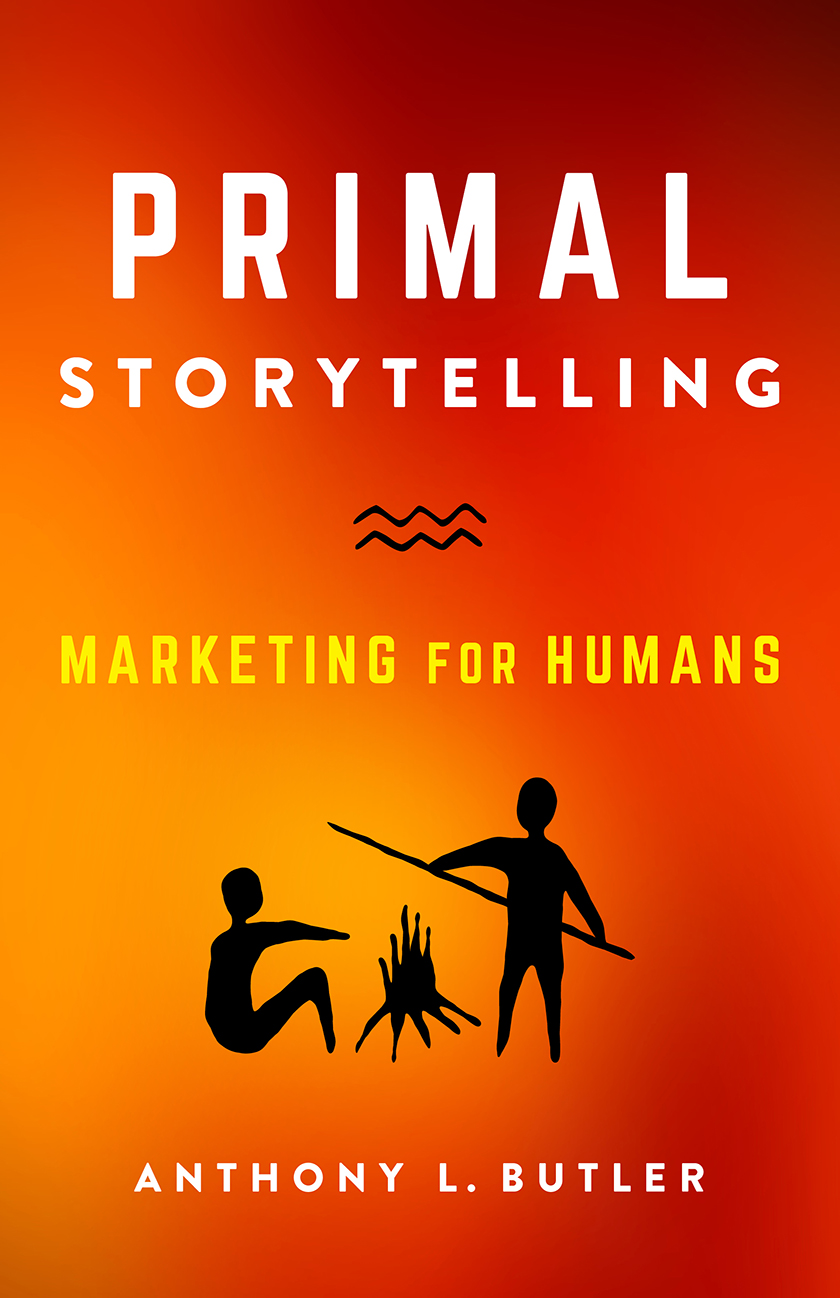
Anthony Butler is the founder of the digital marketing agency Can-Do Ideas and the creator of the Primal Storytelling content system. A highly regarded expert in brand storytelling and digital marketing, Anthony graduated from the United States Military Academy at West Point and the US Army Ranger School. He is a combat veteran and commanded an infantry company in Iraq during the invasion of Baghdad. He is also a Brazilian Jiu-Jitsu blackbelt and currently resides in Montana with his wife and two sons.
📚 Books by Anthony Butler
Transcript
[0:00:39] HA: I woke up to my mother’s screams. If those words sent a chill down your spine like they did for me, then you’re at the right place. What’s up everybody, welcome back to another Author Hour episode. I’m your host Hussein Al-Baiaty. And today, I get to talk with author, Anthony Butler about Primal Storytelling. From a fire in Montana to the streets of Fallujah Iraq, to the war of attention among 1.5 billion websites, globally. Anthony proves time and time and again that stories are the most effective way to capture human attention. Anthony Butler is the founder of the digital marketing agency, Can-Do Ideas. And the creator of the primal storytelling content system. A highly regarded expert in brand storytelling and digital market. Anthony graduated from the United States Military Academy at WestPoint. In the US Army Ranger school. He is a combat veteran and commanded an infantry company in Iraq during the invasion of Baghdad. Very excited for the opportunity to share stories with Anthony, so let’s jump into it in this episode. All right everyone, so, Anthony Butler is here to tell me all about his amazing new book, Primal Storytelling. I’m super excited. Anthony, thank you for having us, thank you for coming on the show. So, let’s start by giving our listeners an idea of your personal background just a bit?
[0:02:05] Anthony Butler: Yeah, so, I have the last 10 years, I have been a full-time marketer and just consulting with a lot of businesses, starting my own businesses, I guess this is the seventh business that I’ve ran. Some six, seven, something like that. Either founded, ran and all the above. And I guess I had just been a full-time storyteller for the last 10 years.
[0:02:28] HA: I love that. So, you’re not busy at all? You just kind of hang out and do nothing.
[0:02:33] Anthony Butler: I Actually, I actually run two businesses. I have my marketing business and then on the side, in the same building, I have a martial arts studio. I run a Brazilian Jiu Jitsu academy in Helena Montana.
[0:02:44] HA: My God, that sounds amazing. I’m into boxing classes myself. I’m not a Jiu Jitsu guy but I grew up getting my butt handed to me because my brother was super into martial arts. Like, all the time. I never got into it, I was very much into, like yourself, storytelling, art, graphics, that was my world, art, painting, and so, I’m very excited to kind of get into your book a little bit. But before that, I kind of want to know a little bit about sort of, you know, what are the experiences that sort of, you know, helped you navigate getting to this book and then realizing, like, okay, I need to write a book about this. What got you there?
[0:03:24] Anthony Butler: Well, there were really three different things that kind of came together to coalesce this book. And one of them, I talk about in the introduction of the book was, I was a little kid living in up, northwestern Montana in Thompson Falls and it’s the middle of winter, it’s 30 below zero outside, the wind’s blowing and our house burns to the ground. And it was one of those fires where the chimney caught on fire, the roof caught on fire in seconds. Whole house was full of smoke, we woke up and we barely got out alive, and then the house burned all the way down to the foundation. No one came, you know, we lived outside of town and it’s in the wilderness, we were way out and you know, we were on our own and it was really, really scary. I have two brothers, my mom, my dad, you know, I was a little kid when it happened, I was seven, eight years old. And it was like the first time in my life where I felt kind of this deep fear. You don’t really – it’s not something that you experience on an every day basis, you know? Maybe you have a close call where you miss a deer on the road or you know, something, but it’s very rare for someone to have kind of an existential experience. And then, later on, I got in the army and I went to WestPoint, I graduate from Ranger school, and commanded an infantry company over in Iraq. Spent very, very long time there, more time than I wanted. And you know, spent a lot of time dealing with situations that are not common and you know, as an infantry commander, one of the things that you're doing is you’re managing the emotions of the troops because they don’t want to be there and you know, they’re fighting and people are shooting at them and on both sides, people are dying and it’s not good for anyone. And through that, between the war and the fire, like, something dawned on me, you know, it’s this connection with that primal part of us that’s – you feel rage, you feel anger and you feel fear, like deep fear. I don’t mean like, “Fear, hey, I’m going to be late for work and I’m going to miss my coffee”.
[0:05:29] HA: No yeah, yeah, I know what you're talking about.
[0:05:32] Anthony Butler: A little different. You know, and deep sadness and grief at a level that is just hard to describe. So then, years later, I get into marketing and I’m helping companies create messages and I’m helping companies create content online. And I just realized, it’s like, man, the worst corporate blogs, they’re just so dry, they’re written for no one, they’re written for search engines. That’s why the subtitle of the book is, marketing for humans, because, most companies.
[0:05:59] HA: Yes.
[0:06:00] Anthony Butler: The mistake they’re making is, they’re trying to write content to trick Google, they’re trying to write content so the search engines, you know? “I need search engine optimization” I was like, “Well, that’s not really what marketing’s about” Marketing is about connecting with people, real people, with real emotions and as I started thinking about it, and I realized, I was like, “Man, we have these primal urges” Right about the same time, I just stumbled, I was studying and I stumbled on this idea of evolutionary psychology. You know, this idea that humans, we have, the vestiges of what were animalistic instincts. You know, geese fly south for the winter, they don’t fly east or west, they don’t go on vacation in Hawaii, they fly south. Well, humans, we still have those primal urges, we still want to do those things that our animalistic nature encourages us to do but we have the chance and we have the choice to say no. We have a choice to say yes to anything that we want. You know, that’s what free will is. And when I started putting those two things together, and I created an entire system around it to try to help companies, you know, create a message that can connect with an audience, that can connect at a primal level that’s emotional. When I say “Emotional” I don’t mean that it’s super angry or super sad or anything like that, it just mean that it’s directed at people and can touch them.
[0:07:25] HA: Yeah, I think for me, when you say that, for me, it’s like you know, something that I read or something that I look at or a product, whatever. That it’s like relatable, right? Like you know, you and I experience a traumatic incident at a young point in our lives differently. Like, I was in the middle east, I was in Iraq, I was about five years old when it was raining bombs outside, right? It was the Gulf war, it was 1990. And so, I can share in that, you know, when I was reading, picking up your book, kind of reading, skimming through it and I was like, wow, this is profound because, here’s a traumatic experience at a very young age. You know, what does this lead to, right? We look at those young, traumatic experiences as like, you know, obviously, you know, when you said, you know, “I woke up to my mother’s screams” Man, that like, sent a chill down my spine. Because, that’s how I remember my experience in a way, you know? And my thing is, it’s like, “Well, now that this experience happened and now that we’re older and like, we’re professionals, we’re working”. How can this experience serve what I’m doing and who I’m working with, right? That extension. What is it about my experience, my story, that’s relatable, right? So that, when you’re working with someone or selling something or whatever. You’re not doing the heavy lifting; you’re creating that connection. And I love that, you know? You’re right. you’re a hundred percent right in the sense of like, this is marketing for humans and humans have emotions. It doesn’t necessarily have to just be sad or happy or whatever. But emotions just connect with relatability, in my understanding. And so, I love that, I love that you kind of had this idea, especially around primal urges and emotions. Can you share a little bit deeper about that because I know that’s a little bit, that’s like two or three chapters in your book, which is pretty big. And like, the purpose of those things, and where they end up in your, sort of, in your marketing journey, if you will.
[0:09:29] Anthony Butler: Yeah, sure. So, for marketers, there are certain emotions that are easier than others to evoke. You know, so obviously, the one that’s most obvious to everyone is, outrage. That’s the clickbait of the day, you know? Every other – and if you just need a reminder of what that looks like, just go on to any news site and just read the headlines and then scroll down to the bottom and look at all the ads. Mostly they’re outrage, followed by curiosity, you know, where you get a partial headline, “See what some celebrity were today” or “The sheer dress” or where they bring in – use curiosity and sexuality and you know, they’re mixing things that just have this kind of primal urge. You know it’s clickbait, you know, if you click on it and you go there. It’s something that you could care less about. But you click anyway.
[0:10:19] HA: Yeah. Because you’re curious, they hit a nerve, yeah.
[0:10:22] Anthony Butler: Anyway, it’s like, you're driving down the highway and there’s a big accident and you know you shouldn’t look but you just can’t help and you look. And it’s just one of those. If you look at viral campaigns, whether it’s an email campaign or something on social media. At the heart of all viral campaigns is an emotional connection. And, I think that most brands are just doing it wrong, you know? They’re trying to connect at, from data, they’re trying to tell people what they do, they’re trying to solve a problem but they’re just not connecting, they’re just not creating storylines that have any kind of emotion behind them. You know, so, in the chapter on emotion, what I do is, I just outline a number of emotions, talk about, you know, there is dozens and dozens of emotions depending on how you categorize them. Which emotions are really are effective for marketers, how do you use them, and then, I created a number of storylines that you can use that follow a specific structure. You know, it’s like, if you look at most movies. You know, movies follow structure. If you look at Harry Potter, Star Wars and you know, almost any other big epic fantasy movie, they’re all the same movie, you know? Harry Potter and Luke Skywalker, they’re the same character.
[0:11:46] HA: Sure, sure, yeah. Following that like, Hero’s journey and all that kinds of work, so yeah.
[0:11:51] Anthony Butler: It follows the hero’s journey to a tee and marketers could do the same thing. You know, what I came up with is, a framework for four primal stories that every business can and should tell. And it’s just a framework to do that and you know, what I’m really trying to do is, I don’t want to go to another website and see a crazy, just bland corporate blog, you know, or all the nonsense that they’re uploading to social media. I go talk about, you know, “There’s 50,000 years of new content being added to the Internet every day “. Well, guess what, most of it sucks. Most of it is awful. It should never have been made. You know, companies are pouring millions and millions of dollars into hiring marketing coordinators and you know, someone to handle their social media for them and they have no structure. They don’t have a real strategy behind it on how to connect with an audience and sell something. You know, marketing is about influencing people and you just can’t do that with dry data.
[0:12:55] HA: I couldn’t agree more.
[0:12:56] Anthony Butler: Where the storytelling part comes in is something that I think we all instinctively know what we just forget, is that, people think in stories. Like, the next time you go to a party, just sit in the background for a minute, just listen to what people are saying. You know, they’re telling you the story about, when they were on the way to work and they almost got in an accident or a story their crazy boss who is having an affair or you know, just something that’s going on in their life. It's always a story. You know, if you spend any time around little kids, like little kids live in a story, all thew way up until about seven and when my boys, I have two sons, and when they were little, you know, Shrek was just coming out. So, I’ve seen Shrek like 6,000 times.
[0:13:43] HA: That’s funny, yeah.
[0:13:43] Anthony Butler: And that’s because kids love stories and they love that kind of, you think in stories, you learn in stories and anthropologists have identified a certain number of story structures that go back thousands and thousands of years. One of the oldest known stories in human history is Little Red Riding Hood, that story has been traced back as long as 4,000 years ago. In dozens and dozens of different versions. I think… don’t quote me on it but it was somewhere around 70 plus versions of Little Red Riding Hood, across cultures. Across cultures. You know, so, stories really work and they matter.
[0:14:22] HA: Yeah, I mean, it definitely, how we’re able to define ourselves, define our, you know, our heritage, culture our essence, and then, the best part of, I think, personally, the best part of a story for ourselves, the one that you define for yourself, the one that you realize like, “Oh, I can create my own story and that’s going to come with trials, tribulations and all these things but I’m going to try to direct my own story” And I think, for me, I’ve been a storyteller my whole life and I didn’t even know. Like, I love poetry, I love – and all these things connected to, you know, your stories unfolding as you live life. And the more you challenge, you know, your perceptions or your growth or you know, I’m just talking about personal things but when you add that business layer, right? Then there is an essence of how your business can grow. So, what I did, for example is, I had like, this T-shirt brand called Refutees and like, my goal with that was to connect story to it. So, obviously, you know, connecting like my story origins and all those kinds of things on my website were huge, they were fundamental to what I wanted, the end point to be, which was to share a positive outlook on refugees, right? And so, you know, you talk about that in your book which I thought was fundamental in the founding story, the primer storytelling which is a huge component of marketing. So, I love that you wove those two, and in your book, talk about the importance of that founding story and how you can share it and you know, it just adds so much, I think, you know, it just makes it really authentic and real. At first, when I did that to my website, a lot of my people and like friends and things were like, “Man, that’s a lot of your, like, personal story on this business” I’m like, “Yeah, because it’s not necessarily just the business, right?” It’s at its core, it’s about this message. And I can’t carry that message without my story. And that’s what I can share and experience from. It turned out to be alike a gold mine for me personally on how to tap into these – to those emotions. So, can you tell us a little bit about like, the importance of like, how can someone, right now, out there, running a small business, or whatever it is. Maybe it’s a big business, how can they integrate that founding story into their work, right? Into their websites, their… whether it be social media, videos, whatever it is. I know you talk about that and you kind of lay out a template. But what are some key components of a founding story?
[0:16:55] Anthony Butler: Think of that founder’s story like a super hero origin story. You know, where you came from, you know, why are you doing what you do and like, I love your particular one. I looked you up also. So, you know, you’re starting a movement around, you know, helping refugees which is seriously, and I just have with a part of WestPoint society and some other WestPointers up in Montana, we’ve been helping some Afghan refugees who, you know, they just got to the states, a lot of them were translators and some of them are really just struggling to find jobs and struggling to find a place in a different culture. And it’s not easy and it’s not something that just anyone can do. And, as the founder of that company, you have a vision for what it is you’re trying to do. Like, who you’re trying to help and how you’re trying to help them. And that’s how people connect. Look at all the Marvel movies, okay? Among those movies, the origin stories are by and large some of the most popular movies. You know, where did the Wolverine get his claws, you know? How did he get started, like, everyone’s curious about where you came from, you know? And if you have an interesting origin story, it’s a good way to connect with someone, It’s a good way to connect with them at a primal level because they can see where you came from, they feel a connection with that because we all came from somewhere, right? We just didn’t spring out of some sort of alien pod in the ocean, right? We all came form somewhere. And we all have a similar background no matter where we’re from. So, I love that part. And then the second part of it is, is linking that origin and why you’re doing what you're doing to the vision. How do you want to change the world, how do you want to help your customer, how do you want to connect with the audience, were you trying to solve something for them, you know? And that’s the part that I think a lot of companies miss, is that, they’re trying to tell everyone about themselves, themselves, themselves, instead of focusing on their audience and them and on them. That’s the difference. That’s the main difference.
[0:19:01] HA: Man, I mean, we can speak on that audience part probably another 30 minutes, minimum or maybe another couple of days, right? I think that the audience part, I mean, even for me, like, learning to grow a business, doing a print shop back in the day. All these things dude, I started in college, you know, T-shirt printing, I had no idea where it was going to lead to, right? And once Refutees sort of was like born inside my little print shop. I just, like, there was this like overwhelming feeling of immediate connection to, like, deeper to myself, my roots, my heritage. But also like, “Oh my God, this is going to be the path where I can deeply connect with people” The walls just came down. And like you, like, when I talk to people about, you know, the importance of storytelling and speaking things like that. I just say, “Everyone started somewhere, tell me about that” right? Like, “Where did you start?” In your case, it started with that fire. And then it led you to being, you know, from what I understood, a Ranger. And it led you to go into Iraq and it led you to, you know, having these deep, you know, primal experiences where you're like, “Man, there’s something here and how can I use this or these sets of experiences to help someone communicate”. And I think, that, for me, personally, is where your book lands. It’s like, the essence of human connection is really communication. And what ideas we’re trying to get across, because like, if I don’t speak English, this is a moment at that day, right? It’s like, I’m going to offer you tea. Because tea is like a universal language, right? And so, I love that about your book. Your ideology behind our deep innate systems that if you align with those systems in a powerful way. You can really get your customer, your client, the people you want to work with the help they need. Which is just amazing man, I love that. So, writing a book is obviously a huge endeavor. Because it’s complex, it’s hard, there’s a lot of components. So, congratulations to you. I just admire people who can you know, sit their butt down and put the pen to paper or fingers to keyboard and write this out. You know, because obviously, you're a very busy person, what was your plan, what was your strategy to sit down and write? I’ve always found that interesting with different people so I’m asking you that.
[0:21:27] Anthony Butler: Yeah, so, what I ended up doing was, I already have two full-time jobs basically. I started getting up every day at 3:50 in the morning. Making some coffee, having a protein shake and then, start writing. So, I get up at 3:50, write from four to five and five, go to the gym, lift some weights, get home early, see the kids off to school and then go to work. And it took a long time and I just chipped away, a page a day, you know? Sometimes no pages, just a couple of sentences.
[0:22:01] HA: Yeah, whatever you could muster up.
[0:22:02] Anthony Butler: Sometimes when you write, it’s like, you know, light dancing off your fingers, it’s like super easy and you can pump out pages. And other days, it’s like, you're close to suicide because nothing is working, nothing right, you know, no ideas are coming, you’re like, “God has cursed me with this idea” You know, writing is not easy, I guess is the big issue. The other thing that I did was, you know, I’m in marketing so I got feed back from real people, you know, in real time. And I took pieces of the book and I went out and I tested them with real companies, I tested, you know, there’s some archetypes and there’s some brand storylines and emotions and I tested them and we went out and we actually did real marketing campaigns using primal storytelling and a bunch of different industries. And you know, the results were pretty amazing. So, this is not some sort of academic theory, this is actual… a way to connect, a way to generate leads, a way to scale a brand and that’s what we’re doing.
[0:23:02] HA: That is so powerful man, you know, I agree with you, writing is difficult but there’s something about it like you said. You said it so poetically, right? It’s the light dancing off your fingers, like, it really is, it’s so cathartic but it also, it’s so immersive because you’re just – it’s like meditating to me, right? Because you can’t help but be in the moment with your thoughts. And by releasing them into this page, you’re really giving them life, you’re breathing life into these thoughts and you know, whether you use it later or scrap it or whatever, I think there’s so much power in that. That’s what I fell in love with, like I said, I’ve been a graphic artist my whole life. And so, telling story through graphics is one thing. But to actually vividly entertain a story and show it through the power of words is a whole different scale, right? It’s just a whole different scale. So, you’ve done that, you know, in such an amazing way, like I said. You caught me off-guard with those first few words which I think is so powerful, you suck me right into the story, man. Your book is, profound, I can’t wait to finish it up. Are there any, you know, one or two takeaways from your book that you would like to share with our audience?
[0:24:15] Anthony Butler: You know, the main thing I’d like to share is, if you have a small business or you have a bigger business and you're trying to scale is, start with your audience, focus on them. And from there, you can connect your stories, you can connect your content to them. Once you really understand the demographics and the psychographics of it, everything is easier from there. You know, find that tribe. I’m building a Brazilian Jiu Jitsu school and Jiu Jitsu is not for everyone. And so, In Helena Montana. I’m looking for those families that want their kids to really try a hard sport. Try a sport, it’s just not for everyone, and that’s okay. But, once they come there, they’re so happy, they have so much fun, it’s really a big deal.
[0:25:04] HA: I love that. And it’s such a, like a tension release, right? Like, whatever is happening outside of the world, you can really go in wards and release that tension in the act of sport, you know? In your case, it’s Brazilian Jiu Jitsu. For me, I picked up boxing, we’re talking about that earlier. Like, it’s such a beautiful way to connect with your body and mind in that moment to release and man, I feel ecstatic, every time I come home after the gym. My wife is just like, you're like happier than when you were painting last night, you know? And I love that because it’s – you’re right, it’s something difficult and it allows you to get pulled in, but you're right. It’s also not for everyone, which is where you’re going to practice and how you share that story, your own marketing abilities attract the right people. So, I love that. Knowing your audience is huge. I appreciate that about your book. Anthony, like, I feel like we can go on for another hour or two, this has been such a pleasure. I’m really excited about what you're doing, what you're building. The book is called, Primal Storytelling: Marketing for Humans. It’s available right now on Amazon, I’m going to pull a DJ Khaled, don’t play yourself, go get this book, it’s amazing, I can’t wait to finish it up. So, besides checking out the book, where can people find you, Anthony?
[0:26:23] Anthony Butler: Well, you can find me at primalstorytelling.com and I’m also on LinkedIn and Instagram as Anthony L. Butler.
[0:26:31] HA: Love it, sounds good. So, what do people reach out to you for, predominantly?
[0:26:36] Anthony Butler: Predominantly, people reach out to me to get help with their marketing, they want to scale, they want to get to the next level and that’s how they reach out.
[0:26:43] HA: I love that. Anthony, thank you so, so much for joining me today. It’s been a pleasure just connecting with you, thank you for your service and what you’ve done for our country, I genuinely appreciate that. I benefit from the freedoms in which I get to practice. You know, growing up in America, coming from Iraq. I understand these shifts. So, thank you again for your help with refugees in your own community. I’m so excited for your book, it’s going to be amazing. I know it’s going to impact so many people. I know I’ll be sharing it personally on my own accounts, so I’m looking forward to that. Again, Anthony, thank you so much for coming on the Author Hour show, appreciate you, man.
[0:27:19] Anthony Butler: Hey, thank you, I appreciate it, take care.
[0:27:23] HA: Thanks for joining us for this episode of Author Hour. You can find, Primal Storytelling: Marketing for Humans, on Amazon, right now. A transcript of this episode as well as all of our previous episodes are available at authorhour.co. For more Author Hour, subscribe to this podcast on your favorite subscription service. Thanks for joining us, we’ll see you next time. Same place, different author.
Want to Write Your Own Book?
Scribe has helped over 2,000 authors turn their expertise into published books.
Schedule a Free Consult