Sandy Pollack: Episode 1071
Read the full transcript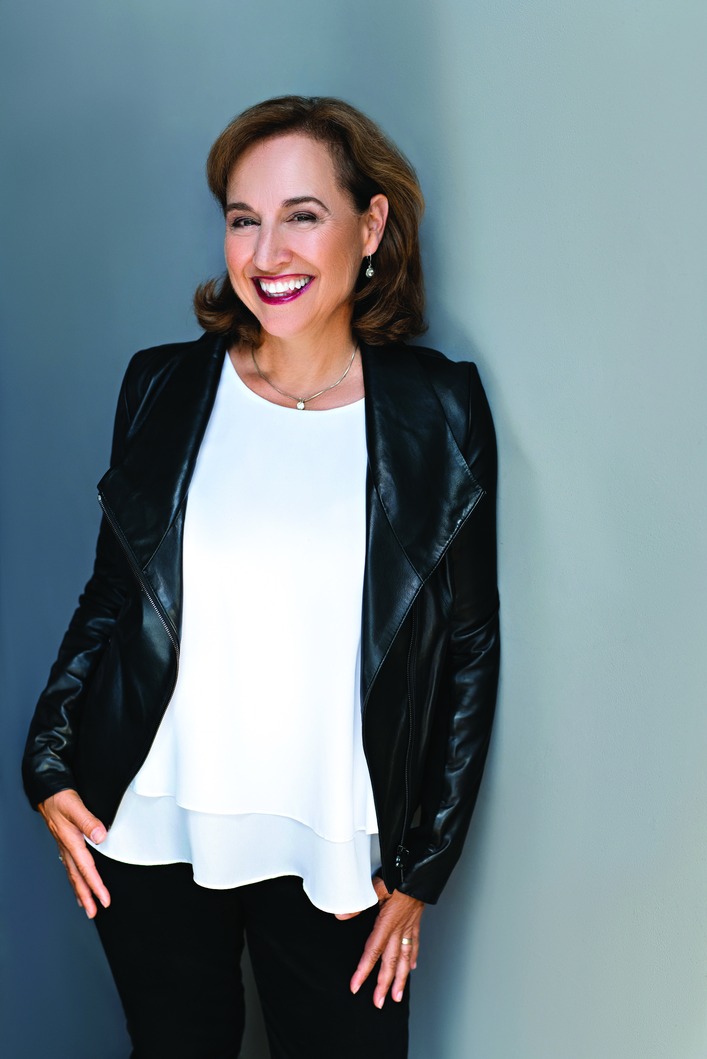
Sandy Pollack
Sandy Pollack never dreamed of being a financial advisor, until her mentor (and squash partner) at McGill University persuaded her to enter the insurance industry in 1983. She got excited about helping people, and became fascinated with the stories of her client’s lives, businesses, problems, and dreams. In 1988, she established a practice in Ottowa which became Trimaran Financial.
Sandy feels strongly that entrepreneurs are an unappreciated and vital group. She’s passionate about disaster-proofing their complex family enterprises. She considers it a privilege and honor to serve these unsung heroes, understanding their why, and helping them be intentional about their legacy planning.
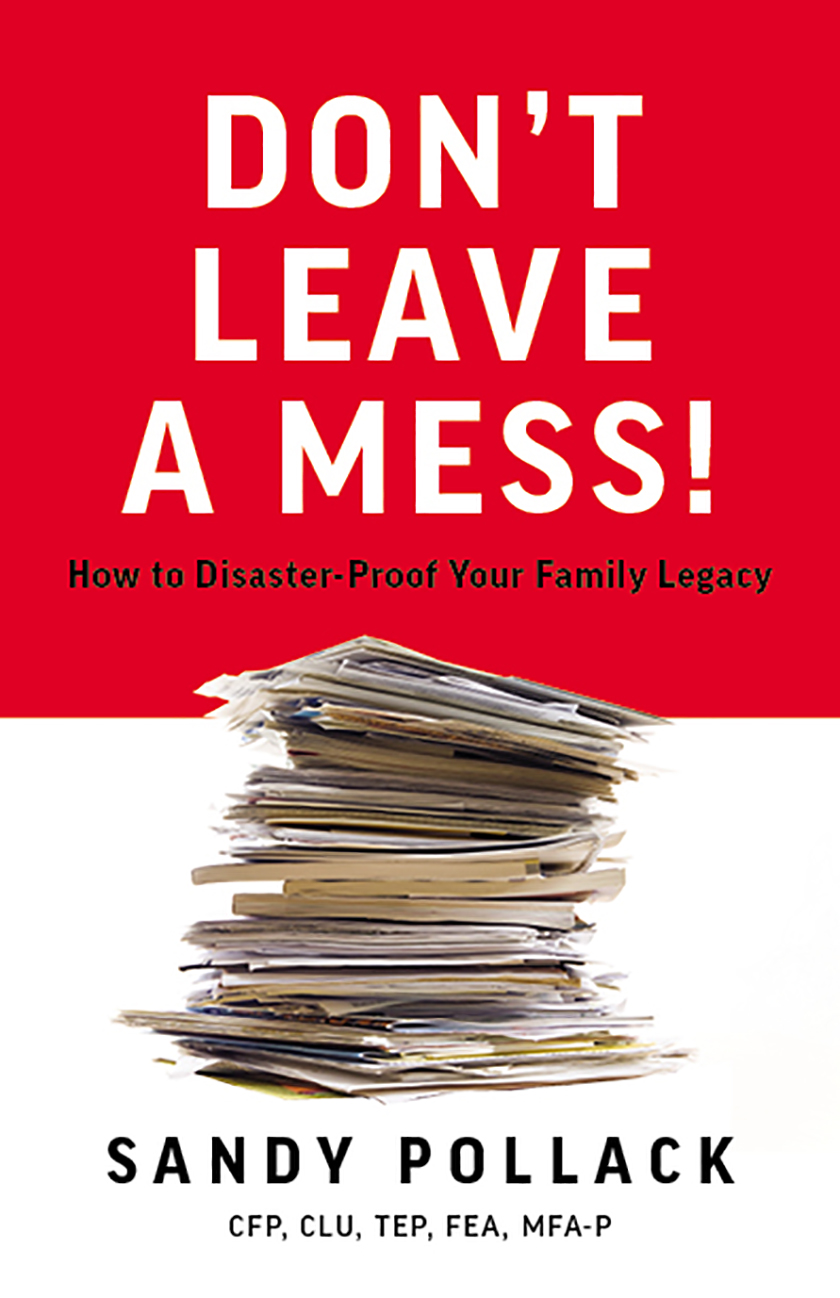
📚 Books by Sandy Pollack
Transcript
[00:00:32] HA: You've built your business dedicated vast amounts of time and money to it. Now, you're ready to consider your legacy. What are you passing on? How does it reflect your values? Does your family prepared for the legacy they will receive? Or are you leaving them a mess? Welcome back to the Author Hour Podcast. I'm your host, Hussein Al-Baiaty. My next guest, Sandy Pollack, is here to talk with us about her new book, Don't Leave a Mess! Let's get into it. Hello, everyone. I'm here with my good friend, Sandy today to talk about her new book. She has so much amazing things to share with all of us. I'm so excited to have you today, Sandy. Thank you so much for your time.
[00:01:14] Sandy Pollack: It's a pleasure being here. Thank you for inviting me.
[00:01:17] HA: Yeah. I mean, we were just talking pre-recording about this book and who is it for? But before I get into all that, I love to introduce you to our audience and can you share just a little bit about your personal background, perhaps where you grew up, college years, and what made you fall into this work that you now have been so passionate about?
[00:01:38] Sandy Pollack: Sure, Hussein. That’s an, very interesting story. I'm originally from Montreal, born and raised. Managed to work really hard and save up money so that I could attend McGill University. I graduated from McGill University with a bachelor's in industrial relations. The next step was either to go into law school or find a job. It turned out that I had interviewed different people and the gentleman who was coaching me in squash at McGill, who was a World War II vet, very amazing man. He was in great shape, and he would clean the clock of 22-year-old students on the squash court had said, “Sandy, have you ever considered the insurance and financial services business?” His name was Harold Martin. I said, “Harold, you've got to be crazy.” I said, “I'm 22 years old, what would I have to do with families and white picket fences to talk about death?” He said, “No, no, no, no, the industry is changing. I think you would really be ideal.” I ended up interviewing different companies and started with an agency called Cafe Philip, which was an agency of London Life at the time, and had some amazing mentors, who guided me and said, “What we want you to do is work with the top 15% of business owners and self-employed professionals and build your practice.” At that time, in Montreal, we were undergoing a tremendous recession. I had nothing in terms of my Rolodex. I listened to these fine young professionals, or older gentlemen, and started building my practice in Montreal. As a result, I did crazy things as I would go into industrial parks and door knock, and just ask people about their businesses. I found it quite fascinating to learn about the stories of business owners because there was always something very unique about how they got to where they got to, the struggles, and the resilience that they had. It didn't work for me. It was really, understanding how they started, and who they were responsible for, which was many, many families that they were feeding. What was keeping them awake at night? After a number of years, I built my practice, and then met the love of my life. We ended up moving to Ottawa and had to start all over again here. Here I am 25, 30 plus years later, still continuing to work with business owners and self-employed professionals, helping them quite frankly, make wise choices to protect what they've worked so hard to build.
[00:04:25] HA: That's really powerful. I think you have a very beautiful and unique story and how you got into your niche, but the idea that you chose to go into this path of small business owners. I feel like, so many people out there, I owned a small business for a while like a little t shirt shop. With that, there are so many things people never think about. You’re 100% right when you said like, “These people have families to feed. They stay up all night thinking about certain things.” You just wanted to get to know who they were. What their stories are. From that you're able to serve them in a unique way, by building relationships. It sounds like, I love that so much, because it sounds like your heart was really into it. So who did you decide to write this book for specifically? I know we harp on that at Scribe, as far as creating your avatar and your audience. Who do you say like, if this book were to land in this person's hand I would feel really good about that.
[00:05:23] Sandy Pollack: That is a great question, Hussein. I would say that this book is geared towards business owners, and not just small. I mean, I have clients that have businesses of 2 million and clients that have businesses that are valued at over 100 million. What I've learned is it doesn't really matter how many zeros you have behind your value or gross revenue or net worth. The problems are still the same. What I mean by that is, there are lots of things that are running through their heads in terms of conversations that – or questions, I should say more. That they're thinking about, but nobody is asking. My avatar is that individual that has built up a business that's feeding not just their own families, but their employees, their bankers, their lawyers, their accountants. I mean, it's this pebble creates such an impact on a community and on the GDP of their own country, right? That nobody is really taking the time to ask them the deeper questions, which is, you've built all this now what do you want to do with it? Why do you want to do this? Who is this for? No one's asking them those why questions. They're focusing more on tax minimization, or deferral, deductions, or legal. Setting up trusts that are all lawyer all over it, instead of really getting down to the deeper conversation, which is what is important to them about their wealth and about money and what is it mean. When you take the time to really listen and keep excavating those things, you come up with something that's more than just the dollar sign, you come up with things like financial security, freedom, and financial independence, ensuring that the well-being of their children, and then the fears, of course of they don't want to have a bum for a child or they don't want to leave their kids too much money, but the money is already there. That is really something that I try to do for my clients. So my avatar is those self-employed entrepreneurs, I call them the heroes of every flourishing economy, who is feeling like there's something missing in their plan, but they just can't put a thumb on it. I'm hoping that my book will help them to start thinking instead of just planning, and start having those conversations with whether it's family members or professional advisors, but with someone so that they don't leave a mess when they happen to walk out of life unexpectedly.
[00:08:00] HA: Yeah, 100%. I love that so much because I feel like, as I ran my small business, whether it be like insurance, or even my tax people, or my accountant. They're all great people. I think you're right. This is why, I guess in a lot of ways you feel alone, you feel you can't talk to too many people, especially because these types of questions, right? The legacy aspect of selling the business, what that looks like, you know, the taxes and the assessment. That's a whole side of things, but then there's the emotional side of things, which I feel like you tap into. Right as I started reading your book, as I said earlier. I was dropped into this really intense conversation and dynamic. Actually, it wasn't even conversation it was dead silence, right? In this room with the lawyer coming in. You got family members around you. You got the wife sitting there, just processing things or trying to – it's a very intense moment. But the way you describe it, I can almost visualize and cut through that silence of what was happening in that moment of there's a disaster left behind, and no one knows anything. No one knows even where the key was to open up the vault or whatever it was. I thought that was so powerful. I'm sure that's not the first time that happens in our world today. Like those moments in time when there are so many unknown factors around a business owner, but after they pass specifically I'm sure in your line of work, I would imagine that happens quite often. When it does I feel like, someone like you obviously can come in and help with that long before it does, but when it does, it's messy. Can you tell us about this problem that happens in our society, and what your line of work tries to help?
[00:09:54] Sandy Pollack: Great questions. So no one, I will tell you this, Hussein. No one is ever prepared for death, okay? I say this, even when someone has a terminal illness, there is a line in your life before and after someone that you love passes away like, even when that person is terminally ill when the event actually hits and it is a reality. It's something that no one can describe unless you've been through it. I have been through this, but I was two and a half years old when it happened. So when I was two and a half years old, I lost my mother. She was 27 years old. In those days, what did they do? They basically took away all your photos. Took away everything and pretended that it didn't happen. At two and a half years old, I didn't know any better. So I don't really have fond memories of my mom. However, I have two older sisters that I think were impacted and scarred by that. Yes, it's happened to me, but I didn't really know. Fast forward to when you're 30, 40, 50, 60 or 70, and you lose a loved one. I have a client who recently lost their mother to cancer. It's five months after, and they're still grieving. What I have learned, because I'm a voracious reader, is that nothing prepares you, and everyone has their own grieving process. The last thing you want to worry about, and the last thing you want to deal with is the bank accounts. Where the documents are? How much do they have? What did they say? What were they thinking? Because the number of times that people say, what was my dad thinking, or what was my husband thinking when he did this? Well, they weren't. They didn't want to think about it. Nobody does. It takes a great deal of compassion and sensitivity to bring the conversation of the big D, D-E-A-T-H to someone who feels that they're going to go on forever, right. There are certain myth that we have, which is why we don't want to talk about death. When in my book what I talk about is, well if I don't talk about death, it will never happen. Dah. It's going to happen. I am 100% certain that each of us on this earth will die. What I do not know is when. So why not prepare for it while you're alive and while you can make the decisions that won't confuse disconnect, disillusion to the people in your world that you love most. Who are those people? Usually it's your family, good friends, people you employ in your business, relationships that you've had. There's a whole list of people that enter a human beings world that are really important. With wealth comes responsibility. I think that most entrepreneurs love building wealth. They don't like managing it. They hate it actually. They'd much rather buy a building, expand their business, do another deal than have to worry about stuff like taxes, how do they divided up? What charities do they give to? How do they do it so that it's effective and impactful and not leaving their family in a total mess? It's hard. These are really difficult conversations. I think that it just takes a certain amount of curiosity to ask and ask. Usually, if we dig deep enough, everyone has a story. The story isn't just from what how they started their business, but it goes all the way back to childhood. How they managed money? Did they have money or not have money? I don't know if this answers your question, but every journey is different. It's really about understanding what that journey is. So that we can better serve our clients so they can make decisions with clarity and purpose.
[00:13:49] HA: Yeah. I love that so much. The idea of clarity, right? When somebody started asking me like, what do you want to do with this business? Do you want to sell it? Are you going to give it to your kids someday? What are you doing with all of this? I feel like at some point, I had no idea. I've never asked myself that question, right? It was just you just said. It was heads down on building of the next deal. I mean, I'm very young at this point, too. I'm not even really thinking about that in general, but it was such a great question. This was like a mentor at the Small Business Administration. I was just learning like looking for someone to help guide me through this process a little bit more. They just asked me those simple questions like, what do you want to do with this? How much do you want to grow it? You know, just asking me really important, beautiful questions that I feel like in a lot of ways I still carry, because you know, it's like, does this thing align with now, this vision that I have for myself for later in life. I love that your work really ties those two things together. It's not just the how to make that legacy and burn that paperwork together, whatever it is, but it's also the why. Like really sitting with yourself and analyzing these things. Can you tell me a little bit, perhaps maybe a story of a business owner that work with you, and you develop this process with them, and you help them through it. They were able to overcome those fears, barriers, whatever it was, so that it doesn't turn out to be a messy end. It actually, it's an ending that is very laid out to the best of the abilities that he or she were able to do. Do you have a story in mind that you can share with us a little bit?
[00:15:31] Sandy Pollack: Well, I'll tell you a story very early on in my career and in my business. I met a woman who was probably way ahead of her time, she was in her 60s. Here I was in my 20s. Her and her husband had started a business from nothing, and it was very successful. We had done some benefit planning work. I would always address her as Mrs. because this woman was older than my mother, but she was bright. She had photographic memory. Her and her husband had brought this business up like to great success. I asked her if anyone ever had discussed with her capital gains taxes, or estate taxes, or shareholder agreements. They had been in business for over 30 years. The response was, “No.” I was quite surprised, because this was a very successful business. So we started talking about things like, what happens when a person dies, and the taxes that are owed. Anyways, I worked with this particular individual. We ended up doing some planning, where they had to secure some insurance, which ended up costing pennies on the dollar. When that particular family – her husband had passed away, and then eventually she had passed away. I get a call from – and I'd met one of I think the four children. I get a call, telling me that unfortunately, this remarkable woman had passed away. So we started unraveling some of the planning, and they couldn't believe and I remember when we were discussing this, and one parent had said they had an option A or an option B to fund these state taxes. They decided, because one parent had a bad day and a fight with one of the children. They said, “You know what? We're only going to cover half the tax, because there's so much money here. What the hell?” I'm sitting at the kitchen table with the children. They said, “This is very interesting, because our parents were quite astute. We don't understand like, yes, this insurance went literally right to the tax guy, right? We just don't understand, because there's still extra money that we had to pay out of the estate.” I shared with them the story and they said, “Well, geez, that sounds like dad.” They just chuckled, right? But they were really happy that they didn't have to liquidate other assets, because at the time that this particular person passed away the day after, it was in 2008. There was a big stock market correction. The value of the portfolio months after the death was significantly less, but it didn't matter, because they had to pay tax on the value the day before they died. It brought to light of the beneficiaries of the family that we have to continue to do this planning, even better than our parents who actually did a great job and left them several millions with lots of zeros, and we're talking above what's this 123. Yeah, like under $20 million. It really ignited the conversation of, “Oh, my goodness. We have our own families. Let's talk about what we want to see happen.” It really brought to light that just asking questions and having conversations and a lot of people are not aware that not only do we pay taxes throughout the course of our lives, but when we die, there's a big one coming, and we have to prepare for it. We also have to talk about it with our kids. In this case, it was a little difficult, but they were just happy that everything else was organized. The will were organized, the funding of the taxes was organized, and all the papers were organized, so they weren't shuffling through lots of drawers because their parents had taken the time and had the courage and deep sense of responsibility to not leave a mess for their family. I was very proud to be part of that and very humbled, as well, to know that it could have been a huge disaster, but they understood why they were thinking without the parents actually communicating it. That's when my pivot came as well to have those conversations and encourage my clients to say now that you've done this, let's share this with your family. That takes a little more nudging.
[00:19:55] HA: See, this is the most amazing part and component of your work. I feel that it's taking them through that transition of that mindset of look, this thing that's going to happen inevitably and the more you take care of these things now, the less of a burden is going to be on you and your kids or whomever you're passing this down to. The better, you can flush all these things out now, the more compelling all of these things are going to come together for whoever is going to benefit. That's so powerful because these are things that, as you said, we don't want to talk about them. They're really hard topics. You talk about this, too. You open up the book with basically the cost of silence and like how just not being communicative can really hurt you. So the opposite end of that, I feel is the importance of communication throughout your work. It sounds like that's probably the key element that can start opening up those really hard-to-navigate conversations. When you start working with someone, what would be the one thing that you would encourage them to start thinking about as they try to navigate the waters of figuring out their legacy?
[00:21:09] Sandy Pollack: Well, the first thing that comes to mind is getting them to verbalize what their values are? We all have values, right? So for example, you can be kind, you can work hard, but sometimes we don't share them with our kids. We just do them. The kids might see them, but actually discussing them and putting that pen to paper is really important. That would be the first thing is to get an idea of how they got to where they are today. Why it's important and what contributed to that. When you really excavate it is incredible that it reveals these gems of life lessons and values. So that's the first thing we do. Then I get to meet their other professional advisors. There's a chapter in the book about cooperation versus collaboration. There's a big difference, because cooperation is when I'm nice to you, Hussein, and you're nice to me, right? We stick in our lanes, but collaboration is when I'm sharing with you things about the client that you don't know, that might help you do better work and more intentional work for the client, because sometimes the forgets or the purposely forget, because they don't want to talk about it. They don't share that. I think that getting to know the other professional advisors and working in a collaborative fashion is essential to start this work. Once they know that, and they understand that working in silos, ends up creating a disaster and a big mess. They're more open, and they're happy, because now you've just taken the burden off their shoulders. Now you've got somebody who's a coach who's working with the whole team, to get the ball to the end zone without you having to do a lot of that heavy lifting.
[00:22:54] HA: I love that Sandy. For me, I just want to say congratulations. Because I'll be honest, I come from a Middle Eastern culture. I was born in Iraq, I grew up through a refugee camp, and I got to grow up in America. All blessed, but I'll be honest with you. That trauma, haven’t gone through war, haven't gone through a refugee camp really made the family dynamic, distraught. I think this is why I was so drawn into how you open up the book is, I'll be honest with you one of my biggest fears is, and not that – like my father passed, he left enough. He didn't have much to begin with. Very humble man, but we have a home back there. All these little things like, nothing too crazy. You really inspired me today to provoke a conversation amongst my siblings, because the dynamic is so, that I feel that the difficulties that would be coming are not worth the engagement in my mind, right, because there's fear. I think what you did to me today, personally, is you allowed and inspired me to just go have a conversation. There's not a business involved or anything like that, but I feel like just to have that conversation with your siblings to prepare how we engage with our mother, right, is really powerful, that in and of itself, that conversation that we're having right now is so profound for anybody. These are the things that we tend to not want to think about, because they're heavy, but they are inevitable and the sooner you have those conversations the better. Least that's what I'm taking away from it, but if there was one thing that you hope that people who would pick up your book and really think about, what would that one thing be?
[00:24:39] Sandy Pollack: For people to realize that talking about money is not a bad thing. That if you really dig behind what money and wealth is, and if you go up Maslow's hierarchy of needs, which is originally for food and shelter, etc. etc. Money gives people beyond security purpose and purpose to do good for others. I think that would be the number one thing is it's okay to talk about money. There's a big joke in our office, when I have an initial meeting with a client. Very often I'll say, “Listen, there's two things people don't like to talk about, sex and money.” We don't talk about sex here. So let’s put that in the parking lot.
[00:25:23] HA: Yeah. Let’s talk about money. Yeah.
[00:25:25] Sandy Pollack: They feel very connected. They feel very connected. Now I can feel relieved, nobody's judging me. Nobody's, no, because when you really dig deep, I deal with a lot of clients from different faiths, particularly, I will tell you in the Muslim faith. I learned that it's not good to talk about money to your spouse, right? You're supposed to take care of them, but not tell them how or where anything is. I've had some situations where I see, but you're talking to me, and I'm a woman, right? Let's bring your wife in so that you don't leave her a mess.
[00:25:57] HA: I love that. Thank you.
[00:25:59] Sandy Pollack: What it does? Is it enriches their relationship, where they weren't saying things that should be said? Then they make assumptions. It creates cracks in a bond that is so unnecessary. When you can actually share your history and understand that you do have the same goals and all of a sudden you're aligned. The other thing I would say about these cultures, that a lot of my clients are self-made. They've started from very little is to understand that those trials and tribulations that you've been through, that you've experienced, some of them have been very, very horrific, actually have strengthened you as a human being. It's important to share those stories with your loved ones, because when they live under your shadow and you're very successful – Hussein, do you have children?
[00:26:51] HA: Do I have children? Yeah. But I have lots of nephews and nieces.
[00:26:54] Sandy Pollack: Okay, well, when you have children –
[00:26:55] HA: Not the same, but –
[00:26:58] Sandy Pollack: When one day you do, if you do, and you have lots of affluence. It's very tough for them, because you may not talk about it, but they see it. Really what that fear is, is helping them understand that their lives are better than where they might have come from, but that these are gifts that you're giving them. There are a privilege that has to be used carefully and not just in terms of expecting it. I think those are some of the conversations that we have so that they can be better at communicating instead of being resentful, “Oh, I came from nothing and look at my kids, they have so much.” Well, maybe you should have a little conversation with privileges comes with responsibilities. All of a sudden that mindset changes and it's okay. It's okay to say yes, we're providing you with a wonderful lifestyle, but understand that there are responsibilities with it and whether it's working in the community, whether it's education and pursuing a career so that you can stand on your own two feet. I think that we forget to talk about that stuff because we're so busy and so distracted with iPhones, iPads, and IMAX. That it's no longer about, us. I think this book will bring more we into the idea that wealth can create a strong we, instead of just an, I.
[00:28:18] HA: Wow. That is so powerful, Sandy. I am so moved like I said earlier. I'm inspired by your work, because no matter how you approach the ending times, it's always good to prepare and think about those kinds of things. Like you said, bring that person in the conversation, bring your spouse into the conversation. It's healthy. It's beneficial. Though it's hard at first, it is of most value later on. Sandy, thank you so much for sharing your stories and experiences with us today. The book is called, Don't Leave a Mess!: How to Disaster-Proof Your Family Legacy. Besides checking out the book, where can people find you?
[00:28:55] Sandy Pollack: They could find me at www.dontleaveamess.ca. We're building that website and adding to it weekly. It's going live next week, actually. There'll be articles that we're going to be building it with tools to help people think about their stuff so that they don't leave a mess. Hussein, this has been such a delight. This is my first interview. I thought, what am I going to like expect here, and this has been wonderful. I want to thank you for your time and your genuine interest in me trying to get this message out.
[00:29:33] HA: Absolutely. I think it's powerful. You did a great job for your first interview. I'm sure you're going to do many more. They're going to be amazing. Your book is much needed. I know it's going to help hundreds, if not 1000s of millions of people out there. I hope that it does. I hope it reaches many. Thank you so much for coming on the show today. I was just privileged and honored listening to you and your story. Thank you.
[00:29:55] Sandy Pollack: You're very welcome. Thank you.
[00:29:58] HA: Thanks for joining us for this episode of Author Hour. You can find, Don't Leave a Mess!: How to Disaster-Proof Your Family Legacy, right now on Amazon. For more Author Hour episodes, subscribe to this podcast on your favorite subscription service. Thanks for joining us. We'll see you next time, same place, different author.
Want to Write Your Own Book?
Scribe has helped over 2,000 authors turn their expertise into published books.
Schedule a Free Consult