Dre Evans: Episode 1077
Read the full transcript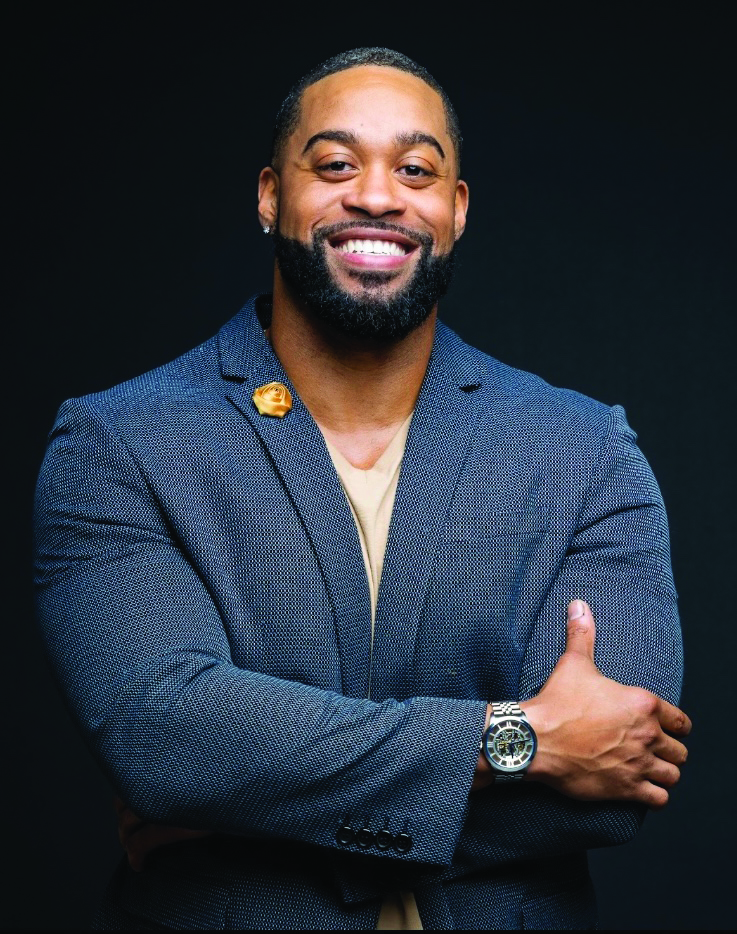
Dre Evans
ANDRE EVANS graduated at the top of his class from the United States Naval Academy with a bachelors of science in Naval Architecture and Marine Engineering in 2016. Hailing from the South Side of Chicago, with his two brothers in arm, they shocked the city and the Service Academies admissions process by becoming the first set of African American triplets to receive acceptance into the Air Force, Naval, and Merchant Marine Academies. During his time at Annapolis, Andre had the privilege to be the 9th black Plebe Summer Regimental Commander in USNA history, being overall responsible for the training and leadership of 1, 192 first year plebe midshipmen and 250 upperclass detailers.
He is a recipient of one of the 10 most prestigious scholarships in America – a 2015 Harry S. Truman Scholar. Andre is also a MIT Lincoln Lab Fellow, Air Force Institute of Technology Fellow, youth activist, engineer, and Supply Officer in the U.S Navy. He has served in various military environments, to include the Naval Nuclear Power school, the Pentagon, and onboard the guided missile destroyer USS JOHN FINN, operating as the Disbursing, Postal, and Sales Officer. Defiant and hardheaded, Andre joined a gang at the age of 12.
Today, drawing from his personal experiences on gangs, violence, and other obstacles, Andre allows his life to be an inspiration that relates to people across various cultural backgrounds. He’s a sought after public speaker and motivator that delivers empowering messages to young people, particularly in at risk neighborhoods, across the country.
**************************
📚 Books by Dre Evans
Transcript
[0:00:36] HA: At 12 years old, Dre Evans felt so proud to participate in his first drive-by shooting. Everyone craves belonging and purpose in life. How far would you go to satisfy that need? Dre started by joining a Chicago street gang. One terrifying day, as bullets flew past his head, he wondered if that desire was worth dying for. Welcome back to the Author Hour Podcast. I'm your host, Hussein Al-Baiaty. My next guest, Dre Evans is here to talk with us about his newest book, Prove Them Wrong. Let's dive into it. All right, everyone, welcome back to the Author Hour Podcast. I'm with my friend, Dre Evans today. I'm really excited to talk about his new book. Dre, thank you for your time today.
[0:01:27] Dre Evans: Thank you for having me.
[0:01:29] HA: Yeah, man. I appreciate it. I've been going through your book. I got to be honest, I haven't gone through the whole thing yet. Right as it starts, you're getting beat up. Things are insane in that moment. I can't imagine getting initiated into a gang at the age of 12. I want to talk a little bit about briefly about where you come from, the areas in which you grew up in. Then we'll go into depth about the stories that led you to the successful man that you are today. Take us back a little bit. Share a little bit about where you grew up, your neighborhood, your family, all that good stuff.
[0:02:05] Dre Evans: Just a kid from Chicago. At the age of 12 years old, I joined a street gang, because a lot of males coming of age, we're going to look for that male role model somewhere. For me, I looked at what was around me. A lot of the men in my life, my uncles, or just cousins, they were all in the streets, or they were drug addicts. Then, you also saw the men that were just on the street. I looked for that, also, too, for protection, and what was cool. I did that gig initiation at 12 years old. I felt that that was my best step in terms of moving forward in life. In that process, I also too, I'd have a relationship my biological father. He was a drug addict as well. All those factors combined led me to join the gang. I argued this in the book as well that gangs is just another word for group, or tribe, the military, fraternities, sports teams, political organizations, academic clubs, they're all gangs, whether we want to admit it or not. Joining all these gangs helped you answer the question, who am I? Helps you define who you are. Even in that street gang, in that sense, you're going to meet role models that yeah, you're there in a street gang, but they might look up to you. For me, that person was Smoke. Smoke was the embodiment of that. The way he carried himself. He had that swagger. He spoke one time and everybody listened. He was very well-spoken, actually, even though he could speak the language and speak the slang, he could still articulate himself very well and move a crowd of people. It was also the way, he had that innate leadership ability that natural leadership as people like to call it. You learn from different people in these groups. You also learn what you don't like. Even from what you don't like, from negative experience, obviously, that helps shape who you are, too. I think, what people don't realize is that they're very quick to say, when they hit some adversity, or when they hit something negative, they try to shun it. Instead of shunning it, or looking down upon something, if we take a step back and look at the lessons learned from, even the things that we don't like, and even the things that don't go well for us, there’s a lesson learned in that. That, too, shapes who we are. That, too, shapes, okay, I'm not going to be – It's just like, if you have a bad parent, or a bad teacher, or a bad leader, you can still look and say, “Okay, I'm not going to be that way. I'm going to take this lesson. Then when I am in a position of leadership, or when I am a parent, I am better.” With that, I got that same exposure from being in the gang. In some gangs, some groups, some tribes are short-lived. Some are only in your life for a season, that help you progress to the next level where you need to be in life. Some last for a lifetime.
[0:04:53] HA: Man, that's really powerful. I love how you launched the book with that idea of redefining how we understand gangs and realizing that in some way, shape or form, it is a modern-day tribe. However, it's been portrayed negatively. Like, that word has been negative and associated with either black culture, or Latino culture, let's be honest, whether it be West Coast, East Coast, all that. However, you saw it differently. You saw it as a way to protect yourself and to protect your family and to have a role model that, I mean, in the most negative senses, probably wasn't the best, but that was what was available to you. This role model, it just so happened to be in this type of environment. That environment created this gang that protects itself and does some violence, does some things that go against cultural norms, if you will. I think it's really profound, though. You really helped me engage with – you challenged the way I saw the word gang. Let's take that a little bit deeper. What are some other things? I know, you were put in a very tough situation. We can talk about it in a few. What are some things you started learning while being in the gang, and especially from Smoke?
[0:06:05] Dre Evans: I would say, the ability that your light can shine in any environment. When I was in the gang, on my way – so I had a drive-by shooting happened with my buddy and I Boogie. He texts me this, come out of school. I came out of school, we were just sitting on the corner and you see that car pass multiple times. After a few times, I said, “Hey, you noticed that car?” He said, “Yeah.” Then after a while, after that third time, we pointed it out, but then it stopped. It circled around, and the next round says, “Okay, maybe they left.” The next thing we know, we see the car speeding up, we see the window drop, we see the hooded figure, and the shots rang out. Me and my best friend, Boogie, we’re ducking and dodging and weaving in this parking lot. I remember, after the gunman in the drive-by was finished and they drove off, and you hear the car screeching down the road, I remember calling out for my friend and he's not answering. I’m like, “Boogie. Boogie. Where are you, man? Boogie.” Nothing. I look under the cars to see if I can see some feet or something. I see two feet. They’re not moving. They’re just sitting there. I run over to the car. My heart stops, because I'm thinking that Boogie got hit and he's bleeding out. I run over to the car and Boogie is leaned up against it. He wasn't hit, but he's sitting there crying. He's crying about what just happened. He was also crying, because just the days before, his mother knew that he was in that gang, saw that he was in the streets. His mother had a really personal heart-to-heart conversation with him about getting out of that life. He in that moment, it all hit him. He was really reflecting on that. That for me was almost a wake-up call of, this time I’ll go with Dre. I had been in many experiences before. The reason why that one really was the red flag in my face was because I had just got back from visiting West Point, the US Military Academy at West Point, New York. That was that golden ticket waved in my face of, okay, you have a chance to get out of the shot. I was there for a week on the campus. I felt safe. I saw that people really cared about my leadership development. I came back gung-ho about the school. Then shortly after that, the drive-by happened. That night, I didn't sleep. I reflected on that experience. I was also reflecting on what I wanted for my life and how I felt that was pointing. I went and I confronted the gang, in front of Smoke. I confronted all the guys and I'm like, “I'm out. I have an opportunity of a lifetime and I need to take it.” I got a lot of people riding on me and counting on me. This is the moment where I started at the beginning, where I saw sharing your light. They started the process where they were going to beat me out. Right when they were about to, Smoke stopped it. He was like, “Get up.” I got up and he was like, “Listen, we've been watching you. We know who your brothers are. We know who your moms are. We see that you’re a different dude. We know that you have always rode for us and you always cared and stick by with the gang and we trust you, but there was something about you that was different. As long as you leave Chicago and you put on for the city and you make us proud, go with us.” That I reflected in that moment, when I walked out the door, I have an excerpt in the book where I just talked about how I felt in that moment of just, “Man, if I can inspire and be a light for people in a gang, in a street gang, on the Southside of Chicago, who else could I inspire?” I leave that to say that no matter what gang, or group, or tribe, or organization, or club you're a part of, negative or whatnot, you can be a positive light to it. My mom used to always say, “You never know whose lives you may touch. You never know who's looking at you.” It could be the way you speak. It could be the way you swag. It could be the way you carry yourself. It could be the way you cut your hair, or do your hair. It could be the way you dress, the way you engage with people, treating people with respect. Every time you speak to someone, you show a genuine interest and you're always listening. You just never know the small little things.” I held on to that.
[0:10:31] HA: Yeah, man. That's amazing. Obviously, you've had just an incredible journey. Also, the school that was connected, it seems like, to this opportunity to go to West Point for a week. How did that come up? What made you be inspired to take advantage of that?
[0:10:47] Dre Evans: I never thought I would join the military. No one in my family was in it. It was never an interest of mine. I was definitely a hard headed kid. Always in trouble. I was like, I do what I want. I don't take orders from anybody. A man that I considered my enemy at the time, told me about this school called West Point. At first, I said to myself, “What is that? What is that?”
[0:11:06] HA: Wait, wait, wait. Hold on. Hold on. You can't just go past by your enemy real quick. Hold on. Was this specific person in a different gang? Or, why do you describe him as an enemy? How did you have this conversation?
[0:11:19] Dre Evans: My stepdad. We were at war for years, because he was very abusive. He had a lot of anger issues. We did not have a good relationship. He had come home one day, and that was the weird part about it. It was always, everybody would walk in the house on eggshells. He took his anger out on me and a lot of us. Him coming home one day and seeing if we knew what the school was when it was, we were like, “No.” He had done four years in the Army enlisted. I'm going to assume and make the assumption that during that time, there was an officer that led him, that must have been a West Point graduate. That must have been how he found out about it. Unless, he was doing some research, or someone else mentioned it to him. I doubt, somebody in Chicago mentioned that to him. When he said it to us, even my mom was like, “No. We saw what was going on in the Middle East, the war in Afghanistan. No. My son is going to nobody's war. Da, da, da.” We believed everything that we saw on TV, or social media, or we knew that public opinion. He kept trying to speak to us about it. We’re like, “No, bro. Leave it alone.” For the next few weeks, he kept coming back home, saying more stuff about the school. Trying to set us up. Look at the website, oh, that we can shoot it down. Then he comes home, he's like, there was a information session, an hour out of Chicago, in the suburbs. He was like, “Listen, they’re having it. Let's just go.” He's like, “If you all don't like it, or after that, just I'll leave you alone.” We was like, “Okay, fine. You can shut up, we'll go.” We go to this information session. This is where things started to change. I remember meeting this man named Colonel Bernard Banks. He was the first African-American man that I ever met. Not only had a master's degree. Now, get this. He had five master degrees and he had a Ph.D. He was the Director of Leadership and Development at West Point. That was the first shocker. Then he had all the other column cadets, which is just another word for students. The West Point calls them cadets, and they were all there. They all had the uniforms on. It was like these white shirts, with the [inaudible 0:13:22]. They look really sharp. My brothers and I got to ask all those cadets the questions that we had like, “Okay, does everybody go bang, bang, shoot a mob?” They’re like, no. There's doctors, there's engineers, there's lawyers, there's pilots, there's all these different people that – there's policemen. There's all these different people that do jobs. They basically chose to look at it this way. Everything that's in the civilian world, imagine placing it in a bubble. That's what it is in the military. That's exactly what it is. The military has every single thing. Accountants, business managers, all those different things that you would need to sustain itself in the military. When they put it that way, we were like, “Wow. This is very different than what we thought.” What we thought it was, was just people going to war, something called infantry. That's one specific job in the army. That's changed our perspective.
[0:14:14] HA: Yeah, and I don't blame you. Because I feel like, that's probably how 80% of the population sees the military. Is just Armed Forces. You don't think about everything else. I mean, they’re a whole tribe that needs to be taken care of, just like civilians. Wow, that's really powerful. Just a young person would have those questions when you meet someone new, right? Because I'm assuming at that point, you hadn't met anybody like this before. You never seen cadets before. Never seen a colonel. You've seen police officers, but not in the light that you want to see them in, right? Tell me more, man. You go in, you start asking these questions, and they're helping you see this different world that existed in you had no idea existed. What piqued your interest? What was the thing that started lighting up those light bulbs in there?
[0:15:08] Dre Evans: For me, in that, coming out of that interview, it was the idea, I can go to a school, an Ivy League level institution that was very well respected. Not only get that type of education, but then also be taught how to be a leader. Have school fully paid for, as well as receive a stipend, like be paid every month. That resonated with me, because my mom, here was three chipper boys, where we can go to college on a full scholarship and we could get paid, and mom didn't have to worry about money at all. I'm like, sign me up. The whole goal was get out of Chicago by any means necessary. That was the best ticket that we had.
[0:15:47] HA: During those years, and actually survive. It was you and your two other brothers, is that correct?
[0:15:53] Dre Evans: That’s correct.
[0:15:56] HA: There's an opportunity, obviously, of a lifetime for all three of you to go get an education, to get on a path that could take you somewhere different. You're right. It got you out of Chicago. Tell me, man, what did the academy do for you? You join. What year is this, by the way?
[0:16:11] Dre Evans: 2011.
[0:16:13] HA: Okay, 2011. Okay. I thought for some reason, it was around mid-2000s. 2011 makes sense. You get in the academy. Tell me more.
[0:16:24] Dre Evans: That's everything changed. I went to something called the Naval Academy prep school, because Chicago public schools, we did not have the academic prowess to excel initially. The prep school was basically this program at the Naval Academy system, where you go there for a year. You swear in the uniform. I swore into the Navy. I didn't go to West Point. I went to the Naval Academy instead. West Point was what opened the door for us to find out that there were other service academies, like the Naval Academy at Annapolis, like the Air Force Academy in Colorado, the big three, and was one in New York. We chose the Naval Academy, because my brothers and I felt like it had the best opportunity for us. When we're there, you went to the prep school, that was at Newport, Rhode Island. You swear into the Navy. We wear the uniform. We go through basic classes, like math, English. Foundational courses, to help us so that when we do plebe year, which is they call your first year at the Naval Academy at Annapolis, you're able to see it as some type of way, or a pass, or do well. In that first year, I remember just barely graduating to get that 2.2 GPA. But in that process, people have found out about my background, and particularly my English professor. He supported me. He mentored me. That bled into me going to the Naval Academy. They found out about it. The Naval Academy shaped me in many different ways. It taught me leadership, foremost, how to interact with and lead people from all walks of life, from all many different cultures. It taught me how to speak better. It taught me how to carve out the negative, bad habits I had from Chicago from the south side, but keep in place what was good. Keep in place that I never forgot where it came from. I never forgot myself. I still had that ruggedness. I still had that edge. I was still blunt. I was still savage in some way. Being able to turn that emote, and to be a more unique, different type of leader. I think that is what I learned most from the Naval Academy, as well as forging those friendships.
[0:18:34] HA: Yeah. It sounds like, the academy really helped you hone in and attain what – I mean, their abilities. All those components of you, especially growing up, they gave you an edge. It gave you an inside look into reality. It sounds like, you're able to take control and then put that in a structure that can actually help you, as opposed to take away your opportunities, right? Because if they were just unleashed in the streets, of course, from the sounds of what's happening in Chicago, you'd have probably ended up dead, or at least wounded in some way and no education, no way to really support your family. It sounds like, obviously, it did something incredible for you and you learned a whole new set of skills. Taking those leadership abilities and turning them into skills that are needed and wanted in our culture. That's really powerful, man. I'm assuming you didn't end up going to the Afghan war, or anything like that. You were more or less stayed in America, or did you travel? Did it give you more of experiences, broaden your horizons? What else happened in the academy?
[0:19:43] Dre Evans: Well, when you commission and become an officer, you have a billet that you are selected into a role. Then that will dictate your life and what you do after the fact. I have service selected, or my job was becoming a submarine officer. I went to the nuclear engineering pipeline to serve on nuclear submarines. There are parts of it that I enjoyed there. There are parts of it that did not like. I did it for a little bit, even though I had the engineering background, which is why I was okay to go that route. Eventually, I put in a package to shift in with something we call a lateral transfer, just basically another fancy word of just transferring, or switching roles. I switched to become a supply corps officer, which is we are essentially the business managers for the Navy. Think of being a CEO, being a manager. Instead of my background is in accounting and business management and logistics, I basically own and operate a Walmart, a vending machine business, an accounting business with dispersing, contracting. I also manage a restaurant, because all these sailors have to eat. Take a Chick-fil-A, essentially, and put it on a ship. Everything that goes into preparing food and sanitation, I'm doing the same thing, except I'm providing to the crew, and then take a vending machine business and put it on the ship. Everything with the accounting, working with vendors, products. Same thing. Now, take a mini-Walmart, put it on a ship, working with vendors, products, or having an actual store, having actual – and then think of Chase Bank, having actual debit cards that people can use, the whole nine. All that is under my leadership and under my organization, but really, just take it from same thing, what we talked about, civilian sector. Put it in the military, or put it on a ship in the Navy’s case. That's exactly what I do as a supply corps officer, or as a [inaudible 0:21:38].
[0:21:39] HA: That's remarkable man, because I can't imagine the amount of skills that taught you and just leveling up your leadership ability to be able to do that. You do this, how long did you serve for?
[0:21:52] Dre Evans: I did my initial requirement of five years, so I'm still currently in.
[0:21:57] HA: Okay, that's powerful, man. So, you've had this journey, right? You go out, you go in This gang, you get out of this gang, you go into what we call a different type of gang, now teaching you all these amazing skills, talents, and really developing you as a leader. But you still have this core mission. You still have this idea, this living life to the fullest and becoming the best version of yourself. Obviously, you started investing, and then now you help other families buy, or get into real estate, it sounds like. Then you also speak and of course, you wrote this book. Tell me about that trajectory in your life. Where does this urge to find to spread your inspiration to others? Why do you feel like, it's now or never, you know what I mean? Meaning like, there's so many people hurting and have been in the same predicament that you've been in, but probably don't have that West Point access, or they didn't have that person, just say, “Hey, go do this thing for a week and see what happens.” In a way, you are that. How do you get your voice out there? How do you get your information out to people?
[0:23:05] Dre Evans: First and foremost, I think that it was a combination of luck and just God in terms of even having someone come to me and say to me the words, West Point. I am a godly man. My mom has raised me in the church, and so did my grandmother. I think, I have to start that with that. I think that alone made a difference in terms of hearing those words and that trajectory. Just having a seed being planted in my mind. In terms of outreach, I always – I will say that seeing the things that went on around me and the violence and life being short, there was that part of seeing Chicago and all the deaths and all the shootings. I've always been a person to take a step back and look at why are these things happening, and to reflect on that. In addition to that is, I'm looking at the men around me. I'm looking at my family. That is a different type of pain in our herd, because I can see how regretful they are. I can see how, here they are, you got these grown men that are in their 50s, 60s and they hate their life. I remember being in the same reflection and more than looking at it, I’m like, “Man, I'm looking at how they feel. I'm looking at how much pain they are in.” There's two types of pain. They're the pain of discipline, or the pain of regret. Which will you choose? That's the thing. My Why is my mother. What I fear most is not the death, or the bullets, or anything that. I fear being on my deathbed and being like, “I didn't give it all.” I fear and look back on my life and regret. People make mistakes. I get that. Obviously, we learn from those and we move forward. You only got one life to live. When you look back on you like those certain moments that you can never repeat and go back and do you, like man. It burns, because you die with that. There's literally nothing you can absolutely do to change it. That pain and that feeling, I hold on to that, because I just don't ever want to be in that position. I'm going to have a family one day and I don't want to say to them, and be it, not to look at them and give them my all and be like, “I gave you my all,” as you’re dead. Everything I accomplished, here it is. I am the embodiment of, you make the most of life. You make the most of giving back to people. When I was at Annapolis, I learned that I had a love for giving back. I was going to all these schools, speaking to these students in these underserved communities, speaking to minorities, to stem our reach, do motivational speaking, and combining those two to just share my experience. I love being able to see their faces. I love the comments that they will make. I love being able to change their lives. I realized that the purpose of life is to use our gifts, our position to help people and inspire them. LeBron James could do it through basketball. Elon Musk could do it through technology and do building cars with Tesla. Everybody has unique positions and gifts and talents that they can use to give back and serve the world. That to me is the purpose of people's life. I operate in that. Eventually, when I was out here in San Diego, I had a buddy of mine that told me about buying apartment buildings, which is another word for multifamily. I never thought I would do that. Just like, I never thought I would join the military and go to the Naval Academy. It fell in my lap. He told me about it. Something in my brain clicked and my guy was just like, “Look more into this thing.” I started researching and reading as many books as I can. The next thing I know, I was closing on a 2 million dollar, four-unit in the Pacific Beach market of San Diego and took off. The next thing I know, I had the podcast and I had the meet up and then I was at 98 units in less than a year. The next thing, I also knew was that people were coming to me asking for all this feedback and all this perspective. Something, then he said, “You need to write a book that teaches people about buying apartment buildings, but dumbed down and simplified.” Because all these books that were sharing so much knowledge about buying apartments was complicated. It was almost like, they essentially designed it to weed out everybody. I was like, “Okay, I'm going to write, That's My Property. The first part of it is going to be how I did my first deal. Though, in the weeds, my mentality, all the struggles, the cry and everything. Every negative experience, every thought process I went through, how I did my first deal. That was the other thing, because the other books never had it. They might have a story of how they did the deal, but it wasn't raw. They weren't like, “Oh, I'm in the moment of what you felt like when you did everything.” Then part two of That’s My Property was everything people needed to know about investing in multifamily real estate, and that's what it was.
[0:28:00] HA: Yeah, first of all, I just want to say, man, it's so powerful. I think, one of the things that changed the trajectory of my life was when I went out and spoke to one of my friends, a high school friend. He was a teacher. Spoke to his class. This was around 2011, 2012 after college. I've gone through a refugee camp and grew up in America. Different kinds of struggles, language, you name it. Fitting in, identity, all that stuff. When I share my story, man, just like you, I felt that same empowerment. I felt that it was beautiful to be able to give back, but also be a person of color that stood in front of the class, so that I could reflect back to the kids in the back of the class usually, right? That you could do amazing things, too. That you can go to college, even if your life starts you off in a refugee camp, you can go do things. You can start a business. Sometimes we want to see ourselves in those positions. I think for you, you met that colonel, I think is what you called him. He was an African-American male. You had never seen an African-American male in that type of position. In a way you saw yourself, which you can be. At least, it hinted to that. I think, when we see and visualize, or we're encompassed in an environment of who we can become, or what we can become, we can have that choice. That choice can provoke action. Action can lead to your ultimate life. I think, that's really powerful, man, how you've taken what we would consider the worst thing you could do is join a gang and put your life at risk and all these things. But to you it’s different. You saw it as a way to protect yourself, your family, and really to understand, to have some sort of role model, even if it wasn't the greatest. I love how you took that and really transformed yourself, your family and use those abilities, those skills to enrich yourself, start making investments. Then of course, teach people how to do it. When I was looking at that other book, I was like, “Man, I got to get my version this weekend.” My wife and I have been talking about making another purchase of a duplex or something. It was funny, we were just talking about this a day or two ago. Here you are with the book. Here's my perspective. I'm like, if there's a guy, I want to learn that from, I want to learn it from this guy, because there's a minority difference, right? How we see the world and how we have these limiting beliefs. I think, for people like you to write their books and write their knowledge and their wisdom, again, I see myself doing that. I commend you for that work, man. I appreciate it. I think it's really powerful what you're doing. Congratulations, man. Yeah, book number two. It's incredible. Good on you, man. I hope you made that posse proud. I hope you've made your mom proud. You really came out of Chicago and held it down for your people, man. It sounds an inspiration.
[0:30:52] Dre Evans: Thank you.
[0:30:54] HA: Yeah, man. It's really powerful. Andre, or Dre. Forgive me. I want to say, congratulations again, man on your book. If there's one thing you hope that people walk away with – if I read your book and I walk away from it, what's one thing you wish I would walk away with?
[0:31:08] Dre Evans: Gangs is the answer to the question, who am I? I employ and I challenge people to, you live life to the fullest and you find out who you are. You learn from adversities and positives and negatives, by joining as many gangs, groups, tribes, clubs, organizations, as possible in life. That will shape you who you are. That would allow you to take risks. Join stuff that you never thought you would do. Join stuff that you never thought you were interested in. That will all shape you, who you are. We all go through life, especially now, cloud in this age of social media, trying to figure out our purpose, trying to figure out our passion. That's the other thing that gangs are so you. You join these different groups, you will find a purpose. You'll find the passion. You'll find missions. You'll find friendships. Join as many as you can.
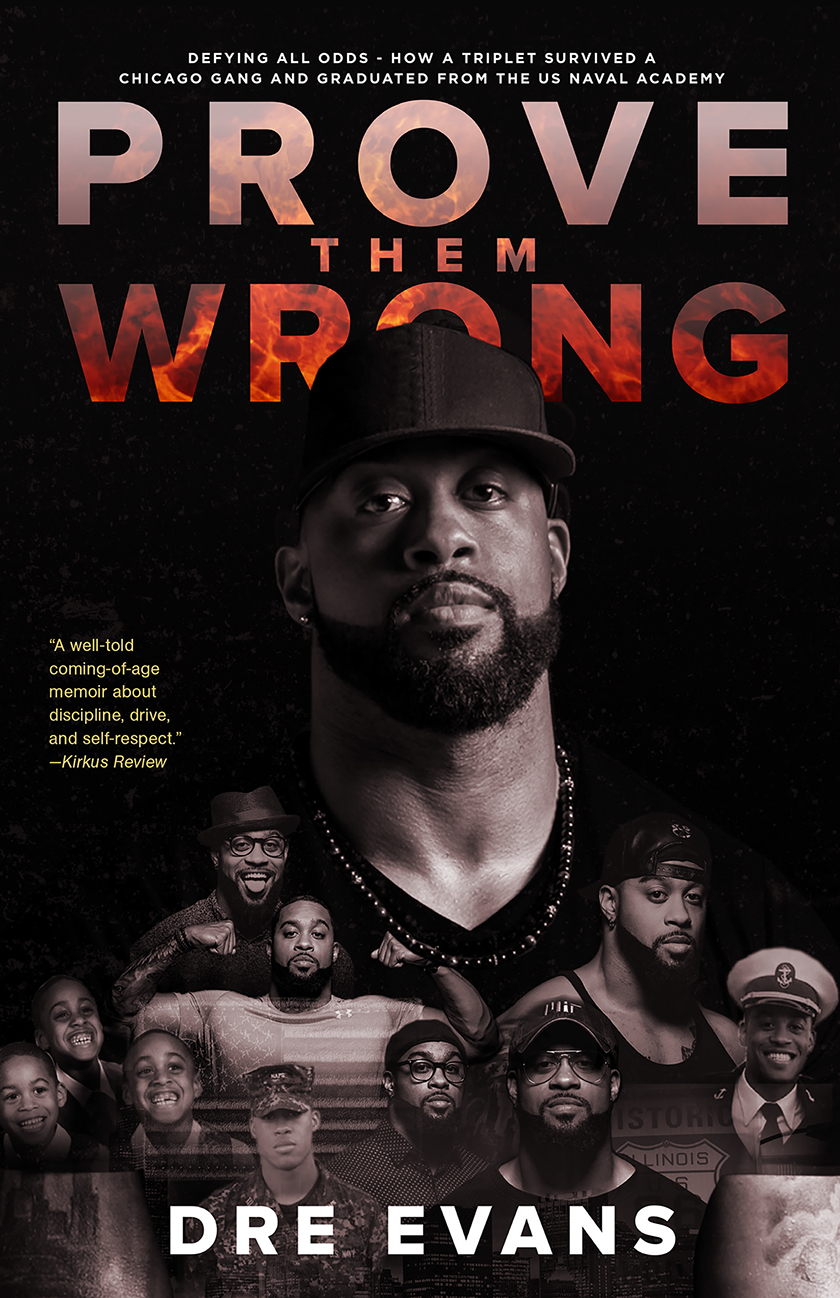
[0:32:05] HA: I love that. What an insightful take. I appreciate that. Well, thanks again for the stories and the experiences, man. You shared a lot with me today. You got me all juiced up. I want to go on a run after this, or something, man. I'm free. I'm inspired, man. The book is called Prove Them Wrong: Defying All Odds, How a Triplet Survived a Chicago Gang and Graduated From the U.S. Naval Academy. Besides checking out the book, where can people find you, Dre?
[0:32:33] Dre Evans: Provethemwrongthebook.com. That's provethemwrongthebook.com. Also, my real estate website is drmultifamily.com. I'm also on all social media platforms @drmultifamily.
[0:32:50] HA: Love it, brother. I appreciate your time today, man. This has been wonderful. Seriously, thank you. Keep doing what you're doing. You inspire me. I'm going to be reaching out via LinkedIn, connecting on there and excited for your book, man. Congratulations, brother.
[0:33:03] Dre Evans: Thank you. Appreciate you.
[0:33:07] HA: Thanks for joining us for this episode of Author Hour. You can Prove Them Wrong: Defying All Odds, How a Triplet Survived a Chicago Gang and Graduated From the U.S. Naval Academy right now on Amazon. For more Author Hour episodes, subscribe to this podcast on your favorite subscription service. Thanks for joining us. We'll see you next time, same place, different author.
Want to Write Your Own Book?
Scribe has helped over 2,000 authors turn their expertise into published books.
Schedule a Free Consult