John Kirksey: Episode 1083
Read the full transcript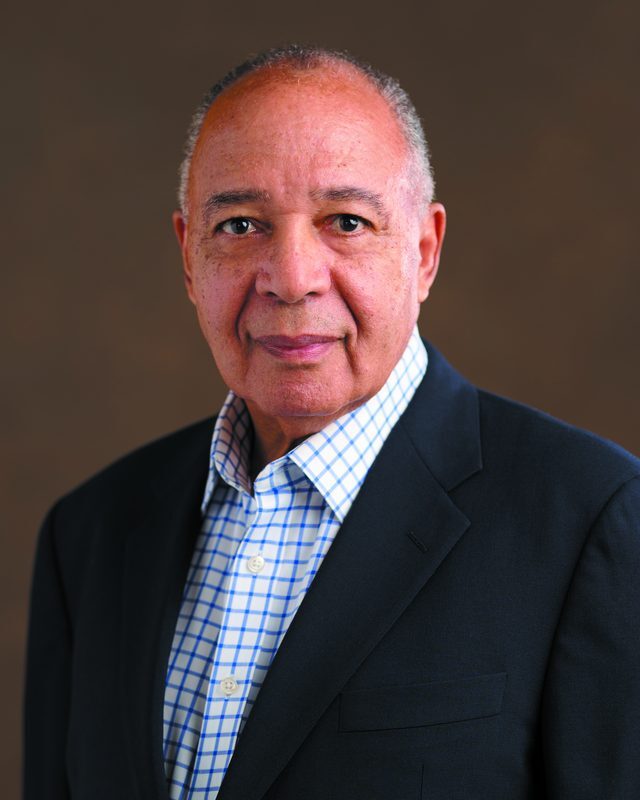
John Kirksey
John Kirksey spent 40 years as a corporate executive responsible for human capital and corporate culture. His corporate career spanned Johnson and Johnson, Cigna, Marsh and McLennan and AXA. He also was a principal at PricewaterhouseCoopers where he led the Global Diversity Consulting Practice as well as the U.S. Entertainment and Media Human Resources Consulting Practice. He has served on the Board of Directors of NYU Polytechnic University and Cornell University's Industrial and Labor Relations Schools Advisory Board. John has Lectured at the Wharton Graduate School of Business on change leadership in organizations. He has a Master of Arts Degree in Cultural Studies
John and his wife Helen reside in New Hope, Pennsylvania.
📚 Books by John Kirksey

Transcript
[0:00:30] HA: A better world starts with a better you. No individual can be whole until we realized we are neither dependent on nor independent of others but all interdependent with one another. My next guest’s story and book are poetic and filled with wisdom. Welcomed back to the Author Hour Podcast. I’m your host Hussein Al-Baiaty and my next guest, John Kirksey, is here with me today to celebrate and talk about his new book, Hope Lives Between Us. Let’s get into it. Hello everyone, I’m super excited to have my next guest with me today, the author of the book, Hope Lives Between Us. I’m really excited to have John Kirksey with us today. I am very excited because this book, honestly, got me moving emotionally in the last 24 hours or so. It got me really thinking about a lot of the lessons that my father was teaching me or trying to teach me and honestly, a lot of the lessons that life tried to teach me. So John, welcome to the show, I’m very excited to have you today and yeah, thank you for your time.
[0:01:37] John Kirksey: Well, thank you. I am glad to be here.
[0:01:39] HA: Yeah, absolutely. John, I always like to start our conversations by getting our audience tuned in a little bit by sharing a little bit about your background, your history, or perhaps where you grew up and what led you on this path because, I know you have a very interesting small-town story.
[0:01:56] John Kirksey: I do.
[0:01:58] HA: Yeah, please go ahead and share with our audience a little bit.
[0:02:01] John Kirksey: Well, I grew up in Rockford, Illinois, which is about 90 miles northwest of Chicago. It’s right at the upper most northern border of Illinois where it meets with Wisconsin. It’s a town, sort of midsized town, 150,000 people with a very small-town vibe. It was a primarily blue-collar town, most people worked in manufacturing businesses, a lot of them supported the auto industry in Detroit, others made things like stoves and refrigerators but it was primarily a blue collar manufacturing town. Both of my parents were welders, who were union workers. My father was a union steward, both he and my mother were welders working for the same company that manufactured stoves and ovens. I had a very large family. Primarily on my mother’s side of the family. She came from a family of 10 children, seven sisters and three brothers. So I had numerous, numerous cousins, my grandparents, my aunts and uncles, all surrounding me as I grew up in this medium-sized, small-town atmosphere place. In many ways, it was a wonderful experience. We had great schools, excellent educational opportunities, and a lot of love, affection, and protection of the family environment. It was also a town that when I was growing up in the 50s and 60s, had many of the small town complexities around the race, gender, place of origin, sexual orientation, many negative thoughts around all of those issues. I happen to be an African-American who grew up in an initially predominantly white neighborhood, where my father bought a house when I was two months old against restrictions for purchases by African-Americans or people who are non-white, period. His house was bought through a white attorney, who he ended up having to pay after the house was bought by him. So we were the first African American family to move into the neighborhood and I grew up with a very, very mixed atmosphere around my neighborhood. So most of my friends when I was very young were white kids, so I got a long with fine. Once we moved in to the neighborhood, we didn’t have any problems. The neighborhood gradually, as I became a teenager, started to change, became much more mixed. Part of that was because part of my large family moved into the neighborhood as well as us. When I was about 13 years old, I found that gradually began to move away from the mixed environment or the white kids that I grew up with and they – it was a time of dating. They moved more to the white dating environment. I moved toward the African-American environment, maintained some of the relationships but not as closely as we did when we were younger.
[0:05:32] HA: This is great. I love just hearing that tapestry of your young adulthood, of how you started to navigate the environment in which you were brought into. It’s very fascinating for me. So you went into this dating scene, there comes a point where this diverging, I guess, you’re moving into adulthood so, these mid-teens, right? So there’s this pressure, I’m sure, right? From both sides. You know, it doesn’t matter what color you are, you’re kind of pressured to go fit that narrative. So talk to me a little bit about that?
[0:06:07] John Kirksey: And it’s very interesting, I have talked quite a bit over the years about it because it was an unspoken narrative. Nobody ever said, “You need to do this or you need to do that.” It seemed like what’s happening naturally. I didn’t understand at the time that it was anything but natural, but it was something that was baked into the societal norms of that time and that place. So stepping forward a bit, as I began to get older into my later teens, I began to be more cognizant of some of the limitations, from a social and cultural standpoint, of the place where I was raised. So when I got to the point of getting ready for college, I decided to move to Chicago, which was 90 miles from my hometown, to attend college and that was where my experiences began to really open up, as I began to meet different people with different perspectives than I have grown up within my hometown.
[0:07:15] HA: Yeah and so you moved out of that atmosphere, you moved out of that environment, the comfort zones, right? I also saw that in the story, your family, especially perhaps your grandmother if I remember correctly, they were shocked that you would leave this environment that was cultivated for you, but you saw more for yourself it sounds like. You saw something else outside of this community that could perhaps fulfill an urge to better connect some dots for you. Can you talk to us about your journey through Chicago and your growth there?
[0:07:51] John Kirksey: As you said, I began to see that even though it was a very protective environment as illustrated by my grandmother’s horror when I decided to move 90 miles away to the big city, it was one of those things where you’re going to be where we can’t protect you anymore. And probably one of the greatest things that I ever did in my life was to move away from that protective web and to a broader environment, where I had to discover who I was without all the trappings of family and protection.
[0:08:22] HA: For me, I get goosebumps when you just talked about that because I so much resonated with that. Coming from Iraq in a refugee camp and then to America, outside of my home like my mom and dad and my siblings, there was no safety net. It didn’t feel like there was a safety net. So even going to school, because we had a completely different culture, language, you name it. Everything was so different. And my mom and dad had this increase sense of worry about what’s going to happen outside those doors but at the same time, it was very freeing. I got immersed in different cultures, learned, I was in ESL classes and I always tell people that those ESL classes were amazing for me, because I got to meet kids from Vietnam, from Columbia, from Puerto Rico, from Mexico. I was just immersed in such a variety of different people. And coming from a refugee camp and then from Iraq, that’s all I knew. That’s all the culture. So this is why your book really resonates with me because there are so many parts of it that I connected with, in this idea of seeking to find one’s self through this urge. I call it just an urge to get out there and get out of your comfort zone. Will you share some more with about that? You’re very fascinating.
[0:09:46] John Kirksey: It’s interesting that you have had that kind of experience because as you know from reading the book, I quote a number of people whose wisdom I believe is inescapable. I think we really need to learn from people like Mark Twain who said, “Travel is fatal to prejudice, bigotry, and narrow mindedness.” It just opens us up so much. My years in Chicago brought me not only new friends but new experiences, new insights, and new understanding of who I was. That’s where I met some of the people I am still very close to. I spoke to a friend on the phone yesterday who was in my wedding in Chicago in 1967, and we have maintained that relationship for all of those years. I met my wife in Chicago and we’ve been married now for 55 years.
[0:10:44] HA: It sounds like it was a great move then.
[0:10:47] John Kirksey: It was a great move and I’ve had a number of other moves in addition to traveling the world through my work. I’ve lived in Bucks County in Pennsylvania. I’ve lived in Miami Florida, I’ve lived outside of Washington DC, I’ve worked in Washington DC, I’ve worked in New York City, I’ve worked in Philadelphia. It has all made me a better person, a much larger person than I would have been had I not had those experiences, and made me understand who I am and how I fit into the world a lot better.
[0:11:24] HA: Very beautiful tapestry. So you had this idea, you open up the book with a very, for me, it was a very powerful quote and it’s something I feel like not only do you read this quote and think about it, but it’s one of those quotes that you really have to experience something to come to that realization, which for me that was truly evident in the last few years, I would say in the last five, you know, this urge. So Rumi says this very beautifully. So he says, “I thought I was clever and I wanted to change the world but then I became wise and realized that I needed to change myself.” I’m paraphrasing here but I love that you started the book with that, because you enter the book with this consciousness that in order for us to understand truly how we can change our environment, we have to, in a way, take action to change ourselves. It's very powerful because when I was young and sort of in my, I call it the warrior phase, I’m out in the world, I’m deploying as much energy to help and transact and move through communities and different types of people, but without really understanding myself. But in that process, I’m learning about myself because I’m putting myself in challenging, uncomfortable situations. So you talk about that. Can you take us through that chapter a little bit and that chapter’s all about choosing to be better, but that choice is hard. Can you walk us through that a little bit?
[0:12:56] John Kirksey: Yeah, in addition to Rumi, Leo Tolstoy, the author of War and Peace, also said that, “Every man wants to change the world but no one wants to change themselves.” I think that, especially where we are today, it’s so important for us to step back from the hate and divisiveness, to really try to understand who we are relative to the rest of the world, relative to others, as supposed to wanting to condemn others simply because of their otherness. That’s what that particular chapter is all about. It’s about beginning to open ourselves up and begin to see what is it that drives us, that makes us see the world on a particular way that we may want to rethink or we may want to view relative to the views of others. Lao Tzu said, “Usefulness of a pot comes from its emptiness” and in some ways, we need to empty ourselves in order to begin to embrace those things that we may have held out. Lao Tzu also says, “To attain knowledge, you need to add things every day” but he says, “To attain wisdom,” and wisdom is a combination of experience, knowledge, and good judgment. So “To attain wisdom, we need to remove things every day”, and that’s one of the things that we have that we tend to not want to do, is we tend to not want to give up those things that we think make us who we are. But sometimes, those are the things that hold us back from being who we could be. And the central theme of my book is, from reading it, is that we can be better. We’re not perfect and being human, we will never be perfect, but we can always be better. And in order to be better, we have to consider some of those things we may want to remove in order to incorporate the things that will make us a larger part of the one. The oneness of humanity, of the cosmos.
[0:15:16] HA: So powerful man and you're not shy in taking us through those doors very eloquently. I just appreciate the book, it reads in a way that is just like, you don’t want to put it down, you know what I mean? It’s one of those that just keeps you, like a magnet, just keeps you attracted to the words, the stories, the beautiful quotes and how you tie things together. You do talk about, there’s a difference with this idea of interdependence and individualism, which I think, coming from a culture, personally, where it’s tribal to a degree, it’s – we’re heavily interdependent on the community, the bread maker, the locksmith, all these things, they’re very tight knit communities in Iraq. And then I’m tossed in America where it’s that, but it’s on a bigger scale. It’s hard to know the bread maker when the bread is at the grocery store. It’s hard to create those relationships and deeper connections unless you start to get to know your mechanic, unless you get to know those people in your community that help you thrive and live through it. But can you talk to us a little bit about what those two ideologies mean and how they impact this today?
[0:16:29] John Kirksey: And they’re actually three ideologies here. One is dependence, one is independence and one is interdependence. Interdependence essentially lives between those other two. If I go back to my experience in my hometown of Rockford, there was a lot of emphasis on dependence to the family and community, et cetera, and that can be both nourishing and it can be destructive and it can be limiting. Independence, which has been a huge factor in our current United States growth, stems from the need for a tremendous amount of independence in the early days of this company, when there wasn’t much that you could depend on other than yourself to survive in wilderness communities, et cetera, in a very large and sometimes unfriendly natural environment. But as we move away from that need for total independence or the need for dependence, we realize that in order for us to become more whole, to become better, to create a better world, we have to realize that we’re all interdependent, that my wellbeing is tied inextricably into your wellbeing and when you laugh, I feel better. When you cry, I feel sadness because as part of the cosmos, and cosmos is a little bit different from universe, the cosmos means universe in equilibrium, and for us to move close to the cosmos, we have to realize that my interactions with you should make me better and mine with you should make you better, therefore we make the world better. It is about symbiosis. Symbiotic relationships where two and two equal more than four, and that is sort of the central theme of my book, is that we need each other and until we realize that we need each other, and that my way is not the only way but is one way, when compared with yours, may create for both of us a better way. We have to be open to that kind of change because we’re not static, we’re immutable and we either grow or we perish. So it is all about growing and not just growing physically or mentally, but spiritually. And hen I say spiritually, I mean that thing that connects us in a way that drives us toward the oneness, the thing that is very hard to define but it is the spark of life.
[0:19:24] HA: So eloquently put together. I just appreciate this idea of, “Okay, let’s take a look at these three elements and let us take a look at where humanity has been and where we can thrive the most, and if you look at this aspect, it is too dependent on your community.” We will get this aspect you’re too dependent on yourself and at some point, those may have served us in some point in our life or human history. However, in the ideology of change and progression and improving, we may need to look at a third option where it can borrow the best of both elements and sort of fuse together a new element that reminds us how much we need each other, and reminds us how much we need our self, right? So it is like you showing up, the other person showing up, if all rivers flow to the ocean then how can you take care of the river? How can you take care of your neighbor’s river? So that’s really powerful. I love the way you describe these themes. But let us talk about this. I mean, here’s the thing, in our world today, it seems like everywhere in pop culture, it seems like everywhere you look, we all have this – I started to understand this idea, would say probably late teens, mid-20s, but I would say now I am sort of living it, which is the improvement of self equals the improvement of my world. So I feel like you see that theme in the hero’s journey, you see it in movies, you see it in books, you see it in music, but why is that something so hard to galvanize, so hard to indulge in? Do you have an idea of why it’s become so difficult to commune as oppose to remain divided?
[0:21:07] John Kirksey: There is something inherently selfish in our natures as human beings and that selfishness comes from the need to survive. So I think I’ve tried to position things in the book so that people can understand that the drive toward interdependence may ultimately be the most selfish approach to our individual and collective survival, because it is to your individual benefit as well as the benefit of society at large to develop a greater sense of interdependence in order to be whole as an individual or a community. I’ll go back for a moment to the title of the book, which is Hope Lives Between Us, and the word hope I don’t use lightly. The word hope is derived from the old English word hopa, and the translation of that is confidence in the future. And the whole reason I wrote this book is because I have confidence that we can be better once we realize that it is in our individual interest as well as, again, the interest of the wider community to be better and to be more interdependent. I have always, well, maybe not always but for many, many years believed that the future holds great promise if we will only reach out and grab that promise. Having read the book, you probably know that I have indicated that I see people of color moving into political offices. I see people who are LGBTQ+ moving into politics and business in a more open fashion. I see people, such as yourself, who are coming here from other places being more accepted and adding to the riches of the overall community. I see signs that we are, I believe we’re at a tipping point where we’re going to make a quantum leap forward. I don’t think it’s just going to be gradual as it has during my lifetime, starting with a lot of the movement in the 60s and the 70s. I think the movement is going to speed up very quickly and I think we’re going to become better, faster than I had ever hoped before.
[0:24:09] HA: I love that. I love your very hopeful attitude. I very much carry that too. I totally agree, I feel like you see so much more openness and progression and improvement in how we discuss these ideas, and of course thanks to the Internet that really opened us up to one another across the globe or neighborhood. There is so much to be thankful for. I always talk about, there are times where one can’t grow. When I was in that little desert refugee camp, there wasn’t much I can do to grow, especially with lack of resources, school, I mean, you name it. But then I was planted in a place where I could grow and I could be intentional and with just the right amount of love and push, and all these things that I was really blessed with from family and all these things, but a lot of being uncomfortable. I mean, I think that 50% of the equation is choosing to be uncomfortable in hopes that you would learn something that could eventually feed your narrative, your story, your hero’s journey, if you will. I love that so much. You kind of wrap the book up with this, really zooming out, if you will, by talking about the drops in the ocean, sort of this metaphor. Can you take us a little bit further out and into the cosmos, if you will, and talk about what does it mean to be drops in the ocean?
[0:25:32] John Kirksey: I believe that is the quote from Gandhi, where he says, “One dirty drop in the ocean does not make the ocean dirty.” That is one of the things that I wanted to make sure that we talked about during this conversation is that I am not a Pollyanna. I don’t believe that evil doesn’t exists in this world or that it will just automatically vanish. But I do believe that those of us with good hearts, which I believe is the vast majority of people in this world, if we open our eyes and work against that evil that we can be better, we can move toward a more perfect world. I talk about the people like Hitler, Idi Amin, many of those people who have done evil things and maybe irredeemable. There are also the people like Schindler, who worked against that evil. He was not a perfect man himself but he did things that made the world a better place by working against that evil. Lech Wałęsa in Poland, Nelson Mandela in South Africa, those people who stood up and saluted the good in the world and worked against the evil, understanding that the evil is not necessarily going to disappear but we can each do our part to make it ineffective. We can mitigate that evil and become better.
[0:27:11] HA: Yeah, I love that so much. You take us through the spectrum when you start us with hope, and you take us through this journey of exploration ourselves or others, communities, and then you also point out, “Look, I am not censoring myself to where I don’t see what’s actually happening or what’s happened before or what could happen as far as evil is concerned.” However, we can choose, and I think that we can choose how we want to treat evil and that we can choose how treat this narrative and descendence of evil. You really play out that story so well for me to understand and contextualize what that means for me to go out there and smile at people, what that means for me to go out and do my work, whatever it is, and JeVon likes to say, the CEO of Scribe, who I very much look up to as a mentor. His whole thing is, every time I see him he says something like, “Are you still opening doors? Are you pushing down doors?” I just love that so much because I genuinely feel like I was transported to this world where I can use my resources, use my knowledge, use my education, my art, whatever it is, in some way, shape, or form. Speaking, writing, all of these things are in a way opening those doors so that more of our people understand this realization of awareness of self and community, that if I thrive, you thrive, and that there is so much power in that. You really reminded me of that in the last 24 hours. I felt like I needed it as a dose.
[0:28:54] John Kirksey: That makes feel great.
[0:28:57] HA: Yeah. Honestly, even as people, as leaders, as people who go out in the world and do great things, we all need that reminder. And there is so much hope and beauty in our world and people like you help us, the younger generation, to remember that and to keep adding to that. That hope does take time, but it does live with between us and when I see you’re hopeful, it makes me hopeful. It is a contagion and it is just so beautifully put. So congratulations man, I know you have been wanting to write this book for 30 years but I am kind of upset that it took you this long.
[0:29:35] John Kirksey: Well, it’s interesting because I mentioned in the acknowledgements that for at least 30 years now different people have been telling me I needed to write a book, as I am a consultant, adviser, speaker. And some of the people who I’ve worked with over the years have said, “You got to find a way to say this to a larger audience.” And that is what I wanted to do with this book. It’s, as you know, it is a small book.
[0:30:00] HA: Very, yeah. It is great though.
[0:30:02] John Kirksey: I didn’t want to try and write a magnum opus and put a lot of extraneous things in that weren’t necessary, but I wanted to do something like my idol, Khalil Gibran, with a small but powerful message.
[0:30:18] HA: Oh man, you got to mention Khalil Gibran and get me all emotional. I love that, I love the prophet, I love your perspectives. Thank you so much for your courage to synthesize your wisdom for us to learn from, and thanks for coming on the show. Congratulations on your book. I do have one more question and it is a brief one if you don’t mind. My question is, if there was a message in the book that you would hope someone would walk away with, if there was one message, what would that be?
[0:30:51] John Kirksey: That message would be, you don’t have to wait to do something big. Again, you talked about the smile or the pat on the back or the telling someone that you appreciate them or what they’ve done can have so much power on an individual and collective basis, because if I feel good, I am likely to pass a good onto somebody else.
[0:31:20] HA: I love that. John, I learned so much today. Thank you for sharing your stories, your experiences. The book is called, Hope Lives Between Us: How Interdependence Improves Your Life and Our World. Besides checking out the book, where can people find you?
[0:31:34] John Kirksey: They can find me at jkirkseytkg@comcast.net. I have not set up a website yet but I’m certain I’ll be doing that.
[0:31:57] HA: Yeah, absolutely, and I’m sure people can find you on LinkedIn as well?
[0:32:01] John Kirksey: LinkedIn, I am certainly on LinkedIn. I am also on Facebook but I utilize LinkedIn a lot more.
[0:32:10] HA: Well John, again, thank you for your time today. Thank you for coming on the show and really enlightening us with your wisdom and in your again, your courage and your amazing life story, and I am so grateful to have indulged in you in the conversation today. So thanks again for your time brother, I really appreciate you.
[0:32:27] John Kirksey: Well, I’ve appreciated speaking with you and I am so pleased that you like the book.
[0:32:31] HA: Oh, it’s phenomenal. It is going to be a must read. Developing a new newsletter for must read books out of Scribe and definitely having that as a top priority and a must read category.
[0:32:42] John Kirksey: Well, that would be great. I appreciate that.
[0:32:44] HA: Hey man, thanks again. I appreciate you, have a wonderful rest of your day and we’ll connect soon.
[0:32:48] John Kirksey: Thank you, my friend.
[0:32:50] HA: Thanks for joining us for this episode of Author Hour. You can find, Hope Lives Between Us: How Interdependence Improves Your Life and Our World, on Amazon right now. For more Author Hour episodes, subscribe to this podcast on your favorite subscription service. Thanks for joining us, we’ll see you next time. Same place, different author.
Want to Write Your Own Book?
Scribe has helped over 2,000 authors turn their expertise into published books.
Schedule a Free Consult