Natalie Michael: The Duck and the Butterfly
Read the full transcript
Natalie Michael
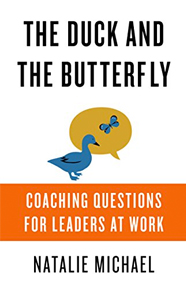
Natalie Michael is a partner and executive coach with Waterfront Partners, where she coaches CEOs transitioning in and out of their roles and executives stepping up into the C-suite. She has coached hundreds of leaders in organizations ranging from Fortune 100 companies to entrepreneurial startups, serves as a CEO Forum Chair with Mackay CEO Forums, and is co-author of Your CEO Succession Playbook. After a decade of executive coaching, she handpicked, developed, and tested more than 1,000 of the most powerful coaching questions, which she shares in her book, The Duck and the Butterfly: Coaching Questions for Leaders at Work.
📚 Books by Natalie Michael
Transcript
[0:00:26] Charlie Hoehn: You’re listening to Author Hour, enlightening conversations about books with the authors who wrote them. I’m Charlie Hoehn. Today’s episode is with Natalie Michael, author of The Duck and the Butterfly. If you’re trying to improve yourself or boost the value of a team meeting or energize a strategy session, you simply need to ask the right question. That’s Natalie’s super power. She asks leaders the right questions. For the last 15 years, Natalie has coached hundreds of executives all over the world with clients in Fortune 100 companies to entrepreneurial startups. In this episode, Natalie shares her most powerful coaching questions to help you lead your life, lead others, lead organizations and create a positive difference in the world. By the end of this episode, you’ll know what to ask to change people’s lives for the better. Now, here is our conversation with Natalie Michael.
[0:01:46] Natalie Michael: I came into the coaching field after a career in the tech space and specifically, I had what everyone would have thought was the dream job. I was the DP of HR for this fast growing tech company we were changing the world, traveling the world and on the outside, everyone would have thought, wow, what a success, but on the inside, I wasn’t feeling very fulfilled and so I was in a bit of a dilemma because on the one hand, I knew that I was in this high flying career but I also had a lot of stock options. I knew that one day, in this job, I had the potential to make millions. The dilemma was, I wasn’t happy and so I made a pact with myself that I was going to make a career change but I had to really make a move that was so deeply fulfilling that when I open the newspaper down the road and I saw that yes in need, we achieved everything that we knew that we were capable of, in this company, that I wouldn’t regret having left and not making the millions as I knew my colleagues would. That one came a few years ago when this company went public and I indeed had no regrets and I was very happy I went into coaching. But the coaching field has not been an easy road and one of the toughest parts of being a coach is actually coming up with really good questions. You realize pretty quickly that when you have a good question, it can really change someone’s life and so this book is really a toolkit for any new coach who wants to be transformational in their coaching, whether you’re a leader or you are an actual professional coach and it gives you a whole toolkit of questions that aren’t just good questions, they actually are transformational questions that can have the impact for changing lives or teams.
[0:03:53] Charlie Hoehn: I love it. Here’s a question, why is the book titled The Duck and the Butterfly?
[0:03:58] Natalie Michael: That’s a great question. The nuts and bolts of this is, when you ask a good question, you’ve got to remember to shut the duck up and really listen to the answer and the butterfly is a reminder that every question, if it’s delivered in a certain way has transformational potential. Throughout the book, you have ducks, listening tips, and butterflies, tips for how to deliver a question. It actually opens up the person you’re talking to rather than hitting them like a sledge hammer.
[0:04:35] Charlie Hoehn: Got it, all right, I’m looking through your book right now and you have three kind of big topics that you cover which are leading your life, leading others and leading organizations. Leading your life seems to be the most pertinent one or the highest priority because you can’t lead others or your company if you’re not taking care of yourself. Can you kind of guide us through some of leading your life, what are some good questions that coaches can ask?
[0:05:07] Natalie Michael: Yeah, well, first off, what I say is the intent of this book is that if you are a new coach, an executive coach, specifically, or you are a leader, or you’re just somebody who wants to self reflect, this is the book for you. The idea is, if you’re a leader in a business, and you’re walking in to a one on one coaching session, a team session or a strategy session. You can flip open this book and come up with some great questions for the coaching session or the meeting that will open up a new, more thought provoking conversation. Just want to set the stage there. And the idea of leading your life and to your point is that all of us want to be more intentional about how we’re living our lives, the value we’re living, what our purpose is, how we’re going to create more wellbeing and authenticity in our life. These are questions that all of us can whip open and journal or they’re questions that we can ask of others to really help them on that path of self-actualization and fulfillment. To your question, you know, there’s a lot of questions in here but when I was writing this book, I found that some of the questions just jumped off the page and really spoke to me. When I was writing the book, I was 45, going through the classic midlife transformation and I was at a point where I was saying, once again, with the tech company years ago, what do I really want for this decade? What I have found, I’m really big into meditation and have been on that path for years and I find that in this latter half of my life, I’m really curious about what do I believe I’m being called to do. One of the questions that really stood out for me in the book is what is spirit calling you to do. You know, what goals do you have that feel like a mission or a calling and I’m also a parent with a 10 year old child and a question that was really important for me was what career opportunities are available. And in line with who I want to be as a parent that was really important.
[0:07:25] Charlie Hoehn: What career opportunities did align? I take it was the coaching itself.
[0:07:30] Natalie Michael: Yeah, for me, I wasn’t going through a career change, I was going through a kind of that delightful phase of “Wow, you know, my career going really strong, what are the things I really want to say yes to?” For me, based on the reflection I did with the book, I realized that part of my purpose is really coaching people who are interested in rising to the opportunities in front of them in their lives but also using those opportunities as an opportunity for personal growth and transformation. And so the ideal client for me, which is something that I got really clear about in writing this book is someone who is really interested in going deep with themselves and reflecting not only all that they want to do. But who they want to be as a person and how they want to grow as a result of whatever challenges are in front of them. It’s really wonderful to be able to say that with clear language and a real heart resonance and I believe that it’s hard to get there if you don’t ask yourself really good questions and take the time to reflect.
[0:08:41] Charlie Hoehn: Yeah, I’m flipping through and some of this questions are just, yeah, they make you really stop and reflect. Like, “Some people think I will be happy when… If you’re credo was be happy now, what would change?” While it’s a little – you know, you can take it the way of like live as if today was your last day sort of thing but it’s really true, how would you change your behavior if you were going to be happy now? I like that you highlight, you really bookmark and highlight the ones that really seem to, I take that these are the ones that really help your clients the most.
[0:09:19] Natalie Michael: Yeah, they pop out and you know, ironically, I do a lot of work with CEOs and one of the parts of my portfolio is I run CEO peer groups and just yesterday, in one of our peer group meetings, we were presenting each of the CEOs was presenting their life vision and the biggest theme was that when leaders are really love their work and they love challenge. Sometimes they have happiness in one quadrant but it’s at the expense of other quadrants like families and friendship and creativity and health and so having a more robust definition of happiness and really saying, “Well first and foremost, I want to be healthy and happy and that comes before work and more work.” That’s a big mindset shift for a lot for these leaders and it’s not until you know, you get a health scare or some tragedy happens that you sort of wake up to that. It’s a very powerful question.
[0:10:22] Charlie Hoehn: Yeah. I love this question. “If I told you this moment of your life was a turning point, what do you imagine you’d be happy to move away from or move toward?” That’s really interesting.
[0:10:38] Natalie Michael: It is and you know, that was a big piece for me because I think so much about success is figuring out what you’re going to move away from or say no to or reorganize in your life, you know? What I have found is when people are going through big transitions, it’s not like our core values change, but they often reorder or reprioritize. I mean, I’m sure I don’t – do you have children Charlie?
[0:11:08] Charlie Hoehn: I do, I have an eight month old daughter.
[0:11:11] Natalie Michael: Well, then you are perfect to talk to about this. I don’t know about you but when I first had my child, I found that all of a sudden, my relationship with parenting and family and how I wanted to relate to that as a human being all of a sudden became much more important. It wasn’t that work was no longer important, it just had a different relative importance, right? Understanding how our values may shift in terms of relative importance depending on what life stage we’re at is a big part of figuring out what we’re going to move towards or away from, I believe.
[0:11:49] Charlie Hoehn: Absolutely. I’m just flipping through the book, it’s actually a really fun book to flip through, I mean, anybody who is interested in self-improvement, not just leaders like you said but anybody who enjoys this type of self-reflection, this seems like such a fun book to go through. “To best achieve your biggest goal, what do you need to accept fully about your present reality?” Which is basically, what are you in denial about that’s holding you back from your goal?
[0:12:24] Natalie Michael: Yup. I’m not even going to comment on what I had to face in looking at that but let me just tell you, it is a hard question you answer. You know, it’s interesting that you say it’s fun to flip through because it’s also fun for dinner parties. Part of what I will do with parties, I’m quite famous for this now is at the dinner party, I write this questions on index cards and then with each meal at the table we’ll tackle them and talk about them. It really does provide for a fun, thought provoking evening and I learned that it’s best not to have all the deep ones, you know, you got to have some fun ones, otherwise your dinner party can get pretty heavy pretty quick.
[0:13:13] Charlie Hoehn: Author Hour is sponsored by Book in a Box. For anyone who has a great idea for a book but doesn’t have the time or patience to sit down and type it out, Book in a Box has created a new way to help you painlessly publish your book. Instead of sitting at a computer and typing for a year, hoping everything works out, Book in a Box takes you through a structured interview process that gets your ideas out of your head and into a book in just a few months. To learn more, head over to Bookinabox.com and fill out the form at the bottom of the page. Don’t let another year go by where you put off writing your book. I am totally on board with that, I love these types – in fact, my favorite dinner party I ever went to was, it was six of us and it was questions like this throughout the night where we talked about things like, “What would you be doing if you weren’t doing what you’re doing today? If you were set financially,” that sort of thing. It was such a fun conversation and that took place, it had to have been seven or eight years ago and I still remember it as just one of the highlights of the last decade. These are great questions for a dinner party and my wife makes fun of me because she says, sometimes I feel like I’m interrogating people when I ask them questions, these types of questions that kind of drain the blood from your face if you think about them too hard. I mean, what is the point of life if you’re not asking these types of questions, these deeper ones about yourself? I know your book’s been out for a little bit and what I’m really curious about though is your coaching. What kind of results or what kind of transformations, to carry with the butterfly analogy, have you seen that you’re most proud of?
[0:15:12] Natalie Michael: You know, that’s such a great question. Right now, I’m doing a lot of work with executives who are defining their next chapter and I have to share a moment with you. Yesterday, in my CO forum, I gave a copy of the book to CEOs and one of the CEOs came up to me and said, “Natalie,” I work with him as a client, he said, “The reason I chose you as my coach was because when we did, meet the coach day.” He goes, “You asked me questions that I absolutely had never thought of and could not answer.” He goes, “That is what I believe is your purpose in the world.” I almost started to cry because what I realized is, the transformational moment is the questions. Sure, I have written a question book and I have a lot of them at the tip of my tongue but my hope is that with this book we have an army of all of the listeners and people out there who are asking these questions of other people. The transformation fits in all of us, we just need to question. I added a bonus part of the book called, Making the World a Better Place, because, like you, I really want our world to continue to evolve in positive ways. And one of my favorite questions in the book is in that section and it’s, “If you can write a message that would get through to all of humanity, what would your message be?” And I’ve used this at executive team retreats, at dinners, for myself and it’s change the world question but it is a life purpose question, that is powerful.
[0:16:54] Charlie Hoehn: What’s been your favorite answer to that question?
[0:16:58] Natalie Michael: It’s the diversity in the answer, I think.
[0:17:01] Charlie Hoehn: Yeah and I imagine everybody has got their own unique perspective and purpose.
[0:17:07] Natalie Michael: I’ve noticed in the older folks around creating the next generation. I remember one executive retreat we ask this question over dinner and some people it was about ethics, other people it was environment, others was their children but all of it was around evolving society. So it was jaw dropping actually.
[0:17:32] Charlie Hoehn: Yeah because I’ve imagined everybody’s got different ways that they think society can evolve that are reflective of their own personal experiences. So what would be the change you would want to see?
[0:17:47] Natalie Michael: There are many questions or many messages but I think the one that just speaks to me and the closest to my heart right now is that all sentient beings are worthy of respect and care and good treatment and if in the course of my lifetime, all animals particularly animals as part of food production are treated as sentient beings, I would feel like the universe is a magical place so it’s –
[0:18:19] Charlie Hoehn: It sounds like you may have read the book Eating Animals.
[0:18:23] Natalie Michael: I haven’t but it’s been part of my life story and it sounds like I should. So I would definitely read that book.
[0:18:30] Charlie Hoehn: It’s an incredible book and I don’t know if any book has motivated more people to try plant based eating than that book. It’s also, I’ve heard – who did I hear? I think it was maybe Michael Pollan or somebody described Eating Animals as both one of the most world changing books he’s ever read but also the feeling of utter defeat at the same time of what a gargantuan task we have ahead of us of just feeling like almost helpless to it. It was both staggering with just the numbers behind it and anyway, we don’t have to get too off topic here but I hear you on that topic. And what I am curious about is what question have you been asked that has had the biggest change or the biggest impact on your life?
[0:19:24] Natalie Michael: It’s hard for me to pick one because I have been living in the world of questions right now but as part of this midlife transition, I’ve been really looking at what conflict is like for me and how I respond in conflict. And so one of the questions of the book that I really stopped to ponder and had a profound impact was, “If you saw a video of yourself in a conflict to situation, would you look or sound like one of your parents?” And that was quite thought provoking.
[0:20:02] Charlie Hoehn: Yeah and potentially depressing.
[0:20:04] Natalie Michael: It definitely requires you know hold up the mirror, right? And that you know I ask myself a lot of questions like “What is spirit calling you to do?” And all of those kind of things but sometimes, you just got to go back to that family system and see what you’ve learned and you know at midlife you think, “Oh my gosh, do I really have to go back and think about that stuff?” And it’s like low and behold, these is something.
[0:20:29] Charlie Hoehn: You have a great question in here along those lines, “What have your kids taught you about leadership?” I am curious about what they’ve taught you.
[0:20:39] Natalie Michael: I think right now what my daughter is teaching me about leadership is the art of quiet leadership and sometimes we have this view of leaders who’s this charismatic big personalities but what I see in my daughter is the power of quiet leadership and somebody who is able to really influence others not from the volume of what they are saying but by choosing their words carefully and asserting their view in a more quiet way.
[0:21:13] Charlie Hoehn: I love that, that’s great. You know I wanted to add to you, what you said earlier when we were talking about the question that changed our life. I just remembered actually, several years ago, a friend of mine, we were at a friend’s birthday in Las Vegas and he asked me a question that haunted me for a solid year and what he said, we were talking about what I was going to do next because I quit a high profile job and I we’d been talking about what I’d really like to do. And he asked, “What are you waiting for?” And coming from him, it made a particularly big impact because he is a peer that I also really respect and admire for all the work that he’s done, but it came from him and it really felt like a call to action like it wasn’t challenging, at all. There was no negativity in the question or anything. It was just purely curiosity like, “What are you waiting for?” And I was like, “Oh my gosh something is holding me back and I need to find out what that is,” so yeah.
[0:22:29] Natalie Michael: I love it and I’ve had something similar to that where it’s like, “What?” I remember I was on the playground once and I really wanted to work four days a week and I remember talking to some mom at the swing set going, “Oh I just really wanted to work four days a week,” and she’s like, “Well why don’t you?” and I was like, “Oh… um… ah,” choking on my words and it was very similar kind of moment.
[0:22:54] Charlie Hoehn: Power questions, you know? I think listening, just giving people the space and just listening and prompting them with good questions is I think you are absolutely right. This is potentially world changing for so many people. So you have a question in here that I think I know the answer to which is, “What’s your Picasso?” The piece of work you’re motivated to make a work of art. And I believe and you can correct me if I am wrong is your Picasso is this book because this has been your work for a long time and now, it is a piece of art that is in the world to help people.
[0:23:32] Natalie Michael: You got it and I want to tell a quick story about that question because it is one of my favorites and I was in a coaching session with one of the CEOs in my forums and she is out to change the world and she is a very inspiring woman and her schedule is crazy. It’s so full of activity and amazing things, as well. And she said every week she looks at her calendar and she says, “What’s my Picasso?” And she color codes her calendar so those Picassos are clear to her. And her mission in that week is to say what are the nuggets, those meetings ,where I am going to show up totally present and let all of my business melt away and just focus on being fully present with who’s in front of me and I love that. So this book is definitely my Picasso, that I actually try to get more tactical and say, “What’s my Picasso today?” This week, this month. And I find it’s a beautiful way to manage your time.
[0:24:37] Charlie Hoehn: I love it. Well like I said, I mean there’s so many great questions in here. How many questions are there in total? Did you ever count?
[0:24:46] Natalie Michael: Yeah, there is over a thousand and I do want to point out that the questions – one of the things that I also do is team coaching and I just was working on a certification in this and what I have found is that anyone who is charged with building a high performing team, you need to hold the mirror up for the team to really help the team figure out where they are being productive and where they are being unproductive. And so there’s a whole list of questions that teams can ask themselves as well and I have found whenever I am facilitating team sessions, I go to this section because it’s hard other than, “Who do we want to be as a team,” right? “Where are we working well? Where are we not working well?” You know those questions are productive but if you ask things that are more thought provoking it can really create an ‘aha moment’ for the team. And one of the questions that I love with teams is simply asking, “So tell me about the most dysfunctional team you’ve ever been a part of?” And everyone tells this wonderful story about all of this dysfunctional teams and I say, “Okay great. Now, tell me how this team is behaving just like those dysfunctional teams,” and they kind of go, “Ah… oh I didn’t know you were going to go there with the question,” right? But questions like that that had team members just stop and really think. So some other ones are things like, “Where has this team inadvertently dropped their standards,” or, “What is conflict in this team were viewed as an investment in a relationship?” I doing that question by memory, I don’t have it in front of me. I think it is better articulated in the book but - “What is the unique value this great team brings to the world? What do you treasure about this team?” Again, things that you can bring for executive meetings.
[0:26:45] Charlie Hoehn: Yeah, “What is the dark side of our culture?”
[0:26:51] Natalie Michael: Here is that conflict question, “If this team you conflict as an opportunity to invest in relationships, what would change in the team dynamic?” And I came up with that question because one of the CEOs that I was working with said, “I used to always think conflict meant we were about to break up,” right? And whether that’s they were going to quit or my girlfriend was going to leave me and he said then I reframed me as, “Oh wow, if we are engaging in conflict that means we are actually investing in each other” and that was a powerful reframe for me and I think it’s a powerful reframe for teams as well.
[0:27:28] Charlie Hoehn: Yeah, I think that’s beautiful. If there’s destruction in nature often the most beautiful things can grow out of that. It’s a chance for rebirth and rising from the ashes. So the final question in the book is, “What are the questions that will take you out of your element and out of your personal comfort zone and hurl you into the mysterious unknown?” Why do you think that matters? Why do you think we need to be hurled into the mysterious unknown?
[0:28:00] Natalie Michael: Well I don’t know that we need to but one of the things I encourage people to do with this book is not just answer the questions that appeal to them because the questions that appeal to you are going to reinforce your current level of thinking and consciousness. I encourage people to ask the questions where they go, “Oh that’s kind of flakey,” or “Oh that’s a bit out there,” because those are the questions that are going to really hurl you into the unknown. You don’t know what the answer is going to be and I just believe that if we want to think more expansively, that there is power in that place.
[0:28:41] Charlie Hoehn: I love it. Do you have a question that makes people squirm the most? The most uncomfortable question.
[0:28:49] Natalie Michael: I don’t know if this makes people squirm but I do find that it’s a question that has people go, “Oh, hmm,” and that’s, “Where would you like to be more mature?” And it’s something where I think we all have that little kid or that scrappy teenager in us and I just find that question of, “Where would you like to be more mature?” It just kind of evokes the wise adults and it usually has people stop and remember that, “Oh yeah, there is a choice here.”
[0:29:20] Charlie Hoehn: Well this is such a cool book so thank you for making this. Can you give our listeners a challenge, maybe one question or something they can do from your book that you really want them to do this week that can improve their life?
[0:29:36] Natalie Michael: Well other than ask themselves a thousand questions by drooling through it, I think that seriously, I think that getting the book and asking two questions from the personal section of the book is a very powerful exercise but barring that, I think that I will leave people with the question of – let me just see. It is going to be in the ‘change the world section’ but it’s: “What is your role in making the world a better place?” Answer that question.
[0:30:09] Charlie Hoehn: All right, take that with you, what is your role in making the world a better place and if you have an answer to that, how can our listeners connect with you and follow you and tell you thanks for the episode?
[0:30:26] Natalie Michael: Well, I think the best thing is to pop me an email. I’m just in the process of getting all of the social media set up, so keep your eyes open for Duck and Butterfly on Instagram and Twitter which is going to be coming up in the next week but in the meantime, just pop me an email. I would love to hear what resonates with you or what you do with this book and its natalie@waterfront-partners.com.
[0:30:56] Charlie Hoehn: Excellent, thank you so much for this Natalie. This has been great.
[0:31:01] Natalie Michael: Thanks Charlie, it was fun. You got me thinking.
[0:31:04] Charlie Hoehn: Yeah, you too. You too. Many thanks to Natalie Michael for being on the show. You can buy her book, The Duck and the Butterfly, on amazon.com. Thanks again for listening to Author Hour, enlightening conversations about book with the authors who wrote them. We’ll see you next time.
Want to Write Your Own Book?
Scribe has helped over 2,000 authors turn their expertise into published books.
Schedule a Free Consult