Julie Calza: Episode 1129
Read the full transcript
Julie Calza
Julie Calza is the founder and CEO of CalzaCo, a top-ranked real estate team brokering through My Home Group. As a former Marine and military spouse, Julie intimately understands the needs of her people, which simply weren't being met in the real estate industry. She built her consistent business around providing honorable real estate solutions for military families and quickly became the most in-demand real estate professional in Arizona in her specialty for her talents and proven process.
📚 Books by Julie Calza
Transcript
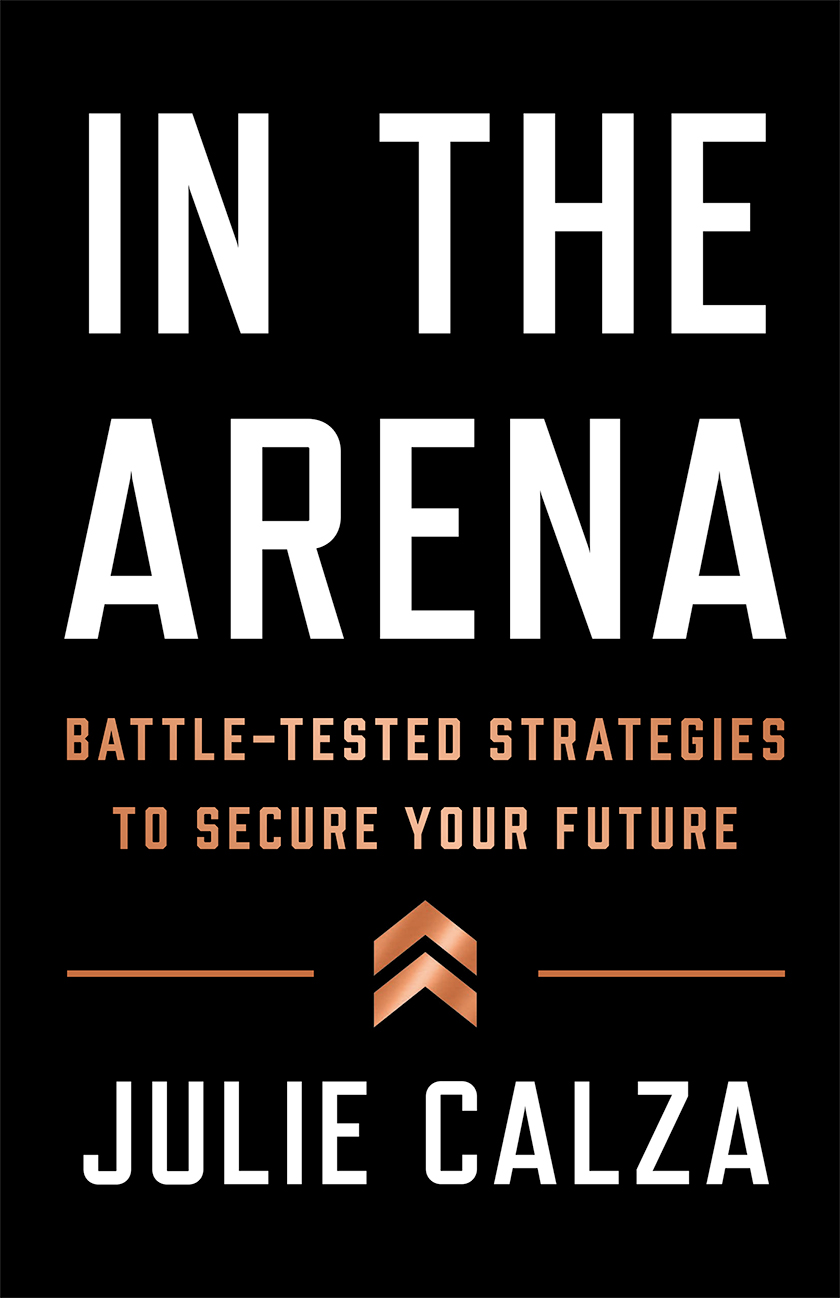
[0:00:30] HA: In post-military life, there are no uniforms signifying who you can go to for advice. There are no ribbon decks on chess to signify experience. You are responsible for making your own way. If you wait for the military to tell you what to steps to take in your civilian life, you’ll find yourself waiting forever. Welcome back to the Author Hour Podcast. I’m your host Hussein Al-Baiaty, and my next guest is Julie Calza, who is here to talk about her new book, In the Arena: Battle-Tested Strategies to Secure Your Future. Let’s get into it. Hello friends and welcome back to the show. I’m here with my good friend, Julie Calza, who is here to talk about her new book, In the Arena: Battle-Tested Strategies to Secure Your Future. Look, I’m telling you, I was flipping through this book last night and I was just fully immersed. It was so easy to navigate. Julie, welcome to the show and congratulations on your book.
[0:01:30] Julie Calza: Thank you Hussein, I really appreciate it.
[0:01:33] HA: Yeah, absolutely. I’m really excited to get into the book. However, we do have an awesome audience and I want to get them to know you a little bit. Maybe give us a little bit of your personal background, where you grew up, and maybe one person or a situation that inspired you the most growing up.
[0:01:50] Julie Calza: So I know this is counterintuitive to this environment but I actually always get uncomfortable talking about myself, but I think I can do that. Let’s see.
[0:01:59] HA: Share whatever you’re comfortable with by the way.
[0:02:03] Julie Calza: So I grew up in Houston, Texas for a part of my life and then moved to East Texas a little bit later in life. I ended up joining the Marine Corps when I was 17 years old and went to serve my country and then, I later married an active duty member in the Air Force, he’s a crew chief, my husband, Cedric, and so I have a lot of exposure to the military life. People always ask me, “Were your parents in the military?” The answer is no but my grandfather served in the Army for almost 30 years. However, they were not in huge favor, anyone in my family, of me joining the military, contrary to what some may think. At any rate, I went to college and studied finance and economics after I got out of the Marine Corps and it wasn’t until a couple of years that I really started to realize all the opportunities available. The military members in the financial world and also just in general, and leveraging their benefits and a real huge gap and lack of education in that space. And I ended up becoming really passionate about real estate through my investments. But when we moved out here to Luke Air Force Base area, my husband was stationed here and I struggled to find someone I could trust to help us buy our house out here. And even after completing the purchase, I found some very unsavory things that happened to my transaction and the person I used, you know, marketed himself to military members and I was really frustrated and I decided to look for a solution and to go work for a company that was the solution for military families and at that time in the market here, that didn’t exist and so even though I didn’t particularly want to become it, I decided that was really the only way to serve my community in that space. So I started my business CalzaCo and we’ve now served over a thousand military members, helping them buy, build, and sell homes and also educating them specifically on their VA loan benefit.
[0:04:10] HA: That is so powerful and I’m glad you brought that up. Because sometimes, when we think about the men and women that go into the service, that’s a different kind of training, of course. No one can obviously take away the bootcamp training, just the intensity of military, no matter which way you look at it, it is a beautiful thing that we benefit from the freedoms and everything that we have. By the way, thank you for your service, thank you for your grandfather’s service and how you still continue to serve the community in that way. So that’s amazing and very commendable, so I appreciate that. But I love that you continue to weave it throughout your life to be someone of value and service to the community of the military. And so talking about that, you start to go down this path of you’re not only creating your company and you're building it up. But really focusing on what happens after military, what happens on this career path, and you start to train people in specific ways. Can you specifically tell me about the people you’re trying to reach with this book, the audience that you're trying to reach with this book, who are you trying to target mostly?
[0:05:19] Julie Calza: Well, in all honesty, even though the book focuses on securing that post-military future, who I want this book to impact most are the people still in service, the spouses of people still in service, and those that don’t know everything available to them now. And what small, I mean, relatively speaking, small steps they can take while they’re still active duty to make their lives way easier once they do get out. In my community, once you're in the military, there is a point where you’re counting down the days until you get out but because there’s this gap where there’s so much dependability built into the military lifestyle, it’s really challenging to really mentally separate yourself from that. Yes, when you get out, but while you’re in, it’s nearly impossible. So I want more people that are still in the military to be taking these steps, so that way they’re better prepared for post-military life. Now, that’s not to say that this book isn’t hugely impactful for veterans, reservists and military members that may have been out for 20 years even, but it’s if you can get ahead of that date when you’re no longer wearing that uniform five, six, maybe seven days a week, then you will be able to make insurmountable progress towards those goals. So I really, really hope that more members that are still in service, spouses of those members can find this book and start getting ahead. And those that may have feel like they missed the boat for those opportunities realize that no, it’s not too late, you can still do these things, but tell your friends about this so that way, they can potentially get ahead as well.
[0:07:09] HA: Yeah, that’s super powerful. I know that when military men and women leave the service, it could get very daunting. It could get very difficult, complicated, as far as really following a purpose, following a passion, things, I’m sure there are many who have a vision of what they want to do after, of course, but there’s many I’m sure that are like, “Well, what do I do now?” And you propose many different ideas, but really, how to think about it, and this is what I found really powerful about your book. But I want to know just from my personal curiosity, what would you say is the most desirable type of, I guess, career or work or arbiter of the world that you see people go into after serving in the military? What would you say is the thing that most people gravitate towards, and if that’s a good or a bad thing, and how you help people navigate those waters?
[0:08:02] Julie Calza: So most of what I see is, and this is a super interesting question I wasn’t expecting, but I actually happen to be writing an article just this morning about the problems with military employment that I intend on publishing, and so it’s just funny that you bring this up.
[0:08:18] HA: I was reading your mind.
[0:08:21] Julie Calza: So what I find most of the time is it’s usually going into some form of government contracting. So for example, my husband is a crew chief and it is really, really common for crew chiefs to get out and go to work for a Lockheed Martin or some of these bigger companies that do contracting, and they still work on the base but as civilians. So that’s really, really common. But what I also see a lot of is military members gravitating towards more portable and I mean, I don’t want to say non-traditional, but still arguably non-traditional fields like real estate, mortgage, anything that will allow them flexibility that they haven’t enjoyed for however long that they’ve been in service. So it’s funny because I feel like it’s both ends of the spectrum. I think that it’s maybe a 60/40 split. 60% staying in that comfort zone of being on base, whether that be staying in the service, active duty or service or working as a government contractor on a base, or going almost opposite direction and something that they perceived to be flexible. But a lot of problems can come from both of those, which I find really interesting, because a lot of military members I see, it’s not that they don’t have discipline. Honestly, we’re the most disciplined people in the planet, but because they had so much time and structure going towards what they view as a flexible field can be super challenging. So for example, when I got out of the Marine Corps, for like two or three months after I got out, I still jumped out of bed at 03:30 and ran to the end of my bed and stood at attention for a second before I really came into the real world and was like, “Oh wait, no one’s going to tell me what to do. Oh crap, I got to actually figure this out myself.” So when you go into a field that you perceive to be flexible but because you have that freedom, it actually requires even more discipline, it can be a huge shock. And then on the other side of the coin, staying in the same mold can breed this culture where you’re not thinking outside of the box and so you are in the same cycle you were in before, just slightly different.
[0:10:38] HA: That’s really powerful, what a great way to look at it and bring it into perspective for people who are seeking that flexibility and a really – discipline is amazing. How can you use it outside of the military? And actually, discipline is great to bring into entrepreneurship. Doing any kind of sales, I feel like the sales world is enormous, right? But I feel like it requires discipline and I feel like the military teaches such remarkable attention to detail, really focus on cutting the distractions. I know two of my brothers actually served in the military during the Iraq war and it’s funny because we became refugees after the first Gulf War back in 1990. So, how I felt about what my brothers’ direction was going to be after, they really wanted to start businesses. They really wanted to do their own thing and I realized how much of those things that they learned in the military played a role. I ended up going to college, and they helped me a ton, progressing through that. So again, shout out to all the military people, man. I feel like a lot of our communities and things, we don’t recognize how important those learned skills are until we really start to apply them to our purpose and passion. So this is what I want to talk about next. How do you then get in front of these remarkable men and women and really help them? What’s the one thing, the first thing you do when you meet with someone or a group of people and you start to talk about these things in the direction? What’s one thing you try to bring their awareness to?
[0:12:09] Julie Calza: I think that this actually will go in the answering your question, but I do want to back up to something you said, which is how these learned skills, right? These learned skills you learned in service and yes, we can argue that they’re unmatchable but the other side of those learned skills is so many military members sign the dotted line when they’re still children, really, if you think about it. They haven’t experienced the real world. Some of them haven’t even had jobs before and then they go into this environment where they’re given so much structure and they’re given a lot of roadmaps to show them exactly what they need to do to be considered successful. “This is how you can work to make the next rank. This is something you can do to try to get ahead, this is X, this is Y and this is Z.” Well, what a lot of military members, and this is that awareness question you ask me, what a lot of military members don’t realize because they’re so into this and I, by the way, I didn’t either. I didn’t either until I got out and had some separation from it, but that’s what caused me to miss a lot of opportunity is, it’s almost like there’s not an adulting 101 class. I meet 23-year-olds in the military that don’t know how to register their car. So you can go and serve your country but you don’t know how to exist in a world that isn’t super-super structured, but you don’t realize that, you don’t, and a lot of people don’t want to admit what they don’t know, or come to terms with that. So I meet so many military members that are eager and excited and can’t wait for the day that they get out and they start their own businesses because yes, entrepreneurship, that’s what I was trying to get to as the other side of that coin, from contractor all the way to entrepreneurship. But you know, you ask them what business do you want to start and they don’t know. They just know that they want to work for themselves, which is fantastic, I applaud that. But it’s so important to get groundwork, to get more skills, and not only depend on the military to teach you the skills you need to know because the military itself, hey, it’s the military. If you served 30 years in the military, you have a whole life to live after that. You haven’t lived any of your adult life outside of having an exact framework of what you need to do, and so it’s super important to understand that yes, you might have these invaluable skills and so many people around you are telling you how invaluable they are because you're military, “Oh my gosh, it’s going to be easy for you to get a job, everyone wants to hire vets. It’s going to be great because you’ll be ahead of everyone that only has a bachelor’s degree.” But then you get out there and it’s really hard because you don’t know how to speak civilian. You don’t know. I remember I had a whole issue when I started my business, where a mentor of mine had to teach me how to properly email because apparently, I wasn’t fluffing my emails enough and they were coming across the wrong way.
[0:15:14] HA: Super rigid emails, like what is happening?
[0:15:17] Julie Calza: Yeah, exactly. I guess the awareness, the bottom line of what I’m trying to say is that don’t only count on those skills, there’s more. You have to learn more to get yourself ahead.
[0:15:29] HA: I think one of the most important lessons I learned just in life is that you are constantly learning, and it’s like no matter what, you can always add to it and that’s the value that you will always bring to the table is that you’re open to learn and really re-evaluate what you know, and see how you can better apply it, and I totally see how you get that idea. Because you’re basically talking about it and I feel like how you’re applying it and helping service men and women understand that concept that, “Look, you got to keep learning. You got to take those skills and compound them into other things and how you could be effective as by having an open mind and keep learning and really apply those things.” Which is really powerful. How do you think your book, and really your work, contributes to the larger conversation about post-military career paths? What would you say, if there’s one thing about your book that adds to that larger conversation, what would that be for you?
[0:16:26] Julie Calza: Well you know what? I’m really glad you asked me this question because this book, yes, it aims to serve military members, but it does greatly contribute to a larger conversation and can help civilians understand the challenges that this population faces. There are so many businesses that claim to be military friendly and so many companies that claim they want to hire vets but they have no idea what it’s actually like to be in that space. No idea what it’s like to go from this structure of knowing exactly what you need and having a formula every single day to coming out into the world and loosing. Yeah, you might not have anyone yelling at you or forcing you to get up really early in the morning but you also lose some brotherhood, some belonging along the way. So, the larger conversation that I hope that this contributes to is awareness. Also for the civilian population, especially in the professional world. Understanding that yes, there are “benefits”, military benefits, and there’s a lot of benefit to serving the country, but it’s a lot of challenges and they’re not the ones you think, at least not only the ones you think. So the deployments, the separation, that’s the first thing people think about. They’re like, “Oh man, it would be so hard. I couldn’t imagine being away from my spouse and my kids for a year.” Which by the way, my husband did that twice, that’s really hard, right? But that’s what people think about. But what about the fact that today, right now, it is nearly impossible for military members near major cities to find affordable housing while they’re still in the military. Understanding that their shortcomings in the healthcare system, and there’s a lot of lack of awareness in the basic principles of finances. It’s not the military’s job to teach you how to balance a checkbook. I know that seems like an archaic term these days but it’s the best analogy I can come up with. So I hope that this book contributes to a wider conversation about, “Hey, just because somebody served in the military doesn’t know that they know how to set them up for a strong financial future.” You wonder why veteran homelessness is such a huge issue. Well, if you never had to find your own housing before, then how are you going to come out and be able to do that? If you have severe PTSD to the point where you couldn’t work anywhere with unexpected noises, how are you supposed to be able to get a job and then find that housing? So I do hope that this book can in some small way contribute to that greater conversation of just awareness about the intricacies of the challenges that we face and not just the, “Oh, that sucks to be deployed,” you know?
[0:19:26] HA: Wow, very powerful. I love that because certainly for me, that’s the thing I started thinking. I’m like, “Wow, this really adds so much flavor into this conversation” because I know, post-military, there’s so many – if you just think about the trauma in which many armed forces people face, it’s very difficult, and then how they navigate that afterwards and how that plays out in work-life. Purchasing a home, financials, it gets very intense and so I’m grateful that you really are adding something to the conversation here and thinking about things a little bit differently and deeply. Again, from your perspective having gone in the military so young, you’re able to see this transition. So what would you say, maybe a particular moment or remember a scene from writing a book or story or an experience that you really enjoyed writing, what was that for you?
[0:20:18] Julie Calza: So I in no way, shape, or form want to compare myself to the great J.R.R. Tolkien, that’s not my intent in saying this, but I can’t help but be reminded of his quote when he was writing The Hobbit. It started with a little corner of paper where he drew a little door and he said the famous first line of what ended up being the book, and it was years before he wrote the book. The reason why I bring that up is because the story that I start with this book is super powerful to me because it’s something that I remember so vividly, this has been nearly 15 years ago. I actually just realized it right this moment when I was trying to do math and we came out of the jungle. We were brought into this makeshift theater, for a lack of a better term, and these people in pristine uniforms and yes, they happen to be officers. I’m not trying to say anything officers versus enlisted, so military people don’t come at me, it’s not about that. It’s just that in the military, when you look at someone’s formal uniform, what they’ve done, because you know what the ribbons mean, you know what the insignia means, you know what the rank means. And so here we are covered in mud, disgusting, having been out in the jungle for I mean, I think at that point, it had been a couple of weeks and hadn’t bathed properly, just used baby wipes. They funnel us into the seating and we had so much gear on we couldn’t even sit directly next to each other. There had to be at least a seat in between us and these people in this shiny uniforms that had their one little ribbon and their one little introductory rank were telling us, were trying to educate us about IEDs, improvised explosive devices, and at this point, we’d already had friends that had died from these. They were becoming super, super common in Afghanistan. And we’re sitting there and of all things, it’s just so ridiculous to me as a grown adult right now but in the moment, it was just like it really, I don’t know, something clicked in me that - so, they showed us a PowerPoint presentation. Can you just imagine learning about an explosive device that’s killed people you know and will eventually kill people in this room with you by the way, on a PowerPoint presentation from people that have never ever experienced anything like it? It’s just such a l stark contrast, really. And that moment in my life has sat with me since it happened, just vividly. So I tell you that to tell you this, I wrote the first couple lines of this book years ago. I didn’t know what I was going to use this for but I just didn’t want to forget that contrast because not everyone realizes it in the moment. I remembered that moment, I didn’t know why I remembered it. I didn’t know why it hit me so hard or why it felt somewhat traumatic to think about. It wasn’t like the visions of the torn apart bodies on the screen, it wasn’t that. We’re so desensitized to that. It was just who was trying to tell us how to not die, right? Like, who are you to tell me this, what’s your experience? So, two years ago when I really decided, “Hey, I need to figure out a way to help more people.” Because my business is very focused on buying, building, selling real estate and educating on the VA loan, but I just kept seeing these gaps as I met more and more people in the military and I wanted to figure out a way to teach what I’ve learned. Not that I know everything but I’ve learned a lot and I want to help people with that and my community with that. And so I went back to those lines and I wrote out the story and it just kind of clicked. Where I was just like, “You know what? The thing is in the civilian world and now, ironically enough in the influencer culture, you don’t know.” Nobody is wearing a uniform, you don’t have the ribbon on the chest, you don’t have the rank on the sleeve or the collarbone or depending on what branch you’re in, you don’t have that. So how do you know who you’re taking advice from, has experience, or been successful at what they’re trying to tell you to do? I again, in my life, I didn’t want to necessarily become the solution to that but I felt like somebody who could tell these stories and could help people really understand that you have to be responsible for educating yourself on what opportunities are available to you. Oh, and by the way, let me just list them for you and tell you how to use them. So all you have to do is read this book and you’re going to have a really good platform for it.
[0:25:35] HA: So powerful. I love that because you do lay it out pretty pristinely, and again, this idea of learning from those who have been through things, the experience, there is knowledge of course that we know when you can dissect the knowledge and the data and all these things but having experienced something, that’s when we can get emotional. That’s where I feel like the heart is connected to it, the purpose. Just throughout our conversation today here in the last like 20 minutes or so, I see your heart into it. I see because you’ve lived it, you know what happens. You put on that uniform before, you’ve experienced things that honestly, let’s be real here, a PowerPoint could not express. However, if you were to then teach that class or teach those moments or whatever, you speak from experience, you speak emotion. I think that’s a powerful place to really bring information forth, bound to the experience so that that experience then impacts that person you’re trying to really have an impact on, which I found so powerful. Which leads me to my last question for you. When your readers pick up your book and begin to go through it and dissect it and finally put it down and feel like they can walk away from it, what do you hope they take away from it?
[0:26:43] Julie Calza: So there’s two things I want the reader to take away from this book and the first is, you’re going to have a lot of people that are trying to tell you what to do, but the thing is, they’re resume doesn’t match what you’re trying to do. So, if you are going to go out and take risks and do things differently or strive to set yourself up for a brighter future, there’s so much out there that’s going to criticize you for that because you’re trying to do something different. The book is titled in reference to a quote that was really impactful for me the first time I heard it, it’s a Teddy Roosevelt quote. It’s a long one but it essentially says, “It’s not the critique who counts or the man who points out how somebody else struggles. The credit belongs to the man who’s actually in the arena, whose face is marred by dust, sweat and blood.” Here’s the thing, when you’re taking advice from every single person around you, you’re not going to make any progress because you’re in the stands with them. You’re there sitting down telling other people what to do and you’re not actually down there operating and learning different ways to think, and also learning different ways to set yourself up. The military is very good at training the best fighting forces in the world. They’re very good at defending this country but they’re not there to teach you how to live your life. So the first thing I want people to take from this is, if you’re sitting around waiting for them to tell you like how to get ahead, how to be successful in the civilian world, how to have financial security, you’re going to be waiting forever and the second thing I want people to get from this is you are not by yourself. The majority of people don’t know these things in this book and I know there’s plenty of people, some of my friends included, that will pick it up and they’ll be like, “Oh yeah, duh.” But it’s not duh, this is not common knowledge the stuff that’s in here and I know that by being a part of this community. So you’re not alone, it’s okay to ask questions, but more than anything, get down there and get your boots muddy and try to set yourself up for a beautiful life that you can live while you’re still in service but also, after you get out of it and after you’re done with it. You’ve served your country, you deserve to have a life that you’re proud of both while you’re there and afterwards.
[0:29:16] HA: Very powerful words. Julie, thank you so much for just sitting with me today and really giving me the rundown of what you’re very passionately about, obviously. It comes through in so many ways but I am grateful for that, because you’re the type of person that we need in the world that can really help our military service men and women that may not have a feel of what happens next and thinking about that. But also outside of that of course, their family members, the people around them, people that surround them, we all want to see them successful. However, there are ways to go about doing that and you’re right, asking questions, coming to the table, rolling your sleeves up, that continues and showing up for yourself, that certainly continues, and you have a way of not only teaching that but showing that from your own experience. So today I’ve learned so much. I’m honored and grateful for your service. Thank you for sharing your stories, your experiences with me and the audience. The book is called, In the Arena: Battle-Tested Strategies to Secure Your Future. Besides checking out the book on Amazon, where can people find you?
[0:30:19] Julie Calza: So if anyone wants to learn more about me, my story, or the book itself, they can go to postmilitaryfuture.com or follow me on social media, Calza, Julie.
[0:30:32] HA: Very cool, thanks again Julie. I appreciate you. Congratulations on your book.
[0:30:37] Julie Calza: All right, thank you so much Hussein. I appreciate you too.
[0:30:41] HA: Thank you all so much for joining us for this episode of Author Hour. You can find, In the Arena: Battle-Tested Strategies to Secure Your Future, right now on Amazon. For more Author Hour episodes, subscribe to this podcast on your favorite subscription service. Thanks for joining us, we’ll see you next time. Same place, different author.
Want to Write Your Own Book?
Scribe has helped over 2,000 authors turn their expertise into published books.
Schedule a Free Consult