Cristina Randall: Episode 1149
Read the full transcript
Cristina Randall
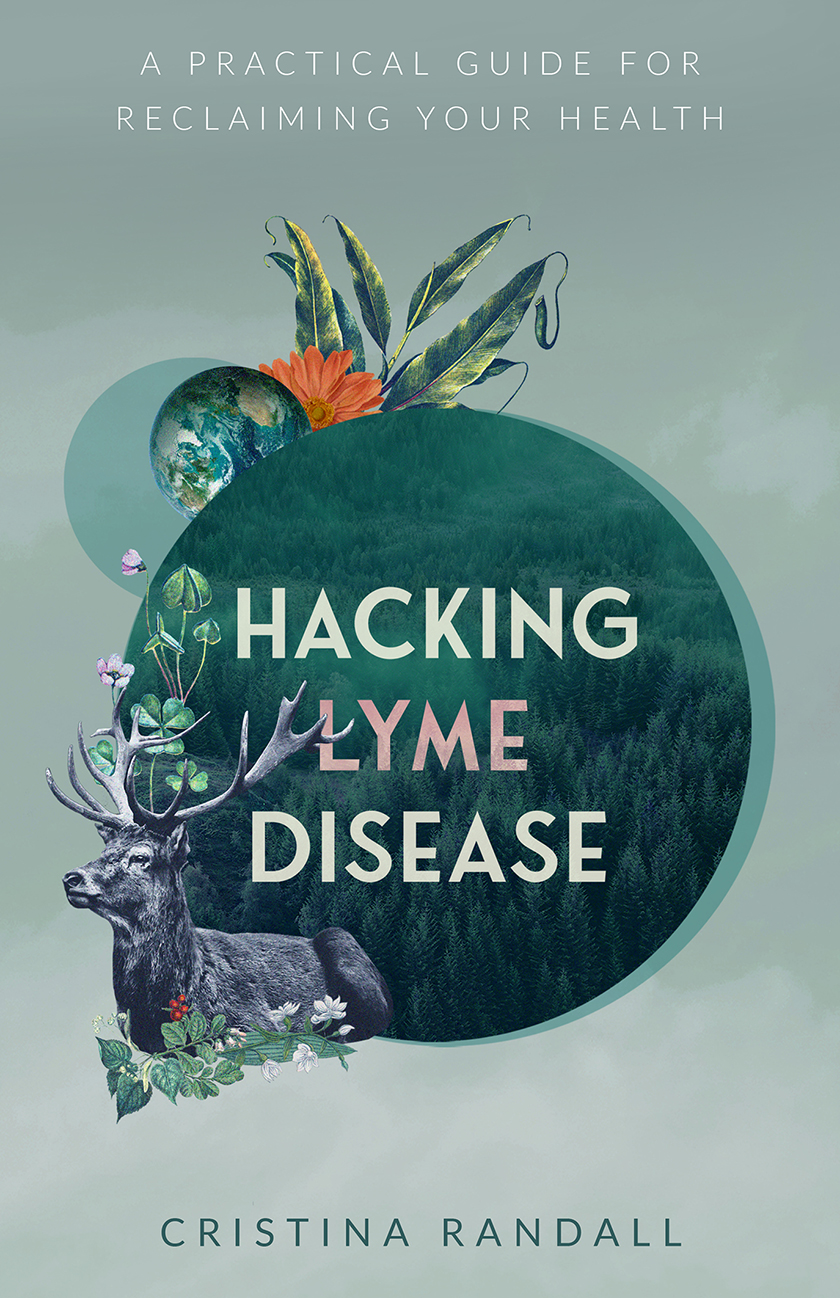
Cristina Randall is a technology entrepreneur and investor who has worked in fintech and payments and now builds technology for healthcare. After contracting Lyme disease in 2018 and finding little help from conventional medicine, she spent years researching recovery, drawing on hundreds of conversations with immunologists, naturopaths, neurologists, and biohackers. She turned that work into Hacking Lyme Disease: A Practical Guide for Reclaiming Your Health, and directs the book's proceeds toward independent Lyme research.
📚 Books by Cristina Randall
Transcript
[0:00:30] HA: My next guest reflects on her journey with Lyme disease, which is a complex condition that affects millions of people across the globe annually. Known as a great imitator, this confusing disease is often misdiagnosed as a myriad of other illnesses, leading to even more hardship on an already difficult path to healing. Welcome back to the Author Hour Podcast. I’m your host Hussein Al-Baiaty and I’m joined today by Cristina Randall, who is here to talk about her new book called, Hacking Lyme Disease: A Practical Guide for Reclaiming Your Health. Let’s flip through it. Hello friends and welcome back to the show. I’m here with my friend Cristina Randall today and I’m super excited to have you, Cristina. Welcome to the show.
[0:01:17] Cristina Randall: Yeah, thank you so much, I’m super excited to be here.
[0:01:20] HA: Yeah, Cristina, you’ve written an amazing book, enriched with so much of your story and I’m really excited to get into it. The book is called, Hacking Lyme Disease, which again, we were just talking about this before we hit record that this is something a lot of people carry, and it’s obviously very important to you to get this message out but I love how you shared your story. It was really deep and I found myself not only resenting some of the stuff, not because I have Lyme disease but some of the traumatic things that you’ve gone through, and just the chase and the hustle and bustle of life but then this thing kind of puts a halt, the stoppage in light, the big boulder that comes around and then you have to deal with that, and so you overcoming that is really powerful. But before we get into the book, I really want to tell people a little bit about you, your background, where you grew up and what inspired you to get on this path that you're on now or perhaps a person that inspired you? I’d love to know and share with our audience a little bit.
[0:02:22] Cristina Randall: Yeah. So my history, trying to think back, things that inspired me. So a little bit about my background, I studied computer engineering so nothing to do with health at all. I had a pretty healthy childhood. I didn’t really go to - I wasn’t ever in the doctor’s office. So pretty uneventful and then got into entrepreneurship and the startup world. So throughout my career, I had done a whole bunch of stuff from investment banking in Japan to international development work in Southern Africa and a whole bunch of things. So when it came time to decide what I wanted to spend my professional career, I was kind of like, “Well, the startup scene is kind of cool.” But I felt frustration that a lot of the problems, at least, coming from Silicon Valley are narrow. In a sense that they’re not really game changing for saving people around the world and building economies. So I understood that for me, that meant looking at big problems to work on. So I fell in love with Mexico through a number of sequiturs events, ended up there. So for me, emerging markets and working on big problems, either with infrastructure or payments or energy, health, that was where I wanted to spend my time. So yeah, I got into the startup world and built today what would be the PayPal of Mexico, not as big as PayPal and we do payments, process a good chunk of ecommerce GDP in Mexico. So that was great. I had a good - I guess a way to cut my teeth in building businesses but that came at a price. So I sacrificed a lot of my health, the cost I paid for building a business was stressing my body both physically, emotionally. So I had also ran marathons and done sports in a way that wasn’t very healthy, just constant stress with the business and so yeah. So when I got bit by a tick, my immune system and my whole body wasn’t really setup to deal with that. So that’s the backstory before Lyme, pre-Lyme and yeah, happy to dive into all of that. There wasn’t any particular event that inspired me. I would say, the one turning point was getting Lyme because it shifted the direction of the next few years of my life and I ended up leaving the business, but fortunate to focus 100% on my health but yeah, that was it, I would say the turning point.
[0:05:18] HA: Yeah, definitely. There’s always, I feel like, with many offers that I get to have the opportunity and privilege to speak with, there always seems to be that moment in life where a trajectory shift happens. Whether it’s an event or a thing that happened to you, whether it’s health or a baby or my dad or whatever it was. I mean, sometimes it’s unfortunate and sometimes it’s really positive and really good, but I feel like more so than not, I feel like there’s always something that, and I hate to say this but, punches you in the face and -
[0:05:52] Cristina Randall: It was a big punch, yeah.
[0:05:54] HA: Yeah, makes you just like look at life yourself, just requestioning the whole thing, right? And sadly, sadly, unfortunately, it happens to be around health but it is the crown that we wear and it is invisible and I love, I absolutely love the powerful quote in which you used to open up your book which goes, “Everyone has a doctor in him or her, you just have to help it in its work.” I love that so much because it is so true, I resonated with it deeply. “A natural healing force within each one of us is the greatest force in getting well.” That’s one of those things I feel like at some point, we do discover and it’s up to us to take that initiative to help our bodies heal and this idea of, “I just need a doctor to give me X, Y and Z to tell me about my body, to heal my body.” This responsibility is really ours, right? But it’s also very difficult and it takes a long time to get there. So I know there’s many events that inspired you to write this book but can you tell me about the stories and times of like, when you started thinking, throughout your healing process of getting Lyme disease and then going through the madness that I feel ensued, right? When did you start thinking about writing this book and really, what moved you in that direction throughout your healing process?
[0:07:19] Cristina Randall: Yeah. So by the time I had finished I would say with getting better, getting back to my baseline. So today, I’m, I would say, more vibrant and healthier than the Cristina pre-Lyme. So I consider myself very fortunate to have gone through and not only have gotten back to my baseline, but feel better than that. So when I came through that process on the other side of it, I just felt a huge responsibility. The whole experience of getting sick with Lyme is just so, so difficult, that’s why you typically hear people call them Lyme warriors because it’s like you need to have such tough skin and it’s just a terrible process. So people that get Lyme are called Lyme warriors, I think maybe because of that but yeah, I just felt a huge responsibility to talk about the healing process and a lot of the things that helped me and what was interesting is that - so I spent hundreds of thousands of dollars and saw more than 40 doctors and specialist from neurologist to cardiologist to energy workers. A whole range of specialists both in allopathic medicine and more alternative, naturopathic medicine and what actually as pretty game changing for me was actually just the conversations with people who had gone through Lyme and hearing what they did. Those were these, you get these gold nuggets. So what I try to do in the book is just summarize a lot of these gold nuggets that I got and structured it in a way that was easy and yeah, that was my idea. So the book is meant to be an ally for someone who is going through Lyme. It’s a very, very hard process, it’s very costly, it’s very frustrating. So the idea is to make it a little bit easier for someone that is going through it.
[0:09:17] HA: You know, it’s really powerful because I feel like from sharing from your personal experience, one can really identify where they struggle the most, and see you through transformation how they can be inspired to make their own transformation and really work through their healing process. Could you share a specific moment or experience that stands out to you in your journey of regaining your health from Lyme disease? Is there a moment in time where you feel like, “Okay, I’m overcoming this?”
[0:09:44] Cristina Randall: Yeah, so I think there is about three different phases. A first phase was like, I started to get these symptoms. For me, it was pretty night and day so I went on a camping trip in California and then I was fine. I didn’t have any outward symptoms until about six months later when I got a dental procedure done. I had a dental infection and so shortly thereafter, I started to get symptoms but it was very drastic. So for me, I knew something was wrong even though I would go to different doctors and health professionals and they’re like, “You look fine, on paper, you look fine” and I was like, “No, this is not right. I know deep down inside, something is very wrong” and so for about five months, it’s kind of like a wild goose chase. Just going through the process of elimination and figuring out what I didn’t have and doing a whole bunch of test and finally after five months, I was working with, they’re called Lyme literate MDs. So basically specialists trained to identify Lyme and then treat Lyme, and so I had a specialist test done and yeah, on the test results, I just lit up. This is a specialist test that you have to get from a lab called IGeneX and yeah from there, it was like, “Okay, yeah.” This, I knew immediately when I saw the test results, I was like, “Yeah, this adds up, this is what it’s at” and then, so that was the first phase. It was just actually probably the scariest of all the different parts of my journey because you don’t know what you have. No one can help you and you gradually experience your body breaking down and your mind as well, because you start to lose cognitive abilities. Lyme and coinfection is really fatty tissue, right? So it affects your brain, it affects your nervous system, and so there’s those five months where just everything was falling apart and I didn’t have answers. So that was probably the scariest part, and then from there, it was like, “Oh, okay, okay.” Now, working with some kind of something so I know what I have to treat, and so at the six months mark, I went on this other part of the journey, which was like, “Okay, how do I get better?” which was probably equally as frustrating but not as scary because at least I would do these things and I would see an improvement. And so a lot of it was self-experimentation, working with practitioners, but I would gradually see an improvement and I was gradually getting better. So yeah, that process took probably over a year, just the next phase, which was just getting better and throughout that whole process, I kind of documented everything that worked and the information. I documented the science and also what I experienced firsthand, what I knew to be true, and so that is where the book came out because at the end of the year and a half, I had volumes of information that I didn’t know what to do with and so I was like, “You know, this should get out there in the world” and so yeah, at that point, It was just a question of organizing the information and making sense of it.
[0:12:56] HA: Yeah, I love that so much. In your opinion though, what is the most important thing? And I always think about this, what is the most important thing for people to understand about Lyme disease? How can we raise awareness? I know, obviously, this book is a component of that raising awareness but to improve diagnosis and treatment, what do you think the most important thing is for people to understand?
[0:13:18] Cristina Randall: Yeah, I think there is all kinds of people. I think also for the general public, just to understand that this thing exists. It’s something that is real and it’s a big problem. So less than about half a million cases per year at 490,000, which is what the CDC is reporting now has grown a lot. We didn’t used to have that many cases several years ago and even that number is small. A lot of practitioners and experts say that it’s actually the real number is more than 10 times that a year. So even with what the CDC is reporting as confirmed cases, which they only confirm a small portion of the cases is huge. It’s more than breast cancer, HIV, hepatitis C combined. So this is a problem and that’s just in the US. And even like commercial insurance claim data suggest it’s way more than that. So there was a report looking at the cost of over about a billion in medical cost from Lyme-related insurance claims. So it’s a big problem and that’s why we’ve seen celebrities coming out about this because they’re using their platforms to talk about it because it’s the epidemic that no one’s talking about. So for the general public, I would say that, just realizing that it exists and also like identifying how to recognize that someone could have Lyme disease. I think that’s another and we could get into that. And then the second part of my answer would be for medical practitioners. So if you get sick in New York or in Connecticut, the medical professions there are more trained to recognize Lyme disease. So the CDC even recognizes that Lyme disease is a clinical diagnosis, meaning that doctors can diagnose it if it looks like a person has Lyme disease. So like if it looks like a duck, walks like a duck, sounds like a duck, you know? But the problem for that is that if doctors and medical professionals aren’t trained in Lyme disease and there isn’t awareness on their part, that’s also part of the problem. So to answer your question, I would say in two parts, for the general public and for healthcare professionals.
[0:15:45] HA: I really like that, this idea – I mean, I feel like you went out there and really took things into your own hands and that’s something, again, back to that initial quote of, “All right, there is a doctor within me.” My immune system can do remarkable things but what am I not doing or what am I doing that’s impacting that to do its job? This idea of really taking control and I know you really – you go deep into this in your book, which is as a highlight like what advice would you have for others who may be struggling with this chronic disease and how can they take their health back into their own hands? What are the things that they could be proactive on and maybe you can share some of those with us?
[0:16:26] Cristina Randall: I could talk for hours about it –
[0:16:28] HA: It’s huge, right.
[0:16:28] Cristina Randall: We’d have to be hanging out the whole day to get into those.
[0:16:30] HA: Which is why you wrote a book, right? Let’s be honest.
[0:16:32] Cristina Randall: Yeah, which is why I wrote a book. Yeah but from a very high level, my takeaway is that Lyme disease is systemic. It impacts your whole body and it impairs your immune system. So you know, when someone is struggling with Lyme, they may not be able to deal with environmental toxins for example, and even a simple thing like my case, a dental infection, it just brought down my immune system. Maybe looking back on my experience, if I had better lifestyle that didn’t have so much stress, if I didn’t have so many toxins in my body, if I didn’t have the dental infection, maybe my immune system would have been able to deal with the Lyme itself. So Lyme has been with us thousands and thousands of years, it’s not new per se. I think like a form in which it affects us is kind of new in the last few years. But I would say it depends on the person because today we are impacted by a lot of things that bring down our immune system so that it isn’t able to deal with these infectious diseases. And one thing that really impacted me, some of my friends that actually got tested and relatives for Lyme disease, they actually did have antibodies to the bacteria barilla and then also co-infections. When a tick bites you, it is not just one bacteria, right? It’s a package of bacteria, viruses, parasites, there’s the co-infections. Most people with Lyme actually have several other infections. Actually the general population if tested would have, the majority would have probably antibodies of some of these infections without ever noticing it, right? It’s a little bit disturbing to realize. But because their immune system is able to deal with it, they never get burdened by these symptoms or it doesn’t become a whole pathology. So it’ a real thing and so I would say it depends on each person, how their immune systems are, what kind of infection they also get, because it depends on that bond that you get when a tick bites you, how many infections are in there. How you’re set up for success or failure when a body deals with the disease, so from a high level, that’s what I would say before getting into what you can do about it is like, “Okay, how was your body set up to deal with it?” Are you balanced? Do you have other burdens that you’re dealing with? And then there’s lots of things you can do, like the mainstream treatment is antibiotics. You know, rotating multiple antibiotics, pharmaceutical antibiotics for multiple months. Some practitioners will do this over several years, that’s probably more than half the people who treat the Lyme disease with antibiotics, and then depending on with the approach of your practitioner that you’re working with, some will include antibiotics, pharmaceuticals or herbal options but that’s just one piece. So before even looking at different therapies, I would just back up and go back to my first point is, how is your stress, how are you moving your body, what are you putting in your body, what nutritionally, how does your nutritional status look like, how is your gut? We know how important all these positive microbes in our body are, so how is your gut? And I would look at that and then recognizing also that the biggest aha moment, I think, for me was how much these non-physical components of our health affect us and can manifest in actually physical ways. So, mental health is a huge part, the trauma that you mentioned, trauma is a huge part, dealing with all these non-physical things as well. In my book, I have a chapter dedicated to those, which are the main pillars like how is your nutrition, how is your activity, how is your sleep, how is your stress? All these things even before because those are the big ones that you don’t need to really spend much money on. It’s just there’s things that are in your control and then on top of that, there’s a whole bunch of stuff we can get into. So unfortunately in conventional medicine, there is not a good treatment regime, so the antibiotics are somewhat effective. Some people actually get well, some people don’t, but beyond antibiotics, there’s not really a good answer and the research is quite behind as well. We have only three public on the trails on Lyme in the last 20 years, there’s a very, very small amount of funding dedicated to Lyme so we really don’t have good treatment options. So it’s still, reflecting on the experience for me, it is like I was in this Hollywood movie because you do have to go into the wild, wild, west of alternative therapies, and I just did a whole bunch of stuff and I just did self-experimentation. Which is why I used the word hacking, like biohacking. It’s a lot of seeing what works for you. So yeah, I mean, I could get into a ton of stuff. I found ozone really helpful, I found there’s a magnetic therapy that was really helpful for me that I talk about in the book, there’s even Rife. There is actually an article that I saw, it was in the New York Times, I think it was about someone using Rife technology, which is kind of like using bioenergetics to address specific pathologies in the body and support the body. Yeah, so there is lots of things that you can do and I get into that in the book and one thing that’s also really important is detoxing. So detoxing is such a – it’s like there’s so much around the word now. It’s so charged because a lot of people use it hand wavy, but detox, making sure that your body is eliminating all these toxins. Because your body, when it kills off any infection, it is going to have these toxins that is producing inside your body. So already with Lyme, your body is struggling to detox all your detox channels, so I dedicated a part of my book just to that, and there’s lots of things you can do to help support your body detox.
[0:22:56] HA: Yeah, I love that so much and I think that the centerpiece of all of this is the idea of being proactive. At least thinking about, honestly it comes down to, “How can I help myself?” And that’s part of the equation. It is not all of the equation of course, there are many different types of opportunities out there that one can seek out. Of course, the things that I really appreciate about the approach that you took was these are things that you could do, just monitoring your eating, your bowel movements. You know, keeping track of your health and really trying things that could benefit you. Because I feel like, and correct me if I am wrong, it sounds like Lyme also impacts people differently to a degree and you have to find your way of dealing, coping and managing it that is healthy and sustainable for you, and that requires you to be proactive. And so I just appreciate that perspective that you brought to the book. Because again, it’s not tossing it up to, “Oh, try this one thing that works for everyone” right? Like it’s not that and that’s the reality of it and I feel like that’s probably true for most things, but in Lyme disease it is very true. And what’s really cool, and I’ll tell you this, I had an author maybe a month ago now who also wrote about Lyme disease and he expressed similar things. Where he essentially biohacked, tried different things and it sounds like it’s one of those things that because like you said, there isn’t that much research money in it, there’s not that many resources. It is one thing that we really got to take on our self and create a mission around it, and a healthy one and to really start. I feel like there’s an acceptance, and then there is that which is mental health. Then there is the action, right? Which I really love, you kind of dip in both worlds. So I got to talk to you because I mean, writing a book is no easy feat. What was the most challenging part of writing this book and how did you overcome that challenge?
[0:24:55] Cristina Randall: Yeah, you’re so right, Lyme affects people differently. With regard to challenges in the book, I mean like I said, I was already kind of done when I started. For me, Lyme tends to affect either – it is either like quite nervous system related or vascular. For me, or mobility at least, for me it affected my nervous system, my brain more. So I would take these notes too when I had appointments. I would take these notes and be documenting what had worked, so I didn’t actually realize I was writing a book when I was writing it. It was just my manual that I used for myself and quite frankly, I still use a lot of things that I talk about in the book. While it’s specific to Lyme, it’s how do you empower yourself and focus on your health, not on your illness, on your health, but how can you become empowered so that you don’t need to depend on someone else, you don’t need to depend on a pill? So it’s just like a brain download of stuff I had to learn and for better or for worse, I really treated it like a problem. I just threw stuff at the at the problem and saw what stuck, what worked. So throughout the year and a half, I was just doing that, I was just documenting it and I was also a little bit skeptical of - with Lyme, you’re forced to explore alternative therapies because western conventional medicine is not really set up to deal with a lot of these complex conditions, especially Lyme. So you are forced to trail-blaze and figure it out. It’s really a survival thing because for me, I was like, “I want my life back. I know something is not right with my body, I want to get back to my health.” It was the biggest motivating factor when you aren’t able to use your body. So it’s like yeah, this is not okay, I want my life back. So I was very driven, I dropped pretty much everything else in my life to work on this and yeah, the book is a result of that.
[0:27:08] HA: Yeah, I love that and it’s a fantastic book. What’s one thing you hope your reader walks away from after finishing your book?
[0:27:16] Cristina Randall: Oh geez, I hope they feel better. I hope they’re in a better place and yeah, if I can be that friend or ally to help them with these little golden nuggets that helped me, then if it’s one person, awesome. It will all be worth it.
[0:27:31] HA: Definitely. Well, I love that so much Cristina. You really put something together that is powerful not just from a medical standpoint, right? Because it’s such - you’re not an MD or anything like that but it’s like you become an MD and you re-educate yourself to realize how much of a doctor you have inside. I really just resonated with that so deeply because I feel like that was a realization I had in my health journey. It was like, “Oh man, these are responsibilities that I have to take on and I got to figure out one, two, and three.” I just appreciate that perspective Cristina. You did such a good job putting all of it together. So I appreciate your experiences and your stories of course. The book is called, Hacking Lyme Disease: A Practical Guide for Reclaiming Your Health. Besides checking out the book on Amazon, Barnes & Nobles, all that good stuff, where can people find you and connect with you Cristina and perhaps reach out and ask more questions?
[0:28:24] Cristina Randall: Yeah, thank you so much. They can find me at hackinglyme.org. So all the proceeds from the book are actually going to fund independent research and to testing, so that’s where I have more information about it. People can connect with me, reach out, I’ll have my information there but yeah, hackinglyme.org would be the right place. Also I’m on LinkedIn and all the other social networks but I would say that’s probably the best place to go.
[0:28:48] HA: Beautiful. Well Cristina, I’ve learned so much today. I appreciate your courage and your work, it’s an honor and a privilege having meeting you today. So thanks for coming on the show.
[0:28:57] Cristina Randall: Yeah, thank you so much. It’s lovely speaking, speaking with you.
[0:29:01] HA: Thanks for joining us for this episode of Author Hour. You can find, Hacking Lyme Disease: A Practical Guide for Reclaiming Your Health, right now on Amazon. For more Author Hour episodes, subscribe to this podcast on your favorite subscription service. Thanks for joining us, we’ll see you next time. Same place, different author.
Want to Write Your Own Book?
Scribe has helped over 2,000 authors turn their expertise into published books.
Schedule a Free Consult