Tod Stillson: Episode 1151
Read the full transcript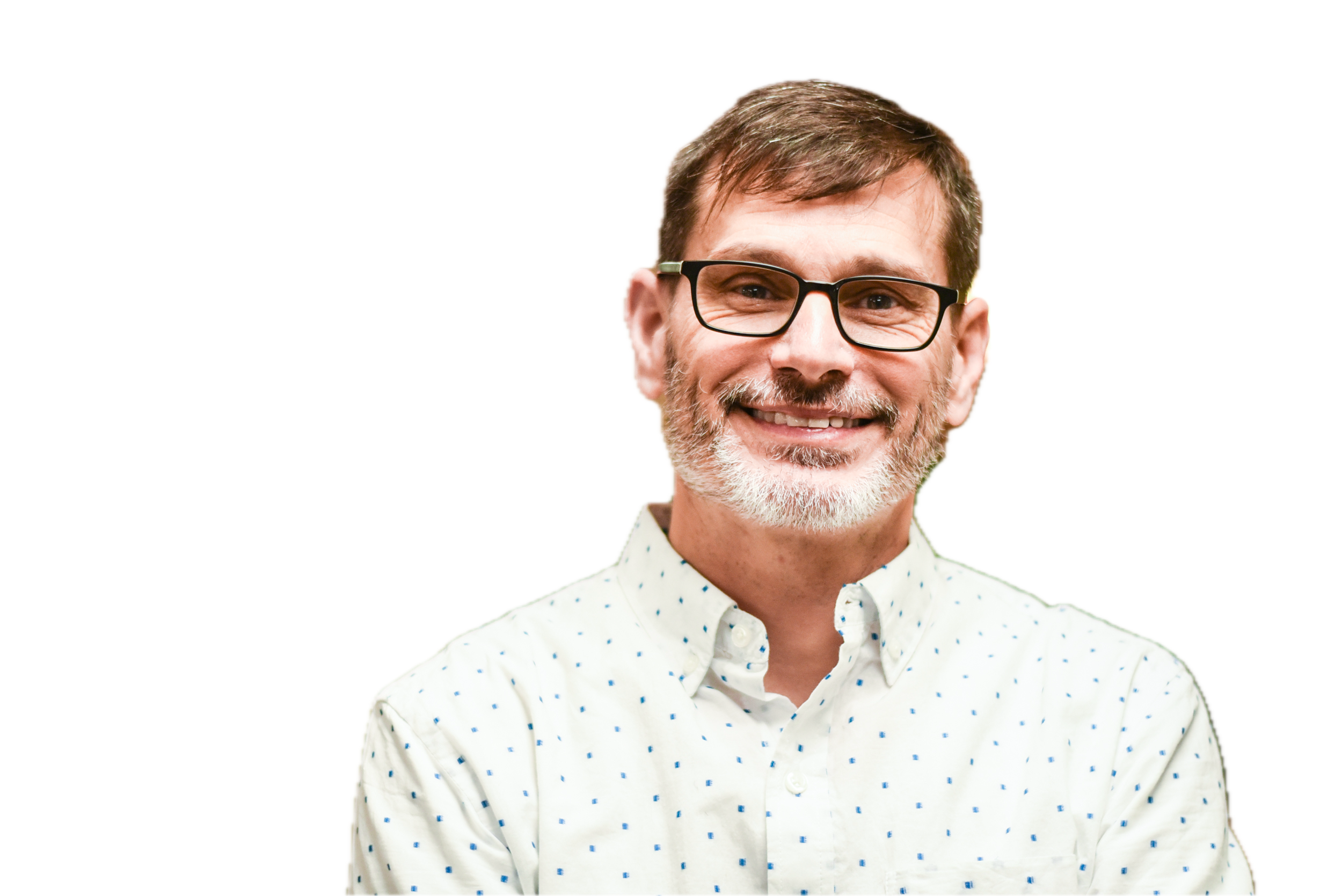
Tod Stillson
About the Author: Tod Stillson MD is a practicing family doctor in the midwest who loves his job. He operates his own PC through an employment lite agreement with his local hospital. You can follow him at www.doctorincorporated.com and subscribe to his regular YouTube and podcast episodes. You can also join his employed physician community on Facebook at “The Employed Physician’s World”
★ Scribe Case Study
Tod Stillson's Doctor Incorporated Catalyzed a 6,000-Member Community and a Multi-Million-Dollar Company
Family physician Dr. Tod Stillson wrote Doctor Incorporated to show doctors they could own their careers. It catalyzed a 6,000-member community, a six-figure coaching bus…
📚 Books by Tod Stillson
Transcript
[0:00:33] HA: If you're tired of being undervalued, micromanaged, and overworked, and you’re in the medical field, this episode is for you. My next guest talks about exciting, lucrative career options that go far beyond a standard employment contract or even winging it with your own private practice. Welcome to the Author Hour Podcast. I’m your host Hussein Al-Baiaty and I’m joined today by Tod Stillson, who is here to talk about his new book called, Doctor Incorporated. Let’s flip through it. Hello friends and welcome back to the show. I’m here with my friend, Tod Stillson. I’m super excited for him because he just launched an amazing book called Doctor Incorporated. Tod, thanks for coming on the show today man, I really appreciate your time.
[0:01:22] Tod Stillson: Yeah Hussein, it’s great to be with you, I couldn’t be any more excited about this book launch.
[0:01:28] HA: Yeah, this is really exciting. You know, books like yours, we were just talking about this, right? They’re very niche and they speak to a very important audience and I think, you know, there are so many components in your book that as I was kind of swimming through it, that, I was learning just about the profession of being a physician and what that’s been like and how you sort of, you know, kind of went off and did your own thing but in a very special way. But before we get into the book and the nitty-gritty, I’d love to get to know you a little bit, talk about and share with our audience a little bit of your personal background, perhaps where you grew up and maybe someone or something that maybe inspired you on the path that you’re on now.
[0:02:08] Tod Stillson: Those are good questions, Hussein. I’m from the Midwest, I grew up in Indiana and so I’ve really lived there all of my life and I’m a primary care family doctor. I was really inspired as a young person by our local little hometown pharmacy and pharmacist. I grew up in a town of about three to 4,000 people, a very small rural community and that little pharmacist really made a difference in the community and so I went off to school thinking I was going to be a little local pharmacist. I went to pharmacy school before medical school and it turned out that a number of events happened in my life that led me to eventually decide to leave pharmacy school and go to medical school to become a doctor, with the idea again, of making a difference in a rural community as a family doctor. In fact, that’s what has transpired. I’ve been practicing in my community now for over 25 years, right back in the same home county that I grew up in. I came back to make a difference, to touch people’s lives, to really love on people and provide great medical care and I’m glad that I’ve been able to do that and so I love being a doctor. It is perhaps, what I consider the greatest profession in the world and I love our entire tribe of doctors. One of the things that have happened in my life because of my passion for medicine is I have five children and my oldest has decided to follow my path to become a family doctor as well and he’s in training. In his first year of training at this time down in Texas and the idea of this book really began forming when I began to think in my own life, “What do I need to tell my son, who is going to be a family doctor, what he needs to know to thrive as a doctor in the future?” and so that’s kind of the genesis of why this book was written.
[0:04:01] HA: I love that man, what a cool story. You know, I got to pause you for a second because what’s cool is, you’re not only were you inspired by the person that’s the pharmacy, right? But also kind of that led you down that path, which of course opened up your eyes and your world to more of that, and then, you know, there’s like the double-layered inspiration, right? To get to this book and to really encapsulate your knowledge and your wisdom to kind of pass that down to your children and of course, you know, other people who can totally benefit from this. I think that’s really powerful. I think you’re probably one of the first authors that answered with like a double inspiration.
[0:04:38] Tod Stillson: Thanks, all right.
[0:04:38] HA: That was really great. So you know, I would say what inspired you to write this book but I already know that and it’s really powerful. What do say — the experiences that led you to discover this idea of the alternative employment model that you present in the book? I think that’s really powerful.
[0:04:56] Tod Stillson: Yeah, the whole idea of kind of professional micro corporations, which is the idea that I present in the book was unknown to me. I just didn’t know it existed and then frankly, a lot of doctors in my generation moving forward aren’t very aware of the opportunity to start a professional micro corporation as supposed to the idea of going into private practice. Most of us are aware, you can kind of go into a private practice but quite honestly, private practice is really challenging today and in today’s economic world, the large corporations they're just kind of squashing and buying up and putting their thumbs down on this private practices and it’s just really difficult for them to make it work in our country nowadays. And so the mindset is, “Boy, it’s hard to do that now so you know what? It’s easier just to go work for one of those big corporations, become an employee, collect a predictable paycheck, and not have to manage a practice, and have them hire all the employees and they bring the patients to you and you do your work, kind of a win-win-win-win, okay?” and it works great. There really are a lot of positives about employment and that’s the path that I chose when I came out of my training is to kind of go that route. There were some circumstances that led me to do that but in the end, that’s the path I chose and in the beginning, it works great Hussein. It works fantastic but what you learn over time and most of your listeners who are doctors will know exactly what I’m talking about, overtime when you're an employee, you lose more and more control of your life because your employer controls you and you really start to see professional autonomy get reduced further and further and further. For me, that kept going and going and going until I reach a breaking point of about a little more than 10 years into practice where frankly, my employer wasn’t valuing me. They were trying to pay me less, where you can strike my contract and lead to a whole bunch of garbage that a lot of the listeners, as doctors, will be familiar with and it caused me to kind of pause and go, “Is this the life I want?” because it was just burdensome and it was really near burnout. And so I decided on my own to go hire some professional consultants to say, “Hey, this is where I’m at in life, what would you recommend that I do?” because I frankly couldn’t see it. I was blind to what was available to me, what the options were, and these business experts. Some of them are just plain business people, some of them were in the healthcare business but they kind of came up with the idea of the micro corporation and incorporating that into employment into what’s called an employment-like contract, and basically, that sort of set in motion what I did and that’s really what I did. I didn’t change jobs so to speak, I didn’t change employers so to speak. I didn’t change what I was doing with my patients so to speak. I just changed the fact that I slipped in a micro corporation between me and the business that was paying me. So now, it was a business-to-business relationship, not an individual-to-business relationship. That began the process of restoring my autonomy, and my control and really got my life back — that’s been a little more than 10 years ago and it’s a story that I want to share with other doctors because I believe it provides a roadmap that many doctors can benefit from. That’s really my inspiration is that reached that point of pain and I found and discovered something that helped me get out of that place and I think a lot of other doctors could benefit from discovering what I learned.
[0:08:42] HA: That’s really powerful, man. Yeah, and it’s the best way to conjure up that wisdom, right? It’s having to go through an experience that especially, all the way out to the edge, right? You’re back to help others in a beautiful way.
[0:08:54] Tod Stillson: This is not just theory, this is not just kind of like, “Hey, just trying to sell you something.” I’m actually trying to point these guys and girls in our tribe of doctors in the direction of, “Hey, this is the best path for you in the future” and I want to share what I’ve learned. I made this road that simple.
[0:09:13] HA: Well certainly, it’s an alternative path that can help you regain your focus, regain your humanity because working for others can be — especially in the medical field, I would imagine — is a very intense type of environment, where there’s so many, I don’t want to say, barriers but barriers. I guess I don’t have a better word that you have to work within and you know, you talk about this later, which I want to bring up later. You know, you kind of lose the creativity, innovation, and a certain type of drive, things that people need to thrive in their own work culture. So you know, you talk about this but your book emphasizes the importance of building a team to support the physician business. Can you provide an example of how a physician can effectively build the team and what challenges they may face in doing so?
[0:10:02] Tod Stillson: Yeah. So again, a lot of doctors, we’re altruistic people. You go into medicine because you want to help people and you want to make a difference in people’s lives and so with that in mind, what a doctor likes is that patient in front of them and that little drip of dopamine that we get when we help somebody at the end of the day, you feel like, “You know what? I made a difference with somebody’s life” and that’s what we love doing. So really, it is a business kind of interaction that happens in that way. All the work of running a business and operating a business and kind of constructing that in a business envelope, just is a little bit burdensome and tiring for doctors. They’d rather not have to deal with that so a lot of them, again, think that employment is the best option because you get to offload all that management, that’s the route they take and in fact, studies show that that’s about what 90% of new graduates are choosing, employment, okay? And this is now, the majority model in medicine is employment but in reality, in a micro business, first of all, it’s a single-member business. It’s not like a private practice or group or a large corporation, you’re a single member and you really just managing yourself. It’s pretty simple, you know? Self-management, you do this every day and so – but, there are some nuances to running a business and frankly, most doctors are not taught a lot of business skills in their medical school training or even their premed training and so it’s sort of novel or new. Now, doctors consider themselves one of the quickest learners on the earth. They can pick up anything. So it’s a lot of do-it-yourself doctors and a few members of your audience to say, “Well, I’ll just figure this out myself” and that’s great, you can but I think the majority of doctors have that mindset that I mentioned, which is, “I’d rather not manage and do all this myself because it can be a little complicated”. So how do you get out of that? You outsource to a team of people who can help you manage your business. That would include an accountant, that would include a lawyer perhaps that would include maybe a wealth manager to help you know what to do with your money, and a business coach. You know, these are kind of some of the core people that doctors need in their lives because they also tend to be a little bit financially illiterate and business illiterate. So having a team of people in your life to help you with those things are really powerful. The most common model for doctors to do that is to have, what we call silos. In other words, I’ve got my lawyer, I’ve got my accountant, I’ve got my business or wealth manager and I’ve got a business coach and they’re all in silos, they don’t talk to one another. In fact, they don’t want to talk to one another. They want to just tell you what to do and then make you choose whose advice should I follow. The ideal is to have a team of people who are working in unison together for you, for your benefit, okay? That’s ideal. So model A would be to hire a team of people and you manage and build that team and they kind of work together, you’re still the center point of it. The other, option B which I think is the best model is for you to outsource to an agency whose purpose is helping physicians and they — in one place, in one location, with all those professionals together — at one table do this together with you and that was my experience. That’s what I actually was able to do. I wasn’t planning to do it, it just sort of happened and all these people landed at the same table, in the same room, looking at one another and it’s amazing what can happen when professionals look at each other eye to eye respectfully, talking about your stuff and they kind of develop consensus decisions together with you involved in that decisions. It’s like a CEO and a boardroom kind of feeling, okay? And that’s the ideal outsourcing that doctors can benefit from with having an agency around them to even do this micro corporation stuff. It’s not real complicated, and it’s not super expensive but yet when you have these professionals helping to support you, you really end up doing better in the long run usually.
[0:14:07] HA: Yeah, the importance of just setting up those systems, right? People, of course, drive those systems, however, it’s the setting up that network around you and they’re all kind of working in unison to help guide your path forward, I think that’s really powerful. What a great way to put that together.
[0:14:23] Tod Stillson: And I think those professionals, they are reaching you, right? You’re part of the team, right? And you don’t always know everything and so they’re providing their expertise, you’re communicating about that back and forth, they’re not just being directive with you. It’s all a learning process because they’re there for you, right? They’re supporting you as a team and that’s what a good physician agency will do and there are a few of them around out there in the country. I actually know, you know, SimpliMD is one that I’m a part of that can do that but there are a few others out there and they’re very important for doctors.
[0:14:56] HA: I love that, it’s really important. Considering how demanding your work must be, right? In the sense that you have to not only know so much but have such a deep level of experience, you know, to work with your patients day in, day out, through all kinds of – you know, I remember, our family physicians, I came here in 1994 and we were giving this – assigned because we were refugees and all that stuff. So we were assigned to a family physician and he was like Pakistani, right? So like you know, it was great because he didn’t know Arabic a whole lot but he understood our culture, right? Coming from Iraq and stuff, that was just beautiful and he remained our family physician. I mean, I was eight years old and the last time I saw him was before he retired, which was like just a couple of years ago. You know, he just had that beautiful connection. However, as I got older, I would always ask like, “How much time do you spend here?” and he’s just like, “I’ve spent my whole life here.” you know what I mean? In his office, right? Like their whole life there but you know, it’s rewarding, it’s this and he talks a lot about setting up systems and you know, all kinds of people running around. He is obviously the main physician in his little office but you know, I always found that really profound, and when I started my own little business, I kind of picked that up, you know? He’s like, “Just have someone at least handle your books” or “Have someone handle your whatever, someone that’s really good at that, and let them teach you things” and I love that you said that because it just resonated so deeply with me.
[0:16:23] Tod Stillson: But it does and you’re exactly right, physicians are very – in their day-to-day work, they’re very used to this sort of coaching, managing, being a quarterback if you will, whether it be in their clinic setting or even in the hospital setting, depending you know, the acute care hospital setting, where they might be in an OR or they might be in an ER, they might be on the floor of the hospital, in ICU. There are all sorts of environments but at the end of the day, often the doctor is in that quarterback position not being a cowboy solo just doing their thing. They have a system of team people around them, whether it be the nurses, the pharmacists, the social worker, you name it, who are working in unison with them and doctors do that every day all day long and so systems are important both in their medical practice but also in their micro business practice.
[0:17:16] HA: It’s the – yeah, working in the business and then on the business, yeah, definitely. So your book challenges the traditional employment models of course and suggests that you know, physicians can achieve greater financial independence and perhaps early retirement through personal corporations. How have you responded to this concept and what are the barriers you think that physicians have faced in trying to make this transition?
[0:17:41] Tod Stillson: Yeah, so first of all, it really comes right from the beginning of when you come out of your training and there’s a Y in the road, kind of if you choose to incorporate yourself right at the beginning you are going against the grain. First of all, most doctors right at the beginning of their career, they don’t incorporate themselves in a micro corporation. I believe very firmly that every physician should do that. They would benefit from doing that regardless of any job or work situation they choose down the road and how they incorporate that micro corporation into their professional life, everyone can benefit from it and so that’s the first kind of step and so what is more common is what you referred to and that is somebody doesn’t do it. They then later on in five, 10 years later like in my experience, you’re like, “Wow, the plan was great for a while and now, it’s a burden.” Now, it is burning me out. I need some sort of change and the most common change that a doctor will make in those situations is they go, “Oh, I just need a new job” so they go look for another job, same employment arrangement thinking that that’s going to be greater for them for three to five years because it’s relieved some of the pressures and that’s what they do. They go walk from one employment structure to the other employment structure. What they are missing is, is not so much the job. It’s the system of employment that is really the breaking point for all doctors. So for us to kind of get to a point where doctors can thrive and do better, it comes back to systemic changes. Now, there are a lot of systemic changes Hussein that none of us can make. The cow is out of the barn so to speak but there are some progressive micro changes that we can make. One of which is micro incorporation to protect and preserve your professional autonomy, so that it can be used in virtually every employment environment that you can imagine including the traditional employment structure that doctors typically go into. Now, an average employer is not going to offer you this employment light option right from the beginning. There are a number of reasons for that but that’s one of the biggest barriers. They’re not going to voluntarily go, “You know, I was thinking you’d probably be better off if I did an employment light agreement with you and you formed your own micro corporation.” They’re not looking out for you. As much as you may think that they’re being kind and thoughtful and care about you, you’re simply a business cog in their wheel. Their job is not to look out for you. You know who has to look out for you? You have to look out for you, okay? Many doctors get lulled to sleep into thinking that their employers, their best buddy, you know, and they’re recruiting them, they are promising them this and making them thinking the honeymoon phase and everything is perfect and they give them what they want and so forth but you find out that was a dream that you really are just a cog and you begin to feel undervalued. So you have to take care of yourself. The way you take care of yourself is you form that corporation around yourself, again, a micro corporation that can be used in virtually every environment, whether it be employment, whether that be in locum tenens environment, whether that be in a side job that you might have even if you are traditionally employed, you have a lot of side job opportunities for doctors, whether that be in one of the other modern movements that are happening with doctors who are kind of moving away from third-parties as a whole. Kind of their response to the system encroaching on them is to just avoid the system altogether and you see these direct care doctors, okay? Who are doing direct primary care, direct specialty care, no third parties, no insurance, no corporations micromanaging them, it’s just them and the patients, back to that traditional model of a doctor and a patient and we’re seeing a big upsurge, and a big uptick of that. There’s lifestyle medicine, there are all sorts of models of direct-to-consumer medicine, there’s telemedicine, there are all sorts of things that are just growing and evolving, and all of those situations, a doctor having their own micro professional corporation will allow them to thrive and do better from the standpoint of both financially but also from a tax standpoint and then the third element is from a liability standpoint. Probably a fourth benefit is more individualized benefits, and greater retirement funding options through a micro corporation, there’s really a whole bunch of benefits that fit in that package that you don’t get as an employee.
[0:22:08] HA: Yeah, that’s so powerful to me. I mean, you break it down in your book so well. I got to tell you, you know, it seems complex but as you said, it’s simple in the way that you lay it out and the way you talk about it. I found myself just very easily perusing your book. So you know for listeners out there, what Tod is you know, explaining and talking about through experience is actually really powerful. But the way it breaks down is really simple in the book, which I found just really powerful. I mean, I am no physician by any means or anything like that but I found a lot of the components that you talk about, I’m like, “Man, I could totally use that or I can apply that” and so even when you start to just view it like that, that’s a very powerful tool.
[0:22:47] Tod Stillson: One hundred percent. So you know, there are a lot of people in your audience that are non-physicians but are professionals in various fields of life who again, really act as sort of freelancers, independent contractors, have their own micro corporations, it’s a very common business model in our gig economy, so to speak. I mean, it’s not just the US. I mean, a lot of us are doing work internationally all over the world, okay? Those doors opened up by having a virtual micro corporation that allows you to have business-to-business relationships and virtually anybody or they may have a business individual relationship with virtually anybody in the world and doctors, there’s a whole generation of doctors — so if you kind of go back to, I don’t know, approximately 1950, 1960 before that, every doctor just knew that they were a business. They opened up a private practice, they operated a business and it was just part of, you know, being a doctor, right? Then we had third parties get involved, then we had the insurance get involved, and the government got involved with Medicare and Medicaid, who are the biggest providers of medical insurance, all of that began to move doctors away from private practice and more into employment because of a whole lot of pressures. What happened is doctors all through that generation and really almost one and a half generations have slowly lost their mindset about being their own business. In fact, a lot of doctors have no idea that they really have the power to be a business. They didn’t even know they could incorporate. In fact, I would say probably the majority of doctors that graduate in the past 10 years probably are even unaware. That they are like, “Oh, you mean I can form a corporation? I thought that’s just if I got an MBA and I wanted to be an entrepreneur and do something really crazy.” No, it’s something you can do and should do if you’re just a regular old doctor who is practicing medicine in today’s world and can do it internationally and so it’s not complicated but what’s happened is we’d become blind to the fact that we can do it. That was part of my story, if you go back to the beginning of our conversation, I was blind to the fact that it was an option and it wasn’t until some business coaches said, “You know, you could do this” that I’m like, “Oh, you know, you’re exactly right.” That’s part of the messaging that I have for our audience in general but physician specifically, you can do this. You are empowered to do this and you should do it. Doctors on average, right? Their medical debt to get all their degree, you know is around 250, $300,000. It’s a steep long investment in them self. So you know, the average doctor takes 12 plus years to actually graduate and become a doctor, begin practicing medicine as an attending. It’s a large financial investment in themselves, so they’ve got all of this put into themselves that really for functionally 20, 30, maybe 40 years that they are going to use all of that. It only makes sense to think of themselves as having this value that’s innate, that’s built into all that work and to incorporate that, to preserve it, to protect it, and to use it in the future rather than just kind of blindly going, “Oh, big corporation X, I’ll just sign up and give it to you. Here you go. Now, I am under your control. You’re going to use all my business powers for your benefits and I am just a cog in your wheel.” That is not what you spent 12 plus years and you know, a half a million dollars to get to. You deserve better as a doctor.
[0:26:30] HA: Definitely, yeah and you know, opening up your thoughts to other ways of approaching your profession not just from a career but also, you know, business and monetary and of course, retirement, all those kinds of things come into play. You know, I got to tell you, my nephew is in medical school and he’s down in the Bahamas and he calls me every now and then and you know he’s working on trying to get to being a surgeon at some point. You know, he just shares, he shares exactly your sentiment of like, “Man, this is just – you know it’s a long road.” It’s a long journey and sometimes he’ll call like asking for some motivation or whatever and it’s great. I love him for it but yeah, it is, you’re a 100% right, it is a long journey ahead. You know when you get out, what are you going to do with it and how do you take your value and put it in the right place? Of course, you may need to work a few years to kind of get some stuff under your belt I feel like with every profession, right?
[0:27:28] Tod Stillson: Let me put it in this perspective for you Hussein. Like all the stuff we just said, how hard it is to get there, all the investment of money to get there, and then understand and you know, doctors expect and should expect a good life, right? I mean, we are high-income earners, we help people all day long, that combination is an amazing combination. You make good money helping people. I love that, okay? Now — but then take into perspective that the current burnout rate for doctors is greater than 50%. Literally, it’s a role of the dice, one out of two doctors who put hundreds of thousands of dollars and investing all that time into work get out, become an attending physician and it’s 50-50 whether or not they’ll get burnout and leave the profession. That’s a crazy statistic that it should not be that way. That you put all that work into something including your nephew in the Bahamas and he’s just hoping that he’ll be not in the greater than 50 percentile that get burned out, he’ll be the one that doesn’t. Well, I think we need to be proactive to make sure that we are not a casualty of those current statistics, which are I believe directly related to the current system of medicine and employment and the way we can respond is by trying to preserve our autonomy in every way we can, in every model we can. That includes the micro-corporation process that helps reduce the chances that you’ll become burned out and improves the chances that you’ll hold onto your autonomy. That’s how you get a good life, that’s how you thrive as a doctor. You know, I just saw a statistic from Medscape, who is a company that does a lot of work with physicians and does a lot of surveys with physicians that the average doctor who has their own corporation makes 20% more per year than the doctor who is employed, 20% more. Our high income, let’s say your average is $400,000 a year earned income, 20% more you get paid. So what’s the 20% of 400,000? Roughly 80,000, right? And so if you add in $80,000 doing the same work per year at that time 30 years, you know how much more money you’re going to make by having your own corporation than just being a traditional employee? It’s a huge amount of money. At the end Hussein, that money can help you find greater freedom too, financial freedom but also individual freedom because you become in a position where you are not depending on others any longer and you don’t even have to work if you don’t want to. Although a lot of doctors who reach that point of financial freedom do by the way continue to work because they love patients and they love people.
[0:30:18] HA: Wow, what a beautiful system, the setup and get you going on the right foot. It sounds like you know, you’ve obviously proven this through your work and your practice and I’m grateful that you kind of packed it all in this book and shared this wisdom not only with your son but hopefully, other people like my nephew and so you know?
[0:30:37] Tod Stillson: That’s exactly right.
[0:30:38] HA: I’m going to be definitely sending this out. Again, Tod, this has been amazing but I got to ask you, what was your favorite part of pulling this whole book together and what did you learn from that journey?
[0:30:46] Tod Stillson: Well, again, doctors are life learners and I am no different. I love learning a new skill and I love just the process of it was a two-year process for me to take kind of what was going on in my brain pinging around, getting it down on paper, and then again, working with a team of professionals who help me improve and enhance what I, my best effort of putting the book together. But they’ve made it infinitely better and that was one of my great joys is really listening to others and having to help me kind of tweak it and make this book better. So I’m just excited to be able to have something that I can share with others that I think is going to make our tribe of doctors healthier, happier, and thrive and that journey for me was enjoyable just having others help me be a better writer.
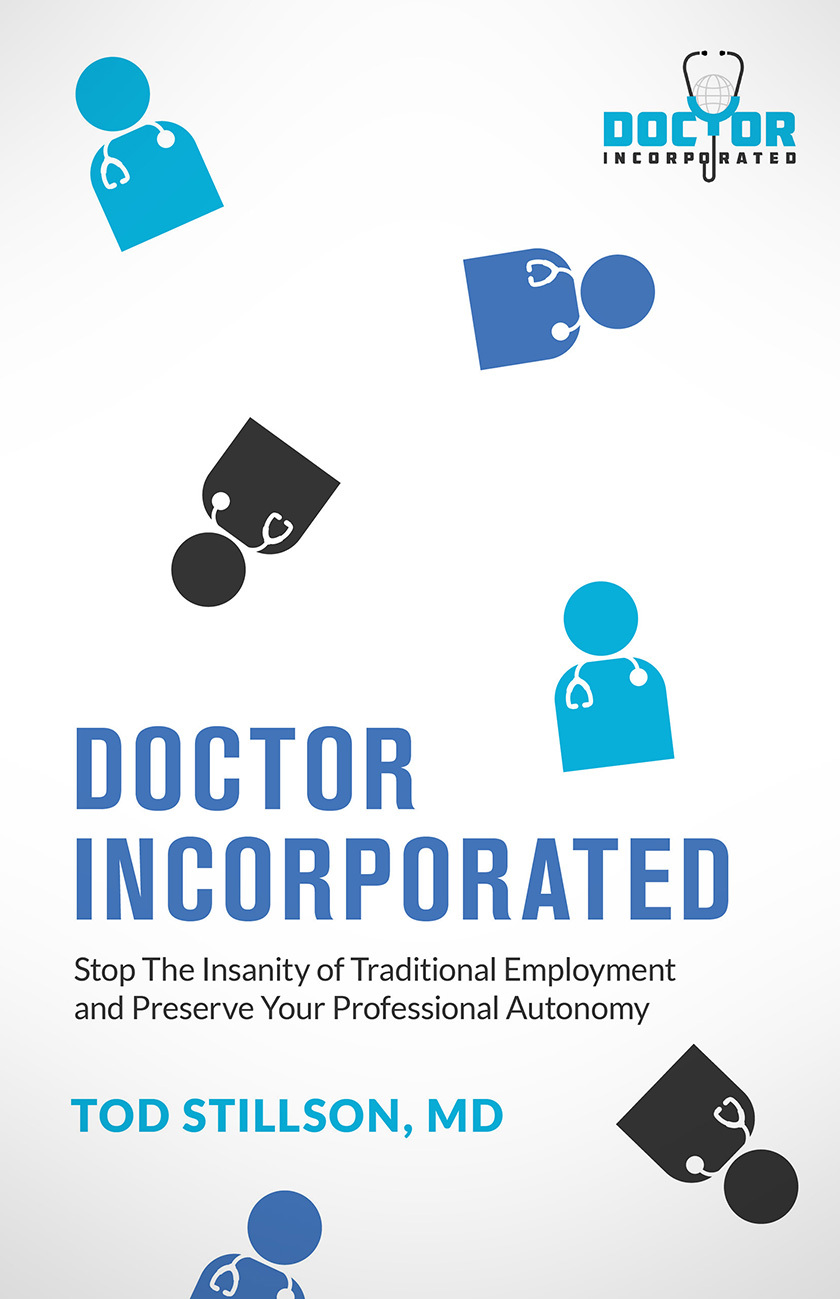
[0:31:33] HA: Well Tod, thank you for sharing your stories and your experiences with me and the audience today. The book is called, Doctor Incorporated: Stop the Insanity of Traditional Employment and Preserve Your Professional Autonomy. Besides checking out the book, where can people find you and connect with you, Tod?
[0:31:50] Tod Stillson: Well, they can connect with me on Facebook, Instagram, and LinkedIn, which are three of the social media channels. I also have a website called doctorincorporated.com that I would definitely recommend that they sign up to receive my newsletter and weekly blogs talking about professional micro corporations and then I also have another company, an agency called Simply MD that they can reach me at simplymd.com that helps doctors actually do the incorporation process and forms a team around them to actually do this work. So it is a great outsourcing agency to help doctors.
[0:32:25] HA: Love that, beautiful. Well, thank you again, Tod. I appreciate your time today. Congratulations on your book.
[0:32:29] Tod Stillson: Thank you.
[0:32:30] HA: Thank you all so much for joining us for this episode of Author Hour. You can find, Doctor Incorporated: Stop the Insanity of Traditional Employment and Preserve Your Professional Autonomy, right now on Amazon. For more Author Hour episodes, subscribe to this podcast on your favorite subscription service. Thanks for joining us, we’ll see you next time. Same place, different author.
Want to Write Your Own Book?
Scribe has helped over 2,000 authors turn their expertise into published books.
Schedule a Free Consult