Dave Wolcott: Episode 1152
Read the full transcript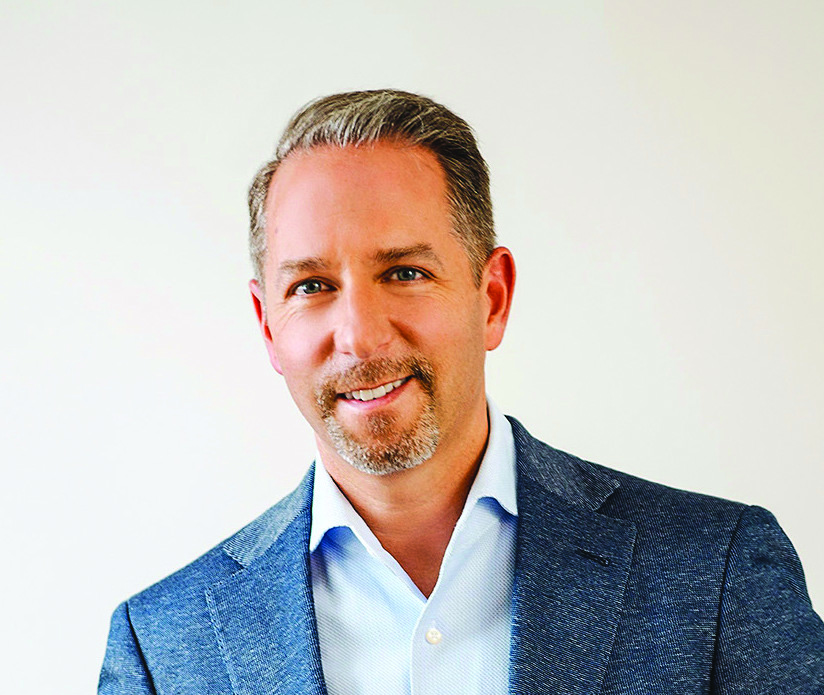
Dave Wolcott
Dave Wolcott is the Founder and CEO of Pantheon Investments. Pantheon gives entrepreneurs an opportunity to passively invest in top real estate and alternative assets that provide cash flow, tax benefits and a reliable alternative to the volatility of the stock market, through leveraging The Pantheon Advantage. Pantheon is currently an equity partner in over 2,500 doors with a combined value of over $450 million across the US. Dave is also the author of The Holistic Wealth Strategy: Your Roadmap To Financial Freedom and has been a featured guest on numerous media outlets.
Prior to Pantheon, Dave earned his bachelor's degree from the George Washington University, served as a Captain in the Marine Corps and established himself as a successful entrepreneur who built 3 companies over the past 2 decades. Dave is more passionate than ever about helping entrepreneurs build wealth through providing exclusive access and curation of the best opportunities, the best operators, and the best markets.
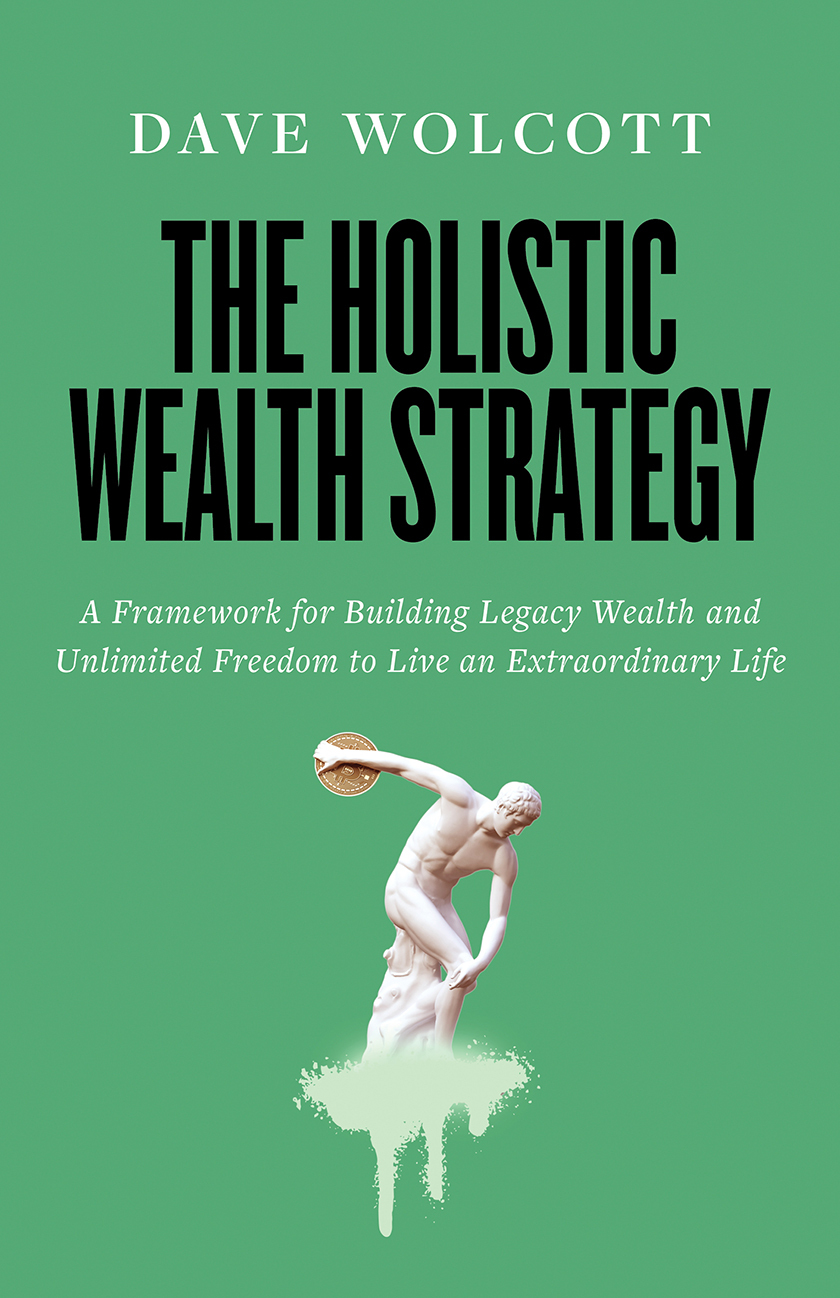
📚 Books by Dave Wolcott
Transcript
[0:00:32] HA: Are you an entrepreneur seeking freedom of money to live the biggest future you can dream of? To have freedom of purpose to do what fascinates and motivates you. It's time to get out of the Wall Street casino and take back control of your financial future. Welcome back to the Author Hour podcast. I'm your host, Hussein Al-Baiaty, and I'm joined by Dave Wolcott today, who's here to talk about his new book, The Holistic Wealth Strategy. Let's flip through it. Hello friends. Welcome back to the show. I'm here with my friend Dave today, who just launched a book called, The Holistic Wealth Strategy. I'm super excited to have Dave. Dave, man, thanks for coming on the show today. I really appreciate you.
[0:01:14] Dave Wolcott: Hey, Hussein, grateful to be here to connect with you and your audience.
[0:01:17] HA: Yeah, man. I'm excited, because let's be honest, man, wealth and wealth strategies and wealth building and all those kinds of things are on, I feel, everyone's minds, right? But before we get into the book and the amazing experiences and stories that you share throughout the book, I really want to go back in time a little bit and share just a little bit about you, your upbringing, where you grew up, perhaps high school, college, all that good stuff, but really just highlight where you grew up and also what got you into this field of growing your wealth and all those kinds of things. I know some of the stories, but I want to share them with our audience. Let's go back in time a little bit.
[0:01:56] Dave Wolcott: Yeah, absolutely, Hussein. Look, I was raised in a middle-class family, probably like lots of the listeners out there. I was told that the path to success was going to school, getting good grades, and then you're going to get a good job. That was the recipe for success, right? I followed down that path, went to George Washington University in DC and did the ROTC program and got into the Marine Corps after that. The Marines was a phenomenal experience. I got to travel the world, really test myself, and really learn some things that they don't teach really anywhere else in the world, which is things like leadership, teamwork, and integrity. Then after the Marine Corps, I transitioned into the corporate world, got into the tech industry. I was really quickly dismayed, because I found out that I lost that sense of purpose. I had that real true sense of purpose and mission that the Marine Corps was able to provide. Now it all became about quarterly results and things like that, lack of teamwork. And at the same time, my wife and I started raising a family and we had an 18-month-old at the time. Then on October 24th, 2000, we literally had triplets. Hussein, we’d literally quadrupled the size of our family. The first thing I did, of course, after drinking a lot that night was, let's maybe say the second thing that I did was I went to see my financial planner, because I'm like, “Okay, you guys just moved the goal post like a mile down the field. How am I going to figure this out?” Right? It is really crazy. He told me what every other financial planner before that had told me was, “Look, the market's going to go up, it's going to go down, invest for the long term. You'll make a 7% return and that's a great return. You can invest in 529 plans for the kids. You'll get a little state tax deduction, that'll be good.” I was just so frustrated. I'm like, “This is not going to the move the needle in terms of providing for my family, or meeting the goals that I really had for myself.” This put me on this obsessive quest to really figure out how are the top 1% actually building their wealth, because I knew it wasn't as a retail investor in the stock market. I started investing into alternative assets, everything from oil and gas, to multifamily, to office parks, residential, raw land, all kinds of different asset classes. I also became a business owner, built a tech consulting company, learned a lot about taxes and running a business at the time. Fast forward to today really, Hussein, the book is really an instantiation of my learnings over the past 20 years of how can you really create a system out of building wealth in this alternative manner. A way that's a comprehensive approach, a framework, a blueprint for you to put all of the pieces together to be able to really build your wealth and build legacy wealth like the top 1% are.
[0:05:17] HA: Yeah, man. That's really powerful. The motivation to do that, right? All of a sudden, you have these three beautiful kids coming into this world, and you have four altogether, and of course, your family, just in general, and taking care of your health, and taking care of your mental. There are so many different things. I commend you for taking the night to really drink things through, because I'm sure it was a wild one to really think through. I'm sure it was also one of those moments in life where you feel inspired, motivated, and know that you can do other things to see if you can change this outcome and maybe bring that goalpost back closer. That seems that push forward really helped you overcome some of those fears. But you talk about the three wealth disruptors in the book, and they can hinder people's financial success. Can you share a personal experience or story of how you or someone overcame one of these disruptors, and what lessons can the readers learn from it?
[0:06:17] Dave Wolcott: Yeah, 100%. I mentioned I had built a tech consulting company. The first five years of my entrepreneurship was amazing. We had double digit, triple digit growth, building out a team, an executive team, working with Fortune 1000 clients. I mean, it was a fantastic trajectory, really exciting time. Like any young entrepreneur does, I basically – I thought of it as really sweat equity, right? We were building for an exit. I thought we didn't pay ourselves much as the executive team, and just putting everything into building equity and value in the organization. On the fifth year, we literally, Hussein, had just won the Inc 5000 award. Then within a 90-day period, found ourselves completely upside down due to the fact that we had a bunch of government clients at the time. They had something called government sequestration, which actually was just a freeze on all government spending. Current projects totally got frozen, new projects weren't going anywhere. We had expensive six-figure consultants on payroll, right? So that was really challenging. We lost a key employee during that time period. One of my biggest lessons learned was that you should not have all of your eggs in one basket. Even though you're so passionate about something, you know something's going to work out, you've got to really protect yourself and have some reserve plan and strategy. I consequently set up an infinite banking policy, which is essentially a cash value life insurance strategy and a lot of the ultra-wealthy use this as part of their infrastructure. Now we can help our clients set this up. Essentially, what it is, is you have a life insurance policy that is a cash value, you can put cash into it, and it completely compounds tax free. You can give it to your heirs, tax free. Then in your later years, you can actually draw upon it and create an income stream. That's tax free, but you also have the liquidity of it to be able to borrow it to say, “Hey, I'm not going to get paid in my business for the next six months. I need some income source.” Right? Or I could pay for my kids’ college with something, right? That's a really, really key strategy that I learned. I think there's some of the three biggest wealth destroyers that are out there are taxes, number one. There's also having a proper asset protection planning in place. A lot of people unfortunately lose what they spend a lifetime to build because they don't have proper measures in place. Then also, people are losing money in stock market losses, right? Because just because the market goes up, say 20% in one year, but then comes back down 10% the next year, you really don't realize what it takes to get back to even where you were. Over time, your contributions in your net worth on that strategy and the equities markets really typically suffers. Planners are really not advising the clients around things like inflation, taxes, and fees which are likely only going up in the future. Really, you've got taxes, you've got stock market losses, and then the other biggest wealth destroyer is 401Ks, IRAs, any government sponsored qualified plan where the government is telling you when you can use your money, how you can use your money, how much you can take out. All of those things are really putting people into golden handcuffs.
[0:10:16] HA: That's really powerful. You also talk about Wall Street being like a casino, which I mean, I feel like I've made a few of those types of references, because, well, I'll be honest like I don't know, I'm not an investor, I'm not a trade person. I don't know the stock market like that, but it always feels like such a gamble, whatever. It always feels like a gamble. It's a risk like everything else in life, to a degree. This risk is completely out of your control, to where I feel like you’re learning and understanding what you are good at and whether you want to get into real estate or different types of things, understanding the way of the ocean, I guess. Can you talk a little bit about what the importance are of just understanding those values, and how you see potential for your future and how you go about – because I know this was a learning curve for you, as well. How do you go about really getting into the weeds of learning financial direction, so that you can take some of that freedom back?
[0:11:15] Dave Wolcott: Yeah, sure. I think a lot of this is also really about autonomy in your life and creating some control. As you pointed out, I mean, I spent so many days and months and years in my life just investing in the market. You're at the gym the next morning, watching CNBC and saying like, “Oh, my gosh, something literally just happened in China that has nothing to do with anything.” The fundamentals of the company, the leadership of the company, a market positioning and your position is down 5% that day. I just felt so helpless. It just seemed so crazy. Then again, if you just look at the averages of the S&P over a 20-year period, you can see that maybe at best it's making 7%. Again, that's not even factoring in taxes, inflation, and fees. Once you do that, you're actually only making a couple points on your hard-earned capital. I think this is really a tragedy, frankly, in this country and why a lot of boomers are retiring right now and really struggling with having enough to be able to provide the financial means that they thought to be able to live on, today. What I wanted to do was take back control. When you avoid and bypass Wall Street and invest directly in Main Street, you can do that. As an example, one of our favorite asset classes is multifamily apartment buildings, right? We'll invest in a 300-unit apartment building in Phoenix, Arizona that has high job and population growth. At the end of the day, people need a place to live, right? You've got rent that's coming in every month. It pays out passive income. You also get to apply what's called bonus depreciation and offset some of that income. Then we do basically value add to the property where we're fixing things up and everything. Then we sell within a three to five-year period, so investors make a return on the backside. What I learned, Hussein, is that by investing in these private assets that are typically reserved for accredited investors only, that you can actually get really a three-dimensional return to your investment, which is having tax efficiency, having predictable passive income, and having some forced appreciation on the back end. Unlike if you have a security. Let's say you have a thousand dollars’ worth of Tesla stock, the only thing that you're hoping for is that stock is going to go up in value. That's all you have. You're just hoping. Hope is not a strategy.
[0:14:13] HA: Yeah. It's interesting, right? Like you said, if Elon were to do something or send out a tweet or whatever, those kinds of things have almost too much influence, right? That's where it gets iffy and weird and not in the realm of, again, what you can control. So bringing it back to the things that - like you said the Main Street, physical things that you can understand how people use. That's really powerful to think about. You argue that holistic wealth is more than just money though, but also includes mental and physical well-being, which I really loved. Can you share a personal story of your experiences of how you balance your financial goals, of course, with your overall health and wellness? Because I feel like, man, I'm telling you, growing up, I grew up on welfare and my family were refugees. I came here when I was eight. I grew up – my parents didn't understand the financial world here. We came from Iraq, a completely different world. So just understanding those things, man, over time for me has been huge. Just constantly peeling back the layers of understanding, not just money, but financials, that world. I think it's really powerful then, once you get this, I don't want to say comfort level, but you get to the level where you're just like, “Okay, the roof over my head is paid, the food, all this stuff is good, but now I got to take care of other things.” For me, it was instantly mental and physical health, but you talk about that. I just appreciate it, because I feel like a lot of wealth-type books, financial books, they do talk about, not all, about mental and physical well-being, but not all. It's all about strategy in the financial world. That's important to you. Can you talk a little bit about that and why you thought it was important to put in a book?
[0:15:59] Dave Wolcott: Yeah, absolutely. I mean, what I found in my journey is that this all really starts with you. In creating your own vision statement for what it is you want to get out of life for yourself, for your family. Sadly, people don't really spend enough time actually creating their own visions. So, if you don't have a target, you're going to miss every time, right? Once you get that clarity in terms of your vision and where you're heading, you really first need to have the right mindset. Having a growth mindset where you're constantly learning and you want to be a lifelong learner and inquisitive by asking questions. For instance, does it really make sense in my 401K to defer taxes until later years? Because that's what all of traditional wealth advisors are telling you to do. You say, “Okay, well, I saved on my taxes this year.” But all you're doing is you're kicking the can down the road to pay taxes in the future, which again I don't have a crystal ball, but I'm pretty sure taxes are going to be higher in the future. Wouldn't you rather pay taxes on the seed rather than the harvest? But you have to have a really strong mindset to challenge the status quo and conventional wisdom to be able to get to the next level. I think that mindset is really important, and part and parcel to that mindset is also trying to increase your IQ and your IQ around financial IQ. Looking at some of these different asset classes and the private investment space that are available to people. The health IQ, that's when you're talking about being holistic, and to think there's so many different people that actually burn their entire health just to acquire wealth. Some of these high-paid CEOs and everything, people are working 70 hours a week, but they have no health, or they have a heart attack when they're in their 50s. What was it all for? It's so paramount to be able to have control over your health. Actually, that continues to drive your mindset, that having that growth mindset, thinking a lot bigger and really trying to get out of life what it is that you really want to. I found out, this was a real shock to me Hussein, but I was actually in my mid-40s and I exercise every day, I'm big into cycling and cardio. I always worked out, but I took this proactive heart scan and actually found out that I had one artery that was over 50% blocked. My doctor said it was basically just a time bomb, right? It was a matter of when this thing was going to have some serious issues. Had I not been proactive in taking care of my health, the consequences could have been really dire. How many times, Hussein, have you heard these phenomenal stories of people, whether it's a TED Talk, a great podcast or something where people have went through this massive transformation in their lives, but it was brought about by a loss of a loved one, major health issue, chronic disease, or something like that. I implore people to, don't wait for that chronic disease to hit you to be able to take control over your life, but go ahead and embrace it right now and get control over it, and the results will be exponential.
[0:19:51] HA: Yeah. It's really powerful that you just mentioned the – I feel like the most important aspect of all of this is just being proactive, is being cognizant and proactive and doing things that, I guess in a way, make you feel uncomfortable and being patient. It's a multitude of things that are being practiced, but if you start with one thing, hopefully that will lead to the other. I definitely agree with you and the idea that like, your mindset is the biggest thing that we have to understand first and foremost and lay out the foundation for. Then from there you can build on, because like you said, yes, there are many books and action steps and so many people that share all these stories, but it does come down to, look, at the end of the day, your health, your mental health, your physical health, matters just as much, if not more than what you're working towards. Because if you can't get there because you're unhealthy now then it's a loss-loss situation. That's very profound. I appreciate you bringing that up. Finally, I have two more questions, but really, I want to know what was your favorite part of the writing journey? Because I know it's no easy feat to write a book. Of course, there's a lot of learning curves on that. What was your favorite part of bringing your book together?
[0:21:06] Dave Wolcott: Yeah. That's a great question. Maybe I can help the audience a little bit to understand my journey in this process. First of all, it didn't even really start out as a book. What it started out was a concept in my head that I eventually put down into creating an infographic for this entire wealth strategy, which we lay this out in the book now, but it's literally like one infographic that became a concept of what I was trying to articulate to the world to be able to have some impact. Then I framed that out into the next step, it became an eBook which was a downloadable asset for different investors as people are trying to understand that. Then I actually moved into a 90-day book, like a short leaflet thing. The framework and everything for the book was linear and incremental. Then when I got to work with the entire team at Scribe and everything, it was just a really great experience to get matched up with someone who really understands you and then can take your voice and communicate that into text, which was to me, that was probably the most exciting part is you think that in your head, it's like only you who understands things in your head. It's really mind boggling to write a book, to find the time, the focus time and write down every little detail and get everything right. One of the things I learned from the Who Not How book with Dan Sullivan. I know Tucker Max talks about this a lot as well is, how can you leverage a team to really help you? Working with a team, like you've got a really good ghost writer in Scribe on your team that can help you translate your vision and your comments into text, you'd be surprised at how fast the process can actually go.
[0:23:13] HA: I just appreciate your concise layout of this, because I love how you just started out with small incremental steps towards what would become obviously this book. In a way, it's also you unfolding everything that you've learned in the simplest way you can get it. I think that's something you really remember as an author or a person that's reading this material. It's, how can we simplify our knowledge? Because obviously, your knowledge spans decades. Sometimes, for certain people it’s like, how do you synthesize this into a simple map that one person can just open up and see where they're at? Then from there, it's here are the three next steps. Then from there, he's here's in depth about these three steps. I love this momentum that you built throughout your journey to really come up in. I think a lot of people think when approaching writing a book, I know I did and many people do, especially when you're an expert in the field. It's like the final product, the one that you hold in your hand, and it's beautiful and it's done, is actually not what you thought about it in the beginning. How we see the book and what actually comes out is sometimes, for many authors, it's a little different. I think that's really powerful that you mentioned that in a way. I just appreciate it, Dave. Dave, thank you. I feel like your stories and experiences just resonated with me. I'm sure they did with our audience. The book is called, The Holistic Wealth Strategy: A Framework for Building Legacy Wealth and Unlimited Freedom to Live an Extraordinary Life. Besides checking out the book on Amazon and Barnes and Nobles and all that good stuff, where can people find you and connect with you hopefully to learn more?
[0:24:55] Dave Wolcott: Yeah, absolutely. Easiest place is you can go to our website pantheoninvest.com/wealth-strategy. You can actually download a free eBook version of this as well. Then connect with us, be happy to connect.
[0:25:13] HA: Love it, man. Thank you so much for joining me today, Dave. I appreciate you and your time.
[0:25:17] Dave Wolcott: Yeah. It's been a pleasure, Hussein. I appreciate it.
[0:25:20] HA: Thanks for joining us for this episode of Author Hour. You can find the book titled, The Holistic Wealth Strategy: A Framework for Building Legacy Wealth and Unlimited Freedom to Live an Extraordinary Life, right now on Amazon. For more Author Hour episodes, subscribe to this podcast on your favorite subscription service. Thanks for joining us. We'll see you next time.
Want to Write Your Own Book?
Scribe has helped over 2,000 authors turn their expertise into published books.
Schedule a Free Consult