John Ply: Episode 1161
Read the full transcript
📚 Books by John Ply
Transcript
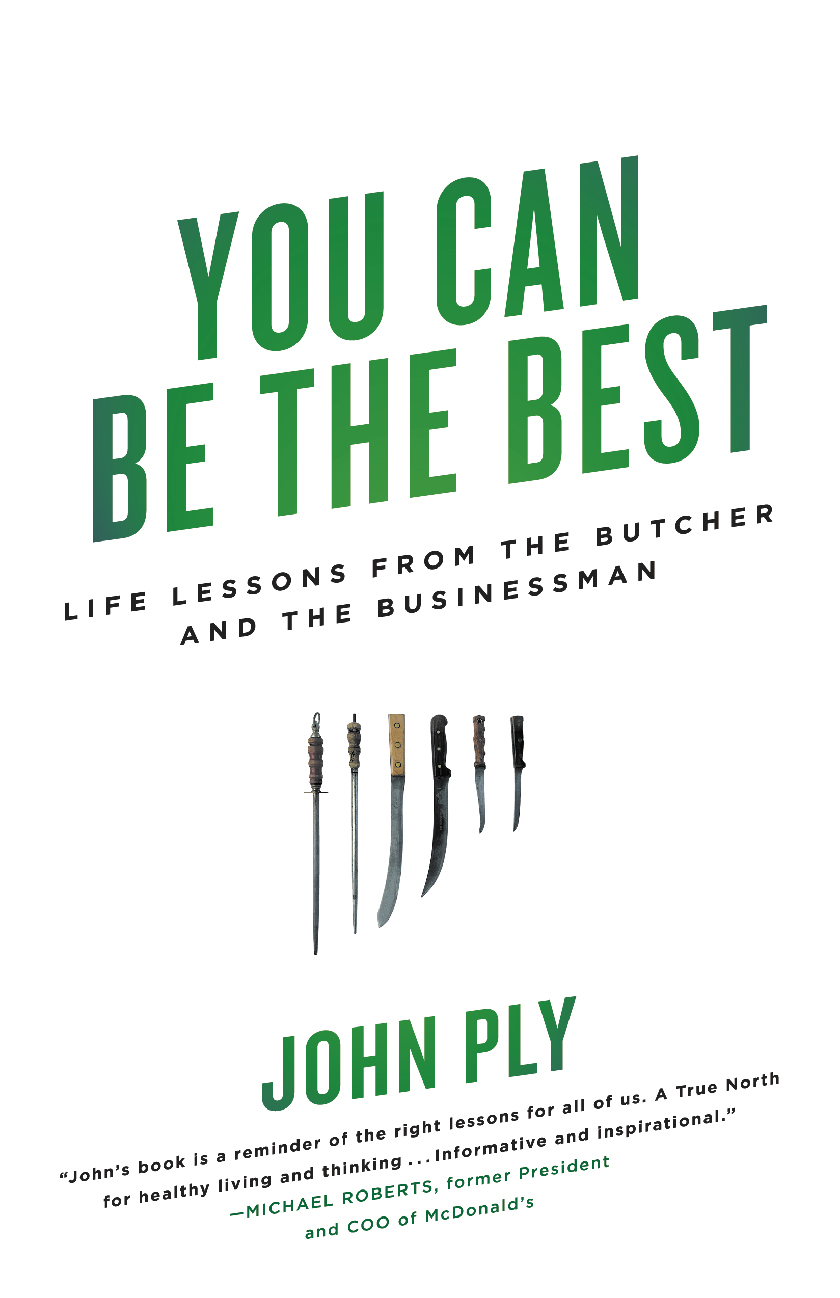
[0:00:39] HA: What is success? We all have associations with the word, but the true definition is hard to pinpoint because it’s relative. The meaning isn’t universal, but the formula to get there is. Welcome to the Author Hour Podcast. I’m your host Hussein Al-Baiaty, and I’m joined by author John Ply, who is here to talk about his new book called, You Can Be the Best: Life Lessons from The Butcher and The Business Man. Let’s flip through it. Hello, everyone, and welcome back to Author Hour. I’m super excited to have my friend John with me today. John just launched an amazing book, and he’s here with me to chat about it. I’m super excited to have you, John. Thanks for coming on the show.
[0:01:23] John Ply: My pleasure.
[0:01:24] HA: Yeah, man, this is great. So the book is called, You Can Be the Best: Life Lessons from The Butcher and The Business Man. But before I get into the book because it is juicy, it is really good, well-written, parts of it I just didn’t want to put it down, but I have to sleep and get up early and all that good stuff so – But other than that, before we get into the book, I want to give our listeners an idea of just who you are, your personal background perhaps. Maybe where you grew up, and maybe if there’s a person in your life or an experience in your life that led you down the path you are in now, I’d love to share that a little bit.
[0:01:58] John Ply: Well, like many others, I guess you could say I’m one of those rags to riches stories that you hear about, and growing up in a very poor family and seeing what that life was like. I mean, funny, we didn’t feel poor probably because there was just so much love in our family, and my dad being a butcher, worked two jobs and brought home lots of meat, a benefit from being a meat cutter butcher. But he was by far the first person to really hit me with an example. It took me years to put it all together, but he really was setting the example to do your best in anything that you did. And I took that lesson really through every single part of my life. It just kept going from one journey to another journey, to another journey throughout my life, where the message was, just do your best. There’s nothing else you can do. Never give anything less than 100%. And that type of incentive just really changed my life from a little boy to where I am today.
[0:03:24] HA: That’s so powerful, man. I very much resonate with that story because I, too, had a very influential father who worked really hard, and he was an artist, and he taught me a ton about just life experiences and whether it was through action or mere reminders or simple quotes here and there. I love those people that come into our lives and really shape it long before we realized how much they shaped it. So thank you for sharing that, I really appreciate it. Let’s dive into your book a little bit, John. Can you share a specific experience from your life that taught you the importance of persistence and resilience in achieving your success?
[0:04:00] John Ply: Well, early on, athletics was the first thing that I really partook in and I was gifted to be a great athlete. And it led to a lot of accolades as being the best basketball player in my grade school and the quarterback on the football team, and it led to future success in high school. So, athletics was the first thing that I just worked really hard to excel in. And then in eighth grade, I wanted to go to a private Catholic high school because all my other friends were going there, my basketball buddies were going there and my parents could not afford to send me to the high school. So I didn’t know what I was going to do, but a friend of mine suggested I come caddy and he said I could make good money, and so I went off and caddied. Again, this idea of becoming the best you can in any endeavor, I took that through my first real paid job as a caddy and I was able to actually earn enough money to pay my way to high school, and my parents paid for my first semester to help me get started and I paid the rest of the way through my caddy income.
[0:05:27] HA: That’s amazing man, and what did being a caddy teach you about just the discipline because I mean, it’s not easy work necessarily but what did it teach you?
[0:05:37] John Ply: It taught me several things. First of all, we got to be around many unique, different, yet typically successful people. So one of the first things it taught me was to aspire to maybe be like one of them. One of my regular caddies, amazing successful banker through his career, had a beautiful home, belonged to country clubs that we as caddies, learned about, and I wanted to be like him, obviously. I want a life like his. So, we got to be around these people and we learned. I think we learned a lot of life lessons, we learned about working hard. The better you do as a caddy, the bigger the tip. So great lessons, life lessons. And it was hard, those are long days. I’d arrive at our club at 7:30 in the morning and I typically would not be back home ‘till 8:00 at night throughout all of the summer months. What made it a little harder was as I would be riding my bike to this club about five miles away, I would pass by a lot of friends who are out doing summer things. You know, playing games and what have you, and there I was, going to caddy. So I learned that go out and work hard and get what you want to achieve.
[0:07:02] HA: I love that, man, because it’s that early on learning to discipline yourself that really, I feel like for many people, it resonates that early on, put the pleasure just a little bit further in the distance so you can work at the thing that you were trying to get better at right now, and it all pays in dividends later, which is very powerful. In your book, you emphasized the importance of pursuing one’s passion. However, that doesn’t come with ease. Can you share a time when you had to take a risk in order to pursue your own passion?
[0:07:35] John Ply: Oh gosh, I share one of these stories in the book. When I got to college, and by the way, I did get to college by receiving a caddy scholarship, a full four-year scholarship at the Indiana University as a result of working hard as a caddy. But when I got to Indiana, it was my sophomore year, and my passion at that time was basketball. That was my life. Basketball, basketball and I didn’t get a scholarship to college, at least nothing as good as the Chick Evans Scholarship. And of all schools that I went to, Indiana University was a superpower. And because basketball was my passion and it was still my passion, I decided I would take the leap and try to walk on to Indiana University’s basketball team. So I spent my first year there getting in the best shape I could, practicing my game. And then my sophomore year, I went out for Indiana University. It was a risk. The likelihood is it wouldn’t pan out, but I would regret it the rest of my life if I at least didn’t try. So I went and did it, 37 of us tried out. Every day for almost two weeks, they would eliminate various players, and finally the last day, I was still there and there was seven others and myself and unfortunately, they cut us all and ironically, that year they did go 32 and 1 and the next year, 33 and 0 national championship. My timing wasn’t the best to try to walk on one of the best basketball teams in history. But you know what? I pursued my passion. I don’t have to look back and say, “I didn’t try.” So it will stay with me forever that I did it.
[0:09:23] HA: Yeah, it’s so powerful. You discussed the importance of using all your tools to achieve success, and I think for young entrepreneurs, young people who are out there trying to chase those dreams, this is very powerful. Can you share an experience where you had to get creative in order to overcome a challenge or obstacle?
[0:09:42] John Ply: Are you talking about for in business or-?
[0:09:46] HA: Yeah, let’s talk about business. I mean specifically, young entrepreneurs today, it’s like sometimes you got to work with what you got, you know? I’m just curious to know. I’m sure that happened with you plenty of times, what’s one experience that stands out?
[0:09:59] John Ply: The first one that really stands out where I had to pursue something that was, as I look back on it was, probably somewhat idiotic, but I went to work for a company and learned what is called the dry food blending and packaging business. It’s a form of contract manufacturing, and when I left that company, I decided the only thing I knew was that. So I decided I was going to start my own tiny little company. Unfortunate again, my timing wasn’t great. I had to overcome something that was pretty much, you think, insurmountable. I went looking to borrow money to do this and the prime rate was 21%. I got thrown out of every bank I went to. Finally, I was losing time and opportunity because I had a client who was willing to go into business with me and had plenty of money. So I had to come up with at least my half of the investment, and finally, my parents, I went to them and they loaned me the only $15,000 they had and gave me half my money. And I finally went into another bank, the last bank and I just said, “I’m going to go and borrow a dollar, a hundred, whatever.” And this bank worked with my old company, and they knew me and I remember, they asked me, “How much you need?” I said, “I need $15,000 to get my investment to total up to 30” They said, “Well, John” well, they asked me about my collateral, and I didn’t really have anything but a car, and they said, “Well, your collateral wouldn’t even cover our legal fees, but we’re going to give you this loan because we like you and think you’re going to do great.” And so, at two over prime, I borrowed at 23% interest to help launch my first company.
[0:11:58] HA: Yes, so tell me more. What happened after that? So you got the money, you got the funding; what happens when you started this company?
[0:12:04] John Ply: Oh well, it was hard. I figured to help this company succeed, I hired one helper and myself. We started – well, first, I had to go out and buy a few pieces of equipment, a forklift, a mixer, a sewing machine to sew up the bags after we filled up 50-pound bags with powder, and other small pieces and get a facility, locate one, and found this little place. And two months after I left my old company, I blended our first product. I had planned on only paying myself $12,000 the first year to keep the company alive. It turns out, I had to pay myself $18,000 just to be able to pay our expenses at home. But pulled it off that first year, and every year thereafter we grew a little bit more, keep investing, buy a second blender, buy a packaging machine, and you just go little by little. So I overcame probably the toughest time in probably our financial history of our country. I don’t think interest rates ever got higher than they did when I was doing this in 1981.
[0:13:19] HA: How remarkable. I love that one layer at a time. When I started my little t-shirt business up in Portland, I relate to these stories because that’s exactly right. I mean, it’s just like one little order at a time, one little machine at a time and you just slowly – it doesn’t even feel like you’re growing. It just feels like what you have to do in the moment and the sacrifices that you have to keep doing. But eventually, you look back or one day you look back, and you have, “Wow, this thing has X amount of employees, and we’re doing this-” it’s just because you’ve had your head grinding it out, and I think that’s powerful. However, I think for me my biggest thing to move forward in my business, and stuff was really to go out and be involved in the community as much as I could, and I knew that that would come back in the form of work. In the form of potentially being remembered to be the t-shirt guy. That for me was this idea of practicing kindness, and I know you talk about that in your book as well. Can you share a story of how kindness played a role in your own success, in your own businesses?
[0:14:21] John Ply: I learned from my previous employment that I learned, I guess it was a negative experience. The only company I worked at, he had the opposite philosophy. He thought you have to be tough and mean to be successful, and so I started using kindness from day one in my companies and never stopped using kindness. And I am not talking just kindness to employees. My goal was to be this great employer as I could possibly be and treat everyone with respect and kindness, which I did, and it paid unbelievable dividends. But I also did that to help create business, new clients. And I also showed kindness throughout not just individually, but throughout our company. We showed kindness to even all of our suppliers. And I found that being kind and generous in your business dealings, customers and suppliers, and kind and generous to your employees, that’s a powerful, powerful formula. It paid dividends in business and of course, the greatest dividends of all with kindness come outside you, in your outside world. In the area of friendships, I am blessed with so many friends in the stage of my life, and I believe showing kindness to others is the foundation to achieving success in anything you do in life.
[0:16:15] HA: Yeah, it’s very powerful force man; you’re right. It’s right up there, along with gratitude, right? It’s one of those things that the more you practice it, the benefits are exponential, and it sounds like it had a profound impact on yourself and of course, your business. Your book also talks about the importance of giving back to others. Can you talk a little bit about that? Can you share a story maybe of how you used your own success to make a positive impact in your community and in the world?
[0:16:41] John Ply: Well, obviously, when you are fortunate enough to be successful in at least your business or career and you start to attain financial wealth, it’s amazing the various organizations, charities, what have you that you could help. We were taught at a very young age when my dad would take us to church, and even though he didn’t have much, he always had an envelope for church. He always had a smaller envelope for us with a nickel or a dime, or a quarter. So we were being taught kindness and generosity, giving back and basically, giving back to your church. So as I became more successful, I started to realize that it doesn’t matter how much wealth you have. If you’re not doing something good with it, why work so hard to build it? You can do so much for others, and it doesn’t have to be dollars. It could be time. In my retirement years, besides financial gifts or benefits to others, I’ve given a ton of my time to mentor younger people to help them in their life. So, giving back is, I think, really the truth of why we’re even here. It’s a form of just doing good. Giving back is a never-ending, you use the word job of anyone that is fortunate to achieve levels of success in their life.
[0:18:27] HA: Yeah, it’s very powerful, man. I mean, I feel like the ideal of giving back is almost – I think it is the most essential component of really any part of life. I think beginning, middle, end, it’s something that you practice, like you said, whether it’s nickels or dimes, a couple of dollars or your time, your advice, your thoughts, and something like your book that you currently wrote, I think that’s a part of giving back to the community. Because what is 10, 15, $20 let’s say, for something that can give you – that you’re investing in yourself? It’s a beautiful way to continue that effort of giving back. So kudos to you, man. What was your favorite part of pulling your book together? What would you say you learned from the book writing journey?
[0:19:08] John Ply: Well, the first thing I learned is what a daunting task it is to write a book, okay? I mean, it’s, I think I was afraid for so long to do it, and you did talk about that in my book a little bit. Sometimes we don’t do things because we’re afraid it won’t work out, and I was faced with that a little bit on this idea of writing a book, which I had several people tell me when they hear my story, my father’s story. They go, “Gosh, you should write a book. You should write a book.” Well, easier said than done. So pulling the book together, there is so many cool things along the way because it is a journey of ups and downs. Even the final path that the book took, we weren’t sure exactly where it was going to go until later on. We figured it out that I did a story, my story, my mentoring stories could use to inspire other people. My dad being the extraordinary man that he was. The other reason for writing the book was to leave a legacy for him. And as people learned his story, they’ll know why he deserved it. Pulling the name together of the book, the titles, it was crazy experiences. Just so many wonderful little things and I had a fabulous writer who helped me along the way. The bottom line is, the journey was really amazing and we kept striving to really kind of live up to its title. Let’s write the best possible book we can write. I think I achieve that with this wonderful book that I think can help a lot of people.
[0:20:49] HA: Yeah man, that’s amazing. John, I can’t thank you enough for coming on the show today. Thank you for sharing your stories and your experiences with me. I think it is one of those books that, like I said, it’s just hard to put down because there are so many amazing stories and literally, like you say, the lessons from your father, of course and how they shaped you as a business man, I just appreciate that so much. The book is called, You Can Be the Best: Life Lessons from The Butcher and The Business Man. So besides checking out the book, where can people find you and connect with you, John?
[0:21:19] John Ply: Oh boy, I haven’t really set up a lot of that stuff yet. I guess through johnply@scribemedia.com would be the first place, and hopefully I will have additional places for them to contact me with either through Instagram, Facebook, some of the social media locations.
[0:21:42] HA: I’m pretty sure you’re on LinkedIn too, and I think that’s where I’ll be reaching out to you. But other than that, this has been amazing, man. Thank you so much for coming on the show and really sharing about yourself and your book. It’s been great, and I can’t wait until this book gets out in the world and really creates the impact that you hope it makes.
[0:21:58] John Ply: Thank you, and thanks for your time this morning.
[0:22:00] HA: Yeah, absolutely. Thank you all so much for joining us for this episode of Author Hour. You can find, You Can Be the Best: Life Lessons from The Butcher and The Business Man, right now on Amazon. For more Author Hour episodes, subscribe to this podcast on your favorite subscription service. Thanks for joining us; we’ll see you next time. Same place, different author.
Want to Write Your Own Book?
Scribe has helped over 2,000 authors turn their expertise into published books.
Schedule a Free Consult