Shannon Miles: The Third Option
Shannon Miles
Shannon Miles is an entrepreneur, author, and the co-founder of BELAY, a premium virtual staffing company she and her husband, Bryan, launched with their own funding during the Great Recession. In 2021 the couple sold a majority interest in the company while remaining shareholders. A mother of two, she also runs Own Not Run, which advises business owners on owning rather than running their companies, and co-founded a craft brewery in Atlanta. In her book The Third Option, she shares how she built a flexible career that gave meaning to both her work and her family, and shows readers how they can do the same.
★ Scribe Case Study
Shannon Miles’ Search for Work-Life Balance Continues to Inspire Globally
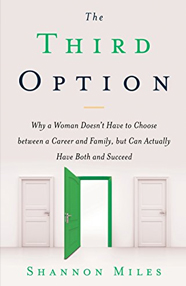
In The Third Option, Shannon Miles shares her journey to inspire people ready to reclaim control over their work schedule. Read on Scribe.
📚 Books by Shannon Miles
Transcript
[0:00:30] Charlie Hoehn: You’re listening to Author Hour, enlightening conversations about books with the authors who wrote them. I’m Charlie Hoehn. Today’s episode is with Shannon Miles, author of The Third Option. Shannon is the CEO of Belay. An Inc 500 Fastest Growing Company and the winner of Entrepreneur’s Number One Company Culture awards but that’s not what this episode is about, you see, Shannon believes in living life more fully. That means being a great mom and a great wife. In this episode, Shannon tells us why a woman doesn’t have to choose between a career and her family. But can actually have both and succeed. If you're a woman who wants to have the best of work and life, this episode is for you. Now, here is our conversation with Shannon Miles.
[0:01:47] Shannon Miles: I was in my late 20s, climbing the corporate ladder and I finally landed my dream job in the corporation that I had been with for the last four years and was loving it. Brian and I have been married for a while and decided, “Okay, now’s a great time to have a baby.”
[0:02:06] Charlie Hoehn: What was your dream job by the way?
[0:02:09] Shannon Miles: I was selling healthcare software which may sound super boring but that was my world and I was selling systems to clients who already had our software so it was theoretically an easier sell. I loved the energy of it and the opportunity for travel and just the satisfaction of like closing a deal.
[0:02:33] Charlie Hoehn: Awesome. You two were ready to have a baby?
[0:02:36] Shannon Miles: Yeah. You got everything in line, you’re like, “Okay, let’s just mix this all up.” Fortunately, we were able to have Rainy right away and she totally wrecked me. The plan was to go back to that perfect job and for Brian to continue on his path and his sales job as well. And so we found a nanny while I was on my three month maternity leave, hired her, brought her on and that was the plan. After I went back to work, you know, three months after maternity leave and the nanny was there, it just started to become obvious that this actually wasn’t a sustainable plan. I didn’t factor in the love of this little baby girl, she totally – because on paper it all made sense. You know, we’re just going to keep doing what we do and hadn’t planned financially for either of us to quit our jobs. We were going to make it work but then like, I don’t know that I held her and I’m like, “My gosh, this little tiny thing needs me so much and I love her,” and I can’t imagine both of us maintaining these sales jobs, traveling around and essentially having a nanny care for her. That was the crisis for us.
[0:04:00] Charlie Hoehn: What month did that really hit you?
[0:04:02] Shannon Miles: That was, she was about six months old when we realized, okay, this can’t continue on. It was a tough time in our house because we were you know, stretched financially, we both had to keep working and you know, we had fortunately worked to get out of massive amounts of debt that we accumulated when we were in college together and young and married and stupid. Still, you know, you spend the money you make, right? We were saving for retirement ad stuff like that but there was not a lot of margin. Not the luxury of just saying, “Okay, somebody just quit their job and we’ll just figure it out,” that just wasn’t an option at that point. There was this tension between the reality of the situation, knowing we couldn’t continue on with the way things were going but then also knowing we had to make a change because you know, they’re only little for so long and the sacrifice of the time away, it wasn’t going to be worth it for our family. We were faced with this decision it seemed like, “Okay, I have one of two options. I keep going and push through and think, okay, this is probably just hormones, it’s going to be fine. You know, she’s not going to be ruined,” or you know, continue selling and working full time or I quit. That seemed like the two options and then we just sell our house or figure out some way to cut our expenses so much that we can make it work. We’re thinking through that and even on the table was, you know, should Brian quit his job? Because we’re making the same amount of money at the time abut there was more potential for him and his job. We were just sort of in this turmoil for the first six months of her life trying to figure out what our lives really needed to look like now. What happened was, during my maternity leave, there was this part time position that was developed that basically, even though I was on sales, I was doing a lot of project management because there were a lot of issues with the client. My philosophy was, we’re not going to buy anything for me if they’re still cleaning up this mess of an implementation. So I spent a lot of my time not selling but project managing and problem solving. While I was on maternity leave, my boss realized this and he actually puts somebody in that role so that when I came back, I could truly sell and then there was this other guy who was doing this part time project management job. In healthcare sales, it takes a long time to get paid your commissions. It’s the golden handcuffs, right? I had all these differed commissions that I hadn’t been paid and if I had just walked, I would have left I think 40 or $50,000 on the table which was a lot of money for us at that time. Still is today, right? This was 2005 and so I thought, “That’s it, I’ll will go to my boss and I will say, let me do that part time job that was formulated during my maternity leave, I’ll get paid out my commissions and then I’ll quit.” That’s the win-win of the perfect situation. Had clarity finally. Like Brian and I were like, okay, this is what we should do. I got my best suit on, you know, I was like all nervous, I was wearing my heels, like I went into his office the whole deal and I just explained the situation like, “I can’t continue selling any longer and I like to propose this transition plan so that I can stay home with Rainy.” I was terrified and he said, “No. I’m not okay with that, you cannot take that job and leave the sales team.” I was like, “What? Can you say that?” It was just a flat out no. Wait a minute, I finally had that, the brilliant idea and the conviction to come do this. He was like “No, we’ll just figure out your account situation and try to make it so you don’t have to travel that much, it will be all right.” I was like, “Okay, back to the drawing board.”
[0:08:27] Charlie Hoehn: You know what that just made me think of? Do you know the Seinfeld where George tries to break up with his girlfriend and she’s like, “No, we can work it out.”
[0:08:36] Shannon Miles: He’s like, “What?”
[0:08:39] Charlie Hoehn: All right.
[0:08:40] Shannon Miles: Exactly. I went home and I’m talking to Brian about this and I’m like, but I was so sure. I decided in that moment that I wasn’t going to take the no and I was just so convinced that this was the right thing to do. The next day I went to his boss and presented the same plan and just said, “Look. I love this company, I love my job, I’ve been very grateful for it but I need to make a change that works for our family. Is there any way we can make this work?” And he said, “Absolutely, you’ve proven yourself, I understand, let’s work on a plan.” Then I thought, “Crap, what am I going to tell my boss?”
[0:09:22] Charlie Hoehn: My boss is not going to be happy about this move, yeah.
[0:09:25] Shannon Miles: I’ve really done it now. I think it was just inconvenience, you know? The burden was going to be on him, have to replace me and transition the accounts and everything. As a boss now, I get it but the reality is, I wasn’t going to be able to do any of it well and you know, I really wasn’t going to be able to give sales my all. In hindsight, I think he worked through the plan right. I was so sure that this was - it was literally the most clarity I’ve ever had around any job opportunity or transition in my life that I couldn’t take that no for an answer.
[0:10:02] Charlie Hoehn: Wow. First off, I got to say. It’s rare for me to so intensely relate to an author’s intro story so to speak but my wife and I are going through this exact scenario that you described right now. We have, yeah, we have a nine month old daughter and my wife quit her job but with an ongoing offer to come back whenever she wants and we’re trying to figure out, what do we want to do next? Because it’s exactly as you described. Which is like, we really love our daughter and we don’t want a nanny or really to put her in a daycare. And you know, like fortunately, we’re in somewhat of a position where I could figure out a way to double my salary if I wanted to. Which I’m thinking about so that she can focus on being the best mom she can be and being with our daughter as much as possible during this phase where we’re never going to get that time back, during those formative years and it’s so fun right now. That we feel like man, we would really regret it. I’m excited to talk about this. What happened next? What happened next in your story?
[0:11:36] Shannon Miles: I love that this is so real for you right now because I think so many families struggle with the decision that you and your wife are going through right now and Brian and I went through so many years ago. Even for the first –
[0:11:49] Charlie Hoehn: Yeah, sorry to interrupt Shannon but I have to say, the struggle with debt, that’s real as well and that’s something that, you know, I’ve only recently started to discuss with others because it’s like an embarrassing problem where you’re like, how did this even happen? I used to be good with finances and then this crept up on me and what’s happening? How did this become the problem that it is?
[0:12:19] Shannon Miles: Yeah, we just don’t talk about it enough. It’s the reality that so many people live and we’re afraid to have the conversation.
[0:12:27] Charlie Hoehn: Yeah, because we don’t’ want to look foolish and like, there’s a part of you that thinks you’ve got it handled but it’s not like dramatically improving.
[0:12:41] Shannon Miles: Yeah, we don’t want to look irresponsible.
[0:12:43] Charlie Hoehn: Right. Yeah.
[0:12:46] Shannon Miles: Sometimes it takes situations like this to really distill down like what your priorities are, you know? Okay. We finally made the decision, “Okay, I’m going to do this part time thing, thinking it is a bridge to staying home,” but the reality is, I don’t know if your wife is experiencing this tension too, but the reality is, I never really wanted to be a stay at home mom. I wanted to have it all, I wanted to have my time with Rainy but I still wanted to work, I loved working, I’ve been earning money since I was 10 years old. To just not work and just stay home with a child, while that is very admirable and a path that a lot of men and women choose, I honestly didn’t feel like that was my path. But, I felt like it was the only option I had. That’s why – the whole concept of the third option in the book and everything is like, we really have more options than we think that we do. There’s a lot of space in between the option of “Okay, just keep doing that sales job, you’ll get over it, you’ll learn to not be around your daughter very much, you’ll travel, you’ll commute, it will work out,” and staying home and not working at all. There’s so many options, there’s so many third options in between. And so, for me, that part time project management, work from home, go to the client site a couple of days a week was perfect. It just kept working. I got paid out those old commissions, I was able to do something that in hindsight, I had naturally gravitated toward anyway. I really enjoyed that aspect of my job because I felt like I was making a difference and there was a practical need. One thing that I will say made this possible for us that I know is not a luxury for everybody but it was our situation is that our moms, Brian’s mom and my mom, agreed to help care for Rainy while I worked and that - I don’t take that for granted now, even though Rainy’s 12, almost 13. I know what a blessing that was. And quite frankly, it’s still part of what makes us all work for us today. My mom still takes care of the kids and the house and the dog and the things like when we travel for work or for pleasure. I have to mention that because I know it’s a luxury. But that’s not to deter the listener from saying, are there options like that in your life that would enable a third option to make sense for you and your family?
[0:15:25] Charlie Hoehn: Right. You know, in a weird way, it’s not a luxury in a lot of parts of the world, right? It is the norm. In America, everybody moves around, we’re kind of – our hair is on fire type countries so we’re all busy running around doing stuff. I love that you had that ability to have that and I think it’s a great healthy thing. In any case, Shannon, how would you sort of distill down the explanation of The Third Option? What is your elevator pitch so to speak of what the book is about to, lets’ say my wife was here, how would you explain it to her?
[0:16:11] Shannon Miles: It is recrafting your work to work for you. Whether that’s a part time virtual opportunity like I took or a full time virtual opportunity. We’re seeing that work more and more for people but it is truly virtual, that’s like the differentiating factor for this because the tie of having to go and tune off every day to fight through the traffic, to have to schedule childcare or care for your elderly parents. Whatever your family obligations or pulls are. When you’re not able to be in your home, it’s really hard to manage all of it getting done. You know, when I first started writing the book, I did gear a lot around part time working but the truth is, as I started doing more research and telling more stories that are represented in the book, the third option can really work in a full time capacity too. It have, I’ve had a lot of women tell me, “I left my corporate job, I still needed and wanted to work, I still wanted to earn an income but I could not go into the office one more day. It was sucking the life out of me.” Honestly, it’s going to sound dramatic and I don’t want it to but it’s the reality. People were telling me like, I was having health problems, I was physically ill.
[0:17:41] Charlie Hoehn: I got to tell you, one of my friends, she worked for a mega corporation that made – I actually talked to your husband Brian about this when he was on the podcast about how, when their company really made the transition to allowing remote work, her cholesterol fell by like 70 points and she – she listed off all these health benefits and financial benefits and yeah, just the commute alone. Not everybody lives a walk or a bike ride away from their office. It’s just not possible. Just the commute alone. I mean, my uncle, I think he drove an hour plus to work each day for like 40 years, that’s crazy.
[0:18:36] Shannon Miles: It is, like you calculate like the time and the expense of that, those are very tangible statistics and a compelling reason to not have that commute. But then you have all of the – the cholesterol and the stress. It blows my mind that employers are so rigid on this idea of you must come in to the office, you must prove your worth by being here and your loyalty and if you’re not here, I don’t trust that you’re working. Because the reality is, they’re not getting the best out of their employees, they’re forcing them in this situation that is unsustainable, it’s unfulfilling and it doesn’t work and they’re losing great talent because the world is waking up to the idea that for a lot of our jobs, you can do them in your home.
[0:19:25] Charlie Hoehn: Or anywhere, yeah.
[0:19:26] Shannon Miles: And be more productive.
[0:19:27] Charlie Hoehn: Yeah.
[0:19:27] Shannon Miles: Exactly. Anyway, I’m not even at my house right now, I’m at a flexible workplace because there were construction workers at my house today. But the point is, there’s so much work that we have right now that can be done remote. The ‘third option’ is becoming more and more prevalent. We just haven’t named it until now. All I did was put a term on something that men, women have been doing for years.
[0:19:54] Charlie Hoehn: Yeah. It allows you to work in a way that doesn’t fracture your emotional connection with your family and your kids. Let’s talk about the mindset. You have a chapter in your book called The Third Option Mindset. I’d imagine a lot of mothers especially are on board with the idea of The Third Option. Maybe some of them might be a little bit skeptical because they’ve read articles that you see online that’s like ‘Hey, work from home, here’s how I worked from home’ but that’s not –
[0:20:34] Shannon Miles: ‘Make six figures in your pajamas.’
[0:20:38] Charlie Hoehn: Yeah. Those sensational headlines and I know you and Brian are very legitimate, you are not in that category but I’m just saying like that kind of nonsense is out there and usually that stuff has nothing to do with what you’re talking about. What is really ‘The Third Option Mindset’? How did we make that shift?
[0:20:59] Shannon Miles: I love that you brought up the whole stay – kind of aspect of this because we do get told all the time, “I hope this is real, I hope that this is everything you’re telling me it’s going to be because if it is, it’s awesome.” The mindset –
[0:21:13] Charlie Hoehn: That’s why I’m glad you wrote a book on this by the way. Because anybody who is slinging those kind of scammy work from home in your PJs stuff. They’re never going to write a book because there’s no substance to what they’re saying.
[0:21:30] Shannon Miles: Yeah, you can go research everything in the book like these are real people, real stories, real statistics, like I promise. You know, I mean, the mindset is really the idea that you really can have it all and I know that there’s this debate in our culture right now, is work life balance achievable? Is it even a thing? Should we call it integration? Whatever that is. I’m here to tell you, the mindset is that you can have a fulfilling personal life, you can have your family obligations met, you can direct your time as needed and you can still be an effective professional.
[0:22:10] Charlie Hoehn: Author Hour is sponsored by Book in a Box. For anyone who has a great idea for a book but doesn’t have the time or patience to sit down and type it out, Book in a Box has created a new way to help you painlessly publish your book. Instead of sitting at a computer and typing for a year, hoping everything works out, Book in a Box takes you through a structured interview process that gets your ideas out of your head and into a book in just a few months. To learn more, head over to Bookinabox.com and fill out the form at the bottom of the page. Don’t let another year go by where you put off writing your book. Tell me the story of when you really experienced that for the first time. Tell me about that day where you were like, “Holy cow! I did it.”
[0:23:04] Shannon Miles: Yeah like going to my client site and like, “Oh my god I only have to do this two days this week.” It felt so good to know where I was going to spend my time that week which I know sounds crazy but I was happy to leave the house and leave Rainy because I knew that the next day I was going to get to be with her all day and I knew I was really going to be able to have it all and so what it enabled for me was focus and mindfulness on what I needed to do at that moment. And I knew that when I was going to the client site, that’s where my energy needed to be and then when I was home the next day, I needed to be focused on Rainy. Now here’s the thing about the mindset though Charlie, you can dream about the possibilities and you can decide, “Okay yeah that there are options right for me,” but it is not, once you make that decision, it is not always easy. It is something you have to decide over and over again because things change, right? Seasons change, your nine month old is not going to be nine months old forever, right? So they are going to start like crawling and walking and switching nap times and entering a preschool program. All of these things affect your day to day decisions and time and where you’re directing it and so it’s a mindset that you have to continue to fight for and decide to choose every day and not give up. Because if it is something that you’re convicted about like I mentioned earlier. Like I was so convicted like, “This is my path, this is what I need to do” it doesn’t mean it panacea there on out. There are challenges. Your childcare providers are people, they are not a 100% reliable so you have to restructure things. I tell a story in the book that it is still very vivid for me today. So, this third option thing worked for me for a very long time all the way through having Harper in 2008, our son and I had taken another three month maternity leave. Went back to work after having him and at that point, I had moved up from 20 to 30 hours a week. So it is still part time but a little bit more full time and I was like, “I got this. I did the one kid thing, let me do the two kid thing. This is easy.” And I am in the car and I think I left work, I picked the kids up from my mom’s. I have to run to the grocery store, I am on a conference call with my client, Harper is losing his mind in the backseat. It was contagious so then Rainy started losing her mind. She was only three at this point and I totally lost my mind but not before the client was like, “So Shannon what do you think?” And I’m like, “Oh shoot, no!” And so I go off mute, he’s red faced losing his mind and I am in a public parking lot and I was like, “Yeah, it’s a great idea. I agree.” Back on mute and I did, I lost my mind. I screamed in the car with them and that was the moment I realized multitasking is not always a good thing. I needed to go back to that separation of like when I’m working I’m working, when I’m with the kids, I am with the kids because especially at that age, to ask them, “Hey could you zip it. I am on a call,” doesn’t happen, right? And so I was putting undue stress on them, on me. I wasn’t giving my client and my company my all. That was the moment I was like, “Okay if I am going to make this work for the long term, if I am truly going to live out this third option, I’ve got to put some structure and parameters around how to make this work.” Because that situation is not sustainable, not good for anybody.
[0:26:47] Charlie Hoehn: No. Yeah, as they say one kid is one and two is 10 or two is a 100 or whatever. So yeah and what’s the age difference between your two kids?
[0:27:04] Shannon Miles: Almost three years, just shy of three. Yeah.
[0:27:07] Charlie Hoehn: Three years, how do you feel about that gap? Do you feel that was perfect? Would you have added or taken away another year?
[0:27:15] Shannon Miles: I feel like it was good, you know? We were very fortunate that we had no trouble having them and I know a lot of families do and don’t get to choose the spread but if you can choose it, I feel like three years was sweet because at that point Rainy was pretty much getting out of diapers and she was bring Harper’s diapers. So you know they want to be little helpers at that age.
[0:27:40] Charlie Hoehn: Yeah, my wife and I talk about that just from a practical standpoint of could the other child help with some of the responsibilities? But also from an even more practical standpoint of the mom’s got to take some time to replenish her nutrients, the pregnancy takes its toll so you’ve got to rejuvenate so -
[0:28:04] Shannon Miles: Totally. It’s hard, it’s brutal on the body that’s why somehow I have high blood pressure to this day. No amount of remote working got rid of my high blood pressure but I do have [inaudible 0:28:17.6] but that all started with Rainy when I was pregnant with her. Yeah so the spread is good and I think you have to give yourself a tremendous amount of grace during that season too because it is so much change that you truly can’t prepare for. I don’t know if people told you this before you had your baby but you get all of this advice and this is what’s going to look like but there was no amount of conversation or books that I read that could truly prepare me for that experience.
[0:28:54] Charlie Hoehn: Yeah, so what are you thinking of in regard there? Like what were you not prepared for?
[0:29:01] Shannon Miles: Well first was how much I freaking love this little people and how that –
[0:29:07] Charlie Hoehn: Because you probably hadn’t experience that level right?
[0:29:10] Shannon Miles: No, I mean even having a spouse is just different and I felt this huge sense of, I don’t know, like super hero obligation. Like I must protect and provide for this baby and that’s really the underlying emotion of needing to make a change with my profession. And so many people that I’ve talked to have struggled with that same thing but the reality is that whole professional side of you, if you really love working and you love developing yourself and growing your career, that doesn’t die when you have a baby. It just changes and so that’s why you have to constantly navigate priorities in different seasons of your life to make it all work.
[0:30:00] Charlie Hoehn: Right and let’s talk about that. How do we make it work? How do we set ourselves up for success with The Third Option?
[0:30:10] Shannon Miles: Well one step and you eluded to it when you were talking about replenishing, you have to take care of yourself. If you think that you are going to be all things to all people and all of your names are going to go in the back burner like that is not sustainable, that doesn’t work. You have to take care of yourself. You have to –
[0:30:31] Charlie Hoehn: How do you take care of yourself by the way?
[0:30:34] Shannon Miles: For me?
[0:30:35] Charlie Hoehn: Yeah. Even if it’s the basics, fundamentals. I think it’s important to remind ourselves of what those are.
[0:30:42] Shannon Miles: A lot of wine, let’s just start there. No, I do love working out. I have a workout buddy that she holds me accountable. If we are doing it right, we are getting up early in the morning and knocking that out because later in the day it doesn’t happen. I love yoga, I love listening to podcasts and shutting my brain down because I am an achiever and so for me I’m always on and so forced relaxation is part of my self-care. So whether that is driving and listening to a podcast or we have a beautiful property here in Georgia. So I’ll just walk around the woods and unwind throughout the day if I need to reset and refresh and I love being with friends and family, those things fill me up.
[0:31:30] Charlie Hoehn: I love it. So we take care of ourselves, we spend time with friends, we replenish ourselves, we exercise, what else can we do to set ourselves up for success in making the third option work?
[0:31:47] Shannon Miles: You have to ask for help.
[0:31:49] Charlie Hoehn: Ah but that requires vulnerability.
[0:31:53] Shannon Miles: Right? Which is so popular right now like it’s never been cool to be vulnerable.
[0:31:57] Charlie Hoehn: It’s the in thing, right.
[0:32:00] Shannon Miles: I love listening to Brené Brown, she changed my life. I am all about vulnerability.
[0:32:03] Charlie Hoehn: I know she’s awesome.
[0:32:04] Shannon Miles: You know I think it’s beautiful because it just removes the stigma of like what you talked about earlier like why having my finances get so out of whack. I think when we surround ourselves with people that genuinely are rooting for us and care for us and want to see us succeed then it makes it a lot easier to ask for help and be vulnerable with them and it’s not that one person has to swoop in and be your hero but it’s the little things. Like, “Hey my meeting is running long, can you go get the kids from school today? I know it was my day but can you go get them?” It’s the little stuff like that that just adds up overtime to make it all work.
[0:32:46] Charlie Hoehn: Yeah, what do you find mothers, fathers tend to get wrong in making the third option work?
[0:32:55] Shannon Miles: I think they have unrealistic expectations.
[0:32:57] Charlie Hoehn: But you said we could have it all.
[0:33:00] Shannon Miles: We can – define all. I think that’s the key. I think if you think you’re going to make that six figure salary and work 20 hours a week and be able to travel the world and have a big house but then also have time to go get your nails done on a Tuesday, you just have to decide what all looks like for you. And really truly get intentional with defining your success. For a long time success for me was proving myself like I had to climb that ladder because nobody else in my family had been as successful as I was. And I came from nothing so I’ve got to just hustle my way to the top. But then with time and life changes, that definition of success looks a lot different for me now and it’s really, truly being happy with my entire life and not just looking at my profession and driving toward that thing to the neglect of every other aspect of my life. Because that was my tendency and I think too conversely, if you have maybe always wanted to stay home. I think more and more guys like millennial age want that freedom and autonomy to be able to direct their time however they want which is awesome. But there’s also still an element of professional development that needs to be part of your life too. So I just think that it’s being realistic about what having it all means to you and what your definition of success is. I will share with you our vision, for Brian and I. So we’ve been married over 20 years now, so over half my life. Yeah, we were babies Charlie.
[0:34:47] Charlie Hoehn: You two, I can tell from speaking with both of you and just from what Tucker and everyone says about you two is just you’re a very model couple of what a great couple looks like. And this is not to say I have no idea what you two have been through. I’m sure you’ve had many challenges and bumps along the road.
[0:35:10] Shannon Miles: No, we’ve been perfect the entire time.
[0:35:13] Charlie Hoehn: Right, yes. This marriage isn’t this one giant rainbow ride but it is to say that you two have seemingly set up a very wonderful life for yourselves and have been obviously very intentional about it. I mean both of you came out with books of your own within six months of each other. That’s wild.
[0:35:37] Shannon Miles: We’re crazy. Thank you for your kind words, that is super sweet. You know I used to have this misnomer when I was young and married because I was 19 when we got married. So I am not joking, we were babies. I was still in college, that at some point where you could just coast. I just thought, “Okay at some point you will work through all your stuff and then you will just be in lock step and on the same page.” No, it is always something you have to work toward just like anything important in life, but that’s what 19 year old Shannon thought.
[0:36:13] Charlie Hoehn: That’s life. Well that’s a misconception of pretty much maybe all young people who grow up in America is the sense that one day, some thing is going to happen where I’ve made it and from there on, I’m at the top level and I never fall off and the reality is no matter what level you advance to there is another level ahead of it. The journey never ends, life isn’t American Idol where you’re picked by the judges and suddenly you’re Kelly Clarkson. Even Kelly Clarkson’s got to keep going so.
[0:36:51] Shannon Miles: She’s still working hard. How many years later, right? The girl is still out there flinging.
[0:36:56] Charlie Hoehn: Exactly, yeah.
[0:36:57] Shannon Miles: And it’s true and I think this isn’t obviously about our marriage but I share that with you to say it is always something you have to work toward and fight for and know that it is worth it. There’s never a coasting season. There are seasons where tensions are high, there are seasons where tensions are low. Like that’s reality too but we just have a fundamental love and respect for each other and we raised each other. We really did. Not only did we grow up together but we helped each other develop into the people that we are right now and I know a lot of couples who get married that young that the opposite is true. I think one of our saving graces is our faith. Another is that we waited eight years to have Rainy. You know the stress of having a child and being married young would have been a lot. So all of that to say our vision that Brian and I share for our future is that someday we’ll be able to vacation with our children and their children. And it sounds so simple but for us, it encapsulates a lot of our values. It’s that he and I are still together and loving each other and wanting to hang out with each other and being friends. It’s that we have the financial means and we’re withal to be able to afford amazing vacations. Travel is very important to us. We think it’s hugely important for the growth and development of our children too and we just love it. It’s that our kids have a relationship with us and with each other and that they are doing well and they are experiencing other relationships and developing families of their own and that our family is strong. So it just captures a lot of things that are important to us now that we know if we want to achieve that vision, there are things that we have to do now to make that reality. Rainy is 12, Harper is 9 so we have time but not a lot, you know? It goes fast and so when we look at our business because he and I own our business together. We’re co-CEOs, it’s a crazy fast growing business that’s been the biggest challenge in the business is just keeping up with the growth and so we look at that and we think this is important as it is in The Third Option to ask for help and know that you can’t do it alone. The same is true for us in our business. We never would have grown to this point of being able to keep our marriage intact or invest in our kids if we didn’t delegate to other people, train up leaders and give away aspects of the business, that we have handled before for the benefit of the company overall. So I think some of the concepts that make the third option work are what have worked for us at delay also and have us help our marriage.
[0:39:41] Charlie Hoehn: That’s a beautiful vision by the way, vacationing with your kids and your grandkids. I love that. Now I know we have to wrap up here but could you tell a quick story of who your favorite success story of another family that made The Third Option work for them.
[0:40:02] Shannon Miles: That was obviously one of my favorite things about doing this book is hearing all of the other stories because mine is my own but The Third Option looks so different for other people. So I tell this story at the end of the book of Kimberly who’s one of our virtual assistants and she wrote a blog all about how her ‘third option’ of being able to work remote allowed her to sit side by side with her sister while she was going through chemotherapy. And it is not the reason she chose ‘the third option’ but had she not made this work for her, she never would have been able to sit there side by side with her sister and hold her hand and be present and not have to take vacation and truly be able to invest in the situation issue she was going through with her sister, side by side. And that is so powerful to me because that’s one story of one person who was able to be there for her family and there are thousands just like this.
[0:41:05] Charlie Hoehn: Amazingly, the technology that we have now could allow us to go back and deepen the relationships with our family. I know that a lot of people they discount social media and stuff because you feel connected with people when you’re actually not but what you are talking about is allowing a fundamental restructuring of how we’ve worked for so long and allowing us to reconnect with the most important people in our lives.
[0:41:36] Shannon Miles: That’s it. That’s why we do it, right there.
[0:41:39] Charlie Hoehn: So Shannon this has been a wonderful lovely interview and how can our – well first off, what’s your challenge for our listeners? Something they can do from your book this week to make a difference in their life.
[0:41:55] Shannon Miles: There are three steps that I want the listener to take if this resonates with them at all. I want to dare them to dream like dream big. Just take everything that is current reality off the table and think if I can craft my ideal work-life situation what would it look like. So dream, I want them to decide, okay that is something that I want to work toward or maybe not yet but maybe next year, whatever, make a decision. And then do something about it. That’s the third step, do something. Even if that’s, “I can’t financially afford to quit my job but I am going to budget for what my dream is and then I am going to take the next step in that direction.” So those three things. If they need some help navigating through how to come about these decisions or some resources at mythirdoption.com, there is a manifesto there. There’s a quiz, there’s a decision tree and then my favorite part about that whole site is stories and that’s where we started a repository of people sharing their own ‘third option’ stories. As to like a testament to have this has worked in their lives but also as an inspiration if you are having a hard time imagining like how could this work for me. If you just go and read some of those stories you’ll be so inspired to do something about it that your next step will become very clear.
[0:43:18] Charlie Hoehn: Beautiful and this is a very worthwhile movement, so dream, decide and do. How can they follow you personally on your journey Shannon?
[0:43:30] Shannon Miles: Instagram is my favorite spot. So they can follow me @shannonkmiles don’t forget the K. I don’t know who that other evil Shannon Miles is, it’s not me. And then also we have My Third Option account on Instagram too so either way and then the company is belayesolutions.com.
[0:43:51] Charlie Hoehn: Yes, excellent so check on that out. Shannon this has been great, thank you so much for being on the show.
[0:43:58] Shannon Miles: Thank you for having me Charlie. It was fun.
[0:44:01] Charlie Hoehn: Many thanks to Shannon Miles for being on the show. You can buy her book, The Third Option, on amazon.com. Thanks again for listening to Author Hour, enlightening conversations about book with the authors who wrote them. We’ll see you next time.
Want to Write Your Own Book?
Scribe has helped over 2,000 authors turn their expertise into published books.
Schedule a Free Consult