Lisa Guillot: Episode 1171
Read the full transcriptLisa Guillot
Current bio on my website:
Lisa Guillot, PCC, helps her clients find their clear vision and bring it to life through her creative, straightforward Clear Vision Framework.
A former brand designer for companies, including Paper Source and Crate & Barrel, Lisa coaches her clients to have the confidence and tools to create their life by design and share their vision through personal and professional branding.
Lisa is a certified creative mindset coach and personal branding expert. Her clients include EVP’s and Creative Directors of Fortune 500 entertainment and media companies, and leaders in marketing and tech. An entrepreneur at heart, Lisa also coaches ambitious people who are ready to build their business with purpose.
Lisa is the founder of Be Bright Lisa Coaching, Be Bright Branding and Clear Vision U, a mindset and marketing training program. Lisa is married to an architect and has four kids, two of which are stepkids, and all of whom she adores with her whole heart.
Lisa is the host of the Find Your Clear Vision podcast, a personal branding and mindset podcast, and you can connect with her on her website and on Instagram @bebrightlisa.
📚 Books by Lisa Guillot
Transcript
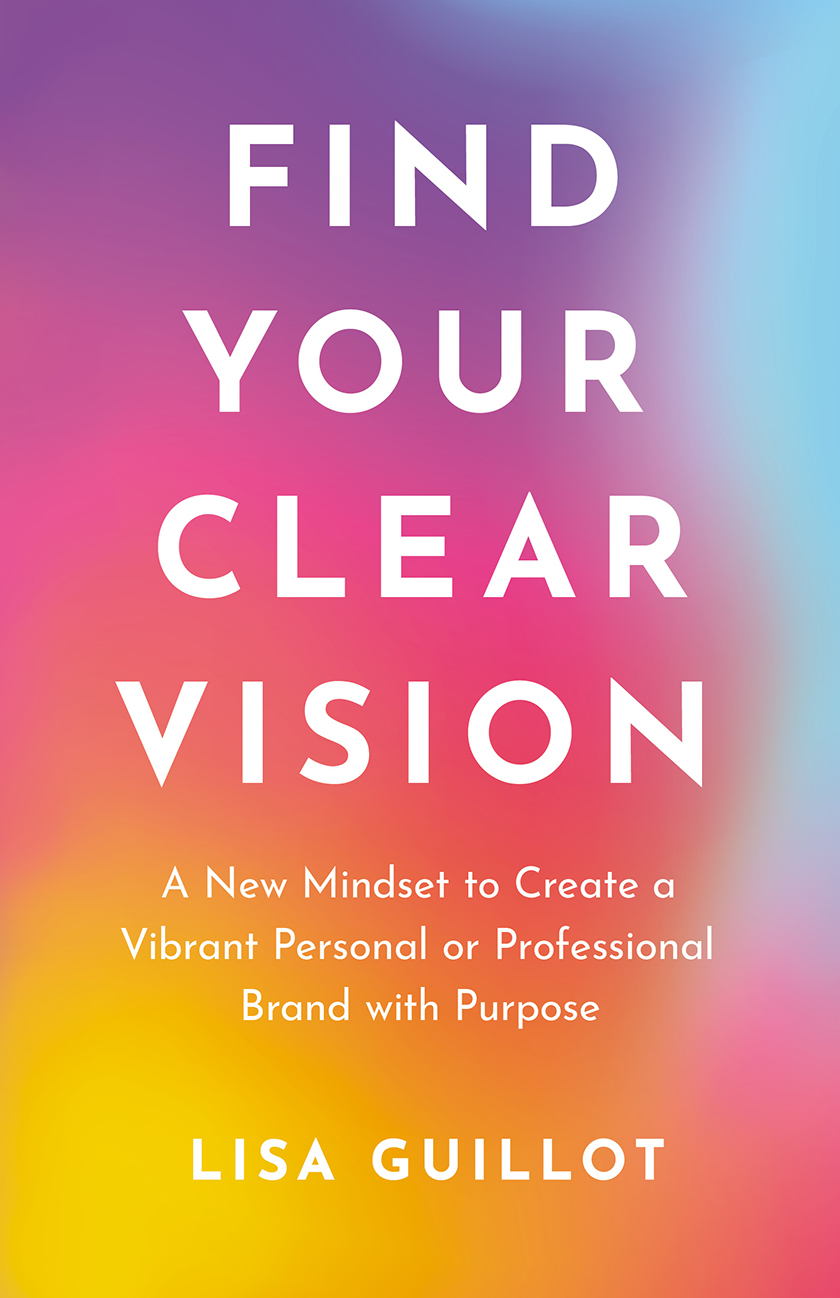
[0:00:38] HA: You're stuck, you have been for a while. From the outside looking in, you’re successful but there’s a calling in your heart, nudging you towards radical change. Maybe you want to reinvent your career or build a business but you have no idea where to start or how to make it happen. Welcome to the Author Hour Podcast. I’m your host Hussein Al-Baiaty and I’m joined by author Lisa Guillot, who is here to talk about her new book, Find Your Clear Vision: A New Mindset to Create a Vibrant Personal or Professional Brand with Purpose. Let’s flip through it. Hello friends and welcome back to Author Hour. I’m here with a very special friend and guest, Lisa. Lisa, how are you doing today? I’m super excited because let’s see here, I’ve literally watched your entire journey come to life in front of my eyes. So Lisa, thanks for coming on the show today, I really appreciate you.
[0:01:35] Lisa Guillot: Aw, thank you and yeah, you watched it come to life before your eyes at the exact same time I was watching it come to life because from start to finish, it was quite a journey.
[0:01:47] HA: Yes, yes, absolutely. The book is titled, Find Your Clear Vision, and I got to tell you, not only did the book title resonate with me but your book and your stories really resonated with me. However, before we get into the book and talk about all that good juicy stuff, I really want to share with our audience a little bit about you, sort of where you grew up, I love hearing those stories of childhood but also what was that like growing up, and what led you down the path that you’re on. Is it a person, an event, something happened while you were just like, also feeling stuck and you made a transition? But let’s just go back in time a little bit and share about that childhood. Do you mind?
[0:02:22] Lisa Guillot: Oh yes. Way, way back in time. Okay, born in Florida but spent most of my childhood in a tiny town in the Midwest Columbia, Missouri. The MU Tigers are there, my dad worked at the University Hospital there and when I turned 18, I thought, “Where is the farthest place I can go to get away from Columbia, Missouri?” and my dad grew up in New York and my mom grew up in San Diego and so I had an experience like on both coasts and I recognized I’m not a New Yorker, at all. Instead, I ended up going to San Francisco for school and stayed out there for a couple of years during the .com boom and the .com crash and worked in the graphic design branding advertising world, and that led to so many opportunities. I was on the first team that worked on Pottery Barn Kids when it went live on the Internet for the first time in the year 2000 if that like, gives you any perspective of time for me. But as the .com crash was coming. I thought, “You know what? It’s time for me to get back to the Midwest” I’m a Midwestern gal at heart and so I moved to Chicago in, I don’t even remember what year that was, and my aunt lived on Lakeshore Drive downtown Chicago so spent time living with her and friends. Also, working here, I’m still in Chicago at design studios, ad agencies, and marketing departments. Then it wasn’t until I had my own graphic design studio called Step Brightly, which I started in 2009 and I did lots of things during a really short period of time. I got married to a man who had stepkids, so I instantly became a stepmom. I started my business, we had our first kid in 2010 and I started a nonprofit organization with two girlfriends who – we were all creative entrepreneurs. I was the design arm and then we had a writer and a photographer and that’s really all you need to start a brand or a business is design, writing, and photography and we called it Fourth Chicago and so it was all this cumulation of like adding more and more and more into my life and as a graphic designer, what I noticed was I was paid to be perfect and what I mean by that is in the design world, it’s the perfect color, the perfect typeface. The perfect space in between the letter forms, right? The perfect pixel placement. Everything had to be perfect and that’s what I was being paid to do and I took that perfectionism like, straight into trying to be the perfect mom and stepmom and all the things and I even remember, I was doing core power yoga, which is hot like, they heat up the room to about a hundred degrees and then they added weights and then at the end of the class, you’re just like, drenched in sweat and just falling apart. And then they tell you to lay in Savasana and I was like, “Okay, cool. I can get my weight training in, I can sweat it all out and meditate for a minute and a half. Cool, done” and everything was like in this super tense order all the time, everywhere, and fast-forward to 2013 and I was about to have my second kid and that’s when you know, the “you know what” hit the fan. So basically, this was the transformational moment and I think most people who go into service of others, coaching, consulting, whatever it is, kind of have a story that led them to that breakdown. So my breakdown happened when I had had a scheduled C-section with my daughter, which for a perfectionist was awesome because you knew exact date and time that baby was coming out and then the left side of my face had started swelling, and maybe it was all the fluids they were pumping in me, who knows? But it swelled to the point where doctors were like, “Nope, you can’t hold your kid!” They were hazmat suits, I was quarantined in one part of the hospital in the delivery wing because they didn’t know what it was. Well, it turns out it was shingles that had manifested on my face and inside of my eye and it took like a team of doctors, two master life coaches, and a Buddhist monk, I swear to God, to help me ultimately recognize that shingles for a 30-something-year-old woman is directly related to what I wasn’t listening to, my body, my stress levels, my way of being, all of these things. So you would have thought I would have learned my lesson but it took another handful of times of breaking out to actually come to the fact that, “Lisa, you know what? This type of life is not normal and let’s find another way.”
[0:08:32] HA: I mean, I’m just like, this is again, where you get kind of sucked into the book, right? Because these stories are, they’re real, they’re happening to you. You're experiencing them also while trying to build a career, a foundation, a nonprofit, and raising kids. I mean, there’s a lot happening and you got to be perfect at everything. It’s just not human nature, right? It’s just, you are stepping into a framework that’s a little bit beyond, not that you can’t do it all, of course, I think it’s just doing it with compassion for yourself, and that’s something I had to learn in a very visceral way as well and I didn’t even learn it I feel like until unfortunately, ‘till my father passed and everything came crashing down like just deep realizations, and sadly sometimes it takes for our bodies to do something to us to be like, to wake us up. To give such a visceral sign to be like, “Hey, there’s no more road here. I don’t know what to do for you” and it’s taken that moment to step away but then you kind of moved on from that. You grew out of that a little bit and you created something, which I thought was kind of interesting. You call it the clear vision framework and you kind of started, building this idea but what happened? Tell me a little bit about sort of post operations and feeling good and now kind of stepping into this new self. What did that look like for you?
[0:09:58] Lisa Guillot: The first thing that comes to mind was like breaking down all of the stories and reasons why I couldn’t be perfect, kind of breaking up with that past identity and as a visual designer now with shingles in my left eye, I lost my 20/20 vision, which was perfect, mind you and no longer. So I then became a trained ontological life and leadership coach which really means, ontology is the study of who are you being about things. And that was where I really started to play with this idea of, instead of, you know, looking towards who I thought I used to be, instead creating a clear vision of the future and aiming towards that and who do I need to be to create that clear vision, what does it look like? Often people, you know, as the New Year rolls around, for example, people start to create vision boards, which is awesome. A great place to start but then, there needs to be action applied to that and why is it important, and what is your first step, and what does it look like when you have reached that clear vision? And that’s the type of work that I love, love, love doing with my clients because even in this world where – and I might be in the thick of it where we talk about manifestation and abundance and all these things that like “feel good.” There is also, like, straight-up research and science in the taking action part, and I think that that’s the part that is missing for many of us when you move from the vision board to actually being rooted in rituals and energetic work and rewiring what I call your paradox pattern to be more pop thoughts, so you live in this future world of where you need to be, and then we create the path to get there. So it’s kind of like you said, your body sometimes will give you a dead end. It’s like, “No, we’re not going this way anymore,” and we need to reinvent and transform who we’re being and create a new path, and I think that’s kind of the space that a lot of my clients and people who read this book are probably going to really resonate with is when you are a trailblazer, that means you are at the front of that road that has yet to even be paved, and so you are radically responsible for how that future’s going to look for you, and that’s actually kind of the fun part, really.
[0:12:49] HA: Yeah, I love that so much. I think for me, I’m realizing that I’m going from like, a gas vehicle and now needing to go into an electric one or one that runs on the sun or whatever, you know? You realize that the tools that got you there are great but now, you have to kind of break away from the tools that are harming you, right? The things that are actually not supporting your, you know, push forward. And you might need to take a break and kind of analyze those things and analyze that part of your story and I think, you know, what I resonated with in reading your book was just that level of awareness, right? It does take a lot of, you know, coaching and health and therapy and people you got to talk to and some time off and some deep thinking that is all kind of messy as well and they don’t all have the answers. There are no answers out there, at least, that’s how I felt. It was more like; I need to listen in. I need to inward, I need to listen in. I need to really respond and build response systems to how I feel, and like you said, with that being grounded, now, I can think from a place that’s a little clear about the future and figure out a new vehicle and what that looks like and how that’s going to push me across the new bridge. So I love that. What role do you think energetic and spiritual practices play in your approach to personal branding and how can readers incorporate these practices into their lives?
[0:14:19] Lisa Guillot: I think that what you shared about self-awareness is a beautiful place to start as it relates to energetics because when you are self-aware of your thoughts before you actually act on them. That gives you the opportunity to choose between what might be a drop box thought, which I call a drop box thought is an essence, a thought you’ve been thinking about for a very long time, that you have on repeat, right? “Well, I should do this perfectly. I should get this done before tonight” Whatever the thought maybe that keeps you stuck in this repetitive pattern. So if you have the self-awareness to choose outside of that thought, you totally nailed it in that, it kind of opens up space for more ideas, right? “Well, wouldn’t it be cool if I got a hybrid car? Wouldn’t it be cool if I just heard the new King Charles, King of Britain, has a car that runs on cheese and wine?” right? Cool, right? Who would have thought that? But in that white space, in this space between your thought and taking an action, that’s where all creativity and all new ideas live, and using energetic and spiritual practices to open up that space, which can be done with breathwork, it can be done with meditation, it can be done with physical fitness or music. Music is one of my go-to places to really pop out of you know, the everyday. In that space, that is like the golden ticket because that’s where as you climb the corporate ladder, for example, and let’s say you’re moving from VP to SVP or SVP to executive VP, you are actually given a lot more tasks, and responsibilities and they’re asking you to think more creatively, so we need to open up that space to have more creative ideas. So that’s where the energetics come into play and spirituality and then how that moves out into personal or professional branding or thought leadership. It’s in those spaces, the space in between the thought and the action, where creativity blooms and blossoms, that’s where your best ideas come from and those are the spaces that it’s going to be a trailblazing idea, one that we hadn’t heard of before like a car running on wine and cheese and people are going to be like, “Oh, come on, really? I’ve never heard of that before?” You’re like, “Well, yeah,” and that’s where you actually dig into it, step into that space, and at that point, we create what I call your visionary values and those are the conversations that you want to be in, in the future and what you simply do is you get yourself into those conversations now and so then, you’re an essence creating your future by design now.
[0:17:40] HA: How do you see us getting into those conversations now, right? How do you take this future perspective and start taking action towards now? For me, when I need to, I don’t know, when I need to kind of check myself creatively, I’m a graphic designer. I went to school for architecture and graphic design and started my business around apparel printing. I mean, it’s a crazy thing that happened in the Northwest. I didn’t even plan on growing a print shop, and I did and it was amazing, and I had to learn to really be a business person and pull the team together. It was an incredible journey, however through that journey, I realized that truly what I loved about anything I was doing was two things, was I love talking with people. So I just had energy around people, and I love creating art but rare types of art. I didn’t want to necessarily duplicate everything I created, right? I love this idea of rarity. However, in order for me to get to that understanding, I had to go through this business, right? I had to build it and figure out what works for me and what doesn’t and I just love that because what it ultimately did was in a way, it didn’t give me purpose. It made me pay attention to my purpose if that makes sense, right? I love how in your book you talk about purpose, you talk about how all of these things are basically intertwined with who we are, how we put ourselves out there, and what we put ourselves out there for, and I think for me, it helped me come up with ideas like Refutees, it helped me come up with ideas like giving back to because I wanted to work with schools and be able to print for them. I’m like, “Well, what can I do for schools?” and I was like, “Well if I go speak to the kids you know, in ESL classes?” because that’s where I was. And oh my God, I can’t even tell you how impactful that was for me, and it started changing that trajectory, which is why I started thinking about writing a book because a lot of people were asking, “Where’s your book? I love your story” all these good stuff. So again, I found myself at Scribe, right? And how we eventually met, but isn’t that amazing how your work is not only sort of like this thing for money but it is also, if you’re aware enough, it could honestly be revealing something about you that you may be hiding from and you just need to figure out a way to bring it out into the world. So can you take me there for a little bit? You know, maybe a little bit about those fears, especially as creatives, because woo boy, do I have them, right? We all have them but what are some of the fears that you feel like maybe you’ve encountered or maybe some of your clients have encountered as creatives to kind of pull back that curtain on purpose?
[0:20:24] Lisa Guillot: Well, the first step in the creative process is to release judgment, right? If you bring the judgment in, “Well, I can’t run a print shop, I’ve never run a print shop” then you probably won’t run a print shop, right? But you came into that venture with curiosity and wanting to make an impact on folks that you saw you could help. I always think like we’re just one or two chapters ahead of the person that we’re helping behind us.
[0:20:56] HA: That’s 100% true.
[0:20:59] Lisa Guillot: Yeah and –
[0:21:00] HA: Yes, one or two chapters at most.
[0:21:01] Lisa Guillot: One or two chapters ahead. It’s not a whole book, it’s not a whole encyclopedia, and we don’t have all the answers. We’re just one or two chapters ahead. So step one, release judgment and I had to do that. You know, speaking from my experience with writing this book, when I went to college it was an art school, a liberal arts school, and I had to be put into a class to learn how to write a five-paragraph essay, which was the most remedial thing you could do in college. I was like, “Oh, there’s actually like a framework for a five-paragraph essay?” I was blown away. For some reason, I had to learn that. I already had the thought I’m not a good writer, and then I had to — I could go back to first grade, I remember my teacher, Mrs. Duffy, telling me I’m not a good speller. So I’ve collected stories that I’m not a good writer for years. So I had to at first release that judgment and in no way, shape, or form did I think, “I’m going to be an author.” Instead, it started, it must have been in like 2018 or 2019, I was just looking for another way to play creatively. I was already full into my coaching career, I was only doing really graphic design and branding for maybe one or two clients and for myself and my business, and I thought, “Well, wouldn’t it be cool to write poetry?” and I know I love accountability so I found a poetry group and we would write poetry and read each other’s poems. So I started super small, right? Same thing with you, you probably started with like one or two t-shirts, and then you kind of see how it goes, right? So I wrote ten mediocre poems, but I found it just so fun, and then I joined a personal essay writing class and then I started thinking, “Well, wouldn’t it be cool to write this book? I’ve got all these frameworks and real client results and research,” and that’s how the idea sparked and came to life. But those little breadcrumbs along the way were now that I can look back, I had released the judgment from my first-grade teacher and the story of who I wasn’t supposed to be, and then I started brainstorming and that was the poetry moment and then I started forming my vision, which was, “Well, wouldn’t it be cool to write a book?” and then, step six, there are six steps in the creative process is to share. There are lots of authors, and artists even, who create amazing work and don’t share it. A-okay, right? It’s their vision, it’s what they want, but I knew because of who I was and my clear vision, sharing it in a really big way and using this book to, you know, in essence, give it away. This is the DIY version of how to find your clear vision was the path, yeah.
[0:24:21] HA: I love that, that’s so powerful because it makes your framework and your experiences so much more accessible, right? And more adaptive and I love that because not only are you sharing your story but you’re really – I mean, it’s so good and that it gives some really practical tools and pathways to discovering a lot of those things and getting to that clear vision. I mean, again, I was reading it, and I was like, “Oh my god, I don’t want to put this down right now” I really want to keep reading, and so I love that so much. What was your favorite part? I mean, like again, I got to see you kind of go through this journey, and it was really powerful but what was your favorite part of pulling your book together? What did you learn from that journey?
[0:25:02] Lisa Guillot: The favorite part, well, definitely seeing it finished and having it in my hands, but I also like with the Scribe process and how it’s set up, I do best with accountability, and I knew 11:30 am Tuesdays, I have that Scribe guided author’s call. So hoping on there with like-minded people, business-minded people, you know, from psychiatrists to therapists to people from the military, just all kinds of backgrounds, and being supported by people like you and Chaz and Emily really helped like carry me through it. Hold my hand even though you weren’t typing it for me but –
[0:25:50] HA: We’re just cheering you on, but you can say all those, too, that’s fine.
[0:25:54] Lisa Guillot: Yes, yes, yes, I loved that part as well, and it also, like for other folks who are considering, especially in the coaching world, if you have a framework that you know works wonders and transforms your clients, that is yours to share and it is so powerful that when you do it one-on-one, it’s even more powerful in a group and I think it’s even more powerful when you can give someone the framework in you know, a 277-page book and say, “Here you go. This is it, you can do it on your own.” I’m really excited about that moment too.
[0:26:37] HA: Yeah, that’s really powerful. You know, the one thing I realized a lot of authors, especially in your category, right? With coaching and those kinds of things, which is honestly again, why I feel like your book really resonated with me because that’s kind of the direction I’ve been going to. It’s like getting into coaching and just understanding that world as well and what I’ve realized is that when I wrote my book, I got to know myself and my story more and my own wisdom and knowledge, right? So it kind of put a stamp on it, meaning that I know what I know because I wrote a book. Did you feel that way coming out of writing your book as well? I mean, because we all know that we know that, but how did you feel?
[0:27:15] Lisa Guillot: Yeah, a hundred percent because I always knew, like the type of work I do is to help people find their clear vision, and one day I remember just being on the floor with all of my notes and sticky notes and revisions and revisions and I thought you know, “Well, wouldn’t it be cool if clear was actually an acronym?” and that’s how I did it. It was like the biggest light bulb moment, and I was like, “Exactly.” Just like applying the process and really defining the steps as it relates to the word clear, it was a beautiful insight that I had, and it might not have happened at such a rapid pace if I wasn’t open to this type of experience.
[0:28:03] HA: Yeah, and I mean, you obviously practice what you preach, which is like not judging the creative process, and when you don’t judge, you allow your heart to sort of just be open to new ideas and new pathways, and I think it’s one thing when we know something, it’s a whole other thing when we need to articulate it and when we to articulate it, you start to come up with new ways of doing that and making it as simple and clean as possible. I love that you have that breakthrough and insight because so many of our authors kind of have – you know, like I did too. We have a vision of going into the book, and we know sort of exactly what we want to do and how to say it but then there is a moment in the journey where your own transformation sort of rehappens, if you will in the process, and you can take it on, or it kind of spins some people out, which that happens as well. But I’m glad you kind of broke through that little barrier and really turned that obstacle into a possibility, and obviously, it came through very well. I love the book; it’s out there. It’s amazing. What do you believe that you really want the reader to take away? What is the one thing you could point to that?
[0:29:16] Lisa Guillot: The one thing that I would want the reader to take away is even if at this moment in time you can’t see your clear vision or you think it’s something that’s outside of what’s possible for you, is blurry or fuzzy or maybe you’re just all turned around if you find that white space, you know, just a space in between your thought, your default thought and taking action and notice that you could take a different action, which will lead to a different result, which will lead to a different life like that is what your clear vision. It has the possibility for you to discover; you just have to trust yourself. There’s an entire chapter on trust that is the biggest breakthrough of any client I’ve ever had is to fully and completely trust yourself because when you do that, then you become someone who is trustworthy, who motivates and inspires their team, their people, their message, their tribe, whatever it is, right? And then that reflects out in and who you’re being and that, my friends, is thought leadership. That’s personal and professional branding right there when it comes from that space of inner trust.
[0:30:43] HA: So powerful. I am kind of getting teary-eyed. This is what I’m telling you all, the book is amazing but Lisa, thank you so much for coming on the show today and sharing, of course your stories and your experiences. It’s been an absolute pleasure just getting to know you over the years and really watching you flourish and bring this work to life, so I attest to that. The book is called, Find Your Clear Vision: A New Mindset to Create a Vibrant Personal or Professional Brand with Purpose. So besides checking out the book, where can people find you, Lisa?
[0:31:16] Lisa Guillot: Yes, that would be great. You can find me on my website at bebrightlisa.com, that’s bebrightlisa.com or same Instagram handle or I also like to play on LinkedIn sometimes. I’m always looking for more fun on LinkedIn. So you can come follow me there.
[0:31:39] HA: Perfect. Well, thanks again. Congratulations on your book launch. I’m super proud of you as a friend and colleague for sure. So congrats.
[0:31:48] Lisa Guillot: Oh, I so appreciate it. It’s been a really fun journey, transformational to say the least.
[0:31:53] HA: I love that. Thank you, Lisa, I appreciate you. Thank you so much for joining us for this episode of Author Hour. Lisa’s book is called, Find Your Clear Vision: A New Mindset to Create a Vibrant Personal or Professional Brand with Purpose, you can find it right now on Amazon. For more Author Hour episodes, subscribe to this podcast on your favorite subscription service. Thank you for joining us, we’ll see you next time. Same place, different author.
Want to Write Your Own Book?
Scribe has helped over 2,000 authors turn their expertise into published books.
Schedule a Free Consult