Damon Lembi: Episode 1175
Read the full transcript
Damon Lembi
Damon is CEO of Learnit, A global leader in corporate training. Damon has a deep commitment to the Learnit team past and present and the San Francisco Bay Area community as a whole, where he was born and raised. Damon attributes Learnit's longevity and success to the ability to surround himself with "A" players and taking advantage of learning / evolving through past mistakes. Outside of Learnit, Damon is an avid reader, moviegoer, and live music fanatic. Most of all, Damon loves spending time with his wife, children—Lucy and Wally, and his dog - Pablo.
📚 Books by Damon Lembi
Transcript
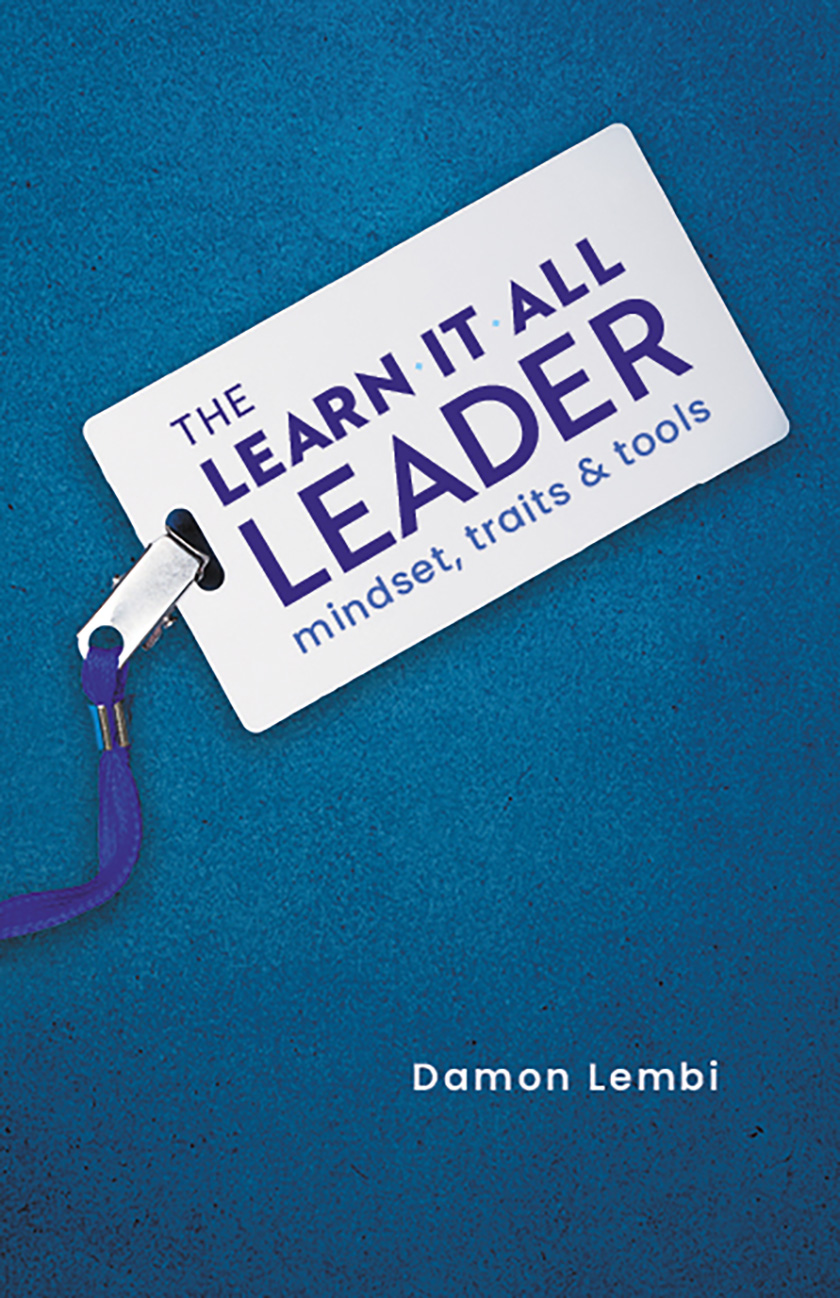
[0:00:49] HAB: Too often, the bottom line in business is valued more than the journey endured to get there. But the journey is where the real growth occurs. It's where lifelong learners reap the benefits of vital lessons. It's where students thrive. It's where leaders distinguish themselves from managers and progress is more valuable than achievement. Welcome to the Author Hour podcast. I'm your host Hussein Al-Baiaty, and I'm joined by author Damon Lembi, who's here to talk about his new book, The Learn-It-All Leader: Mindset, Traits & Tools. Let's flip through it. Hello, friends, and welcome back to Author Hour. I'm here with my friend, Damon today. Damon Lembi, I am super excited to have you on the show, man. The book, I got to be honest with you. Yes, man, the book is powerful, The Learn-It All-Leader. It's one of those things that I feel like resonated deeply with me, because it's not just about necessarily like the leadership, but it's really about these tools, and the things that you really mentioned. Man, I don't know. I just feel like I really want to get into the book. But before I do that, I got to share with our people a little bit about Damon. Where did Damon grow up? What was it like growing up where you were, that family dynamic? What led you on the path that you're on today?
[0:02:08] Damon Lembi: Great. Well, Hussein, thank you for having me today. My name, like you mentioned is Damon Lembi. I was born and raised in Burlingame, California, which is about 30 miles south of San Francisco Bay area. I was very fortunate to grow up with the two great parents, and Arthur and Linda Lembi. I'm the oldest of four children. Growing up, sports were really one of the main features of my life, and I have a core group of best friends, still to this day, 40 years later. My three best friends, David Chesnosky, Fred Wolfgramm, and Dan Toothman. We all played sports a lot, whatever season it was. If it was baseball season, we play baseball. If it was football, we played football. Anyways, throughout my childhood and through high school. By my sophomore year, I realized that I excelled most at baseball, and really decided if I was going to have a professional sports career, it was going to be in baseball. My senior year, near the end of my senior year, I was grateful to be drafted by the Atlanta Braves in the 13th round of the draft. I had my first really tough decision to make and that was, "Do I start on this journey as a minor leaguer at 17 years old or I go play college baseball at on a baseball scholarship at Pepperdine University. My parents are awesome. They said, "Hey, you know what. This is your decision. We'll support you in whatever you want to do." I ended up opting to go to Pepperdine University and play baseball there. It really had to do with the vision that our coach, Annie Lopez, who I talked about quite a bit in my book had for the team. I get to Pepperdine, I started off slow, I struggled, end up getting hurt. At the end of the year, I made the decision to leave Pepperdine and transfer out. It was a tough year for me. I ended up at, eventually, at Arizona State University to play baseball there. I had a great two years. I was really excited about an opportunity to continue on, on that dream to be a professional baseball player. At the end of my senior year, I didn't get drafted. At that point, my baseball career pretty much came to – I decided not to pursue it anymore and kind of came to an end. Always played baseball my entire life, I didn't have any professional work experience. I was very lucky to come from a family, a large real estate family in San Francisco, and I had some options. I can get into real estate, or go work at one of our hotels, or even at my dad, in his newest invention was this computer training company called Learnit. It was very small and I decided in June of '95 to start there as a receptionist, and here I am 28 years later. My book is really about the journey from beginning of that here. That’s a little background.
[0:05:03] HAB: Yes. Wow, man. I love that. Thank you so much for just kind of giving us such a sort of rich and contextualize sections of your life. I just appreciate that because I feel like when we write our books, they're always connected to some deeper meaning. For me, I like to share these stories because a lot of that meaning derives from our youthfulness, and the things, and the resilience, and the things that we face. I appreciate that. Man, I got to ask you a little bit about your sort of baseball journey, especially post. It's weird, because I'm sure there was like a grieving process. There's a lot of times where young man, young athletes go – some of my friends were on their way to basketball and do amazing thing. Then, of course, it comes to an end, whether it's an injury or whatever. What was that coping like for you? What was that grieving process for you? Because I know it's different for a lot of people, but I know specifically, there are people that I know that in some ways, man, they're still struggling with that. What did you do? How did you sort of step into this new sort of career, and feel good about it after sort of a grieving process, or if there was one?
[0:06:16] Damon Lembi: Well, I think it's a great question. Yes, there's a grieving process, because when my season ended, I think it was 18 out of the 25 guys on our team did get drafted. Several of which who – I had a great career, I had a great year, so it was very disappointing to not have the opportunity to move on. But I kind of looked at it like, "Okay. This is the – you have to work with the constraints you have. This is time now to put this behind me, and move on, and get go all in on something else. Now, I remember going to see one of my best friends, Jacob Cruz play for the Giants against the Dodgers. Just going out on the stands, and seeing Jacob out there, I was very proud for him to be out there, but it hurt. It was my dream throughout my life to be out there and play for the San Francisco Giants or somebody. But it just came to an end, and it was time to move on. So I just kind of dove in 100% and focused on Learnit. It's kind of funny how things turn out because unless you make it to that major league level, in any sport, it's a rough pride. Sometimes things just happen for the best.
[0:07:34] HAB: Yes. Absolutely, man. I'm glad you shared that. Thank you for being sort of vulnerable because I feel like there are so many dreams that lay at that edge. There's a little bit of disappointment. But taking that energy and saying, "You know what? I'm going to still make the best out of what's to come because what's to come may be even better than what I thought would be." Then there's a level of transforming the mindset, which I feel like many great leaders apply in their lives. Because if you – I mean, I'm sure you have. I've studied quite a bit of remarkable people who had this moment of grieving, where it's a year, a couple years. Or in the case of Nelson Mandela, it was like 30 plus years in a jail cell. Imagine what you can and take it from there.
[0:08:19] Damon Lembi: Unbelievable story, yes.
[0:08:21] HAB: That's the beauty of learning from what we go through. Can you share a little bit about what happened next? I mean, so you dive in, you go all in, but you start as a receptionist at the very bottom, of course, like we all do with this Learnit program. Can you tell us a little bit about that and then kind of your phases going forward?
[0:08:38] Damon Lembi: Sure. I chose to Learnit because I was, like I said, I didn't have any work experience. I was nervous. I was nervous to get into it. I also didn't want to feel like I was – just because I was just fortunate to have a family where I could just start at the top, I wanted to earn my way in whatever I did. I also really wanted to contribute to this new venture that my dad had. I just went in there as humble as possible. I still say to this day that I've answered more phone calls than anybody at Learnit. Over the next couple of years, I taught classes, I did sales, and I just kind of tried to learn and absorb as much as I can. I got really into it, I was really, and still am to this day, really excited about it. I would say, about five years into it, the CEO at the time wasn't working out. Our board that we had were looking to replace the CEO. I went to my dad and I'm just like, "Hey. You know? I've answered the phones, I've taught classes, I brought in some of our largest deals. Why don't you give me the opportunity to run Learnit?" He's like, "You know what, kid? You got it." So here I am. That was right around the time where a lot of, you remember, a lot of us remember, it was a.com days and everything was going great. The joke was back then, all you needed was a fax machine for people to fax in orders. I thought, "Well, I'm like a genius. I'm great at this." Then, before you can even blink an eye, we went through 2001, and the 9/11, and everything in the bubble burst, and really had a tough ride for a couple of years, which was a great learning experience. We worked our way through it and here we are today still.
[0:10:31] HAB: That's remarkable, man. I mean, I think there's no way to develop a leader, other than put them through hard times. It's not that it’s something you wish on anybody. It's not that you want to put through somebody, but life happens. I think how we generate – I think from there, we react. I feel like, especially when we're young, and we're in leadership positions, for me, I was fortunate enough to start building a t-shirt business that I didn't even know I was building. I was just wanting to make some side money, in college. Then next thing you know, out of college, I was like, I had a team of five people. I was running this small company. I'm working with Nike. It's a lot, but it's also hard. What's cool is, you're kind of being put to the test almost daily to kind of push your edge a little bit, see how comfortable you can get. I know, with operating a business, and running especially a family business, there's so many dynamics. I feel like those dynamics are actually what helped create the attributes to that leader, and what they ended up leading from. I think, you talked about this in your book, it's really the learning aspect of like, "You know what? I'm just going to lean into this idea that I don't really know everything, and that's okay." But leaning into the people around me, leaning into my ability to learn and show up. Those are the qualities that I feel like all remarkable leaders possess. But what do you think is the most important trait for a learn-it-all leader to possess?
[0:12:06] Damon Lembi: I really think that there's four key traits. Those four key traits are, number one, humility, integrity, learning agility, which you just mentioned a moment ago, which you can also call curiosity, and also resilience. Those are – if I had to package them up, those are the four traits that I think that are super important for anybody who's either wanting to get into being a leader, or who want to evolve as a leader.
[0:12:32] HAB: Yes, man, so powerful. You go into those sorts of attributes, I guess, in a way, that's really profound. I mean, you share some really powerful stories. But can you discuss a time when you either had a coach, or team member or just in your Learnit sort of growing phase of going through those tough times, especially when the .com bubble burst. What was that transition like, and through those challenges, what would be like the thing that you're like, "Man, that challenge really developed this part of me"? What would you point to?
[0:13:04] Damon Lembi: Right. Well, I'd say, as any small business owner, you have those nights where you're wondering how you're going to make payroll coming up in the week. Really, what I went through is, I just focused on, let's address what the situation is in front of us, and what do we need to do to get us through what we're at. One time, I'm looking at the great, the financial crisis of 2008, where we looked at it, and we said, "We've been through this already, once in 2001. What did we learn that we can do differently this time?" What we learned from the first time was, you have to make some tough decisions, and it's really best to do it all at once. What we did is we got together as a leadership team in early 2009. We said, in order for Learnit to survive, what's potentially coming up is, we're going to have to make some hard choices and reduce our payroll by about 25%. That's what we did. I met with each of the – probably 15 individuals one on one and made the cuts that we needed to, the layoffs that we needed to keep going, surviving. Then turned around to the team and said, "Hey, look. We put ourselves in a position to make it through this, so let's all get together and focus as a team" and we did. That was very challenging and tough thing to do. Also, something that I think I'm proud of, and other team members are proud of that we were able to survive that really difficult time.
[0:14:45] HAB: Man, that's so powerful. You talk about this again, in your book. I mean, I think the most profound times that I look up to leaders is when I was going through really difficult times. Like you said, making payroll, oh my God. The amount of stress, right? It's because it's not that the making the payroll, it's how others will feel? It's the sitting down with that person and saying, "Hey, we can't go on. We got to go our separate way, whatever it is to make those cuts, and maybe we'll be able to come back." You got to look at what you have to keep it going for those that are able to still work with you and then kind of navigating those really hard conversations. Of course, the learning curve that comes from that. What was the biggest learning curve coming out of those difficult times that you picked up and began to apply moving forward?
[0:15:35] Damon Lembi: Well, one thing, it goes back to – I'd say the traits I mentioned earlier, is humility. Is to not think that you should try to do this all on your own. It's okay to be vulnerable and it's okay to reach out too. I've been very fortunate to have a network of successful business leaders and coaches earlier in my sports career. Where I can reach out to them and say, "Here's our situation. I'm trying to be as transparent as possible. What can I do? Who should I turn to? What can I do to – for help? That's one of my biggest learning lessons, I would say, is don't feel like you have to go out this on your own. Take advantage of the resources you have, and don't be afraid to admit when you need or can use help.
[0:16:18] HAB: Yes. That's so amazing, man. I mean, I feel like for me, when I was at the bottom of like feeling just bad because I just cut to people. We're going through a hard time, we just lost a big client, right? Honestly, this was about six months after my father passed. I was just going through a really hard time.
[0:16:40] Damon Lembi: Definitely.
[0:16:40] HAB: Obviously, when you're emotional, it clouds your judgments, man. It clouds how you respond. I was grieving my father and I was saddened, but also, I had a lot of people relying on me, and all of these things. I just felt the pressure, dude. For me, I reached out to this one person, and I was listening to him a lot on a podcast, and it was all about the screenprinting industry. I just reached out and I'm like, "Dude –" I literally just was like, "My father passed, I'm struggling, I just had to let go of two people. How do I turn this ship around?" He was so kind. I didn't even think he would reply back. This is how powerful this was. I reached out to him on LinkedIn, and I was just like, "Hey, man. I'm just a big fan. I appreciate you. Your episodes have gotten me through a lot, and I've learned so much, but I'm struggling with this. What do you suggest I do?" That guy was like, "What's your phone number?" Just replied back within 10 minutes. He called me and was like, "Man, I'm just so sorry to hear about your father, and this and that."
[0:17:40] Damon Lembi: That's awesome.
[0:17:41] HAB: Was just like, "Let's talk about it, free. Don't worry about consultation, whatever. How can I help you?" Dude, I broke down for the mere fact that this person would just call me, a complete stranger. He didn't have to call me. He can just be like, "Go listen to this episode." But it was that human moment that I realized, wow, this is so powerful in the day that I feel great, and I'm on top of my game again, I want to be this person. Where I could just give back and possess this ability to connect with human beings. That's when I realized – he told me, "Just read this book, do X, Y, and Z," which actually helped me so much financially. It was one of those moments in life where I just felt so connected to humanity and sort of like my belief was brought back to me if you will. I totally feel like my dad had a role in that, personally.
[0:18:34] Damon Lembi: Oh, man. That's awesome.
[0:18:35] HAB: You know what I mean?
[0:18:35] Damon Lembi: Yes.
[0:18:36] HAB: But for me, it was just like, that deeply resonated in the sense that, okay. Now, when I feel great, I'm still going to reach out to people. And when I don't feel great, I'm going to reach out to people. So it just taught me to learn from others and really ask for help. Because man, I would say, cut my ego in half because I can't get rid of it, but I cut it in half that day.
[0:18:59] Damon Lembi: Yes. Your ego and your pride.
[0:19:01] HAB: Let's talk about that. Let's go there because that's where I was going. Let's talk about ego and pride and how they can get in the way of leadership.
[0:19:08] Damon Lembi: They absolutely can get in the way of leadership. That's why I kind of talk about the difference between the know it all and learn it all. Where the know is like, "Hey, I got this handled, I know what I'm doing." Where learn it all, I like to say as somebody – leaders are, they aren't born really, or they're complete. They're always kind of in the making. They're always willing to continue to learn and grow." This woman who worked for me, Laurel Taylor, who I'm close friends with, and now is a CEO of a student debt company, doing fabulous. Told me about, six months ago, "Hey. Sometimes you just have to put your pride aside and go for it, and get yourself out of your comfort zone. Ask the tough questions, be vulnerable.” That's what I think a lot of great leaders do, is they get out of their comfort zone and they are vulnerable and they're willing to learn. Kind of like you mentioned, it's amazing when you reach out to some of these really successful people, they want to share their knowledge and what they've learned. What they also want, I think is – this kind of like a highlight throughout my book is the importance of listening. If you're going to ask somebody for their advice or recommendations, you need to at least listen to what they're saying. It doesn't mean you have to always implement whatever it is they say or do, but listen to what they have to say. Then if you do, follow up back with them and say, "Hey, you know what? Thank you so and so for this. Here's what I did with it." Send them a little written note or a thank you because they love hearing back from you that you've took what they had to say seriously.
[0:20:46] HAB: Yes. There's nothing better than that, man. I feel like anytime someone's reached out to me, I appreciate it. You know what I'm saying? Because I'm in someone's thoughts, and the idea of being helpful to them. I take it very serious, and I consider it as a part of that one day's gift to keep giving back in any way that I can. I just feel like, you know, resharing that is so, so important. What specific technique or – I'm sorry, go ahead. You're going to say something else?
[0:21:15] Damon Lembi: Oh, no, I wasn't. But if I was going to say something, I would say that that's the stage I'm at in my career now, where is I love the opportunity to give back. you know, I want to be able to take the struggles and challenges, and the learnings I've had, and share them with maybe people who are just getting into the workforce or looking, getting into their first leadership role.
[0:21:38] HAB: Yes, man. I love your story a lot, man. Honestly, I can feel like I know exactly who to send your book to. I have four people in my mind. I know exactly who to send it to. Because they are – two of them have made the slow transition of getting out of sports, and that world, and trying to do something else, which is just such a powerful place to be. Because I feel like man, you still – you can still be an athlete and a remarkable leader. You can still be an athlete and just apply those techniques. But you know, how do you say that? It obviously has to come from a person like you, who's been through those kinds of things. I always tell people, like, our own personal experiences will resonate with a lot of people. But more specifically, the people we really want to help are the younger versions of ourselves because those are the ones that you really want to speak to. I feel like my book when I wrote it, this is like the book I wish I had when I was 19, 20, but I'm glad I'm able to be in a position where I can share that story from a vulnerable place. But tell me what specific techniques or practices that you sort of develop on a daily, or weekly, or monthly habit, if you will, that you believe have like had the greatest impact on your ability to lead and help grow the company?
[0:22:49] Damon Lembi: I believe that, especially for a small business, and this can be – I'm not talking about, has to be two or three people. I mean, Learnit, it's about 50 employees. It could be a couple hundred-person company. The leader should lead by example, not sit up in an ivory tower, and just point fingers, and give direction. Now, don't get me wrong. I think it's really important to delegate. But I also think you need to lead your team so that they feel like that they have somebody who's not afraid to roll up their sleeves and do the work. What I tried to do on a regular basis now, and this is something I've only gotten into in the last couple of years, is really plan out what are my goals for the year. I try to break down annual goals, maybe four or five annual goals. Then I tie them quarterly. Right down to the week, what are the three main things I'm going to focus on this week and tie it forward as well. Because as a leader, or as somebody who's – even an individual contributor, your time is precious. That's one thing you can't get back. You want to try and focus your attention on the most-high impact work. It's too easy. It doesn't mean that you're doing great, if you're just super busy, and you're working 12, 14-hour days. Hard work is super important, but you got to really focus. I mean, there's that great book, Eat the Frog, I think it's called. Where it's like, do the hard work, get that done. That's something that I highly recommend. It's a challenge because it's easy to get distracted, especially these days. But really focus on the high-impact work that's tied to your personal and company goals.
[0:24:29] HAB: Yes. Man, I love that so much. It reminds me of something my father always used to say to me, bless his soul. He used to say in Arabic, [Inaudible 0:24:38], which means, those who are tired from putting that really important thing up first, like working hard at that thing first. [Inaudible 0:24:49], which means, plays later. You play, like you get to play during the day, during the week, whatever. But just do the hard things early on, get that out of the way. That way you can enjoy it later.
[0:24:59] Damon Lembi: Absolutely.
[0:25:00] HAB: It always played in my ear, like all the time. Today, I have boxing setup. That's my play. But in the morning at 7 am, I was neck deep in writing my new book because that's the hardest thing.
[0:25:11] Damon Lembi: Good for you.
[0:25:12] HAB: You know what I mean? Yes, man. Just applying those little things, and I always feel it, right? When I'm off track a little bit, I'm like playing too much right now. I need to come back. Or I'm working too hard right now, I need to play. It's that balancing because it's an act that you constantly develop. That's really powerful man. That really resonates with me. Like I said, man, your book was really easy to really navigate and get pulled into, in the sense – not that it was like easily written. That's besides the fact. We'll talk about that in a minute. But easy to get into, meaning the stories that you set up really captivated my attention, especially because leadership is a huge component of my life. I like to just lead myself.
[0:25:50] Damon Lembi: Thank you.
[0:25:51] HAB: First and foremost, and my family. But man, you really set the foundation for some really cool thoughts and amazing experiences. But what was that journey like for you in writing a book, because it's no easy feat? What were the most enjoyable parts and not-so-enjoyable parts of writing your book?
[0:26:09] Damon Lembi: I think for someone like me, it was difficult to write this book. It took me close to three years.
[0:26:20] HAB: Happy birthday. Happy belated birthday.
[0:26:22] Damon Lembi: Yes, that was a while ago. But, thank you. It was difficult. The difficult part was that, is to write something in a linear fashion, story in a linear fashion, because I have plenty of thoughts, and ideas, and tips, and stories, especially stories. If somebody comes to me and says, "Hey, Damon. I got this challenge, leading the sales team, and here's my challenge." I have a great tip or story that I could share with them. But putting everything down in an organized fashion was very challenging for me. But besides that, it was also fun in the sense that it helped me reinforce some of my beliefs, as far as what's important to me as a leader, and to really get there. I think a lot of times, learning, it really takes practice to make things stick. It was great to kind of go through, and go through what was important to me or has been important to me as a leader, and to reinforce all that. Then most of all, it helped me reflect back on the journey I've had with all these great people over the years that I've worked with, either at Learnit, or family. Then also, you've mentioned your dad several times. I lost my dad in 2010 to cancer. He was my very best friend. I got to relive some of those times. Some of the good times, and some of the times that we argued. I wish whenever we're in a challenge these days, I wish I had him to turn to and say, "Dad, what should I do here?" But as far as writing the book, those are really –
[0:27:58] HAB: Yes, fundamentally, I love that man, because I just felt like, for me, writing a book was not only reliving those experiences, but it was almost like a window into those experiences. Because now, I don't really need to feel – I went through feeling the same things, but I can process them differently and make a much better higher-level judgment as to what was going on in that time. I can see things a little bit more clear, see the bigger picture. It really resonated with me and that, like you said, it really helped me understand my life, my journey, the decisions I made, or the things that were happening around me. To now be able to share and give back from a place of just utter love and respect. Because when I realized what I was going through and what other people were going through around me, it made me just that much more compassionate, more empathetic. I think that's what powerful books do and the journeys in which we take. Yes, man, three years, five years. For me, it took about, I would say, a lifetime right to be able to come to writing a book.
[0:29:04] Damon Lembi: Yes. That's true too. I mean, it took me 20-some-odd years to do it. But I agree with you, it's like, I look back at some of the decisions I made 10, 15 years ago. I'm like, "Man, what a dumb move that was, but you learn from it." When that opportunity comes up again, you learn to make better decisions. I just really wanted to put all my thoughts down in a book and just share with people that, "Hey, you know, what? I was able to start off, and here I am through hard work, and really wanting to learn." Others can do that too. You don't have to have a certain pedigree or whatever. I mean, if you put in the hard work and you build self-confidence in yourself, you kind of follow some of those traits, I think that you can be successful in whatever you want to do.
[0:29:53] HAB: Definitely, man. Absolutely. I love that so much, man. I mean, I can't agree with you more in so many different things. But after one of your readers puts down the book and having finished it, what do you hope they feel and get out of it?
[0:30:09] Damon Lembi: Great question. I hope what they get out of it is they see the importance of always wanting to continue on their journey, and that they're never at the finish line. They have to continue to keep learning and evolving. That they also realize that if you have impostor syndrome, and maybe you fear something, you can work your way through it. Just give it your best effort and go from there.
[0:30:35] HAB: Yes. Just keep showing up for yourself. Love that.
[0:30:38] Damon Lembi: I mean, that's what you said right there. Show up, go all in, and give it your best shot.
[0:30:43] HAB: I love that, Damon, you, my friend have taught me a lot today. You really helped me just kind of reflect back to beautiful times in my life. But you know, that's what your book does. It's a good reflection of how to show up, and just be the person that a lot of people around you actually believe that you can be. Stepping into that light with the help of everyone else.
[0:31:03] Damon Lembi: Absolutely.
[0:31:03] HAB: It's just not about leadership. It's about the community that you lean into, to help you develop as a leader. I really just want to say like how much you dynamically showed what a leader can be. That was really profound for me, having sitting with your book. Damon, it's been an absolute pleasure, man. It's just been really cool to hang out with you today.
[0:31:23] Damon Lembi: It's been a pleasure. I really appreciate it.
[0:31:25] HAB: Yes, absolutely. The book is called The Learn-It-All Leader: Mindset, Traits & Tools. Besides checking out the book, where can people find you, Damon?
[0:31:29] Damon Lembi: Well, you could find me on Amazon. You could also connect with me at Damon Lembi on LinkedIn, or go to our website, learnit.com, and you'll see bunch of the content and training that we provide there.
[0:31:49] HAB: Thank you all so much for joining us for this episode of Author Hour. You can find, The Learn-It-All Leader: Mindset, Traits & Tools right now on Amazon. For more Author Hour episodes, subscribe to this podcast on your favorite subscription service. Thanks for joining us. We'll see you next time. Same place, different author.
Want to Write Your Own Book?
Scribe has helped over 2,000 authors turn their expertise into published books.
Schedule a Free Consult