Kelly Smith: Episode 1185
Read the full transcript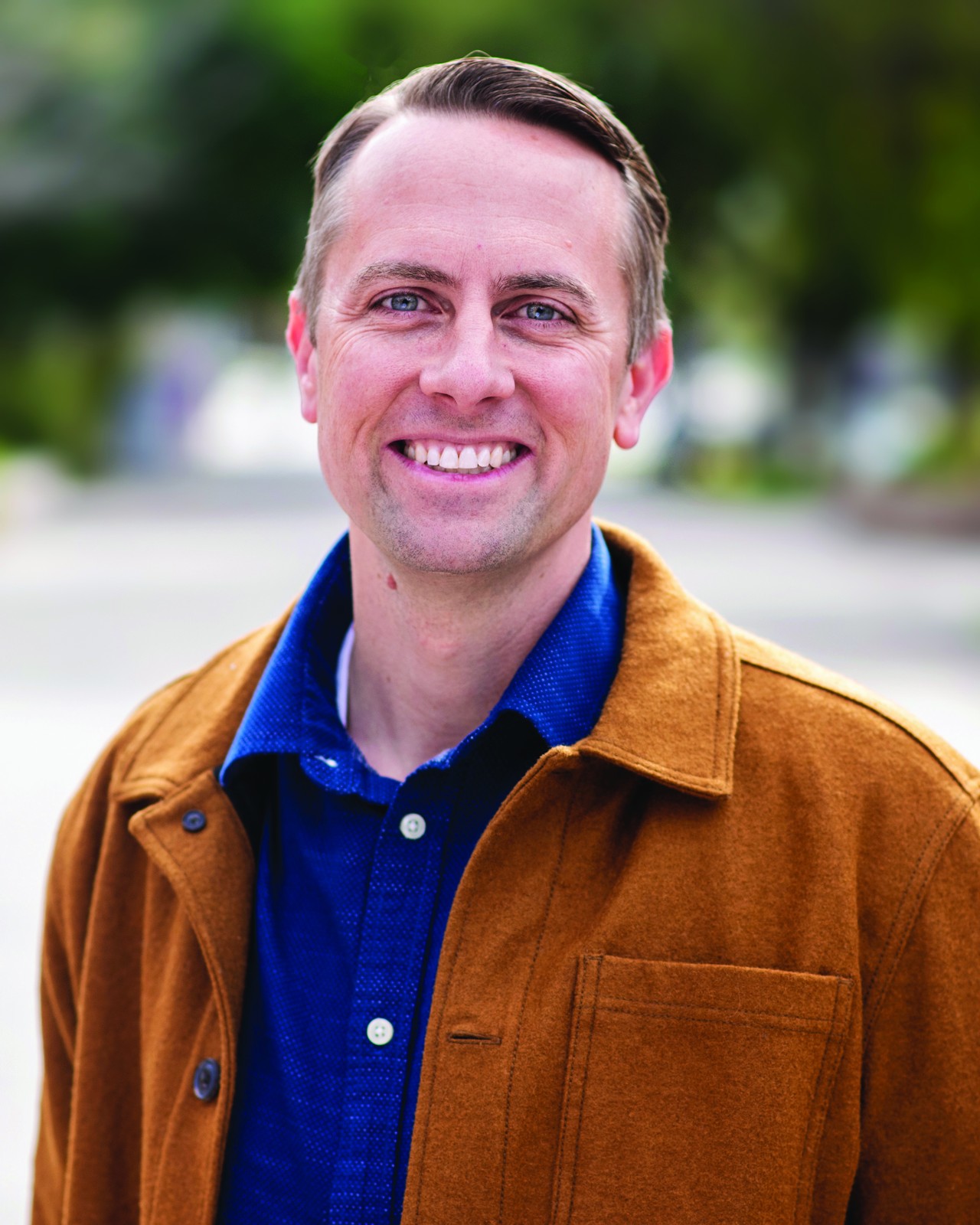
Kelly Smith
Kelly Smith’s childhood obsession with learning and building things led him to earn a master’s degree in nuclear fusion from the Massachusetts Institute of Technology, start a nonprofit and two companies, and develop multiple products at technology companies.
While volunteering at an after-school code club at the library, he saw firsthand what happens when young people really want to learn, which led him to start a microschool around his kitchen table in January 2018. He went on to create Prenda (prenda.com), an education company that helps people run microschools. Kelly is a founder and CEO, a husband and father of four, and an enthusiastic learner.
📚 Books by Kelly Smith

Transcript
[0:00:28] HA: How would things be different if everyone adopted learning as a way of life? Can intentional, messy, audacious learning unlock the power to live meaningfully and contribute to the world? Welcome to the Author Hour Podcast. I’m your host Hussein Al-Baiaty and I’m joined by author, Kelly Smith who is here to talk about his new book called A Fire to be Kindled: How a Generation of Empowered Learners Can Lead Meaningful Lives and Move Humanity Forward. Let’s get into it. Hello everyone and welcome back to Author Hour. Today, my guest, Kelly Smith has some amazing insights in his new book called, A Fire to be Kindled. Kelly, thank you so much for joining me today. Your book absolutely resonated with me so I’m going to get into it.
[0:01:21] KM: Thanks for having me Hussein, it’s good to be here.
[0:01:24] HA: Yeah man. So, every now and then, a book about education or learning or knowledge and all those kinds of things, come across my table and your book really resonated because I’m not from around these parts, man. I’m from the Middle East and I had to grow up in America and I was a refugee and so learning was – I always felt like I was on fire, you know what I mean? I had to absorb and adapt and adopt fairly quickly and my mind, I felt like, was always on fire when it came to that and your analogy about your book title, man, it just like hit me in the head because I just deeply resonated. I feel that way, I feel like there are so many amazing people who added to that fire and – but I’m excited for you to kind of walk us through that a little bit but before we get into the book and the goodness of it, I really want to give our audience a little bit of sort of background about you and sort of where you grew up perhaps, and what kind of got you into the world that you’re in today? Perhaps, somebody that inspired you to go on that path, or maybe an event that inspired you, I’d love to know.
[0:02:35] KM: Yeah, absolutely. Well, thanks again for letting me be here, it’s great to be able to talk about this. I think the thing people should know about me is pretty like middle America and I grew up in the Suburbs of Phoenix Arizona. I went to public school. I was one of those kids that school came relatively easily to me like I did pretty well. I have a brain that memorizes things pretty quickly and easily and so I found myself kind of getting this steady stream of positive reinforcement, good grades, and happy teachers and things like that, and over a period of time, I came to kind of believe these things about myself. Not necessarily – you know, what I look back on now was it wasn’t so much a fire for learning but it was a system that I understood and I knew that I was able to function well. So for me, the game became, putting the minimum amount of work in, getting the grades, and moving to the next stage, that’s ultimately what I was trying to do, and if you think it, in crude language, it’s, I was trying not to learn, you know? I was trying to do the minimum amount of learning possible, the minimum amount of work, risk, and effort that it would take. You know, I would turn in a paper, for example, written exactly to what I thought the teacher wanted to hear, with no original thought whatsoever and it worked. I was able to get the grades but as I look back on it, I don’t feel very proud of it now, it’s sort of like, what could it have been if I had been excited about learning? So that’s my path. I went to undergrad to study physics, ended up at MIT studying nuclear physics, working on fusion energy in a lab, taking these crazy hard science and math classes and at that point, I recognize like, “Oh, I don’t know this.” I’m not the smartest person anymore and this is hard and not only is this hard, I don’t know how to learn. So that was kind of a terrifying moment, an existential crisis for me.
[0:04:35] HA: Yeah, wow, that’s really powerful and I love that you sort of displayed this idea that you know, even though at a young person, like, as a young person and being a student, you know, let’s be honest, we’re kind of taught to kind of stay within those margins, right? We’re kind of taught to stay within those lines but it’s interesting because there is so much more there that could be tapped into. But it is the approach of course of our mentors, teachers, and all those kinds of things, and obviously later on, as you get more excited then to deep learning, I feel like, things start to shift. But real quickly, I want to talk about this idea of kind of how you started your book. You know, you talk about the – where the book title comes from is this amazing quote. But I’d love for you to share that story and why that resonated with you specifically and then we’ll sort of jump back into the career stuff.
[0:05:30] KM: Sure, yeah. I wish I could take credit for the title of the book. I mean, I ripped it off.
[0:05:35] HA: I mean, you should, it’s the title of your book now.
[0:05:37] KM: It is the title.
[0:05:38] HA: You take the credit.
[0:05:39] KM: But it’s definitely pulled from the – when thousands of years ago, the ancient Roman/Greek philosopher Plutarch who said, “The mind is not a vessel to be filled but a fire to be kindled.” So you kind of fast-forward my story I left them IT, I did a bunch of tech jobs, I started a company. I ended up becoming a learner. You know, really getting to this place where I felt like I can learn whatever I need and it will help me succeed at my job, it will help me create new jobs, create new opportunities even outside of work. I started finding a lot of the meaning and purpose that was happening in my life was tied to my ability to go out and learn things. And what happened was, I got to this place where I had some time extra in my life and I started teaching kids to code. It was a volunteer thing. Once a week, I would go to the public library, kids would show up and I would help them learn the basics of computer programming. Well, this became my little learning laboratory, and what I got to see in this room was, I got to see learning come alive, right? I’m watching kids who really wanted to learn, who were engaged, the stories were nuts, right? Parents were using code club, this after-school program as leverage to get their kids to do chores. They wanted so badly to be there and to tackle these hard cognitive challenges. Meanwhile, these same kids are disengaged at school, they’re frustrated, they feel like failures, some of them are getting in trouble, getting bad grades, and so I’m looking at this and saying, “Man, what is the – what’s the problem here? Like, why is this not working?” and so when I encountered this quote from ancient philosopher Plutarch, you know, I just quickly immediately recognized that there are these two competing metaphors. If you think of education as filling a vessel, like pouring water into a cup, which is how much, how so much of our system kind of operates today and many well-intentioned great people inside of that system are thinking in terms of like, “I’ve got this knowledge in my pitcher, let’s get it into that heads of these kids and we’ll you know, have them repeat back to us through assignments or multiple choice test.” That’s one model or paradigm of education but what Plutarch was saying and I think he was right, is that it’s much more like kindling a fire. And if you’ve ever created a fire out of nothing, you know, getting sparks and trying to catch these precious sparks and all of your dry kindling and you’re blowing air on it and trying to kind of hold it and get it started, it's a delicate operation and it’s so amazingly cool when it happens, right? When you're able to get to actual ignition. Now think, if my goal is to kindle fire and I pour water, like from the other metaphor, it’s like that’s the exact wrong thing to do. Don’t do that. That’s going to make it impossible and yet, that’s what’s happening for so many young people today, where I think the things that are done to them, all of the pressures and systems and structure is the equivalent of dumping water on them. And really discouraging them from asking a good question, caring about something, setting a goal, diving in a direction that they’re excited about and so you have these competing metaphors and that’s what I wanted to write the book about.
[0:08:51] HA: Right, man, I love that. It’s so powerful because, I mean, I just can’t agree with you more, especially because I feel like in a lot of ways I’ve experienced drenching the person with water like, when we were in that refugee camp, we had a school, which was like in portables and it was just – it was – the hands down, probably the worst place to “learn” because it was completely fear-driven. I was terrified. Because those teachers were allowed to hit you and I mean, punish. Yeah, it was so, it’s so traumatic and – but when you don’t know anything outside of that, you just think that that’s how school is. Well, guess what? I come to America and oh my God, right? I still had those internal fears about going to school but now they were different. They were based on social aspects as supposed to learning aspects. But I still had those traumatic experiences where you know, I would want to forget things at school because I wanted to forget them as soon as I left school, I saw kids being hit, I’ve been hit and so everything you learned was jam-packed around that traumatic experience and now you just want to forget it. Well, you’re not going to – learning is off the table now and so coming to America, I had to kind of unlearn that and relearn how to learn and that was a profound shift for me and I’d think it happened until like, honestly, my eighth-grade school teacher. She was just so amazing and saw so much in me and literally after school, she slowly start teaching me like, “Here’s how your memory potentially works so let’s work through that” and just getting me to understand, literally, how I learn. And that completely changed my mind because it is like you said, it’s like if you want to learn something, throughout your book, at least these are the things that I got, if you want to learn something, you got to go out and actually, it’s hard. You have to earn it to learn it, right?
[0:10:56] KM: It’s messy, it takes time.
[0:10:56] HA: Yeah, exactly, so this is where I was going to go with this, you talk a lot about, being intentional, being you know, messy and audacious. Can you give me some examples that you’ve sort of embraced in this type of learning to achieve the success that you have?
[0:11:13] KM: Yeah, I mean, Hussein, first of all, thanks for sharing your story. I mean, it’s an incredible story and where you’ve been. I mean, you can see in that so much of what I’m trying to talk about, right? Is that –
[0:11:24] HA: It resonates.
[0:11:26] KM: For sure. I mean, to learn something at all, requires kind of a mindset and an approach, and guess what? If a child is in a state of fear, we’ve got very strong, kind of biological responses that are going to step in and shut off the parts of our brain that are going to be open to taking risks and grinding through the hard stuff. It’s like my job is to put my head down and avoid getting hit by my teacher, in your case. In my case, it was more about getting a bad grade or getting in trouble, you know? I think, we’re in these modes too often of kind of fight or flight, like reptilian-mammalian, kind of brain modes and what we’re really talking about was learning as a loftier, bigger endeavor is saying, “Look, that’s going to require humans to step out of a safe place.” We now – many of us live in safety, no one’s physically – No, I’m speaking to somebody who has experienced, you know, being a refugee and some of these things like, they’re still, that still exists in the world but for many of my readers, it’s like, yeah, nobody’s chasing you down or trying to hurt your body. It’s like, you are safe but you don’t feel safe because of a combination of these things. One of the first things I point to and I’m glad you brought this up, your eighth-grade teacher is to do this, right? To really get – invite a child into that space of taking those risks and doing the hard messy work of learning, really needs connection. Like, connection as a psychological concept. This idea of having an adult that’s there, that knows me, that literally can see me and hear me and understand me, and that I believe, has my best intention at heart. So as you kind of – you put that together and really try to design around that. That one adult, that ability to provide that connection is so incredibly powerful, so incredibly foundational to kind of open that up for a young person in their quest to learn and I’ve been lucky enough to have that in various settings in my life. Some I might talk about in the book and some of them I don’t but I want that for every child, right? I want every child to have adults in their life that are completely there, safe, vested, and ready to kind of provide that stable foundation on which the messy and risk-taking kind of endeavor of learning can happen.
[0:13:52] HA: Hey man, that’s so powerful and you know honestly, I’m not going to lie, dude, I sort of teared up because as you were speaking because I just recall how valuable that teacher was to my life, you know what I mean? The more listen to you, the more I recognize how empowered I felt, which literally leads me to my next question and I’m saying this with pure authenticity. Because look, the way I want to explain this is that because of that empowered feeling is the reason why I was able to get to college and start a business and now get into publishing and become an artist. Bro, I feel like everything spawned from those moments of sitting across this remarkable teacher and, I love that and you talk about that and there are characteristics. But what would you say is the most important characteristics of an empowered learner? Can you go there a little bit with me?
[0:14:54] KM: Yeah, I love to do that First of all, I hope this teacher is listening and I hope anybody out there –
[0:15:00] HA: Oh, I’m sending her this.
[0:15:01] KM: Please do but honestly, I hope everybody that does the work of the day-to-day of this, the hard part about it is the return comes so much later, right? So you don’t know and Prenda, my company gets to work with lots of these people that are really making sacrifices and they’re making – it comes from a very pure place. They’re doing good for children and you don’t really know like, at the end of the day, that kid maybe today was rolling their eyes and falling asleep and having a bad attitude. It's like, I can’t see it but 10 years from now, they’re going to be sitting on somebody’s podcast talking about how I made a difference. So that’s a huge part and always has been in the education space but yeah, like what is it? Basically, what the book is about is an empowered learner. I mean, the two things that I say to be an empowered learner, it’s real simple. First is you have to make a decision. There’s agency involved. You have to make this choice that I’m going to be a learner and that sounds so trivial and obvious but if you look at our lives, so much of it is handed to us, especially nowadays, kids in Western society, I mean, we’ve got them programmed, right? Every single hour of their life is scheduled and we’re driving them around to these things and all of it is happening to them and so it kind of crowds out space for a human being making a choice but I am arguing that’s a huge critical part of this and then the second one is, once you’ve made that choice, you’ve got to practice. It’s an art, a skill, it’s a life, right? To be a learner, there’s a set of habits and daily routines and skills that you can acquire and the book goes into all of that. I hope people read it and take a look but so much of this is about a shift in the way of being to where once you have made that choice, I’m going to be a learner. Now, it’s like, “I’m going to get really good at that” and you meet these people that are just incredible learners. I have seen them in every field, right? Music and sports and math and business and all these different places and as you watch them do their thing it’s truly inspiring. I mean, this is what’s going to change the world.
[0:17:00] HA: Yeah, 100%. I can’t express to you how important education is to my parents who didn’t get through high school, in Iraq. I can’t express to you how my father reminded me damn near every day how extremely lucky I was that I was attending high school, just school in America, and then having the opportunity and the choice to go to a university and of course, these things were not afforded to him. So I always felt privileged and lucky and almost to a degree, this is how powerful learning is man, and how it was for me was like to a degree, I felt a sense of guilt for those who don’t have this opportunity, right? You know, my father’s biggest thing was –
[0:17:49] Kelly Smith: Yeah, absolutely.
[0:17:51] HA: — don’t feel the guilt, feel that you are fortunate to give it back because that’s the coolest thing about knowledge is that it multiplies. You can never get – and you mentioned this so beautifully, it is not pouring out your knowledge. The only thing you have to keep the fire going in that mind is just to feed it more knowledge and it expands and it gets bigger and the way it gets bigger is of course, sharing the knowledge, which is like the essence of knowledge itself. It is meant to be shared. Can we go there a little bit and how you sort of built your organization around this idea of empowered learning of course but how we perceived knowledge and how it needs to be shared? Yeah.
[0:18:39] Kelly Smith: Yeah, I mean, I think one of the interesting things that came out of the book and I must have understood this at some level because it is baked into the learning model that I helped craft and the company that I founded but as I really had the chance to write down the concepts and think this through, you can think of learning as this massive herculean individual thing, right? Me, myself, and I — am going to go out and acquire this knowledge and I’m going to use it to better myself and accomplish my goals and do these things and it is that. Learning is the key and I can hear you know, in the way you talk about it and your parents understood this too, in learning you are opening doors for yourself, and you are creating opportunities for yourself. You know, we talk to children about your future self, right? By putting work in as a young person, you are doing a favor to your future self, you know? You are setting them up for success and possibility. So with that individualistic nature is so critical but what’s interesting is it’s not enough, right? Learning is inherently collective, we live in a society where we’re connected to each other, we interact with each other. So much of learning is with and through and by other people. So seeing, you know this individual learner is going to see everyone around them pretty quickly as, “Well, these are people I can ask questions. These are people I can collaborate with. We can work together, we can co-create, we can work on things and have learning experiences together” and there’s just like you said in the metaphor of the fire, right? More people doesn’t put out the fire. That builds the fire stronger and brighter and it becomes more exciting. So, so much of what we did with Prenda and I had talked to a lot of people that were at the time, right? People homeschooling, people doing other things for education, whether it’s signing up your kids for a specific school or homeschooling and I was thinking, “Yeah, but I think there is something to kind of a personalized student-centered approach to education.” That’s what I put together for the first micro-school that I started in my house, which was in 2018, well before the pandemic made these things popular but seven kids around my kitchen table, and what I was amazed to see was the degree to which that became a collective endeavor. It wasn’t just individuals becoming learners, it was a group learning as a group but doing so in a way that is very collaborative, very engaging, and very dynamic. So instead of, “You guys sit there and listen while I tell you something” it was, “What are we going discuss today?” and one of the students would pull an article and give it to the other kids to read and create this educational moment that I was basically a facilitator, a supporter, and we call this role a learning guide at Prenda and so I was that guide. The kids were really driving their education. That was incredible to see, it opened my eyes to what’s really possible as we kind of rethink what could school be, and what could learning be all about.
[0:21:38] HA: Yeah, man, that’s so powerful, and the idea of like getting to participate in and make decisions about what you want to think about for the day and what you want to learn or the week and then how you can encourage your friends, which later leads to encouraging your colleagues, right? I mean, it goes hand-in-hand and I just can’t disconnect sort of my experience as a kid to where I am today and how learning fits in between. I was so compelled by everything that I was reading that I started speaking and that is one way and then I went out and wrote a book through Scribe, of course, right? Then now, I am building my YouTube channel and it’s one thing, I love this idea that you talked about is that one thing of knowledge, one base of knowledge, it’s a platform that you get to stand on while you build the next one and it is not to go up higher, it’s so that you can see further, right? See people way out further that you can help and reach out to and I love this idea with the micro-schools that you’ve been developing, sort of creates and fosters this concept on such an amazing scale through the Internet of course. Can you briefly talk to us a little bit about Prenda and not only developing it but where does this idea come from?
[0:23:06] Kelly Smith: Yeah, so I kind of hinted at this in parts of this conversation already. I was teaching that after-school coding program and I saw learning come to life. I saw firsthand fire is kindled, right? That you can see it in the eyes of the kids that would come week after week, they were doing really hard stuff. I saw some nine-year-olds, this was a great day for me because I had been talking to a lot of these kids and they were saying things like, “Oh, I hate math class, they get so hard and I am getting a bad grade.” Then one day I walked over to a little table where two nine-year-olds were sitting and they weren’t in the coding software. I could see that they weren’t working on their game that they had been really excited about, I was curious like, “What’s going on? Why aren’t you guys working on this?” Well, I looked closer and they were in Con Academy teaching themselves trigonometry. So this is math that’s three or four years ahead of where they were. Maybe six years ahead of where they were. They were teaching themselves sine and cosine because they want to be able to shoot a cannon ball from a pirate ship in the video game that they were designing and they wanted it to fly in the correct kind of parabolic trajectory so it looked cool in their game and all of a sudden, it was just like you could feel the warmth of the fire, right? That came from that. This is learning in its highest form because these were kids who were creating, who are synthesizing, who are dreaming this up and then they’re learning. They’re going out hungry for anything that will help them achieve them and you compare and contrast that with like, “Okay kids, today we’re going to learn about sine and cosine.” It’s like a complete opposite thing and it’s definitely the thing that’s going to. You know, I am long on humans. I guess Hussein, I’ll just say I believe that humans are the resource on the planet that can really take us forward. Our brains are capable of so much more than we currently – and we stop ourselves, right? There are a lot of things getting in the way but what I’m obsessed with and then I saw this during code club, I’m obsessed with helping kids get to that point where the fire is lit. So that was the idea and when I started that initial micro-school in my house, that’s what happened. I saw it for seven kids, one of them was my own son and then in the next year, more kids and pretty soon other people are doing it here in Arizona and that spread to the other parts of the United States and even beyond. It’s been really exciting to just see people step up in a collective learning endeavor, right? What a micro-school can be, we can create our learning environment together, we can make it a place where kids make that choice and practice becoming awesome lifelong empowered learners.
[0:25:42] HA: So powerful. I love that so much, man. You articulate it so well and I am grateful that you are doing this kind of work because it is extremely important and gives us more options to look at things a little bit differently. Can you tell me a little bit about it — because I know writing a book is no easy feat. Can you tell me about your experience and that journey of writing a book and what you learned from that?
[0:26:03] Kelly Smith: Yeah, it is no easy feat. I think I probably underestimated as I’m sure many authors do what it would actually take to do it.
[0:26:11] HA: Oh yeah.
[0:26:11] Kelly Smith: You know, I mentioned earlier kind of an insight that came from the process of writing. I understood myself and my work better because I force myself to sit down with the computer and write. Yeah, you know ultimately it was a question of what do I really believe and what I want to say and who do I want to say it to, and my message, you have heard this already, just continuous to be that we as a society, I mean, I think we give lip service to learning. We think of it maybe roughly synonymous with school, I’m saying no. It is so much bigger than that, it is so much more powerful than we realize. This is all about lighting fires and those fires are going to power the future of humanity. So this is, I am not kidding around or trying to be dramatic. It’s like if we’re going to solve the hard problems that face our species, which I believe we can but we need to be learners and tackle things together in a way that we’ve seen glimpses of but by and large, we’re missing in today. So as I picture parents out there kind of thinking about, “What do I want for my child?” I think the days of, “Well, I want them to get a perfect transcript and get into Harvard” like, for some people that’s what they want but I think more people are asking the question of like, “Well, so for what? What is it for? Why do I care about learning and education and what do I really want for my children?” I think we see humans as multidimensional, each one is different. There are so many versions of genius and intelligence and you see this in your child to try to impose kind of a one-dimensional system on that, it just doesn’t make sense anymore and I think that’s what really what I am about with the business and the effort around Prenda but that is what I am trying to do with the book is just open people’s eyes, get them thinking and asking these questions.
[0:28:00] HA: Yeah, so powerful man, I love that. So when your reader puts down the book and finishes it up and now is feeling good and all those kinds of things but what’s the emotion that you hope to evoke that they walk away with after having read your book?
[0:28:14] Kelly Smith: Yeah, it’s a great question because I think there is a sense of inspiration or excitement in it. I think there is also going to be just full honesty to somebody considering this book, there is going to be a sense of like overwhelm maybe, like, “Well, this feels – it feels big, it feels lofty.” Our brains are working against us in this quest to become empowered learners. It’s just all too easy to get distracted or to limit ourselves with false narratives and beliefs. So you’re going to feel all of that but I guess what I want is to give you something to hang on to that says, “Look, there is this better way, this better approach toward learning that will be the difference in your life and you are totally capable of it. As a human being, you can do this.” So that’s kind of number one is inviting individuals to kind of step up to that empowered learner goal, understanding that it is not going to be just this easy snap of the fingers. Then the other thing is to be collective about it, right? Engage with your community, I hope you’ll talk to others and we’re building a kindled collective, a group that basically people who believe these things about learning can come together and support each other and join and so I want you to be excited to take action and confident in the sense that you are not alone in this, that you are capable along with many, many others as we kind of step up and shape not only our own lives but together kind of shape what the world is going to be.
[0:29:43] HA: So powerful and spoken like not only a learner but definitely an educator and a person who obviously sees the world in such a beautiful light. Your book deeply resonated with me Kelly, so I am so grateful that it’s out and I can’t wait to share it with so many of my teachers because I fall into that space of I love speaking to the youth as well, high schools, colleges about my experience and what opportunities are that lay before them. Your book really triggered some of those really inspirational moments I’ve had in my life and reminded me honestly just how lucky I truly am. So thank you for putting pen to paper and going through the hardships of bringing all this knowledge together and serving me such a good cup of wisdom, I really appreciate that. So it’s been an absolute pleasure having you on the show, my friend. I know this book is going to create such a huge ripple and impact in our world, so again, I am grateful for that. Your experiences and of course your stories are profound and I know I found them great and I know the audience did too. The book is titled, A Fire to be Kindled: How a Generation of Empowered Learners Can Lead Meaningful Lives and Move Humanity Forward. So besides checking out the book, where can people find you, my friend?
[0:31:04] Kelly Smith: Prenda.com is probably the easiest place and you’ll be able to see some information about this Kindled Collective that we’re talking about, this community that really is much larger than a single company. It is about these ideas in practice.
[0:31:16] HA: I love that. Kelly, thank you so, so much. Congratulations again.
[0:31:20] Kelly Smith: Thanks.
[0:31:22] HA: Thank you all so much for joining us for this episode of Author Hour. You can find Kelly’s book called, A Fire to be Kindled: How a Generation of Empowered Learners Can Lead Meaningful Lives and Move Humanity Forward, right now on Amazon. For more Author Hour episodes, subscribe to this podcast on your favorite subscription service. Thanks for joining us, we’ll see you next time. Same place, different author.
Want to Write Your Own Book?
Scribe has helped over 2,000 authors turn their expertise into published books.
Schedule a Free Consult