Lou Bergholz: Vital Connections
Read the full transcript
Lou Bergholz
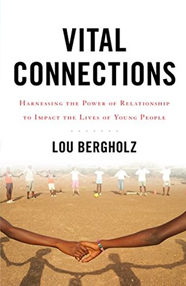
Lou Bergholz is the founder and managing partner of Edgework Consulting, a Boston-based firm he started in 2001 to design interventions for some of the world's most challenged children and youth. He has helped build and implement programs across four continents, addressing mental health and trauma, violence reduction, HIV prevention, and gender-based violence, and he has spent more than a decade at the leading edge of the sports-based youth development movement with organizations including Up2Us Sports, Grassroot Soccer, UNICEF, and Mercy Corps. In Vital Connections, he draws on decades of work with young people from Boston to Zimbabwe to show how caring adult relationships hold the key to helping them navigate the journey to adulthood.
📚 Books by Lou Bergholz
Transcript
[0:00:28] Charlie Hoehn: You’re listening to Author Hour, enlightening conversations about books with the authors who wrote them. I’m Charlie Hoehn. Today’s episode is with Lou Bergholz, author of Vital Connections. Young people around the world face challenges that prevent them from reaching their full potential and over the past few decades, Lou has worked for children and adolescents from Boston to Zimbabwe and he found that the caring adult relationship is the key to supporting them as they navigate their journey to adulthood. More than games and activities, young people everywhere need vital connections. In this episode, Lou offers his most powerful techniques and heartwarming stories to help you reach out and positively impact young people’s lives. These tools will help you whether you’re a parent or a youth worker to help young people truly believe that they can succeed. Whether you’re a counselor, a teacher, a coach or a parent, this episode is for you. Now, here is our conversation with Lou Bergholz. It was the beginning of 2005 and the year before, the summer before that, I was working in Thailand, building and kind of constructing the design for - the program design for this unique camp for children infected and affected by HIV. It’s a very powerful experience, we were planning to go back and do more of that work the next year and the day after Christmas 2004 is when the tsunami happens, that affected the huge parts of southeast Asia, including Thailand. Just after the new year, all of our work reshuffled and turned towards this crisis and kind of post emergency relief work that we were not equipped to do the physical relief work but we’re invited to come back and work with a number of organizations that we’re working with children and adolescents who were now in this state of a lot of shock. A lot of visible and invisible trauma and I had to reorganize and kind of play with what could we do that was useful and I began some research before on the most impactful ways, the shape and influence the life of children and adolescence and hadn’t really come together and the urgency of this need, it really pushed me to go a little deeper. I felt that I couldn’t show up in the midst of this post disaster work and just kind of bring something that I had done before. It needed to be deeper and better and that was where – I already seen this research before but that was where this concept of the impact of relationship on the lives of young people surfaced for me and kind of the light was shown on it. It was very powerful, I didn’t know what to do with it at first because I was a program guy, I was an activities guy, I thought games and activities and curriculum was the way to move everybody forward and I was tuned in a little bit to culture in the way that program and local culture will shape a behavior. But this relationship piece was not in my DNA, it’s not that I wasn’t relational but I kind of lived and breathed activities and I was the games guy. Yet, all the research was saying it has to be relationships. Relationships are protective relationships influence behavior. I started this kind of quest to figure out, if that’s the what, then how do you do it? As that happened and as we went back and started working workshops for these youth facing organizations, the beginning of Vital Connections started to make sense to me and started to kind of become something I could teach and train to but how it happened was that I actually looked back probably seven, eight years and some of these work I had done before and some of the things I didn’t understand about certain organizations, I had worked with who were more relational than I understood, started to make sense. And I kind of reflected on some of the techniques and skills and things I’d seen that were a little bit foreign to me and they all mapped to this intersection of where relationship influences and shapes behavior. By the time I came out of this work in Thailand and continued other work with different organizations around the world who were working with youth. I had to always put this piece around relationship in the center of all the work. It solidified and organized for me this really committed, that’s going to sound a little extreme, but this quest to unpack this relationship piece because all the research just kept saying again and again, it’s the caring adult relationship. You interview adults who really struggled when they were children and every one of them says, somebody made a difference in my life. It wasn’t always clear how they did but it was incredibly clear that they did. And I haven’t been able to stop looking at it since. I feel really excited and it’s been fun and meaningful to try to put the how with the what. Did you have a particular moment when you were doing that work that you personally realized the impact that adults can have on young people?
[0:06:02] Lou Bergholz: Yes, it’s actually the opening story and the introduction to the book. Would you like me to share it?
[0:06:09] Charlie Hoehn: I would love it, yeah.
[0:06:12] Lou Bergholz: I will not read the book because that’s not the point here, right? I told the story hundreds of times because it’s one of the most impactful moments of youth development I’ve ever been a part of in my entire life and you know, it lasted about 25 minutes. When we were at this camp in Thailand in 2004, we were there, my colleague Jules and I were there to support an existing program, the staff there had all done camps before, they were very good at it, they ran a very tight schedule, they had great games and activities, there was education, there was social-emotional skills happening. We were there to try to just make it a little bit better if we could. Every night, at the end of a long day of programming, the staff would kind of huddle up and plan the next day and refine the design for the activities and it took – these meetings lasted an hour, 90 minutes, two hours and we were there with very little language, actually, no Thai and a translator who was slightly less skilled than he should have been and we’d sit there and try to piece together what they said and interject where we could and eventually just did a lot of observing. We were in this fascinating location in the middle of the King’s Forest in Northern Thailand, north of Chiang Mai and I think it was really an old army barracks or army training area actually and they had this open dirt field and you could picture all these soldiers training there in the hot, kind of, Thai summer. It had this very stark, cement barracks that has this kind of open areas underneath the sleeping quarters, there’s all these kind of grey, unfinished cement, it had these kind of traditional in a very old school bathrooms nearby. And that was it, we packed in 50 kids, 25 girls, 25 boys and every night they would march up these stairs and they would 25 kids on one side, boys would roll in to this one long giant room that had this sheet of plywood, off the ground about a foot or two and they would setup their sleeping mats and they would go to sleep and that was it. 25 boys on one side, 25 girls on the other. We were downstairs going on and on, planning these sort of great camp days. As the week went on, it felt like there was something missing from the equation each night and I’d watch these kids go up and some of the staff would walk up with them but they would turn around and come right back down after they all got in the room and huddle up and do these big, long planning meetings. I just kept wondering, why wasn’t one of us up there? First, for supervision but also because it’s bed time. Then one night, this one staff member who actually happened from Norway, she was a young woman, her name was Karin who I don’t know how she ended up in Thailand but she had been there for a couple of years, she spoke very good Thai. She just got up and walked out of the meeting and she ran up he stairs to the girl’s side, opened the door and walked in. Jules and I couldn’t resist, we had to sort of follow her because she literally just walked out of the meeting. By the time we got to the top of the stairs and poked our head into the room, she was sitting at the edge of this wooden bed area and in some kind of conversation with one of the girls. That lasted about a minute and then she’d sit with the next girl and the next girl and the next girl. 25 girls, it lasted probably about 25 minutes and then she walked out. We were standing right outside the door so we took her by surprise a little bit and I asked her, “What were you doing? She said, I was just doing for these girls what my mom used to do for me before I went to bed.” She said, “I sit with the first girl, I tell her, it’s been a long day, it’s the end of the day, sometimes going to bed can be a little lonely and scary or far from where you live. What really helps is to have a good dream so we want to get you ready to have a great dream. To do that though, you have to kind of think of yourself like a package so we’re going to mail you off to your place you want to dream. First, we have to wrap you up,” and so then she would take the blanket and these girls, even that was very hot, they were all wrapped up under these brick blankets, you know? You could argue probably because they’re far from home, it’s a little scary when you’re scared and lonely, you huddle up with what you have. She would take her hands and tuck the blanket under the sides, she would push it up over their shoulder and she would say, “Now you’re wrapped up, the package is all ready to go, where do you want to go?” She would ask, you know, “You want to go to the community where you lived, do you want to go back to school, do you want to visit somebody you don‘t get to see that often? Do you want to come to camp the next day, what do you want to do? Where do you want to go?” They would give the answer and for each girl, she would take a finger and sort of imaginarily she would just draw and write the address right on the top of their blanket, maybe on their shoulder or on their chest. She would say, “You’re wrapped up, you got an address but you know you can’t travel without stamps. How many stamps do you need to travel?” Some girls would say one, or two, some other girls who knew what was coming next would say 10 or 12 and for each stamp, she would give them a kiss on the forehead. And when she was done, she would say, “Now you’re ready to go, we’ve got you wrapped up, we got your address and your stamps so now you get to dream. Close your eyes and think about where you want to go. Hopefully you’ll be there and when you wake up in the morning, we’ll get to have another great day at camp.” She would do that 25 times for each girl and that was it, it was just this profound moment where she saw that, I think no matter what the day was like, in camp, no matter how busy you were, no matter how much fun you have, one of the loneliest, hardest parts of the day for many people, children and adults is bed time. When all the stimulation goes away, when the lights are off, when it’s just you in the dark with your thoughts and for these kids, far from home, many of them aware of and living with the effects of an illness, many of them orphans, that’s the moment that actually mattered most. She figured it out, she got there, had just the right time and I would argue probably, it was the most important one minute of that entire day for each of those girls.
[0:12:48] Charlie Hoehn: Wow, I ‘m going to give the listeners a few seconds to grab a Kleenex and dab their tears and I’m sure my wife is going to listen to this one and she will definitely be crying. That is such a heartwarming, beautiful story and I’m so glad I asked you that on almost a whim. I think you could have almost started the podcast there, that’s just incredible.
[0:13:14] Lou Bergholz: It’s one of the most special things of my career has been trying to pay attention to these moments. There’s a lot of great moments when people get to work and care for young people and then there’s this other moments that something special happens and that was one of them and then inside it is this thing. Whether it’s a technique or a skill or just an awareness that I think, I feel like my job is to try to pull that out and transfer it to other people, whether it’s actually tucking in your kids that way or thinking about the moments that we need each other most and trying to pass that on.
[0:13:53] Charlie Hoehn: Your book, Vital Connections is divided into three parts. Now, the first part is ‘Time and Story’. Making time at the right time and knowing their story is what we just talked about, does that fall into part one or is there a lot more to that?
[0:14:15] Lou Bergholz: Yes, I think it’s probably example of both. To make time at the right time is an - overlaps with knowing their story because the better you know, the young person, the more you can appreciate and understand where and when they need you most. But in its essence, that example, that story is the gateway into making time at the right time because what I’ve seen a lot is that – I’ve been the part of this as well is that we spend a lot of time planning and programming to fill up activity time in someone’s – a young person’s day and we forget that possibly some other piece of time, an informal time may matter more. In that story is kind of the quintessential example of that and that you can spend all day being busy and playing games and in the end, it can call get erased if a child goes to bed lonely, scared, kind of feeling alone.
[0:15:09] Charlie Hoehn: You know Lou, this really sounds like my phrasing might be a little off but it sounds like instead of coming with your own agenda as a parent or a youth worker or an educator or – instead of coming with your own agenda, listen, pay attention to what the kids are experiencing moment to moment. Stop being so concerned with what you want to accomplish and actually, pay attention to their needs.
[0:15:41] Lou Bergholz: It is, one of my hopes, there’s not a direct youth voice in the book, there’s not stories from young people but everything in the book comes from those interactions and from - I think a little more listening to what young people need and also trying to reimagine as you say, I think kind of reposition ourselves as looking at the young person in our life or young people – truly, from the inside out, from what they actually need. There was somebody who just was writing something about the book and wrote as a parent and was saying, “Know their story? Of course I know their story, I know my child’s story,” and they did a double take and thought about it and their second reaction was, well, “I know my story about my child but do I actually know their story about their life?” That’s the distinction I’m trying to make in the book is with each of these vital connections is do we really understand from their perspective how they experienced the world because if we do, we might actually have more impact, more influence and provide more care.
[0:16:50] Charlie Hoehn: How do we better understand it?
[0:16:52] Lou Bergholz: We have the same tools for adults that we have for young people which is to spend time in different activities, to be really good observers. I think, to ask better questions and the piece that we often I think gloss over, although we think we’re doing well, is much deeper and more empathetic and sympathetic listening. Where we spend more time with our ears kind of tuned in than with our voice. So much of what happens unfortunately with young people, whether it’s a child to a parent or a care giver or it’s a participant in a program or a student in a school is there’s so much directing and instructing and corralling I think that happens around behavior and learning that is not relational, it’s really just moving a person through their day and I think a lot of young people unfortunately bounce off of adults all the time because of that and they don’t really get that connection. In that connection is the place to, in a way, have more impact.
[0:18:00] Charlie Hoehn: Author Hour is sponsored by Book in a Box. For anyone who has a great idea for a book but doesn’t have the time or patience to sit down and type it out, Book in a Box has created a new way to help you painlessly publish your book. Instead of sitting at a computer and typing for a year, hoping everything works out, Book in a Box takes you through a structured interview process that gets your ideas out of your head and into a book in just a few months. To learn more, head over to bookinabox.com and fill out the form at the bottom of the page. Don’t let another year go by where you put off writing your book. What if skeptical parent or teacher is listening to this and they’re thinking, you know, “You got to guide kids, you got to have them follow your rules, you have to instill these traits that will help them become more successful adults. It’s not about listening to kids, it’s about teaching them.”
[0:19:04] Lou Bergholz: I don’t disagree. I come out of that I guess training and upbringing in my youth development work and their boundaries and structure and roles and teaching are essential. So when I think about and the work I do, I think there is three ways you shape and can influence young people. One is the programming and the curriculum and the rules and the structure. The second one is the culture which is the traditions and the ways you celebrate and create different symbols that represent positive things and for a young person in the community but again, the research would say this relationship piece is not just part of the equation but is maybe a bigger priority than we think. So what I would say is keep doing what you’re doing and make some small experiments because I think the hardest thing to tell anyone who is doing direct service work with young people is to do more because there is so much they are already doing with a lot of love and care and there isn’t more time of the day that doesn’t run the risk of burnout. So it has to fit into your reality. So a lot of what we talk about or what I talk about in the book is things that should be able to be integrated into work that is already been done and shouldn’t disrupt what you are already doing and then if you make this smart experiments then you gauge impact and see, “Maybe something I thought wouldn’t work might actually be more influential than I thought and allow me to maybe be a little less rigorous in the roles and the structure,” but you know, yeah –
[0:20:38] Charlie Hoehn: Right, I usually say this at the end but I’m curious now. What is one of your favorite experiments that they could test out?
[0:20:46] Lou Bergholz: I think one of my most favorite ones and I wish I could remember where I picked this up because I won’t claim to have invented all of the more specific techniques that are in the book. I think I am really good at curating them and then also seeing when things happen that there’s more to it than what you think and turning into something more practical. But there is this part of the believe the young person or believe they can succeed is chapter three. It is all about influencing and shaping efficacy and helping that young person see that they are better than they think and they can get, they can create more things in their life and be influential is the “how do you that” interview. And so essentially what happens is if you imagine a young person kind of who you work with or is in your care coming home from school and saying, “I got a B in math! I got a B in math!” And they are so excited and so our job is to praise them and support them. And tell them they’re incredible and congratulate them and say, “Keep it up! Keep going.” Because you know maybe they were getting straight Cs and now this B is a big deal and that’s good care giving. That’s good youth work but the better version of that which takes a little more time but actually creates a bigger outcome is to then say, “I am proud of you! That’s incredible, how did you do it?” And usually what happens is the young person does a double take, because they are not used to that being asked and they’ll say, “Excuse me?” and you’ll say, “No, no seriously how did you get the B this time because last time you got a C?” And you ask the question a few times, what you’ll get is this kind of self-discovery with the young person where they reflect. They say, “Well actually I studied before dinner because after dinner I am too tired.” Or “I asked one of my friends if they would teach me and do a little tutoring.” Or “I was reading a book. I decided to only read one chapter a week and not wait until the end to read it.” And there’s all these solution that’s living underneath their outward story of I did it that they could actually then use the next time they face a challenge like studying for a math test. And that if you do that question sometimes with other kids around, then everybody learns what this person did to succeed and they are actually more equipped to do it next time. I think we often underestimate how resourceful young people are and they often don’t know how resourceful they are because they are living in a world where adults sometimes just praise them and move on and how do you do that interview is really practical meaningful thing that when you do it, it changes the whole landscape of the conversation and the bonus is that young person sees in your actions that you care more because you are care enough to ask. Ask a second or third time and then you care enough to actually listen and play it back to them and be impressed with what they did. And then sometimes, you can turn the “how did you do that interview” into the next question which is, “Can you teach me how you did it?” Which flips the paradigm from the young person being taught to now the young person becoming the teacher.
[0:23:42] Charlie Hoehn: I love this. It’s treating kids as what they are capable of becoming, what they are going to be and so they become at it faster. And I’ve always found it odd how dismissive we are of children and their capabilities. I mean they are future versions of us. They are human beings, they are the most resourceful species on the planet. So I love this approach. I think it’s beautiful.
[0:24:12] Lou Bergholz: But I would say one thing that I think is – what you’re saying is important and it goes very deep and it actually gets deeper the more the young person that you’re working with or in your care struggles because we see behavior and we see misbehavior and we judge it. So you could have a young person that’s coming to your sports program as a coach and they are late day after day after day and you look at them and you think, “This young person can’t even get here. They are not qualified to be in my program. I am going to kick them out.” And when we get to know their story maybe you find out that they are the oldest person in their household in the afternoon because their single parent is working a second shift and before they get to practice, they need to navigate safely out of their community. They need to drop off their younger sibling at an after school care program and then they take two buses to get there. And yes, they are 10 minutes late and is that a skill set that is a deficit or might they be the most resourceful resilient kid in your program because look what it took to get there. They are doing more than we ever imagined.
[0:25:21] Charlie Hoehn: Yeah, my friend Azul Terronez, he has a great TEDX talk on this. It’s got a half a million views at this point where he was a teacher all over the world and he remembers this student who didn’t bring her homework in, it was late multiple times and he judged her initially and then she told him her story which was the electricity, the utilities in her family’s house had been shut down and she has been trying to do her homework by candle light and she wasn’t able to do it very well. So there’s all of these assumptions that we had and the ugly part of our nature that we jump to this conclusions and judge. And just, in the absence of information we come up with stories that fit our story rather than the actual story if that makes sense.
[0:26:19] Lou Bergholz: So your way of talking about is if there is one technique or kind of skill in this book that I think is probably the most profound after this idea of intervening when they need you most which I think is this thing we have to all keep in mind around being there in the darkest hour is this construct of the top story and the bottom story. It is one of these five vital conversations that are part of chapter four. To me, it changed my whole trajectory of working with young people when I uncovered what it was and basically, it’s what you just said. It’s that in every situation complicated specially situations, there is a top story that usually adults drive which is all the reasons you should have done something or should do something. “You should have finished your homework. You should not join a gang. You should stay in school. You should use a condom.” Like all of this stuff is the should and believe it or not, most young people know these answers and they actually are trying their hardest sometimes to do it. But the reality is, there is often the opposite which is, “Why don’t you?” And we never ask – well not never but we often don’t ask that question. And so the top story is the should and the bottom story is the reality and if you open up the bottom story, you discover what is really going on. You are living truly in the reality for that young person and what we found is that you actually can have more impact on their choices and their decision making when you can live in the bottom story because it’s their truth. It’s real but for many adults, that’s dark and that’s hard to go there and that’s a little scary because it is not just staying in school or use a condom. It’s “Let’s talk about why you don’t and what’s so hard about that.” And it is completely transformative with your relationship with that young person but it also allows you to have dramatically more impact sometimes by being willing to live there.
[0:28:14] Charlie Hoehn: Lou why do so many adults default to the “should-should-should,” and not really listening, not really offering that safety and security for kids. Is that because we’re following the model that we saw other adults instill in us? Is this something we naturally gravitate to?
[0:28:37] Lou Bergholz: I think generally yes. The shoulds are easy, the shoulds are safe, the shoulds for many adults allow you to avoid some of these things that we don’t want to see in our children that are tough choices they’d make and that they are not perfect and that they can be dangerous choice. Especially as they get older and there’s more consequences to some of these choices they make. And I think we sometimes forget that we often wrestle with those choices as well when we were that age. And didn’t always make the ‘should’ choice and yet still turned out okay and I think that is a big piece of it and really, for some of these topics it’s very difficult. If you just take the topic of sexual activity and relationships for decades and if you can take the US as just a local example, you know many decades maybe the history of the US but in the last 20, 30, 40 years even since I was a kid, the last 30 or 40 years, every generation of parents, many of them struggle with when to talk about sexuality. How to talk about it, how to talk about sexual activity and we are living young people on their own to learn from the next group of people, which is their peers. Which often results in misinformation and confusion and pressure and all of these and yet we desperately or most parents want our children, their children to make health seeking choices, protective choices and yet we struggle immensely with the ability to get inside their world and being in there is awkward and uncomfortable. And when you’re there, the biggest thing is the shoulds allow you to be black and white and right and wrong. When you go down to the bottom story, you have to be willing to embrace two things. One is these choices are complicated, they are not easy. They often are grey even ones that look black and white. And you’re acknowledging that it’s their choice to make and that in the end, you can’t be there when they’re out with their friends or with a partner making choices about whatever they’re going to do. And that I think is very, very challenging for many adults and all we can do is influence, we can’t mandate. You can give somebody detention, you can say, “Sorry I have to give detention,” you can ground them, you can say, “I’m not going to let you do this” or do that but in the end they still make those choices.
[0:31:04] Charlie Hoehn: Absolutely. The conclusion of your book, bring us to that part of the book. Tell us what the ultimate message is.
[0:31:15] Lou Bergholz: So I think there’s two stories that live at the end of the book that are somewhat interconnected but I think hopefully where we land, I try to land at the end and where I hope the reader ends up. One is that, this concept of - well, it comes back to the research in particular for me but it shows up in story form and hopefully in something that is readable which is that what we all hopefully are trying to do is foster a sense of resilience in young people. Not teach it, per se but support it because everybody I’ve ever met, if you’re on the planet walking around, you are resilient. The question is, is it enough to navigate what is in front of you. And that in the end, we can’t be there every moment of the day for a young person but they can take us with them and if they do that and they have - whether it’s the little voice on the shoulder that’s reminding them that they are cared for and they can do it, whether it’s a skill or a tool that they saw us do or we talked about with them or whether it’s just knowing that they are not alone and they have someone to call, that that is a deep, deep, deep source of resilience. And if you have that then whatever is in front of you, you may be more likely to navigate and that to me is what I found over and over again, wherever I was looking across this sort of two decades of work, is that people would talk about the protective factor is this caring adult relationship and that whatever that means to the young person that it is up to you to figure it out. I think the other piece is that we can only go so far in that care and protection but what we can do is and it is the story, the gardening story and this is a story that I came across in one of my experiences but it’s also a recent book that is written by Alison Gopnik called The Gardener and the Carpenter which is that this gardener kind of parenting and care is so rich. We can’t build the young person in our image because they are their own person but we can nurture them and care for them and support them into who they are supposed to be. And that is what they need from us. They need someone to be a partner and a protector but not try to make them into something but to give them room and give them that place to be heard and to be supported so that they can become their best version of their self.
[0:33:48] Charlie Hoehn: Yeah like you said, I love that gardening analogy of just giving the best possible soil or the best possible bed for them to grow into the best version of themselves. This message of Vital Connections is already taking root itself and your book hasn’t been out super long. I believe it is just only been a few weeks but you’ve already had some pretty high up people in education reach out to you, right?
[0:34:23] Lou Bergholz: It’s been wonderful. The education sector and some of the out of school sectors as well and then I think what’s very meaningful for me is it is starting to cross into the parenting aspect of this and so several people who are primarily parents and not working in youth development reading it and feeling like it’s a way to look at forming even better relationships with their children and being able to be even more for positive influence.
[0:34:50] Charlie Hoehn: You know I’ve got a nine month old daughter. This is going to be an interview that my wife and I will listen to numerous times and we’ll be revisiting your book. So this has been phenomenal. If you want to restate once more the challenge for the listeners that you gave the experiment, that maybe they could run this week with their kids that could improve their relationship with them.
[0:35:15] Lou Bergholz: So yeah, I offer the experiment down or over to the child level and I would say that there is a flip side to this as well. What I would say is hopefully people will read the whole book and then go back and pick one chapter and read it or skim it again or jump to the section about putting it into practice. And just live in that chapter for a while. The beauty of what I have uncovered with the vital connections is actually you don’t need to do all six of them all at once. And sometimes, just living in one of them has as much impact as it would be to try all of them. And pick a chapter that you think is important for the young person or the young people in your care and enjoy that for a while and see what the impact is and you don’t need to do them all at once, I should say. And the other piece I offer is think about the caring adults in your life. The people that made an impact for you as you tried to navigate childhood and adolescence. I think in the spirit of connecting on both sides of this, challenge yourself to reach out to one of them and let them know how and what they did. I think it is very important that connecting of certain dots and everybody that I know of has been shaped by other people as much as we’ve been shaped by knowledge or media or society. And to form that connection I think continues the thread from generation to generation. From parents to child to the next person in their life and it’s where the impact actually really starts to spread as well. It shouldn’t just be towards the next level of young person but we can also remind ourselves about who are the people that helped us get where we are.
[0:36:57] Charlie Hoehn: I love that. That maybe one of my favorite challenges that’s ever been given on this show. I hear all the time, write somebody a thank you note and I will try and do it to somebody present in my life. But I’ve rarely, I don’t think ever thought about writing somebody who helped shaped me when I was younger, so I love that. So this has been fantastic Lou, how can our listeners connect with you, follow you, do you do any speaking, who do you like to work with? That sort of thing.
[0:37:28] Lou Bergholz: I have a social media presence on the big three I guess or three of the big four, Facebook, LinkedIn and Twitter and they’re all versions of Lou Bergholz, the name. I have a website and it’s just loubergholz.com and the organization that I have founded back in 2001, Edge Work Consulting, and all the work that I get to do around this kind of filters through that. So you can also see some of the broader work that I get to be a part of including this work at edgeworkconsulting.com. We don’t have a schedule of events because much of the work we do is internal with certain organizations and people but keeping an eye on the social media will keep people up to speed on where I may be and travels around the world and if or when there’s things that we can invite people to come and attend.
[0:38:19] Charlie Hoehn: Beautiful. Thank you so much Lou.
[0:38:22] Lou Bergholz: Thank you, I really appreciate the time.
[0:38:25] Charlie Hoehn: Many thanks to Lou Bergholz for being on the show. You can buy his book, Vital Connections, on amazon.com. Thanks again for listening to Author Hour, enlightening conversations about book with the authors who wrote them. We’ll see you next time.
Want to Write Your Own Book?
Scribe has helped over 2,000 authors turn their expertise into published books.
Schedule a Free Consult