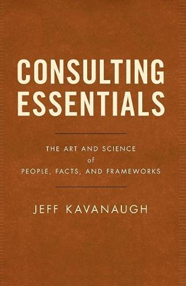
Jeff Kavanaugh: Consulting Essentials
Read the full transcript
Jeff Kavanaugh
NOTE: From top to bottom on the hardcover bio flap, the authors want things in this order:
the Corey Glickman headshot
Corey Glickman bio
Jeff Kavanaugh headshot
Jeff Kavanaugh bio
then the Knowledge Institute URL
[Corey Glickman headshot]
Corey Glickman is Vice President at Infosys and leads their sustainability and design business, delivering smart space initiatives for clients globally. Corey is a member of both the World Economic Forum Pioneer Cities group and the MIT Technology Review Board and is a faculty expert at Singularity University. The American Institute of Graphic Arts named Corey one of the one hundred most influential designers of the decade.
[Jeff Kavanaugh headshot]
Jeff Kavanaugh is Vice President and Head of the Infosys Knowledge Institute, the research and thought leadership arm of Infosys, a leading tech and consulting company. Jeff is an adjunct professor at the Jindal School of Management at the University of Texas at Dallas and author of the books The Live Enterprise and Consulting Essentials. Jeff has been published in Harvard Business Review and other leading business publications.
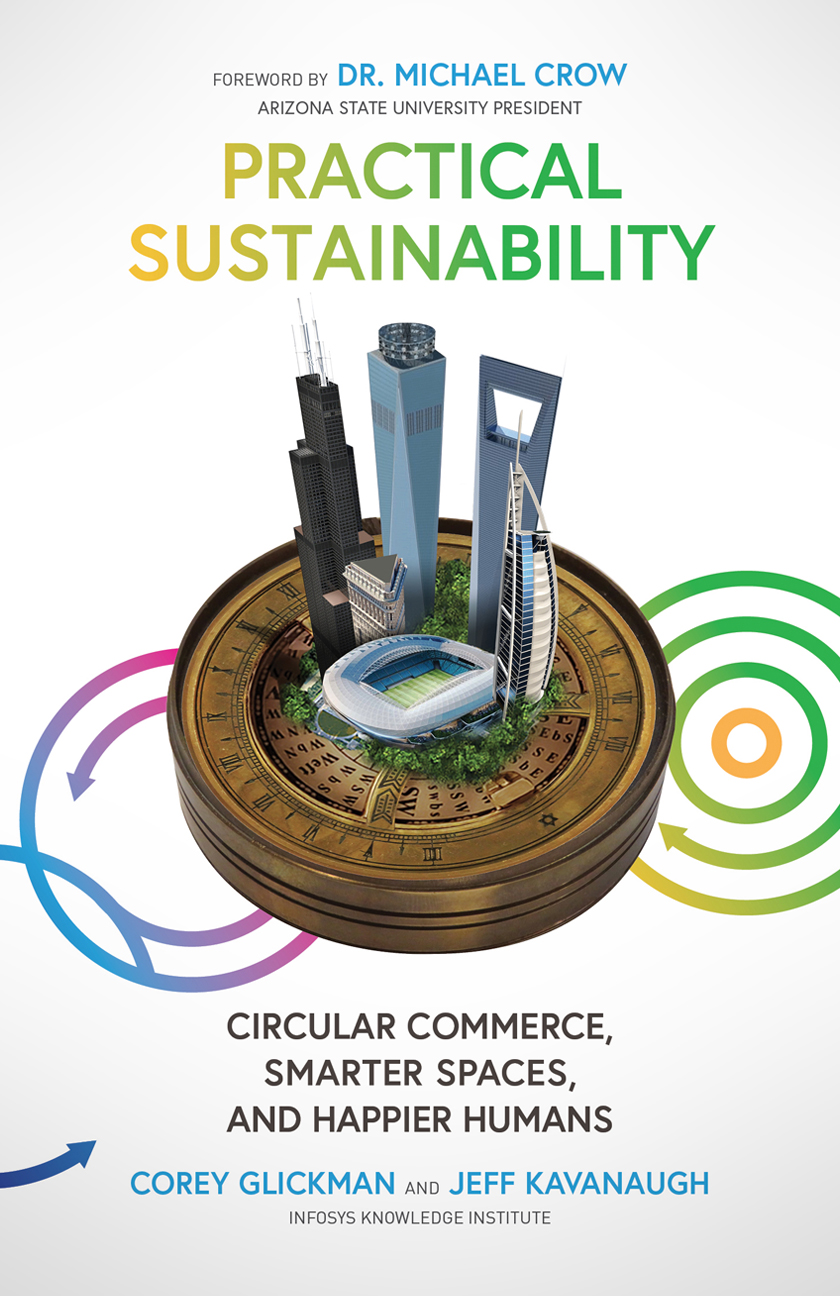
📚 Books by Jeff Kavanaugh
Transcript
[0:00:48] Charlie Hoehn: You’re listening to Author Hour, enlightening conversations about books with the authors who wrote them. I’m Charlie Hoehn. Today’s episode is with Jeff Kavanaugh, author of Consulting Essentials. How do you become a world class consultant? This is the question on the minds of thousands of young consultants as they graduate from the classrooms of the world’s top business school to the offices of top consulting firms. Yet, few of them have been formally trained on the concepts that elevate consultants to the top of their field. That’s where Jeff and his book come in. Drawing on his experience as a senior partner at multi-billion dollar consulting firm and his experience as an adjunct professor at the University of Texas and Dallas MBA program, Jeff shares the tools of the trade for young professionals to quickly scale the consulting learning curve. In this episode, Jeff distills the lessons into the key skills that separate the best from the best. Now, here is our conversation with Jeff Kavanaugh.
[0:02:11] Jeff Kavanaugh: Just a farm boy from Indiana, literally grew up on a farm and there weren’t lots of role models for this kind of work. For sports, for work, for religion, for anything else but not for this. It wasn’t really aware, went through engineering school, thought that was the path to go if you wanted to solve problems and be a good problem solver. It wasn’t until at a school, an industry, we’re starting to understand, there’s this other path of consulting of solving business problems, of looking at things a little bit differently, solving these grand challenges. And by that point, it was kind of too late to go back and decided, you know, if I can’t go back the classic way, go to the right college or at least in a college that has a lot of a business curriculum. Maybe go to the right strategy firm or consulting firm, as a first job at a school. Maybe I can just pick this up along the way. I think when I was at a manufacturing services company, I was working with a former partner from Peat Marwick, that was the predecessor to KPMG and to listen to him and describe what he did and how he did it and the way he thought and the way he solved problems, he worked with clients, even that were clients was a new word. It was fascinating. I think that was the moment that I was hooked. This is what I want to do and to figure out what a consultant is and what a consulting partner is and work backward and figure that out. That was the moment for me.
[0:03:38] Charlie Hoehn: Why were you hooked at that particular moment?
[0:03:42] Jeff Kavanaugh: Because it’s a way of solving business problems it’s a way of feeling like you’re giving of yourself to something in a professional setting. In other words, you’re serving someone else as a client, doctors have patients, business peoples it’s more of a client and it was solving a hard problem, it’s a mental challenge. You know, growing up, playing sports, competition was a big deal. Well, this is like a competition, you’re solving a challenging your problem, you’re doing it for a person for human being, a client, And, the stakes were big. Its’ like you’re playing in the playoffs, you know, if you're in sports. You know, it matters, it’s not just the day to day operational matter. Operations are important but still, I think the combination of those factors that it’s for another person, the fact that the stakes were pretty high and it was mentally challenging, it just reached me on a personal level.
[0:04:32] Charlie Hoehn: Some people struggle with really defining what consultants do and I know it varies but how do you define what you do day to day?
[0:04:43] Jeff Kavanaugh: In a phrase, we make clients more competitive, we help them connect with their customers better or we help them save money and to do that, we solve problems, we help them solve problems, they’re maybe having a challenge solving it themselves, maybe it’s through a fresh perspective, maybe we’ve seen it somewhere else which is great to relate something you seen over client A to client B. It’s also to use a framework, you know, mental models that roughly like a model and then you can apply them to a fresh situation and it gets you half the way there and you can then accelerate your problem solving. It’s also being able to not just solve problems but help people identify the right problems to solve much like a doctor if you go to a doctor, they don’t ask you what drugs you want or what’s the answer, they say, “Well, tell me your symptoms and I’ll diagnose it.” I think that’s the essence of being a good consultant is being someone who can diagnose and being applying what is worked elsewhere in a fresh way and solve a specific problem and make impact. Not just activity but deliver a result.
[0:05:49] Charlie Hoehn: I love it. Yeah, that makes sense. Now, you wrote Consulting Essentials. What was your big goal with this book? Did you write it because you saw other consultants that you wanted to help that didn’t know the basic principles of how to be a great consultant?
[0:06:07] Jeff Kavanaugh: You know, it started off like that, one of the heads of my company said, “Would you mind training the non-consultants? The technical people, in some of these consulting skills?” I started to do that and realized, this is a much bigger item, this is a much bigger picture here. It’s really any professional, anyone who wants to think better, communicate more effectively and take the laws of physics as applies to structured thinking and solve problems more effectively. Then it became more of a personal thing for me, you know? I wish I had this, I basically wrote this for a younger me. I wrote this for all the people who didn’t go to the right school or who went to a school that maybe is very technical or was just not an elite business school or someone who may not have had that relative or that teacher with that environment where they got exposed to this early on. The 99% of the population out there that can benefit either maybe late in high school but certainly in graduate school, college or as a junior professional. The funny thing is though, I’ve looked at tens of thousands of resumes and interviewed many people over the years actual letter, recruiting for campus recruiting for our firm in North America and they are even lots of folks that are in industry. Maybe after several years or thinking about either career changes or had to accelerate, they are also good candidates for this where structuring the thinking, being able to apply some of these tools that you normally see in a consulting firm into an industrial environment, that’s why I did it and in the end, my goal is to democratize, if you want to call it that, some of these consulting skills and learnability, how can people actually do the art of learning or the act of learning. Get it out there in the world as much as possible, because I think that society overall can benefit from being a little more fact based and a little less maybe gut feel oriented, especially in these times. That’s the reason I wrote it.
[0:07:59] Charlie Hoehn: Excellent. Jeff, who would you say of that group of professionals, is going to be the most urgently motivated to read it? Is it consultants who have just taken on a new project with a big client? Is it consultants really starting out? I know it fits a broad category but who would you say is going to benefit the most immediately from it?
[0:08:26] Jeff Kavanaugh: I think students in graduate school who are trying to finish out their graduate degree and this can be like a cap stone or pulling a lot of things together. I also think that professionals who are not too many years out of college could benefit from it. Even if they do get some training on the job, something is missing, in fact, I thought this was the case and a hypothesis it was. University of Texas, we conducted a big survey, 10,000 employers, 3,000 students and 500 career center leaders and interviewed them on what skills they thought were most important and also, the proficiency that students had and readiness to thrive in the workplace. While some of the skills were consistent on what the employers, as well as the students thought were important, like critical thinking, professionalism, creativity, communications, it’s amazing that the students had such a higher opinion of their abilities than the employers did. There’s a significant gap. I was writing for that gap basically. In fact, University of Texas had asked me - they were seeing that the employers were telling them that their students – their graduates were fantastic quantitatively but they couldn’t tell a story, they had a difficult time extracting the signal from the noise and being able to isolate the most important elements and communicate effectively. They said Jeff, would you develop a course for us on critical thinking? That’s where this really began because then the critical thinking and creative thinking, different types of communication, leadership data visualization, elements of automation and AI. These all came together as foundational skills that a professional consultant needs. That’s I think a group that can benefit the most from this.
[0:10:07] Charlie Hoehn: Walk me through what a typical graduate sounds like when they’re trying to tell a story and then tell me what a well told story sounds like by a professional consultant and have it obviously be the same story? Just to have that contrast because, like you said, you’re solving the gap, I want to know how wide this gap really is.
[0:10:32] Jeff Kavanaugh: All right, let’s deal a two or three elements, one is just the structured thinking, here is what a graduate might say or someone they think deductively, they think that’s a neat thing to do, it’s Sherlock Holmes, it’s very sequential. I saw a problem, I got information, I analyze this and it led to that. Analyze that it led to the next thing. That led me to this. It goes on for about 10 minutes and then this is the answer, if it’s a presentation, you’re on page 45 and a half and hopefully the audience is still with you, there are lots of formatting inconsistencies, you’ve been distracted, you're not quite sure, there’s a lot of other things going on. A professional discussion or professional presentation would be, this is the context, this is the complexity, the complication and this is the overarching question that emerged. Should we go into this market? Should we replace this equipment, should we hire this group of people? That question now has peaked your attention, you’ve established a context, you have a complicating factor and you have something grabbing your attention. Then you answer that, you literally give the answer immediately. Yes, hire these four people. Yes, replace the equipment. No, don’t buy that company. Then, you support it with three to five mutually exclusive collectively exhaustive sets of information or output. Because if any of those are challenged by your reader or you had faulty logic, you still have the others to support it. Then, if you have another point, you go on and on and on. Any one of those is modular, if your reader happens to – your listener happens to leave the room 10 minutes into your discussion, they already have the main points, you’ve said an hour’s worth and 10 minutes, if they’re intrigued, they go into more detail where needed. That is the essence of the difference.
[0:12:23] Charlie Hoehn: Beautifully stated. This is not to diminish or even say they’re the same but I have to study how to tell stories and how to communicate through video. Because I do a lot of video work and on YouTube, the way you describe that almost every great video that retains your attention is structured in the way that you talked about. Having the hook, basically giving them a front, like here is what we’re going to be discussing, here is how you’re going to benefit, so to speak, followed by the three points. Then summarizing. I loved how you put that, that’s super professional and very few graduate students, I can imagine are nailing that so in the book, you have an entire section on these foundational competencies. You also have written communication, frameworks and estimation, productivity and leadership. Of these foundational competencies. If you had to pick one Jeff, what would you say is the most valuable?
[0:13:25] Jeff Kavanaugh: It’s like asking which of your children do you love the most, right?
[0:13:27] Charlie Hoehn: I know.
[0:13:30] Jeff Kavanaugh: Let’s just say that I don’t use the word it depends because you shouldn’t do that. They’re important for different reasons. If you’re simply trying to make an immediate improvement, I believe that frameworks and estimation. We all love marvel and DC and the super heroes, right? We all love to be a super hero but you know what? Frameworks and estimation, literally put an S on your chest. They can help you appear to have super human powers, you don’t need a calculator anymore.
[0:13:57] Charlie Hoehn: They literally put an S on your chest.
[0:13:59] Jeff Kavanaugh: Literally. What would you do is you can look at any problem and immediately start to frame it. You can say, all right, this is like something else we’ve solved, so you can very quickly have an approach, you don’t need to know all the information. You don’t need to have – you know, go through hundreds and hundreds of pages if you have a similar problem, you can quickly apply it. That in itself isn’t a revelation for many people because they look at formulas and they look at frameworks. But, the ability to know those and also, to create them. To modify something and create it for your purposes like take Porter’s Five Forces or take something in Lean Six Sigma and then change two things about it and apply it to your situation.
[0:14:44] Charlie Hoehn: Yeah, could you give an example, just going to make this more concrete?
[0:14:47] Jeff Kavanaugh: Sure, I’m a master black belt in Lean Six Sigma which is an efficiency methodology. You know, it’s about ringing out uncertainty and making things better. I did that several years ago. Well, another client, shipping it, large shipping company, one of the largest in US and Asia or China. They had an issue with setting up their new customer contracts because they had to – all kinds of contracts, all kinds of systems in place. We literally got there after they tried for a year and didn’t work. On the first day, they said, “Tell us the answer.” I thought we had six weeks when we did that, I bought us a couple of days at least. I looked at all the frameworks that I had used before and I said, “This one from Lean Six Sigma and this engagement. I think it can apply to this. I literally created what I called the customer engagement operations reference model and I was able to apply it. It was that and the supply chain planning model. I literally just changed a few things but applied it to their situation, they were amazed thinking man, you have this, this is right what we need and we were able to accelerate. That was an example of taking something that was an industry reference model. Seeing that was similar even though it’s a very different industry. Changing four, five elements and we now have something that was rigorous, that this client could use and solve their problem much faster.
[0:16:06] Charlie Hoehn: That is cool. As is forming on my chest as we speak just from hearing that example.
[0:16:12] Jeff Kavanaugh: I do want to have a book end to that, the estimation part is probably something that’s even more relevant for day to day, for people that might be hearing this. Because too often, we’re hung up on the exact number when at the beginning, it’s good to get a broad sense of what’s right or wrong, what’s directionally correct. For example, if I asked you to say what’s 99 times 101? You might be stuck but if I say, hundred times a hundred, 10,000 and you’re off by less than 1%. See, by quickly rounding, by quickly applying approximations, you’re not going to get an exact answer but you’re going to get an answer that gets you in the ballpark and then you understand, just the rest of the problem, the rest of the story makes sense. And then you know of the 15 places you could go deep, which area to go deep. It allows you to go very deep in the right area. Instead of literally as they say, boiling the ocean, trying to do everything. The combination of frameworks and properly applying estimation, does allow people to solve problems much faster, waste less time and appear to have a super power.
[0:18:03] Charlie Hoehn: I don’t know if I totally understand the estimation in regarding to – in regards to consulting. Could you give an example of that, a more concrete one?
[0:18:13] Jeff Kavanaugh: Okay, let’s say that a client has a problem with profitability, the profitability is an issue. They have many product lines, rather than going into lots of detail and maybe trying to have 15 consultants work for six months to look at every single product they have. Why not quickly estimate and round the revenue, the cost, be able to quickly get information back and say, you know, based upon this, these areas look like they’re worth going into more deeply? Rather than have detailed analysis across 10 product lines, maybe there is a very quick veneer to show where there, maybe two or three areas where they’re probably issues because the numbers, maybe like the profit margin is lower in that area or maybe their expenses in a certain area are higher. The point is, you’re not trying to be specifically accurate with your first pass, you’re trying to narrow your field of view so you can get detailed on the one or two areas that matter the most. You know what? The other aspect is you’re creating a hypothesis saying, I declare this is the area we’re going to go deep and you know what? You could be wrong. But you were bold, you said that and if you are wrong, then you go back, but chances are, you’ve honed in on the generally correct area. That’s an example of applying in as well.
[0:19:36] Charlie Hoehn: Makes sense. Thanks for explaining that. You have, again, the foundational competencies, you talked about the process of learning, you talk about becoming agile. Which of these core competencies do you feel leveled you up the most as a professional consultant.
[0:19:57] Jeff Kavanaugh: The base of the pyramid is learnability, it’s the learning to learn, the ability to learn. Because it is the gift that keeps on giving in a world that’s awash with information, disruption and moving faster, it is the only thing that guarantees that you can be flexible, update yourself and move forward. It also keeps you young, it keeps you - beginner’s mindset and you look at the world through fresh eyes and I think learnability is a foundation for anything and it also helps the other skills blossom because to learn means you have some level of humility, you’re approaching something as a beginner because you’re learning new things, you went from being an expert in one area to maybe a novice in another. You accept that and you accept that you're having a bit of a learning curve, it also is a way that you're empathetic because you're learning, you’re thinking about others and maybe you’re emulating some experts and you’re finding a way to seek out the very best in the world at something. Maybe the best books on a topic, the best publications, if you are lucky enough or fortunate enough to talk to some of the best practitioners and it is just an amazing thing to see how much white space you can pull out of the process from going from being a novice to having proficiency to having mastery. Do not skip steps because if you skip them you will fall down the ladder pretty quickly at some point but if you do remove the white space, it reminds me of the movie The Matrix, when Neo sits down in that chair and he blinks and said, “I know Judo.”
[0:21:31] Charlie Hoehn: Kung Fu!
[0:21:33] Jeff Kavanaugh: “I know Kung Fu,” yes. Nothing was skipped but all of those experiences, some of those experiences you must have yourself. Some can be vicarious, some you can learn through others. That’s the whole notion of the apprentice model and that is something that is pretty prevalent in consulting. Any professional service, like advertising especially law, medicine, accounting and I think you think about the practices, the tried and true ones and you apply those. That to me is a bit of a challenge but it’s a rewarding one, how fast can you learn because as long as you are learning, you’re growing. As long as you’re growing, I think that the world is always in front of you.
[0:22:12] Charlie Hoehn: You know I have spoken with other successful consultants and they’ve said pretty much the same thing and you took it I think from an even better perspective, which is it helps you grow. It keeps you young. It keeps the world right in front of you. They also mentioned that by having that beginner’s mindset and that you are learning, you also put the client at ease because from what I understand, a big error that a lot of beginner consultants I should say make is they come in thinking they’re the expert. And almost taking on this air that they know as much about the business as the people running it do and nothing is more distancing and more harmful to them than making that mistake. Is that fair to say?
[0:23:05] Jeff Kavanaugh: Very fair and it’s not limited to junior consultants. There are people and I think if there is a bad underside or strategical consulting in the past it’s been that expert that would come in and say how smart they were and maybe thought they were smart and you paid them if they were experienced but that is not the right way to do it. It absolutely is an attitude of service and what’s nice is that it also reorients your life. It reorients your life towards service, service to the client, to your family, to your company, to your society and ultimately, to the betterment of yourself and I think that attitude of the other, you’re on the same side of the desk as your client trying to solve the problem. The problem, the challenges on the other side of the desk. This isn’t some negotiation, you are trying to solve the problem and it’s like Shakespeare said, “To place the thing.” Well the engagement is the thing. It’s an act of solving that great challenge and that is the essence of professional service is firm, it’s to find these problems we’re solving and then to be blunt, in areas that clients are willing to pay for that are important enough to pay so that people can be well-compensated and that you are doing it in a way where it is a mutual reinforcing structure once you get the basics of compensations out of the way. Senior people work with junior people because they expand their influence, extend their impact. Junior people work very hard because they are learning at the side of an experienced person, someone who is an expert and when it all comes together, it’s really an amazing thing. Yeah I think that especially when a junior person coming, it is a challenge because just like you said, no one wants the arrogant know it all coming in especially when you don’t have any to back it up and have that knowledge to back up. We also don’t want the wallflower. I tell people when you go in the first thing you do in that first meeting, you may only have one percent of that meeting, one small slice of the pie, but you own that. It can be a report, it can be a calculation, it could be something because everyone wants to know why is that person here, what’s their role. You can absolutely make an impact and you have to because until you’re now known for something then people dismiss you as not being relevant and that’s the kiss death in consulting.
[0:25:15] Charlie Hoehn: Now you have other chapters in the book on productivity, how to be more productive, how to be a better leader and leadership, becoming agile. Even analytics and data visualization, automation, even how to ace an interview. But instead of talking about some of those, I want to talk about some of the impacts that you’ve had teaching other students or consultants, how have you affected their careers and what do you expect this book to do for people once it’s been out for a few years?
[0:25:51] Jeff Kavanaugh: I’m glad you brought that up because ultimately that’s the reason for doing it. It’s to hopefully make a positive impact in as many people as possible. One good example and it is not just your classic very technical, very quantitative computer coding consultant, one good example is Libby and she’s given me the permission to use her name, Libby McFarland. She was a Wellesley graduate liberal arts. I say that because it’s not the typical technology consultant profile you’d have coming in. She came in and I noticed that she was in a local office where we had this tech client we’re growing and I said, “Would you join our program?” She said, “Well I don’t really have much of a technology background.” I said, “You know what? I welcome you, you’ve got good base as long as you are willing to learn and work hard,” she said, “Absolutely.” And it was interesting because basically applied these concepts, the learnability, the communication and the frameworks and modeling quickly helped her learn, in this case because there were a lot of projects in editing, Excel and the ability to frame numbers and then moving into organizational change and had to work with stakeholders, she went from to be honest not having a lot of background with applicable skills because the time we didn’t have a deep, deep jumpstart program to being extended many times, several times. In fact the client threw a party when she left, they were so excited and so appreciative of her work. And I think it’s a good example where by focusing in the right things and having a very non-defensive totally open attitude towards learning, her natural skills just came out and in fact even today we stay in contact and she’s one of the most successful MBAs. She went on and got her masters and I see her various awards and I am very proud of her.
[0:27:38] Charlie Hoehn: Excellent and how about the impact you’re visualizing a few years from now?
[0:27:46] Jeff Kavanaugh: Well I am hoping well first of all that at least the people for example in my class, one of the reasons I also wrote this is because I just didn’t like frankly the textbooks we had to work with for this particular area. In the graduate school there just weren’t available. They were either too philosophical like dusty logic more and more philosophy or they were just very tactical and very systems oriented like data visualization. There wasn’t this insight development and so this will be what I use for the students so I hope it helps them in a more concise way. I also hope that as this gets out on the market that it becomes known as some niche at least as the definitive text for people who genuinely want to learn and they want to have this tool kit of skills from learnability to these foundational competencies and a little bit of these more mastery ones like you mentioned visualization and design thinking in Agile. And it is basically what I would tell my students if they were here. It’s what I would tell my adult children. Ao hopefully it’s a way to have a discussion with them in an asynchronous decoupled way around the world.
[0:28:59] Charlie Hoehn: I’m always grateful for authors like yourself Jeff who take a look at the books out there and say, “Nah, that’s not good enough.” And they just go out and do it. So thank you for making the book. Now let’s wrap up with a challenge that you can give to the listeners who are really they’re on this path, what would you suggest they can do from your book this week that could have a positive impact on their life and their career?
[0:29:28] Jeff Kavanaugh: There are two things. One, take this concept of learnability to heart and challenge yourself to say, “Do I really know what I’m doing?” And you could do this quietly with a mirror because it can be somewhat humbling. Do you really know all the experts in your industry? Have you read the important books? Are they on your shelf or on your Kindle? Do you understand the frameworks and know who the leaders are? If not, go do it. Very quickly you will raise your game and you will just feel it and it’s also will be a way to get that mental fly wheel spinning and learn and be better at learning. Don’t underestimate the impact of just doing that. Second, if you think about these two words, first of all we talked about service, it reorients itself, reorients to outside of yourself. The other aspect is critical thinking, it helps you appreciate your world around you and that’s the first step to being grateful further on you. And if you pair those words, grateful and service, have an attitude of grateful and service, it is an amazing everything from an antidepressant to be happy or relatable to other folks, to being more empathetic, that’s also very powerful. So grateful service and then with the foundation of learnability, I think that would make an impact on anyone.
[0:30:45] Charlie Hoehn: Man, I love that. Grateful service, I couldn’t agree more. Especially with the antidepressant part because people who struggle with depression are often so focused on themselves and only taking care of themselves as an individual and not getting what they wanted and blah-blah-blah. And if you can just flip that around and just start focusing on helping the people around you, you end up taking care of yourself through that and so I think that’s phenomenal advice. So how can our listeners connect with you and follow you?
[0:31:22] Jeff Kavanaugh: On Twitter @jeffkav, my firm, Emphasis. We have Emphasis Consulting Insights. A lot of good white papers and thought leadership there if people would like that and I think my own sight, jeffkavanaugh.net. It’s been a lot of the material that has come from the book. Obviously the book is the culmination. What I hope to do is become more of a dialogue conversation which continually gets updated and of course the best way to do that is on the site. So I will be doing things with that and also developing a field guide which will be a very detailed worksheets and then both for my university class as well as to put it out there for people in the future. So those are projects so if people want to stop by and visit, I’d be happy to have them.
[0:32:10] Charlie Hoehn: Fantastic, the book is Consulting Essentials. Jeff, thank you so much.
[0:32:15] Jeff Kavanaugh: Thanks Charlie for having me.
[0:32:18] Charlie Hoehn: Many thanks to Jeff Kavanaugh for being on the show. You can buy his book, Consulting Essentials, on amazon.com. Thanks again for listening to Author Hour, enlightening conversations about book with the authors who wrote them. We’ll see you next time.
Want to Write Your Own Book?
Scribe has helped over 2,000 authors turn their expertise into published books.
Schedule a Free Consult