Bob Bethel: Episode 13
Read the full transcriptBob Bethel
Companies in any field can be revived—and Bob Bethel can show you how.
📚 Books by Bob Bethel
Transcript
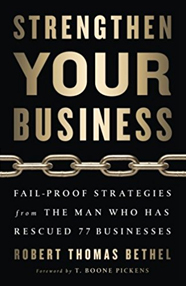
[0:00:30] Charlie Hoehn: You’re listening to Author Hour, enlightening conversations about books with the authors who wrote them. I’m Charlie Hoehn. Today’s episode is with Bob Bethel. Author of Strengthen your Business. Have you ever seen “The Profit”, it’s this TV show where this guy Marcus Lemonis comes in and saves small businesses. Well, that’s what Bob does except Bob is like 10 times better than Marcus. Over the last 52 years, Bob has saved 77 failing businesses that were on the verge of bankruptcy. These weren’t small mom and pop businesses. Some were doing as much as 300 million dollars in sales. If you’ve listened to other podcasts about how to succeed as an entrepreneur, this episode is going to put them to shame. This was one of my favorite conversations on Author Hour because I just got to sit back and listen to Bob tell stories and share his wisdom. Get comfortable, pay attention because this episode is a free master’s degree in business. Now, here’s our conversation with Bob Bethel. Let me ask you Bob, what is the number one take away from Strengthen your Business?
[0:02:07] Bob Bethel: You know Charlie, I don’t think there is one unique idea because what I try to point out is that there are a series of things that need to be done to make a company profitable number one, and number two, to keep it profitable because whether someone is buying a business Charlie or they’re starting a business, most of us come into that business with a certain set of skills that makes us to go in business. If you’re an engineer, you come up with a great idea for a product or a service, that’s going to be your strength but as is often the case, a person’s greatest strength is also their greatest weakness because they are not familiar with all of the other pieces and parts such as sales and marketing and accounting. On day one, suddenly that great engineer can’t be an engineer all the time and exercise is going to strength because he’s going to have to participate, be involved in accounting, in banking, in finance, marketing. I think that this books applies to all businesses Charlie. It’s something that I’ve seen now for 52 years of doing this and that one uniqueness that a person may have could very well become their downfall.
[0:04:01] Charlie Hoehn: Let’s make this a bit more concrete with an actual example. Let’s say I’m running a marketing consulting firm. My strength is marketing and my weaknesses, I can definitely tell you are for sure wanting to get into accounting and getting stuck in things that just don’t make me feel as smart or as capable. What do you recommend to somebody like me?
[0:04:32] Bob Bethel: Well, I think you put it very well, the way you said it because typically, so you’re good at marketing, you’re going to avoid like hell having to deal with accounting and finance, you’re not going to like it because you’re not familiar with it, you haven’t worked with it. When it comes time to give insurance on your company, you’re probably going to hand that off to someone else. There are a number of functions in a company that people simply aren’t familiar with when they go in business. I’m a great salesman, I’m going to go in to marketing, I love that joy, well. You must take on the persona of a general manager, you must be familiar with all of the pieces and parts of your company. Now let me give you a quick example. Let’s say you go out and cut a deal with some huge company to handle their marketing. You’re going to have to hire people, you’re going perhaps require services that are out external to your company and you’re going to have to pay those people, well where’s that money coming from? If you haven’t negotiated on the front end with this huge company, partial payments or payments every 15 days, you’re going to come up short and suddenly you’re going to be in front of your banker and saying “Gosh, we’re doing all this work for this huge company and I don’t have the money to fund it.” Everything comes to a stop and I’ll give you a much better example of that. I have a close friend who started a large, or it became large very quickly, trucking company and when I would seem things were going great, he was excited about this business and so on and he called me one day and he said, “I’m in horrible trouble. I owe the bank a ton of money and they are asking for additional collateral, they want a second mortgage on my home and they are thinking about calling my line of credit because it continues to get huge. “ I said, “Okay great. Send me your financials, let me look through it”, I get his financials and I look and Charlie, his accounts receivable were through the roof. I mean, millions. I pick the phone up and I call him and I said, “What the hell’s the deal with your accounts receivable? Send me a list of your accounts receivable?“ He sends the list of the number of customers he was serving, there were two companies that had probably 90%, those accounts receivable and I looked and I almost fell out of my chair Charlie. This guy was a great salesman, he was in Jeopardy of the bank shutting him down because of the massive amount of money that he had borrowed. As it turns out, he had to borrow that money to fund his accounts receivable and as I look, both of these companies were two of the largest fortune 500, 100 top companies in the United States. I called him back and I said, “What are your terms with these two customers?” and he said, “They pay me every 60 days.” Now, Charlie, he was paying for the gas of many over the road trucks, he was paying for that gas every day by credit card. Well, it wasn’t credit card, it was bank card, a draft against his line of credit. He was paying those drivers weekly, he was paying all of his other people weekly and he wasn’t getting his money for 60 days and his business got better, those receivables got higher. I said, “How did this happen?” He said, “Well, when I went to them, to see if they would do business with me, they said that yes, they would but they needed net 60 days.” I said, “Here’s what you do. You go see both of those customers and you tell them, you love their business but their terms are breaking you and you must be paid every 15 days.” He went and did that and you know what both of them did? Both of them Charlie, laughed and said, “We wondered how long you could keep this up, sure, we’ll do 15 days okay?” Here was an example of a great salesman that didn’t — he was interested in the sale, the details as to payment, that was beside the point. My point in that is you must in order to be profitable and if you’re not profitable, you’re not going to stay in business. In order to do that, business owners must become a general manager, it doesn’t mean that you have to do it but I require of myself, every time I go in to a business, I require that I understand the process of what’s going on in each department and have the people in that department explain it so I can measure it. If I can’t measure it, I don’t know if we’re being effective. If you tell me that it takes five days to paint a room and I have no base of knowledge then I’m going to go okay Charlie, take five days and paint this room. If I learn about the process and realized - Charlie, you ought to be able to paint this room in five hours. Then I can measure your effectiveness and Charlie, in the last 52 years, I’ve taken over 77 businesses, all of them were broke. Typically, what happens is a bank calls me and says, “We’re getting ready to pull the plug on the business, however, we think we’re going to lose a ton of money, you want to come in, take it over and see if you can turn it around?” That’s what I’ve done and the thing that has donned on me in time is I started doing this is I kept realizing as I did more and more. I thought it was a fluke at the beginning because I have covered a vast number of industries in what I’ve done. Therefore I thought, well, this is kind of a fluke that I’m doing a lot of the same things. I never was arrogant enough to go into one of these thinking that I knew what to do. Because kind of like running to a cave to kill a dragon, you really don’t know what’s in there.
[0:12:29] Charlie Hoehn: Yeah.
[0:12:31] Bob Bethel: As time passed, these things started to reappear and the book is a synopsis of the things that have made a difference to return each of this 77 companies to profitability.
[0:12:49] Charlie Hoehn: Right. I have a number of questions based on everything you just said but I’m curious, over the 77 businesses, how many of these principles do you distill in the book?
[0:13:03] Bob Bethel: All of them.
[0:13:04] Charlie Hoehn: Well yeah, how many specifically, is it five, is it 20.
[0:13:08] Bob Bethel: It’s at least 20, maybe more.
[0:13:11] Charlie Hoehn: What are the ones that you look at first? What are typically the ones that most business run in to problems with?
[0:13:22] Bob Bethel: Well, first of all, all of the businesses that I’ve taken over, number one and number two, there are probably as many that I haven’t taken over that were offered to me because they were just too far gone, there wasn’t a potential to make profit with them. The thing that I have found with all of these because when a bank calls me in Charlie, I’m given the opportunity, the owner is still in place, they’re getting ready to pull the rug out from under him, I go in, sit down with the owner and I always start by asking, “Do your employees know the condition of the company?” Every single time, I have been told, “Oh God no, If they knew, they would quit.” Information is hidden and not just in failing businesses but most small and medium sized companies, the employees simply don’t know what’s going on. The first thing that I do when I take a company over is I call a meeting of every employee in the company and I tell them everything that I know, the good, the bad, the ugly and I’ve never had any employee quit.
[0:14:51] Charlie Hoehn: Wow.
[0:14:52] Bob Bethel: Most of the time Charlie, what I’m told by the employees because they’re not stupid, I’m told most of the time, “First of all, really appreciate you telling us where the company is and second of all, we knew that the company was in trouble,” fear without knowledge is a horrible thing for anyone. The owner’s thinking that they are hiding the information, the actual information of the company, in fact creates more fear, more doubt, more stress on the employees. On that first meeting, I simply say, “We’re going to come together and we’re going to create a plan” and you immediately see a rolling of the eyes and everyone thinks Harvard Business plan, so on and so forth. When I explain to them, “No, this is like a football game plan, we’re going to lay out who is going to do what, to whom, when, and for how much, for the next 90 days. Then we’re going to break that into 30 day increments and then we’re going to break it in to weekly increments so that we can measure where we are.” Here’s the odd thing. Never ever one time have I gone into one of these businesses that had a plan. Now, if you and I were to take this morning, a group of little boys and say “Okay, we’re going to divide jobs. Half of you are going to be cowboys, the other half is going to be Indians, okay, we want you to go into the woods over here and play cowboys and Indians.” I promise you Charlie, within the first five minutes, both groups would say, “Okay, what’s our plan?” A football team has a plan, I’m a pilot, I file life plans, all athletic teams have plans so A, we create a plan, we break it down so that we can measure every person in there. Then, we’re going to put that information on a daily basis on a white board. Whatever it is we’re going to measure. If it’s manufacturing plant, we’re going to measure the number of products produced in a day, if we’re sales and marketing team, we’re going to measure sales per day, we’re going to put it on a white board, we’re going to put it where everybody in the company can see it. That’s the beginning and I quite frankly have come to realize that what I really am is a teacher about profit and how we make it and a coach to that team. I don’t come up with the plan, the team comes up with the plan. In these 77 turn arounds in these 52 years Charlie, I would maybe give myself 5% of the credit. Those people know what is needed in their individual department or their particular job. I keep the hurdles out of the way so they can do those things and I teach them that we’re going to measure that business. Because owners don’t like the ugly part of businesses, they don’t want to share that. Then the other part of that reason for not sharing financial information and time and time again, I’ve had this said to me by owners. “Well, if I start showing the profit and loss statement and if I start showing them how we’re doing, when we start making good profit, everybody’s going to have a raise.” No they don’t. Not if you teach your team. By that I mean, “Okay, team, here’s the deal. When we start making money, instead of raises over time, we’re going to reduce our debt to the banks, we’re going to need to build a cash reserve so if things slow down, I won’t have to fire you. We’ll have money to come back with.” And instead of raises and something that I learned a long time ago, raises jeopardize your future and what I mean by that is, stop and think about this Charlie, if you’re making $50,000 a year and you’re doing great job and so is everyone else in the company in, it’s now December 31st and I call you in and I say “Charlie, I’m going to give you a 20% raise, I’m giving 20% raise to everyone in the company, we’ve had a great year.” Well, what I have done, I’ve raised my cost going into the unknown future. Instead, what we do in our companies is we give bonuses at the end of the year because on December 31st, I know how we’ve done and the money is in the bank. We’re going to take some of that money and reduce debt, we’re going to take some of that money and build our cash reserve and then we’re going to give bonuses. Because I’m not jeopardizing anything with a bonus, does that make sense?
[0:20:23] Charlie Hoehn: Absolutely, that makes total sense.
[0:20:25] Bob Bethel: We’ve already made that money and yet time and time again, people give raises, they raise their cost but I have never ever Charlie, seen an owner say, “You know, we raised our cost by 10%. Now the raises we’re giving into the next year. You know, I guess we better raise our prices,” it doesn’t happen. Instead, profit declines. We don’t jeopardize our future, we focus on a plan that everyone understands because it’s not me walking out saying “Okay, here’s what we’re going to do.” Imagine this, what do you think Tom Brady’s team would do if he jogged into the huddle and said, “Snap the ball on two.”
[0:21:26] Charlie Hoehn: Say “What’s the plan.”
[0:21:28] Bob Bethel: “What’s the play”,”Well, I’m not going to tell you, just everybody fall out and do whatever okay?” Yeah, that’s what happens in business on a daily basis. We’re not taking advantage of our team. Charlie, in 77 businesses and these have not been little ma and pa shops.
[0:21:50] Charlie Hoehn: Yeah, give us some examples of the types of businesses?
[0:21:54] Bob Bethel: Well, first of all, there have been a number of them that have been in excess of 300 million dollars a year in sales. I have taken over automobile dealerships, truck dealerships, electronic manufacturing, research and development companies, a chain of restaurants, manufacturing firms that have manufactured plastic products, wielding robots, oil and gas transmission equipment, marine pipeline equipment. Nuclear power plant equipment, Engineering firms, apartment complexes, large office parks, boat dealership, agricultural operations, international marketing companies, retail firms, joint ventures with multinational firms but the thing is, the team knows the business.
[0:23:02] Charlie Hoehn: Right.
[0:23:04] Bob Bethel: All I need to do is measure it and put together a plan that we can measure and monitor on a daily basis. I call it headlight accounting Charlie and I teach that. Most companies operate on a PNL. That PNL if it’s January 1 and on January 31st, you and I hand our books over to book keeper or CPA to create a profit loss statement for the month of January. Because it’s typically six, seven days before you get your bank statements so that your book keeper can reconcile those, reconcile their own books, you will be very lucky to have January’s financial statement on your desk by February the 10th. What if someone in your company started making a huge mistake on January 1st and you only came to realize that 40 days later on February the 10th. I refer to that as tale line the count, it’s important, you need to look at that financial statement, examine it and understand it. You need something that you can measure on a daily basis. That’s what the plan does, the plan implements headlight accountant, telling us where we are today so that we can see where we’re going. You wouldn’t want to drive a Ferrari at 14 miles an hour in a curvy road on a dark night without any headlights. Only being able to look in your rear view mirror at the tail lights to know where you’re going and I think it’s really as simple as that. There are none of these items that are complicated and I think the most important thing I could say about the turn arounds I’ve been involved with are, I have never brought in new people and I have never ever brought new money to the table. What I’m saying is everything that was needed to turn this around was already there.
[0:25:40] Charlie Hoehn: Right. Because of that, I guess my reason in partial reason for writing the book really are twofold. One, Charlie, 50% of all businesses fail and that number has been pretty consistent most of my life Charlie. My thinking was that because of that, if I have been able, with no new money and no new people to turn around businesses that literally were at the edge of bankruptcy, if I could teach you how to implement this strategies and policies and procedures into your business that isn’t failing, it really ought to be failure insurance. You see what I’m saying?
[0:26:30] Bob Bethel: Yeah.
[0:26:31] Charlie Hoehn: Absolutely Bob, I’m curious – just a quick question. You said 52% of all businesses fail. If they were follow — 50, I’m sorry. If they were following these principles, if they were using headlight accounting and they were measuring these things daily, what percentage do you think would be failing then?
[0:26:56] Bob Bethel: Well, Charlie, that’s a great question. I think this. First of all, it would certainly be my hope that someone who is thinking about starting a business would read this book and go, “My god, I didn’t realize there were all these pieces and parts. Maybe I’ve got to wait and learn” because I think it’s sad to see people who have long and recent example is in a commercial building that we own. Two ladies had worked at a bakery for 20 years and they told me they had always wanted to have their own bakery. I said to them, if I could be of any help, please let me know, I’d be glad to help you with your business plan et cetera. They thanked me and that was the end of that. They went to the bank, they took their personal savings, they went to the bank together and took out a loan and they were broke in less than 12 months because the only thing they knew how to do was bake. See what I’m saying? To answer your question, the first part is, it would be my hope that people understood the components of running a business before they jumped in. The other side is that, I think to operating businesses, it’s going to shed some light regardless of the industry they’re in. I’ve been told so many times Charlie, “But Bob, you don’t understand, my business is different.” Bull crap.
[0:28:50] Charlie Hoehn: Right.
[0:28:51] Bob Bethel: “Okay? Your business isn’t different, if you’re not making a profit, you’re getting ready to crash and burn.”
[0:29:46] Charlie Hoehn: Bob, I mean, it’s so refreshing to talk to you for so many reasons. I mean, for one, to be able to speak with someone like you with your experience, it just never happens right? There’s so few people in the world who have done what you’ve done. I want to make the most out of this interview for our listeners and I’m curious, one, how did you get into this? How did you get so good at this and how did you get in a position where banks were calling you to come fix this businesses to help them?
[0:30:23] Bob Bethel: Well, Charlie, I used the old joke that there are four stages of drunkenness in a man. Stage one is he becomes good looking, stage two is he becomes brilliant, then he becomes bullet proof and finally, he becomes radiation proof. That’s based and I’ve seen that old joke come true because I started a business when I was 21 and I was gung ho and aggressive and the business just did super, it was an automobile business, my father was in the automobile business in Nashville. I grew up in that business working at that dealership, thought I knew it all, went out a banker, I also had farms and raising cattle which my father had done as well and I was making really good money, the banker, I came in to pay off the loan and he said, “You know, I’d like to work with you on some of this, be your partner, I’ll provide the money” but of course, he didn’t sign the notes Charlie, I did. We split 50/50 but I literally could write a check for any amount and he’d cover that check. Well, this went on for a couple of years and my businesses were doing great, we had a recession. I was 23 years old and I realized very quickly how ignorant I was, how lacking in overall general management experience and about the time this was happening, my banker partner fell over dead with a heart attack.
[0:32:16] Charlie Hoehn: My gosh.
[0:32:17] Bob Bethel: Here I had massive loans for real estate, lots of different things and the banks were looking for me to pay it. I crashed and burned.At age 23, I went from having a very decent three quarters of a million dollars net worth to zero. This was in 1970, at three quarter million dollar net worth, probably be three or four million today.
[0:32:45] Charlie Hoehn: Right.
[0:32:47] Bob Bethel: Bang, I fell on my face and a friend of my parents who was a very wealthy man in middle Tennessee had a number of businesses, he had retired, had other people running his businesses and he had watched this happen to me and he came to me and said, “I’m going to make you my partner and let you take over all this business and clean them up because I think you learned a very valuable lesson.” When I crashed and burned, it took me three years to pay everyone off. I didn’t declare bankruptcy, nobody lost any money on me but it took me three years. I lived on a shoe string budget while I was turning around this other businesses and because of that, and because my partner was extremely wealthy, bankers started seeing what I was doing. I started getting calls, “Would you like to take a look at this business?” The reason they call me, Charlie. Let’s say they loaned the business three million dollars and they came to realize that the business was in trouble and that if they moved against the collateral, they were only going to get a million dollars. They were going to have to write off two million, well, a better option was to see if I could turn it around. They basically gave me the company, of course they also gave me the debt.
[0:34:17] Charlie Hoehn: Right.
[0:34:20] Bob Bethel: At the time I took it over, they didn’t have to write off a loss and when it started becoming profitable, then they were out of the woods.
[0:34:30] Charlie Hoehn: And you owned the company at that point?
[0:34:33] Bob Bethel: Yes.
[0:34:34] Charlie Hoehn: Wow. They just handed you 100% equity?
[0:34:38] Bob Bethel: Well, here’s what they did. Let’s say your company owed the bank three million dollars and let’s say you’re losing money on a monthly basis and the bank realizes that they’re going to lose a couple of million dollars but Charlie, when you sign that guarantee with the bank, you pledged your house, your car, everything you own against that loan. I go look at the business and I sat down with the owner because see, if the bank forecloses on you, then you probably are going to run to bankruptcy court okay? All of your secured creditors, they’re going to get their stuff, it’s a car, a truck, if it’s a building, they’re going to get their stuff but they’ll have to go through bankruptcy court and they’ll have to spend a lot of money on lawyers and time. I go in and to use the owner and say “Look Charlie, the bank’s getting ready to move against your collateral. I have an offer for you. On your behalf, I will go to the bank and negotiate them to give up all of your personal collateral. The mortgage on your home, your cars, your wife’s jewelry if you will sell your company to me for a dollar.” I’ve never been turned down Charlie.
[0:36:14] Charlie Hoehn: Wow. I’m curious Bob, when you turn these companies around, do these people come back to you and say, “How can we get the company back from you ?”or do they feel any conflicting emotions because they know you saved them but they just – their company’s in your hands now? Do you know what I mean?
[0:36:37] Bob Bethel: Yeah, there have been a few that after the fact, didn’t care for me very much but most of the time, you know, having owned my own failing business, Charlie, I would get up in the middle of the night and of course I was young. I’d get up in the middle of the night and throw up out of fear.
[0:37:01] Charlie Hoehn: Right.
[0:37:01] Bob Bethel: I couldn’t think clearly, it was like you were on fire. Having been there, I know the stress and I would say, by and large, most owners are tickled to death to get out of the crap, they don’t want any cheese.
[0:37:17] Charlie Hoehn: Absolutely. Let’s talk about that actually because that blew me away that you lost three quarters of a million dollars and fell on your face and then a few years later, had paid off everybody, tell us what it was like for you? How did you find the emotional fortitude and resilience to keep going, did you have days or weeks where you just thought, this is a lost cause?
[0:37:46] Bob Bethel: No, you know, I was raised by depressionaire parents that were very optimistic, very aggressive and Mother used to harp on the fact of telling the story about a man and his son walking down the dirt road on their way to church and the little boy slipped and fell into a mud puddle and his dad looked down, at him and said, “Now what are you going to do?” The little boy said, “First thing I’m going to do is get up.” I think that has always stuck with me. You know, I never have had time to be a pessimist, anybody can be a pessimist Charlie, it takes guts to be an optimist.
[0:38:36] Charlie Hoehn: Yeah.
[0:38:39] Bob Bethel: Dad had always accused me by saying that someone could put me in a room full of horse crap and I’d start looking for the pony. I guess that’s true but optimism with a plan that you can measure and making sure that everyone understands that plan, when I was young, I would beat around the bush if I had a problem with an employee and I came to realize that wasn’t helping a bit, you need to be clear spoken. People need to understand.
[0:39:15] Charlie Hoehn: The reason I asked about the emotional fortitude is, I’ve got a lot of listeners and readers who – and I’ve struggled with it myself in the past where you get yourself into a really tough situation and it just, you know it’s impermanent but it feels like how am I ever going to get out of this? I was curious to not only have the mindset of optimism but did you use, like for instance, did you use measuring something on a daily basis, to help you see your progress or how did you keep pushing forward apart from just optimism?
[0:39:59] Bob Bethel: Absolutely. Even in the day of today’s world of wonderful computers and all of the tools that they provide, on my desk for 52 years has been a day timer and each afternoon before I leave the office, I put down what I am going to do tomorrow so that I can measure and you know, I also found early on in business Charlie, that if you will sit down and write down all of your fears just as you said, I’m in a spot on about, okay write those fears down and then go to work with a plan that chips away at that. You know I was very, very fortunate early to realize that I wasn’t smart as Barron Woods going through school, getting my MBA. I realized “You’re not the smartest” but I also realized that I have a lot of endurance and if I used that endurance to a plan, I could pass a lot of the people who I knew to be a lot smarter than me. So you’ve got to have a plan. I continually go back to ego of business owners. Charlie I am probably the most brilliant person you’ve ever talked to about knowing exactly how dumb I am. You are not going to find me in an operating room performing heart surgery so I know my limitations and business people Charlie tend to trick themselves. All you have to do is watch one episode of Shark Tank and see how many times you hear someone or see someone break into tears and say, “I’ve put my blood, sweat and tears into this business” horse crap. Show me Charlie on a PNL where I can put your blood, sweat and tears. Do you see what I’m saying?
[0:42:23] Charlie Hoehn: Yeah.
[0:42:24] Bob Bethel: And where that comes from and I’ve had business owners tell me this, “This business owes me” well, let me ask you this Charlie, “Have you ever heard a parent say about a six month old child, this child owes me?”
[0:42:41] Charlie Hoehn: Not a good parent.
[0:42:42] Bob Bethel: The tricking part that business owners do to their own mind is they say, “You know I am going to start my own business because I won’t have to work this hard. I’ll be the boss, I’ll make more money. I’ll be able to leave at 3:00 and go to the Country Club and play golf” it’s a tricking of their own mind instead of saying, “This is a six month old child. I owe it all of my time, all of my money. The smallest salary I can possibly take to take care of my child”. So there are tremendous middle aspects that twist and warp a business owner into thinking that their business owes them.
[0:43:35] Charlie Hoehn: Yeah, so Bob I would like to hear two stories from you next which is the businesses that you’ve helped, I love to hear your personal biggest failure and your greatest success. I’d love to hear the one because we all had those where we’d wish it had gone better and I think it’s always nice to hear about those actually because it reminds you how far you’ve come and the lessons you’ve learned but I also like to hear about the one that you’re most proud of, of those 77 businesses.
[0:44:13] Bob Bethel: Well I told you about the failure and thank God, yeah there hasn’t been another one. I have never taken one of these 77 businesses into bankruptcy. None of them have failed and oddly enough Charlie you would think taking over distressed business that their business would have been in decline, exactly opposite. Every one of them have been in a growth mode and if you look at it from a common sense standpoint Charlie it makes sense. If I gave you a new Lamborghini this morning and told you you’d drive 10 miles an hour, I’d sincerely believe you’d have no difficulty with it. Now, if you and I took that Lamborghini to the Rocky Mountains and we’re going to head up Pikes Peak and I told you’d have to maintain a speed of a 140 miles an hour, it’s going to be a horse of a different color. Do you see what I’m saying? So business that I’ve brought along with gross sales of a million dollars a year suddenly find themselves in the position of doing $5 million and they ran off the road and crash. Okay because the pieces and parts aren’t in place and to specifically answer your question, I took over a company that group banks called me in. It was an international engineering company working in the deep water pipeline laying business worldwide as well as a primary subcontractor for Weston House Nuclear Corporation and in addition to that, this company was on the brink of an invention for robotic welding and the company owed this group of banks several million dollars. And they told me they would give me 30 days to go in and see if I thought that I could turn it around but in addition, I have to put a million dollars cash in escrow which was insurance to the banks that I wouldn’t start selling the assets off to fund the operations and as I looked at it, I thought there was just no way on earth this would work but then I started looking at the contracts that they were working on and the previous owner had lied to everyone. Oh in addition to that, they had over $900,000 of past due, most of them past due close to 90 days of accounts payable. The owner has lied to the employees, the owner has lied to customers, the owner had lied to their suppliers and vendors so it was a mess. So I took the company over, the very first day after having looked at the contracts, as I said the banks have given me 30 days to tell them whether I was ready to take over the debt and told the employees we’re going to have to create a 90 day plan in the next 24 hours and you’re going to have to do it. Because I’m going to talk to some of the customers and see if they will help us. So as the team started working on the plan, I called three customers. One, the State Owned Italian Company ENI, oil and gas company for the entire country of Italy. Primatone in France which was Primatone Nuclear Group and Saudi Aramco in Saudi Arabia and told all three that I needed to come see them urgently. So one day after coming into the company, I flew a long way to Milan, Italy. Sat down with the managing director of one of the ENI’s companies that we were doing work for and showed him my plan, showed him a list of bankers that I have worked with on turnarounds in the past and told him I needed him to advance us a million dollars on his contract and he sat there and stared at me for a few minutes and asked this, “I hope to God you can pull this off” and I said, “If you advance the money, a hundred percent”. Now we were doing work that they very badly needed. He asked me if I had wiring instructions to my bank and five minutes later, I had the money. I went to France, did the same thing. I went to Saudi I did the same thing. I came back, I started meeting with the people that were owed money. They’d been lied to, they’ve been put off. I told them that we would use incoming money to pay for operations and every penny above that would go to our payables per ramp. So if we pulled in $100,000 and Charlie your company was 10% of our payables, then we’d write you a check for $10,000. That’s a hell of a lot better than they would have gotten in bankruptcy court and all of them agreed. So my point in that is you’ve got to get rid of the ego because if you crash and burn and most owners are of the opinion that they’re the only ones that risk and I would say a great deal of what I have done has been based on the fact that I realized everybody in the game is at risk. Your employees are in the risk. They don’t want to come home and say “the company is broke. I’m going to get a job. We’re not going to be able to pay the mortgage this month or our car payment. Your vendors are making money off of your company, I would hope, they’re going to lose, your customers are going to lose because they’re going to have to find somebody else to do the work you’ve been doing for them.” So I realized that everyone is at risk and I ask everyone still. I don’t have any problem at all going to our suppliers and vendors and saying, “Look I know that our terms are net 30 days but for the next few months, could you give us net 60 days to help us improve our cash flow?” so there are a lot of moving parts in this thing but I think the biggest thing as I said earlier, I’ll take maybe 5% of the credit. The other 95% is that team.
[0:51:28] Charlie Hoehn: Yeah, absolutely.
[0:51:30] Bob Bethel: They’re the ones that make it happen.
[0:51:34] Charlie Hoehn: Right.
[0:51:35] Bob Bethel: And I also start off Charlie and I think this is another point that small to medium sized companies need to hear. Every single business that I have gone into, the owner has said, “All we need is some money and to increase our sales”. Well they are absolutely wrong. They’ve probably have already been loaned too much money so they really didn’t have to have a profit because they could reach into their bank line of credit and pull out some money. I don’t go in to a company gambling on the fact that I can increase sales because Charlie, I could give you a million dollars to try and increase sales into your company and you don’t know that you’d be able – there is no guarantee, you don’t know that you’d raise sales one dime. You can spend to have a new salesman, there is nothing assured about your increasing in sales but on the other hand, I do know that I can control expenses and that’s where a company needs to start is controlling. In 52 years, we had never had a company that reduced expenses less than 34%. That’s huge Charlie but some of these were huge, huge companies but you know what the biggest expense to every one of those companies was?
[0:53:13] Charlie Hoehn: No.
[0:53:13] Bob Bethel: The owner.
[0:53:15] Charlie Hoehn: Really? Is it their salary?
[0:53:16] Bob Bethel: His expenses. His expense account, his salary, his company car, his private secretary, his jet, his house boats, his house in Aspen that belongs to the company. Yes sir.
[0:53:32] Charlie Hoehn: Wow.
[0:53:33] Bob Bethel: Charlie, this business owes me. I put my blood, sweat and tears in it.
[0:53:39] Charlie Hoehn: Yeah, if you’re taking out of the company that much, you’re also a parasite to the company.
[0:53:46] Bob Bethel: Of course you are, absolutely but Charlie this business owes me.
[0:53:52] Charlie Hoehn: Wow, well it makes sense why they don’t want to share that information with their employees.
[0:53:58] Bob Bethel: Yeah, exactly.
[0:54:00] Charlie Hoehn: Keep them in the dark.
[0:54:02] Bob Bethel: Exactly.
[0:54:03] Charlie Hoehn: So Bob I’m curious, if you were going to start over tomorrow but kept all your knowledge of these experiences and everything you’ve gone through, would you still pick this particular role that you have, this unique role or would you go into something else? Would you start your own different type of business?
[0:54:23] Bob Bethel: No. I love what I am doing and Charlie, it’s probably the only thing on the face of the earth that I feel confident in doing. I love it.
[0:54:33] Charlie Hoehn: That’s wonderful.
[0:54:34] Bob Bethel: And as you can see, there’s a huge amount of variety in the businesses so you never get bored.
[0:54:43] Charlie Hoehn: Yeah and what is your title technically? Are you a consultant or?
[0:54:51] Bob Bethel: No, I really don’t know what I am.
[0:54:54] Charlie Hoehn: They could call you the cleaner.
[0:54:58] Bob Bethel: My oldest daughter calls me the Fred Stanford of distressed businesses, taking junk that nobody else wants.
[0:55:10] Charlie Hoehn: Right.
[0:55:10] Bob Bethel: And I suppose there is some merit to that.
[0:55:13] Charlie Hoehn: There definitely is so Bob, if you were going to write a follow up book to strengthen your business what would that book be?
[0:55:23] Bob Bethel: Well probably a couple of things Charlie. One, I’ve always wanted to write a book having spent so much time in my life with bankers and lawyers, things I wanted to say and didn’t. There would be a lot of cuss words in that book Charlie.
[0:55:41] Charlie Hoehn: I was going to say.
[0:55:42] Bob Bethel: And I also think that as I have mentioned to you earlier, this book is drafted at people that are not failing at this point in time and therefore I view it as insurance against failure but I would like to write a book about how to save the business on the edge of bankruptcy because that’s not what this book is about.
[0:56:12] Charlie Hoehn: Right and that’s when they’re most desperate for that information.
[0:56:16] Bob Bethel: Yes but having said that, a vast majority of the items then strengthen your business would go a long way towards a company that is on the edge.
[0:56:32] Charlie Hoehn: Yeah and you know if you were to write that book about saving your business from the edge of bankruptcy, that can be a book that every bank gives away to promise –
[0:56:44] Bob Bethel: I’m hoping that they will do that. I have a number of banking friends that I am going to ask to take a good hard look at giving Strengthen your Business over.
[0:56:54] Charlie Hoehn: Yeah, absolutely. So what is a parting piece of advice you have for aspiring authors? People who want to give back, I mean I’m really looking forward to reading your book. I think it’s amazing that you are giving back this way and to steal all these wisdom that you’ve gathered over the last 50 some odd years, it’s amazing. So thank you on a very sincere personal level for writing the book. I’m curious what you would say to other people who want to write a book.
[0:57:29] Bob Bethel: I would think anyone writing a non-fiction book Charlie should address their own experiences more than anything else. You won’t find any, I’ve been educated on ratios and theories and concepts, you won’t find any ratios or concepts or theories in this book, it’s all practical application. So I would suggest that anyone write about something of their own experience that they’re very knowledgeable about.
[0:58:04] Charlie Hoehn: Yeah, stick to what you know. I agree.
[0:58:07] Bob Bethel: Exactly, yeah.
[0:58:08] Charlie Hoehn: It’s funny because I wrote an article about this years ago called Something along the lines of Write the book that only you can write or something like that and I wrote it as a letter to myself basically where I’d fallen into the trap of writing a book that I wished I could write rather than actually something grounded in my own personal experience so I think you are totally spot on there.
[0:58:37] Bob Bethel: Yes.
[0:58:38] Charlie Hoehn: A lot of authors fall into that trap, a lot of them.
[0:58:42] Bob Bethel: Yeah, I would think so.
[0:58:43] Charlie Hoehn: Yeah, so this has been invaluable. I’m really looking forward to your book coming out. How can our listeners either stay in touch or maybe follow you and your work or connect with you, is that something you even want?
[0:59:02] Bob Bethel: Yes, they will be able to buy the book on Amazon both hard back and electronic form and for more information, they can go to my website, www.robertthomasbethel.com.
[0:59:23] Charlie Hoehn: Robertthomasbethel.com, excellent. This was wonderful, thank you so much for sharing this and I can’t wait to release the podcast.
[0:59:34] Bob Bethel: Well thank you for having me Charlie.
[0:59:35] Charlie Hoehn: Oh yeah, absolutely. I really appreciate you making the time. There’s a million other questions I could ask you but I want to be mindful of the time that we’ve gone. I will say this in –
[0:59:48] Bob Bethel: Hey Charlie?
[0:59:49] Charlie Hoehn: Yeah?
[0:59:50] Bob Bethel: You know we could always do another podcast.
[0:59:52] Charlie Hoehn: That’s true. That’s very true Bob, we should. We really should.
[0:59:56] Bob Bethel: The ball is in your court Charlie.
[0:59:58] Charlie Hoehn: Okay, I’ll make a note to follow up with you on a later date but I’ll say in wrapping that it’s funny because you hear the advice sometimes that “hey, the world doesn’t reward generalist” or jack of all trades master of none sort of thing and I’ve always thought it’s context dependent. If you want to become an employee, yes. You do need to be somebody with a very specific skill set who’s really good at that thing but if you want to be a business owner, you have to be a generalist in order to succeed.
[1:00:37] Bob Bethel: You do have to.
[1:00:38] Charlie Hoehn: And I think this interview really confirmed that for me. So yeah, thank again. This was great.
[1:00:45] Bob Bethel: Well, thank you Charlie. I have enjoyed it.
[1:00:48] Charlie Hoehn: Excellent. All right Bob, I hope you have a tremendous weekend. Again, I’m looking forward to checking out the book and I’ll let you know when we’re ready for you next time.
[1:01:01] Bob Bethel: Sounds great Charlie, thank again.
[1:01:03] Charlie Hoehn: All right, take care sir. Thank you.
[1:01:06] Bob Bethel: Thank you too, bye.
[1:01:13] Charlie Hoehn: Thanks so much to Bob Bethel for being on the show. You can buy his book, Strengthen Your Business, on Amazon.com. Thanks again for listening to Author Hour, enlightening conversations about book with the authors who wrote them. We’ll see you next time.
Want to Write Your Own Book?
Scribe has helped over 2,000 authors turn their expertise into published books.
Schedule a Free Consult