Frazer Rice: Wealth Actually
Read the full transcript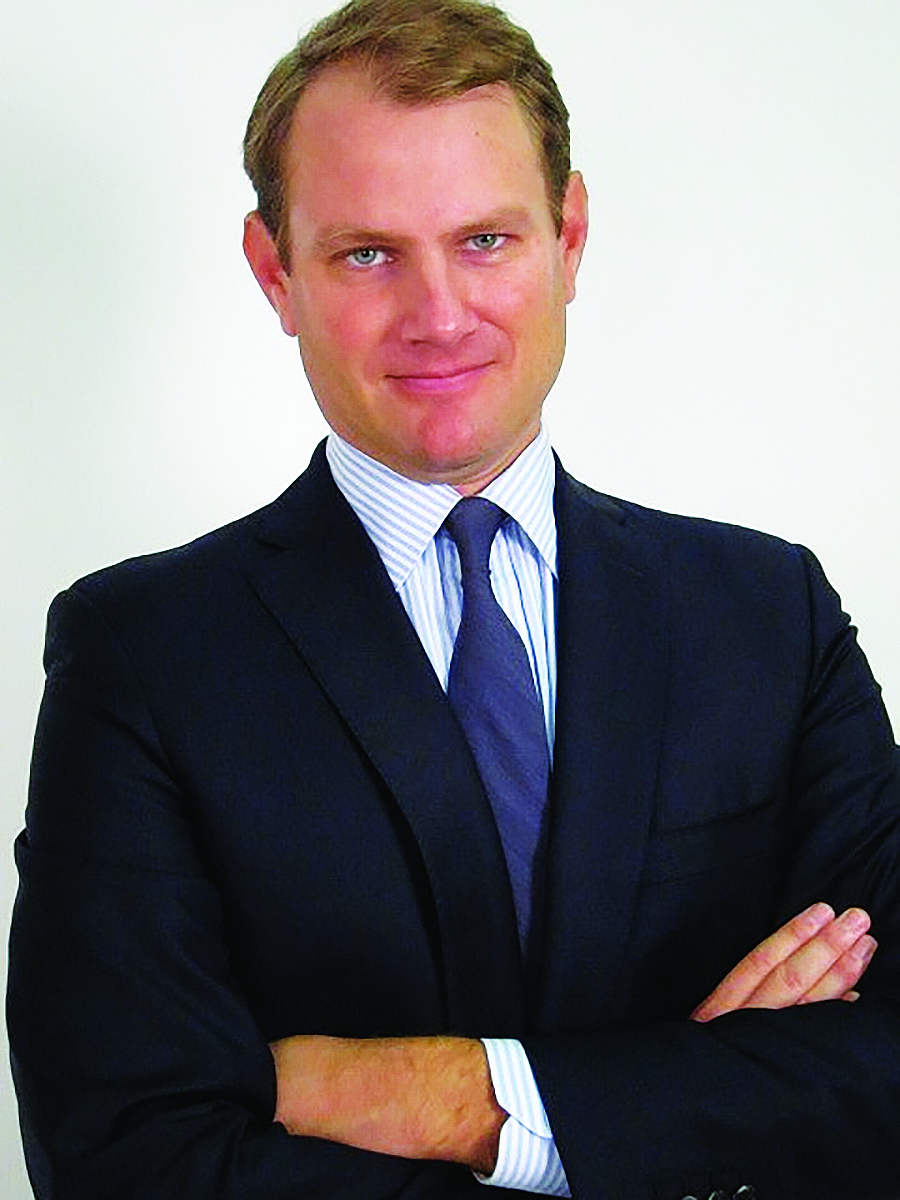
Frazer Rice
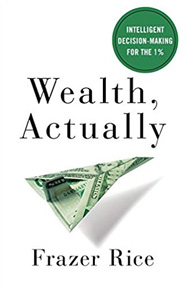
Frazer Rice is a private wealth manager with more than fifteen years of experience advising millionaire and billionaire families on their finances, including fiduciary and estate matters. His clients have included business owners, hedge fund managers, real estate developers, corporate executives, foundations, and established families. A graduate of Duke University and Emory University School of Law, he is a member of the New York State Bar and an experienced corporate attorney. In 2018 he published his first book, Wealth, Actually: Intelligent Decision-Making for the 1%, through Lioncrest Publishing. He has been featured on cable television and in publications including the New York Times and the Daily Telegraph.
📚 Books by Frazer Rice
Transcript
[0:00:37] Charlie Hoehn: You’re listening to Author Hour, enlightening conversations about books with the authors who wrote them. I’m Charlie Hoehn. Today’s episode is with Frazer Rice, author of Wealth Actually. They say a fool and his money are soon parted and for the 1%, this is especially true. The more wealth you have, the more risks there are to your financial security. But with the right knowledge, planning and guidance, you cannot only preserve your assets but enjoy them as well. That’s what Frazer is here to talk about. Frazer is a private wealth manager with 15 years’ experience advising millionaire and billionaire families on their finances. His clients include business owners, hedge fund managers, real estate developers, corporate executives, foundations and established families. In this episode, Frazer shares his holistic approach to wealth management. If you’ve wondered things like, “How do I communicate with my loved ones about our fortune? How do we handle threats to our wealth so that we can protect our investments?” Then this episode is for you Money shouldn’t be the dream but when it’s managed right, it can be the perfect tool to make your dreams come true. Now, here is our conversation with Frazer Rice.
[0:02:23] Frazer Rice: I got into wealth management like most people by accident or coming into it from a different career. I had started out coming out of college, I work for the department of economic development up in Albany New York and it was a really interesting experience. I was charged with helping being a part of projects where we try to keep businesses in New York or otherwise help them locate there which is difficult to do given the high taxes that are in New York. Did that for a couple of years, didn’t want to be a civil servant my whole life so I went to law school like most aimless people do as they try to find their way. I had a lot of experience with family members who are lawyers and knew somewhere deep down that he didn’t necessarily have to be a lawyer with the education but I didn’t know enough about the industry, so I went to law school down to Atlanta at Amery and I had a good experience there. I was there for three years and my first semester, my first summer I worked with Meryl Lynch in their general’s council’s office and then my second year I worked at the SCC and I worked for an entertainment lawyer, which was really interesting and taught me that it’s much more fun to entertain than to be entertainment lawyer many times. Then my second summer, I worked at the House Banking Committee in Washington which was neat. At that point though, I kind of came to the conclusion that I like the education and I like the law degree and so on, but I didn’t necessarily want to be a lawyer. I worked my third year, the federal reserve in Atlanta and I said, “Nice people, cutting edge law but if business is as good as practicing law gets I don’t think it’s going to be good for me long term.” Then I made my way back up to New York and passed the bar exam and worked for a couple of years but I wanted to find a situation that took advantage of the law degree but also, took advantage of an interest in banking law and got me out in front of people. I didn’t want to be stuck in a library somewhere. I met a person who was working for a wealth management firm and they liked the idea of lawyers as issue spotters and as a result, I’d also not been practicing law so long that my answer to everything was either “No” or “It depends.” It got me in front of a – one of his managing directors and that’s how I started my career. Ended up learning how to sort of interact with clients and take care of their wealth issues and get exposed to the business development side of it as well.
[0:04:34] Charlie Hoehn: Frazer, there’s a lot of wealth management books out there, maybe not a ton but there are some out there. What is your philosophy on wealth management and what makes it unique?
[0:04:45] Frazer Rice: Sure, when I started the process of writing the book, I canvased Barns and Noble and looked around at a different self-help books and the different types of things that people read in order to try to get their arms around the issues of wealth and the issues of money and how it relates to their families and their spending patterns and all the different things that money touches. I felt like I saw a hole somewhere. There’s lots of expertise on how to pick stocks and bonds, there were some deeper psychological books about the impact of wealth on families and things you can think about on that front. But there weren’t really any books that were geared toward helping people understand how to make decisions about wealth, especially when they’re transitioning from one stage of life to another. Now, when I worked with wealth management clients and variably they tend to be in the 1%, they’re wealthy, and so there are a set of problems or issues that are related to them. It didn’t feel like it got a lot of attention with the book climate out there. I kind of looked back and said, you know, “What other types of things that they need to be thinking about is they try to set themselves up for the world going forward.” Invariably I looked at it and said, “In many times, people are wealthy in one way, shape or form and that they’re moving to a different kind of wealth and while they may have experienced the practical components to how they used to live, their ability to live in a new set of circumstances, and to be able to understand what their wealth can and can’t do for them.” That part’s been under represented in their development and I thought there was enough there to write a book about that and that it could be useful to people who are going through it personally and then also, to the advisers around them who are advising them. I think there’s a lot of technical expertise out there whether it’s in investment management or state planning or income tax planning or even psychological components but there isn’t a lot of material out there to talk about how do you make good decisions? How do you put people around you who are in your best interest and who bring expertise to your situation? I gave it a crack and one of the good things about it is that I like to write as a hobby, I interview people on a podcast and just by virtue of the job, I meet a lot of different people. I was able to sort of call on some of those experiences and try to distill some of the lessons learned over 15 years into something that’s hopefully digestible for most people and something that helps them advance their thinking.
[0:07:06] Charlie Hoehn: Just to restate it one more time, Frazer. Who is this book really perfect for?
[0:07:12] Frazer Rice: The book was written for people who are wealthy. Let’s call them the 1% or people who aspire to be wealthy and invariably, it’s people who have some confusion about their situation or who are dealing with issues that relate to either transitioning wealth or selling a business or inheriting money or maybe a first round draft choice who has just found – who has just signed their first contract and has a windfall or the investment banker who was getting used to making multimillions a year. But maybe not thinking long term. Or even people who are married and getting divorced. It’s for that person who is going from one stage of wealth to another.
[0:07:53] Charlie Hoehn: Got it. This might sound like a simple question I guess but how do I know, if I’m listening, how do I know if I’m in that category, if I am rich? What type of wealth are you talking about? How many dollars do I have to have before I’m considered wealthy?
[0:08:09] Frazer Rice: Right, well, I just spent a couple of seconds, five minutes ago saying I didn’t like to say “It depends a lot” but many times it does depend and there’s a chapter in the book which basically asks the question, “Am I rich?” I think for many people, first of all, the definition is not hard and fast and you can assign numbers and qualifications to it that apply to one person that are completely inappropriate to another. I talk about in the book a little bit about someone from Mississippi who at one level of income, it might be an insulting monthly clothing budget for someone in New York City. That doesn’t mean that the person in Mississippi isn’t rich or has the same type of life enjoyment that the New York person does but the numbers are just different. When I go through in the book is when asking and answering the question, “Am I rich?” I try to go through a bit of a notion where I take people through an exercise, essentially saying, “If I were to stop working and do I have enough money, and do I have enough income generated from other assets where my standard of living is not going to be affected going forward?” You know, essentially, different types of wealth can generate different types of income and can deal with different types of cash flow requirements from clients and other wealthy people and so it’s my job to help sort of frame what that means to different folks.
[0:09:28] Charlie Hoehn: In your book, you have ideologies for increasing wealth. What are some of those?
[0:09:34] Frazer Rice: Right, well, one of the ideas with an ideology for increasing wealth is the idea that people want to take, or are going to need to take risk in order to do that and you know, one of the ideologies around that is understanding what exactly is the risk tolerance people are willing to take to do that? Many times, people take that risk within their career, they build real estate business, they build middle market businesses – whether it’s a tire company or a roofing company or a database company or something like that. They put everything into it at once and then the other idea is people who sort of earn large salaries or who earn huge commissions, doing certain things where they’re selling real estate or investment banking or selling software or shooting free throws for golden state, or something like that. The idea is basically understanding what you’re doing in order to increase wealth. Within those ideologies, I think the idea is to take a look at where your level of risk is and then to try to frame that within your long-term planning both from your family’s perspective and beyond, whether it’s a retirement goal or creating a legacy for oneself. Many times, the thought process and the ideologies that one use to build the wealth in the first place, sometimes create issues as they try to structure their wealth going forward because since, there are two different skills going on.
[0:10:51] Charlie Hoehn: Could you give an example of that?
[0:10:53] Frazer Rice: Sure, for instance, you know, if you’re Mark Zuckerberg and you built Facebook and you put every bit of energy, resources, et cetera into building this company and you built your lifestyle around it to the point where you weren’t necessarily spending a lot of money while building the company. You get to a level of wealth where you know, if you’re at the multibillionaire stage and you have the types of assets where you don’t really need to work again, but at the same time, the risk-taking components that you used in order to make the company big and great. You can have a conflict there in terms of what would probably be a strategic decision-making process, not just within the company itself but within one’s personal wealth. One of the key words we tend to use in the industry is diversification and at a certain point, it’s probably not a great idea to have 100% of your assets in one thing, especially if you’re trying to take care of other people. Whether family or otherwise, or if you’re trying to maintain your wealth going forward.
[0:11:53] Charlie Hoehn: Sorry to interrupt you Frazer but how do we know when we’ve hit that point?
[0:11:57] Frazer Rice: Well, there is no magic point. I think that’s one of the things where a good adviser, where hopefully it’s me or someone who you have in your circle, it’s important to have different communications across different stages so that your lifestyle events take place and I classify those usually as birth, either yours or somebody else’s. Your kids or your grand kids. Marriage, typically is another life event, the building and sale of a business is another, divorce can be a major event and then ultimately, death. Those are five areas where those are major fulcrum changes within one’s life where the wealth that has been used to either support the spending around it, or otherwise plan for contingencies going forward, that’s the type of area where I would tell clients that those are good checkpoints to see what’s going on within your life and who are you prepared to take care of. Who are you in line to be providing for and what are your spending needs going forward. It’s those types of life events where that checkpoint is going to be – those are good checkpoints to look at as you try to figure out where you’re going to be going forward.
[0:13:07] Charlie Hoehn: Got it. Let’s stick with Zuckerberg but let’s go to his past self, maybe Zuckerberg in 2006 or something like that. How would you prepare him for the hurricane of wealth that he’s about to acquire or create?
[0:13:24] Frazer Rice: Yeah, the first thing I would do is – that he is in some sense, 2006, he was still probably a pretty wealthy guy just by virtue of Facebook at that point. But the first thing I would do is I would try to take him through what his current spending situation is and lay out exactly what his liquidity needs are, because at some point, you need to be able to function on a daily basis, own a house, do you have kids, are you driving on to school? Do you have the money that you need to function? And make sure that whatever was happening at the corporate level was taking care of his needs on that front. From a business perspective, among the needs I would look at would be to sort of take a look and say, “Okay, here you are, you have ideas on the direction of the company and what levels of risk are you willing to take given this framework?” Then I would try to take him through a discussion and say, “Besides what you want to do for the company, what do you want to do for yourself and hopefully your family going forward? Because you should have that in the back of your mind as you try to make plans for not only what you’re doing with the company but what you’re doing with your ownership of the company?” Many times, people have spent a lot of time and energy building businesses and they aren’t necessarily that liquid. At that point, you may be wealthy on paper but if you’re not generating the cash flow you need to lead the life that you’d like to, then you’d have a bit of a conflict there. If you’re someone like Mark Zuckerberg at a very early stage, I would try to get him to think about the future both from a company standpoint but from a personal standpoint so that in a sense, he’s sequestering some assets or at least thinking about, let’s call them side pockets where he’s going to be able to fund the lifestyle where they want to lead five, 10, 15 years and beyond out. To be able to take care of other goals in his life whether they’d be family or otherwise.
[0:15:22] Charlie Hoehn: Author Hour is sponsored by Book in a Box. For anyone who has a great idea for a book but doesn’t have the time or patience to sit down and type it out, Book in a Box has created a new way to help you painlessly publish your book. Instead of sitting at a computer and typing for a year, hoping everything works out, Book in a Box takes you through a structured interview process that gets your ideas out of your head and into a book in just a few months. To learn more, head over to Bookinabox.com and fill out the form at the bottom of the page. Don’t let another year go by where you put off writing your book. I’m curious just as somebody who is not in your clientele’s tax bracket, what kind of answers do you typically hear from the one percent that you tend to work with. I mean are they really so different from me Frazer?
[0:16:19] Frazer Rice: I think there are a lot of different types of issues that translate whether you already have a lot of money, some money or little money and at the end of the day, I think most people want to take care of their families. Most people want to have a certain level of enjoyment in their life. Most people want to try to figure out how to retire well so that they can enjoy life after certain stage of their work career. Those things all translate and the numbers behind what one person’s enjoyment is in one set of circumstances versus another maybe different, but I think those types of things universally change. With that said, Bill Gates is fine in saying, “You know at some point you can only buy a hamburger for a certain amount of money and that hamburger is going to taste the same whether you bought it for $10 or a $100,” and so I think the question is to whether people’s problems are different. I think in general there are a lot of similar undertones for most people but at the same time, the dollar amounts can cause some distortions. One area where I think it can get ugly for wealthy people versus not so wealthy people is if they get into an area where they become used to the finer things in life and if they have a change in circumstances where their wealth goes backwards, that can be extremely uncomfortable. No one likes to go backward on that front. And that is one risk where someone who is really wealthy is different from someone who isn’t so wealthy or doesn’t have any means at all. If someone is still striving and moving upward, if there is a hiccup around the road, along the way there that the impact isn’t as severe as there are for some people who have means and then who don’t have them anymore. That could be a really rough transition, you know that is part of my job and the industry’s job is to help people achieve their goals and to understand that if life intervenes and catastrophe happens that going backward isn’t going to really cripple one’s lifestyle.
[0:18:15] Charlie Hoehn: Yeah, I just can’t help but think of the show, Arrested Development, is the comedic version of what you are describing.
[0:18:22] Frazer Rice: It is closer to life than I care to admit.
[0:18:28] Charlie Hoehn: Yeah, so in your book you have sections on cost and the types of assets and where they fit. Something stood out to me though, you talk about what makes a good investment. What does make a good investment?
[0:18:43] Frazer Rice: Well again, that could be tailored to different people and what they are comfortable with but I think in general, a good investment for most people, number one is something that they understand and that they understand how it fits within their overall plan. For many people, a good investment is one that generates a lot of income and cash that they use to fund their lifestyle. For other people, a good investment is one where they’re building assets and looking for a huge return and growth on that front. But the idea that maybe a little bit later on either for themselves or their kids, they’ll be able to convert those assets into something different or into something that’s income producing. I look at the type of component where you have liquid wealth, which is wealth you can spend versus illiquid wealth which is things like a house or a business where you can’t just readily convert it to cash the next day or in another way you can’t walk down to McDonald’s and hand them a share of Apple Stock and expect to get a Big Mac. There are some, it’s not quite the same thing as having ready liquidity to be able to pay for things and a good investment many times is one that’s well thought out and works in conjunction with achieving the goals that someone has and you know it a very bland way to say it but most peoples’ situations are quite unique and to be able to have an investment plan that deals with people’s goal’s in a customized way is going to drive what makes a good investment. Taking in a broader sense, I think a good package of investments and a good allocation of investments gets people pretty far along in terms of achieving their goals.
[0:20:23] Charlie Hoehn: You also talk about threats to wealth and some of these I’d imagine they’re sexy scary titles such as theft and kidnapping which actually happened to Kim Kardashian but I’d imagine the probabilities just as low as it is for a normal person who is not wealthy, maybe a little higher I don’t know. Let’s talk about the ones that are the most common maybe two or three that every wealthy person needs to be consciously aware of that this is a real threat to their wealth.
[0:20:58] Frazer Rice: Sure, so I would say job one and wealthy people and not so wealthy people this applies to is overspending. If you are spending beyond your means it is extremely difficult for your investments to catch up. When the money is gone, it’s gone. If you buy a car and if you have a Lamborghini habit and you are buying Lamborghinis.
[0:21:22] Charlie Hoehn: A Lamborghini habit, I love that.
[0:21:24] Frazer Rice: Right, then you are losing 30 to 40% when you drive it off the lot and –
[0:21:30] Charlie Hoehn: Ty Lopez, Frazer Rice is talking to you right now.
[0:21:34] Frazer Rice: Right, if I can help let me know. But when you spend on ongoing expenses and those ongoing expenses out strip your investment’s ability to support them, you are in bad shape and that is a threat to wealth because when it goes, it goes and it is extremely difficult to bring it back. That goes back to understanding how much you cost. That goes back to understanding what you enjoy and what you don’t enjoy. It goes back to what type of things are you trying to pay for. Whether they are kid’s educations or housing or retirement houses or medical expenses. When you pay for those things, those are less investments in investable assets than they are digressionary expenditures and as I said, that money once it’s spent is very difficult to replace. I think one of the areas and this is much more portioned to wealthy people is bad communication between family members. Often times there is a lot of in fighting and lack of understanding why plans are put in place. Why certain decisions are made whether it is forming a will or whether it is why certain investments are made and not made and there are lots of hurt feelings and a lack of understanding of how plans came together. What that can lead to is poor decisions that are made either on the investment front or the spending front but also litigation, where many times people get involved with finances quite late in the proceedings, maybe they don’t have the education. Maybe they don’t have the interest in it but when it comes time for them to deal with it once it affects them, they are not well equipped. They don’t understand why the plan is put in place or why a certain investment has been made or not made and that lack of communication can cause a lot of friction and a lot of misunderstanding and many times a lot of bad decisions. So, the idea of getting communication started within families as early as possible is a great way to combat that.
[0:23:34] Charlie Hoehn: And I’d imagine just the investment any wealth manager in those scenarios where there is potential for that communication breakdown more than it pays for itself.
[0:23:45] Frazer Rice: Just anything where you are able to put structure around that gives you a better probability of success and a better probability of avoiding what I would describe as rookie mistakes and whether you have a lawyer who is quarterbacking your situation or an accountant who is quarterbacking it or wealth manager or some other expert, the ability to sound off those ideas and to try to spot the issues going forward, that’s a big component.
[0:24:09] Charlie Hoehn: Yeah, you need a team of advisers basically and you need to be able to find the right people to manage your wealth. So what do you recommend for people who are ready to find those advisers?
[0:24:24] Frazer Rice: Well I think the first thing is there’s no set way to do it. Many people who have developed their wealth have some forms of advice around them unless it’s a lottery winner or somebody like that but the first thing I would do is probably get a lawyer or an accountant, probably an accountant first and I would interview three of them. I would go to my friends or colleagues who have contacts with people who advise other people of similar situations to yours and get a whole bunch and talk to them. I think whether you have a banker or a wealth manager or an accountant or a lawyer, they all know people and they all know people who work well with people in your situations. If they know you at all they will have a sense of what your temperament is and your appetite for risk or aggressiveness. I would just get a list of three or four people in different disciplines and to get started trying to see if there is a good fit as it relates to temperament in personality. And then get references from each of them, see if you can get some actual reports of experience with the people have with them and work from there. As it relates to different levels of wealth. One thing that I would caution sometimes is that especially for people who I would say graduating to a new type of wealth, if you grew up and grew your business with one type of attorney or accountant, it might be time to think about another type of attorney or accountant if you are transitioning or retiring or selling your business. So for instance, if you grew your business developing real estate, you have a real estate lawyer that’s in place who has been a trusted adviser and your accounting has been geared toward real estate, it might be worth getting a second opinion from a lawyer from a trust in the States side of things. Or a more private wealth type of accountant or a wealth manager who provides lending and so on that provides a different view point and can help you spot different issues that you will be again as I said graduating into rather than the ones you previously dealt with. And you know as you are building your team, I think one of the important things to understand too is how well they will work together to make sure that the accountants and the lawyers and the wealth managers and all the other types of folks who advise wealthy people that they are used to working together. Then finally I think one of the important things about building a team is understanding whom you want the quarterback to be. Some people want to maintain control, or they want a trusted figure, what’s called an assistant or someone who they worked with to be a big part of the decision making that they use. Other people are happy to have a lawyer or an accountant or a wealth manager be the quarterback of their situation and so when you’re building the team I think it is important early on to decide when you are staffing it who is going to really help call the shots or to direct the activity. So that there is a clear point of accountability and you don’t have miscommunication within your advisers and a lot of wasted effort and fees.
[0:27:23] Charlie Hoehn: And what about if they want to talk with you Frazer, what is the best way they can do that?
[0:27:29] Frazer Rice: The best way to get a hold of me is probably via my website which is frazerrice.com. I am also reachable by email at frazerrice@hotmail.com and otherwise, I am easy to find on Facebook and Twitter and LinkedIn and all the traditional social media outlets.
[0:27:50] Charlie Hoehn: Cool Frazer with a Z.
[0:27:53] Frazer Rice: Correct.
[0:27:54] Charlie Hoehn: Yeah, that’s an interesting variation. I’ve never encountered that. That’s cool.
[0:28:00] Frazer Rice: Well as I tell people, it’s a family name and the choice was either Frazer or Percifer and I got lucky because if it was Percifer, I would have been a pretty tough kid I think.
[0:28:14] Charlie Hoehn: All right, yeah so cool. Before we go, could you maybe leave us with the transformation that you are most proud of or success story that you are most proud of with a client that you’ve worked with in wealth management.
[0:28:30] Frazer Rice: I’m going to give you two because I think they set up on different things. The first one is a really large client that had a massive transformation of wealth where essentially they run and continue to run a really large business but one of the things that’s been helpful and I think to them is being able to take generations one, two and three and to be able to help them talk with each other and to be able to understand the issues around the wealth and the new found liquidity that they had. In a way that people continue to be responsible and good adults, philanthropic, achieving and using the advantages that the large wealth has created and to be able to put some structure around that, to be able to get as much wealth for the next generations as possible and as tax efficient for way as possible, on the technical side is a great achievement but the bigger part is that the family has really raised some really good citizens. So that is one aspect. The other one is somewhat large family where one of the things that I am proud of is that they were put into an insurance structure that made sense at the time but that was not working very well from a performance perspective and it was associated with the loan. It wasn’t performing well and I was able to engage with a bunch of different experts, insurance, legal, accounting and otherwise. Once we raised the issue, we were able to figure out a solution on that. And able to save the client to what would have been a very difficult wind fall problem going forward, this was happening right before 2008 and had that transaction been in a place around that time, we would have had some significant issues. So the ability to spot issues for that family and then to be able to coordinate with real expertise to create a solution to that, that’s another one, and that’s something that was exactly profitable to me personally but it saved the client a huge headache and I think they are forever appreciative of that. So those are the two that I would bring up, they’re both larger ones but many times it is the emotional side of things would be the good that you would do for the client that is the most rewarding component of it.
[0:30:42] Charlie Hoehn: The book is Wealth Actually by Frazer Rice. Frazer, thank you so much for being on the show.
[0:30:51] Frazer Rice: Charlie thanks so much for having me on, it’s a real treat.
[0:30:55] Charlie Hoehn: Many thanks to Frazer Rice for being on the show. You can buy his book, Wealth Actually, on amazon.com. Thanks again for listening to Author Hour, enlightening conversations about books with the authors who wrote them. We’ll see you next time.
Want to Write Your Own Book?
Scribe has helped over 2,000 authors turn their expertise into published books.
Schedule a Free Consult