Steele Kelly: When Sinners Like Me Come Home
Read the full transcript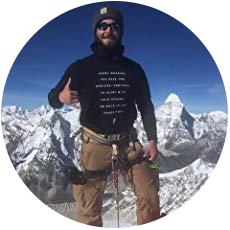
Steele Kelly
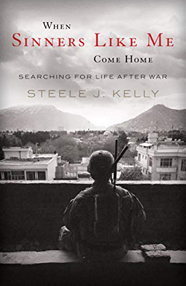
Steele J. Kelly is an Army National Guard veteran who deployed twice to Afghanistan, serving as a cavalry scout and forward observer for the field artillery. In his book, When Sinners Like Me Come Home: Searching for Life After War, he tells the story of a veteran whose heart and mind remained at war long after he came home, tracing his search for meaning from Afghanistan to Nepal as he confronts loss and hopelessness.
📚 Books by Steele Kelly
Transcript
[0:00:43] Charlie Hoehn: You’re listening to Author Hour, enlightening conversations about books with the authors who wrote them. I’m Charlie Hoehn. Today’s episode is with Steele Kelly, author of When Sinners Like Me Come Home. In this episode, Steele tells the story of a soldier who risked his life countless times in battle. But like so many others, couldn’t cope with the day to day existence once he returned home. After losing everything he loved to depression, anger, and PTSD, Steele traveled alone to the Himalayas to find the pieces of himself that he’d left on the front. This episode is important because so many former soldiers never speak about their emotional turmoil. Steele’s account gives us an insider’s view into why veterans are different after war. Why their relationships often fail and how it’s possible for them to come out of the darkness. This episode is not safe for listening around children or young ears or anybody who is really uneasy or unsettled by descriptions of violence or just difficult topics. You’ve bene warned, this episode is challenging to listen to at certain points but again, it’s an important topic. I’d encourage you to listen to it because not only is it an incredible story, I mean, it’s a miracle that Steele is alive today and you’ll see, by the end, why. It’s also a very humanizing one in that soldiers as tough and capable and as much respect as we have for them in their abilities, they are still human beings and they deserve to be able to express what they’ve been through. The more people like Steele who lead and actually have the courage to talk about their emotional turmoil, the better things are going to be for everyone. Now, here is our conversation with Steele Kelly.
[0:03:21] Steele Kelly: The story kind of takes place, I met this girl in gulf of Afghanistan and for me, I didn’t really believe in the light picket fence, I did, I thought it was great, white picket fence, a dog, a wife, some kids but I was like, that’s just some Hollywood fable. That doesn’t really exist in the real world, I met this girl Payton and I immediately was like, no, this is a real thing. This just isn’t a fable. I felt so head over heals for her, I could have married her up to the first month and been totally okay with it. For the first six months or so, I met her about a month after I got home from Afghanistan. For the first six months, I’m in this honeymoon phase of not only a new relationship but just being back home from war. I can get in my truck, I can drive somewhere, I’ve got freedom, I can just go to a coffee shop if I want to. This whole thing was a honeymoon phase on top of the new relationship and so, one day, we’re driving my truck and we’re going somewhere, I was like, let’s go to dinner. She was like, okay, yeah and then we’re just kind of driving, I make some sarcastic joke, I always call her unicorn because of the hot, crazy girl matrix, and he says unicorns don’t exist. I was like, you’re such a unicorn.
[0:04:30] Charlie Hoehn: Such a great use of your video.
[0:04:31] Steele Kelly: I love that video.
[0:04:31] Charlie Hoehn: Yeah.
[0:04:34] Steele Kelly: She turns around and she goes, no, you’re the real unicorn, she goes, you’re just so loving, kind, gentle and caring, you wouldn’t hurt a fly. You’re the real unicorn. I kind of smile and hold her hand really tight. Then, my mind just starts like flashing back through different things in Afghanistan and I’m just start questioning like, if you only need that other side of me, what would you think? Would you still love me, would you still think of me this way? What are you basing your opinion on? And so the story that I really flashed back to – It was like October 2014, we’re in Afghanistan and we’re doing an air assault mission to southwest Afghanistan, story’s pretty big in the book as well as have to be vague here because most details are still classified and will be that way for a long time. How an air assault mission works is you’ve got four different chalks of helicopters or however many other ones and each chalk is one helicopter with men and so the strategy typically is you land all of them at once to surprise the enemy or you land them quietly discretely, one at a time to prevent, getting shot out of the air and losing all your men. I was on the first helicopter landing, it was me and nine other guys and our commander went with us and we went in the middle of the night, just a little before midnight, there wasn’t very much moon out. There wasn’t many stars, had the cover of darkness and we had to be dropped into the middle of nowhere, it was a FOB that had been closed down which is a forward operating base, been closed down in about 2008, 2009 but Americans had been there for a really long time and they didn’t know we were coming, we didn’t want them to know we’re coming but the concern was that they had been tipped off. You have interpreters around, my interpreter was great but there is interpreters who sold out to the Taliban, who let them know and if I was also they know they got four helicopters coming, they’re going to shoot us out of the air and they’re going to lose a lot of Americans. It was really hush-hush, we didn’t notify them like hey, meet us here because we were worried that the Taliban infiltrated their ranks with that many years of Americans absent. We load the helicopter and you know, at first you’re like yeah, I got my boys, we’re going to go up there, all right, it’s going to be fine and then you get closer, for us, it was an hour flight and so we start getting closer and then the stress really hits when the pilot gets over the intercom and says, one minute out. Then your heart starts racing like all right. Then you know, you reach out to your night vision, tighten it, pull your weapon on your lap and then you get 30 seconds out and you’re like, sure that’s 30 seconds? Maybe you need some more time and then he says, 10 seconds out and you’re like, all right, we’re here and then they stop, open the door and all the men jump out. I jump out first on right side my buddy Casey first in left and I get down, you just feel the rhythmic flop of guys jumping on top of you and the rotor wash is just putting tons of wind down and on my weapon, I had 240 bravo which is a machine gun and a thermal optic on that and I had night vision on my right eye. All you can see is ten lasers scanning their fields of view, looking for terrorists to make sure that the helicopters didn’t get shot out. Then, you feel the rotor wash pickup and the helicopter takes of and you’re just sitting in silence in the pitch black. All you have is your night vision to see. We get there and we’re just hoping, mark our watches, and we’re just hoping the rest of the chalks are going to get there because yeah, I forgot to mention that the way we’re doing chalk one was that if we hit the ground and also came under contact by too many Taliban or ANA or whatever, they were going to turn the chalks two, three and four around and they weren’t going to bring the other 60 guys. The plan was, they had rigged up body bags with ammunition to do drops and that the 10 of us were going to consolidate to a tower and fight it out for 36 to 48 hours until they could get QRF by ground which is quick reaction force. They estimated, that would take like 36 hours if they did not hit a roadside bomb. The other plan was if we couldn’t get them in by ground, they were going to call special forces or navy seals to come help but that was – we were the lower priorities, we’re not special forces. During that 45 minutes, it’s really stressful because you’re like, I don’t know if 10 of us – That village there is 9,600 people, how many of them are Taliban? You know, is 10 of us going to make it out of this? The stress is just so high. We end up getting surprised, they get the other three other helicopters there and we’re setting up a command post, kicking out snipers and there’s this little gate over in the northeast corner and we don’t really know why there’s a gate there, it’s a big iron gate but we figured it had something to do with the previous FOB. Maybe it was a fueling station, something like that. I’m up on a Hesco barrier, it’s got gravel, it’s got chain link and I got my machine gun out and scanning through the fence, just watching for people and then I started seeing headlights and cars. I look a little closer through my optic and then I see machine guns mounted on the back with men standing up. All I can see is a silhouettes, I can’t make any details out. I yell at my buddy Casey who was one of the bravo squad leaders at the time and I was like, “Hey Jay, we got like six or seven cars that are coming our way.” I was like, I start counting men like 20 to 30 armed men, heavy weapons and so he’s like, all right guys, stack up. He's like, I think actually his line was, let’s get frosty gents and so we all line up and they come pulling in through the gate, they stop and the driver’s around my side facing me from the HESCO barrier, the passengers jump out, putting their AKs on the hood and the back of the truck bed facing us. Their gunner’s turned facing us and the drivers get out of face and guns at us and so, looking at them, I left and I could see their headlights, see their faces and in my right eye, through the night vision, I see lasers, every single one of their heads and foreheads. All of our fingers on the trigger and we’re just paused, waiting for the other side to do something and their commander comes and he starts yelling at our commander from his interpreter and he’s like, tell your men to put their weapons down. What are you guys doing here? The commander’s like, it’s none of your business what we’re doing here, we’re here for a mission, it’s need to know basis and you don’t need to know. We’ll leave when our mission’s complete and now tell your men to put the weapons down. They’re yelling at each other’s with interpreter for the next 20 or 30 minutes and finally –
[0:10:18] Charlie Hoehn: Hands on the trigger, everybody?
[0:10:20] Steele Kelly: Everybody.
[0:10:20] Charlie Hoehn: That whole time.
[0:10:21] Steele Kelly: Yeah, it’s weird because I could feel sweat trickling down my back and forehead from stress. I mean, it was hot but the stress was like, even if you know, yeah, we’ve got 30 guys to match their guys even more now because first platoon’s coming over but if someone pulls the trigger, we’re all going to start pulling the trigger, how many of them, we’re going to take all of them with us but how many of us are they going to take? The stress is just astronomical and so finally, I think the Afghan commander was like, okay, yeah, the Americans are not going to back down from this which would not be smart for us. He gets their men to put the weapons down and we’re like, just take a sigh of relief and I’m like, bullet dodged, literally. We’re getting ready, we’re like, all right, let’s go back to the mission, we need to handle these objectives. Then you hear the commanders say hey, second platoon, circle around. We were thinking, is this going to be okay, here’s what we’re doing now, we got everybody here. No, we had a support helicopters with us and there were two apache attack helicopters and so he says, all right second platoon, he’s like, “We had an issue with one of the apaches, it went down about one kilometer northeast of here, problem is, the village is about two and a half kilometers northeast of them.” He’s like, “They’re between us and the Taliban, they emergency landed, they can’t take off, it’s two pilots, their wing man is circling and he’s running out of fuel.” We’re like man, this could get bad, I want to take 15 guys, go get them and he’s like, “You need to go recover them, grab them and bring them back before the Taliban does or we’re going to have two dead pilots.” We mount up and I’ve got roughly 27 pound machine gun, 110 pound backpack and same with the other guys next to me and we just start walking in the dark of the night. That was the part where I mean, yeah, that didn’t end in violence but it was one of those things where it could have very quickly gone to that. And just wondering what she would think, you know? If she knew that side and you’re willing, I mean, your fingers on the trigger and you’re like, it only takes three pounds from here.
[0:12:12] Charlie Hoehn: Yeah, you know, in your book, you have an incredible story, I mean, you started training to become a police officer when you were 15 years old, you saw some really crazy, heartbreaking things. Obviously, more stories about your time in Afghanistan serving. I want to talk about the emotional journey you had when you got back? The heart of your story, the challenges you faced.
[0:12:37] Steele Kelly: Yeah, I think, you know, it’s weird, you have this honeymoon phase like I explained and everything’s so great, everything, just the best, you don’t even care, your coffee may suck and you’re like, it’s from America. All right, works for me. I say that the honeymoon phase usually last anywhere from six months to a year of getting back to the States and for me, nothing from deployment bothered me until like I started counting our one year anniversaries and they start noticing, hadn’t really been sleeping over the last year, I was getting four hours of sleep at night. I just kept waking up, couldn’t stay asleep. I just started getting very irritable with my friends, with my family, with Payton and I knew it but I just couldn’t do anything about it. I mean, I know a lot of people will say, you can always do something about it but it’s really difficult, especially when you’re sleep deprived on top of it. I end up moving to Montana and Payton was going to come with me and they have one of her nursing programs and I was going to do a rural doctor program out there. I moved out ahead of her and she’s like, “Hey, I got to finish my contract at work, as soon as that’s up, I’m going to move out there, I want to have a life with you, I want to marry you, we just need some time, we have some stuff we need to work through, you got some stuff you need to work through.” Long story short, she ended up not coming out there, she came out to visit in November and then a week later, she text me, said that she was done and that she’s moving on with her life without me. At the time, I was like, “This is out of left field, I don’t get it.” You know, now, in retrospect, after writing the book, I’m like, there’s a whole lot of reasons here buddy, you know. After that, I had a couple of friends commit suicide and there were guys where I would never guessed in a million years that they were struggling.
[0:14:17] Charlie Hoehn: Before we talk about them which I’m terribly sorry about that, what were some of the reasons now that in retrospect you realize like this could have been seen common?
[0:14:27] Steele Kelly: I want to caution the listeners if you have little ears in the car or can overhear, the following story is pretty graphic, it’s pretty traumatic and it is definitely, this is a trigger warning for people. Involves a woman and some other things.
[0:14:41] Charlie Hoehn: Yeah, again, just to reiterate, if you’re uncomfortable, squeamish, don’t like this type of story that involves violence or whatever, tap out now, that’s totally fine. All right, go ahead Steele.
[0:14:56] Steele Kelly: All right, it’s inter-deployment, after we closed down the FOB in western side of Afghanistan, they moved us to the capital in Kabul and we’re out of the ISAF headquarters which is kind of what all the high rank people, they’re making a decision, things like that. We were tasked with just QRF for the headquarters near the embassy, at the time there’s a lot of suicide bombers. In fact, a few weeks ago, they just killed like 90 people on a market at that same place, with the suicide bomb. We were there and we were there by proxy and I just gotten off 24 hour shift, hadn’t slept and my squad leader comes in, he’s like, “Hey, Kelly, grab your kit, grab your rifle, we got to go.” I’m like, “What’s going on?” We don’t normally get paged up for this, especially in this region of Afghanistan. He goes, “There’s a riot outside, they’re worried that if it back fires towards us, we need to stop containment.” I was like, “All right, I’ll be in operation center in five minutes.” I grab my kit, I’m like, just probably take some extra grenades for this, grab it out and head over there and the platoon leader’s there, we’re only taking like eight guys with us, wasn’t very far from us. He’s like, “All right gentlemen, here’s the deal, he’s like, there’s a riot outside the gates, apparently a woman was burning the Koran where I’m sure the town’s rioting, they’re really upset, we’re worried that’s going to come back towards us, we’re going to go out there, we’re just going to serve,” and he’s like, “Gentlemen at this point in the war, we are not to intervene, let me repeat myself, we are not going to do anything. The afghan national police and the Afghan national army are handling this. We’re just making sure it doesn’t come back to the base.” We’re like, all right. We headed out, we’re standing there and you hear them just losing their mind. I mean, people are throwing rocks, you see fire, there’s smoke, it smells like diesel. I mean, burning tires, everything, we’re sitting there and we can’t come any closer, Afghan national police are in front of us and we’re just kind of watching. You see him – picture like a crowded market where town’s supposed to – there’s like a circle middle but you just can’t see the circle but you see flames shooting out of centre of the circle. You’re like, what is that in there, I don’t say a car, what could that be? We’re out there for like 20, 30 minutes of walking around and then people, you can tell that Afghan national police has under control, they call us back to base, it’s not worth us getting hit by a suicide bomber just waiting. This whole time, I’m just wondering, what is in there? What could that be? What are they freaking out about? By the way, they said a woman was burning the Koran, why haven’t I seen a woman? We go back to base and I’m like, I’m just sitting on it. For me, curiosity always kill the cat. I’m always going to be like, what was it? Then I usually regret finding out what it was but I still do it. I start cruising live leak and Aljazeera website, trying to find like a video of the riot. I find it and you see this woman, she’s probably mid to late 20s and she’s actually burning the Palestinian books. I know, for some of the listeners, I might get this wrong. I don’t fully understand the conflict between like the Afghans and the Palestinians. I’ve just been told there’s a huge amount of disdain for each other and it’s acceptable to burn the Palestinian books but no the Koran. I don’t know much about that so forgive me for that. Anyway, she’s burning that in the middle of the street and then someone yells, she’s burning the Koran. Not only are you burning the Koran but you’re also a woman in this country. Both are – that’s just fuel for a fire waiting to happen especially burning the Koran, it doesn’t matter who you are. Then they start yelling at her, they started throwing bricks at her and she’s trying to get away. She jumps up on one of the rooftops and starts running and these men are chasing her down. Throwing rocks, she’s running and then she kind of trips and you see her fall and roll towards the end of the building. Then she gets up and she starts running again and then one of the guys gets up to her, catches her, pushes her off the roof to the men below. Then they take turns stoning her and then the video kind of cut out where they were gang raping her supposedly is what the news place reported. Then her father came through the crowd. I’m thinking, you know, dad’s going to stop this, thank god dad got here. He doesn’t. He lets them light his daughter on fire while she’s still alive.
[0:18:55] Charlie Hoehn: My god.
[0:18:58] Steele Kelly: You know, it’s weird because like, in person, we were just standing there, it had already taken place but now as I’m watching this, putting these events to where we were just standing. I’m like, man, Toto, we’re not in Kansas anymore.
[0:19:09] Charlie Hoehn: No.
[0:19:11] Steele Kelly: Holy crap, this is what happens here and this is when the Afghan national army and police are there. This is acceptable. It is. They’re very different from the America. I didn’t realize that story stuck with me and really like bother me in my core because I think what it was is just, you always hear stories about the Taliban or people like that and it’s almost out of sight, out of mind, so it’s not real and you're like, that would never happen to me or someone I love. Then when you see that, you’re like, oh no, people are actually capable of this. This actually happens. When the issues with Payton started happening, she told me she was going to go backpacking in Columbia and El Salvador with another one of her girlfriends and immediately –
[0:20:25] Charlie Hoehn: You got scared. That’s an understatement.
[0:20:27] Steele Kelly: Yeah. Back then, it was – I’m getting better about it now, I think always going to struggle with it. You know, in the military, we’re at war, you don’t have time to be sad, you hit everything with anger or funny, those are the two. I got like – irate, do you know what happens to white girls when they go backpacking or any woman for that matter, alone in the back woods of El Salvador, Columbia? I was like, hello, drug cartel land. She was like, “I don’t think I’m asking my dad permission here.” I mean, I had said a lot more colorful things, just losing my lid.
[0:20:28] Charlie Hoehn: Right.
[0:20:29] Steele Kelly: She’s like, “I’m going, it’s going to be safe, we looked through the backpacking websites, we’re on safe places but we’re going to take the local buses.” I didn’t tell her but all I could picture was her face on that woman’s. I just dragged my feet for the next month and was like, “You’re out of your mind, what are you thinking, you’re naïve,” and like really laying into her. In hindsight –
[0:20:50] Charlie Hoehn: She had no idea the context that you were speaking from, from that point, yeah?
[0:20:55] Steele Kelly: Exactly, how do you bring that story up and be like, hey, here’s what I’m actually worried, you know? Then I had, I met with my squad leaders and he’s like, you know? When you joined the military looking for adventure, a lot of the time, you know, there’s a lot of reasons but this adventure is enticing. Maybe she just want to see an adventure of her own and I’m like, “I don’t really care, not in that country,” and you know, I still never explained the reasons but you know, that started happening and then there was a couple of times she go out with the girlfriends and for me, I really don’t care. Okay, you’re going to go out, where are you going, then where are you going, what time are you going to be there, what time are you home, let me know you made it home safe because in my mind, I’m jumping to the worst, she’s dead in a ditch, she’s kidnapped and I want to know where to start looking. But, I had never explained those things and like especially now, you know, we’re not sending 150,000 troops to Afghanistan and Iraq every year. The amount of younger dating interface there is, there’s not much, it’s harder to have friends who is like yeah, I dated combat vet too, this is just a normal thing, it’s not about control. You know, rightfully so, you know, she started to wonder, is he just wanting to know what time getting home because wondering if I’m going home with someone else or is he – is this control? The way coming out it with anger was, that’s control, that’s angry, why are you getting angry, I didn’t text you that you're home safe because we finally had a blow up when I was – I called her until she woke up at 4:00 in the morning. It’s like 12, no problem, one, two, bars close at three. I’m panicking at like four because I’m like, “Okay, well, maybe she made it – the bars don’t close for an hour,” and in my own mind, I know it’s totally irrational. My fear and panic in picturing that woman in Afghanistan, I’m thinking that. It’s like, call her till she woke up. I was like, “Is it really that hard to text me, I’m home safe, that’s all you have to do.” I like flipped my lid but there was no context to it. Looks like, he’s got anger problem and so, I totally understand, you know? It was things like that, that eventually broke the camel’s back. But I couldn’t see at the time.
[0:22:53] Charlie Hoehn: Getting back to, I mean, she was your fiancée, right? No, she was your girlfriend?
[0:23:00] Steele Kelly: No, I bought a ring, I was going to ask her, we broke up before I asked her.
[0:23:03] Charlie Hoehn: Yeah, was about to become your fiancée.
[0:23:06] Steele Kelly: Hopefully.
[0:23:08] Charlie Hoehn: Your relationship ended and then your friends took their lives?
[0:23:11] Steele Kelly: Yeah.
[0:23:16] Charlie Hoehn: You had these really traumatic things happening to you after this year or so that you’d gotten back from deployment and what happened to you then?
[0:23:24] Steele Kelly: I started drinking and like, alcoholism runs in my family pretty deep, a lot of my extended relatives had a hard time with alcohol but for me, I was like, I was just looking for something I’d experience and since I got back from overseas. Things make me like –
[0:23:36] Charlie Hoehn: Experienced what?
[0:23:37] Steele Kelly: Anhedonia.
[0:23:38] Charlie Hoehn: Anhedonia.
[0:23:38] Steele Kelly: Anhedonia is kind of like, you don’t feel happy, you don’t feel sad, you just feel kind of in the middle. You may fluctuate a little bit but you never get the like, I’m so happy right now.
[0:23:48] Charlie Hoehn: Right.
[0:23:48] Steele Kelly: The only time I felt the negative, the anger was fear based, you know? Other than that, there was nothing.
[0:23:56] Charlie Hoehn: You were numb?
[0:23:56] Steele Kelly: Yeah, pretty much. The hard part was that, I started dealing with that, I was like drinking because it was the one time where I was just like stress free. I was like, finally a weight off my shoulders. But then, I was living alone with just me and my dog out there, snowing all the time and everyone just drinks.
[0:24:13] Charlie Hoehn: Yeah. You develop PTSD I’m guessing, you know?
[0:24:15] Steele Kelly: Yeah, so I was having a hard time, I was having some nightmares and which you know, it is what it is.
[0:24:27] Charlie Hoehn: Author Hour is sponsored by Book in a Box. For anyone who has a great idea for a book but doesn’t have the time or patience to sit down and type it out, Book in a Box has created a new way to help you painlessly publish your book. Instead of sitting at a computer and typing for a year, hoping everything works out, Book in a Box takes you through a structured interview process that gets your ideas out of your head and into a book in just a few months. To learn more, head over to bookinabox.com and fill out the form at the bottom of the page. Don’t let another year go by where you put off writing your book. Sorry to say that, I mean, that sounds like a presumptive question but the reason I bring that up is because that’s actually really common when you go from being sort of in a tribe, a unit, to being all on your own.
[0:25:22] Steele Kelly: Exactly.
[0:25:23] Charlie Hoehn: It’s really common.
[0:25:26] Steele Kelly: So, I just started drinking more and more and then I realized about February, you’re drinking a lot, you drink like a gallon of whiskey a week and you’re the only one who lives here. Then I tried to like curve back but I started getting the shakes and the sweats and I was like, we’ve been drinking so much and the problem was, is the period of like reprieve, being stress free start getting shorter and shorter. Then I was more depressed when I was sober so I started drinking earlier and earlier and drinking longer. I just kind of like started to spiraled out. The thing that finally led to going to the Himalayas was, my dad came out to visit and go snowmobiling and we took a picture, we’re in the parking lot and he’s so happy to be with his son. You can just tell, he’s so happy, I’m smiling but you can tell I’m not happy.
[0:26:11] Charlie Hoehn: Could he tell something was up?
[0:26:13] Steele Kelly: No, he didn’t know, my parents didn’t know any of these stories, my dad just read the book last week.
[0:26:17] Charlie Hoehn: Wow.
[0:26:18] Steele Kelly: Yeah, it was tough, my mom made it to chapter three, put it down, won’t pick it up. It’s just – that’s their son. I felt – I mean, I never told him but I felt really guilty because I thought about my friends who have been killed overseas, who have been on different deployments than mine, they weren’t with us when they were killed. But I was like, you know, they would probably do whatever they could to have on more day out, hanging out with their dad, riding around. I’m sitting here, like depressed, not feeling good, what is my deal? I’m still alive, I’ve got all my limbs. I started feeling like this survivor’s guilt and that made the drinking worse. Then, in end of March last year, my buddy’s texting me in the beginning of the book, there’s a story of me and my buddy Casey and Cat Daddy, that’s his nickname. We get trapped out in the open and they’re shooting rockets and machine guns at us and my buddy jumps up on the 50 Cal and starts laying rounds towards the village so we could get back to the trucks to cover. He took shrapnel in the face that day, he got a purple heart and he, his wife left him, I don’t know the full reasons for that but he hadn’t been able to see his kids. She’s keeping the kids from him. He just starts, I was going to buy a gun because she sold all of his guns and he was drinking way more than I was. He’s like, I’m just go to the woods and think about things and I was like, I know what that means man. I know what you’re doing, I’m like, do you realize – your kids are like five years old. I was like, do you think it’s better to let them grow up without a dad? I was trying to be blunt and not very nice to get just some sort of introspective reaction from. He goes, “Will be a lot better than never seeing them.” We got through this long conversation, I was like, “Look man, here’s the deal, if you do it, I’m going to piss on your grave,” and he’s like, “I count you pissing water on my flowers,” obviously I wasn’t serious but I was just trying to get some reaction out and he wasn’t – he wouldn’t give me anything. I was trying to use that to gauge, okay, is this drunk conversation or is this serious? Then I start to realize, it’s serious but he’s drunk and so, I was like, “All right man, I’ll call you tomorrow, you’re drunk, go to bed.” The next day, I wake up in the morning, I call him, no answer. Then I call alter in the afternoon, no answer. That night rolls around, call him again, no answer. Then the next morning, I messaged him and was like, “Hey dude, I’m starting to get worried, I know you were pretty drunk if you’re embarrassed, it is what it is. I get it. But just let me know you’re all right.” No answer. Then, I wait about an hour and then I call my old squad leader and I was like, “Hey, I’m going to send you some screenshots, I think I messed up.” He’s like, “Send them to me. I send him the screenshots, our conversations, he read that and he’s like, you better hope that Brent didn’t kill himself.” He’s like, “You know better than anybody that you should have called Saturday night.” I was like, “What are you doing? You need to call the commander and he’s like, they need to get someone over there. They need to see if he’s okay.” I was like, “You’re right.” I called the commander on his phone number at home and I was like, “Hey sir, I’m sending you some screenshots, we got to figure out where this guy’s at, I think he’s out now but I know you live close to him. You know, here’s what it is.” He read it and he’s like, I’m going to send guys over there now. They got there and was okay, he didn’t commit suicide, he tried to say that it was all just a joke and I took it wrong but then as soon as they left, he texted me, told me I betrayed him and that he couldn’t trust me and how could I do that? Then I felt even more guilty because like, the way I was reading it –
[0:29:41] Charlie Hoehn: But he was in a different – physiological state, he’d been drowning himself with alcohol so you become a different person.
[0:29:50] Steele Kelly: Yeah.
[0:29:51] Charlie Hoehn: You felt guilty of course, yeah.
[0:29:52] Steele Kelly: The thing was, it was a different kind of guilt, I didn’t feel guilty like yeah, I did betray my man, it did feel like I betrayed him and his trust. I felt guilty because I called when I felt those same feelings myself.
[0:30:02] Charlie Hoehn: Yeah.
[0:30:03] Steele Kelly: Then I was like, you’re being a hypocrite right now because you feel exactly like him. Then that just led with everything else combined and then I was drinking one night and had this dream and this dream, I’m in the Himalayas and I’m climbing to the top, for some reason I just know I’m in the Himalayas in Nepal. I get to the top and leave the engagement ring on the summit and just rappel off and then I wake up and I go to my chemistry class, I’m sitting there and started googling mountains climb in Nepal. Then I find the mountain.
[0:30:29] Charlie Hoehn: There happens to be one there.
[0:30:32] Steele Kelly: The same one from my dream. I mean, obviously they’re all mountains but that’s it man, that’s it. I bought a flight for three weeks later.
[0:30:39] Charlie Hoehn: To Everest?
[0:30:40] Steele Kelly: No, it’s in the Everest region.
[0:30:43] Charlie Hoehn: Okay.
[0:30:43] Steele Kelly: It’s just a few miles from Everest but it’s still a big peak, I think the summit is 20,000.
[0:30:48] Charlie Hoehn: Had you seen the mountain before? Is that why it was –
[0:30:50] Steele Kelly: No.
[0:30:51] Charlie Hoehn: Really?
[0:30:52] Steele Kelly: I probably saw it in like a movie or something but no, it was just kind of – I never been climbing, I’ve been rappelling.
[0:30:57] Charlie Hoehn: Dreams are magic. I got to have an author on here, he’s written a dream book.
[0:31:02] Steele Kelly: Yeah, you do.
[0:31:03] Charlie Hoehn: Anyway, you bought the flight.
[0:31:05] Steele Kelly: Yeah, I bought the flight and I was like, right, you got three weeks on everything about mountaineering and I learned things along the way from military about cold weather training, I’ve been rappelling and I wasn’t too concerned. I went through all the paper work to permitting and this and that, have that sent out there and I went to the doctor, went to travel doctor and I was like, all right, you know, I need this medication for Giardia, dysentery, to list and then I get to three, one’s called nephatapine, that’s congestive heart failure drug and essentially, layman’s terms, you pee out the fluid from the chest cavity and it starts filling up. The other one is Dimox and it changes the acidity of your kidneys to get more red blood cells. The third one is Dexamethasone, it’s a high powered steroid and supposedly, the way it works is you pee out your cerebral spine fluid when the brain’s out swelling the skull. For the doctors who are listening to this, I’m breaking it down to layman’s terms.
[0:31:59] Charlie Hoehn: Right, par for the course, just typical drugs, yeah, why not.
[0:32:03] Steele Kelly: I had read about them in this climbing site and I was like, if I need to take these, I’m probably going to die but I’d rather have them than not have them, better safe than sorry. Me and the doctor talking and we’re going down the list, he’s like all right, you need Vicodin, in case you break an ankle out there, he’s going down the list. Then it gets to those three and he goes, why do you need these? He used to be a doctor actually at the Everest base camp hospital and tell me where I was going and he’s like, “You do realize that Dexamethasone is banned in a lot of your European countries? It’s a high powered steroid and it stops your immune system from functioning?”
[0:32:35] Charlie Hoehn: I was like, “I didn’t really notice that but it says on the list I should have it and I feel like I should have it. He’s like, yeah, I’m not giving that to you. I was like “if I need it, I’m dying, you’re not going to get sued by me.” He goes, “Yeah, but what if it kills you?” I’m like, “Then I’m dead and don’t have to worry about it.”
[0:32:52] Steele Kelly: Right, either way, you’re probably going to die.
[0:32:53] Charlie Hoehn: Exactly. He’s like, “No, you don’t need it.” I go, “Here’s the deal, you’re either going to give it to me and I know what pharmacy I’m getting it from, I’m just going to buy it when I get there illegally.” He’s like, sighs and he’s like, “Yeah, I know you will.” He wrote me the script. I headed out and it’s a long walk in. You can either walk five days just to get to Lukla from Kathmandu or you can fly into Lukla, here’s the catch. It’s the world’s most dangerous airport. You fly up over a mountain and you’re flying like –
[0:33:25] Steele Kelly: To land into?
[0:33:26] Charlie Hoehn: To land. Well, there’s a 3,000 foot cliff in front and a huge mountain in the back. If you undershoot it, you crash on the side of the cliff and you hit the mountain in the other side. I didn’t realize so many flights per year crash and kill everybody on board and most people walk in from Kathmandu to avoid that airport. I was like, “No, I don’t have that kind of time, I’m not scared of flying, get me on that bird.” I think for me, it’s like, the whole reason I think I knew I need to go out there was I was looking for lost pieces. Things I felt, like I want to find my old self again, that happy person. I was just kind of like, yeah, it’s a risk but maybe it will lead to me finding it. I wasn’t avoiding risks like in hindsight, I probably should have walked five days. I didn’t. We show up at the Kathmandu airport and the pilots get out in flip flops and he’s got like the sunglasses on and he looks like he’s hungover and he loads the plane and I get on with eight other people, I’m thinking like, I don’t know if I should get on this plane with this guy. I’m like yeah, whatever, whatever’s going to happen is going to happen. I get on the plane and we start flying. He opens up his side window and takes a napkin, wipes the front window off the plane as if like –
[0:34:37] Steele Kelly: My gosh. I’m thinking, what did I just get myself into? It’s cloudy, it’s raining, you can’t see this runway we’re flying into, already looked up is like, I don’t’ know, size of a football field. I’m like, how are we going to find this, as he’s wiping off of the napkin. We land and you get off and there’s just memorials on the trail of people who died in this plane crashes. It’s insane.
[0:34:59] Charlie Hoehn: It’s like a comedy routine.
[0:35:01] Steele Kelly: Pretty much, yeah, I was just like, this isn’t happening, all right. You have a map by the way, if you guys ever go climb, bring maps from America or Geological surveyed map. I realized about day three, the distance they had marked wasn’t to scale, it was way farther when I had mapped out check points and took me twice the length of the time. All their elevation marks were off so some place, you actually gone up 5,000 feet instead of 2,000 where it’s marked.
[0:35:28] Charlie Hoehn: My gosh.
[0:35:29] Steele Kelly: It got pretty difficult but yeah, it took about 18-ish days to walk to Tengboche which my guide, we’re going to go from there up to this town called Jacun, spend the night there and then go to base camp the following day. With altitude and on the CDC recommendation is roughly once you go above 10,000 feet, you sleep anywhere from 12 to 1,400 feet higher at night time. You climb high during the day, go low. Exactly. There were several trekkers who died when I was there who did not adhere to those guidelines. It’s very dangerous. I was adhering to that, I was acclimatizing. I spent a couple of days at 12,000 feet and I was like, all right, I’m feeling good again, keep going. The problem that I ran into was that the weight of my pack was so heavy and I’ve carried heavy packs overseas in the military but once you start getting that thinner air and oxygen, it gets really tough. Before I left to go to the Himalayas, I took out any gear that was not essential. I mean, I’m down like four pairs of socks, four pairs of underwear, my cold weather gear and that’s it. I mean, I took out my water proof liner, my subzero bag because I was going to be staying inside, it was May, you know, temperatures weren’t going to go below 15, too much. I took that out to cut some weight. We get to Tengboche and immediately, everything my intuition when I’m talking to this guy, he’s in charge of all the guides, I was supposed to get my cramp ons, ice axe, ascenders, things like that from him. I walk in there, I’m talking to him in his little tea house. He’s like, “Yeah. You pay for gear,” and I go, “I’ve already paid for gear, I paid from the capital when I picked up my permit and I met your boss at the capital and I’m just picking up from you.” He goes, “No, you pay for each gear,” It was going to total up to like 250 American dollars and I’m like “No, you just think I’m a young kid that’s going to pay you his money.” We argue for a while, I finally go, “Here’s the deal dude, you either get me my gear or I’m just going to call you boss in the capital and let him sort it out.” He’s like, “No, no need to call boss, no problem.” He goes and gets cramp ons and pull them out and see how sharp they are. I’m like, “Yeah, they’re pretty sharp. All right, we’re good.” Brings a helmet out, fits and I’m like, “Okay, cool, that will work. Where’s my ice axe,” and he goes, “You don’t need ice axe.” My gut’s like, Steele, you need an ice axe, your friends who climb hood and mount Reiner in Washington, they use an ice axe and that’s only 11,000, 14, some change feet.” You know, you can use it for footholds or breaking, if your buddy falls through a crevice or something, you need an ice axe. I say, “No, my friends climb back home, I need an ice axe.” He goes, your friends no climb Juteau," and so immediately I’m like, I think this guy is screwing you.” And so then I’m like, “Okay maybe it is more of a difficult walk than a climb, you know when in Rome and so like, “All right man” and I was reading the Dalai Lama’s book, The Art of Happiness and so I was like, “Dalai Lama, Dalai Lama like just be nice,” because I was getting ready to losing my cool and Sunny comes out and like, “All right where is my ascender?”. So an ascender is used, you can slide it up the line, locks, won’t come back down and typically if you are above, 50 to 60% pitch you want two so you can just scissor up left hand, right hand with these ascenders and kind of crab walk at the side. So he comes out with one ascender and he’s like, “Here is your ascender,” and then I go, “Well where’s my second one?” He goes, “You don’t need a second one,” and I go, “Are you sure? I’m pretty sure I need two.” And he goes, “No, no once again your friends no climb in Juteau.” And I go, “Yeah, you’re right. They never climb Juteau.” And so we had talked and originally I was going to go with the guide from there up to base camp but I want to spend two extra days about 17,000 feet because I’d come all that way. I was not going to turn around saying climb test properly. So I talked to him and I was like, “Hey tell your guide I’ll meet him three days from now at base camp and we’ll do the climb from there and when we’re done, I want him to bring me back to Jacun that night.” He walks with me, I give him the gear there and we go our separate ways and he understood and we’re like okay, cool three days and he brings you back. We shook hands we’re done. So I went to Jacun, waited my three days, felt good. I headed out to base camp. Right before I headed out to base camp, what’s really interesting is I had emailed Aubrey Marcus at Onnit and I had listened to one of his podcasts on Joe Rogan’s show and he’s talking about how him and I think it was his girlfriend at the time. A couple of years ago had gotten into this argument and he would stop answering text messages and phone calls and eventually he kind of realized that, “Oh I am doing this because she hurt my feelings. I know not responding hurts her feelings.” So I’d messaged about some of the realizations I had about Payton and I and how it really helped me and how his and Joe’s show. So I find myself in the Himalayas and I was like, “He’s never going to get it but yeah, I will send a nice message. Everyone likes a nice message every now and then. So right before I left I saw I had a response from him. He is like, “Hey my friend I know what you are looking for out there. You won’t find light in the Himalayas but you might find light within yourself while you are in the Himalayas.” So I was like, “That is kind of cryptic. I don’t know what to think about it,” my screenshot was like, I think about it when I get there so we got up there.
[0:40:25] Charlie Hoehn: It is the same similar quote, I can’t remember who said it but they’re like the only enlightenment that you find at the top of the mountain is the enlightenment you bring within yourself, yeah.
[0:40:34] Steele Kelly: Exactly. I never heard about those quotes and so I was like, “Oh that is really cryptic, I don’t know what to make of it right now,” so I went up there and I meet the guide and he’s got food. He’s got all the camp set up and I’m like, “Great” all right we’re off to a rocky start, we’re off to a good note. So at 7:30 at night, luckily still clear skies. We know our window is going to be good. Well a bunch of other climbers come in and they are up until about 11:00 yelling, joking, running around. Well we start our climb about 12:50 in the morning so I haven’t slept now in probably 24 hours so we start climbing. It was a lot harder than I thought it was with that elevation. We started going and I’m like, “Oh it’s a lot.” And so we finally at about 3:30 in the morning, we get to cramp on point where it is all ice and glaciers and so I look at the guide and he pulls out an ice axe and I’m like, “Oh man, I knew it.” And so his buddy cords onto me but then I’m like, “And I will, maybe it is just like to break in case you fall through.” But then my mind goes, “What if he falls through? How are you going to stop you guys and you don’t have a knife to cut the rope because they didn’t give you an ice axe.” So then I’m like, “Nah, you’re along for the ride. You came all this way”. I know looking back everything my stomach is like, “Why didn’t you say something?”
[0:41:45] Charlie Hoehn: How many lives are you on now?
[0:41:46] Steele Kelly: Oh I know so we start going and it’s really tough like you have to walk like cowboy stagger kind of bow legged to keep your crampons in catching your pants. The snow is still pretty deep up there and we come to this crevice and it is, I don’t know, 40 or 50 across. There are this aluminum ladders that are lashed together. There is only six inches of ladder on each side and I am like, “That is a long way down.” Like it is a long way down and then I’m like, “I’m buddy cording to him. If he breaks through I am going down with him.” And I was like, “I mean you are not going to feel it when you hit the bottom, might as well cross the ladder and follow him.” So we cross that and we cross another one and another one and as soon as we get to the final ascent, I am standing there looking up and it is hard to judge how far it was. I think it was probably a thousand two hundred feet but it is like a 70% pitch maybe a little more in some places. So I look at the guide and I pull out my ascender and he pulls out two. And I’m like, “Oh man these guys just screwed you. You dumb American.” and so he just start scissoring up the line. So I go and clip into the line and my first red flag is that it is nylon rope and I’m like, “You don’t normally use nylon in this kind of a climate because it gets brittle.” You usually use a dry rope or something and so that is my first red flag. It’s like something is a little off so I put my ascender on the line and I start going to slide up the tension and I take the two steps of the crampon.
[0:43:14] Charlie Hoehn: What is an ascender specifically?
[0:43:15] Steele Kelly: So picture like an oval piece of metal that has a little square off one of the long ends and in that there is a little locking device that it allows the rope to slide through but not down. You go up and you are just going to slide off. The problem is with those because of that locking mechanism, you have to have tension on the line. If you don’t have tension on the line, you can’t slide if up the line so that is why we use two. You can put tension with your left hand and your right hand slide back and forth. So the problem is like, grab on the line, lock in and I start to go to climb up and I take two steps and I start sliding down and I can’t slide my ascender. And I am like, “Oh your crampons were finger sharp not ice sharp,” and then I’m like, “You made it all this way, you can’t not climb this now.” So then I grabbed with my left hand. I wrapped the rope around my hand and I pull myself up with a half pull up and slide the line. And so I started to do this all the way up the line so two steps up, one step down, the whole way up and about half way up –
[0:44:17] Charlie Hoehn: A thousand feet.
[0:44:17] Steele Kelly: Roughly, yeah I know. In hindsight, I am like, “You idiot.” Right? So anyway, I get half way up and I start feeling like a cold winter cough and I’m like, “Well, okay this isn’t good,” this is the beginning stage of what’s called high altitude pulmonary edema so your lungs fill with fluid and I’m like, “It’s not severe. There’s no bubbling,” just a little bit of fluid which is expected when you are going up 21,000 feet almost and so then it’s getting harder and harder to catch my breath. It is taking me longer and longer pauses. Anyway, I make it to the summit, I am standing there, take the cool guy picture and then I take a picture out of my wallet that I carried of Payton and I and I buried that and a couple of other things on the summit and so then I stand back up. Mind you, I borrowed his ice axe to dig the hole to bury the post things. So I stand back up and all of a sudden I feel drunk and I’m like, “Oh this is bad.” This is the beginning stages of what’s called high altitude cerebral edema. And essentially your brain is swelling from the altitude and it is confusing you and it is messing your coordination just like being drunk. So I look at him and we’ve only been up there like 10, 15 minutes and I was like, “Hey man we got to go down now,” and he’s like, “We just got here,” and I’m like, “Yeah, you don’t understand.”
[0:45:28] Charlie Hoehn: We just got here.
[0:45:31] Steele Kelly: And I was like, “No I don’t think you understand.” I have emergency medications in my bag. I am not at that point yet but I don’t want to stick around and find out. He’s like, “Oh yeah no problem. I’d get you back to base camp.” So he clips on the line and just rappels down all the way down and so I clip on, do the same thing. Well after we get to these tie off points from the final ascend he starts walking and I start walking but this time he doesn’t put his buddy line onto my harness. He was just walking and I am trying to struggle to keep up and now there’s getting more fluid into my lungs. I’m just like, “Okay maintain coordination,” but I can’t even walk a straight line. My crampons are catching my pants, tearing them open and I’m like, “Focus, focus.” And trying to walk this line. I have to cross now all these crevices with essentially drunk coordination and so once again I’m like, “Man that is a long fall at the bottom. You are not going to feel any hit there just make sure you cross it.” So we make it down and we start walking and he’s walking ahead of me like, “Why is this dude taking so long?” And so I ended up walking all the way down. He just keeps walking to base camp, it was just one trail down, make it to base camp six hours later which is way longer. The walk down should be way quicker than the way up and so I get down there and by then I can feel the gurgling in my lungs. So you put a straw you can blow bubbles because there is so much fluid in my lungs now. Because it took me so long to get to blow them out at that point and I am also really confused and so I am thinking I am dehydrated and so I drink a bunch of water and then I walk over to him and I’m like, “Hey I need to get back to Jacun by 5:30.” And he goes, “Why?” I’m like, “I am not doing good, something is wrong.” I want to keep my life flight options open. I don’t think I need it now but just in case, I know they stop flying at six and I already pre-paid for insurance just in case I need a life flight. And he goes, “Yes, yes no problem.” And so I take out $130 which is a lot there. A bottle of water is like 20 American cents and I hand it to him and I was like, “No I don’t think you understand. I need to go back to Jacun by 5:30.” And he goes, “Okay no problem. We’d get you there by then”. So I go back to my tent and it is probably three in the afternoon and I only have five things out but it takes me an hour and a half to figure out how to get these things to my backpack because I am so confused. And I don’t even need to be going there, I just have to figure out how to get them in there and it’s just so weird how it happens because you know why am I struggling and so we start walking and by this point I am coughing out white foam out of my lungs which is the fluid and he is walking pretty fast. I mean in his defense I did say I got to get back to Jacun by 5:30, we are starting late. So we started walking and I can’t keep up and I am just like, “All right try to keep up, try to keep up.” And I can’t barely talk I am so winded. And so from then, I bend over and I started coughing and I can’t stop coughing. I can’t get air and I start vomiting and I am in this vicious cycle of cough-vomit-cough-vomit and it went on for my guess it is like 20 minutes and we have to stop because you are going to pass out. There is too much fluid in your lungs and so I freeze. I am able to control it, stop coughing and I look up and he is gone. And so I had gotten to base camp on my own so in my head I am like, “Okay you got yourself out here, you can get yourself back.” But what I didn’t know is that I already started visually hallucinating. So I get my map out. I’m like, “All right the sun rises in the east, sets in the west. You got out here there is one river.” And then all of a sudden my brain I’m like, “No you took the east river when you should have taken the west side river. You zigged when you should have zagged.” So then I looked up and over there they have trail markers to the veterans out there. It is like an IED marker with stacked rocks and so I look up and there is no vegetation above 14,000 feet or 16,000 feet, so there is nothing. There is just rocks and boulders and so I look up towards the north which I notice the north now and I am like, “Oh there’s this trail markers,” and so I started following it. I go up the hill and down the side and then back up and I am still following them. And these boulders are the size of cars. So with every step you have to be careful. I am thinking of that guy I saw, what was that movie where he had to cut his arm off?
[0:49:34] Charlie Hoehn: 127 Hours.
[0:49:35] Steele Kelly: Yeah, so I am thinking of that. You have to be really careful and then I was like, “You brought tunicates just in case,” I don’t know that is how my brain is working at the time but I am being careful because I’m like, “Oh man.” And so now it’s probably 6:45 at night. It is starting to get dark and I am completely lost and then all of a sudden I hear an auditory hallucination and it is my buddy Casey and he says, “Hey man I’m having a kid.” And we just talked about him having a kid before I went. He’s like, “So you got to make it home. You’ve got to be in this kid’s like, you can’t die in the Himalayas.” And then I hear the sound of a cassette tape running out of tape and I hear one of my old AIT sergeants at my job training school and I hear him say, “Gentleman if you are ever lost or separated from your unit, stop, dig in and get in a shelter before the due point hits or you will die of hypothermia.” And immediately I am like they’re not here but I could hear it. And so I turned behind me and all the trail marks I am following are gone and I’m like, “Oh no you have been visually hallucinating these trail markers,” and so now I pull out my map. The sun is already past the mountains and for the first time, I am really good with directions. The first time in my life, I don’t even know which way is north and I can’t see Everest anymore and you always know that Everest is towards the north so I have no idea which way I came from. I have no idea which way is out. There is no city scape so I can’t just see the village where you are standing and so immediately I am starting to, “Okay you can’t panic, you can’t panic, you got out here. You can get yourself off.” And so then I looked down the valley and you can see all the way down Khumbu Valley and I see clouds coming in and it’s like 18 degrees Fahrenheit outside. To see these clouds coming in I am like, “All right you’ve got two hours or the storm is coming straight for you.” So I get my head lamp out, all right I got my headlamp, I got my flashlight, we got to find shelter and then I’m like, “Wait a minute, no just take out your down sleeping bag with your waterproof rain cover,” and it dawns on me. I cut weight, I took it out and if you try to get into a down sleep system, you have snow and ice, you’re going to freeze to death because there is no insulation by you and the down is went. So I’m like, “Okay not an option. We got to keep walking until we find some shelter”. Here’s the other problem, the glacier moves three feet a day so trying to find overhang there is a lot of risk A and B, trying to find it because most of it is settled. So I just start walking. I’m like, “Hey big J, you’ve got to hook me up man or I am dead,” and I was so exhausted. I was physically exhausted, I have all these fluids in my lungs, I am trying not to cough and I have been awake for 36 hours and I am just drained and so I am really at this point in the first time in my life I think I am getting to that point where I really can’t push much further. I only had two bottles of water and I was already half way down with one of them and I don’t know how long I was going to be out there. So I was really trying to find a way, how far I move like what do I do. So I walked for another half hour maybe 45 minutes and I see this little rock and it’s about the size of a Honda Civic and it’s got an inch overhang on this other rock and I am looking at it and it holds eighteen inches tall and 24 inches wide. I’m like, “Perfect,” but then it dawns on me, “Oh yeah the glacier moves three feet a day. If you climb into it and it shifts while you are sleeping you are going to die from crush syndrome because it is granite rocks,” or at least I thought it was granite rocks but either way it is heavy rock.
[0:52:54] Charlie Hoehn: I like how it’s called crush syndrome by the way not just getting crushed. It’s a syndrome.
[0:53:00] Steele Kelly: Yeah and so I was like, “Okay if you climb into the rock you might die. If you stay out here in your sleeping bag you are going to die of exposure,” and then the hallucinations start again and I hear my training sergeant. He’s like, “Take your waterproof rain cover out, put it over the roof, take rocks when the wind comes stack it on that” and then he’s like, “Take your arctic jacket out, put it on the other side of the roof to keep you dry. Put rocks on that over the top,” and then it is like I am following these directions. And then I hear him say, “Take 20 milligrams of dexamethasone and 40 milligrams of nifedipine” which is four times the standard dose of nifedipine and almost like 10 times the standard dose of dexamethasone and so immediately I’m like, “Hmm, I’m dehydrated, I haven’t peed on 10 hours.
[0:53:47] Charlie Hoehn: Do I listen to the voice in my head?
Want to Write Your Own Book?
Scribe has helped over 2,000 authors turn their expertise into published books.
Schedule a Free Consult