Joshua Miller: I Call Bullshit
Read the full transcript
Joshua Miller
As I sit and contemplate how to write my bio and tell the world about me, I keep coming back to the concept of us not being our bodies, our minds, our thoughts, our jobs, what others think of us, but what we are as our true and authentic selves - our soul, our spirit, our consciousness. We so often respond to “who are you?” with some element of our lives that it can become engrained in us that those elements are, in fact, who we are.
What I do and am doing in life? I am a former elementary teacher turned mortgage lender extraordinaire and now adding author, speaker and thought leader. My undergrad is in education, masters in educational leadership and a lifetime of learning within myself. I love sailing, exercising, dancing, exploring, traveling, reading and learning. I’m currently working on Spanish and French so that as my husband and I travel the world, we can better communicate with more people. Oh, and we plan to travel with world via sailboat soon! Not necessarily with the goal of circumnavigating, although at some point I’m sure we will make the loop – but more for the sake of exploring and experiencing all this world has to offer on land, under water, amongst people and cultures and in the remote corners where there is nothing but nature.
Who am I... my soul, my spirit, my consciousness? I am a ball of energy! A bright, sparkly light and a humongous smile that wants to embrace others and life. I am open and honest, which means that I soak in all the love and light possible, but am also vulnerable to being hurt because I trust first most of the time until proven wrong. I am getting much more adept at setting healthy boundaries and making sure that I am whole so that I can contribute to the world from the overflow. I laugh all the time and find the most ridiculous things entertaining. I seek nature in all its glory and desire to be more connected to it with each passing day. At this stage in my life, I seek the things that I feel most aligned with and follow those, no matter how simple or strange, small or substantial (aka scary!). I am strong, confident, empowered and a badass. I am also peace, bliss, love, calm, in the flow and simply…enough within myself.
📚 Books by Joshua Miller
Transcript
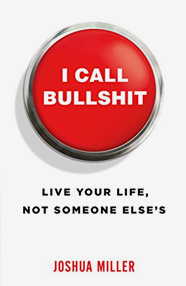
[0:00:23] CH: Author hour is about answering one question: How can you get the best ideas from great books without spending so much time reading? Every week, we take you behind the scenes with a new author, about the most important points in their book. So if you love to learn while you're on the go, you’re in the right place. All of our book summaries are 100% free and we do more than a hundred episodes every year. So please subscribe to and review author hour on iTunes. Today’s episode is with Joshua Miller, author of I Call Bullshit. Josh wants you to be happy and not just getting by and not being successful by society standards but can’t wait to wake up every single day happy. If you’re shaking your head, convinced that this is impossible for you, Joshua calls bullshit. The life that you want is attainable and Joshua believes that you simply need to reconnect with the person you really are. In this episode, Joshua takes some of the overly complicated advice that’s presented by the self-help industry and distills it down to its basic principles and reveals how you can use those to help you become your authentic self. If you’re suspecting that your life maybe doesn’t have to suck. Well, this episode is for you. Now, here is our conversation with Joshua Miller.
[0:02:20] Joshua Miller: I grew up in New York City, in a time where I was surrounded by uber-wealthy people and raised middle class, you know? This is what I was surrounded by and what I knew. It was always kind of this false narrative when you’re surrounded by this. It’s kind of misleading as to where you want to go in your life. I grew up, I had two loving parents who are artists and an older brother. I went off to this high school that I never fit in. I went to this private high school that I was the outlier. I wasn’t the smartest kid, I was a C plus, B minus student but everyone else was an A plus student. I was the creative art guy and everyone else was you know, the mathlete or whatever you want to call it. And so, I, for the most part in my high school life, I just never felt like I fit in. I went off to college and I struggled to get my communications design and advertising degree because that’s what I was most passionate about but I unfortunately just was not prepared for it. The call that changed everything for me was my senior year, having struggled to get, working two jobs and to get my act together, I got a call from my mother and my father, my brother was on the phone that my dad was sick and you know, they weren’t really being truthful with it, about the situation but he had cancer. It was really bad. I knew it was bad but I also knew they weren’t telling me the truth. It hit home when thanksgiving break came and they were like, we’d prefer you not come home which was unheard of. Being really close to my family of course. I went to a friend’s house and obviously, I was concerned and when Christmas break came by, they thought, you know what? You probably shouldn’t come home as well which tore them apart. The reason being is that my father was literally falling apart in pieces with chemotherapy and stuff. Here is a man who, this is my idol, my father, my dad, a leader, a friend. Someone I looked up to and he was weathering away and fighting for his life. I was fighting to just graduate and it was a dark time, it was a tough time for me. I had to dig deep to focus and graduate college, I was blessed and feel grateful that my father was miraculously able to turn around and through chemo and stuff, show up for my graduation. He did not look like the man that I knew when I went off to my senior year in college but there he was. He stood by me in graduation, it was one of the most proud moments. I mean, in my life. Shortly thereafter he had passed way. It changed everything for me. My whole concept of time, my concept of family, my concept of what’s important. I mean, even just talking about it, I get emotional because I miss him a lot. I mean, every day, I think about him and I strive to be the best father, the best husband. I have two sons and even the book is dedicated to him. That call that I got really changed my perception because I was on this path because I thought that’s what I was supposed to do because that’s what I enjoyed and I went off and I graduated and I jumped right into a very successful advertising career. For most people, on paper, it would look like I was living the dream. You know, early 20’s living on my own, New York City, making money but I was so unbelievably miserable. I felt so dispassionate and soulless. I hated where I worked, I was one of those people that I couldn’t wait ‘till Friday. As soon as Friday showed up, I was dreading Monday. That was the life I had and somewhere between that dread between Friday and Sunday, I was trying to fit in a life. After about six years of working, there was an event that happened and I wrote about it in my book. that literally changed my life, it’s probably the second thing that was a pivotal shift in my entire life was when I was walking out of my office and I wasn’t paying attention where I was walking. Someone knocked into me, I spun around, I fell into the sidewalk, I broke my nose in two places and this is rush hour on a Friday and everybody’s walking by, over me, literally, people are stepping on top of me, this is New York and one woman says, “Excuse me, are you okay?” You know, honestly, if I was coherent and probably not in like a semi reduced coma, I would have said, “Yeah, I’m fine,” and gotten up and gotten on the train and went home but I wasn’t. I said, “No, I don’t think so.” She helped me up and pulled me to the side of the street and she was cleaning up my face, was all bloody. She’s like, “I’m going to call the ambulance,” I said “Sure.” She’s like, do you want me to wait with you? I was like “Yeah, sure.” Everything about that went against eh grain of what I knew growing up in the city. I wound up talking to this woman and she was short of an angel. I mean, she was kind, she was gracious, I was like, “What is it you do?” Of course, you know, I had to know. She’s like, “I’m an executive coach.” I go, “What is that?” She goes, “Well, I make people better, I make people happy.” I said, “Make people happy?” That’s a job? She’s like, “Yeah.” I was like, “You get paid to do that?” She was like, “Yes.” I’m like, “How the hell do you do that?” She’s like, “Well, it’s not an easy answer.” I’m like, “We’ve got time, there’s no ambulance coming here” and we kind of laughed about it. Meanwhile, I’ve got blood dripping all over me and we’re starting to have this deep conversation about you know, how to be happy, right? Finding your purpose is really what we were talking about, it wasn’t under that umbrella. We started talking and she started telling me about what she does and I literally felt like this was it, this is divine intervention, I was meant to break my nose unfortunately, she was meant, out of eight million people on a side walk in New York City, she stopped to help me. It could have been anybody. I asked her if she would ride in the ambulance with me which she did and I just kept asking her questions and questions. I’m like, “How did you do this? How did you learn this? How did you do that? That’s a real thing?” Finally, after I was discharged and I obviously, she went home, she was like look, if you ever want to talk again, I’d be more than happy to. I said “Yeah, absolutely, tomorrow, what time?” Because that’s how I was, you know? I met her the next day, I have a picture of - gauze pads in my nose, I have a black eye, I have a big bandage around my face, I mean, I look like the end of Rocky I. I mean, it’s bad. We sat in the Starbucks in mid-town. I remember I borrowed her pen, I didn’t bring a pad of paper, I was just like on the edge of my seat. I wrote down every single thing, more or less she said on a six different little Starbucks napkins. White napkins. I still have them framed in my office today. That was my road map on how do I change my life. I still keep in touch with her today and she’s kind of like a defacto – I don’t even know, mother, spiritual religious figure, coach, mentor, I don’t even know what you want to call it. I look at those napkins, at least once a day, to remind me of where I’ve come from which I think is really important. To remind myself of why I do what I do and to never give up. Those are some of the messages I talk about in my book because inherently that’s what I believe that as people, as human beings, it’s important to not just get out, wake up and go do things but be passionate about what you do. But more importantly, remember and stay present to why are you doing it? Because life is going to purposely try to trip you up, literally and figuratively and challenge your beliefs every single day, you really say you want to lose weight, how badly do you want to lose it? You really want to make money? How badly do you want it, right? That’s how we’re tested. I was tested that day and I believe that there is, we’re being tested every single day, we’re just not looking for it, we’re not aware of it or we’re not engaged. I look at that roadmap, the framed napkins and it’s just a reminder, it’s very symbolic in so many ways for me. That’s kind of my story, you know? How it all changed.
[0:09:47] CH: That’s an incredible story and thank you for sharing what you just shared. I mean, it’s deeply personal and vulnerable. Thank you for sharing that. Now, what specifically was on the napkins? Is that getting two granular?
[0:10:03] Joshua Miller: No, well, being a creative person, you can imagine there’s more graphs and charts and you know, smiley faces and arrows. I mean, it’s kind of like I don’t know, I mean, if you looked at it, you’d be like, “Looks like your two year old started to learn how to draw,” you know? To me, it all makes perfect sense. It’s kind of, think about it almost like a solar system for your life, right? There is different pathways on here’s where I am in one circle or quadrant, how do I get to that next one, right? Is it a straight line, is it a dotted line, I’m kind of letting you in to how I think and what’s the pathway to get there, is it close or far away? Just think about it in terms of like, we can only technically get to the moon now, we’re trying to get to Mars. We have to figure out, how do we extend the ability to go further in life. I kind of looked at it as, “Okay, here is where I am in the creative world. I want to pivot pretty hard to go into this kind of coaching/learning and development world I know nothing about.” What are the – you could think about it like a lily pad, right? How many lily pads as a frog am I going to have to jump or hop on to get there? What it looks like is a lot of dots and lines with a lot of notes and notations on here is where I am, here is how I – here is where I got to get to and here are the steps in order for me to achieve it.
[0:11:27] CH: Author Hour is sponsored by Book in a Box. For anyone who has a great idea for a book but doesn’t have the time or patience to sit down and type it out, Book in a Box has created a new way to help you painlessly publish your book. Instead of sitting at a computer and typing for a year, hoping everything works out, Book in a Box takes you through a structured interview process that gets your ideas out of your head and into a book in just a few months. To learn more, head over to bookinabox.com and fill out the form at the bottom of the page. Don’t let another year go by where you put off writing your book. The subtitle of your book is Live Your Life, Not Someone Else’s. It sounds like this book is really about becoming authentic again to yourself. Which most adults sort of lose touch with, just given the nature of how most of us live our lives. If that’s the big idea in the book, where do we need to get started?
[0:12:31] Joshua Miller: It’s a great question. I’m going to answer it in two parts. The first is, authenticity is definitely at the root of the book, however, it also is a word that is used, I think sometimes in the wrong context and maybe even over used in the wrong circles. You know, Live Your Life, Not Someone Else’s is a nod to yes, being authentic, right? Which a lot of people struggle with, what is authenticity, right? You could argue that hey, the way I’m living right now is authentic.
[0:13:00] CH: Cool.
[0:13:01] Joshua Miller: It’s not so much about being authentic.
[0:13:02] CH: You could argue there’s no such thing as authenticity as well.
[0:13:06] Joshua Miller: Right, let’s take authenticity off the table and just say, what is it that’s going to make you happy? Are you actually truly happy right now? Forget about successful, because that’s kind of different, right? Are you happy? Whatever it is you’re doing. If what you're doing is making you happy, awesome, great. Because, that alone is what people, I would hope, aspire to achieve. Unfortunately, people are driven by different status and motivators and money and so on and so forth. Living your life not someone else’s is also about hey look, I know we’re all going to measure our success against someone else’s highlight reel. That’s a slippery slope because you don’t know how that person got to where they are. Unless you engage and ask them and they’re honest with you, you truly don’t know. What you see on social media, what you see, even when people tell you is not the whole story. It’s very easy to be seduced and even possibly manipulated into believing that well, I should be there or I should be in the corner office or I should be IPOing or I should be the CEO at 25. It’s great to have these kinds of conversations but you have to put them in context. I think a lot of people tend to forget where their true north is. It’s easier to say like, “I like what he or she’s doing, I want to do that,” right? That part of it is just natural. You can want to do what somebody’s doing but you got to stop and ask yourself and to answer your question, where do you begin, you have to ask yourself some pretty powerful questions that only you can answer. This is a big premise of my book, in the back of it, I put over 200 questions in the book and in total, there’s probably close to 300 questions in the book in its entirety. And the reason it’s laced and embedded with questions, their thought provoking questions that are going to purposely put you outside your comfort zone but inside your heart. Not your head, your heart. Because what I’ve learned after 20 years of coaching people from all over the world is up in our heads, we’re all really smart, right? We are all experts. When we start to have conversations around our heart, that’s where we get scared and the answers lie down there. Not upstairs, down stairs. And I firmly believe that when we start asking ourselves some really powerful questions about what makes us happy, how will we define success, what are we afraid of, those types of questions are how we spark real growth and transformation and ultimately, find authenticity.
[0:15:26] CH: So to the reader who is potentially feeling a bit lost or disconnected with how they really want to be living, these are questions that can help not only engage their mind and thinking about what the problem really is but also reconnect them with their heart and helping the decision making to move them forward.
[0:15:49] Joshua Miller: Absolutely.
[0:15:49] CH: Yeah, so one of the quotes that I love that you included in this book is about a guy who goes in and asks where the self-help section is in a bookstore and the woman says, “If I told you it would defeat the purpose.” Which is great but you actually include tools and techniques for people to help themselves in here. So talk to me a bit about those, what are two or three of your favorite tools and techniques?
[0:16:16] Joshua Miller: You know it’s interesting, I have a few tools and techniques and I wrote about them in the book. I think probably one of the biggest ones from an eye opening standpoint is the concept of the ‘be-do-have’ versus ‘have-do-be’. This has been around for a while. I think there’s different iterations and I see people talk of and teach about it differently but I put it in the book because we are almost hardwired I say almost to live in a world where I have to do something - In order for me to have something, I have to do something and then I can finally be happy or I can be successful or I can be rich or be married or be in love or whatever it is and it’s this carrot and it’s this stick conversation. And so you are constantly in service of, “I got to do this in order to get that, I got to do this.” And what I found is that when you live inside of the context of I have to do this, you are starting off, it is almost like, “If I don’t something is going to happen.” And what typically happens with people is we start up putting things in opposition. I can either do this or I can do that. I can’t have both and what I find is that we start living in this world, it is a context of either or. It is not a world where you are creating a life of robust and abundance of ‘and’, “Hey can I have this and that? Do this and that.” And so the concept around be-do-have is that when you start to take on being the things that you want your life is a mindset thing is like you start being or adopting the behaviors and embodying them around the things that you want, you will take the action and you will have the stuff that you crave. And I wrote about it because I really think that the concept is a powerful one. It takes some work, I am not going to lie, it takes some work but that is probably one of my favorites.
[0:17:56] CH: So tell me how that’s played out in your life? You said it is not easy.
[0:18:01] Joshua Miller: I don’t think any of this stuff is easy. I hate the word hard because people always say, “Well if it is not easy, it’s hard.” and I had talked about that as well. There is a whole chapter around bankrupt language. We use words every day, we throw words around like it’s just bubbles. We just blow them out of our mouths without really even thinking about it and in reality, our words are incredibly powerful. Think about it, the words that you say if someone is listening to you is going to anchor their reaction and ultimately, maybe the reaction that you are going to get in terms of what you are trying to achieve and so Yoda always says it is either do or don’t there is no try and although that has been quoted to death, it’s really true and it is powerful right? You either go into commit and take action or you are not. Don’t say you’re going to try to do something. So the concept of hard is another thing I talk about. I always tell my clients when I talk to them, “I can’t do that it is really hard.” I say, “Really? Can you go to a store and say hey what isle is hard or go to a restaurant and say I’d like to get a bowl of hard? No you laugh because you can’t.” We’ve used the word in the wrong context. So I ask you not hypothetically, what’s a different word? A more empowering word you could use versus hard and where people typically land ultimately is challenging. When you say something is challenging versus something is hard, it evokes the possibility and the potential of a different outcome. When you say something is hard, it’s like done and I talk about that in the book. Yeah and so the concept of ‘be-do-have’ versus ‘have-do-be’ and bankrupt language are two things I am incredibly passionate about and I believe anchor us either in a way that is either in a way that is going to help us move forward or complacent, for sure.
[0:19:45] CH: Yeah, I am in full agreement with what you are saying Joshua. And this is a concept. I don’t know I have only become recently familiar with, I know it has been written about in books like The Four Agreements and stuff but I remember it the first time my wife called me out on it. She said, “You can’t say to your clients “No worries”. You say no worries all the time and it is two negative words.” And so now I say absolutely and of course rather than no worries. And so yeah, word choice is a big thing. You talk about I think what is the most important part of existence of being a human which is relationships in your book. What is your advice for relationships?
[0:20:32] Joshua Miller: This is something I have learned. So I’ve taken some lumps and I have learned some hard lessons over the –
[0:20:38] CH: We all have.
[0:20:39] Joshua Miller: I know and I think every single one of those people that gave me the opportunity to beat myself up and fall on my face because I don’t think I wouldn’t have written the book without it. So there is a couple of pieces around this. There’s relationship to others and relationship to self. A lot of people think of relationships just in terms of the other individual, partner, lover, friend, family but you know you can’t forget about the relationship to yourself. It obviously, I say obviously, it begins with you. The strongest relationship that you will ever have will be with yourself. So if you look at any relationship externally and say, “Oh you know it is not happening. It’s not good, it is not as strong as I’d like you to be.” Look at yourself first. Identify what your weak points are and work on that and as a result you will strengthen every other relationship in your life. That is the first piece. The second piece is I tell people, “Make sure that the friends in your circle are also in your corner.” It’s really, really important. We live in a world where it is all about likes and followers and we get manipulated and seduced all the time about, “Well, I’ve got 100,000 followers so I am pretty special and popular.” Okay, maybe but at 3:00 in the morning when you’re lonely and you need someone to talk to, do you have somebody to call? Do you have somebody to write to? Do you have somebody to text? More importantly are they actually going to pick up the phone? This is where a lot of people go silent and it is important to make sure that you’ve got the right people in your life that are going to support you. They are going to be honest, they’re going to challenge you but they are ultimately champions for your success and happiness and I talk about in the book there is doing relationship auditing. I do this at least once a quarter if not more where I take all the priorities, the big things I am working on in my life inside of relationship, finances, career and wellbeing and I list out what are the big things I am working on and then I look at my life and I list out all the friends and I say, “Okay do I have the right people to help me? Who are the people currently I have supporting me? Are these the right people?” And when you start to get granular and specific about who’s in your life, you will clearly be able to see if you are surrounding yourself with the people you need to hit your goals. To be happy, to be successful. And I encourage all my clients and I encourage all of the readers, if you are playing a big game and there is something you are working towards and you are finding that hey, maybe you have hit a plateau or a bump in the road or you just can’t get off the ground, write out all of your friends. List all of the people in your life and then see out of that list who are the people that are currently helping you? Maybe they’re the people you should ask and you haven’t. Or maybe they are the people that are helping you and that could be a part of the problem. So that is really, really critical when it comes to being happy and successful is check your relationships and audit them frequently.
[0:23:24] CH: I love it and you mentioned clients that you have worked with. Let’s talk a bit about the transformations that you’ve gotten for your clients. Could you share actually your favorite success story with a client or the biggest impact that you have made that you are most proud of?
[0:23:41] Joshua Miller: There’s a lot but there was an individual. It was about five years ago, he had retired. He was a CEO of a company and he just wasn’t sure what to do with his time and after a few conversations, it became evident that his heart and his head, was into giving back in a philanthropic point of view around schools, around education because he had to work incredibly hard and smart to get through school and had a tough time at it and wasn’t given a lot of fair shakes but was able to be successful. So where he decided or he was going to put his passion as well as his money and his time is in developing a whole entire school system in a remote part of Africa. And this, what started off as just a conversation about a year and a half later turned into a reality and it’s now funded and he is working on branching that out into a broader type of school system. And working on other types of infrastructure in the area of this remote part of Africa. And it is touching for so many obvious reasons but the thing that means the most to me was that here was somebody who had so much to give and literary just didn’t know where to go with it and it was like a matter of time before it almost exploded out of him. And so working with him to really understand where is this coming from and why it’s important to him and then just get out of his way and watch him create this has been unbelievably beautiful to watch. That is one of the biggest - most proudest moments. It really is.
[0:25:16] CH: And you’ve come a long way from where you were and you have transformed yourself and now you have this book which is awesome. And so Joshua, what about are you taking new clients that you’re coaching?
[0:25:29] Joshua Miller: Yeah, I am. I always have a few spots in my practice open for clients of course. I have a vetting process. It is not incredibly scientific. It really comes down to someone’s interest in working with me. We set up a time and have a conversation and see if it is a match. So yeah, absolutely.
[0:25:44] CH: How can listeners get in touch with you if they are interested in that?
[0:25:48] Joshua Miller: Yeah, well there is a few different ways. Through social, I’m on LinkedIn and I happen to be an influencer there. So I am usually around, you can find me under Joshua Miller and then of course on Instagram, I’m @coachjoshmiller as well as on Twitter @coachjhm and then on Facebook, Joshua Miller as well. So I am on there and I am online and so people can definitely reach out to me and then of course my email which is josh@joshhmiller.com. I answer every single email I get from my readers and followers.
[0:26:23] CH: Phenomenal. Now before we part, can you give our listeners a challenge, something they can do this week from your book that will have a positive impact on their life?
[0:26:34] Joshua Miller: Sure, a challenge would be when you wake up tomorrow morning the first thing I want you to do is nothing. Meaning I challenge you to not reach for your phone and to go online. To not reach for a cup of coffee. I challenge you to actually stay in bed for 30 seconds or longer if you could and just focus, just literary focus intentionally on how you want your day to go. Like imagine that you absolutely get to control how your day goes. It starts with focusing and making yourself a priority which is something we don’t typically do. I challenge everybody every morning, if you could just do it for 30 seconds. Close your eyes, just think about what is the day going to be like for you? What is the emotion, right? Imagine yourself and that will set the day and the tone for you in a way that you may not have ever thought was possible. And that is my challenge and I challenge everybody every day to do something like that themselves.
[0:27:34] CH: The book is, I Call Bullshit, this has been Joshua Miller. Joshua thank you so much for being on the show.
[0:27:41] Joshua Miller: Absolutely man, thank you so much for having me. It was a pleasure.
[0:27:44] CH: Many thanks to Joshua Miller for being on the show. You can buy his book, I Call Bullshit, on amazon.com. Thanks for tuning in on today’s show. If you liked what you heard, here is what I want you to do next. Open up the podcast app on your phone or iTunes on your computer and search for “Author Hour with Charlie Hoehn” and then click “ratings and reviews”. Take 10 seconds to rate this show or leave a review. It is a small favor but it’s really the best way to show your support and give me feedback and if you know someone else who’d love Author Hour, take another three seconds to text them a link to this episode. We’ll see you next time.
Want to Write Your Own Book?
Scribe has helped over 2,000 authors turn their expertise into published books.
Schedule a Free Consult