William Treseder: Reset
Read the full transcript
William Treseder
William Treseder is a cofounder of BMNT, an innovation consultancy headquartered in Silicon Valley. He has trained thousands of entrepreneurs around the world through institutions including Stanford University, GE, and Singularity University, and has worked with governments and organizations on a wide range of challenges. A former U.S. Marine who served in both Iraq and Afghanistan, he is the author of Reset: Building Purpose in the Age of Digital Distraction. He lives in the San Francisco Bay Area with his family.
📚 Books by William Treseder
Transcript
[0:00:25] Charlie Hoehn: You’re listening to Author Hour, enlightening conversations about books with the authors who wrote them. I am Charlie Hoehn. Author hour is about answering one question: How can you get the best ideas from great books without spending so much time reading? Every week, we take you behind the scenes with a new author, about the most important points in their book. So if you love to learn while you're on the go, you’re in the right place. All of our book summaries are 100% free and we do more than a hundred episodes every year. So please subscribe to and review author hour on iTunes. Today’s episode is with William Treseder, author of Reset. We’re all drowning in too much information in this digital age. We often feel trapped or even paralyzed by all these distractions while we let the system control our lives. But if you want to succeed today, you need to stop choking and take action. In this episode, William shares his life altering lessons that he learned during a career that took him from the battlefields of Iraq in Afghanistan, to the board rooms of Silicon Valley. In this episode, we talk about how you can personally transform and improve your life through determined action. By creating habits that lead to breakthroughs and power you past your choke points. By harnessing your own unique talents, William believes that you can accomplish more than you ever dreamed of. William has educated and mentored thousands of entrepreneurs all around the world through partners such as Stanford University, GE and Singularity University and has even helped governments and large organizations solve major problems. If you’re ready, it’s time to reset and reconnect with the world. Now, here is our conversation with William Treseder.
[0:02:57] William Treseder: In August of 2012, I was newly fired from a company that had basically imploded, the investors have pulled out and not paid any of the employees for several months of pack pay, it had been out, just broke up with a girl, I didn’t have a place to live and was kind of in route to crashing in my brother’s apartment in upper haven San Francisco. I was looking back on a military and college career that I thought would have taken me some place very different. After say this was about six months after I finished at school and felt like I was flailing and just had not had anything figured out. Silicon Valley is a place where everything seems like it’s happening all the time and opportunities are everywhere. I knew that I wasn’t taking advantage of any of the opportunities that were around me that was quite obvious from my first crash and burn after college, despite the fact that I finished it. I was 29 at the time because I had long six years in the marine corps. It was a very hard thing for me to deal with, it was just the realization that I didn’t really know what I needed to do to succeed and so it felt like there are all these wonderful opportunities passing by all the time constantly and they’re all just out of reach. That was the sort of, that was the feeling of probably some helplessness, a lot of anxiety and sort of soul searching. That took me from 2012 to now, you know, to six years later, my life is different in some ways but more than anything else, I just keep going back to that feeling of there’s always opportunities and I’m not taking advantage of any of them. I’m pretty good at the things that I’m supposed to be pretty good at, it was this feeling of this mismatch between the stuff I could do and the stuff that was actually useful. The stuff that people actually wanted to see me do in order to be valuable, to be desired, to be recognized, to be rewarded, incentivized, however you want to think about that. Does that make sense?
[0:05:18] Charlie Hoehn: To have your place, yeah, to feel a part of society when you’ve done all these things that you were supposed to do to fit in and is that part of it?
[0:05:30] William Treseder: Absolutely. In the broader sense, I had always been someone who didn’t quite fit in. I grew up with a family that was very conservative in a very liberal town, it is a college town in northern California. That didn’t quite work and then when I was enlisted in the military, I was a very liberal person in a very conservative culture because anybody from Northern California is going to be considered liberal. When you’re enlisted in the marine corps with a bunch of dudes from like the south and stuff. Then, by the time I went to community college, I was older and I was a veteran in a place where there’s almost no veterans and sort of did a couple of more tours in the military, again, back in that sort of – Now I’m just sort of awkward guy who left the marine corps and then came back and I’m sort of in college and you know, it was just sort of never fit into anything and then when I transferred to Stanford, then I was just this really old kind of creepy guy that just came back from war and that was all anybody really knew about me, despite my attempts to fit in.
[0:06:37] Charlie Hoehn: Did anyone describe you as creepy or do you like to describe yourself that way?
[0:06:42] William Treseder: I don’t think I like to describe myself as creepy. But I do think that in a very homogenous culture, people that don’t fit in just stick out very clearly. A lot of people spend a lot of time trying to fit in, but they have the opportunity to fit in. I didn’t have a shot at fitting in. I’m six four, I weigh over 200 pounds and I was way older than everybody else. It wasn’t like people could just sort of randomly not notice that I was taking up a fifth of a classroom, right? I think in each of those places, I felt the same kind of, that lack of place, lack of purpose, not quite fitting in and then the first job that I took out of college was with a group of people who are mostly former military. I think I was trying to get back to scratch that itch and to say “Okay, well I know these people, I kind of know this world, these people, they’re out of the military, they seem to be a little bit more my speed and maybe that’s the solution”. That’s where that came from.
[0:07:43] Charlie Hoehn: Reset. Why Reset? Why do we need to reset? Tell us.
[0:07:48] William Treseder: Yeah, I think the most important thing that I realized at that time is I started digging into it was that no one is really trained or educated to succeed in the world today. We’re basically all being trained to fail. Because the world has changed so much in the last 20, 30 years but the way we’re educated and raised hasn’t changed. It doesn’t really update, it doesn’t adapt to the circumstances. School now looks effectively the same as school looked a hundred years ago, it’s not really different. That’s just absolutely awful for anybody coming through the system, there’s this sort of predictable way that we’re screwed up. It’s not actually that we need to create all these amazing new habits and fix all these new – You know, adapt to all these new things and pick up all these productivity tips and tools and learn these new skills. Actually, a lot of what we have to do is sort of zero things out and when I think about resetting, I think about, it’s not necessarily starting over but it’s returning to a more original state and the reality is we’re better off with our sort of natural inquisitive attitude that we have as kids before it’s sort of ground out of us, right? We’re better off that way than we are in any other way. Reset is really an exploration of how did we get to the point where we are now where the world is churning us out in a way that we’re completely inadequate for the jobs that were actually being asked to do, for the kind of careers that we’re being asked to have and then you know, what does that imply for us, where do we even start to look for examples of who are the kind of people that are figuring it out and what can we learn from them? Can we take a couple of those principles that they have and weave them into our own lives in any sort of a systematic way, is there any way to do that, this is what I’ve learned so far. Reset is all about, it’s to help somebody come to terms with the fact that no matter how they may feel right now about the world around them, they’re not alone and there’s a lot of other people that feel that way and the reason why they feel that way is not because there’s anything wrong with them but because they’ve been systematically shaped to be the wrong thing. The tendency there is to just blame someone else but the reality is we can’t. Blaming doesn’t help so we can just make our peace with that and then start to move on and the book kind of dives into how you can do that and it really, the whole idea of resetting starts with the need to view your purpose in life. Your kind of mission, the things that you want to accomplish as not a thing that you have but a thing that you build, that you earn every single day. It’s like, if you see someone who is in really good shape and you tell them to leave the gym, you say “You're done, you’re in shape, you don’t need to – you have a six pack, you poses it, now you don’t need to do anything else,” right? Obviously we know intuitively that that doesn’t make sense, you can’t stop working out and then still look the same for the rest of your life. It’s an ongoing process. The way you look is reflection of your lifestyle, your habits, your behaviors. If we can understand that at a physical level, we can also understand that from the perspective of how your overall set of skills and your mindset and your habits can push you towards a level of success, of achievement of personal fulfilment and satisfaction or not. But it’s not something you can just do once and then you let it go forever.
[0:11:26] Charlie Hoehn: Right. Let’s start at the beginning. You have a chapter called Choke and it’s not about what a reader might assume it’s about. It’s about where does all of our time go? Talk to me about why you began here?
[0:11:45] William Treseder: I define choking as getting lost and are getting overwhelmed by all of the information that is presented to us digitally. It’s like information is being jammed down your throat constantly. I think that is probably the single most defining feature of life and for most of us, it’s become this problem of “I’m on my phone, I’m on my laptop, I’m getting notifications, buzzes, pings, emails”. “Everything is hitting me all the time and because of that, I can’t actually focus on the things that matter to me”. That my world is going to be defined for the rest of my life by choking on information because unless I do something else, right? Unless I reset, because there is all these products, these services, the software and everything else that’s being built is only going to make us choke more. It’s not like, think like augmented reality and for sure, you’re going to make this any better. If anything, they’re going to make it significantly worse.
[0:12:49] Charlie Hoehn: Sorry to interrupt but you mentioned some pretty staggering statistics which listeners may or may not have heard some of these, but 300 hours of YouTube videos are uploaded every minute, 6,000 tweets every second and one new book on Amazon every five minutes which has – from somebody who talks to a lot of authors, that is crazy. You’re right, I mean, information is going to come faster and faster every year.
[0:13:22] William Treseder: Absolutely, I mean, one of the best examples of this is for people who are ever interested in the concept of big data, the amount of data being created, right? The statistic that should blow everybody’s mind just in terms of truly the amount of information as that there’s more information created in the last 18 months than if you start the clock 18 months ago and you go all the way back to the beginning of time and it has been more information created in the last 18 months. There’s just this absolute explosion and that’s driven entirely by this technologies that are also informing the way that Facebook and Instagram and Snapchat and Twitter and all these other groups work with and design products and build things that basically hack your brain, right? To grab your attention and that is, that’s what it means to choke, is to just have this Information just jammed into you probably as much as any company can get you to pay attention.
[0:14:20] Charlie Hoehn: You say, you know, we need to develop habits to help us avoid choking. What are some of those habits that help you?
[0:14:27] William Treseder: There’s some pretty basic ones that I think are important for people to know for those that haven’t played around with notification settings on their phones so that they don’t get updates with every single thing. I turn off updates for everything. A lot of people uninstall social media apps that they can only sign on using their web browser instead of the native app, so you uninstall Facebook, you’d actually have to go into safari or chrome or something and then go to facebook.com. Those are kind of specific tactical things, you know, don’t’ keep your phone near your bed, don’t have to be the first thing that you do in the morning, you know, the last thing you do at night. There’s a lot of stuff like that. I think the challenge is not so much though with having with people having the knowledge, right? Everybody sort of understands that they shouldn’t do that, it’s kind of like telling someone that you shouldn’t eat this specific kind of dessert that they really like multiple times a week or something, you know, it’s bad if you do that. Okay, fine. I can know that information and then still not change anything about my behavior, right? It’s really about understanding what the true cost is of connecting that way and that’s really, that’s the issue and that’s what the book really helps dig in to is not just, what are the tactical changes that you can make the day to day changes that you can make. While those are important, I mean, you need to understand what you’re capable of and how much more you can do as a person and that’s what’s really hard for people to understand. You have this incredible power, this incredible potential to affect so many other people around you and to have a massive impact on the community. However you choose to define that and there’s often very simple actions that you can take to do that but because we get stuck in choking and constant consumption then we’re never really able to be to get on fire for some kind of mission or purpose, we don’t’ take any action. We don’t have a way of protecting ourselves from being distracted and then we never get to that sort of feedback loop where we start making an impact on other people and then we get that positive reinforcing because ultimately, we are social animals, we need to see that we can have an impact on other people, the book also talks about some really specific ways that you can start to get feedback right away. That lets you feed this kind of, the feed your reset and start to gain, gather more momentum, push yourself harder to improve and have a larger mission, a more compelling mission, right? To take even more action and then to have an even larger impact on the people around you.
[0:16:58] Charlie Hoehn: Yeah, before we talk about that, let’s talk about – you know, we just covered the technological habits that we need to develop to deal with the onslaught of distraction and information. What about habits we formed in school growing up that are now just obsolete, it might be holding us back. What are some of those habits?
[0:17:21] William Treseder: Yeah, absolutely. Those are basically some of the worst, this is the stuff that you can think about it as like malware that your brain is running and you need to uninstall this from yourself. Some of the worst are the need to have someone else hand you or define for you what you should be doing every day. It’s an inability to chart your own course and that’s the thing that kids don’t have a hard time doing but as you get into the system like you’re like a little hamster that’s being fed pellets in school, right? For 12, 14, 16, 18 years, what you do every day is defined by what your teachers tell you you need to do. You don’t’ spend a lot of time determining for yourself what it is you should be spending your time on. It’s really easy for other people to define those priorities because you have it rebuilt that capacity to do that. That is always an absolute number one.
[0:18:16] Charlie Hoehn: Before we skip past that one, I think you hit the nail right on the head. I think that is the biggest problem that anyone faces coming out of traditional public industrial style of schooling. How do we reform that habit? How do we get started?
[0:18:36] William Treseder: Well, I like to tell people that there’s a sort of an open secret, there are things that you’re really good at and the things that you should be doing but you never take the time to solicit those inputs from other people, right? If I ask you, what are things that you’re really good at? You’ll have a harder time coming up with it than if you’re just in the flow of your life and there’s a way to solicit or crowd source that information from other people. It doesn’t mean this is what your specific task should be for this day but what it means is, you need to start with this sort of messy overlap between what are your actual strengths and then what are things that interest you within that set of strengths. Because that kind of points you in a vague direction and that’s really all you need to get started. But a lot of people get kind of stuck in this sort of, “Well this is what I do and so I kind of wait for people to give me things that fall into this world”. One of the things that I, which is very much like waiting for the hamster pellet, right? Instead, one of the things that I love to have people do is email their – email or text, kind of depends on the relationship, start with email because it’s a little bit more formal, it should be a little bit more thoughtful than just a text. But I tell them to email their closest five friends, usually not family members. Usually friends because friends are a little bit more objective in terms of h ow they perceive you. Just ask them to say “Hey, you know, I’m doing kind of like a personal survey, I’m just interested in figuring out, what are some other things that you think I’m really good at?” What are the things that you see me do really well that impressed and maybe never talked about it before. Hopefully the kind of person that has friends who won’t just make fun of you if you send them an email like that. I’ve been there but you probably know the kind of people who would give you a good answer and usually, one or two of the answers are pretty basically what you would expect. Then, you usually get two or three, perhaps even all five that really surprise you in terms of things that people say that they noticed that you do really well, that you may never even thought of before. The point of that exercise is just to open your mind up a little bit to thinking about, what are the things that when you’re in your natural kind of zone of just being with your friends, hanging out, I mean, they might see you at meals. On social events, maybe on trips or something like that. They see you interact in a pretty wide variety of settings, be surprised what they’ll come up with. They may tell you to do something, they may say, “You know what? You’re just amazing wit handling people, I’ve never seen anyone do, do you remember that restaurant, the person was giving us a hard time about this and you did that? That was really cool”. Then looking for opportunities to explore that a little bit more, just within your current life, right? All of a sudden, you’re taking a skill and kind of reasoning backwards from here’s something that I have actually done naturally in the past, right? It’s something somebody else has noticed in me that I do, and I do it well, that’s a very different way of engaging than what is somebody telling me I need to accomplish today? It also allows you to look at some of the things that people tend to task you with and say, “All right, what is the way I can cater to my own strengths when I’m accomplishing this goal?” How could I do this differently in a way that plays the things that sort of helps me develop the skills that I wanted to develop? I do this all the time with people at work, I give them, there’s three kinds of task that they have. They have core tasks and then they have the random task, that’s the stuff that you have to get done. They always have stretch tasks. In every quarter, I ask everybody to identify what their stretch tasks are and it’s fine if they change from quarter to quarter, the point is not to define and get it right. The point is to just think to yourself and engage other people around the idea that there are things that you do really well that you need to weave into the rest of your life and to do more of the things that you do well, and stop just accepting whatever is handed to you.
[0:22:26] Charlie Hoehn: Now, let’s talk very briefly about two big points that I think, the more I talk to people, the more they’re aware of these issues, it seems to be a rising awareness but A, why do we get the feeling like we’re missing out on life so often and why are we so addicted to the web and all these things coming at us every day?
[0:22:53] William Treseder: I would answer the second question first. When we say we’re addicted to the internet, what we usually mean is that we’re addicted to social media and a couple of the attended things like YouTube and stuff like that, maybe that’s not properly social media but it’s content that’s often distributed through social media. The reason why we’re addicted to social media is because social media, every social media company makes almost all of its money and when I say almost all, I mean, at least 90 cents on every dollar but usually more like 95, 96, 97 cents on every dollar they make. They make off of advertising revenue. That kind of surprises some people but if you think about it, it really shouldn’t, that’s the only way they really have, they’ve proven that they can make money. Remember, Social media didn’t even exist 15 years ago, right? Not in any meaningful form. It’s a very immature industry, it’s very new and we really have barely seen you know, how it’s going to emerge over time. They basically just latched on to the first thing that makes money and there you go. They sell us, we are the product that the social media companies are selling to other people. They are companies that want to sell us things, right? They need our attention and so the social media company sell us as products to the people that want to buy, that want us to buy their stuff. That’s google ad words, Facebook ads, you know, LinkedIn ads, twitter ads, whatever, sponsored ads. All of the different things that you see, all this social media marketing, all of this stuff is all based on selling you to someone else. It’s easy to forget because you think of social media as “Yeah, it’s my friends, people I know or people I follow or people who follow me”. There’s two worlds of social media, there’s the massive loud, noisy, obvious world and then there’s the quiet shadowy world where all the money is made and it’s very easy to just entirely forget about that since everything that we do on social media is free. We don’t think about it but it’s not free. No business is free and so the cost is our attention and you know, again, unless you can figure out how to handle that world, then you’ll basically be choking for the rest of your life because social media is not going anywhere. It’s only going to get more sophisticated, it’s only going to be immersed more and more into our lives. We need to build our own systems for controlling and moderating it, otherwise, you know, we’re choking.
[0:25:23] Charlie Hoehn: The second point of why we’re feeling like we’re missing out all the time like you said, we are the ads, our behavior changes to make our lives look like advertisements.
[0:25:38] William Treseder: Exactly, we’re mimicking the behavior without even realizing what we’re doing and it’s a sort of terrible trick that we all play on each other. I tell a story in the book, a time when my wife and I were at a party and really not have a good time at all. Instead of leaving, just getting out of there and going to somewhere else doing something else together, she wanted us to take a picture and then of course you want to put that picture up on social media and if you looked at the picture which was filtered in a particular way and set up perfectly and you know what? The right hashtags and so grateful and everything looked wonderful and we’re all smiling. You would get such a completely different perspective on what that party was like and of course, whether or not she meant that, obviously, no she didn’t mean it this way but for somebody who is in a party. Maybe the party that was better but they’re looking at our Photoshop version of our party, thinking, man, “I wish I was over there”. The reality is if they just weren’t plugged in at that moment that they weren’t choking, they would be able to be wherever they are and be happy. They can’t, so instead, they have that fear of missing out on something that actually didn’t even really exist, it was a fake party that only existed on Instagram, didn’t actually exist in real life. That’s an example of the kind of thing that I like to use with people when we talk about the goal of removing social media, making it harder for yourself to get on social media. That’s a great example of why it’s so important. It’s not because of the obvious benefits. It is because of the non-obvious drawbacks and consequences.
[0:27:10] Charlie Hoehn: Yeah, to other people who you are not even seeing.
[0:27:15] William Treseder: It’s the difference between how you intend it to come across. You may genuinely just want to be celebrating something or you want your friends to know about a particular thing but it has this unintended Keeping Up with Joneses dynamic and so it is this wheel that spins faster and faster and faster, there is no end to it, right? So, we are all on these weird social media treadmills next to each other and we are all in charge of each other’s speed, so we just keep upping each other’s.
[0:27:44] Charlie Hoehn: Oh that is a wonderful analogy. It’s funny, my wife was just saying before I came back to record this podcast, she had a few of her girlfriends over and they were just sharing breakfast with each other and stuff like that and one of them mentioned to my wife, they were like, she said – she said it in jest but there’s a kernel of truth in every joke, like “You make me feel bad by the pictures you post of you cooking food” because my wife loves cooking. And she loves sharing recipes and everything and it’s funny because my wife had said to me about that woman that she feels a little almost insecure about how great in shape she is because she is always posting pictures of her working out or something, I don’t know, and I was like, “You do realize that you are having this effect on each other. You both could talk about this and understand,” like come from a place of understanding that you are having this unintentional negative consequence on a friend and it’s distorting each other’s world views and your views on each other in an unhealthy way.
[0:28:58] William Treseder: Yeah, it’s really terrible and that it always comes back to this idea of well I didn’t intend to do it that way. I am only trying to celebrate this thing that happened that is really wonderful. Yeah that’s great but if I see your highlights and I see the highlights of all my other closest friends that have been right algorithmically placed within the feed based on how likely I am to pay attention, this is the other thing that most people don’t realize. Is that you’re not showing your feed in the sense of your newsfeed is just the people that these companies algorithms have shown are the most likely to get you to keep reading. So it is probably the people that you are going to be more obsessed with and probably have a less healthy reaction to, those are the kinds of people you are going to see more. So again, that’s the nature of the business model and then a big part of the challenge is that for instance to use – Not to talk a lot about women in social media and health but my wife uses, she has a specific group. It is not social media. It’s a WhatsApp text chain, a group message with some other people who they’re almost like a support group for if they have an issue around wanting to eat like a specific dessert they know they shouldn’t eat. They just text each other just for encouragement to stick with their plan, right? And that is a good example of how you can use this connectedness as a way to foster positive outcomes. Instead of as a way to unintentionally hurt someone else’s perceptions of themselves or generate this sense of anxiety or fear of missing out. So it’s a lot of these unintended –
[0:30:30] Charlie Hoehn: So they key there by the way William, the key there is that they’re in a dialogue there. It is an actual conversation and not a broadcast. It is not an ad. It is a communication stream. It is not putting an advertisement out there to get likes and comments. It is an actual conversation.
[0:30:52] William Treseder: Yeah, exactly. It is the ability to – that’s one of the amazing things about it and the promise of the internet has always been to help you built communities and dependent geographies and that is an amazing thing if you can do it well. But again, you are not trained to do that well. So it’s something you have to figure out, you are not educated to do that. Well you have to figure out how to do that and this is just a briefly return back to the educational piece. This is actually where one of the most insidious and negative parts of the educational system comes in, right? Which is that a lot of people who are afraid to embrace their strengths because not that they would think about it that way, but it makes them lopsided. So, the difference between being a great person and being a great student is kind of an instructive example. So, if I am student and I have one A+ and three D’s or F’s would you consider me a good student?
[0:31:44] Charlie Hoehn: I mean I am sort of against the whole grading system in general, so it is tough for me to say.
[0:31:52] William Treseder: There it is. There is usually a reason for it right? I think a teacher would look at that student and immediately want to bring up the D’s and the F’s and any parent would as well. So, the education rewards that right? But if I can build a team of people that there is more subjects and I have somebody whose grades look like A+, F, F, F somebody else is F, A+, F, F, somebody else is F, F, A+, F, do you see where I am going with this? And I put those three together, I have a team across the board of A+ and they’ll work together and they will naturally figure out how to self-govern and to accomplish and do amazing things and push each other to get to whatever the level is after A+ right? And that does exists. It’s just that it’s really hard for people to think that way because they spend so much time being told that who they are can be quantified and if it can be quantified, it can be compared right? So you know a lot of people don’t know that the first grade that was issued to somebody in an educational setting was right around the turn of the 19th century so around 1800. The idea that you could condense a person down to a letter is absolutely insane. We just have forgotten that it’s insane. So it is really interesting to think that for almost all of human history, there was no such thing or even an attempt to try to shrink down and condense who you were as a person and as a student into a letter. It’s just there’s no way you can actually do that, but it just makes it a lot easier to run an industrial school. So this goes back to the kind of comparative behaviors that we have. I am afraid to embrace my true strengths, the things – the strengths and the relationships that made me unique are because I have been trained not to. I’ve been trained to even myself out and to play nice with others but also stick with the pack kind of thing. All that kind of training really keeps us from being able to embrace the behaviors and the mindset that will actually let us enjoy life a lot more, as well as be a better fit for the kind of world that we live in now.
[0:33:59] Charlie Hoehn: I mean there is so much to your book, your entire book is like this. It is diving into these topics that are right in our face every single day literally in the case of our screens. But each chapter begins with these questions, of there are things that we care about like “Why haven’t my dreams come true?” And “What separates the successful from everyone else?” And you know I am just flipping through know, “What is the most important mistake that I make all the time?” Just the entire book is set out to help people with this reset of the areas of their life that are most important and changes to make, I mean to really dive deep into these things that people tend to either not really think about it and go on autopilot, or they take it as something that it must not be able to be answered because it is so difficult. So, the book is really rich in that regard of being able to help people reset and what I am curious about William, is where is your life today and how is resetting shaped your future?
[0:35:19] William Treseder: Yeah, that’s a great question. I will answer in a couple of different ways. I’ll just start with a good day for me is one where – I have a wife and two kids and a couple of businesses. A good day is waking up way before everybody else and I am spending some time in prayer and getting a workout before anybody else in the family gets conscious and then I really try to start the day by once I get the basics of self-care out of the way, I love to start by taking care of my family. I will get everything ready for my daughter, get her lunch made and make sure that any of the stuff leftover from the night before cleaned up and put away and get ready to prep everything for her breakfast and all the kind of stuff to me is a way of autocorrecting for the purpose of not allowing the rest of life to creep in. I always try to keep myself focused on this mission when I am at home, try not to pollute what’s going on at work or anything that can be considered work. And so a good morning for me like launching into the day correctly means that I am probably once everybody is up and everything and I drive my daughter to school, I probably don’t check my email until I get to work. I might have been up at 4:30 maybe and I get to work around 8:30 and I haven’t checked my email yet. That is a great launch to the day and even better, the longer I can extend that, the more productive I tend to be because that goes back to you are just opening that massive floodgate of distractions, right? But that is a very specific thing about trying to focus on the relationships that matter to me and not to let technology determine what I am focused on at any given point. So, my purpose in that, in that places to be the most conscientious father and husband that I can be in the mornings. It doesn’t mean I don’t try to do it other times, but it means a really stress building habits around this specific purpose, a family focused purpose, in the mornings and then have a similar structure in the afternoons. But really, since that time, since the summer of 2012 I had the opportunity to join my old professor who is a former Army special forces guy and start a business with him and two others and that business is about five years old now and that’s been a huge part of my life. The company is called BMNT, just four letters. It is a military acronym, but we do a huge amount of work in the national security innovation space, so we do a lot of problem solving work for different groups. We’re like a MacGyver organization. Well if MacGyver had Attention Deficit Disorder that would characterize our work. So we are constantly moving on to diffusing the nuclear bomb and the next nuclear bomb and the next nuclear bomb. So in a lot of ways, I am head of product at the company. My goal really reflects all of the principles of Reset and we really are. We call it being outcome driven because it is the language of the industry but really it’s what we drive on, we focus on missions, right? Which is a big part of Reset and we help build this mission overtime. We really curate and cultivate the problems that we work on. We’ve spent a lot of time on that stuff and that’s what our customer finds valuable. So it has been really cool and a wonderful experience. We’re up to from four people to 40 people and continue to grow. It’s a lot of fun, that work is really powerful for me. At the same time and I mean to be super clear, the only reason why that company started and became the company it is, is because of people. It was this mission that the original founder of the company, he just came to me and said, “You know I have known you for four years. I really like you and respect you and I think that you are the right kind of person to do this with,” and that is exactly how we felt about the other two people that joined the team as founders and it was no more complicated than Silicon Valley has amazing talent and the military has a bunch of problems that we got to help them solve. We’ve got to harness the right talent and we’ll just do whatever we have to do to figure out how to make that work and that was the beginning of the company and it has taken off since then. So it goes back to this it’s a mission right? And then it was started with the right people but always focused on people first and building a really strong culture. At the same time, when my wife and I started a company that basically it’s pretty similar. My wife is from Nigeria and we had this really cool opportunity back in 2014 to travel in Nigeria and to build a program for GE, that was designed to help entrepreneurs in the mostly in hardware and in like supply chains companies, build businesses and rapidly grow the businesses so that they could help mature like the manufacturing phase of Nigeria because Nigeria is trying to transition away from oil. So, there’s this huge mission just like a lot of countries in the Middle East. The countries that only know how to make money off of oil is trying to figure out how do we build the economy for the post-oil future? And the answer is you have to invest in people. You have to teach people how to build things of value, right? You have to figure out how to take the people who are coming out of it, I mean they make the US, the Nigerian Educational System makes the US Educational System look awesome, by comparison. And how do you take those people and help correct them, to correct their mindsets and correct their habits so that they can actually build businesses themselves? So we built a program called The Lagos Garage. Lagos is like the New York of Nigeria, it’s not the capital but it’s the head of the economy and that company is doing really well. We’ve had a bunch of people, hundreds of entrepreneurs go through the program, a bunch of them raise money and build companies that are doing great work in Nigeria. And also worked on a project to basically educate 10,000 entrepreneurs over remotely so via the internet over 10 years and it was a really amazing project to get to work on and I get to talk about that a little bit in the book but it is an example of what it’s like to really – to build off of the community to find these kinds of – to create these missions that are super powerful, super compelling. So we had this basically somebody came to us and said: “We have this huge massive mission of educating 1,000 entrepreneurs a year for 10 years and we don’t have anything that we need to get started but part of the vision is to educate them. How can we do that?” And oh by the way, they basically want to train them like give them an MBA with an entrepreneurial focus. You only have 12 weeks to do it, on their own, there could only be 12 weeks to build a curriculum and it has to be in three different languages. And it also has to take up no space in terms of data because data is super expensive the way that the telecommunications companies are set up across Africa. So, the people who are in rural areas who are poor can’t afford to download big PDF’s or watch videos. So, it is a 12-week MBA that you have to deliver basically by SMS to people who don’t even have feature phones, distributed across the continent and if anything I have said has come through yet, this to me was amazing. I was so on fire to do this and this is such a great example of the kind of thing that you can really turn into a super powerful mission and so these are the kinds of things that we’ve been able to do not because we were super strategic. I am one of the least strategic people in the world. I am really bad at sales, I’m bad at business development, I am bad at so many things but when we do work in either company, when we do work our customers are always really just blown away by what we do. And how we always elevate them as a customer and what they do and that means that they always want to refer us. They are asking us, “Who else would you like to work for? Who do I have in my world?” And we are just connectors, we bring people in and we’re able to over deliver on everything we do even with insane constraints, like some of the stuff that I just mentioned and in both cases though, these companies have done really cool things. Certainly, from the baseline of being unemployed and homeless and you know sleeping on my brother’s couch in San Francisco two years before but the real key in both places was just it was a conversation with one other person and it was just about a mission. It was with the conversation with my wife was like, “Hey I have this crazy idea based on this job offer that I got and do you want to come back to Nigeria with me for three or four months and just live there?” I think she didn’t think that that was actually going to happen. I am pretty sure most people would say no to that but to me, I was like, “Don’t threaten me with a good time you know? Absolutely let’s do it,” that is something that we are never going to forget, and it has led to a lot of other great work. But it’s just that willingness to reframe these things as a mission that you can do to help a community and to focus on just taking action, however you possibly can and then launching. Like I was talking about in the very beginning of this answer just every day getting a huge amount done before I inevitably get sucked down into answering emails and reading things and all the other kind of stuff that happens. But each day, I’ve been meaning to bite off a meaningful chunk of every mission that I am working and that is really how –
[0:44:46] Charlie Hoehn: Yeah.
[0:44:47] William Treseder: Resetting has practically changed my life, like both of that very high level in terms of the stuff that I have been able to accomplish but also just in terms of how I am able to orient myself each day and the habits that I try to build to reinforce who I want to be and close the gap a little bit each day between the opportunities that are around me and my ability to take advantage of them. I feel like I have a place and I am doing something that really matters.
[0:45:12] Charlie Hoehn: So William, could you tell us where our listeners can get in touch with you or follow your work?
[0:45:20] William Treseder: Sure, so I like to connect with people on LinkedIn. I think that is the best way to do it. I don’t like people really following me, I think that is a weird thing, so in LinkedIn I can actually have a little bit of relationship with people. So they can just look me up on LinkedIn. If you type in Treseder on LinkedIn, if you are looking at a keyboard it sounds hard to pronounce but it is actually really easy to type. If you just type Treseder, they’re all right next to each other and it doesn’t repeat any letters. So you stroke up with your left hand, it is pretty easy to type but yeah, that’s on LinkedIn you can find me immediately. Go either connect with me or my wife because we are the two main Treseder’s that will pop up on LinkedIn. That’s pretty easy.
[0:45:59] Charlie Hoehn: Nice, owning those results. So, what’s a challenge that you could give to listeners something they can do today that will make a positive impact?
[0:46:08] William Treseder: I think there’s two things and it depends on where the person is in their life. So if the person is feeling a little bit more outgoing, social and they want to try to actually do something that push them out of their comfort zone a little bit, I would suggest sending that email to five good friends that will give you thoughtful answers to the question, you know “Where do you see me really shine, what do you think my strengths are?” Right? I think that is a really powerful one. That’s a one-off kind of thing for somebody who wants to engage their community a bit more. For anyone, no matter who they are, I think a much easier thing – well it sounds easier but to do this consistently, is to try to teach someone else something new every day before lunch. There is a chapter in the book that really gets into the nature of community and how that works and what the relationships were like. I really hate the concepts of mentors, to sort of figure out the person.
[0:47:01] Charlie Hoehn: Me too, yeah.
[0:47:03] William Treseder: It feels stupid, right?
[0:47:06] Charlie Hoehn: Here’s the thing and I have to jump in and say this about mentors because I’ve had – people have called them mentors. I have worked with very high profile, closely for years and they’re like, “Oh it must be so awesome to be mentored by them,” I’m like “No. Actually, I don’t explicitly get mentored, I don’t ever call them a mentor. They’re somebody I work with. They’re somebody I provide value to and just by being in close proximity with the people that you work with, they will give you advice on the things that you asked them for help on and that is mentoring”. Or you can ask to shadow them, or you can ask them anything you want once you get close enough to them, but never once ever have I used the word mentor to them ever. So, I am with you on that.
[0:47:59] William Treseder: It would be super weird if you did too. Actually, it is a very old school, you are probably going to anger them or annoy them because you’re implying that they are –
[0:48:07] Charlie Hoehn: It is annoying, yes. Well no, not only that. It is annoying to them because they’re like, “Oh this guy thinks I am going to coach him for the rest of his life,” and that’s a burden to them.
[0:48:18] William Treseder: Yeah, there’s a variety of ways that it’s inappropriate and that’s certainly another one is the open-ended time commitment. So there is a whole chapter about this in the Reset and the way I break it down is pretty simple. So never use the word mentor instead use the word teacher, student and cheerleader. I think cheerleaders are pretty obvious they are just literally people that just pat you on the back, send you a text, “Hey that was cool”. Maybe it’s a metaphorical pat on the back, maybe it’s a literal one. I have received both many times. I have one just yesterday. I got one from you during our warm up which I appreciated. So I think that is really important. The teachers and students is really a reframing of things from a perspective of, what is a thing that someone else had learned very recently that they are just a little better at than you? They could be a lot better, but the point is that you want to find. There are teachers everywhere. It is not that you need to find someone who is well known in this field. There are a lot of – for instance like my wife is a marketing executive. You don’t have to go to somebody at her level. There are a lot of people who know about marketing that can help you out because they know more than you and ditto, there is a lot of people out there that are students of yours that you may not think of that way but that you are teaching them a specific skill. It is a very specific to them and it is specific to the context of the relationship. So it is these little micro transmissions. I mean if you want to think about it anyway, it is like micro mentoring. It is a very specific thing that you do for a very short period of time that’s designed to correct a specific deficiency and that is a very different way of thinking about anything around how you actually get mentored by people, but it is the reality of what people want. I want to close the gap, I want to learn new skills and I also want to solidify the skills that I have by helping teach them to others and I lift my orientation and learn about the skill a new way when I am teaching it to someone else and that’s just such a super basic point that people often forget about it, that there is a process of teaching and learning as you go. So you learn and you teach and you learn and you teach and that’s expressed across many dimensions both professional and personal. So that’s an absolutely huge thing that people need to take way more advantage of and I think it’s this – I love to see how much of an impact people could have. I tell a story in the book of my uncle who was walking to – he was a math major in college. He went to college in Oregon and he was walking through the math library, walked by a woman that he met, that he saw her and recognized her from one of his classes and he just stopped and said hi. And then he saw that she was working on a problem set that he had done already and he helped her with a couple of problems and didn’t think anything about it ever again until he saw her 30 years later and she said, “I was actually going to drop out of school because of that class was so hard and you helped me with that problem set when I was going “that was it” that was the breaking point for me and it was only that you did that, that I actually stayed in that class and I ended up graduating and you know I went on to have a good career and everything else,” and she was doing fine. Who knows if that is actually true in terms of that’s how she remembers it therefore that is the truth for her and I can’t tell you how much my uncle, it meant so much to him to hear that from her and that is – that is a perfect example of how you never know when just doing a little bit of teaching can make such a huge difference for someone else.
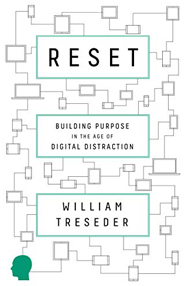
[0:51:39] Charlie Hoehn: Absolutely. Well the book is Reset: Building Purpose in the Age of Digital Distraction. William, thank you so much for being on the show.
[0:51:50] William Treseder: Thank you for having me Charlie.
[0:51:53] Charlie Hoehn: Many thanks to William Treseder for being on the show. You can buy his book, Reset, on amazon.com. Thanks for tuning in on today’s show. If you liked what you heard, here is what I want you to do next. Open up the podcast app on your phone or iTunes on your computer and search for “Author Hour with Charlie Hoehn” and then click “ratings and reviews”. Take 10 seconds to rate this show or leave a review. It is a small favor but it’s really the best way to show your support and give me feedback and if you know someone else who’d love Author Hour, take another three seconds to text them a link to this episode. We’ll see you next time.
Want to Write Your Own Book?
Scribe has helped over 2,000 authors turn their expertise into published books.
Schedule a Free Consult