Sue Hollis: Riding Raw
Read the full transcript
Sue Hollis
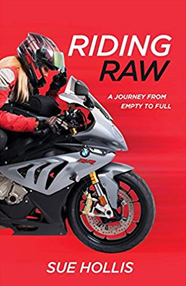
Sue Hollis built her career in the airline and travel industry, working for Qantas and British Airways before co-founding TravelEdge, which grew into one of Australia's largest privately owned corporate travel management companies. Her success made her one of Australia's Top 10 Female Entrepreneurs. After stepping down as CEO, she rode a BMW S1000RR superbike solo across North America for eighty-three days, a journey she recounts in her book Riding Raw: A Journey from Empty to Full. Today she works as a coach and speaker, splitting her time between Whistler, Canada and Sydney, Australia.
📚 Books by Sue Hollis
Transcript
[0:00:17] Charlie Hoehn: You’re listening to Author Hour, enlightening conversations about books with the authors who wrote them. I am Charlie Hoehn. Author hour is about answering one question: How can you get the best ideas from great books without spending so much time reading? Every week, we take you behind the scenes with a new author, about the most important points in their book. So if you love to learn while you're on the go, you’re in the right place. All of our book summaries are 100% free and we do more than a hundred episodes every year. So please subscribe to and review author hour on iTunes. Today’s episode is with Sue Hollis, author of Riding Raw. Sue lived in the fast lane, she was juggling a high powered career, she was a super mom and always striving for perfection but in spite of her external success, inside, she felt a deep emptiness. So, she left her old life in the dirt and she got on a super-bike named Voodoo and set off on a 15,000 mile journey to discover what it really takes to feel fulfilled. In this episode, Sue shares her incredibly true story off her 83 day as solo journey across North America. She had adventures on glaciers and in roadhouses and she also offers a candid and vulnerable look at what it took for her to really let go, change her story, step out of fear and learn how to love herself. If you’ve been searching for what it means to have it all, this episode is for you. Now, here is our conversation with Sue Hollis.
[0:02:33] Sue Hollis: I guess my story began a long time ago. I had always been a serious corporate hitter for many years, I worked for Global Airlines and it gave me mazing opportunities to travel the world and to live in incredible places. I’d love that career and it had been the absolute focus of my intention, you know, nothing came before my career. Eventually I guess I got to a place where I felt that my soul was starting to seep away and that was a real shock for me because I’d always been the career at all cost person. That something dawned on me one day that my values were becoming more important than the next promotion and I had to answer that question inside me. It meant that I actually lift that kind of corporate world behind and I stepped into to embrace the kind of crazy world of entrepreneurship and I really wanted to start my own business because I fell in the corporate environment. I’d lost control and I wanted to create something really special that had a great culture, had to do great things to people, do great things for clients. That basically, gave me an environment that was fulfilling for me and the corporate world hadn’t been. I stated my own company and it became very successful and eventually became a multimillion dollar business which was probably be on my wildest dreams and not something I envisioned particularly the first two years when my kids had nothing but mince, literally for two years. Because we had no money.
[0:03:54] Charlie Hoehn: For two years? Mints?
[0:03:56] Sue Hollis: For two years. Mince. I got to tell you.
[0:03:59] Charlie Hoehn: What kind of mints?
[0:04:00] Sue Hollis: Well, I can make mince into 500 different recipes and you would never recognize the taste.
[0:04:06] Charlie Hoehn: Okay, panic there. I thought you were talking about like the mints you can get at a checkout line, that freshen your breath.
[0:04:15] Sue Hollis: No, mind3! M-I-N-C-E. Here we go, the logistical challenges between. No, I think you guys call it hamburger.
[0:04:22] Charlie Hoehn: Yup, there you go. Sorry to interrupt you again one more time Sue but what was your company that you started?
[0:04:31] Sue Hollis: Our company was, it’s called Travel Edge and it started off as a corporate travel management organization and you know, by the time I stepped away from it, It had become five separate companies, employing 150 people and doing basically a range of different corporate company environments. It had become a multimillion dollar business by the time I stepped away from it after 15 years.
[0:04:55] Charlie Hoehn: You stepped away from it and what happened?
[0:05:00] Sue Hollis: Well, I guess the thing is that on the outside, it looked like I was living the perfect life. There’s no two ways about it, I had an amazing career, an incredible business, I had a beautiful family, two great kids, two great sons and really understanding and some would probably say long suffering husband. I had incredible financial security, I lived a very privileged lifestyle and on top of it all, I had adrenaline. I raced motorbikes, I ran marathons, I dived with sharks. You know, I was living a really crazy wild, brilliant life on the outside. But on the inside, it was a really different story because on the inside internally, I was a real mess, I was absolutely running scared, I guess now when I’m able to look back at it, I can understand that there was no self-love in my life, I just didn’t believe in myself, I never felt that I was enough and it didn’t matter what I achieved. That voice and I know so many of us have heard that voice, that voice in my head just kept telling me that I wasn’t enough, I wasn’t smart enough, I wasn’t successful enough, I wasn’t good enough, thin enough, pretty enough and the challenge that I found in not honoring myself was that I had to find validation elsewhere, I had to find it from someone else or through something else. To kind of keep that voice quiet in my head, I just kept pushing harder and harder, I kept looking for the next success, the next goal, the next achievement but it was manic because you know, that may just kind of made it worse because I had to work harder, faster, longer just to hold it all together and I guess, adding to the challenge that insider. I felt like a real fraud, I felt like I’d found kind of full into my career through lack and good management and a bit of smoke and mirrors. I felt like everything I’d created happened through bluff and there was an ounce of talent involved and to be honest, every morning I got up and I was absolutely terrified that the lives that I’d created was just an illusion and that any minute I’d be found out and that the whole thing would come crashing down. Because I guess, no matter what I did, I was just never enough. That’s how it all started.
[0:07:06] Charlie Hoehn: How did you realize that that was going on? I mean, that narrative which is by the way extremely common among the uber successful.
[0:07:16] Sue Hollis: So I’ve heard.
[0:07:19] Charlie Hoehn: You found but how did you really come into that awareness and eventually crack?
[0:07:25] Sue Hollis: I think one of the things that I’ve discovered is that the universe has an amazing way of bringing you yo your knees. Just when you least expect it or probably when you need it most. My life was seriously careening out of control. Work defined me, my whole identity was tied to my job. Not just actually, just not my whole identity but my whole purpose, my whole reason for being, my whole value to the world was literally tired up in my business card. With that came this insane need to be constantly perfect in all areas of my life. I guess I just wasn’t being confident and being loved to accepted for who I was. I had to be perfect so that meant, you know, the perfect mom. You know what it’s like, any mom suffers guilt whether you go back to work or whether you stay home, you’re always guilty that you’ve made the wrong choice for your child.
[0:08:16] Charlie Hoehn: Right. Women have it especially tough during this tight timeframe in their life, right? Which is like late 20s to mid-30s or so where it’s like, you have to have a career and be a mom or those two things alone conflict so hard that I just, yeah, I don’t envy the inner turmoil that must create.
[0:08:42] Sue Hollis: You know, it’s really hard Charlie because you know, it doesn’t matter whatever decision you make, you always feel that you’ve made the wrong one. You know, I think any mother that goes to work has this incredible guilt, you know, will their children grow up to be axe murderers because you haven’t given them the amount of time that you need. You know, fortunately, I haven’t got to the other end and you know, now my boys is 21 and 23, I can safely say, they’ve not become axe murderers and you know, we kind of survive that.
[0:09:07] Charlie Hoehn: Good job.
[0:09:08] Sue Hollis: Good job mom. She did it. It’s a really horrific time and you’re surrounded by guilt in all areas, you know, you’re guilty because you don’t feel that you’re giving enough to work, you’re guilty because you don’t fully give enough to your child. That guilt is just, it’s just completely debilitating you know? As a result, you know, as a mother, your boys have come home at night and in the bottom of their bag, they’d find a note that says, cakes needed for the cake stall tomorrow. Packet cakes not accepted. Frankly given my cooking skills, you know, packet cakes would have been infinitely, a much better choice but you know, there at midnight, you know, I’m coming home and I’m trying to make homemade cakes or building dioramas or sewing buttons on clean shirts and shirts because you know, they were the only shirts that they had and you know, I would not let my boys go outside and not be perfect. Again, because of the pressure from other moms apart from anything else.
[0:10:01] Charlie Hoehn: Yeah, that’s the other thing is if you’re with a certain group of moms, they can hamstring you and guilt you into not being even more perfect.
[0:10:11] Sue Hollis: Absolutely. It’s a vicious circle, you know? You put out this role of the perfect mom and for me it was you know, I would leave meetings and go and read at school or I would run the sports classes and I was the soccer coach and - you know? Nobody was going to accuse me of not being the perfect mom but I do have that guilt and that pain and that pressure comes from all areas of your life, whether it’s your family, potentially that don’t believe that you know, you should be you know, kind of being less selfish and sacrificing your career to bring these two little people up in the world through to other moms who are just waiting frankly with swords and spears pierced ready to kind of dig in to your armor. Because you have made that choice to also have a career. Look, when I kind of look back at that time in my life, it was really difficult but I just kept pushing through it so you know, I had to be the perfect mom, I had to be the perfect athlete, I was up at 4:30 in the morning training. Again, because being a perfect athlete was great for me because it was actually hard in place when life got tough. I guess my answer to everything was throw myself into a physical challenge so it was triathlons and marathons and hundred kilometer walks. Adrenaline became a serious issue for me and the problem with adrenaline is you become acclimatized to it so you get one hit and you go, well, that’s amazing. Then the next time, it’s just got a – you’ve just got to push it further and further.
[0:11:38] Charlie Hoehn: I know, it’s so true, it’s bizarre. And it’s really pronounced when the first time you do a few extreme sports back to back. The first time you’re like kind of high for five hours and then the second time, it’s over half an hour or something.
[0:11:53] Sue Hollis: Yeah, it is. You get to the place where it’s going to be more dangerous, it’s gotten scarier, it’s got to be more terrifying and you know, that just makes it incredibly difficult because you just – you can’t stop. It just continues to feed you and again, usually for me, was that it’s scaring myself really fill the gap. Because it made me present and you know, while I was terrifying the life out of myself, I got to forget about everything else. Adrenaline became seriously, you know, seriously major drug for one of the better word in my life and I lived in total warrior mode, you know? I just had this – I was just ready to fight at all times. Because that’s where I was safe, I put my shields up, my swords were sharpened.
[0:12:37] Charlie Hoehn: Yeah, you were fight or flight.
[0:12:40] Sue Hollis: Absolutely. To be honest, you know, kind of look back at that personal and go, my god, I don’t think she was really a nice person, I’m not sure – I’m not so sure I actually liked who she was. But –
[0:12:50] Charlie Hoehn: Right, I’m curious too, how many people do you suspect knew the truth about you deep down that hey, you were having a tough time?
[0:13:01] Sue Hollis: No one, Charlie because I would not allow myself to be vulnerable to ever admit to not being perfect, to never admit, to not having it all under control, to never admit to really having all of my shit together in all areas of my life. I mean, even my husband, bless shim, I mean, you know, he was great but he’d say you know, slow down, you need to meditate, I’d got to tell you, telling me to meditate, I mean, that was as b ad as sticking needles in my eyes. I just couldn’t have imagined any – I would think I would rather have cleaned them with a toothbrush than to have sat down for five minutes. You know, bless him, he was trying to do all the right things and he could see it but I would never admit it, I could never admit to basically – the fact that I knew deep down inside, my life was falling apart so if I just kept pushing and moving, then I wouldn’t have the space to ask myself the tough question which was not – you know, how’s this working for you? Then it really wasn’t.
[0:14:01] Charlie Hoehn: Yeah. At what point did you break down? Because you can’t be the person you are today without breaking down.
[0:14:12] Sue Hollis: No, there’s always a breakdown involved, isn’t there always? You know. Just when you think you hit rock bottom, you suddenly realize you’ve probably got about another three levels to go. You know, I guess I reached the point where you know, I started to understand that my life was starting to really hang by a thread and I knew it wasn’t sustainable. I mean, stuff was starting to fall apart around me. I was having problems with business, I was getting really stale and we were going through a really tough time in our business at that point. I guess, and I was working with a great business partner but you know, sometimes business partnership is like a marriage. Sometimes you start wanting different things out of a business and my business partner and I certainly had started to change the way we both wanted to take the business, and that was starting to cause some stress within the business itself. To be honest, I’d been in the business for nearly 16 years and I was getting tired and stale because you just can’t keep operating like this. You know, eventually, you do start to lose your edge and I felt like I was losing my edge. I just felt like the business needed more than I had to give it, we were at a difficult time and I was starting to not have the energy to pull this through and that had never happened in my life and I started getting sick which again, you know, when you’re a fearless warrior and a fearless athlete and a vegan and you’re fit and healthy. You never get sick but man, I got sick. I went down with pneumonia, serious pneumonia. I was having very bad insomnia. I got ulcers which just weren’t healing and the doctor basically, you know, said to me, if you don’t start addressing this, this starting to start concern, starting to look cancerous, you got to start doing something. After really a long session with him, he suggested that I have some stress medication. That started to blow me out of the water because I mean, I was just invincible and I couldn’t believe that I was actually starting to be one of those people that potentially needed medication to calm me down.
[0:16:01] Charlie Hoehn: One of those human beings that needs sleep and –
[0:16:06] Sue Hollis: Yeah. Who would have thought? All of these things were starting to compound and you know, when I look back now, you can see all the chunks starting to fall apart but at the time, it was one of those things where I just kept thinking. I mean, I’ve always lived by the phrase, toughen up princess. I know.
[0:16:25] Charlie Hoehn: Where did that come from?
[0:16:26] Sue Hollis: Well you know what? That came many years.
[0:16:30] Charlie Hoehn: That’s a different book.
[0:16:33] Sue Hollis: That’s a whole different book but it was – it was kind of a fundamental belief and so, in my head, if I’m the perfect warrior, if you just keep pushing harder and harder, you get through it. But, you know, as I said, I mean, the universe kind of looked at me and must have gone, you know what? Okay, enough now, literally. I mean, it literally kind of came crashing down in the bathroom. I kind of wonder why al epiphanies seem to happen in bathrooms and I’m kind of figuring, maybe it’s the lighting in there at 4:00 in the morning.
[0:17:02] Charlie Hoehn: It’s the only private room in the house.
[0:17:04] Sue Hollis: You know what? It certainly is in my place. I got up to go for a run in the morning and I literally was 4:30 in the morning trainer and I, you know, the alarm would go off, I’d never consider anything else. My feet had hit the ground, I’d throw my stuff on and I would just go, I would run and I got up this morning and I couldn’t do it. I had a beautiful, I was trying to put my running clothes on and most of your women listeners will appreciate this, I had a stunning, Lululemon top on but they’re amazing, you actually needed a degree in origami sometimes to put these tops on. This thing, for the first time, I just couldn’t, I had arms and legs going everywhere, I could not put it on and I was fighting it and fighting it. All of a sudden, I stop fighting and I literally just slumped to the ground and the tears started to fall. I knew I was done, I knew this couldn’t continue. I literally, the tears were just falling an falling and this voice came out of nowhere, it’s the only way that I can describe it and it was so clear and it just said, “Enough, enough now. Just quit.” And to this day, I can still hear this voice in my head and it was you know, the confusion was just what? Quit what? Quit life, quit crying, quit banging my head on the tiles on the floor? What is it I’m supposed to quit? You know, I just kind of sat there in silence and eventually I stopped and I realized, I had to quit this life that I was living. It was killing me. I literally got up off the floor, I went back into the bedroom. I said to my husband, “I have to quit. I had a shower, I walked into it, I went back into work and right then and there, I called my amazing business partner who was on holidays and usually at the time, I said, I quit. I have to leave but I don’t know how, I don’t know what this means, I don’t know what we’re going to do. I mean, it’s one thing to quit your job, it’s a very different thing to quit your own company. But I knew I had to stop this madness. I had to define some space, I needed to breathe, I needed to be alone. I needed to find out who I really was if I kind of pulled that out and all these scaffolding of my life that I’d carefully erected around me to protect me. Literally, on the spot, I left my business. I didn’t leave my business on the spot, I quit, it took us a little while to find a CEO, to take over my role in the business but I walked away from it. I knew I had to do something very different if I was going to find who I was really meant to be and if I was going to survive in this world. Actually, not to survive in this world but really thrive.
[0:19:33] Charlie Hoehn: Wow. Thank you for sharing that by the way.
[0:19:37] Sue Hollis: You're welcome.
[0:19:37] Charlie Hoehn: The bathroom breakdown. I have had myself, so I hear you. It’s beautiful that you can still hear the voice and that it was so simple. It’s these very almost obvious aha-moments that we have that maybe everybody from the outside hearing that might say well, obviously, enough. To you it was probably the – maybe the most profound moment of your life or at least in the top three I would guess.
[0:20:06] Sue Hollis: No, without a doubt, I mean, it was you know, with the exception of obviously having amazing children.
[0:20:12] Charlie Hoehn: Children, yeah.
[0:20:12] Sue Hollis: Yeah, it was without a doubt, it was the moment that changed my life. I can’t imagine what my life would be now if I hadn’t had that because I just would have imploded, there’s no two ways about it, you know? I was literally hanging by a thread and my life was not – would not have been sustainable in its current form. Something would have had to give, I would have got seriously sicker or you know, who know? But I know that those words, those just simple, clear words, literally saved my life as well as changing it.
[0:20:45] Charlie Hoehn: Yeah. You come out of this with a new perspective, you’ve quit your job.
[0:20:53] Sue Hollis: I did.
[0:20:55] Charlie Hoehn: What happened next?
[0:20:57] Sue Hollis: You know, it’s one of those things, you come away and I walked out and I quit my job and there was an incredible sense of relief and I knew that I’d done the right thing. That feeling of confidence probably lasted all of about, I’m guessing about 32 seconds before you go, “Holy shit, now what? Now what?” That seemed like such a good idea at that time, now what? I guess, you know, kind of, I went back to my old kind of format, you know, kind of the safe place for me so what do I do now to kind of find myself? Do I go – do I climb Kilimanjaro, do I ice walk across the north pole, what do I do? I couldn’t work out what I needed to do to find myself in this world. For quite a few weeks, I was in quite a state of conundrum and I just – you know, I remember kind of saying, okay, well where are you now, voice? I mean, it was great to tell me enough now, quit. But you know, now I seriously need your help, where are you now? Amazingly, turns out, you know, that voice was there all along. I woke up literally one morning at 2:00 in the morning and two words, clear again as day. Go ride. I remember sitting up going, that’s it, of course. How did I not know this? I’ve been on a motorbike all of my life, I’ve been riding since I was 16. That is my happy place, that’s where I am at seriously. At one with me and the core me. It was so simple. Go ride. I woke my husband up and I said, that’s it, I got to go ride. He went, what? Now? It’s 2:00 in the morning. I went, no, I need to get a new bike, I’m going to go to Canada, go to the US and I’m going to sit on this bike and I’m just going to ride till I can find out who it is that I’m meant to be. That was the plan and that was the only part of the plan that made any sense and that’s exactly what I did. I just took off and I went to ride until I had the courage to kind of say to myself. I am enough, in fact, I’m actually more than enough.
[0:23:01] Charlie Hoehn: Wow. How long were you on the road?
[0:23:05] Sue Hollis: Just on three months.
[0:23:07] Charlie Hoehn: Three months, that’s a good stretch, that’s no joke. You went from, it looks like, Whistler in Canada, all the way to Washington, Oregon, California, Utah, Wyoming, back to Washington and all the way back to British Columbia, right?
[0:23:29] Sue Hollis: Yeah, it did, I mean. Whistler seemed like a natural place to start for me for my journey. My oldest son had – was working as a cinematographer out of Whistler and we – my family, my boys and I had lived in Vancouver for a couple of years. That seemed like a great place to start. I bought a bike, kind of true to form, most people, when they were kind of talking to me about what kind of bike should you take on this trip? To be on a bike for five, 600, four, five, 600 kilometers a day is a really exhausting thing to do for your body, you know? Because you are battling winds and rain and snow and heat and dust and it is a very physically demanding thing to do. I am quite short, I’m 5’2” so I am not necessarily a big person and the most sensible option for me in terms of motor bike would be a big BMW, a cruiser, a bike that is used to going on the road where you sit upright, where you’ve got a big fuel tank, where your back is protected, your arms are protected. So that made a lot of sense but you know, true to form it was all about the look and the feel before any kind of anything made sense and so I bought a super bike. A complete 1000cc BMW race bike, the fastest production bike in the world and she was gorgeous. She was my home, she was my partner in crime, she was my safe place for three months and her name was Voodoo and I call her Voodoo because she was dark and mysterious and she was certainly bite me if I didn’t have my shit together. And together, we spent three month literary as you said, kind of Wissler, you’re doing a little bit into Canada and then drop into Washington, Oregon, California, crossing into Utah, Colorado, back into Utah then Wyoming, Montana and back and so a big – I am not sure what it is in miles but about 23,000 kilometers which is a lot of time on a motor bike.
[0:25:21] Charlie Hoehn: Yeah, it definitely is and for those curious, that is 14,000 miles on motor bike which is that’s wild. So Sue tell me, the book contains all your stories, all your lessons learned and you share these profound things that you learned about yourself and about people and I want to start with some excitement and then we’ll get into the lessons. Tell me the story about the trucks. You went to visit your youngest son.
[0:25:56] Sue Hollis: Yeah, it’s one of those things where you know, when you are on a journey like this there are certain points in the time and in the journey where you start to congratulate yourself. When you start to say, “You know what? I am getting this. This is making sense and I’m really taking these lessons on board and I am really, really learning this stuff.” And then something will happen to which it will set you back and you suddenly realize that you are continually are a work in progress. You don’t just get the lessons, you have to live the lessons to learn the lessons and it was towards the end of the journey and my oldest son, Jakey had been filming in Jackson, Wyoming and I was in Utah at the moment and there was an opportunity for me. If I really hightailed it out of Utah very quickly and did a very, very long trip, spend a lot of time in the road, I would actually have the opportunity to spend a couple of days with him and it was about an 800 kilometers - that I had to travel. But to be honest, I mean that is a really long way on a motor bike particularly given the kind of terrain that I had to cover. It was icy mountain passes where I knew it would be snowing and unbelievably cold. The higher you get funnily enough the colder it gets and I was starting to freeze on this motorbike and I was getting snow and ice but I guess the thing is let no distance come between a mama and one of her cubs. So in my head, I was really confident that I can make this journey pretty simply. But the first day was actually diabolical. The conditions were horrific. It was rain, it was ice, it was snow and when I got in that night, I was completely exhausted. I was absolutely toasted and being a vegan, sometimes it’s hard to find good food on the road and the reason I chose this motel was that they had this great sign that said an all you can eat buffet, a salad buffet and that is like heaven on a stick for me. So I pulled in there but only to find that all you could eat salad had already been eaten by everybody else and there was no food. So the night before to what I refer to as the incident actually happened, I’ve gone to bed and I was cold and I was exhausted and I was absolutely physically spent, I was emotionally drained and I had no food. So the next working I woke up and it was minus three, celsius. It was absolutely freezing and if I had an ounce of brain in my head, I would have gone, “It’s too cold. I just can’t go.” And I know I want to meet Jakey but the conditions are just horrific and I really need not to ride today. So I went outside and I looked at the bike and the bike was completely frozen over which is not a good sign and every time I poured hot water over to defrost it, she would just freeze up again. It was that cold so I looked at it, I was getting messages from lots of friends who knew I was making that trip and they were basically saying, “Well just wait until it gets warmer,” but you know I was looking at my iPhone and it wasn’t going to get any warmer for hours and if I didn’t go then I wouldn’t get a chance to see Jakey. And I seriously ummed and ahhed about whether I went or whether I didn’t and yet again, as I sat thinking about it and contemplating it, those famous two words, well it was about three words, toughen up princess just came through and I thought I am going. So despite the fact that it was really cold and again, I am really suffer from cold and the thing is, when you’re on a bike and you are cold it’s incredibly dangerous because your fingers start to freeze and your fingers control the bike. They control your brake, they control your clutch, they control your acceleration, if you can’t feel your fingers you can’t feel any of those three which means that you will over accelerate your over break and it is just incredibly dangerous and I knew that. As I started to gear up, I had one saving grace which was a heated vest which actually clicks into my bike and gave me a little warmth but the connection on that vest had been playing out for a couple of days and sure enough, the day that I needed that the most when I went to plug it into the bike, the connection snapped. Meaning that I had zero heat on my bike and at minus three, I mean I can’t begin to describe how cold that it. So I had a choice, I could stay or I could go and true to form, I choose to go thinking that it would just get warmer as the day got better it would warm up and it didn’t. It just got colder and eventually, a huge fog started to descend on me and fog is one of the worst things you can have on a bike because it doesn’t matter how many layers you get on. Fog has this incredible fingers that just find their way through every layer until they find bare skin and then that bare skin completely freezes and I know now I was actually suffering from hypothermia. Now I understand what the consequences of hypothermia, I understand that I was completely hypothermic and I had these voices in my head that kept saying, “Pull over, this is crazy, this is dangerous. Pull over, warm up, have a coffee,” but I was obsessed. I had gone straight back into warrior mode despite all the great lessons that I thought I’d learned about letting that warrior go. I went straight back into warrior mode and I was just pushing through no matter what and it was incredibly dangerous and with the fog, I couldn’t see a thing in my visor. So my visor was fogging up on the inside and on the outside and again, a tricky thing to have to happen to you when you are on a bike not being able to see. So I couldn’t feel, my whole body was literary just shaking with cold on the bike. I could barely cling onto the tank on the bike and I had to ride with the visor out because I just couldn’t see. So that’s an incredibly dangerous position to be on a bike and what I learned about hypothermia is that not only does it freezes your body, it also freezes your brain. So you make very, very bad decisions when you are in a position of literary being frozen to your core. And I had sat behind a very, very big kind of 12 wheeler truck. I mean it was probably only for about three minutes but it felt like about three hours and again, when you sit behind a truck you are sucked into the vortex. So again, I am a small person on a very big bike and it was just throwing us all over the road and grit and dirt and frost and snow and ice was just continually being thrown over me and I knew I had to get past this truck or I was literary going to be put the bike down the road. I mean sitting behind it was incredibly dangerous. So I figured that I had to go so I pulled out to get past this thing and again, a really big truck so you really got to have a lot of space to get past him even on a super bike and I pulled out and I could see a truck coming towards me but I figured that I have plenty of room, I’ve got enough gas to go on this and I’ve got plenty of space to actually make that. It is going to be tight but I can make it and as I pulled out, I suddenly realized that the day before I actually left the bike on what’s called rain mode. Rain mode is a mode that you leave the bike in if you’re funnily out in rain because it keeps your traction. It improves your traction but it drops your power capacity and I have left it in rain mode foolishly and so when I went to gun this bike, I got nothing, zero. She just did not take off and I looked up and I suddenly realized that the gap that I had figured was that had been enough was nowhere near enough and this truck was coming at me incredibly fast and I suddenly realized I didn’t had enough power and I didn’t have enough space to get through. I’ve always thought to myself, the last two words that I wanted to say in my life would be, “Oh fuck!” As you careen into something on a bike.
[0:33:27] Charlie Hoehn: And then you were given that opportunity.
[0:33:30] Sue Hollis: And then I suddenly realized that was about to become a reality and there was only one thing I could do and that was to try and tuck in incredibly tightly alongside the truck that I was trying to overtake. That was the only space that I had as this truck was about to hurdle past me. Fortunately, the truck that I was overtaking must have saw me in my mirrors. He braked, he gave me just enough space to scoot past him and scoot through and miss the oncoming truck but it was literary so close that I swear to God that I saw the color of the other driver’s eyes. And the speed of his vortex, the wind from his vortex knocked me all over the road and it was all I could do to basically control this bike but it was probably more, all I could do to control myself because I knew I had been literary seconds away from as I said being the cheese in a two truck sandwich. Fortunately there was a road house literary just a couple of hundred meters away. So I pulled in and I got off my bike and I just sat and I was just shaking. Absolutely shaking with fear, with adrenalin, with every emotion known to man and as I sat there shaking, all of a sudden I felt this incredible warm hand on my shoulder and I turned and looked at the hand and these hands, these fingers were an enormous bunch of bananas and there was a guy, a truck driver, standing alongside me and he just looked at me and he went, “Awful close out there missy. Are you okay?” And it was the truck driver that I had over taken. And he had come in behind me just to check if I was okay and he bought me a coffee. We didn’t say a lot. I mean he wasn’t big on words and I couldn’t speak. He sat with me until I stopped shaking. I mean he must have been with me for probably 40 minutes. He sat with me until I warmed up, until I stopped shaking and then he leaned over and he gave me a big hug and he just said to me, “You might want to think about slowing down a little, huh?” It is like, “You’re kidding me, right?”
[0:35:36] Charlie Hoehn: Words of wisdom. Words to live by really.
[0:35:39] Sue Hollis: Absolutely and it was incredible. You know in those words, he summed up my whole life you know? That whole incident summed up everything about my life, going too fast, going too hard, hearing all the warning signs and choosing to ignore them, thinking that I was invincible and being prepared to compromise and sacrifice everything for a ridiculous goal and those words just summed up my whole life. You might want to think about slowing down a little, you reckon? So an incredible powerful lesson, an incredible powerful learning.
[0:36:11] Charlie Hoehn: And there is a whole bunch of lessons in the book but I want to talk about head success and what you learned about that. Tell me that.
[0:36:22] Sue Hollis: Yeah, I think that was probably the most powerful and I guess overriding lesson in the whole book and then it’s important to celebrate head success but it is absolutely critical to embrace heart success and I guess what I mean by that is my whole life had been about head success. It had been about goals and achievement and targets and acquisitions and that’s fine. There is absolutely nothing wrong with that so long as that’s not what defines you but that was my challenge. Because my whole value, my whole worth was completely linked to those kind of traditional measures of success and what I found is that that’s never enough to fulfill you because you just get one and then you need the next and the next and the next and no matter how much head success that you get you are still hungry and you still feel empty and for me it actually meant that my life didn’t have meaning and what I found on this journey eventually and it took a long time. And I must be a really slow learner because I can tell you what, I’ve got this lessons again and again and again and again but for me, it was about actually that to find real fulfillment in life, you have to find heart success and heart success for me became connecting with my body, connecting with my mind and more importantly connecting with my soul and the world around me. It became about connecting with who I really was deep down inside and that is actually a really scary place for most of us. We don’t give ourselves the time, the space to ask those really tough questions who are we really but you know when you do that work that’s when the magic happens and hard success for me became about living my purpose and living the life that I was meant to live and for me, just like I was saying on the book, it really was the journey from empty to full.
[0:38:16] Charlie Hoehn: That’s right and the biggest lesson that you took away was that we’re all one, right?
[0:38:25] Sue Hollis: Yeah, we are. You know what? So many lessons I think from all of this, I mean one of the most powerful probably I think the top three is that you know number one, we are all connected. You know I had spent my whole life being about me. It was about me and my success and sure, other people are involved but it was about me and my success and my achievements and what that meant to my own validation. And I guess the biggest lesson that I learned from this is it is not about me. It’s about we. You know we are all connected. You know I spent my whole life trying to be my business card, you know what I found when I went on the road was nobody, no one cared what I have done, what I have achieved, who I had been, that I had a business card that opened doors and made me look really important. Nobody ever talks about that. They didn’t care. All they wanted to do was connect to the smelly, dirty Australian that was sitting on a super bike and wanted to learn about my journey and to tell me about theirs and the greatest joy that I actually had from this whole journey was connecting with people in gas stations, in coffee shops, by the side of the road, everywhere I went, I was truly honored that people were open and honest and wanted to share their lives with me and enable themselves to be vulnerable to tell me their life story. I mean goodness knows why, I mean probably because they figured who was I going to tell. I was never going to see them again. So probably safe telling me their greatest secrets and their biggest fears and their most important dreams but to have those moments of connection with people day in and day out was absolutely breathtaking for me and to be honest, the greatest lesson and I guess the second was it’s okay not to have all the answers. I didn’t have all the answers. I put a lot of pressure on myself on this trip to have the answers and in true warrior format, I figured that three months in the bike, three months in my home and I would get off the bike and I would know what the next step was, what my journey was, what I was going to be doing next and I didn’t. I didn’t know that. And that was the lesson. It’s okay to not know where the final destination you’re on the journey but it’s about surrendering and surrendering is not about giving in. It’s about relinquishing control and surrendering to the unknown and this journey was all about the unknown. I had no idea who I was going to be when I got off that bike but I knew I had to just go in and find that person whoever she might be and I guess the third lesson was we can change our stories. We are not the stories that we tell ourselves. I told myself I was a warrior, I was an athlete, I was perfect and I got to change those stories in about three months. I chose to let those stories go and to create new stories in their place, new stories that really did help me fulfill my life and I guess they are the three biggest lessons that I learned in this journey.
[0:41:16] Charlie Hoehn: Well I am so glad that you took that journey and as difficult and challenging as the breakdowns are, they open a hole where the light can come in and so I am glad that you took that journey and you continued to be on that journey and that you are sharing what you’ve learned from everybody. Now I’ve got two more questions for you, one how can our listeners follow you? How can they connect with you?
[0:41:46] Sue Hollis: I have now, it has taken me a little whole after this journey but I have suddenly realized that that is my purpose in life now is to be a coach. To work with people who are basically feeling empty and would like to know how to feel full in their lives. So I’ve been back to another journey now that is of coach and so people can connect with me on suehollis.com and on my website, it is obviously about sharing my journey. It is about setting myself up as an opportunity to coach people. But it is a place where I want to share all the lessons that I have learned and to be able to share resources and tools and information to help people on their own journey to finding themselves. I am on @suehollis_ at Instagram and also on Twitter.
[0:42:29] Charlie Hoehn: Lovely, can you give our listeners a challenge, something maybe they could do today or this week that you would typically coach someone to do?
[0:42:41] Sue Hollis: Yeah, I think one of the most profound things that I have learned when we come back to talking about being connected, one of the most profound things I have learned on my journey was setting – well it is kind of double the header and that is probably the challenge that I like to set the listeners. It’s to double the header which brings the power sitting in intent with the power of connection. So every day on my journey and now every day in my life, I would stop my day by setting an intent and an intent is basically setting the tone for the day. And it is about being clear on how we want to show up for the day and what is it that you want to achieve and most days, I would set the intent to connect with all of those people around me to be really open and to open my heart to connect with everybody that was around me and the powerful lesson that I learned was that the energy that you receive back when you connect is literary double the energy that you put out and it is a conscious choice. You know we could all make the conscious choice when we get our coffee ion the morning which is take a coffee and we say thank you but we don’t make the connection. We walk past someone in the street and we avert our eyes, we avert our gaze, we don’t take the opportunity to make the connection but when we do take that opportunity to connect, the power and the joy that comes from that is gob smacking. So my challenge is for a week, try it for a week and see what actually happens. Get up every morning and set the intention to connect with all those around you and connection is these things like having a conversation with that barista that makes you coffee or you chat the person at check in or you smile and say hello to the bus driver or you tell a stranger that you look fabulous or you hold the door open for someone that is longer than it’s comfortable you know as someone steps through because the thing that I found is that when you make someone feel special even for a fleeting moment of time is the greatest gift that you can give them because we are all connected. We are all one, we do all want the same thing, everybody around us has the same kind of hopes and dreams and the challenges and they just want to matter just like we do. So the challenge is every day for a week, set that intention to connect with those around us because when you put that energy out that energy comes back twice what you have given. That’s my challenge.
[0:44:59] Charlie Hoehn: Beautifully said and I would add to that, they not only want to matter but to be understood which is why you put this book together. The book is Ridding Raw. Sue, thank you so much for being on the show.
[0:45:14] Sue Hollis: Thank you Charlie, it’s been a pleasure.
[0:45:17] Charlie Hoehn: Many thanks to Sue Hollis for being on the show. You can buy her book, Ridding Raw, on amazon.com. Thanks for tuning in on today’s show. If you like what you heard, here is what I want you to do next. Open up the podcast app on your phone or iTunes on your computer and search for “Author Hour with Charlie Hoehn” and then click “ratings and reviews”. Take 10 seconds to rate this show or leave a review. It is a small favor but it’s really the best way to show your support and give me feedback and if you know someone else who’d love Author Hour, take another three seconds to text them a link to this episode. We’ll see you next time.
Want to Write Your Own Book?
Scribe has helped over 2,000 authors turn their expertise into published books.
Schedule a Free Consult