Sakina Bajowala: The Food Allergy Fix
Read the full transcript
Sakina Bajowala
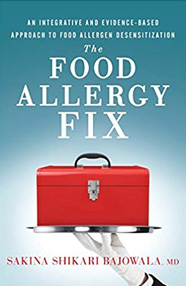
Dr. Sakina Bajowala is a board-certified adult and pediatric allergist and immunologist, and the Medical Director of Kaneland Allergy and Asthma Center. She specializes in the evaluation and management of life-threatening food allergies and has successfully treated hundreds of patients using sublingual and oral immunotherapy, developing her own integrative protocols to optimize the safety and efficacy of treatment. She received her medical degree from Rush Medical College of Rush University Medical Center, completed her residency in general pediatrics at the University of Chicago, and completed her fellowship in allergy and immunology at Rush University Medical Center. She is the author of The Food Allergy Fix: An Integrative and Evidence-Based Approach to Food Allergen Desensitization.
📚 Books by Sakina Bajowala
Transcript
[0:00:48] Charlie Hoehn: You’re listening to Author Hour, enlightening conversations about books with the authors who wrote them. I’m Charlie Hoehn. Author Hour is about answering one question: How can you get the best ideas from great books without spending so much time reading? Every week, we take you behind the scenes with a new author, about the most important points in their book. So if you love to learn while you're on the go, you’re in the right place. All of our book summaries are 100% free and we do more than a hundred episodes every year. So please subscribe to and review author hour on iTunes. Today’s episode is with Dr. Sakina Bajowala, author of The Food Allergy Fix. Eating shouldn’t cause fear but for kids with allergies, food can feel like a minefield, making even simple pleasures like parties and picnics dangerous. Instead of resigning ourselves to a lifetime of avoidance, allergy sufferers can take action and embrace desensitization therapy. In this episode, Dr. Sakina who is a board certified allergist and immunologist is going to demonstrate how allergies can be managed through oral immunotherapy. Dr. Bajowala has a huge success rate, which proves that it’s possible to live in a world without allergies. By the end of this episode, you’ll have taken the first step toward reclaiming food freedom. Now, here is our conversation with Dr. Sakina Bajowala.
[0:02:49] Sakina Bajowala: I would go back to 2008. I had recently graduated from my allergy-immuno fellowship and I had started working in private practice. At the time, I had two very young children. One who had a peanut and tree nut allergy and another one who was a newborn and was randomly breaking out in hives without any clear reason. Here I was being the mother of allergic children on one end and going to work during the week and taking care of other people’s allergic children on the other. One of the things that was incredibly frustrating to me as a physician with a number of years in specialty training under my belt is that for these particular patients, these very young patients with potentially life threatening food allergies, I had very little to offer them. It was, “Okay, I’m going identify what you’re allergic to. Okay, well that’s done,” and then the next thing was, “Okay, don’t eat this. Here’s some emergency medication because at some point, you may accidentally ingest this allergen and then it might be a life-threatening situation so let me show you how to use auto injectable epinephrine. Allergy action plan.” It’s always like worst case scenario, right? I was not offering anyone any hope at all.
[0:04:22] Charlie Hoehn: Very disempowering, yeah.
[0:04:24] Sakina Bajowala: Yeah, it was pedaling fear, right? You’re sitting there and you’re talking to people like - everybody’s tearing up in front of you because you’re giving them the worst possible news and they come to you for help and for solutions but you really didn’t have any, right? I had solutions for runny noses, I had solutions for asthma. I had solutions for immune deficiency. I had solutions for drug allergies but I didn’t really have any concrete solutions for food allergy which, arguably, is much more impactful to your day to day quality of life than many of these other conditions. I just hated this feeling.
[0:05:05] Charlie Hoehn: Yeah, no kidding. How long did this go on for?
[0:05:10] Sakina Bajowala: Well, I didn’t let it go on for all that long because what happened is my elder son actually outgrew his allergies. We had spent the life of an allergic family for four years just avoiding, having our emergency medication with us at all times, I was following the same instructions that I was giving my patients. But, he had an accidental exposure and nothing happened.
[0:05:41] Charlie Hoehn: What was he allergic to?
[0:05:43] Sakina Bajowala: Peanuts.
[0:05:44] Charlie Hoehn: Yes, okay.
[0:05:46] Sakina Bajowala: He had an accidental peanut exposure and there was no reaction. I just looked at him and like okay. Now what? Now let’s retest him and see if he has outgrown the allergy because his first test was just unequivocally positive. Markedly positive. There was no question, right? The repeat test was unequivocally negative. The next step was to actually perform peanut food challenge. Which we did and he passed eating the equivalent of approximately 20 peanuts worth of peanut butter and once again, no reaction. He had outgrown his food allergy. And it is an awesome feeling, right? Our lives changed substantially in terms of all the limits that had been put on us and him and all the fear that I was harboring internally as a mother, right? Always that worst case scenario that I had been preaching to my patients that I had to be prepared for all the time. I’m sure that sometimes I was a real pill to be around because all I can ask is, “What’s in that? Are you sure it hasn’t touched any peanuts?” Did you read the labels,” right? It was limiting.
[0:07:01] Charlie Hoehn: Yeah.
[0:07:01] Sakina Bajowala: Suddenly, all of that was lifted and I was more motivated than ever to bring that same kind of freedom to the rest of my patients. Now I knew that all of my patients weren’t going to spontaneously outgrow their peanut allergies and that’s just not the natural course or the natural history of peanut allergy. In fact, most children with peanut allergy actually have that hypersensitivity for life. I had to come up with something else. I started researching and looking into the possibility of translating what we already knew about allergen desensitization therapies that we were already performing for environmental allergies and drugs -
[0:07:52] Charlie Hoehn: Yeah, just to pause you there, what kind of treatments do those look like? Are you talking about the shots or the pill or the droplets that you put under your tongue?
[0:08:06] Sakina Bajowala: All of these methods are different ways to desensitize or perform immunotherapy for allergens, they’re just different ways of delivering it, the allergen into the body. But the whole concept of desensitization is retraining the immune system to tolerate something that it is currently over reacting to. The way this occurs is by gradually and incrementally over time, increasing the amount of allergen that is introduced to the immune system and going up and up and up and during that process, you create tolerance and you reduce the sensitivity.
[0:08:52] Charlie Hoehn: Right. Before we go down the path of desensitization, I’m curious in the first place, how do allergies to foods develop?
[0:09:04] Sakina Bajowala: That’s a million-dollar question. If we knew the exact answer, we might be in a position where we don’t even need to consider desensitization therapy because we would prevent the allergies in the first place.
[0:09:16] Charlie Hoehn: Sure, what are the prevailing theories and what do you believe?
[0:09:20] Sakina Bajowala: There are a number of theories there in terms of hygiene hypothesis or that were simply not exposed to enough microbes in our early life to properly stimulate our immune systems and then the lack of anything to do for a lack of a better term, the immune system gets bored and starts reacting to stuff that it should be ignoring, that’s one theory.
[0:09:45] Charlie Hoehn: The ‘bored immune system theory’, how’s that?
[0:09:48] Sakina Bajowala: Then, of course there are others. One is that of gastrointestinal dysbiosis. That we maybe born with a certain genetic susceptibility to allergy. But it is our environmental exposures that determine whether that’s susceptibility is expressed or not expressed. That’s a concept known as epigenetics.
[0:10:14] Charlie Hoehn: Right.
[0:10:14] Sakina Bajowala: What is happening here is that there may be certain environmental exposures in terms of illnesses or environmental pollution, antibiotics exposure, certain types of delivery, vaginal versus C section, timing of exposure to certain potential allergens, that all play a role in the epigenetics of expression of food allergy. And so all of these different factors interplay with your genetic susceptibility, turning that little genetic switch on and off.
[0:10:54] Charlie Hoehn: It is a soup of different ingredients that is causing these allergies that make it impossible to determine if it was one thing or the other, or very difficult.
[0:11:07] Sakina Bajowala: It’s definitely multi-factorial.
[0:11:09] Charlie Hoehn: Yeah. I’d imagine that the exposure to all the different chemicals and the fact that we’re eating so many processed foods, that has to play a major role but do we know how far back food allergies as a thing have been on record?
[0:11:26] Sakina Bajowala: Well, what we know is you can look all the way back to the ancient text of Ayurveda in the Indian sub-continent and there is a concept known as [inaudible] which means it’s something that is unwholesome for your body. Now, this concept is not necessarily the same for each person. Something that may be unwholesome for me might be wholesome or [inaudible] for you and so it has a parallel with the concept of food allergy that something that most people are okay with, some people are not okay with. You can see the idea of intolerance to foods going back, way back in history. That said, what we do know is that the prevalence of food allergy seems to be increasing over time. If we look at the factors in terms of what has changed. Once again, it’s multifactorial. You mentioned diet, right? You mentioned the nutrition in our diet and how processed foods may not be as wholesome for the body as a whole food based diet or a plant based diet. This is definitely something that is being explored, other factors are that we have a definite rise in C section deliveries, we have decrease in the amount of babies who are being breastfed for an extended period of time -
[0:13:06] Charlie Hoehn: I just learned this recently because we’re still breastfeeding our one year old daughter. The average,, historically for breastfeeding was like three to four years and it’s still that way in some parts of the world where as in the United States, it’s what, now it’s like, for a lot of moms, it’s three to six months, correct?
[0:13:29] Sakina Bajowala: Right. But you know, even those three to six months can be helpful because It’s a really critical input window. You know, as much we can do to get skin to skin nursing, vaginal delivery whenever safe for mom and baby, avoidance of unnecessary antibiotics, right? And doing the wholesome whole foods, unprocessed diet as much as possible. Getting some fermented foods into the diet. Taking care of the skin and really safeguarding that immunologic barrier against the outside world, that Intact skin provides. All of these things are things that we can do to try to mitigate risk.
[0:14:16] Charlie Hoehn: Just a point on the antibiotics, this is where you can’t always rely on a professional’ s opinions, sometimes the antibiotics are given for a virus and you have to know that antibiotics don’t help in those cases, you got to say no in those situations. And I’m not a medical professional, listen to Sakina, you are free to say don’t listen to this man at any point.
[0:14:43] Sakina Bajowala: There’s a huge push for antibiotic stewardship and making sure that we’re only prescribing antibiotics when it’s really indicated and that when it is indicated, we choose the narrowest spectrum antibiotics that will get the job done and target the infection at end. Because indiscriminately, using very broad spectrum antibiotics affects a lot more than the organ you’re targeting. Some of the data out there now is suggesting that even a single course of antibiotics can disrupt your gut bacteria balance for a whole year.
[0:15:23] Charlie Hoehn: Yeah, that’s a long time. I don’t want to deviate too much from the main ideas in your book which is The Food Allergy Fix. You are obviously a big believer in desensitization. What kind of results have you seen since you started to implement desensitization into your practice?
[0:15:47] Sakina Bajowala: We’ve been incredibly fortunate in that our success rate is hovering right around 94, 95%.
[0:15:54] Charlie Hoehn: Holy cow, when you say success rate, do you mean completely - no more sensitivity to that allergy?
[0:16:03] Sakina Bajowala: No, that’s not what I mean. The food allergen desensitization is not a cure. I can’t stress that enough. It’s a management strategy and the goals of therapy are to reduce risk and to improve quality of life.
[0:16:20] Charlie Hoehn: Got it.
[0:16:21] Sakina Bajowala: The way we define success is that our patient is able to continue dosing with their food allergen on a regular basis without experiencing any distressing side effects. And the ability to continue doing that is what gives the patient protection against a severe allergic reaction from accidental exposure in the future.
[0:16:49] Charlie Hoehn: That’s wonderful. What are the most common food allergies that you’re treating?
[0:16:57] Sakina Bajowala: I would say peanut is primary, that’s definitely out of the hundreds of patients that we treat, well over 50% are from peanuts.
[0:17:06] Charlie Hoehn: I want to say by the way, the last time we spoke Sakina, you had a very long waiting list for people, yeah. Is that still the case?
[0:17:17] Sakina Bajowala: It is, alas, there’s only one of me but I will say, part of the reason I really wanted to write this book, is because I feel very strongly that my colleagues who are board certified, allergy and immunology specialist, all have the skillset to also be performing this therapy and to bring this therapy to their communities. So that patients don’t have to drive seven hours each way to come see me. They can work with their local allergist close to home that they may already have a wonderful working relationship with and get access to food allergen desensitization treatment close to home.
[0:17:58] Charlie Hoehn: That’s excellent. You were listing off the other foods that you treat typically, you got peanut, I’d imagine you’re treating wheat sensitivities a lot these days, right?
[0:18:09] Sakina Bajowala: You know, what’s so interesting is that wheat was the very first food that I desensitized to in my practice. But it’s actually not that common that patients come to us to be desensitized to wheat. That’s not to say that it doesn’t happen at other practices and in my own personal experience, is that the vast majority of my patients are requesting desensitization for peanut, tree nuts, milk, egg and seeds.
[0:18:41] Charlie Hoehn: See, I wasn’t even sure if this book was for me but you just mentioned milk and potentially eggs. I’ve never really had a big problem with eggs but I have definitely had issues with milk. Let’s pretend I am your patient and I am coming in for my first appointment. What should I expect?
[0:19:04] Sakina Bajowala: Well, there is a lot to prepare before you come in but the way your appointment will typically go, we’ll start by taking a really detailed history. I always say that allergists are the detectives of the medical world that we sit there and we have to tease out all these little factors that may have contributed to the big event. The history actually may take more than half of the visit and we’ll be going through your history from the very beginning. For example, I usually start all my visits by asking mom how their pregnancy was. And I’m taking it even before the patient was born and going through events surrounding delivery, for example, like we discussed earlier, was it a vaginal delivery, was it a C section, were there any antibiotics given around that time. Did the baby have reflux, was there any significant eczema, were we nursing or did we do formula? At what age did we start solids, were solids well tolerated? You know, all of these things are really important to the background history and then we move on into, well when did you first come to suspect that a food allergy might be in play and why? What we need to tease out from those reactions is, what was consumed, how much of it, how long did it take until the reaction started, what were the symptoms during the reaction, how was the reaction managed, how long did it take for the reaction to subside and what were the results of any testing that were performed in the aftermath of the reaction and what did they show us? We do that for each and every reaction that has occurred. And in doing so, we build up this kind of rich history of the allergy in the patient. So we can really paint a really vivid picture of kind of the time course of how the allergy has progressed and also, place it on a timeline with other important life events. For example, somebody might tell me, you know, I got Charlie here in the office and his mom is here too. You brought your mom, Charlie. She tells me that well, “You know what’s so funny is that Charlie was always doing really well with milk but then he got a really bad case of the flu and he was sick for three weeks and he didn’t really eat a lot during that time but when he started drinking milk afterwards, he didn’t seem to tolerate it anymore,” right? Those are the types of things that we want to put into context. Have multiple timelines going in at a time so we can make connections between different life events.
[0:21:57] Charlie Hoehn: Man, these questions are just flooding my memory with these haunting periods of my life and milk. I mean, the sound of silence is playing in my mind right now. Wow, okay, we go through that extensive history where we talk about all the big events, all the things that are correlated with the food allergies and I’d venture that’s pretty difficult for some people, especially in regard to the last comment about, right after the flu. That’s a hard thing to pin down typically, right? Of yeah, I had the flu right before that.
[0:22:37] Sakina Bajowala: It is hard to pin down but you’d be amazed at what parents remember.
[0:22:41] Charlie Hoehn: Yeah. I believe yeah. Definitely believe you there. Is that the entire first appointment is focussed just on that is pinning down the history?
[0:22:52] Sakina Bajowala: It is not the whole first appointment but it is a very essential part of it. So we have to get that whole history down and that all has to happen in the first appointment. In addition to getting that history, we’re also reviewing any previous labs or skin testing that has been done and because food allergies do not occur in isolation it is essential to pay attention to other allergic or what we call atopic conditions that might be occurring simultaneously along with the food allergy. This could include eczema, environmental allergies so allergic rhinoconjunctivitis, asthma, allergic gastrointestinal conditions. All of these things need to be taken into account because if one of them is not under excellent control it affects the whole body.
[0:23:48] Charlie Hoehn: Got it, okay. So are we done with the first appointment, anything else?
[0:23:52] Sakina Bajowala: No, now we have to do a physical exam. So we’ve done our history, we’ve done our review of the labs but now it is time for the actual checkup. So we are doing a detailed full head to toe physical and during this time, we often uncover little secrets that the patient have not mentioned and this is not to blame the patient because many times they just don’t realize that they are not well because imagine, if you have lived your whole life with the stuff he knows, how do you know what it feels like to be able to breath easily?
[0:24:30] Charlie Hoehn: Yeah, it’s true.
[0:24:31] Sakina Bajowala: You just don’t know. This is your new normal. You felt bad for so long that you don’t know what it feels like to feel good.
[0:24:40] Charlie Hoehn: Man, it’s the total truth.
[0:24:41] Sakina Bajowala: Yeah so when I asked you how you feel you’re like, “I feel fine and then I looked in your nose and I say, “I have no idea how you just tell me that you feel fine because there is no air moving here,” right? And that happens all the time or I will look in a back of a patient’s throat and it will be what we call cobblestoned, where it’s an inflammation of the mucosal tissue in the back of the throat from constant irritation from post nasal drainage.
[0:25:07] Charlie Hoehn: To people listening who are thinking, “Well, I would have self-defined as normal but maybe I actually have that going on,” what is an at home kind of quick check in with themselves that they can do that might indicate, “Hey, maybe it is not so normal?”
[0:25:24] Sakina Bajowala: Yeah, so you want to keep a diary and you can just like the detective work that we do during that visit kind of do it over in an extended period of time and see if your symptoms are correlating with certain environmental exposures, animals or pollen, mold, dust exposure. And also pay attention to if your symptoms improve when you take allergy medication. So if you take an antihistamine or a nasal spray consistently. And your symptoms actually improve and then you stopped the medication and your symptoms get worst, well guess what? It is not a cold, it’s about the allergies and so it makes sense to then visit your friendly local allergist and have them help you identify what your allergic triggers are.
[0:26:11] Charlie Hoehn: Yeah, you know I don’t think I have ever felt so foolish as when I realized the dogs, our dogs that were sleeping in our bedroom were causing myd allergies. As soon as I moved them out I was like, “Wow I can breathe again! I’m not sneezing eight times in the first hour of waking up, this is unbelievable!” Yeah. So it’s this little things that you’ve just become accustomed to that you tend to not notice so that is really good advice now –
[0:26:42] Sakina Bajowala: Yeah and it is really important too because you can imagine see, you have this chronic dog exposure but you didn’t realize that you were allergic to dogs and not only are you congested and your sinuses are inflamed but your lower airwaves are also inflamed. And then you come to me to treat your milk allergy and I introduce milk into your system you might have a reaction because you’re already skating on thin ice from the perspective of airway control and allergy control. In order to perform food allergen desensitization safely where we actually take something that you could potentially have a life threatening allergic reaction to and deliberately put it back into your body, I need to make sure that your body is as healthy as possible and everything is tuned up and rearing to go and that your airways are clear and your sinuses are clear and you are breathing well and your skin is in good shape and your stomach isn’t hurting. Because that is the only way I can optimize your chances of success.
[0:27:49] Charlie Hoehn: Got it, all right. So first appointment, we are covering a lot of grounds here, is there anything else?
[0:27:57] Sakina Bajowala: Now we have to do some testing. So certainly, many of my patients walk in the door with a binder full of previous test results and allergy testing results can fluctuate overtime. So it’s important to track that overtime and be consistent and see what we are dealing with because an allergy that you may have had when you are two years old doesn’t mean you’re going to still have that allergy when you are eight years old. It might resolve and there are certain allergies, food allergies in particular that the natural history is for them to resolve over time. That includes milk, eggs, soy, wheat for example and then there are other allergies that tend to stick around long term like seafood, nuts and seeds. And so we do want to track things overtime because the most recent information is going to help me craft an accurate plan. So in addition to looking at historical results, I am going to take that and we’re going to do some new testing. And testing for foods can be done via skin testing or blood testing, both are accurate and helpful and sometimes I do both. There is a little bit more granular information that you can get by doing some blood based testing for food allergies but it requires a great deal of interpretation. So generally it’s best to wait and let your allergist order that blood work because they know exactly what they’re looking for and they won’t over test you. Because it is really easy to just order a full panel for a blood test for food allergies and be testing to things that are in your diet and get a lot of false positive results, clinical context is really important here which is why we spend so much time getting the history. We are doing testing, we are identifying what our current food allergy triggers are. We can do similar testing via skin testing for the environmental allergens so we can identify those. In blood work, I also look at a few other parameters. I look at the complete blood count and look for a few things there. Number one, we know that children with very limited diets and especially with multiple food allergies are at an increased risk for some nutritional deficiencies including iron deficiency anemia. So we want to make sure that children aren’t anemic because if they are that can lead to fatigue and issues with focus and overall malaise and a feeling of not feeling well. So we definitely would want to correct something like that before we got started with an intensive treatment regimen. I look at the white blood cell counts specifically particular white blood cell called the eosinophil. The eosinophil is involved in protecting the body against parasites but it is also an important player in mediating allergic reactions. And the eosinophil count can be a marker, a proxy marker of internal allergic inflammation and so I like to get a baseline. So that I can track that over time, if the baseline eosinophil count is significantly elevated, it is going to prompt me to do a little bit more investigation to figure out why that might be the case. Is this because of chronic environmental exposures? Is there a drug allergy? Is the skin very inflamed or is there some allergic gastrointestinal inflammation kind of burning under the surface that we haven’t recognize yet that we need to look into and correct. And occasionally, I will choose some herbal supplements to help mitigate that eosinophilia or that inflammation depending on the count. I also look at a vitamin D level. Vitamin D is an immunomodulatory hormone that has been demonstrated to play an important role in the modulation of the immune system when it comes to autoimmune disease and a topic disease and there are some studies that show that optimizing the vitamin D level can actually improve the body production of anti-inflammatory molecules or cytokines. So to our patient’s benefit to have an optimized vitamin D level. And my personal practice is to really boost that above the bear minimum of normal. So generally in the level of 30 is considered sufficient but I really like my patients to be quite a bit higher than that. So I am aiming for levels around 50 with the vitamin D3 or 25 hydroxyl vitamin D and hovering there is still high enough to be optimized but low enough to not have any concerns about toxicity.
[0:33:09] Charlie Hoehn: Got it. So vitamin D3, 50 IUs you said?
[0:33:15] Sakina Bajowala: Oh no, so 50 IUs is the unit of measurement that determines the dose of vitamin D that you are receiving. So that is the IUs but when vitamin D levels our chart it is in nanograms per milliliter.
[0:33:35] Charlie Hoehn: In other words, all of this to say the first appointment is amazingly comprehensive and let’s touch upon what follow up in treatment, making the most of treatment really looks like.
[0:33:49] Sakina Bajowala: Right, so like I mentioned before I would say 50 to 60% of successful treatment involves tuning up the body and getting the patient at baseline to be as healthy as possible. Once that is done, we can move onto dietary expansion and what that means is taking a look at our blood work and our skin testing results and categorizing the foods that a patient is currently avoiding into three different columns. One is synthesize and likely allergic. Which means, okay well you are certainly synthesize to this food and the levels are high enough and the clinical history is such or the particular proteins that you are synthesize are high risk enough that we believe that this is a true allergy and that you should continue avoiding it. Although you will be potentially a candidate for treatment down the road. Category two is synthesized but likely tolerant. What this means is that we think it might be a false positive result. That on paper it looks like your body is producing IGE or an allergic antibody against this food. Your skin test may even be positive, however due to the level of IGE that you are producing maybe it is relatively low or that you may only be synthesized to certain low risk proteins. We think it’s worth the chance of trying to introduce that allergen back into your body under medical supervision to see if you can handle it and the way we do that is within an in-office oral food challenge. What this involves is taking the food that we are testing and reintroducing it into the body in very small doses that increase every 15 minutes or so until you have eaten a whole serving of that food within around an hour, an hour and a half. And then we watch your for another hour after you’ve done eating to make sure that you are tolerating it well. In between each dose, we keep checking on you to make sure you’re doing well and of course, if there were any signs of an allergic reaction, we would halt the challenge, treat the reaction then you would go back to avoidance. But if you can pass the challenge and not experience a reaction, well then there is no reason to not introduce this food into your diet on a regular basis because you are not allergic.
[0:36:28] Charlie Hoehn: And that is the dream. So let us talk about then – I mean you have treated tons of patients, you’ve got this huge waiting list with a 95% success rate, tell me your personal favorite success story of a patient you’ve treated?
[0:36:46] Sakina Bajowala: I would say I really, really loved treating a patient who had a very severe milk allergy to the point where she had experienced anaphylactic reactions to trace amounts of milk from walking into a room where somebody was boiling milk on the stove. From walking into a coffee shop where milk was steaming and needing epinephrine injections multiple times before she came to see me. And her level of allergy was high enough that we went through our full or long protocol for treatment. Which starts with [inaudible] immunotherapy where you take diluted extracts of the food allergen in question and introduce it to the immune system by giving drops under the surface of the tongue once daily and those doses of the drops increase gradually over the course of around six months. Once that is complete and you transition into what we call oral immunotherapy where you are taking actual food and ingesting it on a daily basis and building that up overtime. And this patient was so allergic to milk that it actually took far longer than we anticipated to get to our goal dose of drinking 240 milliliters or a whole eight ounces of milk in a single sitting. But she did it and the greatest feeling was when her mom pulled out of the chocolates out of her bag because it was her very first time eating chocolate and so the three of us sat there and we ate a bunch of chocolate together and it was just such a nice bonding moment. Afterwards, I got text messages from both of them sharing pictures of a family event where for the very first time she was able to eat this traditional dish that her family had been making for generations for the holidays and she had never been able to taste it because it had milk in it and there she was sitting in the center of this photograph with a big plate of this dish in front of her and whole family beaming surrounding her and it was just a lovely feeling of everything is right in the world.
[0:39:28] Charlie Hoehn: That’s so wonderful, you’ve got to be so proud to be able to have such an impact on her life and countless other people’s lives. I want to wrap up Sakina by saying thank you for doing this episode first of all and secondly, I’d like for you to give our listeners a challenge maybe as something they can do this week that can have a positive impact on their life if they think or they know they have a food allergy.
[0:40:01] Sakina Bajowala: So first of all Charlie thank you so much for inviting me to come and talk to you about this topic which is so near and dear to my heart. I am very proud but mostly I am proud of my patients and I am just grateful to be able to help them in whatever way I can. My challenge to anyone listening is if you do have an allergy and you’ve been living life in a cage where you feel limited in any way, I challenge you to get out of that box and just educate yourself. There is a lot of information out there and it can be really difficult to separate the wheat from the chaff here when it comes to medical things online but there are some really great resources. So obviously read the book. I’d love for you all to read the book and take that information with you to a local board certified allergist and sit down and have a real conversation about your options. If you read the book and you talk to your allergist and afterwards you decide that, no, treatment isn’t right for you, you just want to continue on with avoidance that’s fine. More power to you. At least you knew all the options that were out there and you made an educated decision. What I hate is that when I hear from people who say, “If only I had known about this five years ago, I would have done it and I would have avoided a stay in the ICU.” Or people who say, “If only I had known about this before my son went off to college I could have protected him before he left my house,” right? Because this information has been out there but it just hasn’t been publicized so that’s my challenge. Just read as much as you can, educate yourself as much as possible and then go armed with that information and knowledge and talk it out with somebody who is an expert in the field who can help you really make sense of it all so you can make an informed decision on how to move forward.
[0:42:15] Charlie Hoehn: Beautifully put. Now you have again, a long list of patients but how can our listeners maybe connect with you, follow you on your journey, potentially get on that list?
[0:42:30] Sakina Bajowala: Sure, so my private practice in North Aurora, Illinois is Kaneland Allergy and Asthma Center and our website is www.kanelandallergy.com and patients are welcome to call us there, schedule a consultation appointment. We would be happy to meet with anyone who is interested. If you are not local to us and you’re still interested, I would certainly encourage you to utilize the resources in the back of the book where I list a number of support groups, Facebook pages and websites. Where you can go to find allergists in your community who are also skilled in the practice of food allergen desensitizations therapy and who can serve as resources for you locally. If you just want people to talk to, I encourage you to go online and join a lot of those Facebook groups that are available specifically for education about sublingual immunotherapy, oral immunotherapy and any other of the food allergy treatment options that are coming up the pipeline.
[0:43:42] Charlie Hoehn: Wonderful, so the book is The Food Allergy Fix - An Integrative and Evidence-Based Approach to Food Allergen Desensitization. Sakina, thank you so much for being on the show.
[0:43:55] Sakina Bajowala: Charlie thanks so much for having me.
[0:43:58] Charlie Hoehn: Many thanks to Dr. Sakina Bajowala for being on the show. You can buy her book, The Food Allergy Fix, on amazon.com. Thanks for tuning in on today’s show. If you liked what you heard, here is what I want you to do next. Open up the podcast app on your phone or iTunes on your computer and search for “Author Hour with Charlie Hoehn” and then click “ratings and reviews”. Take 10 seconds to rate this show or leave a review. It is a small favor but it’s really the best way to show your support and give me feedback and if you know someone else who’d love Author Hour, take another three seconds to text them a link to this episode. We’ll see you next time.
Want to Write Your Own Book?
Scribe has helped over 2,000 authors turn their expertise into published books.
Schedule a Free Consult