Jacqueline Mcleod: Feminine, Masculine Balance
Read the full transcript
Jacqueline Mcleod
Jacqueline McLeod was a health professional clinician with a lifelong passion for self-development, which led her to studies of tarot, astrology, spirituality, and alternative health. Her purpose is to help build a more balanced society by empowering the feminine in both women and men. She owns a studio and learning space in Sandringham, Melbourne, Australia.
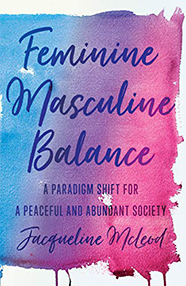
📚 Books by Jacqueline Mcleod
Transcript
[0:00:26] CH: Author hour is about answering one question. How can you get the best ideas from great books without spending so much time reading? Every week, we take you behind the scenes with a new author, about the most important points in their book. If you love to learn while you're on the go, you’re in the right place. All of our book summaries are 100% free and we do more than a hundred episodes every year. Please subscribe to and review author hour on iTunes. Today’s episode is with Jacqueline Mcleod, author of Feminine, Masculine Balance. We’re well into the 21st century and yet we continue to struggle with the same problems that have plagued us for centuries – violence, poverty, inequality, toxic relationships. But Jacqueline believes that real change is possible, and the first step is to understand the driving force behind all the turmoil in the world. In this episode, Jacqueline explains how masculine and feminine energies are unbalanced on a global scale. Masculine attributes like competitiveness, rationality and detachment while beneficial for all genders, can grow dangerous when they dominate our value systems. In this episode, you’ll learn how women and men can become better versions of themselves by balancing their feminine and masculine energies. By the end of this episode, you’ll have your eyes open to a new way of living. Now, here is our conversation with Jacqueline Mcleod. Tell me about the main idea behind your book?
[0:02:30] Jacqueline Mcleod: Well, I think for me really, this has developed through a whole lifetime of experiences and observation. I’m very much an introvert so I tend to be the person who is quite and observes things and experiences things and doesn’t necessarily say much about it at the time. You know, just sort of absorb things and think about them and reflect.
[0:02:53] CH: Tell me, what led to you writing this book?
[0:02:56] Jacqueline Mcleod: I think I do have to give a bit of background before I say maybe when this first started because I was born just after 1946. It was just after second world war into a very what would then be called patriarchal society. I call as a masculine dominated society because of the theory I’ve got, this paradigm shift I’ve developed. I put up with a lot of prejudice against women and I think a lot of imbalance in the masculine and feminine, not that I knew about it at that time and then when I studied astrology and taro which was I started that in 1990. I actually became aware of masculine, feminine energies or principles or attributes or whatever you want to call them. And you know, they are polarities and people would provide you with key words for those sort of things, like rational, logical is masculine and intuitive and emotional is feminine and tables, things like that. I just sort of said with that. Actually, prior to that or around about – I think it was prior to that time, I read about Neolithic communities that were female centered, not female ruled and they had no evidence of fortifications apart from protecting themselves against wild animals They had no weapons and no evidence of in the grave sites, you know, no broken skulls or anything like that. I thought, “Wouldn’t it be lovely to live in a community like that?” And also, I read about the introduction of patrilineal inheritance. Now, before that time, people knew who their mother was because she gave birth but they weren’t always sure who the father was and when patrilineal inheritance came in, to know who their children were, men had to control women’s sexuality and therefore their lives. That seemed to me the reason why so many men feel I have to be very controlling of women and because of their physical strength, they were able to do that. Clearly, you know, like so many women have read about women’s issues and things like that, which wasn’t a big deal for me when I was a child, but it did become that as I got older. Then, it was about 2004. I was looking at one of these tables of the masculine and feminine energies and I thought, you know, “What needs to happen is the feminine energies need to be empowered to the level of the masculine.” It’s not a matter of denigrating the masculine energies which are fine as pure energies. It’s a matter of bringing the feminine energies to the same level as the masculine. It’s a balance that’s out – I sat on that for a long time, I actually devised a course that I never taught, just didn’t happen because of all the things that happened in my life. Then, it was about 2014, I was having dinner with a friend and she said, “You’re going to write a book” and I said, “I’m not a writer” and she said “No, we’re talking about information here, not literature” and I thought, “Maybe I could write an information book,” I said, “I’m not a literary person.” She said, “What would you write about?” And I said, “Empowering the feminine.” Then a year went by, she’s a workaholic, I only see her about once a year and then I said to her, “You know, I’ve started on the book.” But what I’d done was when I had ideas, I’d jot them down on a bit of paper and when I had time, I brought them into the document and I’d put them in a folder called “Book.” That was all I’d done. She said, “No, you’ve got to have a structure” and all this sort of thing. Then the friend said to me, not us. Long after that that she’d heard an author on the radio talking about there are two types of authors, there’s one that’s the architect who has the structure and writes around the structure and there’s the one that’s the gardener and just goes out into the garden and you know, plants things and finds things and whatever. I thought, well that’s okay, you know, I felt okay. I felt, well, I’m really brainstorming this because it now became aware, it really was a paradigm shift and it was a different way of thinking to the way we normally think. At about the same time, I’d looked at this table and I thought, “I wonder what would happen” – I put a column of feminine, a column of masculine and selected some of the energies – “…If you actually blended the two.” I did this middle column and I had a friend who is a wonderful wordsmith which helped me select the right words. We actually had to play around with that quite a bit to get just the right words. Really, the book is based on that table and then applying it to various aspects of our lives.
[0:07:48] CH: When did you start to really pickup on the nuances of masculine and feminine energy?
[0:07:54] Jacqueline Mcleod: It went more back to the fact that I’ve never seen men and women as opposite. I’ve always seen them as different but not opposite. Even as a small child, and because there is a whole lot of men that are different anyway, you know, you think of Hitler and Gandhi, they’re very different men. If you think of Margaret Thatcher and Marylyn Munroe, they’re very different women, Margaret Thatch is a very – was, a very masculine woman. Gandhi had a lot of feminine attributes. You know, Hitler was obviously very masculine dominated which is not the same as masculine. Masculine dominated is when the energies lined up all the masculine energies line up and they’re unbalanced by the feminine. You know, that’s a real distinction that needs to be made.
[0:08:41] CH: You know, I heard something recently in the series Wild, Wild Country where the spiritual leader Osho said that Gandhi was the most cunning politician of all time and Hitler was the most idiotic politician of all time.
[0:09:06] Jacqueline Mcleod: Yeah, well it is. But on the other hand, Gandhi still had his heart in the right place and Hitler was, well, just mentally ill basically wasn’t he. Yeah, then getting back to this former feminine, it is a different one because I believe that – I think what we need to understand is that the term or the word feminine, is not synonymous with women and the term masculine is not synonymous with men. But we do use it that way and we need to separate that out and realize that if a woman is very destructively angry, she’s acting from her masculine side. It’s not feminine behavior, it’s distorted masculine energy. Similarly, if a man is very passive and doesn’t do anything and is just wafting along in life. He’s behaving in the very feminine way. Once we make this paradigm shift and understand feminine-masculine balance and that is quite complicated, that’s why it’s hard to explain in a conversation, you know, it’s something you really need to look at and study. But once we make that shift, it will bridge the gap between men and women, that’s what I believe. It will also assist in reducing violence, greed and poverty immersive.
[0:10:27] CH: You said that you're someone who prefers to quietly observe, which is sort of different from writing a book. What drove you to observe more publicly with this book, what made you feel it was necessary to step out from being an observer to leading the conversation?
[0:10:48] Jacqueline Mcleod: Well, there are many things. I think the biggest impetus was my horror of violence and the futility of war and the horrors of domestic violence, which is really bad. That was probably the first step, you know? I explain in the book how you know, disagreement is inevitable, but war is not. I believe we can eliminate war and the horrible things that happen with the, you know, the number of refugees we’ve got in the moment. I mean, they simply exist because of violence, that was to eliminate violence but then, I moved on to recognizing that this masculine dominated society. Even though it’s achieved wonderful things, there are areas where we’re really not doing well and apart from war and domestic violence, there’s greed and poverty which affects the environment and affects people’s lives because now, what was it that quote that I had in the book that I think is something like, the eight wealthiest people in the world have the same amount of money as 50% of the poorest people. That’s crazy, you know, it’s just so wrong. A lot of that is to do with domination and control which is out of balance masculine.
[0:12:07] CH: This really is a paradigm shift which makes it seem like it might be a little bit complex for a lot of readers to really follow. How can you help our readers move from the more common ideas of masculine and feminine, to understanding them as a balance that should really exist in all of us?
[0:12:30] Jacqueline Mcleod: Well, I think awareness is the first step and actually, achieving and understanding of what I’ve written. I think the table is very helpful and also in the book, I have what publishers call callouts which I would call a box with words written in it. I’ve given examples of patterns of behavior, using those keywords so you get an understanding how that behavior happens with violence. The violent person starts with a hierarchy called concept. Now, these are masculine terms, hierarchy is a masculine term. That’s a belief that they’re superior to somebody else in whatever – it might be they’re religion superior, they’re racially superior, gender, you know, “I’m a man, I’m superior to women,” whatever. But they have that belief, they’ve set it up in the hierarchical way and they can analyze that in the rational logical way and prove that you know, in their eyes, in their belief system, those are all masculine terms. Another masculine attribute is controlling your own life. But those people – which is good, we should control your own life, but those people’s control then spills over into controlling other people, that they believe are inferior to them or less able or whatever. And they’re very competitive, they’ll be very competitive about it. Then, if they’re challenged, they’ll defend themselves, they’ll react and defend themselves by acting with detachment and strength. Now, if you have a look at that column, it’s all in that column of the masculine energies and that will be fueled by destructive anger and there is a difference between constructive and destructive anger. Now, anger is an emotion which is feminine but because of the lineup of masculine, unbalanced masculine energies, that emotion becomes destructive which is you know, a distorted emotion. Distorted by the masculine and you get violence. Then if you look at the table, if on the other hand that person had a holistic attitude towards life rather than the hierarchical one. Then holistic thinking is feminine, so they integrate those two which is a balance, they could have the intuition and imagination and to recognize that other people who are different are simply different. They could reflect on it, this is all feminine terms and be sensitive to the needs of those other people and that doesn’t mean you necessarily agree with them, but you can be sensible and knowing and understanding that these people can coexist with you. That balance is out, that masculine, that distorted masculine energy and you can learn to collaborate with them. If you have a look at – you can be compassionate towards them, you can show flexibility, you can trust, you can allow them to live their own lives which is feminine and trust that you know, the world can keep going without you having to control it.
[0:15:44] CH: Are there certain professions where you really see a need for masculine and feminine balance? We’ve obviously talked about war in the military complex but are there things that we see more close to home?
[0:15:59] Jacqueline Mcleod: Well I do believe that medicine it doesn’t make feminine and masculine balance because it evolved scientifically. So it is very analytical. It is very hierarchical and also in the sense of divisiveness and the focus of medicine has developed into a focus on fighting disease, it has evolved through the scientific approach which if you have a look at the list is very masculine dominated to a definition of health is being the absence of clinical symptoms. And this is I think one of the reasons we have so many chronic diseases because chronic disease starts years if not decades before the clinical symptoms appear and so you’re basically treating the disease at the wrong point. So that is why I compare that with what I call healing whatever you want to call it, as in we need to take responsibility for our own health from the beginning, you know from conception basically and have the right health practices to allow the body to heal itself. Now that is more feminine to allow the body to heal itself. Obviously when things go wrong we do need help but that needs to be in a much more balanced way.
[0:17:14] CH: Yeah, so what would a masculine-feminine balance look like from a day to day perspective? How can this play out in our listener’s lives?
[0:17:23] Jacqueline Mcleod: Well as I said in the book, it really sort of struck me when a friend of mine who has a very busy business said, “Look I need to play more. I am working too hard and I need to play more to get more balance” and then I said, “Well it is actually more than that. Yes we do need play and I talk about that in the book too but that is all we’re doing which is masculine” It’s an action. It’s active and the feminine is being. So we need sleep, we need meditation, we need to just be and regenerate and we need that balance.
[0:17:56] CH: Absolutely, so instead of hording money it made me think of actually a Louis C.K. I remember when he went on tour, he started running his own tours and I think he made like a half a million, possibly even a million dollars the first time he did this and he made a statement about it where he basically said, “I was raised to not try and horde money so I am trying to flush this back into the system,” like money is not something we keep. Money is something we all share, it is an energy.
[0:18:32] Jacqueline Mcleod: Well abundance is more than money. I am trying to distinguish between people who are totally focused on money and actually have rather empty lives. It’s really an addiction. I talk about this in another part of the book, well lots of people talk about this but particularly, Gabor Mate, talks about – he’s the one I refer to – how an addiction is trying to fill an emptiness and so they never have enough money and they have to have more and more. It is like somebody who eats too much that they are trying to fill their emptiness with food and that doesn’t satisfy them because it is not their real problem and so they really don’t have full and meaningful lives because they’re just constantly chasing money. Now there are other people who happen to be good at making money, but they have very full lives because their abundance, they might have abundance of friendships and abundance of activities. Abundance of interest, abundance of health, they are much more rounded people and the thing is that also if you happen to have a lot of money, it is a good idea to recycle it not horde it and then you can assist the other people who may not be so good at making money lead better lives.
[0:19:49] CH: Absolutely, I mean beyond a certain point, money is about keeping score of the value that you are creating for other people and once you are past the certain amount of – I can’t remember if it’s still $70,000 a year, you have that feeling of security and your quality of life does not increase so substantially anymore.
[0:20:12] Jacqueline Mcleod: Well I think it’s as I said before, it’s an addiction and also in terms of the feminine-masculine balance, it’s a hierarchal called belief that if I have more money, I am superior to other people, that that’s part of it too. So the more money I have, the more superior I am. Well not really. You know, there are lots of other areas of life – you might have more money but you might not be very athletic or you might not be very academic or there’s all sorts of other areas of life that you can achieve in. And having lots of money doesn’t really make you superior but there is that belief and because of the way society set up of course controlling dominating people with money, if you think of the mafia or something, can then harm other people through that control that leads to a sense of superiority too, but it is only in their own mind that they are superior. It’s not what other people think.
[0:21:14] CH: So aside from war, how else do you see the imbalance of masculine and feminine energy playing out on a national level?
[0:21:25] Jacqueline Mcleod: I believe that true democracy is politicians collaborating with one another to achieve the best outcome for the whole population. I think Australia is very similar to the US that it is very divisive. You know we tend to have two major parties that they are adversarial, and they are competing with one another to get into what they call power, which is domination control, and they have really lost sight of the fact that really politicians are supposed to be serving the people. And if you are serving the people, all the people not just the people who happen to vote for you, you are not really doing the job and if you look at the masculine line up there, I’ve got it there. That is the way they operate from a very competitive masculine way.
[0:22:16] CH: Do you see a balance of masculine and feminine qualities helping us to progress more as a society?
[0:22:24] Jacqueline Mcleod: I think they are all inter related really. I think that is the thing and that is the feminine approach is a holistic approach. That’s what makes it a bit difficult because we really need to see the big picture. In terms of the feminine and masculine. I suppose we could get back to really understanding the symbolism. The masculine is a straight line, so it is linear. So, it is basically you need dimensional, you could think of it as an arrow or something like that. And this really doesn’t have any breathe or depth, it is just a straight line. The feminine is a circle and the masculine is beginning, middle and end. So, if you have a look at the way we’ve all operated particularly in the past, you know stories are always told the beginning, the middle and the end. You know we are educated beginning, middle and end and everything is beginning, middle and end. And so, it’s straight line stuff. Very few branches, very focused. Reduced things to one, now the feminine is a circle. So where is the beginning, the middle and the end? It doesn’t exist. It just goes round and round and round. So it does have breadth but it just goes round and round and round in the circle but if you combine them, you get the spiral. So then you got the spiral or the circle moving onto a further place and that sort of represents a more balanced approached because it has the length and the breadth and the depth. And you can’t pick one because they are all inter related and one of the things I focus on is inter dependence and interdependence is really an important way. This millennium that we just came out of is very much a one, the 1900’s of what is the 2nd millennium but it’s the thousands and it is very sort of independent and individualistic and competitive and confrontational, whereas we’re moving into the new millennium of the two. The 2000’s and on onwards, which is more being cooperative and working together in diplomacy and tolerance and trying to achieve things for the whole. So that is all part of our shift, but it is looking at things wholly stick play. That is the emphasis looking at things holistically and seeing the big picture that we need to integrate it into every aspect of our lives.
[0:24:50] CH: So the country has still a long way to go. I mean it is going to take some time to make the shift but are you seeing any companies or organizations that is really getting this balance right?
[0:25:02] Jacqueline Mcleod: I think there are companies that are doing it. What I see is I think the millennials are getting the understanding. Kate and I, Kate is my publishing manager, we discussed this is the first step we took in the book. We discussed who the target audience was and so we decided on millennials and funnily enough, we decided on millennial males because we thought that they were the most confused but when I told Kate about this she said, “This is essential reading for my husband.” Anyway, then marked the outline and said, “No that is too big a stretch. It will have to be millennial females” and I thought, “Well that’s okay because they hand their books onto the men anyway, so the men would get it.” But I think there are some young people setting up companies that are very altruistic and yes, they are getting the feminine-masculine balance.
[0:25:54] CH: So you talk in your book about the imbalance of masculine and feminine energy in religion. Do you want to dive into that a bit before we wrap up?
[0:26:04] Jacqueline Mcleod: So with the religion, actually it is quite a funny story because my parents got married when they were very young and my mother went to church because everyone else did. I don’t think she was particularly religious, but you know everyone else went to church, so she did too. My father as a teenager had rejected religion because he’d really thought about it and decided that it was all the problems or whatever, but he used to go to Labor Party meetings. So, the Labor Party is sort of the – it’s not so much these days but it’s traditionally the Worker’s Party and unions and all of that sort of thing and my mother was a bit of a snob. So she wasn’t very keen on my father going to Labor Party meetings and he wasn’t very keen on her going to church. So, they came to the agreement that if he didn’t go to Labor Party meetings she wouldn’t go to church and my older brother was christened Presbyterian because he was going to a Presbyterian school. I was going to an independent school, so I wasn’t even christened, and we had no religion in the family and the school I went to taught a little bit of Bible studies but very little. So I grew up in a very sort of unreligious family side. I am sort of an outsider and from an outsider looking in, I see to me I’ve always just said, “Well it was set up by men for men and I am not a man so it is irrelevant to me,” so that has been my approach to religion. Now it is not saying that there aren’t religious people whose core values are really good and they are trying to help people live very ethical, good lives but I think it’s been spoilt by the masculine dominated approach. It has been spoilt by being very hierarchical and exclusive of women and as I say if the Vatican had 50% women maybe they would get somewhere, and I don’t think that is going to happen in a hurry.
[0:28:00] CH: So I always like to ask for a challenge that our listeners could take. So what is one thing that you’d like to see them do in order to move toward feminine-masculine balance? What is something they can do this week?
[0:28:17] Jacqueline Mcleod: I think maybe get onto the website and the table will be on the website and study the table. I think that that’s because this is – I really want to stress this, it is a paradigm shift. So it is not something you can change overnight. It is something you need to really just work on and understand in depth. Paradigm shifts take time, you know I believe that as people work on it more and more, we will get that tipping point where things will change but as you said, it does take time to change those sorts of habits so yes, work on the table would be the challenge and thinking about it. And as you go through and maybe even at the end of each day review your day and say, “Where was there an imbalance? Where was their balance? How am I going in terms of that balance?” Thank you Charlie and can I give my website and Instagram? The website is femininemasculinebalance.com and the Instagram because that’s so long couldn’t be that. So it is @fem.masc.balance.
[0:29:24] CH: Jacqueline, thank you so much for being on the show. Many thanks to Jacqueline Mcleod for being on the show. You can buy her book, Feminine Masculine Balance, on amazon.com. Thanks for tuning in on today’s show. If you like what you heard, here is what I want you to do next. Open up the podcast app on your phone or iTunes on your computer and search for “Author Hour with Charlie Hoehn” and then click “ratings and reviews.” Take 10 seconds to rate this show or leave a review. It is a small favor but it’s really the best way to show your support and give me feedback and if you know someone else who’d love Author Hour, take another three seconds to text them a link to this episode. We’ll see you next time.
Want to Write Your Own Book?
Scribe has helped over 2,000 authors turn their expertise into published books.
Schedule a Free Consult