Devan Kline: Stop Starting Over
Read the full transcript
Devan Kline
Devan Kline is the co-founder of Burn Boot Camp, the fitness franchise he built with his wife, Morgan, after starting out running boot camps in a parking lot. A former pitcher in the San Francisco Giants minor-league system, he grew up in Battle Creek, Michigan, and turned a difficult childhood into a career helping people transform their health. Under his leadership, Burn Boot Camp has grown into a nationwide network of locations and earned repeated recognition on top-franchise lists. He is the author of the number one best-selling book Stop Starting Over, hosts The Devan Kline Podcast, and speaks to audiences about fitness, mindset, and building a business.
📚 Books by Devan Kline
Transcript
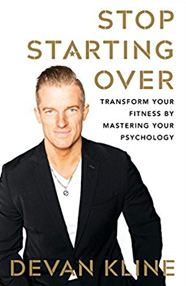
[0:00:34] CH: Author Hour is about answering one question. How can you get the best ideas from great books without spending so much time reading? Every week, we take you behind the scenes with a new author, about the most important points in their book. If you love to learn while you're on the go, you’re in the right place. All of our book summaries are 100% free and we do more than a hundred episodes every year. Please subscribe to and review author hour on iTunes. Today’s episode is with Devan Kline, author of Stop Starting Over. Too often, the quest for a fitter lifestyle can feel like a never-ending cycle of failure. Lose weight, gain weight, fast, feast, work out and then give up. But the truth is that the key to changing your body isn’t finding some magic exercise or diet, it’s about changing your mindset. That’s where Devan comes in. Devan and his wife Morgan are cofounders of Burn Boot Camp which is a fitness empire that was created to maximize the quality of women’s lives by going beyond normal fitness routines. Burn Boot Camp already serves over 300 locations with plans to open 15,000 locations globally over the next 10 years. Devan takes an integrative approach in fitness that transcends workout and diet routines. By identifying these deeper psychological goals, he’s helped over 20,000 women build a healthier and more fulfilled life. In this episode, he’s going to give you some of his best coaching lessons and share some client’s success stories that will help you reframe your own story and turn your beliefs into action and results and also, help you conquer common excuses so you can develop life changing strategies. Devan believes that happiness is 90% psychology and 10% strategy and with his techniques, you’ll be able to master both your mind and your body to build the happy, healthy life you’ve always wanted. Now, here is our conversation with Devan Kline.
[0:03:12] Devan Kline: Being 30 years old sometimes I get a weird look, people sometimes perceive my success at being 30 as something that happened because of some type of fortune that my parents had. You know, I get that a lot, it’s like, “I wonder how much money this guy had before he started this?” And the answer is that it’s $600 and the reason – you know, it’s been so successful is because I think my background is my biggest advantage. I grew up in battle creek Michigan and what most people would refer to as low income housing or some might refer to as the ghetto and you know, my parents, my father, my mother were addicted to drugs and alcohol. Very violent household, any given weekend we might have an incident go down. You know, the times were harsh and while you’re in it as a kid, you don’t really understand it and it just kind of becomes normalized and so, when I turned about 15, I found a CD actually. I am 30 but I’m old enough to remember Sony Walkman’s and I had one and I would use it back and forth coming to and from school and I found an old CD in my parent’s collection and it was a Tony Robbins CD. It’s called personal power, I’m a huge Tony Robbins fan and that CD, I listen to, back and forth for a couple of years to and from school and it really shaped who I was because I never had a role model, you know? My dad is a caring guy, but you know, drugs and alcohol got the best of him and he wasn’t present a lot. My mom fled when I was 13 years old and I’ve not had a relationship with her since. Finding Tony at 15 and kind of that culmination of me having to take care of my brothers and sisters as the man of the household, it taught me a lot, especially about business at an early age. Some things that some of my peers are struggling at you know, 45, 55 years old, I had to deal with when I was 14 and 15 years old.
[0:05:01] CH: Like what?
[0:05:03] Devan Kline: I would say, when you’re running a business, there’s so much emotional stress and mental stress, physical stress that comes along with it and even spiritual stress, I would say. You know, finding ways to cope with that, finding ways to figure out your own stuff, you know? As you’re going through the process is somewhat difficult and I had to reflect as an early kid on who I really was and what I was capable of and who I really wanted to be because I knew intuitively that it wasn’t the path that my parents went down. I really had to open up mentally and emotionally at a young age to be able to handle the threshold of things that were going on and happening, that shouldn’t be happening to a kid at that age. I think that it’s really translated to me fast forward to 30 being one of the fastest fitness growing franchises right now. I think it’s translated into my threshold of control that I have as a business owner. I’m not starting off on the bunny hill, I’m starting off on the black diamond and you know, I’m ready to attack it and then go after it and you know, am focused on where I’m going. Just instilled from a young age.
[0:06:06] CH: Yeah, you know, first off, really remarkable, thank you for sharing your origin story. I’ve encountered people who are extraordinarily high performers, people running their own businesses, large businesses at a young age and pretty consistently, come from chaos in their childhood and they had to learn to manage that chaos, whether it was internal, their emotions or everything going on outside of them. As difficult and challenging and frankly, awful as it can be to grow up around that. It gave you some super powers I’m guessing, right?
[0:06:06] Devan Kline: It’s my ultimate advantage. I don’t ever tell my story to get sympathy from anybody. What I do is try to just put in context what I stand for and what I’m about, start starting over as a book, it transcends fitness. I’m a trainer and I’m a fitness professional and a franchise professional but really, I wrote this book to create a blueprint for people to have happiness because that’s all I ever sought for growing up in those environments. You know, the last 15 years of my life, really, since I found that new perspective in Tony Robbins and his teachings, it really catapulted me into this kind of lifestyle university that I’ve been on for the past 15 years trying to master the game of physical, mental, emotional, spiritual stress and mastery. Trying to really take those four areas and apply principles into all the areas of life, right? That we care about, our careers, our family, our finances. Whether you have a job, whether you’re on the PTA at school, whatever it is, whatever your mission is, you know, in life, there’s whatever your outcome is, there’s multiple elements and it’s my belief that you have to never let any of t hose get into the red and always constantly depositing in all areas that can help you to grow up to be holistically successful.
[0:08:01] CH: You know, Devan, before we kind of dive in to Stop Starting Over, I’m personally curious, I could just hear it, you are bubbling over with energy, you know, you sound like an energetic person and not in a bad way. You just sound like a healthy person who is, I’d imagine just like this all the time, right?
[0:08:22] Devan Kline: Yeah, I mean, you can’t ot be energetic when you wake up every morning and you love what you do, you love who you’re around, I love my headquarters crew like they’re my family, I love my franchise partners, I love the 50,000 clients that email you in the morning and say, “You know, Devan, you’ve been a hand in changing my life” and for me, I just explained a little bit about my background and obviously that’s not synonymous with having a lot of money and for me when, I was 25 years old. Just getting started with this, I had enough money to be satisfied financially, I don’t need that, what I need is the fulfillment that comes from the gratitude that I feel when people actually love our service. Not only just love it but love it so much that they tell everyone about it and get all their friends to do it. That’s what keeps me energetic, it’s natural, yes, there’s a certain level of it that’s extroverted but also, it’s not any manufactured internal enthusiasm, it’s really just the passion that stems from me from a feeling that gratitude.
[0:09:19] CH: That’s awesome man, good for you.
[0:09:21] Devan Kline: Thanks.
[0:09:21] CH: Well, let’s talk about Stop Starting Over. Why did you title it this?
[0:09:28] Devan Kline: I’ve noticed something over the past, really, over the past six years and since I’ve started training clients, I’ve now trained personally over 20,000 clients here in North Charlotte, in the Lake Norman area and then hundreds and thousands of more through the osmosis of me mentoring my trainers out there. I just really started to become fascinated with human psychology and kind of this internal conflict in America, how there can be this overwhelming statistic that almost 70% of our population is overweight, almost 35% is obese, 17% and rising percent of our children are overweight and yet if you go on the corner and look at all of the fitness places, if you go on social media on Instagram and Facebook and YouTube and you look up fitness, it is everywhere. It’s a perceived saturation but it’s almost like we’re just starving for the wisdom behind it. You can have all of these tools and all of these strategies but if you don’t have a reason behind why you want to reach a health transformation in the first place, a purpose, a passion that’s more compelling and enchanting then just pressing snooze in the morning or you know, keeping your hand on the cookie jar, if you want something that’s a greater pull to get you over those obstacles then days turn it, weeks, weeks turn into months and all of a sudden, you keep every quarter or every week or every year or every new year’s. You reset the same goal that you had last year. I’ve noticed this over and over and I’ve also noticed people that out of 20,000 clients, pretty good sample size, especially when you're working with them one on one hands on, they’re like, real time case studies and I noticed that there is a distinct difference versus the people who were ultimately successful, who looked at myself, this program and my philosophy as “This is what I’m going to do, I’m going to run with it. It’s done, I’m changed mentally and emotionally, and I will be changed physically” and they’ve had the conviction to stick with it. Then I’ve seen other people who have not done that and done the opposite. I started studying this and I started kind of trying to find patterns, right? Between, I think that’s what a good business man and a good trainer is really is finding the patterns between success and unsuccessful people and sharing that. Basically, Stop Starting Over is a culmination of all of those observations, all of those principles, all of what I call focus meetings that I have one on one, even though I am a group trainer and Burn Boot Camp is a group training atmosphere. We have one on one sessions called focus meetings and I expand upon that and really lay out a blueprint for somebody to take complete control. First, psychologically, first deeply rooted at the problem that has made them start over so many times, removing that, deleting that belief systems, those patterns, installing new ones and then asking for a commitment. Because you’ve got the blueprint here in Stop Starting Over, I need your commitment and meet me halfway, hey, you’re ready to go. This is a blueprint to change your life physically, mentally, emotionally, spiritually.
[0:12:38] CH: That’s what I like about your book actually, the first third of the book is just on basically the mental and emotional game which has to come before the physical transformation of any kind. Tell me if you think this is right, what I heard you saying and this is something I’ve been thinking about a lot lately which is, you have to have a state that you actually want, not be focusing on the state that you don’t want. In other words, if you’re just thinking, “I just want to lose this weight,” you’re almost in a state of frustration and anger with yourself in the present and like. It's almost punishing you, this negative reinforcement, this harsh loop in your head where as if you’re ager and excited and genuinely joyful, thinking about the future that you’re going to be in, It’s easier. Am I dancing around what you’re saying?
[0:13:42] Devan Kline: Yeah, it’s definitely easier, when you have what I call a north star and there’s two questions that formulate a north star. The first question is, “What is my outcome, what do I really want to transform here? If I’m setting off on this goal, what is it that I really want?” Because clarity is power, when you’re able to clearly define concisely, exactly what you want, not what other people want. You know, a lot of people will say, “I want to be fit and toned,” well, you know, fit and toned is a goal that pretty much everyone has, welcome to the club, right? It’s, do you really want specifically, what do you really want to transform. The second question is, “Why do you really want it?”
[0:14:18] CH: Well, before we go on to that part, give us an example of what a better outcome would be than fit and toned?
[0:14:25] Devan Kline: Something specific to you, okay? That’s a great point, let’s say my name is Jessica and I ‘m 32 years old and I have three kids, one of my kids play soccer, right? When I get home from soccer or when I get home from work and my kid gets home from school, every day she wants to play soccer. I’m out of shape, I’m 60 pounds overweight, there’s no way I can get out there and play soccer with you for 90 minutes, I’m going to pass out, right? Being specific and setting your outcome can say something along the lines like, “I am committed fully to changing my life mentally, emotionally, spiritually, physically because I have a daughter who I refuse to watch grow up and then her, look back on her life and say, mommy could never play with me outside.”
[0:15:13] CH: Yeah.
[0:15:14] Devan Kline: It’s something that’s connected to your life that’s tangible to who you are, that you can draw on, that’s going to actually move the emotion because no motion in your life happens, no progression moves forward without motion and without emotion, it could be negative, it could be positive. A lot of times, in a principle that I teach in the book is using negativity to your advantage. If you’re not really sure what you want, then you’ve got to figure out what you don’t want, and you’ve got to project that pain to the future. How are you going to feel in 10 years if you were to drag these habits out with you over all of this time, right? If you eat fast-food every weekend and didn’t move your body, what are you going to look like in 10 years, 15 years, 20 years? I call it the projection of pain exercise which we talk about in the book and it’s so powerful.
[0:16:00] CH: It’s extremely powerful. I call it the hell exercise. I did this with a client recently in their marketing and they had to take the next day off because they were so like energetically messed up – visualizing their future, the future of all their clients if they didn’t get things right. It’s super powerful.
[0:16:22] Devan Kline: Yeah, it helps you prioritize very quickly.
[0:16:24] CH: Yeah, definitely. You were saying, and then I cut you off to give that example, I forget what you were saying.
[0:16:30] Devan Kline: We were basically going into what’s the definition of this outcome, what is this north star that you really want. The reason people constantly start over is they’re so focused on strategy – the next diet plan, the next weightloss plan, you know, the next book that comes out that’s 60 days of exercise and diet recommendations, this book is not that. If someone’s looking for just like a blueprint where you can just read it and just go, my mission is to create lasting changes for you in order for you to have those lasting changes, you need this north star, you need to know what you want, you need to know why you want it, it needs to be specific to you. You need to take 15 minutes on each one of those questions and we need to come up with a statement that basically says, “This is what I want out of my life ultimately and this is why I want it” and we’re going to use that as a guiding light to the decisions that we have to make in order to create the rituals that we need in order to get there eventually. It’s basically reverse engineering your life and figuring out what you really want and then you can start to dial the years, the months, the weeks, the days, the hours, the minutes backwards and until you, you know, exactly what you need to do in this moment, right now, to be where you want to be ultimately and continue to progress to that moment of happiness down the road.
[0:17:46] CH: 100%. I’m with you totally. The thing that always frustrates me when I look at a lot of Instagram accounts for instance, it’s always pictures of food but there’s no talk of the mental game, the emotional game, the spiritual realm. It’s all very just pictures of pretty food but your book talks about these things, you have four chapters on these areas. The principles of mental mastery, of emotional mastery, physical mastery spiritual mastery. Let’s go through these, what are some of the principles of mental mastery?
[0:18:23] Devan Kline: You’re going to go through the book and you’re going to see each one of these sections, it’s broken up into different principles and mental mastery really starts with the overall concept, it’s 90% psychology and 10% mechanics. In order for you to setup the foundation for you to succeed, you have to have that belief system first and foremost installed that 90% of what you want to achieve out of your life, that 90% of your ability to get to that north star that you had set for yourself, relies on your ability to choose what thoughts you think most often if that makes sense.
[0:18:58] CH: Yeah. I mean, a great book on this exact topic is As A Man Thinketh, by James Allen, that kind of breaks this down I don’t know, in a really simple way. But I think the question for a lot of people is how do I install that new software? How do I get started?
[0:19:15] Devan Kline: Ask yourself the right questions and you’re going to get the right answers. I think most people often times will ask, “Why is this happening to me?” When they need to say, “Okay, this is happening to me” and face that actuality and say, “What am I going to do about it?” You know? Ultimately, when you’re speaking about principles to live your life, it’s like a map, if we were to go to Los Angeles California and you know that if you head west, generally speaking, you’re going to hit California at some point and you know, whether you land at Sacramento, whether you land in The Bay or you land in Los Angeles or San Diego, doesn’t matter because you’re headed towards California and now if we start to get more distinct in that path, we can go right to downtown Los Angeles. Now if we add a GPS into that map, we know the exact turns to go on every route and that’s all that principles are, they’re helping you navigate that path to get you where you want to go but if you don‘t know where you want to go, you’re just going to end up in northern California when you’re trying to get to San Diego. It’s about the principles of the book are about just guiding you because I’m not here – I’m here to be a coach and a leader and I think the best leaders are the ones that ask questions that make the mentee really think hard and come up with their own answers. That’s the only way that they can ultimately own that plan, the only way they can ultimately stop starting over is if it’s theirs, if they own it, because if I just sit here and give you a meal plan and an exercise plan, A, are you going to use it? No, probably not because if you do, it’s going to be for 30 days and you’re not going to learn anything because all you’re doing is just robotically following a system that’s generic to everyone, it’s not lifestyle. You know, you mentioned Instagram, it’s a perfect representation of the culture that we live in today. Everyone is focused on aesthetic and no one is focused on health. I think that’s a key differentiator. The reason I wrote the book and added these principles in there isn’t to give people another strategy, another 30 days strategy, it is an evergreen book where you’re going to be able to draw on it when you come a crossroads at some point in your life.
[0:21:20] CH: Got it. I’m kind of asking as well Devan, what is your routine to continually reinstall the proper thoughts going on in your head. I mean, at this point, it’s now habitual, you have it in there, right? I’m sure there was a point in your life where you deviated, right? It was hard to change the same thoughts that were repeating in your head, right?
[0:21:44] Devan Kline: Yeah, no. It definitely is a challenge, when I was a baseball player, I played in the minor league with the San Francisco Giants for three seasons and a lot of my time in baseball really helped me prepare to be an entrepreneur and to grow as fast as we’ve gone. There’s inevitably big hurdles when you’re in a nationally recognized company and baseball really, it’s a mental game, the entire thing’s a mental game, yeah, you have to have the physical skill but there’s guys throwing a hundred miles an hour out there that never even see a dollar from baseball because they don’t have it mentally. I think being able to go through that and being able to go from a 7,000 to 9,000 people on good nights and to have the ball in my hand and to know that it’s me versus the other guy. That largely my success is dictated on my ability to control my emotions, that is in reflection, it’s an amazing gift to have. I would say that that’s really prepared me to be able to speak on it now and then I think, also, I have my own podcast, the Devan Kline podcast. I have on my Instagram account, I’m preaching every single day and my close Facebook groups I’m preaching every day, some type of audio or doing some type of video, documenting my life pretty much every day and I’m talking about these things on a daily basis. Part of the way that me personally that I am able to remember it is just repetition.
[0:23:07] CH: Teaching.
[0:23:07] Devan Kline: Yeah, you’re teaching it but you're also repeating it too. One reason that I say that is because, I really want this book to be a tool for those to take what I’ve written down as their own philosophy and start to take it and teach other people. A lot of what I talk about in here, stems from philosophies – As A Man Thinketh, the Tony Robbins philosophy, Jim Ronh, Ray Dalio’s philosophies, Will Smith, some of his esoteric, crazy stuff gets thrown in there. I think it’s really important as we continue this progressive generation of growth is that we honor these guys that have come before us who have paved the way. We stand up on their shoulders, we find our own point of view, we don’t have to agree with everything or you can take principles and philosophies from different people and kind of massage them and make them your own. I think you’re doing the world a service when you’re taking somebody’s or a group of people’s words, standing on their shoulders and shouting them from a mountain top. I want people to do that with this book because I have done that my whole life. That is modeling and being able to emulate successful people, iconic people. People I look up to, Gary Vaynerchuk whether you like him for his profanity or not is a brilliant marketer. Mel Robins is a huge fan of mine that’s in the book. Vani Hari is a more of a regional celebrity to me but I’ve looked up to her since – her name is Food Babe, she’s in my book, she’s one of the world’s leading activist on nutrition labels and making sure companies area ridding it of any harmful ingredients. I’m just always doing it, you know what I mean? Always repeating it. Take this book and utilize it, share it with other people, do book clubs, whatever you got to do to be a master of it and teaching it over and over.
[0:24:49] CH: Absolutely. Very cool side note about the Giants playing baseball, that’s really cool. Little fun fact. Right before we did this episode. I was having lunch with somebody who actually played in the minor leagues as well and they told me their claim to fame, they were a catcher, was they caught for Nolan Ryan before he went into the big leagues and they were just saying they literally couldn’t see the fastball as it was coming in. It would just hit their wrist and stuff.
[0:25:23] Devan Kline: Yeah especially at some of those minor league stadiums that don’t necessarily have the glitz and glam like the big league stadiums do. So sometimes you cross the catcher, throwing 96 miles an hour is not a good thing.
[0:25:34] CH: Yeah, very cool. So let’s talk a bit about emotional mastery. So this is very difficult for a lot of people, break it down for us.
[0:25:43] Devan Kline: I think that controlling your emotions and being able to find that control and develop that control is ultimately one of the most important skills that you can have in your life because the thoughts that we think and the conversations that we have with ourselves internally are more conversations than we have with all of our loved ones and collective friends combined in a year. You know we talk to ourselves more in one week than that. So we are constantly thinking thoughts, you know it’s said, I don’t know how true this is but there is 60,000 thoughts in a day and the majority of them are negative. I really wanted to lead with mental mastery in the book and then also followed up with emotional mastery right behind it. Getting up in the morning is for me the – if you are to break down every ounce of success that I’ve had or that I have ever seen anyone else have there’s always – They are across every person that has success big or small. There is a common denominator in the rituals that they have when they get out of bed in the morning. Every single person, it’s always getting up and focusing and priming the day. I call it pre-gaming, I am an athlete and this is what I used to do before I knew I was going to pitch a game that night and I would get up in the morning and I would really prime myself and get myself mentally and emotionally ready. To be able to handle everything that comes with grinding and trying to be successful and whether you are working on losing weight or you are in a business, whatever it may be so getting up in the morning that ritual that I have been able to create for myself called pre-gaming as I lay it out in the book is super important and basically I am saying dude, take an hour for yourself first thing in the morning and schedule it every single day. And mind you, before you go to bed the night before you want to write down on a piece of paper or type it in your iPhone or whatever you want to do, you want to write down everything that you want to accomplish that day and then on top of it because most people do that, right? You want to write down how is that going to make you feel once you’ve accomplished it. So that way, the night before you start to get it connected to those emotions and subconsciously your day’s a lot easier to attack when you get up. So I get up in the morning and I personally like and I talk about this but I personally like to lay out some shoes and some shorts and just go out on a nice 15 minute to 20 minute very light jog for the purposes of breathing and focusing on gratitude. As simple as that sounds, you know once you trade all of the expectations and all of the ambitions and all that stuff that you have for the moment and you just can feel the wind on your face as you are running down the street that puts your life in perspective on a daily basis. And that sometimes, we make things way bigger than they are emotionally, don’t we? And it really puts in perspective how the things you are thinking about are the things that actually matter when you are grateful, and it is not all the nitpicky things so.
[0:28:44] CH: That’s great but do you also do any other things to prime your day?
[0:28:48] Devan Kline: Then I will go right into a workout, so for me it is a 45-minute workout. I don’t work out any more than 45-minutes six times a week and during my work out, I am usually listening to an inspirational podcast or listening to a YouTube video. Seldomly, I listen to motivational music but I am getting up and not only am I simultaneously creating mental stimulus and physical stimulus, but I have already done it emotionally. And so in the first hour of the day you can work on your mental, your emotional, your spiritual health, your physical health all in one hour every single day and that is really what taking care of you is about. It is okay to be selfish and too many people, a taboo word for too many people is this word selfish. You have to be selfish. You have to be selfish when you are on an airplane and the stewardess talks about the oxygen mask, she’s obviously like, “Put your mask on first before helping anybody else.” And that is just a metaphor for life that says you need to be filled up before you can fill other up. If you have all this energy that you want to give out, you have to have the emotional energy put in first and the physical energy in first. So an hour a day, 10 to 15 minutes working on gratitude, asking yourself questions like, “Who do I love, who loves me back, what am I grateful for?” And then going into some type of workout whether it’s walking, Burn Boot Camp. Honestly, I really don’t care what it is. I just want you to move and I want you to move with a purpose and with an intent in the morning.
[0:30:14] CH: Yeah, those airline stewardess are doing a service to de-stigmatize the word selfish. I fully agree with you there. I actually think it’s brilliant what you said which is write how it is going to make you feel when you’ve accomplished it. I have never heard anybody say that and I have heard the morning routine thing a lot but that made a click for me more than anything else. I think that’s great. So obviously, we don’t have time to cover everything in your book. But I want to cover a number of things that you include. Real quickly let us talk a little bit about nutrition. Are there any surprises in this chapter because I’d imagine people who have listened to health and fitness podcast they hear all sorts of things these days that all follow into the same realm which is “Hey, fat’s not bad, stop eating so much sugar, get a lot of plants, meat is okay that sort of thing if it comes from the right source,” yada-yada-yada. So sort of ancestral eating, what are your philosophies on nutrition?
[0:31:18] Devan Kline: I think nutrition has such a long way to go and I am privileged to be one of the professionals out there in the fitness industry spear heading it. I think that big business, I think that marketing companies that control the dialogue and big medical companies that control the dialogue are ultimately doing us a disservice. 70% almost of our country isn’t overweight because they are sitting around waiting to be overweight. And they are overweight because they don’t have the – nobody is feeding them the right knowledge, or the right education and you see more and more of that. It is just yet to catch up to that obesity number or that overweight number. I am really passionate about nutrition. I have my own supplement line called Burn Nutrition. I partner with the world’s largest number one natural nutrition company, Shaq Lead, they have been around forever and I practice every day what I preach. You know this is something that I think is one of the biggest psychological hurdles to overcome is eating correctly and I think there is this all in or all out mentality and I really want to break that. So people might be surprised by the fact that I am not going to lay out like a nutrition plan for you. I really am not going to. Surveying 20,000 clients there is no 12 people that eat the same food, right? I am just pulling that number out but there is no 12 people that are going to eat the same exact diet every single day. And like I mentioned, be happy and fulfilled and satisfied and satiated with it. So, my goal when we are getting started we’re making progress is to change the dialogue surrounding nutrition and I really want to get rid of these silly notions that carbohydrates are bad and people going on low carb diets left and right. Carbohydrates are essential for our body to function. You need a 100 milligrams of glucose a day for your brain to function. And if you deplete yourself of carbohydrates, you’re going to cause your body to react in adverse way creating an acidic environment which breathes disease and so I have this vision and the vision is to teach people how to properly nourish their bodies, rather than telling them what to do without educating them on anything.
[0:33:23] CH: Hmm.
[0:33:23] Devan Kline: So it’s not sugars, it’s not carbs, it’s not fat, it is not the enemy. That’s what we think the enemy is and it’s really not. I have almost all of my successful clients twice a week binge eat on fruit on purpose. You have never heard that before because there’s this word around binging that’s like this negative association. I have you do it because it’s bio available vitamins, it’s bio available minerals that live within these fruits. It’s fructose sugar which comes naturally to your body. Your body can digest that better than sucrose or sucro-low sugar which is the fake sugar and you’re getting that need to just throw your hands in a bowl of stuff. You are getting rid of that need and I found it works really, really well. So fats, carbs, sugar, they are not the enemy. The enemy is acidity. We need to start to look at the root cause not only psychologically but also nutritionally as well. It’s acidity in our body, not carbs, not sugar, not fat.
[0:34:13] CH: Yeah, so the enemy is acidity. I know this may go against what you did in the book but could you walk us through a typical day might look like for you knowing that acidity is the enemy. What kind of stuff do you eat? Apart from the supplements and everything that you take.
[0:34:33] Devan Kline: Yeah, sure no problem and you know I’ll keep it generic because I am generic in the way that I eat and it’s every time I eat a piece of protein, let’s say here are some foundational principles, right? So every time I eat a piece of protein, it’s fish, it’s chicken, it’s turkey, it’s London broil, it’s shrimp, it’s sea food whatever it is, which are acidic foods meet are even the cleanest cuts of meat are acidic in nature and so I always have a big bowl of greens or a bed of greens. I like to combat that so in the book I actually outline, there is a column with a ton of foods that not all the foods in the world but a ton of them, the most common foods that are acidic versus alkaline. I start to get people to put that line down the center so that they could understand. When I go to reach a piece of food is this alkaline or is this acidic, is this going to help me or hurt me? I will throughout the day, I’ll have eggs in the morning and or some oats with maybe a little bit of protein powder in it. And I will also have lemon water. Lemon water is the easiest way for people to balance the acidic foods because outside of the body, lemons are acidic in nature but once they are mixed with chemicals in our stomach it actually becomes an alkaline property for the body. I really like lemon water. If you took nothing else away from this nutritional little speech here just drink lemon water all day long. Put one whole lemon in a gallon of water and you’ll never feel better. So it’s random because I travel and I have a lifestyle. I wish I could sit here and say I am one of those trainers who marches to the orders of macro nutrition and follows everything to a tee. I am just a human being who is out here trying to be healthy and trying to build a business and run a family and it’s 85-15. As cliché as that sounds, I care about what people do 325 days of the year because I know there is 40 days in a year that –
[0:36:25] CH: They’re going to be crazy, yeah.
[0:36:26] Devan Kline: That we need. We need those days.
[0:36:28] CH: Yeah, I am a huge fan of that principle as well. Awesome, so let’s talk about 80% of Happiness. You have a chapter towards the end of the book called 80% of Happiness. What is that?
[0:36:42] Devan Kline: So we spend so much time on our mission right? So here is the big thing with this, 80% of happiness, this chapter is all about getting away from the fitness transformation because I really wanted this book to create an idea of holistic happiness for somebody. A book that gets away from this work-life balance mentality that most people have and it focuses on what my wife and I call holistic integration. Where we are basically taking all of the things that we’re passionate about in our life, only doing those things that make us passionate or that light us up and not trying to draw any lines between them. You know when we come home from the evening, we know we are going to sit down with Cameron, our daughter and our son, Maxwell and we’re going to sit there for two hours from six to eight-ish, 5:30 to 7:30 and we’re going to have some fun. We’re not going to get rid of technology, we are going to use technology. I am going to show my daughter a video that I did from earlier in the day in the gym kicking somebody’s butt. I am going to let her talk and my wife and I are going to talk about business moves which is I want to get people to really get to a place where they can wake up by default, be in a beautiful state all day long, hate Fridays and love Mondays because ultimately that’s what I have been able to do with my passion. And this whole chapter is really how to do that. It is the strategy to maybe get rid or maybe if you don’t like the job that you have, your nine to five, maybe you love the job that you have but if you don’t then you have to do something about it because you are spending 80% of your time on your income, especially if you are the breadwinner, you want to be happy. If you are not happy, if you are not fulfilled, where else is that going to spill? And we all know it’s going to spill into your relationship. It is going to spill negatively into your finances. You are not going to be passionate and you are not going to go in early to get the promotion that is going to give you more money and you don’t like it, you know what I mean? So side hustle is what it’s all about. You know if you want to be happy and you are stuck in a place right now where you have some discontentment then what are you doing between six and 11 PM every night? Two of those hours might be with kids. Great, that’s odd I mean family is not just an important thing, it’s everything. The entire reason why most people draw on their north star is their family. Somebody that they love. Your north star is always going to be connected to something that you really love. It is going to be connected to emotions and so I want people to be self-aware. I want them to say, “Okay am I discontent? If I am, what am I doing about it? If I am binge watching Netflix from six to 11 every night and I am complaining about work, I’m not allowed to do that anymore because that’s counterintuitive.” I really want people to be able to be happy in all regards of life and not just fitness because I’ve got to be true. I got to be honest. I am a fitness professional. I think it’s a gateway to health but if you are out there and you think fitness is going to solve your problems or losing weight is going to solve your life’s problems, you’ve got another thing coming when you get to your fitness goal and you’re like, “Oh is this all there is now?” I mean that’s why people who make a lot of money they get to a point. Where they’re like, “Okay I am here, this isn’t cool. It’s not as cool as I thought it was going to be” and then the discontentment comes back.
[0:39:48] CH: Yeah, you’ve got a great quote on your Instagram. “You can’t afford to be unhappy, life is long.”
[0:39:56] Devan Kline: That’s right.
[0:39:56] CH: Which is true, you can’t keep it going. So the whole book, I mean we can’t go through everything. There is a ton of great stuff on here, there is principles on spiritual mastery, there’s stuff on recovery and building momentum, developing your daily rituals, visualizing your perfect day, all this great stuff. But I will leave that to the listeners to grab the book. A couple more questions for you Devan then, I know you are a busy guy. So one is of the 20,000 or a hundred plus thousand clients that you’ve worked with directly or indirectly, what’s been your favorite transformation that you’ve seen?
[0:40:37] Devan Kline: It’s funny that you ask that because my favorite transformation that I have seen, I actually put in the book and her name is Brandy Parker and she is a dear friend of mine and we set out on a 12-month journey to lose a 100 pounds and Brandy ended up losing a 174 pounds in 12 months. Oh my gosh, you know the coolest part for me though what made me the most proud, was the distinct difference in the way that she carried herself at 374 pounds versus 200 pounds. The confidence, the ability to walk in the room and hold your head high, light up a room and smile and make eye contact with people and that confidence that she gained from that was a beautiful thing to watch and at the end of her transformation, Brandy and I, she didn’t know this is how crazy I am, she didn’t know that we were going to go out on a trail run half marathon. So if you have ever done a trail run you know how hard those are by themselves and then to throw 12 and a half miles or so on top of that is 13.1 or whatever it is, that’s a beast. And so she didn’t know we were doing that and so we run it. It takes us three and a half, four hours, we get done, I get done just a little bit before her and as she is crossing that finish line, we just shared. It seems like the longest most emotionally pact filled hug you could possibly imagine and from that day forward, Brandy has been a completely different person. I am still honored she is a part of Burn Boot Camp and is still a client and coming at 5:30 AM every day even though I am not her trainer anymore. But you know that to me and other cases, other similar cases now like that across Burn Nation, man there’s no better feeling. Money or any other thing that people try to achieve, or people perceive as success, it’s not about success. It is about moments like that in your life that can create fulfillment for you.
[0:42:27] CH: That’s powerful man. It’s got to be pretty magical to have that big of an effect on people’s lives and I’d imagine a lot of our listeners are thinking, “How can I follow this guy?” What is the best place to do that?
[0:42:40] Devan Kline: So I am pretty much all over the internet. I am a marketing guys by trade so you can find me on YouTube and Instagram and Facebook and podcast, Devan Kline Podcast. I have an email list at devankline.com but also probably I would say the best place to follow me is Instagram because I am on that all the time. Every day I am posting interacting, I answer a lot of my direct messages trying to do as many as I can, try to help people. You are always one DM away, you’re always one message away outreach from being helped and you know, I have a team full of hundreds of trainers and several fitness professionals on our team that could help. I would be more than honored to have people reach out, follow me, direct message me and hey let’s get this thing going. There is also a private Facebook group by the way, I should add this. It’s a closed Facebook group. You can search “Stop Starting Over with Devan Kline” and only people who can show me a picture of their Stop Starting Over book are allowed to be in the group. So if you purchase the book, you get a workbook when you go there and the workbook, well it is about 12 pages long or so and it walks you right through all the exercises that are in the book so that you can have something tangible to takeaway and something to reflect on. I am a big believer in that so head over to that Facebook page or request for access and waiting for you once you have that picture of the book and you’ve got to show it to us. We are very strict about that because we want serious people in that group who really want to create lasting change for themselves.
[0:43:59] CH: Nice, so the final question is I’d like for you to give our listeners a challenge. What is one thing they can do from your book today or this week, that will have a positive impact on their life?
[0:44:14] Devan Kline: Okay, I am going to give you a principle for nutrition because I think that has the most immediate benefit and impact for you. Can I give you two things? They’re super quick.
[0:44:23] CH: Yeah.
[0:44:23] Devan Kline: Okay, I’d give you two things. The first one is when you’re at home, this is an at home rule okay? I have vacation rules on the book for nutrition. I have at home rules and then I also have rules when you travel for work. So this one comes from the five, principle number eight of nutrition, five at home rules. The first one is following what I call the 12-hour rule. I talk about 85-15. In the book, I’ll never going to tell you how to do something without telling you or what to do without telling you how to do it. So the 12 hour rule really creates that 85-15 balance for you and it basically works like this: You pick 12 consecutive hours at any given time throughout the week that you feel like you want to go modify a healthy diet that you feel like you want to go have bread and wine, that you feel you need to let it out a little bit. Now you are not going to blow it out but we’re going to let it out, all right? We are going to crack the door not kick it wide open. And you’re going to allow yourself, give yourself the option to do it or not to do it and that’s what I want you to have. I want you to have more options not less options, that’s the way you have options. You are going to choose what works best for you. If you are struggling with nutrition, 85-15, you are going to get 12 hours a week, let yourself modify a little bit. Number two, this one is super important because water can increase a dehydrated person’s metabolism up to 30% with some people. All right, create these things called hydration events that I talk about two times throughout the day, five to 10 minutes. Each one of these, you are going to be focused. You’re so focused, your main priority is to drink as much water as you possibly can because that is going to combat the time when you get to work. Or school or whatever you’re doing throughout the day when you get super busy and bogged down with everything, we can’t use that as an excuse to not be hydrated. So in the morning, in the evening consume lots of water at two major periods throughout the day and then obviously try to remember to drink it but create these events for your life and gosh, hydration is the thing that gives people more energy than anything else and it’s the simplest thing to do.
[0:46:16] CH: I love that you said. You are going to crack up, have you heard of Hydrate Spark?
[0:46:21] Devan Kline: Hydrate spark, I have not heard of that. No I haven’t.
[0:46:23] CH: So it is a water bottle that I just bought for my wife because I was noticing. I was like, “You’re not drinking enough water, there’s no way you are feeling hydrated” and so I got her this. It is a smart water bottle. I have no affiliation with them, it’s hydratespark.com and it shows you on your phone if you’re hydrated or not. It tracks how much water you are drinking throughout the day and sure enough, she was drinking two thirds of what was required to get hydrated. And as you know, you can’t just start drinking enough and be rehydrated in a day or even a week. It takes a long time to get it back and so it is so important. Your body can’t really operate without water, so I love that last suggestion.
[0:47:08] Devan Kline: Yeah, it is going to keep your body properly hydrated. It keeps you mentally sharp so then you can discern those real hunger queues versus the fake ones and it helps you control your appetite as well.
[0:47:17] CH: Absolutely, the book is Stop Starting Over. Devan thank you so much for being on the show man, this was great.
[0:47:26] Devan Kline: It was so much fun. Thanks for having me, I appreciate it. Great interview, you’re super awesome to talk to and I appreciate everybody out there listening. I couldn’t be more grateful to have the opportunity and I can’t wait for this book to hit the market, it’s going to be hot.
[0:47:40] CH: Many thanks to Devan Kline for being on the show. You can buy his book, Stop Starting Over, on amazon.com. Thanks for tuning in on today’s show. If you like what you heard, here is what I want you to do next. Open up the podcast app on your phone or iTunes on your computer and search for “Author Hour with Charlie Hoehn” and then click “ratings and reviews.” Take 10 seconds to rate this show or leave a review. It is a small favor but it’s really the best way to show your support and give me feedback and if you know someone else who’d love Author Hour, take another three seconds to text them a link to this episode. We’ll see you next time.
Want to Write Your Own Book?
Scribe has helped over 2,000 authors turn their expertise into published books.
Schedule a Free Consult