Tom Roderick: A Little a Day Keeps the Dog Trainer Away
Read the full transcript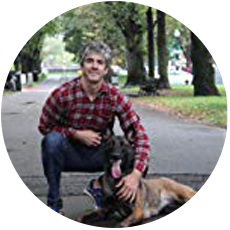
Tom Roderick
Tom Roderick is a professional dog trainer. He began his career with a protection dog company in northern Massachusetts, where as a senior trainer he trained and delivered obedience and protection dogs to clients around the world. In 2010, he founded WalkyWalk, dedicated to turning dog owners into their own dog trainers. In A Little a Day Keeps the Dog Trainer Away, he shares the daily habits that help owners raise a happy, obedient dog from day one.
📚 Books by Tom Roderick
Transcript
[0:00:38] CH: Author Hour is about answering one question: How can you get the best ideas from great books without spending so much time reading? Every week, we take you behind the scenes with a new author, about the most important points in their book. So if you love to learn while you're on the go, you’re in the right place. All of our book summaries are 100% free and we do more than a hundred episodes every year. So please subscribe to and review Author Hour on iTunes. Today’s episode is with Tom Roderick, author of A Little a Day Keeps the Dog Trainer Away. You’re getting a dog but will it be obedient or nothing but trouble? Whether it’s a puppy from a breeder or the shelter or an adult dog, Tom is going to show you the secrets to raising a puppy from day one so that it will bring you joy and companionship. In this episode, you’ll learn how to select your new companion and how to prepare your home for your puppy. Why crate training is so important. We’re also going to talk about what are some of the best foods for your dog and how to socialize them properly. By the end of this episode, you will know how to raise and train your puppy more effectively. From the moment that you bring it home, up to a year later and beyond. Your dog and everyone it comes into contact with, will thank you. Now, here is our conversation with Tom Roderick.
[0:02:37] Tom Roderick: I never really aspired as a young kid to be a dog trainer but it just happened to work out that way because of my passion for dogs and one thing led to another and I worked at a small dog boutique in middle school and a vet clean up in high school and then I started doing training at Petco and I’m slowly but surely work my work up to where I am now.
[0:03:04] CH: Roughly, how many dogs have you trained over the course of your career?
[0:03:10] Tom Roderick: That’s a tough one, I’d say thousands.
[0:03:12] CH: Thousands?
[0:03:14] Tom Roderick: The bulk of — the meat of my training experience came after college where I work at a kennel called CPI, it’s Canine Protection International and they get a stock of dogs delivered from Europe and you’re just shredding and pulling your skills training anywhere from 15 to 25 dogs a day. You do that for five, six, seven years and it really adds up. In terms of doing my own thing, it’s a much slower pace because it’s not a kennel like scenario, it’s more tailored to the owners which just takes a little bit more time and everyone - these aren’t professional dogs that come, it’s not a German shepherd that is delivered from Europe that has a foundation and training, these are just people’s pets and kind of dealing with a little bit more complicated issues.
[0:04:11] CH: You’re an expert, you really know what you’re doing. Let’s talk about your book, you wrote A Little A Day, Keeps The Dog Trainer Away. The goal of this book sounds like of course, to not have to depend on a dog trainer but to be able to successfully bring a puppy home and get through the first year, year and a half successfully, right?
[0:04:36] Tom Roderick: Yeah, you nailed it, that’s exactly right.
[0:04:39] CH: Yeah. Let’s start with prep, what do we need to do to prepare ourselves in our homes before we bring home the puppy?
[0:04:49] Tom Roderick: Even before that, if I catch wind of somebody preparing to get a dog, I really recommend taking the time to do research on the breed selection. 99% of the behaviors that owners come across can be negated or eliminated or just overall just nonexistent, if you do the proper research and select a breed that’s appropriate for your family, your lifestyle, your environment. You know, if they have a big yard, a small yard, all those sorts of things because a lot of people will get a dog because they think it looks cool, or they saw it in the movies or they had one growing up but that’s not a great way to select a dog that’s going to be with you for 8, 10, 15, maybe even 20 years of your life. Before you even get into any sort of prep in terms of bringing a crate or a leash or food dishes and things like that, doing a little bit of research on is a pit bull really a good choice for me or is a Great Dane or Australian Shepherd a good choice for me in a small Boston apartment? I really recommend starting there.
[0:06:01] CH: By the way, this is going to be a personal and triggering episode for me because I did exactly what you're talking about. I got a – effectively a miniature collie mix. Super high energy and I was living in an apartment at the time that didn’t have a whole lot of space that we could go run around nearby and it became problematic. I agree with you there. I know that this could be answered, this next question, could be answered with you use Google. But how do you go about the process of researching like, are there particular sites that you find are really good.
[0:06:41] Tom Roderick: There’s a Dog Breed Bible, that’s what it’s called. Somewhere along those lines and it really just lays out all the different breeds, their temperaments, their trainability, if they’re good with kids. Their longevity, their grooming, their health requirements, all those sorts of things and they’re pretty accurate. If you go to the AKC.com they kind of have their you know, information as well which is definitely a good place to s tart, obviously Google is another great way to do research, asking people their experience with a particular breed if you see somebody who is really nailing it, has their dog really tight and it’s a really harmonious relationship and it’s all laughs and smiles. “Hey, what’s that dog like? Hard to train?” Ask them questions and you can even ask them where they got the dog, was it a rescue, did they go to a specific breeder? Things like that can definitely go a very long way.
[0:07:40] CH: The Dog Breed Bible and AKC which stands for americankennelclub.com.
[0:07:47] Tom Roderick: Correct.
[0:07:47] CH: Those are great resources. Awesome. We’ve done the research, we followed the steps. Now we need to prepare ourselves and the home, right? For the puppy, what do we need to do now?
[0:08:00] Tom Roderick: Yeah, the next thing you want to start to get in the mindset of is to make sure that you’re doing what you can make the puppy, if we’re talking about a puppy. To feel confident, secure, comfortable, accepted into the new environment because if you’re getting the dog when they’re 8 to 10 weeks, it’s not very old but that’s all they know at that point. If you’re taking them out of one environment and putting them in to a new one, especially one, there’s probably not going to be as much action in terms of litter mates or parents like their dog parents, that can be stressful. If you do just a little bit of soul searching in terms of, what is this dog going to need? That’s a great way to start and pretty much the way, a couple of different tools that I like to utilize is a crate. Crate is a great way to give a dog their own space, you know, their own area where they can go and relax, you put blanket over it, everything is calm, quiet, that’s a great tool to use because the last thing you want to do is take a puppy who isn’t very old, who isn’t used to stimulation of the world, throw them into a family of three kids and two adults with constant traffic coming in and out of the house with nowhere to go but just kind of the middle of the living room. I think they will know adjust, dogs are really adaptable but you’re going to run in to a lot of other behaviors just general anxiety, you know, could run into some lack of confidence issues, excited piece, the best of your nation, things like that. I’m a huge advocate of the crate for that.
[0:09:45] CH: Yeah.
[0:09:46] Tom Roderick: I think first and foremost, I think a crate is going to be your number one thing that you need before you bring it. The breeder, wherever you get the dog from, might even give that to you which is kind of an added bonus. Otherwise, you can go pretty much anywhere. Petco, any dog boutique, you can buy it online, Amazon, so many different places have those.
[0:10:09] CH: Having a bit of empathy for the dog and what it’s going to experience thinking that through before you actually bring in home. Here’s a challenge I found with dogs is obviously they’re different species and so sometimes hard to fully understand what they’re going to feel when you do a certain thing or bring them into a certain environment. How did you develop that empathy that compassion for this other species? Was that just something you naturally developed over time or was it through research?
[0:10:45] Tom Roderick: I think I definitely had a drive or motivation just in general interest in dogs which is huge. I think for anything in life, if you’re interested and you’re driven, you can do a lot. I think that naturally gave me kind of the inside. But I think aside from that. I think honestly, it sounds kind of gross but trial and error, you know, working from a young age of 14 and going to the kennel and seeing what dogs look like when they’ve been mistreated. How they respond to different people, different environments, things like that. Along with later in my career with the CPI, you’re working with 15, 20, 25 dogs a day, you really get a sense of what dogs respond well to. It’s not – I don’t want to put it in terms of what dogs like or don’t’ like but what is good for the dog. You have to understand picking up on their body language on their general demeanor. If they’re panting excessively or if they’re even shaking a little bit then clearly they’re –
[0:11:58] CH: Just paying attention to them, yeah. Yeah, totally. At this point, we’re ready to bring the puppy home, what do we got to know now?
[0:12:08] Tom Roderick: Okay, you brought the puppy home, you got your crate, you want to consider where you’re going to put the crate. Inside your room, the furthest point from your room if you don’t want to have to go through the growing pains of the whining, you need to select a dog food. Dog food is very important. You want to have a meal plan, all the root of dog training comes from food drive. Meaning like a dog’s willingness to work for food. That’s the primary source of training. Getting them on a set schedule, meaning, you feed them in the morning, early afternoon and evening and that’s it, you start to create a habit of, “Food is valuable, I want food, I’ll do what I can to get that food,” because a lot of people will – I call free feeding them, put them down, they’ll walk away, dog picks graces and I’m going to try to use food for training. I got a meal that over there, what do I need that for? Meal times are really important, starting to get the ball rolling on house breaking, easier said than done but you want to start to create good habits in terms of not going to the bathroom inside, taking them outside to a specific area to go to the bathroom, after they’ve gone to the bathroom outside, you can bring them back inside and back and forth. Other than that, you start to get into a little bit of later phase of puppy 101, talking like 8 to 16 weeks and you want to start considering socializing your puppy, socialization is paramount when it comes to dog ownership and you want to start to think about food cultivation like starting to get them to follow –
[0:13:47] CH: I want to pause you there because the socialization part is you’re right, it is paramount, what is good socialization look like and actually, before you answer that, start with what typical socialization looks like for an owner that may not be the best.
[0:14:05] Tom Roderick: The typical socialization of when I walk into a home and talk to owners is they take their puppy, they take them to a dog park and let them off leash and it’s a free for all. A lot of times, that’s great, dogs like have a good time and they play and things can work out but you also get the other side of the story which is about 50/50. Where you take the dog out, take it to the dog park and all of a sudden, more of a shy introverted dog and you take them to a dog park with 20 other dogs and all of a sudden that dog feels overwhelmed, he’s not having a good time, it becomes a little defensive, the owners don’t pick up on that queue. Do that a few times over the course of six, 12 months and your dog starts to develop a phobia around other dogs. When it comes to socialization, it’s really different for every single dog that you come across. If it’s a shy dog, I recommend quality over quantity, meaning, having one really good experience with one dog in a controlled environment, dogs don’t even need to touch each other, they just need – can be in the same room, looking at each other and maybe they sniff each other a little bit, that can be a positive experience or sometimes you have the goofy dogs who you don’t care about, you know, the labs and the pit bulls and you know, the bulldogs, you're just are goofy and super confident just innately. There’s a lot more grace when it comes to socialization because they’re just, they’re big meatheads. You know, I have a pit bull and he was the same way, he’s – I could take him as a young puppy to a house full of 50 people, let him off leash and he’s having a great time running up to people, going back, you know, getting treats from people, you do that with a different dog, they’re going to have a very bad experience. It’s really important for the owner to just monitor and just use your common sense and really ask yourself at the end of the play session or the socialization experience, did my dog have a good time, was he confident or is she confident? What was she doing with her tail, was she hiding behind me or was she trying to escape from other dogs? Or was she just having a blast?
[0:16:24] CH: Yeah, your book has all this awesome information broken down by the age of the puppy, by the age of the dog. You have a chapter from 8 to 16 weeks and then 16 to 26 weeks and then 6 to 15 months. How did you decide to break it up this way?
[0:16:47] Tom Roderick: I did it because that tends to be more or less the curve at which dogs learn and a lot of it is the way I structure my own personal business and the programs I offer. That’s all based of 8 to 16 weeks, you’re not going to be doing advanced things like a recall, or you’re not going to be doing a down stay, you’re really going to be focusing on socialization, house breaking and really just having fun chasing food or chasing a ball because that’s all they can handle. If you try to apply more complicated experiences or you know, exercises, the dog can be stressed and usually what happens when the dog doesn’t figure it out, the owners get frustrated and who knows where it goes from there? Kind of like trying to teach a child 10 years old, you know, calculus.
[0:17:44] CH: Right.
[0:17:45] Tom Roderick: It just doesn’t really apply there so they don’t have a foundation yet. When they come to 16 weeks, they get a little bit more coordinated and they can start to handle what I call a lure, taking a piece of food on you, hold it above their head and they follow it and they sit, you can lure it down, the lay down, you can start laying the foundation for going to your bed by pulling the food and putting near the bed. They start to get that hand eye coordination down, their appetites are a little stronger at 16 weeks but they’re still puppies, so you can’t really apply too much pressure in terms of, well, I didn’t expect my dog to sit and stay until I release him, even though there’s squirrels, bunnies, other dogs running around. That’s later, that’s six months to a year. Then you can start to incorporate distractions because they have the capacity in their brain to hold on to a behavior, it’s like, “Okay. I know what sit stay is, I really want to chase that rabbit but I’ve done tis a thousand times now. I can do it.” Yeah, kind of you know, it’s just the natural development of a dog.
[0:18:55] CH: What’s great about your book is you give owners the tools that they need in order to raise a happy and obedient dog because of course, you can’t train every dog but it seems like the goal of this book is really to make it easy for them, for the years to come by getting that pivotal time period at the beginning, getting them in a good place and making the owner realize that look, you’re already training your dog whether you know it or not.
[0:19:25] Tom Roderick: Exactly.
[0:19:26] CH: Yeah. I’m curious, what has been your favorite transformation that you’ve seen, I know you’ve trained thousands of dogs but do any of them really stand out as shining examples of these ideas put into practice?
[0:19:43] Tom Roderick: Be kind of selfish here but maybe brag a little bit but every dog that I owned, my development kind of gets a little bit better, I become a little bit more aware and tuned in with dogs. So the most recent dog that I have, I mentioned her a lot in the book twitch. She’s a Belgian Malinois but I’ve followed the examples in the book to a T and I swear, she’s borderline perfect. Unfortunately, most of the people that I work with have not followed these steps all – which is the reason why I wrote this book because people always call me after the fact. I’m just trying to get some information, here’s what you do before so you don’t have to call me but I’ve had some pretty amazing stories of dogs doing incredible things, turning around from pretty sophisticated behaviors of reactivity and aggression dominance, things like that.
[0:20:45] CH: I want to ask you a personal question. My dog pulls on the leash like crazy, she’s a mini border collie as I said, she’s got tons of energy. Do you have any recommendations for making it a little more manageable?
[0:20:58] Tom Roderick: Yeah, you know food is huge. If your dog works for food, you’re golden. So the number one thing is to cultivate a food drive, so that your dog will work for food. After that, you bring out big guns, chicken, cheese, hotdogs, bacon and always do the training before the dog has eaten. So what’s your dog’s name?
[0:21:22] CH: Ruby.
[0:21:23] Tom Roderick: Ruby, so before Ruby eats you are going to take some good stuff, chicken that you made the night before or bacon from that morning and you are going to start to teach her to check in as you are walking. When you start to walk, you can show her that you have a piece of food maybe even give it to her a little bit and start to reward her for any eye contact or head turns that she gives you. Give her a piece of food. If you can space it out to five, seven seconds as you are walking, you should start to condition an automatic check in every few seconds which is really what heel or lose leash walking is and this doesn’t even have to be from A to B. You don’t have to go from this place to that place. You can just do this in your backyard and do the zigzag and circles and just walk around on leash. Have a handful of chicken, put it behind your back every five to seven seconds. Give your dog a piece of food and see how she responds to that. That’s the best place to start because if you haven’t tried that, there is no reason to complicate things and try different leashes and different collars and things like that. Just start with the basics and then once you maximize on that then you consider taking another step.
[0:22:43] CH: Beautiful, I love it. Thank you so much.
[0:22:45] Tom Roderick: Yeah, absolutely.
[0:22:46] CH: Let’s wrap up here with a challenge that you can give our listeners, maybe what is one thing, one tool that they might be able to use this week from your book that can have a positive impact on their life and their dog’s life.
[0:23:02] Tom Roderick: I will have to challenge people to just do one training session a day. Pick a very simple goal. I want my dog to blank. Sit, lay down, go to their bed, walk by another dog without pulling the leash and really focus on making that a reality within a week and the way I want people to do it is what I just explained to you. Withhold their breakfast until they have done the training, take a very high value treat item. I love chicken, it’s lean. It really drives dogs crazy. It is good for them, they can eat a lot of it without getting sick and use that as your primary reinforcer to get them interested in what you are trying to get them to do. I think people would be really surprised to see how the dog responded if they worked with them when they are hungry and if you work with them with a very valuable piece of food.
[0:24:08] CH: Perfect and what is the best way for our listeners to either connect with you or follow you?
[0:24:15] Tom Roderick: So I have a website, it’s walkywalk.com. I have my info on there, people can shoot me an email. You can give me a call or shoot me a text, whatever is convenient but that’s the best way.
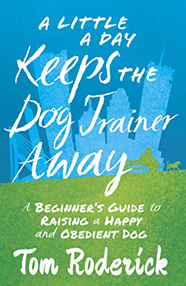
[0:24:33] CH: Wonderful. The book is, A Little a Day Keeps the Dog Trainer Away: A Beginners Guide to Raising a Happy and Obedient Dog. Tom, thank you so much for being on the show.
[0:24:45] Tom Roderick: Thank you very much.
[0:24:47] CH: Many thanks to Tom Roderick for being on the show. You can buy his book, A Little a Day Keeps the Dog Trainer Away, on amazon.com. Thanks for tuning in on today’s show. If you liked what you heard, here is what I want you to do next. Open up the podcast app on your phone or iTunes on your computer and search for “Author Hour with Charlie Hoehn” and then click “ratings and reviews”. Take 10 seconds to rate this show or leave a review. It is a small favor but it’s really the best way to show your support and give me feedback and if you know someone else who’d love Author Hour, take another three seconds to text them a link to this episode. We’ll see you next time.
Want to Write Your Own Book?
Scribe has helped over 2,000 authors turn their expertise into published books.
Schedule a Free Consult