Brendon Lundberg: Radiant Relief
Read the full transcript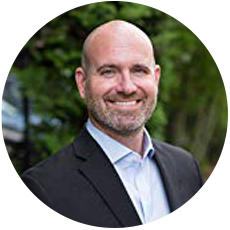
Brendon Lundberg
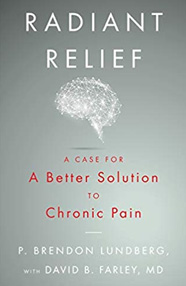
Brendon Lundberg is a former chronic pain sufferer with deep experience in healthcare management, marketing, business development, and sales. He co-founded Radiant Pain Relief Centres with David B. Farley, MD, opening their first center in Portland, Oregon, in February 2014 to offer a drug-free, non-invasive approach to chronic pain. He is the co-author, with Dr. Farley, of Radiant Relief: A Case for a Better Solution to Chronic Pain.
📚 Books by Brendon Lundberg
Transcript
[0:00:22] CH: Author Hour is about answering one question: How can you get the best ideas from great books without spending so much time reading? Every week, we take you behind the scenes with a new author, about the most important points in their book. So if you love to learn while you're on the go, you’re in the right place. All of our book summaries are 100% free and we do more than a hundred episodes every year. So please subscribe to and review Author Hour on iTunes. Today’s episode is with Brendon Lundberg, author of Radiant Relief. Our understanding of pain has improved significantly in recent years but our treatment of pain for the most part really hasn’t. The opioid addiction epidemic has proven that a better, safer solution for chronic pain management is needed right now. Thankfully, there is one. In this episode, Brendon who is one of the cofounders of radiant pain relief centers presents a revolutionary pain management method. It doesn’t include drugs, or needles, or surgery, or side effects. He and his cofounder have combined recent science, innovative thinking and business disruption and they’re ready to transform the way that chronic pain is understood and treated with the safest, most effective therapy targeted to elevate complicated conditions. Brendan should know. He’s a previous chronic pain sufferer himself with deep experience in healthcare management, marketing, business development and sales. By the end of this episode, you’ll have both a method for chronic pain management and you’ll have a vision for the future. Now, here is our conversation with Brendon Lundberg.
[0:02:41] Brendon Lundberg: You know, I spent my career in healthcare related business, I grew up in and around healthcare and my dad was the CEO of hospitals an executive in hospitals growing up and I had an uncle there who was a chiropractor and kind of was exposed to those two different types of camps, alternative and the allopathic communities. And then began my career to finishing my MBA and spent my career in healthcare and you know, worked with hospital administrators, practice owners and operators, clinicians of all different types, medical doctors and a gamut of alternative care physicians. The hearing aid industry for about a decade which is kind of surprising in some ways but really was a predicate experience for the business. And was head of sales and marketing for our breath test to measure free radical damage which is very eye-opening experience and exposed me to a much deeper range of alternative care.
[0:03:31] CH: Free radical damage?
[0:03:32] Brendon Lundberg: Yeah, free radical damage. So you know why we eat antioxidants is to reduce oxidation or oxidative damage like rusting of the cells and so when we had a technology, it helped freaking technology that would measure the efficacy of taking supplements or eating better, making lifestyle changes to see if your free radical damage levels were being reduced and thereby theoretically getting healthier. Yeah, it was pretty fun and you know, all along my professional journey, my wife went through a pretty challenging health journey, the time that our youngest, who is about to turn 14 was – or when my wife started developing different health challenges and you know, for many years, sought solutions, unfortunately didn’t find answers to those solutions or didn’t find answers to those questions. You know, across both the gamut of allopathic care and alternative care and eventually, did find relief in a process of brain retraining too which is kind of the underlying modality of what we do for our therapy for resolving pain. It really created a level of understanding of what our clients go through when they have years or decades seeking answers for why they hurt and why their bodies are betraying them and why their doctors can’t solve that answer, you know, find that answer for them. I think it was a culmination of all those things, I worked in two companies when I was in the hearing aid industry, you know, joined the team in their early days, one of the first 10 or 15 or so employees and both became Inc. Magazine Top 500 Fastest Growers, Portland Business Journal Growth Award winning companies and I got to be kind of hands on in helping those businesses to grow from close to inception to high levels of profitability and the rush and energy that comes in that type of startup environment is contagious and it’s unreal. I always wanted to start my own business, I’ve always been very entrepreneurial. Going into it, it was a culmination of those two feelings of like I really want to create this for myself and for my family and for other people. You know, I want to do it my way and then as we got into it and started building it and started to encounter challenges as anybody does in starting a company, it’s glamorous and amazing but it’s also one of the most difficult things probably anybody can embark on. It was really, it became less about the economics and more about seeing our – you know, feeling it like a necessity to drive this forward because of the outcomes we were seeing in our client’s lives and seeing them restored back to level of function and joy and engagement that had been robbed from them years prior because of pain. You know, it’s been an evolution for me of the why and the book is to tell that story and just started a conversation. We have hundred million people in the United States who suffer with chronic pain we have an opioid epidemic that’s out of control. I think I read yesterday like something lie I don’t remember what the number was, some huge ridiculous number of opioid, related deaths and obviously addiction is just epidemic. You know, that’s not just a factor of pain but obviously it is certainly a derivative of that problem and our failed approaches to address it.
[0:06:38] CH: Let’s talk about this problem. I imagine you see all sorts of patients suffering with chronic pain, can you break down what patients typically experience, how they describe things?
[0:06:53] Brendon Lundberg: Well, pain is such a complicated thing, I mean, it’s very human. I think it’s probably the most human experience that’s shared amongst anybody because there’s not a single person who ever lives or will live that doesn’t experience pain and so we developed some level of understanding about it based upon our own experience to it. You know, looking back at our primitive, caveman days and all the way till now, we realized, if I hurt, if I drink alcohol or if I take opium, then I feel better, at least in the short term. Industry was kind of born out of this analgesic approach, pharmacologically, you know? Again, kind of alcohol and opium kind of being the precursors and really not much changing in hundreds or thousands of years since man first discovered that they could feel better doing that. But the science of pain has really changed. You know, even though we feel the pain in the tissue if we whack our thumb with the hammer or sprain an ankle or break a bone, we feel that in that localized area but all pain actually comes from the brain, the tissue has no ability to feel pain. In the short term, when you have an injury or there’s some sort of disease or problem developing in your tissue, that pain is a protective mechanism, it’s there to alert us of a problem and say, “Hey, seek help for this, take it easy, let it heal,” and then the body is made to heal. Maybe there’s a medical intervention that’s necessary to correct damage tissue or remove disease from the tissue but once that’s been done, or if it’s not necessary to be done, the body should heal and correct itself and the pain should go away, it’s no longer necessary. What happens in chronic pain is that for some reason, the brain creates an expectation in which it’s now kind of wired to expect the pain phenomenon and perpetuate it regardless of what’s going on in the tissue. In fact, you know, many clients will come to us and it’s not atypical for a pain sufferer and chronic pain to stay, “I hurt in this area,” their doctor images them with an MRI or x-ray and there’s no pathology in the tissue, there’s no reason why they hurt. There’s actually a disconnect between pain and tissue even though we don’t experience it that way and even though in the short term in the acute pain phase, it’s probably very appropriate to fill it in that localized area. In chronic pain, it’s not. Then the tissue then reactors to that expectation. That’s understanding the difference number one is that it’s really a neurogenic or brain related problem, not a tissue related problem, yet the therapies that are available generally address, just the tissue or they are drug that has impact the entire chemistry of the body which results in addiction and side effects and all the problems that we see.
[0:09:30] CH: A quick question Brendon, is this why allopathic medicine or kind of the western version of medicine sort of dismisses placebo as a legitimate therapy? Because it’s – or they marginalize it, they’re like, it’s the placebo effect when in fact, that’s like the brain retraining, right?
[0:09:49] Brendon Lundberg: I mean, absolutely. Early on, when we were pioneering this model, many physicians in particular would say, “Well, what is it really doing to change the brain,” you know, through our therapy and or is it just placebo and I go, at the end of the day, who cares because –
[0:10:06] CH: Exactly.
[0:10:06] Brendon Lundberg: Our clients don’t they’re getting better and we now know, I mean, if you read books like The Biology of Belief, Dr. Lipton and you know, there’s a number of pioneering and kind of really progressive thinkers out there that are helping us understand the mind, body connection. Allopathic medicine is symptom based medicine, not really holistic medicine generally speaking. We kind 0of dismiss that and I had a great conversation with a physician this past weekend, I was at JJ Virgin’s Mindshare Conference and we’re talking about what we do and he made the comment and I think it’s very true that we are a brain. Our bodies are a utility for our brain. The brain is the primary function. And we think of those things very separately and we think of the brain in terms of the cognitive functioning and thinking and reasoning, that’s part of the brain but we also have an old reptilian brain and limbic brain and these things serve different functions and so when I talk about brain, I’m not saying that somebody is consciously thinking about I want to have the pain, they’re craving the pain through conscious thought. It’s at a deep, you know, subconscious, reptilian brain level that these things are really emerging. But we do know, and the science is becoming much more clear and I think this is penetrating into the mainstream and the allopathic world a little bit is the ability by changing the cognitive focus of the brain to be able to enact changes in the deeper, older, primitive reptilian brain too.
[0:11:31] CH: Right. The analogy I’ve heard that really resonated, the middle sense is, your brain, your thoughts are the software and your brain and your body are the hardware and if you can change the software, it actually can change the hardware.
[0:11:48] Brendon Lundberg: 100%, yeah.
[0:11:51] CH: Yeah, I’m fascinated by this. I have always wondered why the placebo was a marginalized thing because at the end of the day, like you said, a result is a result. Talk to me about this therapy that you advocate for. For Radiant Relief, where did it originate and you talked about how it nearly died?
[0:12:14] Brendon Lundberg: Yeah, we use currently a technology and we’re beginning the process of developing new technology to – that we can, that we’ll own the IP on, right now, we license this. But this technology was developed in Italy by a biophysicist there. It has been completely ignored and misunderstood by mainstream medicine and there are multi-factors to that. It is already FDA cleared and it has been researched to you know, very reputable institutions like the Mayo Clinic and Johns Hopkins but when it was taken through the FDA and it received its FDA clearance, it was predicated on a technology called TENS. TENS therapy which has been around probably since the 1950s or 60s and this is basically most of us have experienced at one point or another, it’s common in different types of clinician offices but it basically creates an electrical stimulation. It’s applied at the pain site and the idea is that you create a different sensory experience and then when you’re plugged on to the device, the pain feels like it’s diminished. Probably creating greater blood flow to the area which can accelerate healing if there’s tissue abnormality or tissue damage but it really does very little to create lasting relief and particularly, when a pain has converted and become a chronic pain situation and again, it’s a brain driven problem, not a tissue driven problem, just addressing that the tissue does very little. There’s not a lot of relief that comes from that book because that tense predication, it’s really limited what the economic opportunity would be for clinicians because TENS has been around for so long, there’s very low reimbursement if any. That’s really shot it in the foot and the technology itself is very expensive being both new and novel and you know, the RND and all everything else that goes into it. It’s very expensive at a retail price point and without a viable way to make money, that makes it very difficult. Maybe even more poignant is the fact that most clinicians are trained in old science, something called The Gate Control Theory of Pain which is published in the 1960s and really has evolved so much since then but most doctors don’t know it, you know, people don’t necessarily die from pain directly, they may have other comorbidities or other health elements that ultimately are terminal but pain is not typically terminal. The research around it and at least in the US has been very minuscule compared to other diseases. We just don’t really know it. What has been done, you know, I mean, it’s really been informed and influenced by industry, you know? You have the drug companies that make a lot of money and again, just from our own experience.
[0:14:38] CH: Same with the medical machine companies?
[0:14:40] Brendon Lundberg: 100%, yeah. In industry informing science which informs economics which informs policy which informs, understand - it becomes very complicated and you know, again, this book is designed to start a conversation and help people kind of think differently about our understanding of pain from the very beginning so that we can then think differently about solutions to it. Unfortunately, we have a solution through this technology that’s very effective and because it’s technology based, very scalable. There has been other very bright, pioneering, brave individuals that have talked about different approaches, like Dr. John Sarno and I love the work of David Butler, Adrian Lo, Lorimer Moselye. Most of whom are Australian. Dr. Norman Doidge, Canadian physician, The Brain’s Way of Healing, The Brain That Changes Itself. I mean, these are remarkably poignant and important works. But because we have a technology that’s the center of our business, we’re able to take that scientific understanding and roll it out in the way that nobody else today has been able to do. We’re very excited about that.
[0:15:44] CH: Paint the picture of your vision of what this new model that can disrupts the way we’ve been doing things really looks like?
[0:15:54] Brendon Lundberg: Man, I mean, it is complete disruption in my mind. My goal when someone says what do you do? What I say and what I coach our team to say is, we’re changing the way that chronic pain is understood and treated because at first, we have to shift the understanding. We’re building clinics around this technology which is remarkably beneficial to our clients because it creates a higher level of experience, we’re able to create economic efficiency I guess is the right word around the model to make it affordable to the average person and still be healthy and profitable to the company as we scale.
[0:16:27] CH: Say the name of the technology again?
[0:16:28] Brendon Lundberg: Well, the technology is known in the medical literature as Scrambler Therapy. In our business, you know, unfortunately, it’s not an attractive name. People think that they’re getting their brain scrambled, they’re getting a lobotomy. We rarely talk about it in that term, we call it, we just call it you know, our radiant therapy essentially and our business is known as Radiant Pain Relief Centers. Again, we’re in the process of developing new technology to you. That may change. While the technology is obviously a critical piece to it, our belief is that without strong brand integrity and brand awareness, it makes it very hard to scale and disrupt, if I sold this technology to a doctor’s office, they may or may not use it effectively, appropriately and it’s really hard to build a brand around that. The experience in their clinic could be very different than you know, the next person’s. In our mind, equally important is not just the technology but the whole methodology of our approach to create a higher level of customer experience or client experience and brand integrity to really be able to scale and to grow and to shift understanding and you know, the goal is hopefully through this book, create a lot of conversations, use that as a mechanism to raise more money, create more fans and open more clinics to follow.
[0:17:40] CH: Yeah, you know, normally I ask about this at the end of the interview but I’m going to say, your website is radiantpainrelief.com. For anybody listening who is like, I need this right now, stop beating around the bush, you could check it out at Radiant Pain Relief. It’s pretty incredible because it says, you know, you don’t use any drugs, needle surgery, it’s totally free of side effects but what’s really impressive, after a protocol of daily sessions for a couple of weeks, you average in 84% reduction in pain with more than 90% of your patient’s concluding therapy with zero or near zero levels of pain. On a pain scale called the VAS. It sounds, it looks like it’s affordable through - for pretty much everybody.
[0:18:36] Brendon Lundberg: Yeah, thank you for promoting that. We’d love to see anybody that’s hurting, we have clients, we’re just in Portland right now, two locations in Portland, we have clients that do fly to us from all over the country and from out of the country, Canada in particular, they come and find therapy with us. And our goal you know, to raise awareness, raise money, expand and get clinics closer to you wherever you may be listening. As soon as possible and we’d love your help in doing that. In fact, the radiantpainrelief.com is the main primary site, there’s a site for the book which depending on when the listener reads may or may not be up yet but that’s radiantrreliefbook.com and then if you’re interested more in participating in understanding our story and helping us champion what we’re doing and not necessarily just on the clinical side as a potential patient or client, you can visit radiantrelief.com as well and you know, our goal is to create a lot of advocates. You know, industry is you know, born around economics that are incentives for them, not necessarily incentives for the people or for others. That’s our goal as shift understanding and create a higher level alignment around therapy that is safer, much more effective and those numbers that you read, when you tell them to a trained clinician, typically an MD, maybe a pain specialist, they say that sounds too good to be true and they dismiss it because you know, you just aren’t seeing outcomes like that through other therapies. In particular, without some sort of side defect or you know, diminished cognitive function because of the drug or something else. It’s remarkable, it literally is life changing. I mean, I could tell you lots of stories and on our website is only actual clients, we don’t use any stock images and the patient testimonials are very moving. I mean, people who have previously elected to have a part of their body amputated because after years of trying different therapies, nothing worked, they’re on there, thinking suicide and like all right, the next step is chop my leg off and then unfortunately, they do and it doesn’t resolve the pain, because it’s neurogenic problem. It’s not a problem of the tissue, now they have phantom pain and you know, what pain does to people, unless you’ve lived through it and I have chronic pain, mine is mild compared to many people but it robs you of your life, it rubs you not – not only do you feel crappy but it robs you off joy and connection and productivity and all the things that make you feel human and so it really, at some point it begins to dehumanize you and its’ sad what people go through it really is. We’re grateful to be part of getting people their lives back.
[0:20:57] CH: So I’ve got a few more questions about this. The first one is how does this really work? What can people expect when they go in and they’re a candidate for this type of therapy and they’re ready to do it? Let’s say they have that chronic pain on their leg, do you hold the machine against it for 20 minutes? How does it work?
[0:21:24] Brendon Lundberg: Before they even come in, I want to talk about the process that leads them into the clinic. So obviously, many pain sufferers are out there seeking solutions. They are googling in the middle of the night, they find our website and hopefully they find on our website a different level of explanation and obviously approach but instead of calling us and saying, “Hey I want an appointment, let’s do this,” we actually walk them through a process, in which they are asked a series of questions and get them to think a little bit differently about their pain and about why like why now, why do you need to be out of pain. Does your family need you, do you need to get back to a higher level of work. What is the reason that now is the reason and then timing to do it. Then they complete this application extension that comes across to us as a lead and we follow up and call them. There’s very clear contra-indications or disqualifies. So as long as somebody isn’t disqualified because A, they’re pregnant, B, they have an implanted device like a pacemaker or in some cases a spinal cord stimulator, many pain sufferers have gone down that path and sometimes they get benefit, great and sometimes they don’t but if they have a spinal cord stimulator typically we can’t treat them and there are certain drugs that will impact the outcomes that we need to be aware of and ultimately would help - work with their prescribing doctor. To help them wean off of that and most of the time, they want to get off those drugs anyway because the side effects have become pretty rough for them. So once we’ve got this lead, we qualify them. We schedule them to come in for a two hour free initial consultation and treatment. So we invest heavily on the front side with each of our clients and the goal is education for them and to create a whole new experience and then really to get the opportunity to get to know them and their history. And to connect with them in a way that they haven’t really experienced anywhere else and our model is designed to fulfill those type of function. In a typical doctor’s office, there is no way that they have two hours of free time to allocate. But we have intentionally and purposefully modeled our business to be able to create this because we think it is necessary to enact the best outcomes. So we spent an hour giving it to our client, learning their history which is often times very complicated history. And when you understand the most recent neuroscience of pain, you realize that an injury or a trauma that they experienced when they were a kid or a teenager or early on, decades ago completely potentially unrelated actually could be impacting the reason in which they are experiencing pain now. It is an aggregation of what the nervous system perceives as threats and if those threats haven’t been effectively reduced or passed through the body they aggregate up. In fact in the book, I make an analogy that pain is not necessarily a direct correlated phenomenon to the tissue as we have already talked about but it is really more like credit card debt and you can maintain some debt on your account balance and be just fine as long as you’re paying the bank the minimum payment every months and maintaining a healthy balance there but if there is some sort of tipping point event like if we can keep with the credit card analogy, like the car breaks down and you have a $1,700 transmission repair bill but you only have $1,500 of available credit on your card, metaphorically that is a painful experience because you have this large charge. Now you have over limit fees and the impact of what that really cost you could be increased if you were reliant upon that credit card to buy groceries or something because you don’t get paid for another week and a half. So circumstance can really inform what’s happening with the experience of pain for that person and the same is true with our nervous system and we think about it very cause and effect because of that dang car repair bill that I am now on the situation and yes, that might have been the tipping point but if there wasn’t so much threat aggregation on the system prior or if you have a higher threat limit, you could have withstood that better. So we kind of explain this. We talked to each client about what is their definition of success, what is their why and we anchor to that because if they don’t have a strong why, it makes it a lot harder to move through this and the pain is very complicated and I don’t want to minimize it for anybody but it is fair to recognize that some people even though they say they want to resolve their pain, they don’t or they are not ready to. For them it is some sort of crutch or some sort of a protective thing.
[0:25:29] CH: Yeah, how frequently do you run across that?
[0:25:32] Brendon Lundberg: We run across it very infrequently in our therapy because we are not just giving a drug. We are going through a process of brain retraining and education and empowerment and this whole process is designed to weed those people out. So somebody who doesn’t really want to resolve their pain, they probably won’t even answer the questions on the website to come across as a lead for us, right? So it is all essential to change the thinking around it. To help us be able to dedicate our time which at this point we’ve dedicated. We haven’t charged them anything up to this point to clients who really do want to get better. So we go through this and then we have a process of education about how our therapy works which I will explain to you in just a second and then we treat them and typically they see, a real marked improvement even in the first session which we don’t charge them for and we give all of this for free. Because so many of our clients have in their mind tried everything and many times they have. I mean drastic things like amputations and surgeries and things like that as I mentioned. So giving them a very low barrier other than sometime we think is very necessary and helpful to open their mind and even if they don’t move forward right away because of economics or life circumstances, hopefully we have left them in a better place and empowered because we have educated them more about their brain. And some other techniques and tools that they can do to help shift their pain experience even if they are not using our methods to do it. So do you want me to explain how it works, is that what you are asking about?
[0:26:52] CH: Yes.
[0:26:53] Brendon Lundberg: That was a long answer to not answer that question. So the way it works is that this technology acts like an artificial nerve and it generates a dynamic set of artificial nerve impulses that kind of mimic endogenous or natural nerve signaling in the body. We identify where the pain is in the body and we attach electrodes on the skin in proximity to that pain but actually in healthy tissue that is near it and the reason it’s near but not in is we want to transmit our artificial nerve signals through healthy tissue. Not through tissue that is currently experiencing the pain phenomenon. But because of the way that the brain and the appropriate receptive system, so the brain and brain napping works, if it is attached in proximity then the areas of the regions of the brain are proximal as well. So anyway, we attach the electrodes in the skin, we turn the device on, it transmits these dynamic artificial nerve impulses through the nervous system and typically in a matter of minutes, there is a noticeable reduction in the pain. And once we have that indication that the pain is being reduced, the client sits there for about 40 minutes. Over the 40 minutes their brain is flooded with this changing set of information and this is why the technology is called Scrambler Therapy is that the message is not static. So it is sent in a scrambled in the device and then resent, scrambled in the device and resent. So the brain is flooded with various and varying messages that are similarly no pain information. And that causes the brain to work to interpret it and that triggers the beginning of a neuroplastic change in the brain. So this is much like anything the brain learns, algebra, speaking a second language like Spanish or something or learning how to ride a bike. It is through repetition and exposure. So typically once we get the client see the improvement in that first session, they are excited about it, they are educated, they’ll need to come back in every day and we set the expectation that we will probably have a relationship of some sort over the next year. Maybe beyond but we can think of it in the first year and we sell it on an annual membership so clients, like a gym, can come in when they need it but it is typically a daily session for two or three weeks, an hour session daily for two or three weeks and then after that, they will experience weeks or months and in some cases, indefinite relief after that initial dosing if you will or that initial subscription of daily sessions and then they’ll need to, oftentimes, come in for a booster session. Like a refresher course to reinforce that neuroplastic change of the brain and that is up to them how frequently that they feel like they need to do that. In some cases, it is a week or two later. In some cases it’s a month later and we have treated clients back when we first started in 2014 who still out of pain and the thing that is really awesome about this is that it is typically not diminishing efficacy. It is improved efficacy whereas most other approaches, drugs, you have to keep upping your dose and they get the benefit and you know, the cortisone –
[0:29:38] CH: Or God forbid, surgery. Yeah.
[0:29:42] Brendon Lundberg: Yeah and again, there is a level of education and empowerment that happens by virtue of our processing, getting to know our clients every day and utilizing that time to educate them and they become empowered and there is a psychological shift to the degree that there is a placebo or there is other benefit that comes by just the person taking – feeling like they are back in control of their life and being able to re-engage and things that bring them joy or sense of who they really are. All of that plays together in reducing this complicated problem of pain and we haven’t just given them a drug to mask the symptoms but really help to resolve. It is like if we go back to the credit card analogy, if you are dealing with credit card debt and you feel crappy about it, you drink some alcohol and in the moment, you might feel better but it is just masking the problems not resolving it and the same is true with pain. You can mask it and resolve it short term but it isn’t. It isn’t resolving that long term and so these tools do, this therapy does and it is remarkable and it is just beneficial. It is awesome to see people get their lives back and there’s so many days of tears of joy with our clients. It’s just pretty special to be a part of.
[0:30:48] CH: Yeah, I believe it was William Gibson who said the future is here it is just not evenly distributed. So tell me about the future of chronic pain management?
[0:31:01] Brendon Lundberg: Well if I could paint the future, it would be that we arrive at a higher level of understanding about the brain’s involvement in pain and that we have tools like what we are developing at Radiant and hopefully, we become a very successful company in the sense that we are able to grow and to deliver this therapy and help a lot of people have a much better quality of their life and reduce their suffering. But my goal frankly beyond that is to help shift society to a higher level of understanding about the mind-body connection. You know the average person out there may not be ready or care about what they think about, what they eat, how they move, how they sleep. They’re just going through the routine of their life but a pain sufferer is motivated to feel better. Particularly if their doctors cut them off of their drugs because that is increasingly happening with opioid regulation that is now starting to happen. Or they’re just not satisfied with the outcomes they are getting. If we can help them feel better which we’re typically very successful at doing and we can educate them and empower them, now they are motivated and even though all we’re doing is addressing pain, a high percentage of our clients start losing weight. They report back that they have returned back to work or started new work. Their relationships, their intimacy with their companions starts to improve. Their ability to be present with their families improves and that is significant and so we were intentionally modeling in resources and tools to help clients access better education about nutrition and movement and sleep and mindset and mindfulness and personal development even because the more cumulatively progressive somebody is in advancing their life, the more empowered they are and pain becomes less and less of a factor. And so I think it is not just easing pain for us, our future vision is shifting society and helping people move to a higher level of ownership and engagement in their lives.
[0:32:52] CH: I love it and I hope you accomplish it. It may not happen right away, of course but I hope we get there as a civilization at some point for sure. I think this is the direction things are heading. So Brendon, I have two more questions for you. The first one is what is the best way for our listeners to connect with you or even follow you on your journey?
[0:33:20] Brendon Lundberg: For me personally?
[0:33:21] CH: For you personally and your business.
[0:33:23] Brendon Lundberg: And the business, well I think the business I’m just a pawn. I am just a player and I am happy to have people follow me but yeah, go to radiantpainrelief.com if you are suffering, that’s the way you can get in and get booked into one of our current clinics. Go to radiantrelief.com if you are interested in understanding our journey. If you are interested in being a participant in our journey in some way, as a messenger, as an investor. And we are as of the time of this recording, not yet legally allowed to openly solicit but we are about to file with the SCC to begin what’s called a regulation A plus offering which is crowd funding. So anybody can invest and it is a relatively small amount of money if you are interested in contributing and being a part of this and owning a piece of hopefully the future of chronic pain management. That is the two best places and then obviously read the book. I think the book will educate and hopefully inspire and those are the two best places and you know, find us on Facebook. I am there as well and I am happy to help answer anybody’s questions.
[0:34:22] CH: Awesome and the final question, give our readers, our listeners I should say a challenge. What is one thing they can do this week that you advocate in your book that could make a positive impact on their life? And you can’t say read the book.
[0:34:38] Brendon Lundberg: Yeah, no well, I would say especially if you are suffering with pain, I would challenge you to think about who needs you, who needs you to be better, who needs you to feel better and maybe it is you, maybe it is a family or friend or coworker but think about that person. Because again, as I talk about in our therapy and our process, the why precedes the outcome, right? And the journey for everybody is different. In some cases, it is very simple and fast and in a matter of weeks, they’re a 100% back. Others, it is still a longer journey but I believe given the outcomes I have seen for our clients and the journey that my wife personally went through, things that we have lived through, that people can reclaim their health and it starts with a mindset shift and that mindset shift starts with a why. So focus on the why. Think about that and I think the second is spend as much time thinking about the things that you have to be grateful for now. Because pain robs you of that and inevitably, I think it is easy to feel victimized because of that. So when you can start to shift your thinking around what it’s taken from you and shift it back to what you still have or what you can have or what you want to have and you start putting yourself emotionally and mentally there as much as possible, it does change your brain and that change, though you are making that in the frontal cortex in the modern brain, in the cognitive brain will begin to change the old brain and it will begin to change the physiology of your body. So that is my challenge, for sure.
[0:36:15] CH: The book is Radiant Relief: A Case for a Better Solution to Chronic Pain. Brendon, thank you so much for being on the show.
[0:36:24] Brendon Lundberg: Man, it’s been a pleasure. Thank you so much.
[0:36:27] CH: Many thanks to Brendon Lundberg for being on the show. You can buy his book, Radiant Relief, on amazon.com. Thanks for tuning in on today’s show. If you liked what you heard, here is what I want you to do next. Open up the podcast app on your phone or iTunes on your computer and search for “Author Hour with Charlie Hoehn” and then click “ratings and reviews”. Take 10 seconds to rate this show or leave a review. It is a small favor but it’s really the best way to show your support and give me feedback and if you know someone else who’d love Author Hour, take another three seconds to text them a link to this episode. We’ll see you next time.
Want to Write Your Own Book?
Scribe has helped over 2,000 authors turn their expertise into published books.
Schedule a Free Consult