Kim Butler: Busting the Real Estate Investment Lies
Read the full transcript
Kim Butler
Kim D.H. Butler is a recognized expert on whole life insurance and prosperity-focused financial strategies. She is the president of Partners for Prosperity, which serves clients across the country, and the cofounder of the Prosperity Economics Movement, an alternative to conventional financial planning built around the 7 Principles of Prosperity she identified. She is the author of paradigm-shifting books including Live Your Life Insurance, Busting the Life Insurance Lies, Perpetual Wealth, and Busting the Real Estate Investing Lies. Her work has been recommended by financial thought leaders such as Robert Kiyosaki, Tom Wheelwright, and Garrett Gunderson.
📚 Books by Kim Butler
Transcript
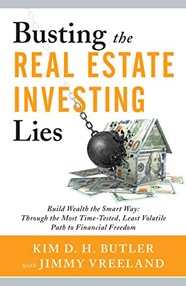
[0:00:20] CH: Author Hour is about answering one question: How can you get the best ideas from great books without spending so much time reading? Every week, we take you behind the scenes with a new author, about the most important points in their book. So if you love to learn while you're on the go, you’re in the right place. All of our book summaries are 100% free and we do more than a hundred episodes every year. So please subscribe to and review Author Hour on iTunes. Today’s episode is with Kim Butler, the coauthor of Busting the Real Estate Investment Lies. If you think that real estate investment is risky, costly, time consuming and complicated, think again. Investing in real estate is actually one of the smartest, most powerful tactics to create a reliable passive form of income but only if you use it right. In this episode, life insurance guru Kim Butler shows you how to break the middle class myth, so you can find financial freedom through the time tested method of combining real estate with whole life insurance. This isn’t some get rich quick scheme destined to crash and burn. This is a chance to truly reclaim financial freedom through steady dependable income. Kim is the President of Partners 4 Prosperity which offers clients financial health nationwide. She’s also the cofounder of Prosperity Economics Movement which offers and alternative to typical financial planning. By the end of this episode, you’ll have an overview of a time tested strategy for building wealth. Now, here is our conversation with Kim Butler.
[0:02:28] Kim Butler: We’ll pick up on my background as a farm girl, as an entrepreneur because literally, when I was in 4th grade, I was given a milk cow and I had to sell the milk and figure out how to pay for the grain and we upgraded to registered Holsteins over time and those things are expensive and I was involved in the auction and I did 4H as a kid. For a 4th through 12th grader, I had a lot of money going through my hands. It was just something that I did, I didn’t think about it and I learned a lot form that, learned what to do, learned what not to do, etcetera. Fast forward to getting out of college and trying to figure out what I wanted to do with my life, I had an opportunity to do an intern at a law firm and it was because I thought I wanted to go to law school and it became very clear to me during that intern – I was getting school credit, it was about three months long that that was not a good match for me. I’m so grateful for that because while I was there, I lived with a banker and she was helping people with their money all the time and I thought that was super cool and so I started out right out of college at a bank and this was in the late 80s, it was before bank did investing at all, I was just basically helping with simple stuff, mortgages, car loans, checking accounts, savings accounts, that kind of thing. Yet, I got to see in a very short period of time, a massive number of people’s personal finances. Now, I had a father in law that was a stock broker so I was conscious of that side of things, I had a really good friend that was a life insurance agent. I was conscious of that side of things, typically two sort of opposites if you will in the financial world. I had a whole bunch of clients that did real estate. This was in Phoenix Arizona in the late 80s, when the real estate market first of all was doing fabulously, then it just died and so I just got to witness so many examples of people handling their personal finances well and so many examples of people handling their personal finances horribly and everywhere in between.
[0:04:43] CH: Wow, okay, that brings us to your newest book, Busting the Real Estate Investment Lies. Now, this is an interesting title to me because I have friends who are mortgage lenders and they’re in the real estate game and I’ve seen and heard both sides, right? When I think about real estate investing, I think about people who are either flipping houses or people who lost their retirement accounts during the crash of 2008, right? What do most people not understand about real estate investment. Like, what are the lies?
[0:05:24] Kim Butler: Well, the biggest lie is that it is a flipping game. To use your example, there are absolutely people that can make money buying a piece of property to play with the building, sometimes not, doing something to improve it and then selling it later. That’s sort off the typical definition of flipping. Yet, frankly, that’s not where people make their money, that’s a short term deal, it can happen sometimes but it’s actually more speculative in nature and to me, the definition of an investment is ideally, high single digit, low double digit return without the loss of principle. If you’re going to do real estate in that space, you must have a longer term approach and you must have a cash flow focus. Which many people have learned about through Robert Kiyosaki and the whole Rich Dad, Poor Dad brand. And his focus on cash flow but it’s weird, they learned it and then they go try to flip houses and that is just not the same thing.
[0:06:29] CH: Right, yeah. Break that down a little bit more, just pretend, actually, you don’t have to pretend, I’ll just tell you this fact. Pretend that I am at the most base level. I’m thinking about buying a house and I keep hearing that this is a really wise financial move, how long term are you talking. Is it five years, 10 years, 30 years?
[0:06:55] Kim Butler: Well, let’s first of all clarify that we’re not talking about your primary residence, that’s a whole separate discussion, we’re talking about real estate investments. You want to have like a 30 to 60 year perspective even though a particular deal might only be three to five years and yet, the important aspect to lay over the timeframe is the focus on cash flow. You want to focus on cash flow not on what’s called net worth which is a balance sheet item. You don’t want to focus on the value of the property or what it could or could not grow to. You want to focus on cash flow. That’s the thing that you should be looking at. The challenge with this is, that most of the real estate brokers and the real chores is out there. You know, with all due respect to their abilities and what they do in the marketplace, frankly, their focus is not on cash flow, it tends to be more focused on the value of the property. They often don’t know how to actually analyze cash flow of a real estate deal. It blows my mind that in today’s world, there are not more simple calculators on the web that would enable you to actually identify a rate of return on a particular piece of property. I want to specify, I’m not talking about cap rates because cap rates are often something that people want to throw around as they’re talking about real estate investments. Their fine to use as a relationship of one property to another but they don’t normally have anything to do with cash flow and cash flow is what you want to be looking at measuring and identifying as either good or bad.
[0:08:50] CH: Break down what makes good cash flow and what makes bad cash flow that most real estate investors aren’t fully aware of?
[0:08:58] Kim Butler: Yeah, it’s either the positive cash flow is good cash flow and the negative cash flow is bad cash flow. I mean, it really is almost that simple. Yet, let’s dig in a little bit further. You brought the situation up earlier, you're ready to go buy some real estate as an investment and typically, most people start with residential real estate because it’s smaller and you can get into it quicker. You want to have minimum down payment as an example. That’s another lie right there. A lot of people want to try to pay cash for their real estate and it’s the most misused aspect of money. If you pay cash for your real estate, let’s see you – because your cash has both a cost and an opportunity. Let me put some examples. You’ve got a hundred grand, let’s say you worked really hard and you heard you had to save up a hundred grand. You got a hundred grand and now you’re ready to go buy your first deal. Well, let’s say that you live in an area where you could actually buy a single family residence for $100,000 and so it might be tempting to just pay cash for one deal, right? If you do that, you’re missing one of the most beneficial aspects of real estate which is leverage. And the fact that a bank will lend you money on real estate, unlike almost any other asset out there. The bank’s not going to lend you money to go buy stocks, the bank’s not going to lend you to buy a business, they do but not at this level and so the bank will lend you money. You want to take your hundred grand and buy five houses, not one. You want to put minimum down which is probably in today’s world, $20,000. 20% I should have said. $20,000 times five is 100,000, that’s where I’m getting that number but 20% is typically a requirement of down. Now, if you can do some fancy finagling which we talk about a little bit in the book of getting some other opportunity then maybe you can only be required to put 10% down or in some circumstances, 3% down or in really rare occurrences, 0% down but just your basic thing is maybe going to require 20% down. Well, awesome, put 20% down, not a 100%.
[0:11:14] CH: Right. Yeah, that makes total sense and this is more I guess a tactical question but if you’re just getting started in real estate investing, is it smart to do what you’re talking about, to leverage five houses instead of one, even if your minimal experience, it seems like a lot to come at you, right?
[0:11:35] Kim Butler: That’s well said and so this is one of the other aspects of the book that we talk about is what should you do before you buy your first house? That is that you should first of all do a lot of learning which is what books are for, right? Whether you like to read or maybe you’re going to stay tuned and wait for our audiobook which will come out a few months after the physical book is released or keep an eye on the videos that Jimmy Friedland does on Facebook or whatever your learning style is. Make sure that you are indulging in lots and lots of learning. This is covered in the book quite extensively, you also want to build up your emergency opportunity fund, we should dive into that is now a good time or you want to hit me with another question?
[0:12:28] CH: Absolutely, yeah, we’re going to jump around so dive right in.
[0:12:31] Kim Butler: Okay, your emergency opportunity fund is something that you should build up before you purchase your first piece of real estate and I know this is frustrating, it is very difficult as human beings, especially in America to not want to just jump in and get going on stuff and see results right away etcetera. We are very fast food society right now, we want the results without the efforts, right? We want something for nothing and that is not how a good, strong, foundationally built personal finance arena happens. A good, strong, foundationally built personal finance arena happens by building your emergency opportunity fund up first and really getting clear on where the most important place to store that emergency opportunity fund is. Now, notice I’m using the word emergency and opportunity. Nobody wants to talk about emergency fund for more than about two minutes, it is boring, it is fear based, right? Emergency, I mean, that’s the whole title of it and frankly, most families can get an emergency fund saved up in three, six, 12 months at the most, you know, kind of depending where your family is. Now, did you know that Oprah Winfrey has her emergency fund set at seven million dollars?
[0:13:52] CH: Holy cow.
[0:13:52] Kim Butler: Yeah, she stated that. Emergency is defined by each family differently and yet, again, somebody’s going to get past that point pretty quickly, then where do they go? They want to build their opportunity fund. Now, this is a lot more fun to talk about, think about, focus on, right? We all want to build for opportunities. The person that properly builds and stores an emergency opportunity fund is going to have a much stronger foundation with which to then go do their real estate deals and I can either do a little spoiler or not, you want it now or later?
[0:14:28] CH: Well, yeah, do the spoiler.
[0:14:30] Kim Butler: The spoiler is, that the most efficient place to store that emergency opportunity fund is the life insurance industry. Most people are going to go for banks, money market accounts at brokerage houses, that kind of thing, that’s your normal spot to store emergency opportunity money. But the life insurance industry has more certainty, less tax, and a slightly higher rate of return than banks and brokerage houses are ever going to have on liquid money and your emergency opportunity money, obviously needs to be liquid.
[0:15:03] CH: What I’m curious about here with this is, why doesn’t the general public know about this, why is this something that we – I’ve only heard one other person say this information and it was Patrick Donohoe. Your other author friend. Why is this not common knowledge?
[0:15:23] Kim Butler: Because Wall Street doesn’t want it to be and they have massive advertising budgets. Then the media, which is driven by their advertisers is of course going to promote their advertiser’s agenda which is for these advertisers, these large brokerage houses in New York to have all of your money focused on the stock market. When you go ask America what the definition of an investment is, most of them are going to tell you stocks, bonds and mutual funds. Only a select group of people might think about real estate as an investment. That’s part of the problem and the other part of the problem is the life insurance industry, unfortunately, has earned the reputation that it has. Which is slimy. When you talk to most life insurance agents, especially those that do work in the space of talking about life insurance as an investment. Which by the way, it is not. You find a group of people that, like I said, have earned the reputation and it’s really unfortunate because if you go back into even as recent as the 1940s, 50s, 60s but also as far as like the late 1800s, everybody used life insurance. It was a common product that solved a common desire which is having a place to store cash and having some money to leave as a legacy. In fact, if you read books about personal finance in that era, there were literally three products. One was a mortgage, one was a life insurance policy and one was a checking account at a bank and that’s all people used.
[0:17:15] CH: Yeah, you say in the book that this is not a new thing and over the last 200 years, the one consistent performer in building wealth has been real estate coupled with whole live insurance. If I’m a listener, I’m thinking right now, okay, this is new information, it’s novel but I still don’t quite trust it. Are there big reputable people today or even companies that are putting their money primarily in this?
[0:17:47] Kim Butler: Absolutely. If you step back from the Wall Street space and you look at the overall world and I’m just talking about in the US but still, the overall world of finance, all big deals are done with real estate and life insurance. Think about like the biggest building that you can think about in your town, okay, that’s a physical building, that’s a piece of real estate, right? I can almost guarantee you that it was financed by the life insurance industry because the life insurance industry stores dollars backed by one dollar for every one dollar. The banking industry as you may know stores dollars backed only about seven to 10 cents on the dollar. When you look at large financed deals, it is a combination of real estate and life insurance, or life insurance industry I should say, like actual life insurance companies. Which again, they’ve been around two to 300 years so you want to talk about some certainty and of course, real estate has been around a long time as well. One of the things that we know about real state is that there’s a title to it and so that increases certainty. You could say that there is collateral to it. Collateralized is a term that you use with real estate that ties together the physical piece of the building and the title that represents that actual building with making darn sure that the money goes where it’s supposed to go.
[0:19:26] CH: Wow. Your book is about busting these real estate investment lies but I’d imagine, it looks like it does, that whole life insurance also has these lies that need to be busted. Let’s go through a couple of these, just to demystify this as well, right? The first one that you list is that it’s an investment, like you said it’s actually a place to store cash. The second is that it’s multilevel marketing. Do a lot of people believe this?
[0:19:57] Kim Butler: Yes, isn’t that funny? Like I said, it’s understandable, our industry has generated its own reputation and there actually are some life insurance companies that work in a multilevel marketing arena, and yet, that’s of course not what I’m speaking of. Whole life as indicated around 2, 300 years, it’s absolutely the red-headed step child of the financial services industry, there is absolutely nothing than compete with it. There’s literally not another product anywhere that does all of the things that it does. Yet, it has a horrible reputation and a whole bunch of people hate it, even though they really don’t even understand it and so one of the things that it just gets lumped into, you know, we could say it’s like used car salesman as well and we could say it’s like ambulance chasing attorneys. You know, all of those things along with multilevel marketing or network marketing. All of those things just bring a bad taste to people’s mouth, even though they potentially shouldn’t, although in some cases, they should because they are problematic and slimy and you know, all the things that we think about when we list those various industries. I know the era that the shift occurred, it’s in the 70s when the actual idea of financial planning came forth and you had the advent of the college of financial planning out of Denver and the stock market started to play a larger role in people’s lives because of the 401(k) plan. Life insurance just started getting notched down, notched down, notched down. There are a whole ton of lies around life insurance and wouldn’t you know it, one of my books is actually called Busting The Life Insurance Lies. I think there’s like 37 of them in that book.
[0:21:55] CH: Wow, yeah. No kidding. It still feels so novel but as you are saying, I mean the history behind it is clearly there. So you have this paragraph in the beginning of your book in the intro chapter where you say, imagine this scenario. You have a portfolio of cash flowing properties. You may still have a career you love but now you have the option to take time off, to try a different career field or travel. Most people won’t retire, sit back and relax. They want to live their life and the strategy that you outlined in the book provides options and offers peace of mind. You can sleep at night because you’ve put yourself in a position where you are almost untouchable when it comes to financial risks. Imagine how a life like that would feel if this life is something you want read on. Now that sounds pretty good but I’d imagine most listeners think, financially - where you are almost untouchable when it comes to financial risk. We’ve seen and our parents and our grandparents have seen these downturns in the markets and that sort of saying so it almost still sounds too good to be true. Is there anything that does make it too good to be true or?
[0:23:17] Kim Butler: Yes and that is time because one of the biggest challenges that people have again in our fast food world that we live here in America is they want results now and so to be fool proof on the financial side it’s going to take some time and yet, if you follow the guidance in the book which is very straight forward and simple, it enables you over time to get those results. Now I am not talking 30 years. It doesn’t take that long. It might take five or 10 and yet again, we have people that somehow think they should be able to pull up to XYZ fast food place and get a decent steak. Those two things doesn’t go together and so us Americans need to learn that it does take a little bit of time. It takes a little bit of commitment and yet with that, you can get outstanding results.
[0:24:14] CH: Now I want our listeners to actually pick up your book. So we are not going to get too detailed on the actual methodology that you talk about in the book or the steps to take because the last thing I want is for them to hear this podcast and say, “Oh I can do that. I think I got it figured out.” And then screw something out. So to anybody who’s listening who wants to learn more, definitely pick out the book but let’s go over a quick broad overview of some of the steps, if you wouldn’t mind walking us through that.
[0:24:47] Kim Butler: Sure, so the absolute first step is to build a foundation for your family whether that is you as a single person or a more standard family with spouse and children. Every single family needs to have that emergency opportunity fund and it really doesn’t matter at the outset where you start to save for that and I mean save as a verb. The act of savings is the number one critical starting point and I know it’s boring and I know that you’ll build your emergency fund quickly. But then you need to go on and continue to build your opportunity fund and of course once it gets a little bit bigger, you darn well better have a good place to store it. So that is the first step and then the second step is to open your mind and learn. And it is so common today that we get out of college and then we just decide we are never going to open a book again and thankfully, people that listen to podcasts are usually pretty good learners. You know I have heard podcasts is kind of like the new radio and people that listen to podcasts are very forward based thinking as people listen to radio are very backwards based thinking and I love how both books and podcasts have helped people realize that they can learn because of course if you are not a reader you can get the audio version of a book and so learn, learn, learn. Learn about yourself, learn about how you make decisions, learn about how you learn and hopefully as you do that you can include your family with you. Because there is nothing worse than having one spouse on the learning more and another one stuck where they are. So I really feel like second is the learning part and so then there’s a really critical distinction I think at this stage and that is to figure out what you are good at and how you should spend your days in a way that you can love what you do because when we look at a healthy person in whatever their age is, 30s, 40s, 50s today that person is going to live another hundred years. I don’t care if they are 50 years old. They’re potentially going to live another hundred years. Now a listener may just completely disregard that and think that is absolutely impossible. No it’s not. Start to do another research in the area of longevity and you are going to hear that a baby born today, piece of cake, hands down no problem will live to a 120 to a 180. So when we look at these steps, we want to have work that we love to do. In addition to that, we absolutely want to have literary almost a second job of handling our finances. People today and people for our history do not get enough financial education and we do not spend the focus and time on our personal finances that we should and it is extremely sad to me that families do not talk about finances and that it is still in this world today here in 2018 is considered an awkward subject to get shoved under the rug not discussed. Not covered in any way that is helpful amongst families or even friends and that causes some real problems. So as you learn, figure out ways to have conversations around money that can help you learn even further. Seek out mentors, get together in groups, whatever it takes for you to learn about your money and how you can build it and protect it. So that you can have the unbelievably awesome peace of mind of not only having that emergency opportunity fund. But also creating passive income so that your job as much as you love it and as much as you should work at it literary for as long as it is physically possible, 65 forget that. You should be working until you’re in your 80s and in order to do that, you need to have a job that you love.
[0:28:45] CH: Agreed 100% with everything that you said and I’ll double down on it because with the financial education piece, I know I myself went through this going through credit card debt, right? Racking some of that up, I was so embarrassed about it that I didn’t talk about it even with myself. I didn’t really acknowledged it because it was this ugly problem. There is no shame in not having your financial act together because even some of the wealthiest people have lost it all and gained it all back like everybody has this ebbs and tides. No one is perfect so everybody starts in the same place which is at the very beginning. So I love that you said that and I also love that you included this in your book. That retirement is this ridiculous game. I talk with my wife about this often, that retirement is actually the number one indication that your mortality rate has gone up. That you’ve increased the likelihood that you’re going to die. So just from a purely practical, if you love your life standpoint, why on earth would you retire? I don’t know.
[0:29:54] Kim Butler: Exactly. It is a word and a social construct that has been brought into our society to our society’s detriment and it’s really, really sad. You know when you go back and look in again, the late 1800 early 1900 people didn’t retire. They died at their job and that’s really what we should all be seeking and yet we want to die at our job because we’re on stage performing, loving it. I don’t mean literary on stage although that is accurate for some people. But we are loving it and we are getting so much good information and juices and kudos and endorphins from giving of our abilities to humanity. That is what work is, it is giving of our abilities.
[0:30:44] CH: Absolutely, we can talk all day about that concept alone. So let’s talk a bit about some of the people that you’ve helped. I mean you’ve written a ton of books and you’ve transformed people’s financial lives I’d imagine a lot of them. So tell me about someone and it could be yourself who has gotten a lot of mileage out of the ideas in this book, talk about where they started and where they are now.
[0:31:16] Kim Butler: So I can think of an example of somebody that was doing what I call all of the typical financial planning strategies. So they are pre-paying their mortgage, they’re funding 529 Plans, they are maxing out - M-A-X - their 401(k) plan and they’re buying term life insurance and trying to invest the difference. Those are the basic personal financial strategies that Wall Street and the media talk about all day long every day and we would systemically go about adjusting every single one of those strategies. And what’s interesting is that when I used the word strategy, I am talking about what you do. I am not talking about the products that you buy. I’ll get to that in a minute so first of all on the mortgage, we would not have them be pre-paying mortgages and whether they are investment mortgages or primary residence mortgages, you don’t prepay mortgages. We also would not have them be doing 15 years because that is effectively prepaying. We would have them be doing 30 year mortgages. We would not have them be funding 529 plans because all you’re doing there is handing the money over to Wall Street in a government program that you control at zero percent. You have absolutely no control over 529 plans. We would reduce their 401(k) contributions to the match level M-A-T-C-H not the max M-A-X level and so 401(k) are fine. Fund up to the match level, have at it, that’s awesome use of money. But let’s take those other dollars somewhere else. I will get to that in a minute and then we would also educate them about the whole life insurance and I want to make it clear, term and turns is wonderful. Yes you should have it, absolutely, positively. You should have up to your human life value which we can define that in a little bit. That is your maximum amount of life insurance. You should have up to your human life value in term insurance and whole life insurance. And then your whole life insurance should be your place to store cash. So we would take the money that you had been funding the 529 plans with. We would take the money that you have been funding your pre-paid of your mortgage with and we would take the money between the match level of the 401(k) and the max level and we would reduce that number for taxes and we would take all of those dollars which this is all monthly commitment stuff. I am not talking lump sums right now. We would take all of those dollars and start to fund whole life insurance with, with a special writer called the pay the petitions writer that enables you to have a very minimal death benefit and a very maximum cash value and the reason that we add the term insurance on top is to fill up the rest of their death benefit up to your human life value. Now that is a big mouthful but that is the kind of difference that we make and with that difference, you get less taxes, you get more certainty.
[0:34:20] CH: How much less taxes by the way?
[0:34:22] Kim Butler: That’s a good question. It is hard in the quick example that I gave you to define that or put a number on it at all but let me just state it this way. If you store your emergency opportunity fund in a bank, it is going to taxed the rest of your life. If you store your emergency opportunity fund in the life insurance industry, it’s never going to be taxed as long as you handle your life insurance properly.
[0:34:44] CH: What does that caveat mean? I don’t mean to digress from the example but yeah.
[0:34:48] Kim Butler: That is a fair question. Handling whole life properly means that you keep it for your whole life and that when you borrow against it, you pay it back. Maybe not right away but you do pay it back.
[0:35:03] CH: Okay, so on with the example.
[0:35:06] Kim Butler: So what we’ve done there is we’ve reduced taxes as we said, we reduced volatility like the fluctuation of the stock market creates. You are still going to have some of that because you still have probably your 401(k) and mutual funds which that is fine, have it but we’ve reduced that and we’ve reduced governmental control so that now you control your money instead of letting the government 529 plans and 401(k) plans control all of your money. And we’ve put you in a position where just like a house, you have a strong foundation and just like a house, you don’t always see the foundation. You are not really conscious of it unless there is problems with it and when there’s problems with it, it’s ugly right? The foundation is the worst part of a house to fix. If there is problems there, your money is no different. If you don’t have a good foundation in the whole life insurance policy forms the foundation you are building a house of cards with your finances. And so, when you take a family and you make the changes that I just suggested, then you start to build a pure foundation with your whole life insurance and then you can start investing in real estate and investments in real estate when they’re handled properly which again is time like not having a short time perspective then you have a more certain environment and also again less tax because real estate has so many tax benefits. And so this transition that I just walked through that would take a couple of years and then your real estate portfolio would probably take another two or three or four years. We talk about something in the book called the strike number and I don’t want to define it. I don’t want to list a spoiler on that but that’s a really cool and amazingly easy number to get but you are not going to get it if you don’t identify it. You’ve got to calculate. It’s a quick calculation but you’ve got to have it and then you’ve got to go after it with a vengeance and if you could get your strike number in real estate then everything shifts financially to a much more peace of mind oriented environment.
[0:37:12] CH: And that’s what happened with this individual, very nice. Now let’s sort of wrap up with a couple final questions and again, really appreciate you taking the time to explain this Kim. It is a fascinating topic and my apologies to the listeners for not getting too granular in the steps but you have to pick up the book. This is one of those topics where I would say definitively like don’t rely on a podcast to guide your financial life. So let’s wrap up with two questions. The first one is, what’s the best way for our listeners to stay in touch with you or potentially connect with you?
[0:37:50] Kim Butler: Absolutely, so first Jimmy Friedland’s information, Joinups Properties, St. Louise, Missouri. Just google it and Jimmy is on Facebook all the time and I am going to say and I would if he were joining us today that Jimmy’s got a military background and can be a little rough around the edges sometimes but has a heart of gold and really cares about his clients and I encourage people to listen to the wisdom, overlook some of the choice of words and just learn about the opportunities that are there because they are unusual in their perspective and in their location and in their way of working within the real estate world. And so I think that is a fabulous thing that people can either choose to get Jimmy’s help personally with or they can learn enough about it and then go do it either in their own area or an area that they are familiar with that has some of the same similarities as the Midwest does. So that’s the first thing and then for my side, Kim Butler, Partners 4 Prosperity, Mount Enterprise, Texas. The website is partners4prosperity.com and again, just google that and both of us have lots of things that are out there in the social media realm. As we’ve indicated I’ve got books on Amazon. I have a podcast and there’s lots and lots of free information that is there for the taking. We love sharing it and we’re well aware that there are other real estate people. And other life insurance people out there that can do our work and we encourage that. We have complete abundance mindsets and that’s why we wrote the book. We are so happy to share all of our wisdom in a way that we’ll hopefully reach more people.
[0:39:35] CH: And the final question I have for you is give our listeners a challenge. What is one thing they can do from your book this week that will have a positive impact on their life? Just one thing.
[0:39:48] Kim Butler: Think abundantly and it seems maybe superficial but everybody in today’s world, I say everybody, many, many, many people are starting to realize that your mindset is the number one opportunity and the number one weapon that can either be a positive or a negative and it is also the number one thing that you can change in a heartbeat and so if you’re feeling frustrated, if you are feeling fearful, if you’re feeling like, “Oh my gosh they did that. I can’t do that.” The first thing you must do is to adjust your mindset and we do talk about this a little bit in the book and it’s because mindset is so unbelievably critical and I’m so grateful that we’re in the world that we are now in 2018 because even just like 10 years ago, if I brought that up I’d lose half the listeners immediately. I’d be like, “That’s rose colored glasses, pansy stuff, whatever. It doesn’t matter,” that’s not accurate and people are starting to realize that which is why I started my sense with like everybody is talking about mindset these days.
[0:40:59] CH: Yeah because it is backed by neuroscience now. It’s clear as day your mindset dictates your health, it dictates your reality, all of these things so yeah, I am with you.
[0:41:11] Kim Butler: Isn’t that awesome that it is backed up and yet we still got a lot of learning to do around that space. So do I, I have to be conscious of my mindset every day and so inside Partners 4 Prosperity, we actually have seven principles of prosperity and the first one is to think and it’s to think – first of all, to turn your brain on and then to adopt that perspective and the way to do it if you are struggling is to think about things that you’re grateful for. And sometimes, I get really elementary in this space. The only way I can get through a grocery store is to think about all the things I’m grateful for otherwise I come out of there in a bad mood because I just don’t like grocery stores and so that is a simple example but it is an evident one of how you can control your environment and like you said Charlie, you know your health is affected by it, your relationships is affected by it etcetera, etcetera. But the best part is you can shift it and you can shift it in a nano second. It is as fast as flipping the light switch in terms of getting out of fear and scarcity and into abundance and positivity and gratitude.
[0:42:22] CH: Yeah and you can even thank the universe yourself whatever for a reality that hasn’t occurred yet. You can train your mind to thank you for what’s to come and I hate to use the word manifest because people think, “Oh, The Secret,” and all of this stuff but I’ve experienced it so many times in my life that it’s like I just know it’s a law basically that can happen. So as challenging as it is, it is fantastic advice, think abundantly. Thank and be grateful for what’s happening in your life. That is wonderful advice. So Kim this has been fantastic. The book is, Busting the Real Estate Investment Lies. You’ve been a wonderful guest, thank you for being on the show.
[0:43:04] Kim Butler: Absolutely Charlie, I enjoyed every minute of it.
[0:43:07] CH: Many thanks to Kim Butler for being on the show. You can buy her book, Busting the Real Estate Investment Lies, on amazon.com. Thanks for tuning in on today’s show. If you liked what you heard, here is what I want you to do next. Open up the podcast app on your phone or iTunes on your computer and search for “Author Hour with Charlie Hoehn” and then click “ratings and reviews”. Take 10 seconds to rate this show or leave a review. It is a small favor but it’s really the best way to show your support and give me feedback and if you know someone else who’d love Author Hour, take another three seconds to text them a link to this episode. We’ll see you next time.
Want to Write Your Own Book?
Scribe has helped over 2,000 authors turn their expertise into published books.
Schedule a Free Consult