Jarred Kessler: Death of a Real Estate Salesman
Read the full transcript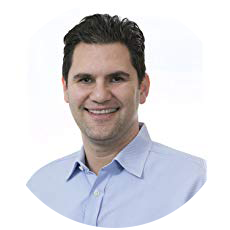
Jarred Kessler
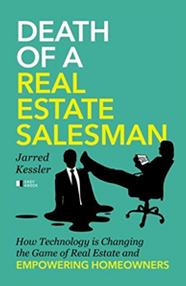
Jarred Kessler is an entrepreneur with more than fifteen years of experience in the financial services industry, where he worked for firms including Morgan Stanley, Credit Suisse, and Goldman Sachs. He is the founder and CEO of EasyKnock, a company that gives homeowners a way to access their home equity without having to move. In Death of a Real Estate Salesman, he explores how advances in technology are changing the traditional role of the real estate agent and empowering homeowners.
📚 Books by Jarred Kessler
Transcript
[0:00:35] Charlie Hoehn: You’re listening to Author Hour, enlightening conversations about books with the authors who wrote them. I’m Charlie Hoehn. Today’s episode is with Jarred Kessler, author of Death of a Real Estate Salesman. Let’s pretend you’re selling your home, you live in a good location, your house is in great condition and you decide to price it competitively at $200,000. How much would you pay somebody to give tours of your house to interested buyers? Would you pay them $12,000? If you think that’s too much then you’re going to love this episode. You see, Jarred believes that there’s a better way for homeowners to sell their homes. Instead of relying on realtors. We’ll soon be able to use technology to speed up the transaction and keep more of the money. By the end of this episode, you’ll learn Jarred’s plan for empowering home owners and disrupting the real estate brokerage industry. Now, here’s our conversation with Jarred Kessler. Let’s begin with your story. Can you tell us the problem that you encountered which ultimately laid the foundation for you saying I have to write this book?
[0:02:09] Jarred Kessler: Yes, happy to do that. The problem I encountered is I didn’t understand in 2017 why there wasn’t a better process to buy and sell a home. What I mean by that is if you want to buy a home right now, the active market which is if you look at the United States housing market is 110 million homes and of that 2% is actively listed in any given time and that 2% is controlled by the real estate brokerage community. If you want to connect directly with an owner and a buyer in order to connect directly, there’s no profits. I started doing some research and I came across that 73% of the people we surveyed because they want an online portal in 2017 to connect directly and that hadn’t happened. I needed to define what is actually wrong with the current process in what the future will be in that process and just intermediation of the residential real estate broker.
[0:03:11] Charlie Hoehn: The book was you exploring and defining that specific problem then?
[0:03:16] Jarred Kessler: Yeah, the book talks about some of the things that people don’t realize like the motivations are not aligned with the people, the respective buyer’s rep and owner’s rep in the brokerage industry, meaning that a buyer’s broker owns the most, the highest price and the owner’s broker wants the seller to pay the lowest price, she’s not in their best interest and that they want to deal to happen quickest, not necessarily the best price. I talk a lot about those dynamics for example and then I talk about what is actually going to change and how homeowners are going to be empowered through technology in the future.
[0:03:56] Charlie Hoehn: Okay, why do you care so specifically so much about this. I mean, maybe a skeptic might look at the title of your book and say, that’s written by somebody who is in real estate and this is just a way for them to market me on their services. Why do you care so much about the problem?
[0:04:15] Jarred Kessler: For solving an outsider, I’ve never been a real estate broker and I watched the distant nation of financial services but the reason I care is I think that homeowners deserve more money in their pocket and they deserve a better way and they should be empowered, it’s their homes. It shouldn’t be controlled by the residential real estate brokers. You know, when you pay 6% on your home and you’re not in control the process and you don’t have accessibility, that’s not fair, there’s 110 million homes in the united states and I feel that the money these people, these homeowners are paying, stolen air pockets so they can go on a vacation for the next 10 years. You know, you could save, the money you save, you can buy 4,500 lattes at Star Bucks, you can buy your wife a diamond ring, the average guy can buy that dream car that he always wanted and I think people deserve that in this country and I think the process right now is not fair, that’s why I want to see this happen.
[0:05:07] Charlie Hoehn: Sure. I’m all for that, I’m with you there Jarred but I want to learn more about you. Can you tell me more about how you came to be so passionate and interested in this particular issue?
[0:05:25] Jarred Kessler: Yeah, that’s a great question. I came from financial services, I worked at Goldman Sax, Morgan Stanley Credits Swiss. From the time I entered the industry, there were rooms full of brokers and not real estate brokers, equity brokers, fixed income brokers and you know, you would hear these expressions, the business is never going to change and this is the way we always do business, they’re such big transactions, people are always going to be human. Over that 17 year period, I watched the disintermediation of those people. Those rooms that were filled with people were replaced with servers and computers and understanding that, I really got a sense of an opportunity and that opportunity led me to start to pay attention and when people that I was friends with or family members would say things like I want to put my house on the market but I’m embarrassed because my nosy neighbors are going to ask questions. Or you know, I want to put my house on the market but there’s 20 houses that have been on the market for 100 days and what’s the point? I realized that there’s people that actually need a better process and that really inspired me to start taking my unique perspective from financial services and applying it and that’s what made me passionate about this opportunity. To create a better way for people that are going through things like this.
[0:06:49] Charlie Hoehn: Yeah. you know, my wife’s mom several months ago sold her house and it was frustrating because we had the sign in the front but the realtor forgot to put it out there for weeks and then the sign was out there for even longer and it made her self-conscious that the house wasn’t selling fast enough once the sign was out there. I feel you, it’s this massive sell right? That you’re making or massive purchase of course but these little things in the process really add up to these big emotional states that the homeowners feel. What is the better process then? I mean, we’ve seen Air BNB and all these companies improve other process or revolutionize these different processes. What do you see coming down the line with real estate?
[0:07:52] Jarred Kessler: Yeah, you know, you have a lot of these emerging companies, you have companies that are resellers like Open Door or Offer Pad where you’re going to come in and they’ll buy your house at a small discount and then they’ll go back and sell them, they’ll guarantee your price within a certain amount of time. Then you have companies that basically do some sort of derivative of the brokerage industry which is you know, a la carte broker, flat feet broker, discount broker, technology to match a broker with an agent, with that consumer like the right agent for you. My company, Easy Knock which I’m the CEO and cofounder of is we connect owners and buyers directly and it’s not for sale by owner because the problem with for sale by owner is, you put your house on yourself, you get some barter by gropers asking to be their broker and you also, you have brokers that avoid you because they know that you don’t want to pay a brokerage fee. What we do in easyknock.com is we ask homeowners where would you want to sell your home? You might not be motivated, you might just be curious. We ask them the price, we have all the information on their home already there, they claim their home profile which has your bill, bedroom, bathrooms, we have the consumer just to take pictures and the two questions we ask again is, what price will compel you to sell your home and how motivated are you? Are you just curious or are you actually actively motivated? By doing that, buyers can come in and bid the owner and the owner can decide if they want to engage with that buyer so it’s not as invasive and the owner can do price discovery, the owner has no days on the market because he’s always in the market, there’s no public spear. And we don’t charge the 6% that the brokerage community charges and we charge somewhere between one to one and a half percent and you know, let’s say the biggest thing is that they all said that we’re bringing control back to the buyers and owners because we’re allowing them to connect directly. You don’t have to call a broker, you have no idea if they’re even making the bid, you have no idea what they’re saying to protect their permission, you’re talking directly to people and that’s the macro trend you know, we believe that Air BNB is the biggest hotel and they don’t list on hotel and Uber’s the biggest taxi company, they don’t own a single taxi. We aim to be the biggest brokerage company without having a single broker because we’re connecting people directly and that’s the macro trend. People want to do it themselves and less sights, 42% of the buyers are millennials and 76% of them prefer not to talk to a middle man or a person, they’d rather do it themselves.
[0:10:28] Charlie Hoehn: I’ve got a number of questions about your company. When did you found the company?
[0:10:34] Jarred Kessler: August of 2016.
[0:10:36] Charlie Hoehn: Okay, fairly recent. Can you take us to the exact moment where you decided you had to start this company. I know you talked a bit about seeing the disintermediation and stuff when you were working with those firms. Can you take us to the moment where you realized this has to be a company?
[0:10:56] Jarred Kessler: Yeah, it was the summer of 2016 and I was thinking about how I really did embrace technology and the example I gave you at financial services and I was kind of always fighting it and I was saying to myself, I really think that residential real estate reminds me a lot of where financial services were 15 years before it and I thought to myself that all of a sudden the idea popped in my head that everybody has a price. Wouldn’t it be amazing if every person had a price, was able to price their home and be able to directly communicate with buyers. The idea all came out of this idea that everyone’s got a price and then it sort of evolved to where Easy Knock is today. Just like, I was thinking to myself that you know, you just shouldn’t be just limited to the active market because everyone has – the home is your biggest asset and everyone’s curious and that’s what happened, it just popped into my head one day and then the rest was history.
[0:11:58] Charlie Hoehn: How did you test the idea before you went about. I take it, it’s a site and it’s called Easy Knock? Okay. While I’m pulling that up, how did you test out whether people would actually use this service or not?
[0:12:16] Jarred Kessler: Yeah, we’re actually launching our beta in August, we’ve been building it for quite a while now but we’ve been casting for the last seven, eight months through Facebook mostly, ads. Different messaging. Would you like to discover the hidden market of your home? Because I explain it, you can put your house on the market without being in the market. You could be anonymous. Then we talk sometimes about messaging around what you’re stating by doing it. Control and accessibility and then also about brokers won’t be here very much longer. Well when people click on those ads, they gave us their address and by doing that, it’s validating to us that they’re actually interested in our product and we have a very – I think we have a seven dollar and 50 cents customer acquisition cost which is in net world, it’s very good.
[0:13:10] Charlie Hoehn: Yeah, that’s fantastic. We are very competent by number one, talking to industry professionals. People that live in this communities that this is something they want. The whole do it yourself culture, that’s been around for a while, those people want it. People that are in high demand, knows to approach, where the homes are to sell themselves. There’s no need for them to pay a broker. They just need a better platform. We’ve got in that validation through Facebook ads I would say is the short answer. Author Hour is sponsored by Book in a Box. For anyone who has a great idea for a book but doesn’t have the time or patience to sit down and type it out, Book in a Box has created a new way to help you painlessly publish your book. Instead of sitting at a computer and typing for a year, hoping everything works out, Book in a Box takes you through a structured interview process that gets your ideas out of your head and into a book in just a few months. To learn more, head over to bookinabox.com and fill out the form at the bottom of the page. Don’t let another year go by where you put off writing your book. Interesting. I want to go back to your book. Let’s talk about Death of a Real Estate Salesman. If you had to choose one story from the book that listeners would remember, what would that be?
[0:14:50] Jarred Kessler: You know, I gave a story about a guy named George Kale, he was a fictitious persona and the story with George Kale was that him and his wife were selling their home and they tried to sell their house themselves on for sale by owner and a broker came in and invited him and convinced that he had to sell his home and he filled it at a ridiculously low price. The point of this is that, two weeks later, about five houses in the neighborhood sold significantly higher than that and basically, the broker was interested in just getting the deal done and what George experienced is what a lot of Americans experience is that it’s not really consumers are not really rewarded for waiting from the broker’s perspective but you know, if you look back to sort of the economic example a couple of years ago, they do the study and they said, if you wait all week to sell your house for $10,000 more, it saves you $10,000 which is very significant to the average American. To a broker, it is a $125. So they are more interested in selling it now and we took that a step further and I’m talking just to give the example of the story with George is a for sale by owner process was annoying because he was harassed and the brokerage process was just about getting it done and if you would have been in control of the process and did a pass to do that, that would have been better. And the other thing we talk about is if you’re not comfortable with the transaction management, the people that are really not valued enough in the process are the real estate lawyers and at the end of the day where a broker does and we talk about this a lot in the book is they used to help you expose your home, tell you what your home is worth and then transaction management but in reality and this is what we highlight in the book, exposure is now done through your computer. You hit a button and in five seconds you can go on Zillow, MLS, wherever you want to be. Price discovery? There’s all these emerging companies out there like Quantarium, House Canary where they tell you what your house is worth with sophisticated machine learning technology. So again, you don’t need a brokerage to tell you that and by the way, when Edinox are launching, you literary can put your house on the market without the other mark and you see what people are willing to pay. And the third is the transaction management which is not that brokers are really allowed to do that, that’s really a lawyer’s job and the lawyer at most gets paid $1,500 in the process while a broker gets paid, they can be making more than six figures depending on the price of the house. It’s a very strange dynamic that doesn’t make sense. The lawyers go to law school, they go through a lot of training. They do a lot more work and I’m not knocking brokers but you don’t have to go to graduate school to be a broker.
[0:17:52] Charlie Hoehn: So do you see brokers completely going out of business or do you see them just tailoring to the high end markets just like in New York City, those multimillion dollar homes, where do you see the future of brokerages going?
[0:18:08] Jarred Kessler: I think the same way Uber repurposes taxi drivers. I think that real estate agents are going to be repurposed. Now the problem with real estate agents are there’s too many of them. In Manhattan last year there are 26,000 brokers and there are 12,000 transactions. So you ultimately get a lot of – but 93% of the transactions are done by brokers. The other 7% are for sale by owner. So what I think is going to happen is that you are going to see – Yeah, sorry. Yeah, it’s very surprising.
[0:18:38] Charlie Hoehn: Wow, I had no idea it was that disproportionate. Is it because we’ve grown accustomed? In not to veer your line of thinking off track Jarred but is it because we’ve grown accustomed to that is the process or do brokers make home owners scared to sell it on their own or do home owners get overwhelmed, is it a combination?
[0:19:03] Jarred Kessler: So you hit the nail on the head. One fact that a lot of people don’t know is the National Association of Realtors, NAR, is the second biggest lobby group in the United States. So they pay for messaging, they took their budget from 37 million to 65 million from 2015 to 2016. Secondly, a for sale by owner in 1985 was 25% of the market and now it’s 7% and the reason for that to answer your question is they scare people. There’s not enough people talking and that’s one of the benefits of my book is it is one of the first books that really called the brokerage industry out. Secondly, they’re in your face more now with companies like Zillow, Trulia, Redfin, they constantly bring you to the broker. So if you’re looking at a property in the old days you would say or knock on someone’s door and then you go to these sights, people pay for advertising and they constantly bring you to the broker. So that is actually the biggest reason for it and then to answer your question you asked me before that is what do I think is going to happen. I think the more it is missed priced. The rest of the world, the brokerage rate is around 1%. United Kingdom is 1%, Australia is 1% pretty much everywhere you go it’s 1%. So the United States is not sustainable especially as you have technology exploding, they just have such a hold on that 2% of the active market. The second thing is that they really push hard in terms of creating fear. So “You need us, you can’t do this without us” so I think that’s going to change. So I think what brokers get paid is going to get lower and I think that they are going to become more of real estate, I would say, concierges because at the end of the day, people don’t want to necessarily show their homes. So that people would just show their home and rely on them for questions but I don’t see them in the traditional sense. I think they’ll become more sort of concierge full service and maybe help you with other things. If you’re going to a town they’ll be for service, you know “this is where you go for soccer or this is the doctor that you should go to” those type of services like more concierge services than real estate brokers but I definitely don’t think that my five year old son will be using a real estate broker.
[0:21:14] Charlie Hoehn: Right, so tell me more about your book. I am a person who hypothetically speaking, I own a home I’m interested in selling it, I get the argument immediately that hey I don’t necessarily need a brokerage firm or I don’t need a broker. I can go with Easy Knock. What are some of the other things I’m going to learn by reading your book?
[0:21:41] Jarred Kessler: Yep, you learn about the collision between the real estate broker and you understand why the commission rate is so high. We talked about pumping up the volume, we talked about the competing of agendas. So those are some of the things that we talked about already. I also give a perspective of some of the horror stories so people are more aware that they can avoid it. We talk about the future, some of the technology that’s out there. And one of the more fun things in the book is we talk about a lot of these misconceptions throughout the book. For example in reality the lawyer does most of the work and the misconception is the agent holds your hand during the entire process right? And that’s really it, we talk about the discount brokers and the flappy brokers. So you understand all the different types of brokers. What SFBO is and why the SFBO failed and then one of the fun things in the book is we talk about this intermediation in other industries. So we show, if someone is just interested generally in technology, forgetting about now being a home owner, if you are interested in technology we give a lot of parallels to this intermediation in other areas. We talk about Uber and AirBnB and how all these companies happen and just robo-advisers how we just intermediated – not we but financial advisers are being disinter-mediated by computers or insurance and then we talk about establishing a better process by eliminating the pain points and understanding what the pain points are.
[0:23:17] Charlie Hoehn: Great, now I’m curious your book has been out for a little while, can you tell us about your readers? Who have been some of the people who’ve maybe written into you and thanked you for your ideas?
[0:23:35] Jarred Kessler: You know there’s been a really amazing cross section of people that read it and to be honest with you, the book is titled Death of a Real Estate Salesman. It’s definitely going to rub the real estate agents the wrong way and we understand that. So I was expecting a lot of the reviews to be pretty negative because of what we talked about, the messaging is there. Some of the agents can be very aggressive and the day I put out the book I had about 19 reviews. And I would say of the 19 all of them are overwhelming that these people are feeling a sense of excitement and empowerment that the industry needs to change and we, I, me, Jarred hit all sorts of the points of what’s wrong with the brokerage industry and what the future of it is going to be and those themes are very encouraging for me and that was pretty much consistent with most of the reviews.
[0:24:36] Charlie Hoehn: I think it’s a great title and I would frankly rather see a polarizing title than one that tries to make everyone happy. Have you gotten any feedback from real estate agents where they’re really upset or they think you are blowing smoke?
[0:24:52] Jarred Kessler: I think that we occasionally hear from real estate agents that you can’t cheap out on selling your house and they just don’t understand what we’re trying to do and specifically to the book no because there is nothing in my book that, it’s not an opinion. They are all facts. I’m giving the dynamics and the agendas and the way I’m just writing it out and I think one of the great things about the book is like I said before is no one has really laid it out before. I think the consumers deserve to know that if you are going to buy and sell a home, they should read the book just to understand how you should approach the agent and be aware of what to look for because people don’t understand that the agent wants you to just get the deal done. They don’t really care about getting you the best price.
[0:25:42] Charlie Hoehn: Right absolutely. So Jarred what does the rest of this year look like for you? Are you just focused on Easy Knock? Are you doing speeches or marketing your book more?
[0:25:56] Jarred Kessler: Yes. So tomorrow I am speaking at a panel at a real estate technology conference. So we do a lot of that and we are launching Easy Knock so that is going to be busy and I invest in technology companies as well too. So I spend a lot of time working SEO but the main focus is we want to create Easy Knock to be one of the biggest real estate technology company. We believe that everyone in the US should be empowered to connect directly and I really honestly believe that. So I have to make sure the success to that and part of that is just spending time marketing our company so people know it exist.
[0:26:30] Charlie Hoehn: And if you are going to write a follow up book what would that book be?
[0:26:34] Jarred Kessler: Probably Death of the Financial Adviser and I think it could be in the same sort of theme as what I did but highlighting the value and the pain points involved in using a financial adviser. So I think it would be fun to write different themes throughout the disintermediation and playing on Author Miller’s wonderful title.
[0:27:03] Charlie Hoehn: Absolutely. Do you have any parting advice for aspiring authors? People who are in industries maybe similar to yours or not who are thinking about writing a book?
[0:27:16] Jarred Kessler: I mean my advice is always that it’s better to be scrappy than smart and part of being scrappy is just being persistent and writing a book takes a lot of persistence and patience. So the ability you have to just stay with it is very important. So if you want to do it, don’t talk about doing it. Do it.
[0:27:39] Charlie Hoehn: Absolutely, Jarred how can our listeners follow your journey with Easy Knock and potentially connect with you?
[0:27:48] Jarred Kessler: Yeah, sure so our website is www.easyknock.com you can go up and you can sign up, you could be a part of this beta test, get on our newsletter. I am on LinkedIn, Jarred Kessler and you can connect with me and I would love to talk to anyone that wants to know more about Easy Knock or Death of a Real Estate Salesman.
[0:28:13] Charlie Hoehn: Awesome. Thanks so much for being on the show Jarred.
[0:28:16] Jarred Kessler: My pleasure, thanks for having me on the show. I really appreciate it.
[0:28:24] Charlie Hoehn: Many thanks to Jarred Kessler for being on the show. You can buy his book, Death of a Real Estate Salesman on Amazon.com. What did you learn in this episode? Let us know by leaving a review on iTunes. You can follow us at Facebook.com/authorhour or on Twitter @authorhourpod. Thanks again for listening to Author Hour, enlightening conversations about book with the authors who wrote them. We’ll see you next time.
Want to Write Your Own Book?
Scribe has helped over 2,000 authors turn their expertise into published books.
Schedule a Free Consult