Nir Kaldero: Data Science for Executives
Read the full transcript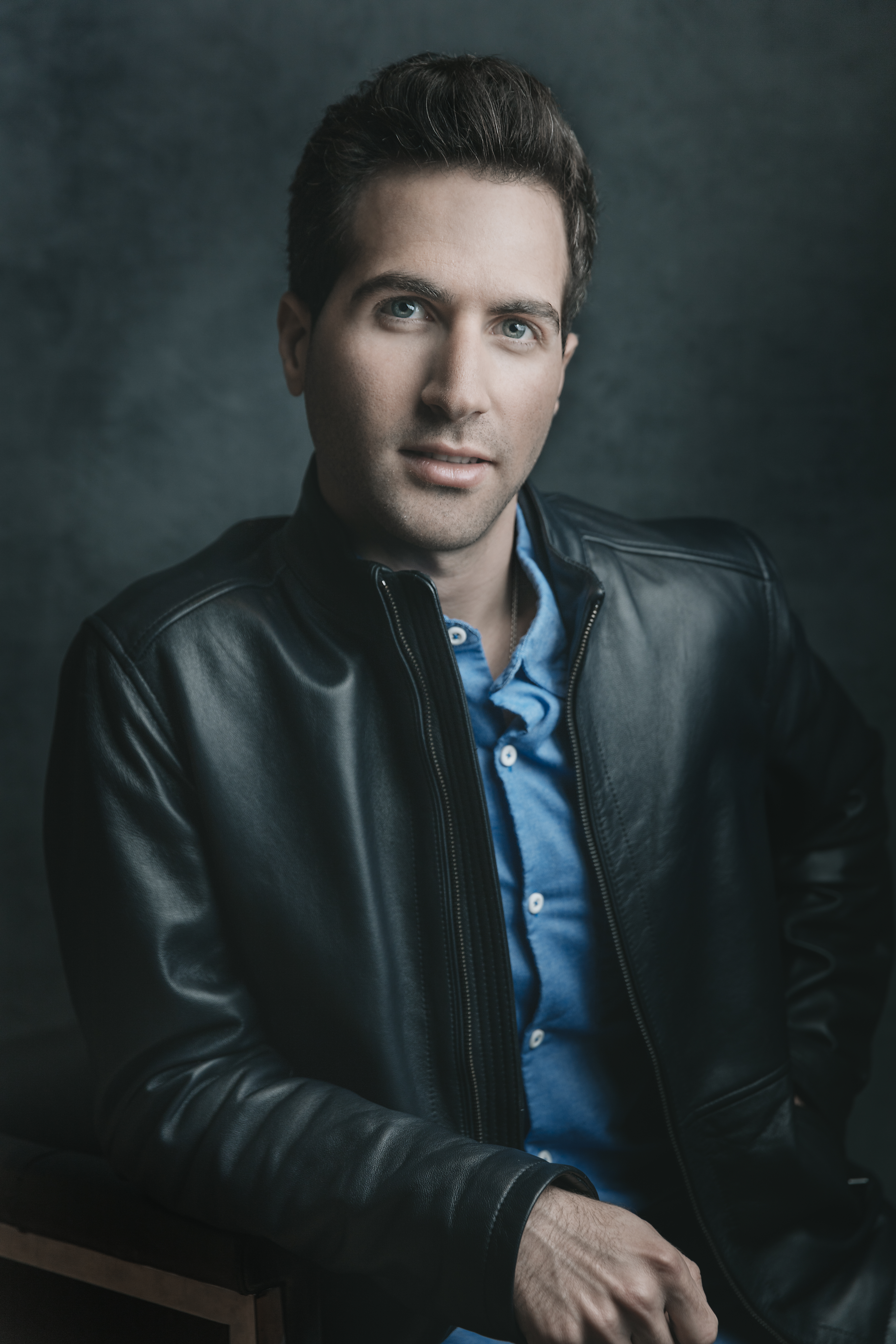
Nir Kaldero
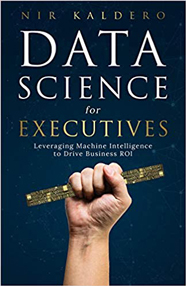
Nir Kaldero is a data science leader who has trained C-suite executives from Fortune 200 companies to transform their organizations into data-driven companies. He created GalvanizeU's graduate program in data science and served as Head of Data Science and Engineering and Vice President at Galvanize. His background spans service in the Israeli Defense Force and studies at Berkeley, and he has served as a Google expert and mentor and an IBM Champion. He is the author of the bestselling Data Science for Executives: Leveraging Machine Intelligence to Drive Business ROI.
📚 Books by Nir Kaldero
Transcript
[0:00:19] CH: Author Hour is about answering one question: How can you get the best ideas from great books without spending so much time reading? Every week, we take you behind the scenes with a new author, about the most important points in their book. So if you love to learn while you're on the go, you’re in the right place. All of our book summaries are 100% free and we do more than a hundred episodes every year. So please subscribe to and review Author Hour on iTunes. Today’s episode is with Nir Kaldero. author of Data Science for Executives. If you’re like me, you get a little bit antsy when you hear ‘artificial intelligence’, right? You got people like Elon Musk who get freaked out at the idea that it could really disrupt and hurt civilization and that’s why I wanted to talk to Nir. Nir is the Head of Data Science at Galvanize and he’s trained a bunch of executives from Fortune 200 companies on how to use machine intelligence and data science to really transform their companies and bring a positive impact into the world. We spent the first part of our conversation talking about a lot of those myths around AI. Then we spent the next part of our conversation talking about what happens to the companies who really incorporate AI and data science into how they operate. What’s going to happen to these Fortune 500 companies if they choose to do it or to not do it? It’s really interesting. That being said, here is our conversation with Nir Kaldero.
[0:02:25] Nir Kaldero: I started working in the field when I joined the Israeli Military Service at the age of 18 and what I did was leveraging data to increase efficiency and pretty much save lives. I truly saw the impact and power of leveraging data to make a positive impact on the world. You know, data science, machine learning and artificial intelligence is a very new field and when I first heard about it around six to eight years ago, I felt I can make an impact and help reshape this field, especially through education, through science, through technology by leveraging my experience that I gained to really make this world a better place and explain to people what are the benefit of using data and modeling techniques and how it can actually extend to every part of their life.
[0:03:24] CH: Excellent. Your book is Data Science for Executives. You’re trying to reach the C level people at companies, the decision makers. Let’s start by addressing some of maybe they myths or myths or misconceptions that they have about artificial intelligence, machine intelligence. When you go in to these meetings, what are some of the things that they think that you have to dispel?
[0:03:59] Nir Kaldero: Yeah, there is many of these things, especially around people truly believe and think that artificial intelligence is a technology that will replace us, some people will think it’s going to – the robot will conquer humanity and destroy the world. That’s a really big misconception about –
[0:04:20] CH: Really? I want to press you on that Nir because I mean, two very smart people have said it’s a potential existential threat. Stephen Hawking and Elon Musk, why is that a myth?
[0:04:34] Nir Kaldero: Long conversation but I try to make it short. So working closely with you know, the largest technology companies, the one that actually creates all the chips and the technology infrastructure to run, you know, machine learning, data science and AI. I see that they build this technology with three principles in mind and the purpose, all about transparency and ownership. If you really think about the purpose when you build this technology and hardware specifically. You see that companies like IBM, like Dell, like Intel, like Nvidia build this hardware with the purpose to augment our human intelligence and not necessary to replace us. We are living in an era of wealth of data where our brain cannot process all of this vast amount of data anymore. We are in era of human plus the machine. You can really think about AI and all of this kind of sophisticated modern techniques as a brain helper. AI is a tool. It’s a tool that is here to service us, to augment our intelligence, to help us make better decisions on a daily basis, not necessarily to replace us. We need this technology to basically digest and process the vast amount of data that we have, that we get as an input on a daily basis and crunch it down and shrink it to a much smaller subset that we, the human can actually read, remember process and act upon. Currently, with all the data that we have that we tried to process, we cannot make anymore smart decisions. Again, looking at the purpose of the people and the companies that are building the technology. You see the purpose, the true purpose here is to really augment the human intelligence and not to replace us. Give you an example. Quantum computing is a new trend that comes. Quantum computing has a good side and a bad side. The good side is that now, we can solve problems that we could not find solutions before. Even with super computers. Think about for example, like drug discovery. There are so many drugs out there, people have different preferences and different reactions to certain drugs. How can we find the best optimal drug based on everyone’s conditions and all the drugs available? Even super computers today cannot solve that, this is kind of like the binary approach. Quantum computing is moving away from this zero and one binary approach to think about an infinite interval between zero and one. This very strong computational power can actually find an answer to what drug to recommend to a specific patient. Everything about finance, everything about drug discovery, healthcare issues, quantum computing can actually provide us an answer to it. But quantum computing also has a dark side. For example, with enough usage, quantum computer can encrypt The Pentagon, it can encrypt its system. When you know, companies like IBM and Google and Nvidia, actually building quantum, they’re thinking about this anecdote about this kind of like misbehavior and you know, kind of like situations where the public can actually misuse the technology and looking at this anecdote, they put barriers to the technology. The technology cannot and will not, especially at this point, even looking like five to 10 years ahead. Will not be able to either outperform us or replace us because the solutions that the market but the enterprise and the public gets are bounded to the idea and the purpose to augment our human intelligence and not try to replace us. Also, you don’t want to replace the human intelligence and judgment because machine learning and data science is purely looking at past behavior and data. You know, we have way more than that. I do not think as a data scientist, although I’m always trying to tell people like, you should always leverage data to make data driven decisions that do not think that in this process or equation, we should ignore our past experience and even our gut feeling. The entire idea here is to crunch a vast amount of data and present us with much smaller optimal size that we can actually act upon and make a decision with respect to that. Not sure I do, the mission is not here to replace us and make the decision on our behalf.
[0:09:13] CH: Got it. All right, Let’s touch upon this Nir. You’re trying to reach executives with this book and I’m sure any of them listening appreciate the demystifying the potential dangers. Tell me what kind of companies do you really want to benefit from the teachings in your book? What type of companies are you really hoping to reach?
[0:09:39] Nir Kaldero: Yeah, I think every company’s size can actually benefit from trying to figure out how to deploy and implement artificial intelligence to serve their client, their user better or even to enhance their operations. But you know, to your question, I think that we are in a crucial time in history where I think that incumbent companies should act right now today and to really transform themselves to become not just a data driven companies but also a model driven enterprises. I truly believe that if the transformation will not happen in the next, let’s say, one to three years, this companies will basically vanish from the world. I think they will see their market share eaten up and you know, competition and speed of change in this forward industrial revolution is really exponential.
[0:10:33] CH: Can you give some examples of what you think could happen over the next few years. You just said some of this companies are going to vanish. Give an example of how this might play out one company who doesn’t do anything and one company who does incorporate machine intelligence.
[0:10:48] Nir Kaldero: Yeah, let me present to you, I’m a data scientist so let me present to you some data. I typically ask executives in the workshop if they know what is the life expectancy of a Fortune 500 company today. How many years do we expect a Fortune 500 company to survive in the index. Give you some data. In 1955, the life expectancy of a Fortune 500 company in the united states was 75 years. It means that executives could actually, you know, sit very comfortably on their chair. In 2015, it dropped to 15 years and today, the life expectancy of a Fortune 500 company is around eight years. It means that if change will not happen immediately, these companies will not survive. Now, let me give you kind of like an idea about the companies that they work with or you know, what I call incumbrance. This companies are part of obviously, you know, fortune 500 companies, you know, some of them are 185 years old. Just think about it. They employ between, you know, 60,000 to 400,000 employees globally. They generate around 240 billion dollars every year, if you think about it, it’s a one billion dollar every business day. Think about how much time and how much effort and how much money needs to go in to this initiative to really transform this gigantic beast. I truly believe that companies today can transform themselves quickly. Just because of the large size and globalization, it might be a little bit you know, it might take more time. I think we are already in a point where it’s late in the game, especially, you know, look at companies like Facebook, Tesla, all of this like data driven, Apple, all these data driven companies that are basically growing and eating market share from other companies that have been doing and been in this business for many years and I truly believe that you know, if incumbent companies will not be able to transform themselves immediately. They will not be able to survive and compete within the competitive landscape of this fourth industrial revolution and with all of this like tech giants.
[0:13:05] CH: Can you list again the leaders in the space, the companies that are really at the forefront of doing this right in growing because of it. You said Facebook, what were the others?
[0:13:17] Nir Kaldero: You know, companies that are very highly data and model driven companies are Amazon, Facebook, Tesla, Google, all of these like really big, like tech giants that were born very much –
[0:13:32] CH: Well, are there any companies that aren’t technically tech companies but are following in the footsteps of these tech giants. Maybe they’re in the finance industry. Yeah, let’s talk about some of those companies.
[0:13:48] Nir Kaldero: Without disclosing names because I’m working with them I can tell you that – there are many banks in the US that are moving rapidly to become kind of like the model driven enterprise that I talk about. There’s a lot of healthcare companies in the United States, especially relative to Europe, relative to companies in Japan for example. That are really catching up with these trends but again, they just started the journey. Maybe a year, two years or three years ago, they are gigantic and the transformation takes time, you know? In general, this initiative of becoming, you know, a data driven and a model driven enterprise is not an easy one. I truly believe that organization can transform themselves, it just a matter of like, how much time it’s going to take them to really survive.
[0:14:41] CH: How much time, and they need some shepherding, right? They need a sherpa like yourself to guide them through this process I imagine.
[0:14:51] Nir Kaldero: There are no guiding principles or kind of like, rubric or a playbook, how to become a data driven and a model driven enterprise and what I did in this book is try to give them the guiding principles, definitely not the playbook of how to start the journey. Harnessing data to become a data and model driven enterprise is not an easy one. It takes a lot of like, effort and change mindset, so I try to give them the habits, the tools, the principles, hopefully they will take and make their own with respect to their own culture, their own mission, the organization, their own organization goals to really make this transformation and journey successful.
[0:15:33] CH: Yeah, let’s touch upon those Nir – I don ‘t want to give way too much of the book because I mean, anybody who is interested in data science and how it could impact their company, you should really just pick up the book and check it out. Maybe give a quick overview of some of the principles that you talk about or some of the workflow and change management stuff that you talk about?
[0:15:55] Nir Kaldero: Yeah, you know, when I typically talk about AI and data science, it is important to kind of like understand the workflow. What is a data science workflow and I typically, the workshop try to basically explain to executives, what are the steps that are happening within this data science workflow. Not because I want them to become a data scientist or a scientist in general. I really want them to understand what is the expected contribution and responsibilities within each of the steps that they should know about? For example, if I look at the overall data science workflow, I think there are like four major steps and the four major steps are, ask, the first thing is you want to ask the right questions that can be solved by leveraging data and then you want to acquire the data, then you want to analyze it and then you want to act on it. If you really think about it, the act phase is mainly driven by business people, the acquire phase is collaboration between you know, some business people and some technical people, the analyze phase is all about you know, business people like data scientists and machine learners and engineers. Act phase operationalizing all of these problems is really all about, you know, collaboration again between business and technical people. If you really think about the change management required for implementation and operationalizing data science project to realize the ROI, it’s a really a collaboration effort between business and technical people. Which is a completely new thing to the world. You know, if you think about how business people would make decision in the past an implement project, it was mainly driven by executives and senior leaders. Today, the participations of technical people, especially data scientists and engineers is part of this new change in management and executives and business people have to start figuring out how to involve them in the process to actually operationalize all of these projects so the organization can actually realize the ROI behind it.
[0:18:01] CH: Nir, I want to talk about what it’s like to work with you. Let’s say I’m an executive at a Fortune 200 company. I hear this and I freak out a little bit because it’s stuff that I’ve heard before but I’m realizing, wow, we are late in the game and this could actually, if we don’t address this, this could shorten our shelf life on this Fortune 500 company list. What is it like from start to finish when we hire you and work with you.
[0:18:31] Nir Kaldero: Yeah, typically, you know, I try to first and foremost try to explain them what are the current and future trends in AI machine intelligence so they understand what the space be operating and how the frontier line looks like and then I’m trying to basically help them figure out why and how they should start transforming their organization to become data and model driven enterprise. Especially looking at you know, these six principles that have been iterated many times and so companies successfully act on. And then you know, the second part here is to really or maybe the third part here is to talk about the data driven journey and try to demystify what is machine learning. How your organization can benefit from machine learning. Also, understanding the data science workflow and their contribution and participation within each of the phases within this workflow. Obviously, you know, at the end, I typically write a very tailored case study that is highly tailored to their type of business problems and the data they have and try to showcase them and guide them through these data science workflow so they can understand what is expected from them, how they can develop the mindset and the critical thinking within each of the steps to make sure that the project is going in the right direction and the organization can really benefit from leveraging data and modeling techniques to basically innovate.
[0:20:03] CH: I know a lot of the companies that you work with has to remain confidential but are there any results that you’re particularly proud of or an impact within an organization that you’re really thrilled about that incorporated these learnings about machine intelligence.
[0:20:23] Nir Kaldero: Without saying names, you know, look at Fortune 10 companies in the United States, these are gigantic companies. When I started working with them around three years ago, there were some companies that had zero data scientists or maybe one data scientist. Again, for a company that generate around 200 billion dollars a year, that was a scary moment for me to hear that. And now, you know, after almost two years and they have an army of a hundred data scientists with more than like 250 hardcore machine learning projects that have been implemented and they are benefitting from all of that and I definitely see how these companies involve and becoming you know, not the leaders, right? They’re now innovative, now they can actually create solutions and products that will take the organization to the next step. Definitely be proud of that.
[0:21:20] CH: That’s awesome. Well, this has been really interesting. I want to sort of wrap up our interview here with a couple of more questions. The first one is how can our listeners who are interested in learning more from you or connecting with you, what’s the best way for them to either get in touch or follow you?
[0:21:39] Nir Kaldero: Yeah, you can always like feel encouraged to reach out to me. There is a bunch of material on my website, there is a lot of stuff on my LinkedIn that I post pretty often. So you know, feel free to reach out and there’s also a Facebook page that I will try to, with a little time that I have to maintain. And you know, if you are really curious about you know, data science and want to transform your life or your career to become a data scientist, I think Galvanize is a really great place to start the journey. There is tons of information and tons of processes online as well.
[0:22:14] CH: Yeah, the website is Galvanize’s website or your website? I didn’t catch that.
[0:22:18] Nir Kaldero: You can do both, I think on both, we have enough information about how to start the journey to become a data scientist.
[0:22:25] CH: All right galvanize.com, excellent. All right, it looks like you have branches all over in Austin, Boulder, Denver, New York, Phoenix, San Francisco and Seattle, that’s great. My final question for you Nir is, give our listeners a challenge. What is one thing they can do from your book this week that will have a positive impact?
[0:22:50] Nir Kaldero: Yeah, my true hope is that they will read the book and then go to the appendix and in the appendix, there is, the data science work sheet and that I typically hand to executives and this data science worksheet will guide them through the steps and actions on how to start the journey and I want everyone to finish within the book and feel that information, go to their office and enterprises and start leading a change. The journey is to become a data and model driven enterprises not easy but it’s the only path in a way to grow and survive in this fourth industrial revolution.
[0:23:32] CH: The book is Data Science for Executives, Nir, thank you so much for being on the show.
[0:23:38] Nir Kaldero: Thank you so much Charlie.
[0:23:40] CH: Many thanks to Nir Kaldero for being on the show. You can buy his book, data science for executives on amazon.com Thanks for tuning in on today’s show. If you liked what you heard, here is what I want you to do next. Open up the podcast app on your phone or iTunes on your computer and search for “Author Hour with Charlie Hoehn” and then click “ratings and reviews”. Take 10 seconds to rate this show or leave a review. It is a small favor but it’s really the best way to show your support and give me feedback and if you know someone else who’d love Author Hour, take another three seconds to text them a link to this episode. We’ll see you next time.
Want to Write Your Own Book?
Scribe has helped over 2,000 authors turn their expertise into published books.
Schedule a Free Consult