Philip McKernan: Episode 196
Philip McKernan
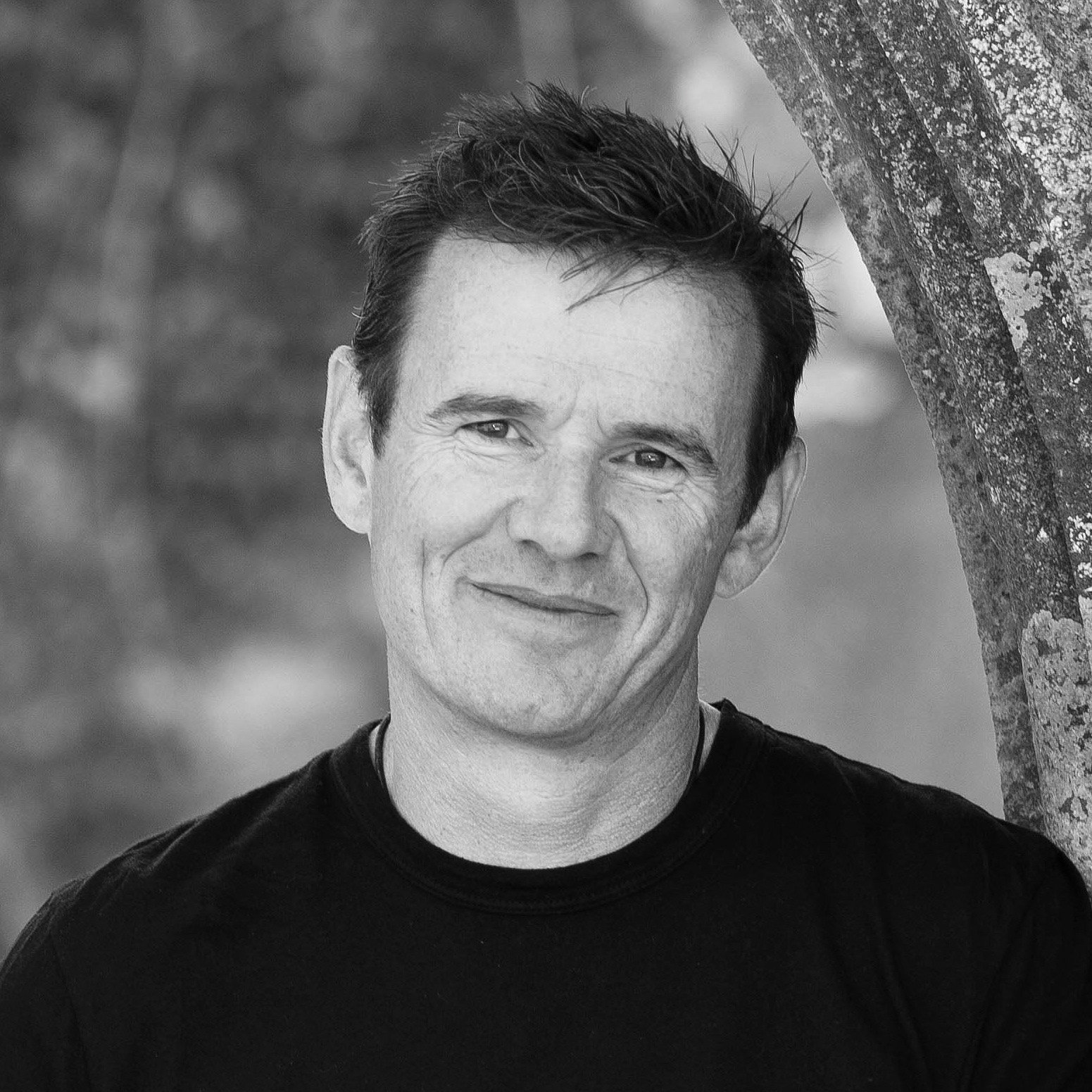
Philip McKernan is an international speaker, filmmaker, and coach from Ireland who helps entrepreneurs and high performers uncover their deeper purpose and unlock their potential. He is the founder of the One Last Talk movement and his documentary work has explored the transformative power of generosity and service.
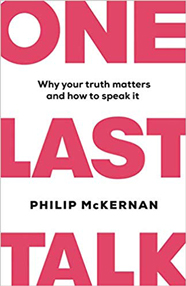
📚 Books by Philip McKernan
Transcript
Philip McKernan: And what we do in society is we mix our passion with excitement, and we're now getting passion stickers and slapping them on anything. We're slapping them on wine, we're slapping them bumper stickers on cars, Harley Davidsons, hiking, whatever these things are. And my ask is, are they really the passions or are they just excitement? An excitement runs out, but passion doesn't.
Charlie Hoehn: Hey everybody, it's Charlie Hoehn, the host of Author Hour where I interview authors about their newest books. And today's episode is super special. This is my favorite book I've read all year. It changed my life, truly. Philip McKernan's One Last Talk. And it's about speaking your truth. The question is, if you were about to leave this planet, what would you say and who would you say it to? I was truly blown away by this book. I read the book in less than two days, I cried for 50 pages straight because I was so moved.
Philip McKernan: Yeah, I'm surprisingly nervous. It's a sense of anticipation, genuine, genuine excitement, and also a deep level of insecurity that is very old within me that the world won't want us, which I know it might be irrational and all that, and so on and so forth. But the reality is, it's there, and in an essence, I think that goes back to the world not wanting me. I'll just be honest, that's there, it's not significant, but it's still playing a little role. But I absolutely believe in this book. I said to somebody recently, they asked me, they said, "Well done on the book." And I said, "Yeah, I'm really proud of it."
Charlie Hoehn: One of the things I've wondered with this book is, how many One Last Talks have you given?
Philip McKernan: One, and the reality is coming into this book, working on it with Tucker Max when we were going through this book and when we were struggling to really outline, try to get this concept on paper, which was a hell of a challenge. Tucker said, "By the way, how can I get my hands on your One Last Talk?" And I said, "Oh, I haven't done it." And before I finished the last syllable out of my mouth, he just goes, "Well, that's complete bullshit." And I said, "Hang on a second, hang on a second."
Charlie Hoehn: How did this originally really begin? Because every time I explain the concept of your book, I've explained it to multiple friends of mine and they've either started tearing up crying at the concept or they say they get chills. So how did this begin?
Philip McKernan: I don't think I've really fully stopped, Charlie, really to break it down. Like where did it start? I think I start a little bit more in a more advanced place, and that is out of, to some extent, frustration as I do public speaking. I don't do a lot. A lot of people assume for whatever reason, I do a ton of public speaking, I don't. I don't want to get on the tour, I don't want to be on the road all the time. But one thing I did witness as I traveled the world and spoken in various different countries in different cities around North America, I did see some things that emerged that I found that were frustrating, were unnecessary, and we're not necessarily serving humanity.
Charlie Hoehn: I love that you noticed that about speakers because I've noticed it as well. I do some speaking, and I've seen it in myself too at times, and I think a part of it is you get incentivized to behave that way a bit and you feel like, "Oh, this is what they want." But it makes you misaligned from your truth. I actually wrote down in your book on page 62, you had this thing that you said to somebody. You were pointing out why he didn't have the right to be a speaker, almost. You said, "You see down there, there are gamblers, drug addicts, people who don't even know yet they will be gamblers are drug addicts, people recovering and just on the verge of moving back into the darkness, and you're sitting here waiting for the perfect story. Until you make this fully about them, you have no right to be a speaker."
Philip McKernan: And again, Charlie, I'm not sitting here in a high perch preaching and saying this is happening to every other speaker, not me. the reason I can sense and feel is, as I've witnessed it in others and I also witness it and feeling myself. And it's probably arguably my greatest fear, is that I've become very disconnected, I start to believe some sort of hype. And I believe that we have a responsibility as speakers and as public figures, if you want to call it that. And also, we all have a responsibility as people not to elevate people onto a pedestal because it's a twofold thing. One, is we allow it, and two, is the audience do it.
Charlie Hoehn: Why is it that we're so taken with vulnerability, and why do we resist it so much if we know that it can give us the thing that we seek the most, which is to be seen, understood and connected to others?
Philip McKernan: I think we're afraid of rejection. I think if we allow the world to see all of us and they reject us, then that there's nothing really left. In the same way that a lot of people will come to me, and I don't think I've ever shared this with you, Charlie, but it's a weird one that people will travel thousands of miles, and in some cases pay thousands of dollars to sit in front of me for the clarity that they don't actually want. People will go, "What the hell does that mean?" If I'm going to engage in a coaching capacity with you, I want the clarity that I'm seeking. I want to get my money's worth here, type of thing.
Charlie Hoehn: I feel like this episode could be five hours long because I just want to dig into like so many different things you're saying. I wonder how much of that is the human experience, versus how we just disintegrate our communities and so we're always feeling like, "Who do I belong to?"
Philip McKernan: Yeah. And community is an interesting thing. I think we need to understand and take a step back and start to really understand what really community is because a lot of us think of Facebook group as community. It can be. It can be a part of the community, but it's not the essence of community. And I'm not suggesting I have a community that's better than anybody else's. The one thing I will say is our, what we call as our clan, and I know clan is a very sensitive word. Clan an old Celtic terminology to talk about little small villages and communities.
Charlie Hoehn: Let's jump back to what you said earlier about playing it safe, basically. Like, "This business failed, but it wasn't really my passion." You went through something along these lines, right? Like your career before, what you do now, you were working in real estate, I believe.
Philip McKernan: Yes. And before that, wine, and before that, coffee, or vice versa,
Charlie Hoehn: Which on the surface, all of those things are like, "Wow, Philip's really doing his thing."
Philip McKernan: On the surface, that's definitely how it looked. And on the surface, that's essentially what I told myself as well.
Charlie Hoehn: How long did that go on for? And when did you start to wake up?
Philip McKernan: Until I was about 37, I felt my entire working career was trying to find what it is I wanted to do, trying to show up and prove to the world that I matter. You know, just a lot of trying. And also, I had this story that some people might still hold onto and believe that it's going to serve them. I don't, I believe it's a fundamentally flawed story and it certainly was for me and many people I see. And that is, when I make enough money, then I can go and do what I want. But I felt for me, that everyday that I betrayed myself doing something I didn't want to do that was out of alignment with who I was, that's an extra day that the universe almost looks for payment.
Charlie Hoehn: Let's talk about your book now. I will reiterate what I say in the introduction to this episode: This book changed my life. It is my favorite book of 2018. I read a lot of books, I've talked to a lot of authors. I recommend everybody who listens to this episode to get multiple copies because you're going to want to give them to people that you love. I read your book in less than 48 hours. From page 60 through page 100, could not stop crying, in a very good way. And was so moved by this book that I came back from a business trip we were on, and my wife was off with her friend for the weekend, luckily.
Philip McKernan: Well, first of all, you're very welcome. But the other thing I really want to say, and I think I would be doing everyone a disservice if I just accepted the thank you and left it at that, but I absolutely believe the one caveat to this book is, the book is only as good as the reader. In other words, the reader has got to be willing to go there and to read the book and go through the process. And I assure you, if you're willing to lean in, it is an incredibly therapeutic, cathartic and clarifying process. It really is.
Charlie Hoehn: I want to start at the beginning with this book. When you open up, the first section is called How To Think About One Last Talk, by Tucker Max, our mutual friend who has written many bestselling books that are not in the vein of One Last Talk. How did you get linked up with Tucker and why did you decide to let him help you with this book?
Philip McKernan: I went to a conference called Mastermind Talks with Tucker a number of years ago. He was speaking and I was speaking at the same event, and our formats were a little bit different. I think he had 15 minutes on stage, and for some reason, I was given an hour And the organizer, Jason, kept extending my time or whatever. But when I first heard Tucker speak I'd be lying to say I didn't judge him, I did. And I think likewise, when he heard me speak, I think it was judging the crap out of me as well.
Charlie Hoehn: Oh yeah. He talks about how he didn't like you for a while because he knew you were good at speaking, but it rubbed them the wrong way for some reason.
Philip McKernan: Yeah, I did actually. In fact, one thing I know because he mentioned in the book, he won't mind me saying, but I remember, we were sitting at lunch the day after I spoke. And Veronica, his wife, who is absolutely incredible, said something along the lines of, "You need to go and work with this guy." And he goes, "No, I don't need to do that kind of thing." And he was chatting about this thing, and he was going on and on and on and on. He was trying to convince me and the whole table of his perspective, his intellectual perspective of a particular philosophical aspect of life.
Charlie Hoehn: Yes she is. I'll double down on some of what you said, not make this interview about Tucker, but to comment on how remarkable it is, how much he wanted this book to do well and to capture this message. He spent more time on this book than any other book. Tucker's helped a ton of authors, including very big household name authors, and he says here, "I personally spent hundreds of hours helping edit this book. I spent dozens of hours helping Philip and his team brainstorm, and I asked to write the introduction to this book and then I wrote it." Man, I've known Tucker for 10 years and he and I have good friends throughout.
Philip McKernan: I'm glad you acknowledged that because this book, I decided I'm never going to sign a copy of this book ever. I'm never going to sign a copy of this book and my people might think, "What an odd thing to say and what an odd thing to ... When someone comes and asks you to sign the book, you're going to say no, it's a bit obnoxious, it's rude, it's dismissive." I'm not going to sign a copy of this book because I don't believe this is my book to sign. I've written this book on behalf of the brave and courageous men and women who have given their One Last Talk and who are going to give their One Last Talks in the world, and the healing that that is going to create both within them and the greater humanity on a bigger scale. So that's it.
Charlie Hoehn: Let's talk about the book itself. Why speak your truth? Why does that matter?
Philip McKernan: The way I best describe, let's use a book analogy. We all have a part of us that we have a lot of judgment towards, we have a lot of shame around, we have a lot of pain around. And if we look at our life through the lens of a book, let's just say, the book has 15 chapters. Let's just say, 20 chapters before you're gone, you bite the dust, you're buried, you go to wherever you feel spiritually you're going to go to. You got 20 chapters now, wherever you are in that book, whether you're 15 chapters in, so you're three quarters the way through your life, whether you're halfway through 10 ... Most people, everyone I've ever met, has a couple of chapters in there that they'd rather forget or they'd rather not acknowledge.
Charlie Hoehn: What's your vision for what the world could become, Philip, if everybody's speaking their truth? You talk about this concept that I've come across in a lot of spiritual books of people who are sharing their truth and who are emotionally healed from their greatest pain, are feeling their way through life rather than thinking their way through life. So what happens to the world when everyone's speaking their truth and when more people are feeling their way through life?
Philip McKernan: Well, I think there's two things. I'm a huge advocate, I created this concept called soul set. And soul set to me is, to some extent, the opposite of mindset. A mindset is important, but to me, the mind, the brain is simply a MacBook, it's a laptop. It's something that should be used to analyze, to strategize and so on, but we can start living from a slightly more intuitive place both in business because this is a huge business obligation. The business owners and the entrepreneurs and the leaders that I work with, who begin to bring more intuition into their lives and more of that gut, that raw gut back into their lives from a business context, have all reported better decision making, significantly better decision making.
Charlie Hoehn: Wow. I love that. You know what that made me think of, is Charles Bukowski's grave. Do you know what he has on his tomb?
Philip McKernan: No, no.
Charlie Hoehn: It says, "Don't try." That's all it says. And I think that speaks to feel, stop intellectualizing. It's when the chatter comes into play and tells you to start strategizing about everything, that you get offset in who you are and what your truth is.
Philip McKernan: Charlie, I want to give you a real life example of this. I was working at a couples ... I did a couple's retreat and I had this couple sitting there. My wife began, she joined me for the first time in this couple's thing and basically, one lady raised her hand and says, "What do you guys do with money" And what she wasn't asking, "What do we do with our money, with the investors? How do we make more money?" It was really physically, "What do you do with your money?" Like joint bank accounts, separate bank accounts, etc. And I said, "What do you do?" And she goes, "Well, we have separate bank accounts."
Charlie Hoehn: The first time we met, Philip, you told me that people are afraid to talk to you because you ask these piercing questions that get to the heart of it, and I'm noticing that you are able to communicate the question, obviously, in an intellectual way and meet them at their level, but the heart of the question is always the emotion. What is the emotion that's driving this? Did that ability come from you flipping to being a more feeling person later on in life or have you always been able to do that?
Philip McKernan: I think I was always like that. I think as a kid, I was just a big bundle of emotion walking around the world, and I felt that over a long period of time, I began to suppress that, I began to shut that down. I didn't get rewarded, I didn't get seen in that way necessarily by society, by people close to me. And I started to shut that down, I started to see that actually, you get more rewarded in the world when you're strong. Whatever 'strong' is, whether it's through movies or whether it's at home. I think also, and it's not a direct criticism, but in one way, it is a criticism, that I would have loved to see my parents more vulnerable because I feel that as parents, we feel that we should be strong for our children and yet, we all would want our children to come to us with the challenges that they face, so they would not feel alone.
Charlie Hoehn: Yeah. And this is something that comes up with everybody because we haven't been taught well or shown how strong it is to be vulnerable. Obviously, a lot of people are scared when they're doing their One Last Talk, then the One Last Talk is the last thing that they would say if they were about to die or if they had to share their personal truth before they left this earth with one person. I'd imagine you get a lot of resistance from people who are like, "I'm freaking out, I'm just scared." What do you tell those people?
Philip McKernan: Well, it's not about you. It's not about you. It's your story, but it's not about you and it's not for you, it's for the world. If you want to create an impact in this world, if you want to leave something that has real meaning. If you want to free yourself and the rest of the world from their own suffering, you have a moral obligation to show both sides of the coin. That's the invitation, that's the challenge, and some people might disagree with that. I don't really care anymore. I know the power of this, I know what this does, and not one human being has ever been able to either write down our draw a vision or creative a vision board of what they're going to receive on the back end of this.
Charlie Hoehn: And here's the thing, that story I think broke me the first in the book. I do want to share this one story of the man who gave his talk in front of his father. Could you share that story? Actually, I want you to do it justice.
Philip McKernan: I met Brian at a coffee shop in Florida, and Brian knew about One Last Talk and said to me, "Listen, if there's ever a possibility to stand on the stage and share the talk, I'd love to do it." And I said, "Okay. What would you speak about?" And he said, "The five F's." And this is a big point as it relates to One Last Talk, and I kind of rolled my eyes, not in a deep judgmental way, but almost in a way, "No, no Brian, you don't get it." And they didn't get it because I've never explained it. That's not what One Last Talk's about it. So his five F's are things like freedom, finance, family, whatever all the five F's represent.
Charlie Hoehn: That story, it still brings tears to my eye. It's so beautiful. It's like field of dreams in real life, where it says at the end of the movie, "Dad, do you want to have a catch?" Men love this movie, because it's a guy who spent hundreds of thousands of dollars chasing this voice all around the country, only to have this brief moment of connection with his dad. And there is no truth speaking there, there's just ... You're giving people something even deeper. The core of their soul is brought out and you're giving them a safe place for it to be seen and accepted and loved, and it's just, it's astounding.
Philip McKernan: And what's really important, Charlie, is what people have chosen to do as a result. So when they free themselves of this truth, of this pain, of this story, of this, whatever it is, what ends up happening is your creativity starts to grow. You start to see parts of yourself that you never imagined. You start to see possibilities that didn't previously exist. This is not just a one off, deliver your One Last Talk and that's it. Number one, is because you can come back and do another One Last Talk maybe 12 months later or six months later, because there's always new chapters and new areas within your body. As you shed one layer, there's another One Last Talk that starts to emerge, but I wouldn't ask people to obsess about it.
Charlie Hoehn: Yeah. And you're a perfect case study of having that happen. You do this now because you were able to do that, but what's been your favorite example of somebody who delivered their One Last Talk and they started going out and doing incredible things in their world and in their business or whatever?
Philip McKernan: For some of us, it's completely intangible, we can't even measure what it's meant, but report of just a lightness, a freedom, a lack of fear, and giving themselves permission to do the thing they've always wanted to do. Brian is an example of that. Brian wrote his book, his philosophy around the five F's and published his book. That was something he was scared shitless to do and perhaps may never have done. I don't know, I'm not trying to take credit for that. I'm giving him a 100% credit because of his courage, but he would put it down to a lot of it to that experience. To my surprise, we've had other people say, they've gone out and set up professional soccer teams.
Charlie Hoehn: I can't imagine the ripple effect that this book is going to have. Truly, I have not been more excited to witness a book coming out and just spreading.
Philip McKernan: There's one other area, I believe this whole thing with teams and companies, and without going too far off on a tangent, there's a lot of research to show us companies that build a team in order to build and scale a business. That's what the founder or the directors or the board of directors or the shareholders want, but what's emerging is, there's a lot of research to show that the people within the organization want to truly connect. They want to feel authentic and they want to feel competent in what they do. And what we've done is we've experimented with bringing this into the workplace even, without getting off into too much detail, what I've done is I've created a whole concept called team deepening.
Charlie Hoehn: How can people get in touch with you or use that format? What's the best way for them to do that for their company?
Philip McKernan: Well, we can support them in that, but they can reach out to us through onelasttalk.com. And we're coming up with creative ways to support people and we're not attached to having to be part of everything. We're going to create your PDFs and little manuals so people can take this. And we're not trying to monetize every part of this, this is a movement, this is a gift to the world. We have to look at this, and it's very difficult sometimes because if you think about a concept or something that generates a lot of interest, the typical way of looking at is, "How do we monetize this?" We're choosing to begin to roll this out and we're trying to do it in a way that we're not even thinking about monetization at this point.
Charlie Hoehn: I just want to reiterate, I am so thrilled for this message to get out there. I can't wait to see what it does and it really is just such a gift. To everybody listening, please get a copy of this book, One Last Talk on Amazon. Philip McKernan, this was such an honor and again, I'm just so thrilled for you as who you are and what you're doing in the world, so thank you again.
Philip McKernan: Thanks for supporting it. I appreciate it.
Charlie Hoehn: Thank you again, Philip McKernan, for being on the show. Buy his book on Amazon. It's One Last Talk. Get multiple copies, your friends, your family, your colleagues will thank you. And thank you so much again for listening, we'll see you next time.
Want to Write Your Own Book?
Scribe has helped over 2,000 authors turn their expertise into published books.
Schedule a Free Consult