Alberto Lopez Valenzuela: Episode 197
Read the full transcript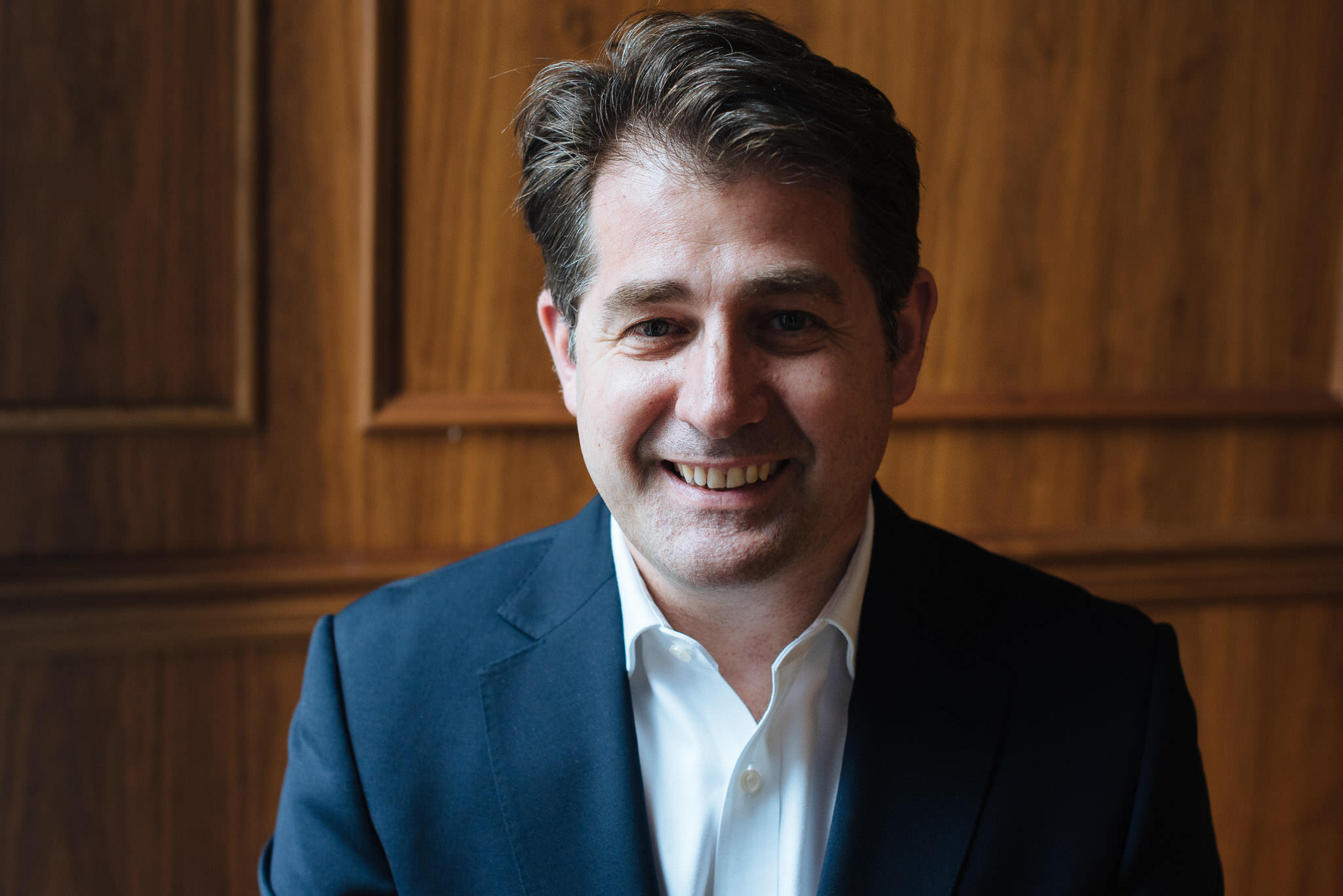
Alberto Lopez Valenzuela
Alberto Lopez-Valenzuela has worked with leaders of some of the world’s biggest companies and has spent years analyzing how companies build authentic reputations that create tangible value.
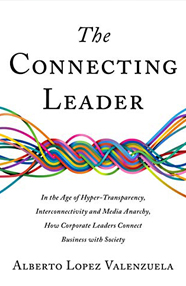
📚 Books by Alberto Lopez Valenzuela
Transcript
[0:00:23] CH: What’s up everybody, it’s Charlie Hoehn, the host of Author Hour where I interview authors about their new books and today’s episode is with Alberto Lopez Valenzuela. He has worked for over 25 years in business information and analysis and helping Fortune 500 companies develop decision, intelligence solutions. Now, what does this all mean? Well, Alberto’s specialty is helping corporate leaders connect their business with society. Over the last few decades, we’ve seen a big shift in the balance of power from institutions to our society. Individuals like us have never been more demanding or powerful when it comes to our relationship with big businesses. That’s what we talk about today is Alberto’s work with the leaders of some of these huge companies and how he’s helped them build authentic reputations that create real value. By the end of this episode, you’ll have some ideas on how to further deepen your authentic relationship with both your stakeholders and your customers so that you can deliver not only huge economic value but also really positive social value. Now, here’s our conversation with Alberto Lopez Valenzuela.
[0:02:06] ALV: In late 2008, I wasn’t in a good place, I had a job that I enjoyed but my boss, let’s put it this way wasn’t very nice and I started to think about what I wanted to do next. Then, suddenly, in February 2009, I was fired and while initially, it was a shock, even though I was quite unhappy, I took a few days to digest the situation. After these few days, I realized that this was the right opportunity to take control of my life and do the things that I wanted to do and that I have been talking to for some time. Among those things, I wanted to do and indeed I did more meditation, I was more conscious about what I was eating, spending more time with my friends, going to the gym, doing more reading. It also gave me the opportunity to think what I was going to do next career wise and the more I thought about it, the clearer it became that I wanted to set up a business that this was a very good time for me to take a chance on that. In March 2009, I have to say that I started the most intense and fulfilling challenging period of my career and that’s when I decided to actually start a business. Of course, I’m conscious that not everybody can actually do that and one of the main things that work in my favor was the fact that I had enough savings. They had to rush back to finding the job. That also allowed me the time to really think about what type of business I wanted to set up. You know, at the time, I realized that I wanted to setup something new that solve real business problem and in an essence, I wanted to find a way to do something better. While making money was one of the drivers, it wasn’t the main one. The main one for me was to find a link between reputation and the impact that it has on business performance.
[0:04:12] CH: What happened next?
[0:04:15] ALV: The first thing I wanted to find out was why. Why I wanted to set up this business and for me, it was all about as I said, about solving a business problem that actually affected thousands of people. I was very intrigued about the concept of reputation and reputation in simplistic terms is what people think about you. It follows you everywhere and determines how people interact with you. I was always very interested about what reputation actually did for companies. I realized that when companies understand the reputation concept, it makes them engaged in a more positive and authentic manner with their customers, employees, consumers and investors. On the other hand, I mean, this happened just right after the financial crisis and what it made me question is why so many businesses did not get the concept of reputation. Why they didn’t really care about the concept of reputation? The main driver of my business and is still is, it still have companies understand the reputation so they can engage more meaningfully with their stakeholders. The reason why is that the moment in full on inclusive engagement, the more businesses become a positive force in society. That’s I guess my small contribution, I wanted to help companies get closer to society and develop a positive relationship between businesses and society. At the core of these, it’s about business being a force for good. For the last –
[0:06:03] CH: I’m sorry to stop you Alberto. I don’t mean to interrupt but why is this so personally meaningful to you?
[0:06:10] ALV: it’s really about finding always a win/win. You know, I believe that when businesses are in a position of strength and they’re in a position to provide prosperity to those that they are involved with that business. I don’t believe that business should be operating on a zero sum gain. Business is an integral part of society and therefore, as well as providing the shareholders which I think is necessary for the business to achieve, there are also other role that the business can actually play. As I said, this providing prosperity to the staff, looking after their communities where they operate, ensuring that they’re essentially good citizens and I think that will have a really positive effect in society in a positive effect in the world.
[0:07:02] CH: Well, let’s talk about your book now, The Connecting Leader. Tell me what is the big idea. If you had to give a 30 second pitch to somebody who was unfamiliar, why did they need to read this book?
[0:07:19] ALV: Up the core, the main idea about the book is about challenging the status quo and having the courage to do the right thing. In the context of the book, it’s about looking at the role that business plays in society today. By connecting wit stakeholders in a meaningful and authentic way, create more economic and social value. It’s really about harnessing the relationship between business and society to be a win/win for all parties.
[0:07:50] CH: Give me some examples of how we’re currently doing things, the status quo, how companies are currently doing things that’s sort of the norm but you feel it needs to change and then give me an example of what it looks like when they’ve integrated The Connecting Leader into their behavior. Does that question make sense?
[0:08:16] ALV: Totally. If you look at the man businesses today, they’re still very much focused on short time objectives. Many of these short term objectives are governed by the investors or by achieving a set of financial goals. The problem of that shorter mistake approach is that sometimes, you find short cuts into things that actually really matter to stake holders and really matter to society. In the long run, that just doesn’t work, we have seen endless reputation or crisis in both sides of the Atlantic, in the UK and in the US, where companies have not really behave in a way that have been mindful of all the stakeholders. What comes to mind Alberto?
[0:09:05] CH: What’s a recent example that comes to mind? I just want to make it concrete and specific for the listener.
[0:09:13] ALV: Yeah, I mean, companies that have experience reputational crisis, one of them is Uber which ended up with the outing of calling Nick in last year and having to bring a new CEO. But while Uber was on an extremely aggressive and successful growth phase, there were a number of ECU’s that were neglected. Some of them related to staff, some of them related to drivers, some of them related to the regulator. By not doing the right thing for stake holders, in the end, despite of Uber being extremely successful in achieving their growth targets. I believe that they ended up having around 700 lawsuits to deal with at some point. That is the result of being single minded about your shareholders and neglecting everybody else. That’s something that ultimately, it does, it wrote a lot of value in the business. You take out the company like let’s say, Johnson and Johnson which has been around for 130 odd years and for many years, have been a light in themselves to Credo. And the Credo is basically a set of values on behaviors that the organization actually leads by. With Johnson and Johnson, you see an organization which is extremely mature, extremely balanced in the way that they manage their relationships with all their stakeholders and demonstrates that those relationships provide a longer, a more sustainable performance of the business. I think that’s the fundamental rule that you have companies that they extremely show their mistake and neglect some of their responsibilities and you have companies that they take into account the long term and they are good citizens and those companies, they tend to live longer and they tend to achieve more success in the long run.
[0:11:25] CH: You have a chapter in your book called Authentic Leadership and authentic is a word that sort of gets thrown around a lot and for some people to they think authentic doesn’t really mean anything. What is authentic leadership and why’d you include it in the book?
[0:11:45] ALV: Absolutely. What’s fundamental in this framework of The Connecting Leader is that from the research that I have done, the companies that they are authentic and the companies that they are – that they connect and they combine the authenticity with connections are the ones that tend to have most sustainable and long term value. The concept of authenticity, it’s very interesting because in the book, I have a definition of authenticity precisely because of your question. Authenticity has become almost a marketing buzz word and in this context, authenticity actually, it’s much more authentic. Authentic really is about being truth to your identity, being truth to your values and it’s basically, at the core of it, it’s just about doing what you say you’re going to do. It’s a synonym to being trustworthy and you find that actually, authentic people and authentic companies, they are not there to please everybody, they actually just break it about who they are, how they manifest their identity and then some people like them, some people don’t like them. But the one thing that it’s quite unique is that authentic companies and authentic individuals command respect. Nobody likes anybody, someone funny and authentic is the opposite of that, it’s just basically being strong enough to live by your identity and without consequences.
[0:13:21] CH: How does one become an authentic leader, what are some off the steps in recognizing their inauthenticity and how can they go about correcting it?
[0:13:31] ALV: Authenticity, it’s something that has to come from the core, it comes from the identity of an individual, that’s fundamental, you cannot – it’s very interesting because in the four word, an anecdote that Chris Clark who is the former CMO of HSBC, Chris Clark mentions about an encounter he had it done individual and this individual, this person said, “I’m trying very hard to be authentic. Let’s try harder to be authentic.” Well that doesn’t quite work because authenticity is a consequence of a set of traits and those traits is being aligned to your true identity and that also comes from knowing yourself, understanding your purpose and living according to that purpose. That also means as I said earlier feeling comfortable to say no many times but to say yes to the things that are aligned to your identity. That is fundamental. These is one of the problems that we have seen in the business context of today and I talk about it in the book that today, we live in a happy transparent interconnected and media anarchy world and many companies, many individuals in that context they have tried to communicate different things to different people just to satisfy the different audiences but what actually really makes companies standout is when they are saying the same story to everybody. That is what stresses your stances in authentic company or an authentic individual.
[0:15:11] CH: Which companies really stand out to you as being authentic that maybe our listeners won’t be able to guess? So I take it pretty much everyone would guess Apple or Coca-Cola, these big companies, which companies really stand out to you as authentic?
[0:15:29] ALV: Yes, in the book I cover three types of authentic companies. So what I found from the research is that what differentiates some companies from others is their relationship to profit. So you have profit first company and you can be an authentic company but still be very much focus on generating profit but being authentic and being consistent with that decision and the company that I feature under that classification is Apple. Apple is very clear about their identity. They are very clear about how they manifest that identity and they’re part of carrier of premium but by doing things really well, they become one of the best companies in the world. The second classification I have in authentic companies is companies that balance profit with society or societal targets and as a company there, I have an NFCG company, Unilever who for about 10 years now every push in sustainability agenda. And as well as aiming at a financial goal, they also have sustainable goals and they have contributed to the change in the agenda of how companies think about sustainability and the third type of company I have is Society First Company and as an example of those companies I have, I have illustrated Patagonia. Patagonia is a company which they do have financial goals but they stress their contribution as a company that wants to use the platform to address some social issues. And again, three different companies with three different identities but all of them are authentic by their own right. They just go about it in a different way and I thought that that was very, very interesting.
[0:17:34] CH: Talk to me about connected intelligence. What does this mean?
[0:17:39] ALV: So connected intelligence is necessary for a connecting leader to bring the 360 degree view that they need to bring in the organization to make the right decisions around on how to engage with different stakeholders. So the role of the connecting leader is they have essentially five roles. They have to bring in the outside end view and they have to bring it to the organization. They need to be able to connect different stakeholders, so the outside connector. They need to connect internal stakeholders, so staff internal connector. They need to also own the narrative of the company and they need to also have to have a reputational risk manager. In order to carry out all of those, the five functions that I just described, the fundamental requirement is to have intelligence. Intelligence to ensure how you balance your decisions and to decide how much energy or attention you put into the different minds from the different stakeholders. The challenge that many companies have had is that those decisions at times have been done through anecdotes or gut instinct as oppose to real intelligence and today, we have access to so much intelligence from traditional media, from social media, from multiple stakeholders that you have a unique opportunity to actually uncover the key insights to be able to make decisions.
[0:19:25] CH: Now your book concludes with a chapter on connecting in the fourth industrial revolution. I haven’t heard this phrase, the fourth industrial revolution. I assume you’re talking about right now, right?
[0:19:42] ALV: Yes, so right now there is a lot of talk about AI. There is a lot of talk around automation. There is a lot of talk about the impact that these things are actually going to have in business and one of the things that actually concerns me the most is the impact that actually will have on the workforce. So in an environment where you have robotics, in an environment where you have artificial intelligence, where you have a great deal of automation, what is the impact that this will have into people? Into humans that currently they do some of those tasks and the point I am trying to make here is that hey, if the current business context is not enough for you to realize that you need to connect with society, there is a tsunami coming which is going to be this called the automation tsunami and companies need to really figure out what the role in society is going to be. Some argue that about 30 to 40% of the current workforce will become redundant. If that is the case big businesses need to think about what role would they play in society, is that going to change the rules of engagement between businesses and society? So what I am trying to alert here is that if you have a connecting leader or a society proxy that alerts you of what’s happening externally and that makes you aware of these issues coming up, you need to be prepared, to prepare the business and you need to prepare your business model to respond to these social changes.
[0:21:24] CH: So Alberto, you’ve been working with Fortune 500 companies and helping them with decision intelligence for over 25 years. What have been some of your favorite successes or case studies with helping businesses with the concepts we’ve talked about?
[0:21:49] ALV: Yeah, I guess the main success comes from helping professionals that they are stacking a fairly tactical role and to enable them with intelligence to become much more strategic. To be able to have an internal debate of change and being able to bring to the table that the executive parts of the business wasn’t fully aware. So I guess the biggest successes comes from empowering corporate affairs, directors, chief communications officers to become much more influential within their organizations. And by becoming more influential, also helping those companies again to connect better with society. That is the underlying theme of all of these that the whole point of intelligence, the whole point is to show to executives that the business can play a better role in society and the most important thing moving away from the concept, the most important thing is how, how can we change the business, how can we adapt to the changes in our stakeholders to be recognized and become relevant to them.
[0:23:03] CH: Let’s say we were talking a year from now. So your book has been out for roughly a year, what are you hoping the impact it will have will be?
[0:23:15] ALV: I hope that the impact of the book will be to enrich the debate and to allow businesses and CEO’s and corporate affairs directors and communications see that there’s a wall out there that wants to be engaged. There is a lot of value to be created that of that engagement and that business should become much more integrated with the stakeholders and with society. I think it is about creating that movement or contributing to that movement. Where by businesses show that they have this social consciousness and that that social consciousness turns into becoming a force for good as oppose to having an antagonistic relationship between business and society.
[0:24:03] CH: Excellent, so Alberto I’ve only got a couple more questions for you. The first one is what is the best way for listeners to either follow you or connect with you?
[0:24:14] ALV: Sure, so they can connect with me on Twitter. I am @alvaceo that is my Twitter handle @alvaceo. They can connect with me also on LinkedIn.
[0:24:26] CH: And that’s @alvaceo?
[0:24:30] ALV: Yes, the Twitter handle is @alvaceo all one word and the LinkedIn is my name, Alberto Lopez Valenzuela.
[0:24:44] CH: Excellent and the final question is give our listeners a challenge, what is one thing they can do from your book this week that will have a positive impact?
[0:24:56] ALV: So I think the one thing that readers can do to change the life is to ask their companies to explain what is the role of business in society and to our senior management, what is the purpose of the company beyond shareholder creation?
[0:25:12] CH: Beautiful. The book is The Connecting Leader. Alberto, thank you so much for being on the show.
[0:25:20] ALV: Thank you very much. I really enjoyed the session.
[0:25:23] CH: Thanks again to Alberto Lopez Valenzuela for being on the show. You can buy his book, The Connecting Leader, on amazon.com. Thanks for tuning in on today’s show. If you liked what you heard, here is what I want you to do next. Open up the podcast app on your phone or iTunes on your computer and search for “Author Hour with Charlie Hoehn” and then click “ratings and reviews”. Take 10 seconds to rate this show or leave a review. It is a small favor but it’s really the best way to show your support and give me feedback and if you know someone else who’d love Author Hour, take another three seconds to text them a link to this episode. We’ll see you next time.
Want to Write Your Own Book?
Scribe has helped over 2,000 authors turn their expertise into published books.
Schedule a Free Consult