Joel Johnson: The People's Retirement Handbook
Read the full transcriptJoel Johnson
Joel Johnson is a Certified Financial Planner and the majority owner and managing member of Johnson Brunetti, a financial services firm that specializes in helping retirees and pre-retirees build investment, income, and estate plans. He is also the founder of Rainmaker Evolution, a coaching program that teaches financial advisors across the country how to grow their practices. He hosts Better Money, a weekend program on the CBS affiliate in Connecticut, and Better Money Boston on the ABC affiliate in Boston.
📚 Books by Joel Johnson
Transcript
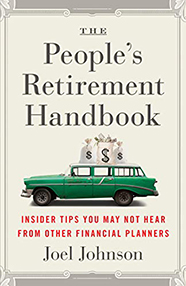
[0:00:25] CH: What’s up everybody, it’s Charlie Hoehn here, the host of Author Hour where I interview authors about their new books. Today’s episode is with Joel Johnson. He’s the author of The People’s Retirement Handbook. Now, Joel is a certified financial planner and he’s been doing this for many years and he’s helped thousands of families develop individualized retirement plans and in this episode, he’s going to share his decades of experience in financial planning and some real life stories to give you guidance on preparing for retirement. Everybody’s finances are different and Joel believes that everyone’s financial plan should be as well. Joel’s going to walk you through everything from retirement income to the types of accounts and insurance and investment you need and even how to talk to your family about money. If you are in the process of preparing for retirement, this is the episode for you. Now, here’s our conversation with Joel Johnson.
[0:01:52] Joel Johnson: In 1989, my wife and I had been married for a couple of years and I decided I wanted to change careers, I was in the entertainment business looking at how to provide for my family, a future family we’re about to have, I wanted to find a career, a profession that offered more stability, more potential for income and really where I could have an impact on more people than just a few people, which was basically the impact I was having in the entertainment industry. So 1989, I was offered a job with a stock brokerage firm.
[0:02:21] CH: Just a pausage Joel, what were you doing specifically in the entertainment industry?
[0:02:25] Joel Johnson: I was managing bands, I was booking different bands around the country, I had a music publishing company, I had a little record company. So I was doing a little bit of everything, I actually had a musical background, I traveled all over the US as a performer and then also as a manager. Totally different industry and just made up a pure career switch. I had always been interested in finance, I had a grandfather that ran a company and he used to always tell me that you know, if you have the ability to relate to people, you’ll always have a job because very few people can relate to other people. I made the career change and very quickly, I found out that in the stock broker world that some people were doing a good job, some financial advisers were doing a good job but a lot of financial advisers didn’t have the client’s best interest at heart. I began a search to find somewhere where I felt like a fit in better, not just with my values but also, I wanted to work with older people. My grandfather was always in the back of my mind and he was retired at that point and I just felt a real affinity, a real ability to relate to people that were already retired. I also enjoyed the wisdom that I could glean from them because they had lived so many more years than I did. Over the next few years, I found my place in a firm, I wasn’t the owner of the firm, at that time, I’m independent now but at the time,, I found myself in a firm where I could really learn from older people that had been in the firm for a long time. When I say older, I mean in their 50s and their 60s, I was of course 27 at the time and I just loved learning. I began this quest to, in the end, own my own firm as I have with the last 13 years. I really enjoyed working with retirees and I felt like I found my home after a number of years of working in firms that I didn’t think were either doing the best thing for the client or just didn’t really have a focus on a certain individual niche if you will.
[0:04:24] CH: That’s a really lovely perspective on financial planning. Because you’re right, it must be so nice to work with people who are ready to retire and to be able to kind of glean some of the lessons they’ve learned over the years, that’s really great. Do you remember if there was a particular moment where you knew this is right for me?
[0:04:49] Joel Johnson: Well, it was pretty early on. I mean, even though I wasn’t with the ideal firm and in the ideal environment, it was really early on that I loved giving financial advice. At the time again, my wife and I, we were just starting a family. I had had a little bit of money saved but I was sort of in the place in life where we were getting a mortgage, starting a family, starting to safe for retirement and I was just immediately, I just felt at home being in the world of finance. I felt at home doing research for people so we could solve their problems. I enjoyed working with average I call middle class or slightly upper middle class Americans. I came from a very middle class background and my whole family, relatives, aunts, uncles, cousins, middle class and I loved working with people that had come from the roots that I had, not necessarily wealthy, high net worth people which really is different for a lot of people in my business. I felt like I found a home very quickly, not only the mission of what I was doing but also, just like I said earlier, loving the people I was working with and being able to learn from them just as much as they were learning from me.
[0:06:03] CH: Joel, I want to sort of kick us off with a really elementary discussion. What exactly is financial planning, what do you really offer?
[0:06:13] Joel Johnson: Well, what we offer is starting with the client’s goals and their dreams. We want to begin with the end in mind as Steven Covey said in his great books. Beginning with the end in mind means identifying a client’s goals and dreams and that sounds kind of cliché but we go really deep with that, we want to know not just well, I want to retire in Florida for example, that’s what a client might say but why do you want to retire in Florida? What are the things you see yourself doing day to day in retirement, what about when you get older and you can’t be as active? What do you see yourself doing then? We drill down really deep on the client’s goals and why they have those goals. We back up and we identify the obstacles towards getting to those goals. Many times, they’re not financial, yes, many of them, many of the obstacles are financial but so many obstacles aren’t financial. Some of them are you know, my spouse might have a hard time being away from her family or my spouse and I were going to go through a difficult time when we have grandkids and we’re scattered around the country. We really want to identify the obstacles to them enjoying their retirement, financial and otherwise. Then we began to one by one, clear our ways to either reduce the challenges of those obstacles or get rid of the obstacles all together. Again, I would say about 60 to 70% of financial planning actually focuses on money, a lot of it focuses on identify those goals, identify those challenges so when people get hit with those challenges and retirement or getting close to retirement, we have a plan to solve those challenges as best as possible. Then we get into the money. There’s all these things that happen before we actually get into the money and then when we talk about the money, we figure out what we know your goals are, you know what your goals are, we know where you stand today and we know what your plan is going forward if you’re still working and saving money, let’s find out if based on what you’re doing today, your money is going to be taken care of, your money is going to serve you in retirement. If you’re not saving enough, we want to find out right now. If you’re spending too much, we want to find out right now – how do we setup a structure where number one, we know you won’t run out of money and number two, that the money was managed properly so that as changes come, whether it’s in your immediate world, whether it’s globally, whether it’s in the investment world and so we’ve anticipated those changes as best as possible. When you are tempted to react emotionally out of fear, out of fear of missing out or out of just fear of running out of money, we can hold your hand and keep you on track because the investor’s biggest problem, the retiree’s biggest problem is their own behavior, emotional behavior when things get tough which is really what a financial adviser gets paid for.
[0:08:58] CH: That I immediately see the value in that last part, especially. Is be able to mitigate against times of great stress in making hasty decisions that could hurt the rest of their future. I love that. Joel, I’m 32 years old and I see the value in this but I’ve never talked to a financial planner. What type of clients do you tend to serve? Is it people who are very close to retirement? Do you do an entire wide range?
[0:09:30] Joel Johnson: Our typical client or family when they become a client is typically between the ages of 55 and 70 and it would be pretty well scattered across that age group but I would say, 80%, if we were going to draw a bell curve would be between the ages of 60 and 67. Getting real close to retirement or having recently retired. Somebody’s waiting in to retirement, let’s say 78, 80 years old. Usually, they either have things in place or they’re challenged to make a change, they don’t like changes. If they’re much younger, no offense Charlie but they don’t have any money to work with.
[0:10:08] CH: No, none taken.
[0:10:11] Joel Johnson: There are companies that specialize in that but let’s pretend I specialized and people like you Charlie, they’re 32 years old, maybe they’re starting to save, we would look at things like how do we make sure the only debt you have is the debt on a home if you own a home? How do we ensure and encourage you and really coach you to save 10 to 15% of your income off the top? Those two basic things, getting rid of all debt except debt on something that’s going to go up in value like a home. Saving 10 to 15% of your income. If you can start doing that when you’re in your 30s, you’ll be better off than 80% of the people you know, maybe in the 90% of the people that you know when you get into your 60s. Just by saving enough and watching out for the things that hurt a younger person because credit card debt, buying a car every two years and financing it. A lot of those things, and the great thing is you know, I have a son that’s 28 years old and he has very different relationship with money than I did when I was 20 years old. When I was 20 years old, the world where I lived in was about keeping up with the Jones. Borrowing money so you drove the nicest car possible. He doesn’t really care about any of that, not to say that nobody in his age group does but he pays cash for everything, he rent a nice apartment in Boston with several of his friends, he works really hard, he saves money and he is – the habits he has around money are much better than I think the habits that my peers had when I was 28 years old or come to me and said, what’s the financial advice that II could follow? It’s really basic. Save 10 to 15% right off the top, maybe put it in a good mutual fund, don’t pay any attention to it. Stay out of debt whenever possible and only borrow money on things that are going to go up in value.
[0:11:56] CH: Beautifully said. Yeah, the generational differences are interesting because you guys grew up, I don’t know your age but I mean, grew up this phase of extraordinary wealth creation and the ability to have things on such an unprecedented time in history is understandable that the spending habits were different back then.
[0:12:23] Joel Johnson: We had a few – if you look at my parent’s generation, my mom and dad were born 1934 and 1936. That generation, they lived through end of World War II, they saw the Korean conflict, they saw the Vietnam conflict, at the same time, the world, the US in particular was continuing to grow this very prosperous middle class and we began to get one or two generations away from the struggle of the Great Depression. All of a sudden, it was all this access to borrowing money. People’s income were for the most part, higher than they ever dreamed it would be and that was very positive but in some ways, it was negative because it came for some people while I’m making much more money than my parents or grandparent ever did. What am I going to do with that and many times, excess, I don’t mean access in the real obscene way but just extra stuff and the lack of a struggle to feed families became kind of a negative thing and they took on some irresponsible behavior. Again, my son’s 28 years old, he saw the housing crisis when he was younger, he’s questioning whether it makes sense to buy a home or not, making a judgment call on that but you know, if he wants to be mobile and maybe move from one city to the next, doesn’t want to be encumbered by a home. He’s scared of debt because he saw what’s happened to a lot of friends and older people that got into debt and lost their homes or you know, got all kinds of credit card debt. Some of them having to declare bankruptcy so he’s scared in a healthy way and he, I think the environment he’s in, even though it’s a little tougher from a standpoint of getting a job and so on and so forth. It’s forcing him to have better financial habits. I wouldn’t say that for my 23 year old, my 21 year old and my 19 year old also.
[0:14:11] CH: Yeah, it has not been without its blessings, the hardship. I always liked these kind of corrective periods because they change things for the better, ultimately over the long run. Let’s talk about some of the chapters here in your book. You have a chapter called ‘Grandpa Pete’s Retirement, It’s All About Income.’ Tell me about this?
[0:14:33] Joel Johnson: Well, again, my grandpa, I believe it was 1907 that he was born and he lived in a world where you went to work for a company and work for that company for 40 years till you had a pension. Which meant you retired, let’s pretend it’s age 65, you had a company that made a promise to pay you every month for the rest of your life and perhaps for the rest of your spouse’s life. Had social security and those two things combined, usually, met same income you had while you were working or exceeded the same income you had when you were working.
[0:15:07] CH: I have to pause on this point because to me, that seems like such a crazy thing for an organization to provide an employee that no longer works there. How are they able to make this work for so long?
[0:15:21] Joel Johnson: Well, they set money aside, it was just sort of worked into the equation. You know, I’m going to hire you Charlie and we were back in the – let’s say the 50s. I knew that part of the deal was I needed to provide you an incentive to stay with the company for 20 or 30 years.
[0:15:36] CH: Okay.
[0:15:39] Joel Johnson: It was just part of the deal where today it’s 401(k)s and things like that now. Part of the deal and big companies started doing it and even medium sized companies thought, in order to retain good talent. Remember what was happening, the growth in the US was so tremendous that companies really were competing for talent. Similar as they are today, but maybe we’ll get that down the line. That was just part of the deal. Grandpa Pete might have made, you know, 15, $18,000 a year back in the 60s but he had this automatic retirement that was being funded by the organization. You know, it was great. People didn’t think about their retirement at all, they were going to get to retirement, they just knew they had their pension and social security and the pension is guaranteed by the federal government, even if the company goes out of business is guaranteed by a certain amount. There was this tremendous feeling of security and so when he thought about income, he didn’t think about which mutual fund should I buy, which auction I own, should I put money into bonds or stocks, there’s all this stuff that clutters the minds of retirees today, for good or for bad. But it’s just a lot of noise. Back then, it was just you know, have I worked long enough to replace my income and I really don’t need to save much money, I’m going to enjoy my retirement. Retirement was always about income, retirement today is still about income but there’s all these noise around where to invest money and all this stuff and people get distracted and forget that retirement, good financial planning and retirement is going to provide me monthly checks. Yes, I have to answer the question of how should a money be invested. Am I going to work with a financial planner? What about long term healthcare costs? What if I have to bail out my kids, what if I have to take care of my aging parents? All of that stuff gets in the way of people remembering, this is about creating a monthly paycheck that I cannot live. Then the question is since the pension isn’t there for most people, how do I structure my money in such a way, watch my spending in such a way where I can rely on that paycheck for myself and my spouse?
[0:17:42] CH: All right. Yeah, that makes perfect sense. How many of your clients that you began working with are in a good position, they come in and they feel like, “Okay, I think I’m set.” Versus people who come in and they got a lot of work ahead of them and restructuring and figuring this out?
[0:18:04] Joel Johnson: That’s a great question and let me answer that in two ways. One is, when clients come to us, especially if they’re pre-retiree, let’s say they’re four or five years out from retirement. They’re nervous, they don’t think, most of them don’t think they’re going to be okay, part of that is why they’re seeing us in the first place. And when we start doing a basic outline, a foundational financial plan in d the first question we want to answer is, are they going to have enough money to live throughout their retirement? Usually we find out, they’re in much better shape than they thought they were, which gives them a degree of confidence. On one hand, they’re in better shape from the standpoint of if they’ve saved enough money, for the most part, meet all their needs, however, there’s this fear, there’s this uncertainty that’s plaguing them because even though they can see on paper, they’ve done okay, they’re worried about how do I invest the money, what if I looked too long, what if you know, I have four boys, what if one of my boys make a terrible financial decision and I want to help them out? So there is all this mental noise going on but usually they’re in better shape than they think they are and again, I’m not talking about ultra-wealthy here. We might have a couple up in Connecticut and their household income was 150 to $250,000 and they just feel like they’re not going to replace their income. On the other hand, usually their investments are much too exposed to risk in the stock market. And they don’t realize those investments are exposed to that risk because they just have been saving money in their 401(k) and not really thinking about it and quite frankly not reallocating, not backing off on the risk when they’re closer to retirement. So on one hand they have saved enough money, on the other hand they don’t think they’ve saved enough so they are taking much more risk than they should.
[0:19:44] CH: Got it. So let’s talk about reducing risk in the financial future, so to speak. You mentioned a number of risks that can happen but you have a chapter on this called ‘The One Dollar iPhone.’
[0:20:00] Joel Johnson: Yeah, so this gets into the aspect of insurance. So part of good financial planning is not just investing money for the upside but it is insuring against the worst thing that can happen and not necessarily the worst things but the risks to our financial future. Now if you picture a pyramid in your head the bottom part of the pyramid should be risk management. Those are the things like home owner’s insurance, car insurance, life insurance, disability insurance. So if you can’t work because of an illness or a sickness you’ve got money coming in. Because a lot of people spend a bunch of time saving for retirement and not exposed to one bad thing that can happen that can wipe out their savings. So the insurance needs to be the foundation of a good financial plan. However, there’s a lot of confusion around insurance and there is bad insurance policy. They’ve got insurance policies that people buy that are not appropriate. So one day I get a call from my wife and as you know, iPhones come out and when the new generation comes out let’s say the eight comes out while the seven then goes on sale because there is all these inventory of 6s and 7s that the companies want to get rid of, the cellphone retailers. So my wife goes and she’s replacing her phone and instead of buying the new one because we are pretty frugal, she finds that she can buy one that is a generation old, two generations old which works perfectly fine for her needs for a dollar. So we are going to sell her this phone for a dollar and she calls me. She says, “Hey I could get the phone for a buck, should I do it?” I said, “Yeah it’s perfectly good and you know if it doesn’t work out it is only a buck.” So she buys the phone for a dollar. She calls about 10 minutes later she says, “Well the guy is telling me I need a warranty.” And the warranty I think at the time costs $60 and he says it’s a $400 phone or a $500 so $60 for a warranty was a pretty good deal. And I said, “No, it is a one dollar phone.” And she said, “But the guy is telling me it is a $500 phone,” I said, “Well it may have been a $500 phone at one point but it is a one dollar phone. So why would you spend $60 to protect an asset that can be replaced at 1$?” And that goes to the point that some people buy insurance that is not a good deal at all. Hence that extended warranties and things like that and they’re woefully under insured areas like life insurance and disability insurance. So we’ve got to figure out what can happen to derail our financial plan. Usually a financial plan and the discipline we’re taking around money now is for 10, 15, 20, 30 years from now. What can derail that? If I figured out I’ve got to save $3,000 a month, what can prevent me from saving $3,000 a month? A furnace breaking, I don’t have the emergency money to pay for it. Somebody slipping and falling out in front of my house and suing me and I don’t have adequate home owner insurance. My son is driving my car, God forbid he hits a school bus and there is a $5 million law suit that I lose and I didn’t have enough coverage to put that down. I get hurt playing flag football on the weekend with my buddies and now I can’t go to work for six months, what happens to my income? All of those things need to be insured for. The little stuff like I buy a washing machine and I buy an extended warranty maybe that’s nice maybe it’s not. But we get way focused on these insurances they’re easy to buy because it’s on a tiny tangible asset like a phone, a washing machine, sound system, a television and they miss being insured on the things that can just completely wipe them out. So that’s what we’re talking about on reducing risk. It’s to make sure once we’ve developed a financial plan that things can’t completely derail that. I am saving the right amount of money. Well let’s take you Charlie, 32 years old. You’re saving the right amount of money like I said, 10 to 15% of your income. If you lose the ability to speak, here we are talking on the podcast and you make good living talking. You can’t speak for the next 10 years because something happens to your throat, your income is gone. Who cares that you saved 10 or 15% of your income because now you are going to have to spend it and maybe find a new occupation and so people have to insure for those things that can really derail their long term financial goals.
[0:24:11] CH: Yeah. And I am so glad you included that chapter because you are right. I mean those things are the things that we don’t see coming. We may not even ever think about being a possibility until it happens and then it is too late. So that alone I would say is worth the cost of admission of the book.
[0:24:32] Joel Johnson: And by the way, let me just say that the most important insurance that somebody can have while they’re working is disability insurance.
[0:24:41] CH: Disability insurance.
[0:24:42] Joel Johnson: Disability insurance and disability insurance simply means if you get sick or hurt and you can’t go to work. We’re not talking about necessarily getting hurt at work but if you get sick or hurt and you cannot go to work disability insurance will send a check into your house every month to pay the bills until you are able to go back to work. And the statistics on somebody becoming disabled are tremendous. I don’t know if this is correct or not. I have to go back and research it but I remember being told years ago that if you have four people that are aged 18, one of them will suffer a disability where they lose at least three months of work before you’re 65. So the statistics are really high, people buy a lot of life insurance, they buy things like that. They only buy one type of insurance in your working years and that will be one.
[0:25:30] CH: Great advice, I will and thank you. So let us talk about transitioning now investment tools and strategies that you talk about in your book. You have a chapter called ‘I Lost 90% Of My IRA.’
[0:25:48] Joel Johnson: Yeah, I mean this goes to the behavior. So picture this, I am in the business for 13 years. It’s the year 2000 and in the 90s nothing could go wrong. You could throw a dart at a stock and it will double about every three years. It was just ridiculous. So you take somebody like me and there were a lot of us, baby boomer generation and it’s the year 2000 and I am 38 years old. I was born in ’62 and I feel omnipotent and I am saving money. I am making money and I am building up this IRA where I was saving my money at the time and I’ve got stocks like Microsoft, Cisco Systems, Dell Computer and Sun Microsystems and these tech companies they were just – stock prices were like I said, sometimes doubling every year but doubling every two to three years and I am all in. You know my IRA has gone from 30,000 to 60,000, 110, $120,000 by the end of ’99 and so I am feeling very wealthy. I am feeling like a genius because now all of a sudden I can pick stocks next to the best of them and I should have known there was a problem because the cleaning guy in our office was walking around giving stock brokers financial advice on those stocks just kind of a sign of the market and so sure enough, 2000-2001 came along and those stocks that I held because they were in the technology area which is feast or famine when it comes to stock prices, dropped and I lost 90% of that IRA. And you know there were so many lessons in that. One is when you think you’re a genius you’re probably not. A lot of investing is just plain - a little bit of luck. Even the best money managers, the best hedge fund managers in the world with private equity guys recognize that as they get older and I just got wiped out. I didn’t have a financial plan, I didn’t have an investment plan. I was so caught up in emotions I couldn’t even see it and this is why people need good financial advice. Even the engineer or the most left brained analytical person sometimes get hurt more than an emotional person, even that engineer, that actuary, that accountant will do the wrong thing at the wrong time because looking to get a win that’s exactly what happened to me and I’m so glad I learned that lesson. I sure wasn’t glad after it happened but I am so glad now I learned that lesson because I never want to put myself in that position and I don’t think I will but I even hesitate to say that because I know how powerful emotions can be.
[0:28:28] CH: Oh my gosh, yes. Wow, I really appreciate you sharing that story and I’ll share a quick one as well. When I was in my mid 20s I quit a job that I had and then the next job didn’t really work out either and so I spent a few months just unemployed and instead of asking for help or anything like that, I was too proud and I was also in an emotionally volatile place and I took money out of my IRA and I am reminded of that constantly. When I look back at my history and think, “Wow.” Especially now by far the dumbest decision I ever made in regards to finances, I think. So yeah and you don’t – you think of yourself like you said, as a logical person, somebody who makes good decisions on a whole and then you find yourself in a scenario where your emotions are much stronger than whatever intention you had before that. So just the value of having a financial planner to prevent or at least mitigate against those types of rash decisions, it’s tough to put a price on them.
[0:29:44] Joel Johnson: Yeah, I mean it’s like having a good doctor right? You know you have a good doctor and they might be difficult to work with, their personalities might be a little abrupt. They might not listen as much but if they’re the right doc, they can save you from so much future pain and it never feels like it at the time, right? Like giving your prescription or you’re going through chemo therapy, it feels the worst when you’re doing the right thing. That’s exactly how investing works, because the work is doing the right thing.
[0:30:14] CH: Absolutely, well said. So your book covers other things like estate planning but I want to - because we only have a few more minutes here, I want to wrap with talking about your children’s and grandchildren’s future and how you talk with your children and your grandchildren about money. Give me an overview of these chapters.
[0:30:39] Joel Johnson: Well sure and let us separate out the two. So you know talking about children about money and remember that the target of the book is the person who is probably between 50 and 70, okay? So many times their children are on their grown. I am 56 years old right now. My oldest is 28 and my youngest is 19. So let us pretend I am the client and I am talking to my kids about money, what am I telling them? Stay out debt, market is not going up forever because it has been going up pretty much for the last 10 years. I am telling them all of these things and the problem is they are not feeling it. Their dad is talking to them from this intellectual level that are in school or recently out of school. So they’ve got all of these professors talking to them from an intellectual level. Sometimes especially in this day and age, they feel like they were promised this great job and so on and it didn’t come to fruition so there is a little bit of mistrust in the older generation. Either they were promised that job or not is a totally separate state and so they’re not hearing everything I am saying or they’re hearing it but they don’t feel it and you’ve got to feel something to behave the right way. And so the best thing that parents like me can do when I am talking to my kids is almost showing them about money, not talking to them. Talking about that situation that happened when I lost 90% of my IRA, talking to them about when they make an investment and it doesn’t work out. They can get caught if it doesn’t work out and telling them, “Look I know what it feels like, I’ve been there. This is how to prevent it the next time.” You’ve got to get to their emotions to get them to listen advice about money. Otherwise it is just you going on, “Stay out of this, don’t hold on.” All these kind of stuff and so that’s really important work with somebody my age, 56, talking to their kids who are in their 20s. There’s a difference in my dad or in law. My dad is like God to them, right? So they will listen to grandpa way before they listen to a parent. I don’t know why it is that way, it just is. So from a grandparent standpoint, those kids are glue. You know when I say kids in their 20s they’re glued to what my dad says. My dad says one of the worst mistakes I’ve made is buying a car, that I can’t afford. Those what was that, 10 words, 13 words they take more advice from those 13 words than they would for me talking to them for an hour. There’s this reverence toward grandparents and cool parents have a ton of wisdom, just about so many things in life. And so I talk about parents should talk to their kids about money but also how grandparents. I am encouraging them to you talk to your kids about money and talk to them from a standpoint of the successes you’ve had and failure you’ve had because they will listen.
[0:33:24] CH: I love that. I am going to encourage my parents to do the same for our daughter. So Joel, this has been so valuable. I really appreciate you sharing all your wisdom and also your personal stories. Let’s wrap up with a couple of questions. The first one is how can our listeners connect with you, potentially follow what you are doing or work with you?
[0:33:47] Joel Johnson: Well, they can go to johnsonbrunetti.com, right there they’ll have our website. There is financial advice on our website. They could request different books or pamphlets about different financial subjects. They can come to our workshop. They can also link to the TV segments that I do every weekend in the Northeast where I am giving simple financial advice on a news program. For all kind of issues on that website. They can subscribe to my podcast which is Money Wisdom where we basically take my radio show and create a podcast out of it and so each week, we have a new episode that comes to giving financial advice. And then for those that are close by that want to talk to us or even far away we can schedule a consultation on the phone, give us a buzz at 1-800-208-SAFE and if you don’t have letters on your phone like we don’t these days, it is 208-7233 and talk to a financial planner. We don’t charge anything for that. We’ll help you if we can, down the line you want to start a relationship where we’re helping you manage your money then that’s how we do pay for. I can say we don’t charge anything for the consultation. I have to be careful with this. We’re pretty regulated so we don’t charge anything for the consultation, you only pay us if we manage your party.
[0:35:02] CH: Got it, okay so the final question I have for you is give our listeners a challenge. What is the one thing they can do from your book this week that will have a positive impact?
[0:35:14] Joel Johnson: The closer you get to retirement, once you are within five years of retirement or you are already retired, your investments should protect you against the downside more than they should capture the upside. Protect against the downside just don’t lose money and usually the upside will take care of itself.
[0:35:33] CH: Fantastic. The book is The People’s Retirement Handbook. Joel Johnson, thank you so much for being on the show.
[0:35:41] Joel Johnson: Great to be with you.
[0:35:43] CH: Thanks again to Joel Johnson for being on the show. You can buy his book, The People’s Retirement Handbook, on amazon.com. And a quick disclaimer from the compliance department, Joel Johnson and JB Capital are registered investment advisors. Nothing here is to be taken as recommendations. It is merely the opinion of the participants. Securities and investment advisory services offered by JB Capital. Thanks for tuning in on today’s show. If you liked what you heard, here is what I want you to do next. Open up the podcast app on your phone or iTunes on your computer and search for “Author Hour with Charlie Hoehn” and then click “ratings and reviews”. Take 10 seconds to rate this show or leave a review. It is a small favor but it’s really the best way to show your support and give me feedback and if you know someone else who’d love Author Hour, take another three seconds to text them a link to this episode. We’ll see you next time.
Want to Write Your Own Book?
Scribe has helped over 2,000 authors turn their expertise into published books.
Schedule a Free Consult