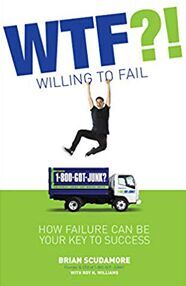
Brian Scudamore: WTF: Willing to Fail
Read the full transcript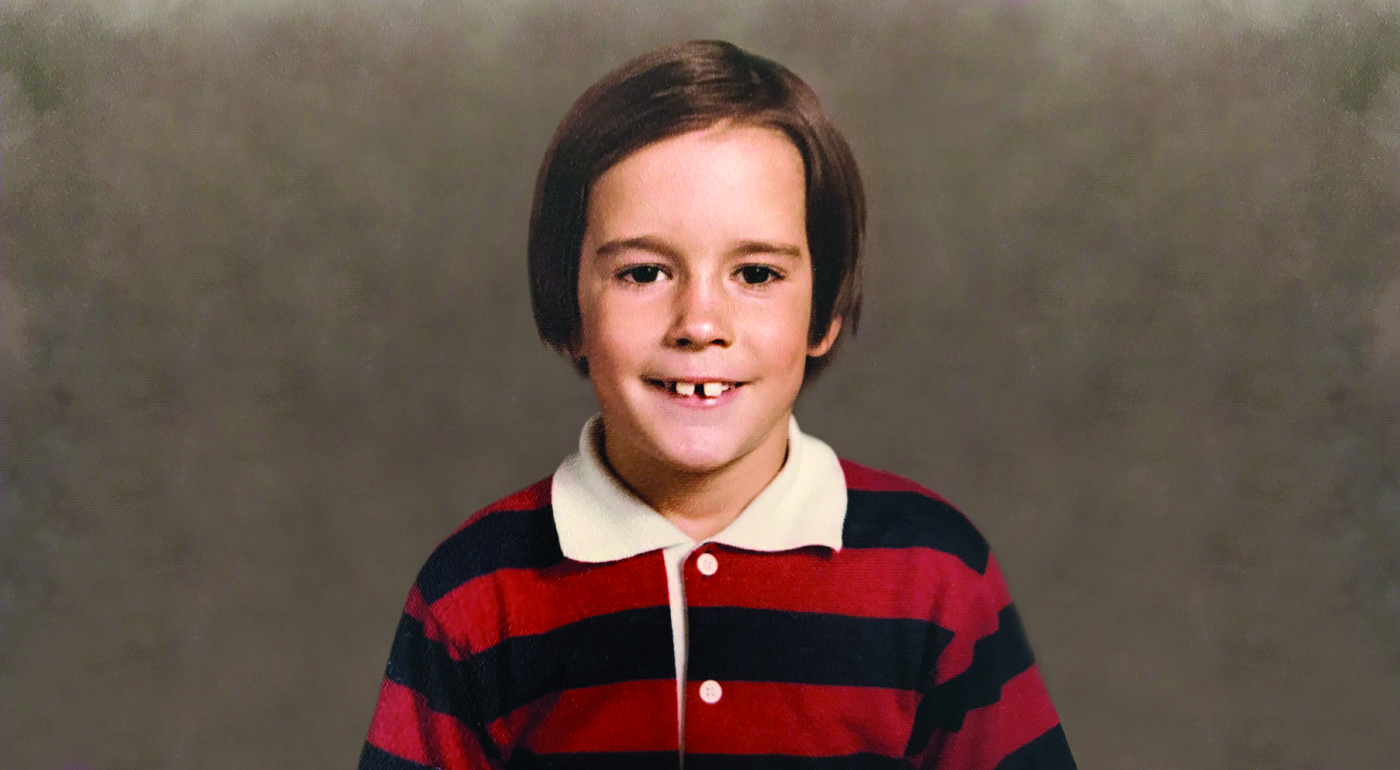
Brian Scudamore
MEET BRIAN
Brian Scudamore has created three hugely successful brands and an exceptional corporate culture by embracing failure and curating advice from the world’s most respected business leaders. He’s always taken the road less traveled, spurred on by his insatiable curiosity and drive to do things bigger and better—and always together—with the passionate people at 1-800-GOT-JUNK?, WOW 1 DAY PAINTING, and Shack Shine, all under O2E Brands. Brian is on a mission to share wisdom from thirty years in entrepreneurship to help others realize their biggest dreams, take risks, and start today.
📚 Books by Brian Scudamore
Transcript
[0:00:16] CH: What’s up everybody, it’s Charlie Hoehn, the host of Author Hour where I interview authors about their new books. Today is a really cool episode, it’s with Brian Scudamore who is the author of WTF: Willing to Fail. Brian is a serial entrepreneur. You might know him for the company he founded, 1-800-GOT-JUNK? at 19-years-old, he pioneered this industry of professional junk removal and he gave it this amazing customer service experience and then scaled that success into three more home service brands, WOW 1 Day Painting, You Move Me and Shack Shine. This episode is not about his successes, it’s about his willingness and his team’s willingness to fail, to make mistakes, to do things that push them to the next level. What I love about this episode is that he tells really great stories from his 30 years of what he calls failing upward and if you’re an entrepreneur and you are maybe struggling with getting clear on your vision or creating an awesome culture or just dealing with setbacks, this is absolutely the episode for you. You can apply all the stuff that Brian talks about to your own endeavors, it’s a great episode. Now, without further ado, here’s our conversation with Brian Scudamore.
[0:02:03] Brian Scudamore: I was 24 years old, I felt proud of the fact that I’d started this junk removal company, a way to pay for college but ironically, inspired me to drop out of college because I was learning much more about business, running a business and I was faced with a decision. I had 11 employees, now, one bad apple spoils the whole bunch, I looked at my team and I said, “Wow, I got the wrong people here." I don’t even know what the right people are but I’ve got nine bad apples of 11 employees and I made a tough call and I said, “I’m going to clean house.” The next morning, we have a morning huddle and we would bring our team in and talk about what the plan was for the day and the logistics of sending out our 1-800-GOT-JUNK? trunks and I sat the team down and I said, “Guys, I got some bad news but we’re going to part ways.” I said, “this isn’t working out for me, this is not the company that I envisioned building.” I took the blame because this was a leadership lesson for me, this was an inflection moment where I had to say, “I might not have given you the love and support you needed, I didn’t hire the right people necessarily, I didn’t train you well, whatever the reasons, I’ve decided we’re not moving forward and this lands on me." I think they appreciated the transparency and the honesty but I had to say I got to start again and going from five trucks, five years into the business, half a million in revenue, down the one person, just me, lonely in that truck trying to run the business was an absolute nightmare but it was one that I said, “I’m committed to rebuilding the business, we’re going to get back on track, even though it’s going to be hard."
[0:03:55] CH: Wow, how long were you in kind of that lonely place after you made that decision. I mean, what was that transition like?
[0:04:05] Brian Scudamore: I think we forget the painful moments in our lives so when I look back and I go wow, back to 1994. How long was it that it really took me to rebuild? I don’t remember, I think somewhere from three to six months. Because what I had to do is I had a call center, I had trucks, I had people out there running the trucks, I had customers, I really came down to this point of there’s nothing left, I’ve got jobs that are booked, nobody to service them, I had to cancel a bunch of my current jobs and I had to rebuild. That meant having that big brick Motorola cellphone and answering in between hauling jobs, trying to hire employees, trying to book new jobs and there I was building a junk removal business that had grown into something of size, half a million in revenue, I felt was important and was significant yet I had nobody to help me. I had to rebuild and it was a moment in time where I said, “Okay, this might not be fun, this might be hard but I believe in a bigger vision of – today, we look at our business and we say, we’re taking the ordinary business of junk removal and making it exceptional through customer experience,” I didn’t have exceptional people. It might have been ordinary people that I could have helped become exceptional, but I didn’t know how to get them there. I didn’t know how to develop and so at that time I said, “this isn’t working out, we’re parting ways” and it was a new day but it was a painful one.
[0:05:43] CH: I’d imagine, you may have felt during that time a bit over your head and realizing that you had some limitations in where you were able to help people get to yourself. What were the steps that you took to prevent those mistakes when you were rebuilding?
[0:06:05] Brian Scudamore: I said to myself, "what’s the most important thing that a company has that’s a part of where they’re going?” All the company has really is people. It doesn’t matter whether you look at Apple or Google or Air BnB, it doesn’t matter how sexy or glamorous a business is, All you’ve got is people rallying together to build something special, to do something different, to challenge the status quo, it’s all about people. When I learned that day when I let everybody go that all the business has is people. The decision moving forward was, I don’t ever want to bring the wrong person into my company again. When I look at the business and that opportunity to start fresh, it meant that everyone I interviewed, it wasn’t just, can they lift junk and throw it into the truck, it was, are they happy? I wanted to hire happy people because I surround myself with optimists, I wanted to find people that saw what I saw in the world. Saw that the world was generally good and that the world is presented with this opportunity everywhere. I got out there and I started to recruit people who were like minded. If someone was negative in the interview, the interview ended. If they were positive, cheery and had a fresh, sunny outlook, that meant something to me. The mistake I was not going to make again was bringing the wrong people onboard. Now, I’m human, I’ve hired thousands of people, we have 5,000 people with just one of our brands, 1-800-GOT-JUNK? today, you’re bound to get some wrong. However, I do think, when people walk through the junction or head office and they look around, someone who is an outsider, visitor coming in goes, “why is everybody smiling?” It’s this energy of we’ve hired happy people, we found the right people and we’re treating them right and it hasn’t always been this way and we’ve made a mistake in our hiring in the past but we learn from that, we learn from that failure and everyday going forward, it’s about ensuring that we live that commitment of finding the right people and treating them right.
[0:08:25] CH: That’s a great hiring philosophy and just real quick Brian, could you give a quick update on where you are currently today with all the lessons learned and all the wisdom you’ve distilled in your book. Also, where your businesses are today from those beginnings?
[0:08:46] Brian Scudamore: Yeah, great question Charlie, where am I today? I am still earning, I’m 48 years old and I will be learning forever as long as I’m alive. I believe that I will continue to make mistakes and my biggest mistakes might be yet to come. But the title of the book is willing to fail, I’m willing to fail, I’m willing to try new things, I’m willing to make mistakes but learn from them in the spirit of getting to a better place. If I think of where the business is today, of our four brands, they collectively do, 365 million dollars in revenue this year, 1-800-GOT-JUNK? does about 300 of that. I don’t share that in a bragging way but more as a size and scope of what we’re building. After 29 years, we’ve been working hard to grow great business, it took us eight years or it took me eight years to get to a million in revenue, we now do a million in revenue on average each day.
[0:09:48] CH: Wow.
[0:09:49] Brian Scudamore: What’s exciting is, the learning that we’re getting at an even faster rate. People talk about how the world’s changing so quickly. Well, our business is changing so quickly and what an opportunity to make mistakes, what an opportunity to get more learning and this whole WTF attitude has been one where 20 years ago, I was like, “man, do I have to keep making mistakes?” Another failure and this and that. Now I understand the value of failure and I feel like wow, isn’t this interesting? It’s a different approach and feeling which has been very empowering to say the list.
[0:10:34] CH: I love it. Yeah, you’re not boasting whatsoever, I mean, those are facts, I mean, a lot of the listening to this will recognize your companies and a lot of our listeners are entrepreneurs and varying levels of success and so the willing to fail lesson, I’m sure resonates deeply with many of t hem. I’m curious though, what are some of the other ideas that you really hope entrepreneurs take away from this book? I mean, you got a bunch of fun chapter titles which I can ask you about but what really comes to mind that you want listeners to take away from this interview?
[0:11:17] Brian Scudamore: Well, one of the things that I say in the introduction is, I wrote this book to inspire. Inspiration is something that’s very personal, someone, an entrepreneur, a wannabe entrepreneur, a soon to be entrepreneur, someone who is listening to this podcast might go, “you know? I was inspired by this story,” someone else is going to be inspired by different stories. Who am I to say what inspires but if there’s one thing I’ve learned over nearly 30 years of building a business, if I look at the WTF book and I say, “what’s a moment that stands out, that I absolutely had to do again?” I think it’s the story of being on my parent’s dock, they have a summer cottage, about an hour away from Vancouver where I’m based. I remember I had joined the EO, the Entrepreneur Organization and it was supposed to be an empowering, exciting, enthusiastic experience for me but I was surrounded by others who had businesses that mine was a million in revenue, theirs is worth five million, 10 million 100 million and I felt little. I felt small, not just in the way of my revenue but also in the way of my success and what I was giving to the world. I got a little depressed, a little bit of a doom loop I would call it and I went to my parent’s summer cottage on Bowen Island and I sat on that dock and I took out a sheet of paper and I said, “Okay Brian, stop thinking about the bad things, stop thinking about all the obstacles. Imagine for a moment” and close my eyes as I did and I said, “What could the future look like if only I imagined pure possibility?” I started to dream and I said, “We would be in the top 30 metros in North America because there’s 30 cities bigger than we started." I said, “We would be the FedEx of junk removal, clean, shiny trucks, friendly uniformed drivers, on time service, upfront rates,” I said, “We would be on the Oprah Winfrey show” and I started to create this painted picture, this vision of the future and sure enough, after writing down my ideas in the future with present tense verb saying, “we will make this happen, not hope to or want to.” I started to look at my painted picture and felt a sense of not just hope but a sense of accomplishment of what would happen in the future. It was fun because I left with, you know, I sat on that dock with a frown, I left with a smile and I left with a sense of okay, time to spread the word and share with others. A long answer to your question Charlie, when you say, what would I want people to leave this podcast with? If they could think for themselves as an audience member, as a listener, what is their purpose in life, what do they want to contribute to the world, don’t worry about how to get there. I talk to young entrepreneurs all the time and they’re like, “I don’t have the money, I don’t have the idea,” don’t worry about how. Just think about where, where are you going, what could it look like, then think what would it look like and set out to rally a team around you of amazing people who could make your big dreams happen. That’s been a life changer for me, come up with a painted picture, come up with a vision and once you know the destination, it’s easier to start putting all the little pieces in place to make that journey happen.
[0:15:00] CH: Man, that is completely true and I think it’s easy to go along for quite some time and realize, “wait a second, I don’t have a destination, I’m just in the flow of whatever I’ve been doing for quite some time.” I think that’s wonderful advice. I’m curious to, how did you land on junk removal? How did that give you a strong sense of purpose and a place that you were going to become the FedEx of junk removal?
[0:15:32] Brian Scudamore: Yeah, that painted picture story, that was eight years into the business so I already had a million-dollar business at that point.
[0:15:38] CH: Sure.
[0:15:39] Brian Scudamore: How did that get into the business, I was in a McDonalds drive through, of all places, 18 years old, I was trying to figure out a way to pay for college. I was one core short of graduating from high school, my parents were not going to fund my college degree, I got out there and said I got to figure out how to A, talk my way into university and B, find a way to pay for it. There was this beat up old truck in front of me in a McDonalds drive through and I looked at that truck and said, that’s the business, that’s what’s going to pay for university. Now, did I choose junk removal or did it choose me? Interesting today on my Instagram, I put out a picture there of me, there was a picture of me drawing a self-portrait, actually, it was a picture of me with a self-portrait that I drew of me hauling away junk. I did this drawing at four and a half years old, my grandmother passed away and I remember we cleaned out our home, I found a binder that said, “Brian’s drawings” and there was this picture of me in the uniform, it was drawn in blue, the same blue color that we use for 1-800-GOT-JUNK? I had a hat on, I was sweeping up trash, it was unbelievable. Who imagined themselves as a junk man, as a kid and then actually becomes one. It was strange. Back to the comment, did junk choose me or I did I choose it? I don’t know. I’m in the junk removal business, I’m in other home services and absolutely feel passion each and every day for what we’re building and how we’re building that.
[0:17:19] CH: Yeah, wow. I mean, that story would make a listener believe in a higher power, that’s wild stuff.
[0:17:27] Brian Scudamore: Most kids dream of being you know, superman, wonder woman, you know, who knows? There I am dreaming of becoming a junk man and then however many years later turns into reality. Very strange –
[0:17:40] CH: That’s incredible.
[0:17:42] Brian Scudamore: But it happened.
[0:17:43] CH: Very cool. Let’s keep jumping around a little bit, we can’t go totally in chronological order here and so let’s keep in on the random track a bit. You have all these fun chapter titles in your book. The blue wig is where you find it, is one of those chapters. Tell me about the blue wig.
[0:18:03] Brian Scudamore: Yeah, we believe as a business and I think I believe as myself take the business seriously but don’t take yourself too seriously. We are a little bit quirky, we’re a little bit unusual, we’ve all got our gifts and intricacies of who we are and I think the blue wig spirit for us was born out of a story. It was born out of me thinking how do we market our business in a way that’s unique, that could have a standout? I remember reading Seth Godin’s book, Purple Cow. Seth Godin talks about – he’s a customer by the way which is cool, he talks about the fact that when he was in France and he was on a train and they saw thousands upon thousands of black and white cows, they all start to look the same, things blend in but imagine if you could see a purple cow that would catch your attention. It would be truly remarkable, you’d tell others, you’d send pictures home and the whole bit. So for me it was what’s our purple cow, how do we stand out in a world that’s filled with other junk removal companies? And so we literally got out there a bunch of our franchise partners and we said what’s the toughest city to stand out in and one person said New York City, one person said Las Vegas and I said, “You know what we’re going to do? We’re going to go to Las Vegas and we are going to stand out. We are going to show that we can get the attention of eyeballs in Las Vegas”. So we hopped on a plane a whole bunch of us, three dollar blue wigs, some bowling shirts that said 1-800-GOT-JUNK? on the back printed on them and we had a handful of 1-800-GOT-JUNK? tattoos that we could stick onto people’s hands and we went into the Hard Rock Hotel and I remember walking into the casino with all of these people and I said, “Let’s show everybody that we can stand out here” everyone’s got Armani suits on and they’re dressed to the nine’s. We’re the guys, the dorks in blue wigs and bowling shirts yet everybody was coming up to us going, “Who are you? Are you a band? Are you guys on a stag? A bachelor party?” like who are you guys? Drew all these attention and everyone by the end of the night was walking around with 1-800-GOT-JUNK? tattoos on wondering who these famous 1-800-GOT-JUNK? guys were in blue wigs and we proved to our self that it can be an inexpensive marketing stunt type thing. Where you just get out and you take something as simple as curly blue nylon hair and put it on your head and book, people will take notice and wondering what you are doing. It is that whole velvet rope that line up effect of you’ve got a few people lining outside of a bar then the line grows. It is down the block, before you know it, you know no one realizes that the bar is actually half empty but people want to line up with other people because they feel like I could be missing out, what’s going on here? So our marketing opportunity became let’s put on some blue wigs, let’s stand out and see what we can do with this and it was a tactic that grew for us in many ways across 1-800-GOT-JUNK?.
[0:21:24] CH: I love it. Yeah, you can really tell with 1-800-GOT-JUNK? it is distinctive. It is a purple cow in its field and even beyond that is just a brand you recognize. So I am curious what was the next iteration of blue wig marketing or that kind of standing out tactic, how did that ripple into the next evolution of your marketing?
[0:21:48] Brian Scudamore: I think one of the biggest things, I was always someone who I really question the value of mass media. I thought it’s expensive, it’s a noisy world, there is so much advertising, we’re bombarded with 5,000 messages a day. The last thing we should be doing is traditional mass media. We met a guy however named Roy Williams, the wizard of ads, he calls himself and he looks like a wizard, he’s got a wizard’s tower in Austin and he is this ad writer. Who his claim to fame is nobody has bought more radio on the planet than him. He doesn’t just buy radio but he writes this brilliant ads and he sat down with us. He said, “You know if you look at your business” and we understand what is really truly unique about 1-800-GOT-JUNK? or any of our brands he said, “It’s magic”. He said, “Brian you’ve been inspired by people to bring magic into the world” and he started telling me stories that made me go, “Have you’ve been talking to my mother?” Like how do you know this stuff? He said, “You love Willy Wonka” you know Charlie and the Chocolate Factory, “You love Doctor Doolittle, you love the little leprechaun who sold frosted lucky charms” and I mean it literally blew me away but he knew these things because he could tell from a few stories what inspires me in life is making people feel happy. Happy magic, things that can happen in the world that you just go, “Wow isn’t that fun. It’s news pricing and different and it stands out”. And so, when we met with Roy he said, “All I know is radio. It’s what you guys need to do. I will write radio for you that I promise will stand out” he said, “If something sounds like an ad, someone driving in the car listening to the radio is going to treat it like an ad but if you have something that truly stands out” and he went to the effort of even going, “You know we are going to have two people speaking on the early day radio ads and we’re going to have Brian as the founder”. “But we are going to have someone who’s got a completely different voice that stands out and apart from Brian” and so we created this magical radio campaign where we said, “You just point and junk disappears” and we told stories on radio and we went through these period wherein Roy told us, the wizard of ads said, “You are going to go through the chickening out period somewhere between 12 weeks up until probably 26 weeks”. “Where you are going to question your investment radio because it is not working” but he said, “About 26 weeks, the magic will start to happen and you’ll see that the results are coming in. The reach, the frequency of the radio, your investment will start to work” we spend $10 million a year today on radio. It has absolutely been one of the biggest drivers much bigger than the blue wigs. Culturally blue wigs is part of our spirit but the radio and the magic and the storytelling that we do it’s hard to put into words. But it has been truly remarkable for us and we did things with our radio like Roy said, “remind people that we’re the company that Oprah told them about and the Wall Street Journal and Good Morning America.” We’ve talked about some of the wins we’ve had as a company and somehow that credibility in our radio really helped to put us on a great growth spurt.
[0:25:25] CH: That’s incredible. I’ve never heard of Roy but I am looking him up and he definitely does look like a wizard that’s amazing.
[0:25:33] Brian Scudamore: You’ve got the white flowing hair, he’s often got this big beard or goatee that’s white, he’s got a wizard’s tower so he’s built this 34 acre ranch in Austin, Texas and what’s cool about it is he’s got a bookcase that you pull a book and it’s like Scooby Doo, the bookcase opens and got a thousand bottles of Scotch behind that bookshelf. So he is a pretty interesting guy that when I talk about I take my business seriously but not myself, I probably role model that after a guy like Roy.
[0:26:04] CH: Wow, I got to talk to him that’s amazing. I love that, wow. All right, well it sounds like this book is just full of amazing stories of how you’ve grown this businesses and how your team has really grown these businesses. What other stories do you really enjoy from the book that you are excited for readers to checkout?
[0:26:27] Brian Scudamore: You know to me it is interesting that there’s so many failures and people would often say to me and they say it all the time like, “Brian, you and your team, what an overnight success. Look at what you guys have built, look at what you have done over the last few years” I remind people that it has been 29 years. I heard a stat that Walmart took them 25 years to get to seven locations. Seven not 7,000 and when you look at businesses and how long they take to actually build momentum, my favorite stories are the ones where those little things that just add to the momentum. The Oprah Winfrey story, the dropping out of university to tell my dad that you know I am putting it all on the line for the junk removal business. These are all little tiny decisions but they all add up to the momentum because that flywheel, that momentum just starts to spin faster and faster with its own weight propelling it and the business is so big and doing so well right now that knock on wood I feel like we couldn’t slow it down if we wanted to. And so we’ve attracted these amazing entrepreneurial minded people to our cause. Let’s build Shackshine, let’s build WOW 1 Day Painting, let’s build these brands together with people that want to that are passionate about something and want to build with us. So I have always believed that we are building something much bigger and better together, something bigger than we ever had built alone and that’s what all those little stories are about, they’re about. This is where I struggle a little bit with, “Oh Brian Scudamore has written a book” well you know what? I am not telling my story. I am telling our stories and stories are meant to inspire others to create their own story. In fact, the very last chapter in my book has a heading, “your story,” but really the whole chapter is blank because I want someone to then think, what’s their story? From the time they finish the book until the time they write their first book, what’s the story? Fill in the blanks.
[0:28:48] CH: That’s a beautiful way to end the book. I love that and what struck me about this interview and about your book is the message is more than just a willingness to fail. It’s really the ability to rise from the failure well so you know that the failure is going to serve you in a large way it seems, is that fair to say?
[0:29:17] Brian Scudamore: It is very fair to say. It is one thing to be willing to fail and jump off a cliff but then what are you going to do when you hit rock bottom? What are you going to do to learn from that experience to then say, “Okay that hurt that was hard but here’s how it’s going to make me stronger” and some of the most successful people in the world I think has really had on the outside what would be seen as big failures. They’ve been victims, things have happened to them but it is how they’ve dealt with that failure and said, “This is now a stepping stone to greatness and it is what you do with that failure”. So I would want to convey to your listeners don’t just go and make reckless mistakes and hope that some pay off. It is go out and put yourself out on the limb, make mistakes and see that things aren’t always going to go as planned but when the plan goes sideways, when things go south go, “Okay what do I do about this?” I mean I almost bankrupted my business, I’d hired a COO to come in who was an ex-Starbucks president. I thought, “Oh my gosh I have hit the jackpot here” and together in 14 months we almost bankrupted the company. We were down 40 plus million in revenue. I have laid off 52 people, I then laid off more people and that was painful but if I hadn’t failed so miserably in bringing on the wrong COO for me she’s gone on to be ridiculously successful when the big financial institution here, if I haven’t brought on the wrong COO for me, I wouldn’t have reflected. I wouldn’t have learned, I wouldn’t have then re-engineered who’s the perfect person for me and how do I get out there and find that person so we truly can get this incredible brand or family of brands that we are building on track towards the billion dollars that we want to hit.
[0:31:17] CH: Well this has been really, really amazing to hear your story, to hear the team story and tell me Brian, what is the best way for listeners who read the book to follow you or reach out to you and tell their story potentially if you want that.
[0:31:37] Brian Scudamore: Yeah, I would love to have people reach out. I think as an author you put a book out there and then you hear crickets.
[0:31:45] CH: Right, so everybody is reading quietly.
[0:31:49] Brian Scudamore: Yeah, I wrote the book to inspire. I would love to know if someone’s inspired. I think the best way to get me is any of the social media handles out there of @brianscudamore on Instagram. I am on LinkedIn, Facebook, you name it. I think that if somebody was to reach out and tell me a story of how the book impacted them or something that’s struck a chord with them and it makes it all worthwhile. It takes a long time for people to write books. And you agonize over every word and as an entrepreneur, as many entrepreneurs are, we’re perfectionists and I want to get it right. So to get some feedback from people that it made a difference even if they’ve got one nugget out of the book that would be a rewarding thing.
[0:32:33] CH: Absolutely and the final question I have for you is something we actually touched upon earlier but I just want to restate it to kind of tie this up with a bow give our listeners a challenge. What is one thing from your book that they can do this week that will have a positive impact?
[0:32:57] Brian Scudamore: Yeah, that’s a great question. I think and it may not just take a week but they can sit down and they’ve got to commit to doing this process and it might take a couple of weeks but to me, it is what’s your vision, what’s that destination, what does it really look like, what do you want to accomplish in this life, what will you put on this planet on this earth to do? And so the easiest way I have done that is that story at the dock. Sitting down one page double sided and just started writing but I was very careful of my language not “I have a goal of… I hope to accomplish… I am going to try and do X” it was “We will be in the top 30 metros in North America by December 31st 2003” we hit that goal two weeks early. Now no coincidence that five years out that is what we envisioned doing. What is it that your audience envisions doing that they’re committed to doing don’t get caught up on the how to get there, just focus on where you’re going and what it looks like, that would be my challenge.
[0:34:07] CH: Awesome, awesome challenge. Life changing challenge if you allow it. So the book is WTF: Willing to Fail Brain, thank you so much for being on the show.
[0:34:19] Brian Scudamore: It was awesome to be here Charlie and I really appreciate you including me on the show.
[0:34:24] CH: Thanks again to Brian Scudamore for being on the show. You can buy his book, WTF: Willing to Fail, on Amazon. Thanks for tuning in on today’s show. If you liked what you heard, here is what I want you to do next. Open up the podcast app on your phone or iTunes on your computer and search for “Author Hour with Charlie Hoehn” and then click “ratings and reviews”. Take 10 seconds to rate this show or leave a review. It is a small favor but it’s really the best way to show your support and give me feedback and if you know someone else who’d love Author Hour, take another three seconds to text them a link to this episode. We’ll see you next time.
Want to Write Your Own Book?
Scribe has helped over 2,000 authors turn their expertise into published books.
Schedule a Free Consult