Jim Dew: Beyond a Million
Read the full transcript
Jim Dew
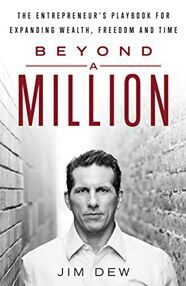
Jim Dew is the CEO of Dew Wealth Management and the creator of Functional Wealth Management, a strategic approach designed to help entrepreneurs maximize their time, money, and freedom. He has more than twenty-three years of experience helping entrepreneurs preserve and expand their wealth. In his book Beyond a Million, he shows elite entrepreneurs how to use the family office strategies once reserved for the ultra-rich, addressing questions about taxes, risk, lawsuit protection, investing, and building a financial team. Jim earned a bachelor's degree in mathematics from the University of Arizona and an MBA from Arizona State University, and he is a Certified Financial Planner, Chartered Financial Consultant, and Certified Private Wealth Advisor.
📚 Books by Jim Dew
Transcript
[0:00:23] CH: What’s up everybody, it’s Charlie Hoehn, the host of Author Hour where I interview authors about their new books. Today’s episode is with Jim Dew, he’s the author of Beyond a Million. Now, this episode is for entrepreneurs who have hit big financial success. The ones who are left with a lot of questions after they’ve hit a big payday or setup a really successful business. Questions like what are my next steps, who do I ask for help? Am I missing out on valuable information? You see, these people are managing millions of dollars in personal assets and the professionals in their lives like accountants, investment advisers and attorneys are often inexperienced in working with high net worth entrepreneurs. That’s where Jim comes in. Jim is the CEO of Dew Wealth Management and the creator of Functional Wealth Management. Which is an innovative strategy that he’s designed to maximize time, money and freedom. He’ll tell the story in the episode of how he designed it, it is really quite interesting. He has 23 years of experience building high functioning wealth management teams for entrepreneurs. You might recognize some of these entrepreneurs by the way. Guys like Joe Polish, the founder of Genius Network who has been telling Jim to write this book for 20 years. And in this episode, Jim is going to be giving away a lot of his secrets. This is a must listen episode for any entrepreneur who is at the elite level of earning millions of dollars. Now, here is our conversation with Jim Dew.
[0:02:24] Jim Dew: In my 23 years of working with entrepreneurs, I was doing better and better and making more and more money and one year, I looked at my federal tax return and I noticed that I paid over $400,000 in taxes on to the federal government. It made me think the first home Mimi and I ever bought was $90,000 so I was a little bit sticker shock on how much I saw that I was paying in taxes. I thought, well, what should I do about this? I called my CPA who I had been with for 20 years and he took me from a teacher in 1989 making $20,000 a year, to this moment in time when I was paying over $400,000 in taxes. I called them up and I said, you know, “What are we going to do about the taxes?” And he said, “Congratulations, hardly anybody gets to this kind of income in America.” I said, “I appreciate that but what are we going to do about the taxes?” He said, “Well, make sure you max out your 401(k), consider buying a bigger home because you get the interest mortgage deduction and give more money to charity.” What I realized at that moment is that he was giving me an elementary school answer and I was asking a Warren Buffett question. What am I going to do about this? I started asking around to other wealth managers and I started asking highly recommended wealth managers, what are they doing with their high income earning and more successful entrepreneurs. I was getting the same types of generic answers. I thought, there’s got to be a better way to handle wealth for this specific niche of a person. Then I discovered something called a family office. A family office is, it’s kind of a secret kept by the ultra-wealthy, it was started over a hundred years ago. The first one was by JP Morgan, it was called House of Morgan, at least, some people say that that was the first one in 1838 I believe he started that and then the Rockefeller’s had one. I heard about this term and I wanted to see how billionaires were managing their wealth, using this thing called the family office and just for definition, in case you haven’t heard the term before, a family office is where really wealthy family will hire all of the professionals needed to manage all of their wealth. From the attorneys, the CPAs, the wealth managers, the investment professionals, the insurance professionals and they put them all on payroll to work for the family. It’s very expensive, really, you have to have, usually more than 200 million dollars where it will pencil out, that’s why this is kind of the billionaire’s club. When I learned about that, I started asking around and I got an introduction into a family office in New York City. It was a strong introduction and I flew out there to meet with the CEO. The CEO was a gentleman who was in his 60s but he started managing the family office in his 30s. He was the son of the entrepreneur that built this billion dollar family wealth. I learned how they did things and he opened up everything to me and I mean, this is old money, big money, he opened up his processes, he let me talk to the adviser s and it was an amazing experience and I came away with really, three insights. The first insight was, all of their professionals on their team were A players. The second insight they had was that, the tax estate asset protection, all those attorneys and CPAs specialized in working with entrepreneurs. And the last thing was that all of the professionals knew everything there was to know about the family so that all the strategies were carefully vetted, knowing the family’s beliefs, their values, their goals, the things they cared about. I thought, “Wow, I wonder,” –
[0:06:12] CH: Can I pause you just a quick second Jim?
[0:06:14] Jim Dew: Yeah, Charlie. Sure.
[0:06:15] CH: How does that actually look in practice? Knowing the family, their beliefs, their values, how does that affect the financial team’s behavior and decision making?
[0:06:27] Jim Dew: In a lot of ways. For example, I’ll just give you a few examples, let’s say, an entrepreneur has a goal to create a foundation to help orphanages in other countries. Well, if the estate attorney doesn’t know that and if the investment advisor doesn’t know that, if the CPA doesn’t know that, then they don’t do the things to create that type of an entity to have them deliver on that goal. It could be also things that are more on a regular basis, practical things. For example, I know an entrepreneur whose daughter is an equestrian. I grew up in Tucson, Arizona, so I thought that meant like that was someone who swam, like a swimmer. It’s actually someone who rides horses. His daughter was an equestrian, so they owned a horse and they kept a horse at a stable and you might think, well, why is that important to know? Well, it’s important to know because their umbrella liability policy, through their insurance agent didn’t have coverage on that horse. If that horse at the stable happened to kick another kid and permanently damage another kid, that family’s going to sue. And who are they going to sue? They’re going to sue the owner of the horse. By knowing that, then these kind of CEO person, the person helping coordinate all of these strategies, which is the model that I built up in my book in that I do for my clients, that person is going to call the insurance agents and say, “Hey, by the way, did yo know their daughter rides horses? That horse that they own is in a stable. Is that covered under the umbrella policy?” Often, the answer is no. “Well, can we get it covered?” The answer is often yes. It can be grand things like things the family wants to do for charitable causes, it can be practical things like protecting against liabilities that the family might have, it can be different estate planning things about who in the family gets what and when. Often - I had a client who wanted, didn’t want their children and grandchildren be ruined by all the money. So we put in language about something called an incentive trust where they can’t get a dollar out of the trust unless they earn a dollar. There’s a cap, there’s a limit but no one can get out of the trust unless they earn a dollar. They’re forced to continue to be productive in society and then he carved out some of what he called, honorable professions. So that if someone wanted to be a teacher or a police officer or something like that, he didn’t want them to be punished because they decided not to pursue something that was a high income type of profession that would get more out of the trust. Those types of things, it’s critical to know all the feelings, values, beliefs of the family when it comes down to actually putting these things together through all those different areas of tax insurance, investment, legal.
[0:09:13] CH: It sounds like because of this setup, their financial team is really able to be assertive and proactive and take a hold of the right decision making, almost in the background without them having to instruct too much, just based on getting to know the people.
[0:09:33] Jim Dew: When it’s setup right, it gives the entrepreneur freedom. So that’s freedom to follow their aspirations and inspirations and not be tied to worrying about all these different components of their wealth management. It also allows them to have the confidence to know that they have a one go to person which is kind of the CEO, if I use that analogy, of the family office who is coordinating the team and making sure that all the different professionals are communicating. So that whenever something comes up, the entrepreneur knows, he or she can call that person, contact that person and let that person vet any idea or strategy or take a new direction the family wants to go and see what could be done in all those areas to actually improve upon trying to get that result.
[0:10:18] CH: You walked out of that meeting and you had a realization you said?
[0:10:22] Jim Dew: You know what? These family offices seem to me the best structure for managing all these components of wealth. But you really can’t do it unless you have two or 300 million dollars. I wonder if I could help people create the same model if their between, say five million in assets and a hundred million in assets. I thought, I might as well set out and try to do that for myself before I try to do that with clients and that’s what I did, I set out to create my own family office for me and Mimi, for me and my wife.
[0:10:57] CH: Right. And here we are today, talking about your book Beyond a Million. You’ve successfully done that. Now, let’s go through this, I guess, chapter by chapter or step by step. The first step you talk about in the book is just creating your family office or what you call your financial dream team.
[0:11:20] Jim Dew: Yes, that’s the critical piece and really, understanding who are the players you need on that team, how are you going to vet each player to make sure they’re an A player and not a B or C player and then how are you going to get them communicating and collaborating so that there are no gaps in your situation or liabilities you’re not aware of. So that you take advantage of opportunities as they appear.
[0:11:44] CH: By the way, you have a business, right? You run a financial or wealth management firm. Are you able to just handle this on other people’s behalf or how does this work?
[0:11:57] Jim Dew: I do, I build the family office structure for my entrepreneur clients.
[0:12:02] CH: Awesome, I wanted to mention that upfront because I’m sure some people listening are like, I want to do it, I don’t want to have to figure it out myself.
[0:12:10] Jim Dew: Sure, The reason I wrote the book is really to help people understand how this is done and there may be ways that they can do it on their own or more importantly, follow my model and start with that center of this dream team who can help you build it out and that would be the wealth manager.
[0:12:29] CH: Right, got it, excellent. How do we get this A team once we have this A player team, how do we get them communicating with each other and proactively managing our wealth?
[0:12:41] Jim Dew: Just like any team, you need a team leader. And in my opinion, that would be the wealth manager and let me tell you why I think it would be the wealth manager in most cases. That’s because there’s a language to tax, there’s a language to legal an estate, there’s a language to insurance and there’s a language to investments. Those languages have certain jargon and certain terminology that can be confusing to people that don’t do that every day of their lives. It reminds me of a time when my wife Mimi and I went to Scotland a few years ago and we went out to dinner and on the way back, we rode a taxi and the taxi driver had the heaviest Scottish accent of any Scottish accent we had heard while we were in Scotland. He talked just nonstop the whole way back to the hotel. We get out of the taxi, we walk into the hotel, we’re in the lobby walking towards the elevators and I turned to Mimi and said, “Did you understand a word that guy just said?” She laughed and she said, “Well I know it was English, I heard an English word here or there but I really didn’t know what the heck he was talking about.” I think that happens a lot of times with entrepreneurs when they’re talking to a tax attorney or an estate attorney, they’re talking to their CPA or an insurance specialist or an investment professional. They hear these words and they go, “Sounds like English but I don’t know exactly how – what they mean or what this jargon is.” And if you don’t do it every day, it’s like speaking a foreign language you have to practice and you have to do it all the time to stay fluent. A good wealth manager should be able to speak with any of t hose professionals in their terminology with their language and be able to translate for the entrepreneur. That’s the person that I think should be in the middle is a wealth manager.
[0:14:22] CH: Got it, perfect. This actually reminds me. A question I had earlier when you were telling your story about paying $400,000 in tax and I mean, it’s a huge amount but how did you know that you were paying too much in taxes apart from just the feeling?
[0:14:41] Jim Dew: I would say, it was when II talked to my CPA who – great human being, good at being a tax preparer, most CPAs in my experience are tax historians. They find out what happened in the past 12 months, they tell you where to put it in the form and they tell you what you owe. But what you really want is someone in the – sometimes can be a tax attorney, it can be a CPA, who is looking forward and saying, “Okay, what can we do over the next 12 months, 36 months, 48 months to reduce your taxes, legally.” There’s a lot of things you can do legally, it’s a very complex code, we don’t want to do anything - I would never recommend anything in the gray area. You want things that we call bright line transactions, things that are in the IRS code that are very clear and you want to document and follow those rules. However, a lot of CPAs are working, number one with all types of people so they may be doing a return for a W2 wage earner, they’re doing a return for doctor, they’re doing a return for professional athlete. Really, entrepreneurs have special circumstances and you have to just be a specialist to work in that area and be a tax planner rather than a tax preparer. That’s kind of what you have to do so to me, it was just obvious when I spoke to my CPA and he said those three basic things. I said, “Well, really, there’s got to be more in the tax code, I can do legal with than my house.”
[0:16:06] CH: Right, is this something that, I mean, at your level of wealth and beyond, are these topics that wealthy people talk about with each other and share inside baseball to give each other, I mean, obviously, you had that meeting, right? Beyond that, is it common for them to share the kind of knowledge that you're sharing in your book?
[0:16:26] Jim Dew: Entrepreneurs love to talk to each other about things like saving taxes. Ideas and concepts will come up but the problem with that is, an idea or concept that works fantastic for one entrepreneur might be a terrible idea for another entrepreneur. It might be a set of circumstances where it works completely in the tax code in one situation and then in another, it might be something that would be really unwise to do and the IRS would not appreciate it or even condone it. I think that it’s great that entrepreneurs talk about these things but they need a trusted source and a team that just represents them to vet these things based on particular unique situations.
[0:17:04] CH: You have a chapter titled, “How to Make the Very Best Financial Decisions.” tell me about this.
[0:17:10] Jim Dew: before we could do that, could I just mention one thing about choosing the wealth manager?
[0:17:14] CH: Absolutely.
[0:17:16] Jim Dew: That, since I see is the team leader, it’s one of the most difficult positions to fill and let me just tell you what I’ve heard in the last 23 years from entrepreneurs about their concern about how to find a wealth manager and try to fill that position. There’s several that I’ve heard over and over. One is, it’s hard to find a wealth manager who is worth it. Many, I’d say, perhaps most are basically sales people, who are pushing their products or services that are best for them, not for the entrepreneur. Second, I hear them tell me that they’re weary of paying for underwhelming advice in areas that they could figure out on their own but, it’s hard to sort out an A player from a C player when it comes to wealth management. Often, they’re choosing people because they like them or a friend recommended them. It’s hard too suit, really sort out who is an A player. The third thing I hear is that, wealth managers almost never specialize in working with entrepreneurs. Their advice is often too generic to be really –
[0:18:13] CH: Right.
[0:18:13] Jim Dew: Then fourth, at five million or more, the demands of managing wealth become very time consuming, they become very complicated and most entrepreneurs I know don’t enjoy spending their time trying to learn all these things and do all the diligence that’s required and yet they don’t want to miss out on something important. I’d say, those are some considerations or some concerns when it comes to finding the wealth manager so you want to make sure you find someone who - their advice is worthwhile that they do specialize in working with entrepreneurs. They are something called a fiduciary which we can talk about more which is confusing out there to the public and maybe I can shed some light on that. Those are the concerns I hear and you just want to take your time to find someone who is going to do a really good job to bring in those other components, those other professionals and to really make your team work efficiently and effectively together.
[0:19:01] CH: Got it, yeah, that makes total sense. All right. Making the very best financial decisions. Let’s get back to this.
[0:19:10] Jim Dew: Yeah, when it comes to making financial decisions, I think one of the most important things to understand is how our brain works and why we are actually wired to often make bad decisions. There’s been a lot work done in the field of behavioral finance which chose how we make decisions and how our brain is setup to guide us wrong in many situations. A couple of things that – I mean, I cover a lot of them in there but the two most risky times for bad decisions I see in an entrepreneur’s life is the startup phase for obvious reasons. Then three years, post exit. After they sell their business and the next three years, that’s where I see huge mistakes being made. Often, that’s because of something called overconfidence bias. That’s where we believe and our brains tend to do this to ourselves, that we’re smarter than we are. That we are better at making decisions than we really are at making decisions. The reason why that happens in the three years post exit is, think about this, an entrepreneur builds this business for many years, has this huge liquidity event, everyone around them including the investment banker and the mergers and acquisitions attorney, they’re telling how smart they are, how great they are, other entrepreneurs are jealous about how much money they made and all of a sudden, they start to think, “I’m an investor, I’m really good at investing. Look what I did with my business.” Then, out of the woodwork comes all these people and now they’re best friends who have these opportunities and these deals to put money into and so they often squander it on other startups and things that don’t work out. I give an example early in the book, I talk about Mark an entrepreneur who came to me and he’s very well known in the entrepreneur world because he sold his business for 80 million dollars. As I got to know him and when he came and sat down with me, the first thing he said to me was that he was ashamed and that he actually didn’t have 80 million dollars and that’s what everybody thought but he wasn’t as rich as people thought. The reason why and this is a common story, he had other people invest in his company. By the time he sold it, he did sell it for 80 million but he owned a little more than half. The terms of the deal was one third down, the rest is in earn out over time and he had to pay taxes. His net after tax on the initial sale was about nine million bucks. Well, the earn out didn’t work out so he didn’t get anything else from the earn out. He paid off some debt, he bought a very expensive home and then he put the rest in this little startups because all of a sudden, he felt confident like I’m a really brilliant investor. When I sat down with him, he had about five million dollars and I’m not saying five million dollars is anything to be embarrassed about but when everyone of your friends and peer group are talking about how you sold your company for 80 million and in your mind, you’re going, I’ve got five million, it can be something that entrepreneurs are ashamed of. A lot of that can happen because of this over confidence bias. That’s just one of many that you have to be aware of.
[0:22:11] CH: What are some of the other biases to be mindful of that you run across a lot?
[0:22:16] Jim Dew: One is framing. I’ll just give you an example. If you were going in for a surgery and I said, you know, the good news is, this surgery with this surgeon has a 95% success rate. You’re going to live 95% of the time. You’re going to probably feel pretty good about that number I’m guessing.
[0:22:34] CH: Right. But that’s not what doctors say. They say, you have a 5% chance of dying.
[0:22:40] Jim Dew: Or even more, let me frame it a different way. There’s one way to frame it. You have a 95% of chance of living. If I frame it a different way and say, this doctor who is going to do your surgery, he does four surgeries a day, five days a week and every week, one patient dies. Now, you’re going to think, every week? This doctor kills somebody? Every week? I don’t want to go into that surgery. Same statistics, it’s a 95% survival, 5% not survival. It’s the same percentage whether it’s one out of 20 or 95% or 5%. The key is how it’s framed. One thing that we can do is reframe things from the other perspective, let’s say someone is telling you they have this great investment they can’t lose. Instead of thinking all the reasons why it can win and framing it the way like, look at all the reasons that these new startup is going to be worth millions and millions of dollars? Reframe it, say, “What are all the reasons why this startup is going to fail? What are all the reasons why this is going to be a terrible investment?” Merely reframing the question, you’ll come up with a different set of facts and circumstances that will give you a more balanced approach to making a decision. We have to understand the brain works that way and we have to force the brain to look at another perspective.
[0:24:00] CH: I think that’s so healthy because so many entrepreneurs tend to be such optimists in assuming everything is going to go exactly according to plan but failure proving your thinking is really sharp.
[0:24:14] Jim Dew: Absolutely, it is the key to making the decisions.
[0:24:17] CH: Yeah so let shift gears a little bit and talk about risk. Entrepreneurs are risk seekers, people who’ve built wealth have often taking risk to build that wealth. How do we know when we have our money, if we are taking on too much risk?
[0:24:41] Jim Dew: So the first thing I like to tell entrepreneurs is the one risk you want to invest in is the risk that you are in your business. So taking a risk on yourself and your business that is going to always give you the greatest potential for return. I tell my entrepreneurs what I do with money to help you out is never going to make the kind of money you can make with your own business. So you have to invest in yourself and your business. That is your greatest investment but I also tell them that being concentrated makes people wealthy but staying diversified keeps people wealthy and so you want to overtime have some diversification where it is not all about you and your business and I always tell entrepreneurs whether you exit your business or not, you want to have this other option that gives you freedom and I describe it this way, right now you have this business and it is a money printing machine. And that money prints money faster than any machine you are going to buy except the machine that you control. So that is great to have and you are having a great lifestyle and you are doing very well and you are really happy. On the other hand, I want you to start taking some of that money that that printing machine is printing and start putting it over toward another printing machine and that printing machine prints money very slowly almost boring but reliable. Methodical but reliable and once you get enough money to where you have that machine that prints enough money where you don’t have to work, you don’t have to run a business and then you have true freedom because if your business fails or if you have a health problem or if a family member has a health problem or if you change your passion and you want to do something else completely different, you are not tied to what it took to build that business and run that business. Which is your energy, your creativity, your efforts and so the idea is eventually you want to have these two machines printing money for you and that you have to do overtime but you have to let go of every investment you make has the kind of risk and potential reward that your business have because not many things do that and by looking for that, often entrepreneurs start chasing the shiny object and looking to put money in investment that their friends are doing. Or in too much crypto currency or other avenues that sound exciting and sound like it feels right to the entrepreneur but in the long term it can often be really damaging and a good example of that I give in the book is Tim Duncan who played basketball for 19 years for the San Antonio Spurs. You probably have heard of Tim Duncan. He won five world championships during those 19 years and every year when Tim Duncan started the season he had one goal in mind and that was to be a world champion. He didn’t say I hope we make the playoffs or hope we finish second. He said, “I want to be a world champion.” Every year that was his only goal. Well the problem with that is he did the same thing in his personal investing life. So he did not want to put his money on regular boring reliable investments, he wanted to do exciting things. So he found this wealth manager called Charles Banks and Charles Banks brought him exactly what he wanted. So he got him to invest in wineries and new clothing stores and startups and all these things that sounded really exciting to Tim Duncan and sounded like the types of things that could win him a championship, so to speak. Not something that was just going to be average but something that could be unbelievably exciting and make him even wealthier. Well it turns out none of those things panned out and he ended up suing his wealth manager who has to pay him millions of dollars of restitution. He lost over $20 million through those endeavors. So had he said to himself which is what I would have told Tim if I had a moment with him, is I would have said, “Win the championship every year that should be your goal in basketball. But when it comes to your financial freedom and the future of your world don’t try to win the championship with every investment you make.” Sometimes it’s better to as I tell people strive to be average. Put money and some average investment with average returns that aren’t very exciting but are diversified and reliable and I think that is an important point all entrepreneurs should be aware of.
[0:29:01] CH: Oh yeah for sure, that is unbelievable about Tim Duncan. I had no idea. Man, so being on the flip side of a lawsuit, of an entrepreneur being on a lawsuit, how do they mitigate against losing their wealth in those scenarios?
[0:29:19] Jim Dew: It is a big area and something that gets overlooked a lot and that is you want to think about if you ever get sued that your assets are very undesirable for anyone suing you and the bottom line is that’s the name of the game. You want to also have the right insurance protection. So one of the simplest and least expensive things that an entrepreneur can do is have an umbrella liability policy. That could be five million, that could be 10 million, that could be 20 million. It depends on how much you have a net worth kind of a general rule which doesn’t always apply but it is a good general rule is get the next level of umbrella liability coverage over your net worth that is at risk for creditors. So if you have $8 million at risk that if you got sued you want to get $10 million of umbrella liability policy. And the other thing you want to do is you want someone your team to read through that policy. As I mentioned earlier about the horse not being covered by the umbrella liability policy. I have seen all kinds of things that are not listed on the umbrella liability policy, they can get people into trouble. There is an insurance company that if you have a dog that they put in the category of dangerous dog, then your liability is limited to $25,000. So you are going have if someone is worth $20 million and the dog bites the neighbor and it falls into the category of dangerous dog according to that insurance company they only have coverage to $25,000 and believe me, the law suit is going to be a lot bigger than that. So both policies knowing what is in there, knowing whether you’re particular situation is covered appropriately is one of the basic building blocks to asset protection.
[0:30:56] CH: What kind of – I mean if you don’t know the answer to this it is totally fine, I am just curious but when these law suits do tend to hit the wealthy - what ranges they typically see, I mean what kind of potential damages are they looking at?
[0:31:10] Jim Dew: It could be millions of dollars and it depends on what happens. So there is a famous movie star who wasn’t even in the country when this happened. This was a house of hers in America and the house manager threw a party and there was a guy at the party who when he came to the party he actually told several people including the house manager, “Hey I can’t swim.” And it was a pool party by the pool. Well that was a problem because somehow later that guy fell in the pool. People didn’t notice that he drowned and this is California. California has no limit on a wrongful death law suit which means this famous star who is worth $200 million, who knows what a jury in California might award someone who has a wrongful death and the guy clearly told people I can’t swim you’d think someone would pay attention to that. Luckily for her though she had that home in a separate trust. So she could lose that one home which I think was about $5 million. They can’t get to her other $195 million of assets. Had she not had that kind of planning in place than it could have been a huge life altering problem for her. So there are a lot of things that people can do from planning by entities, so simple things that an entrepreneur can do, they can have their building in a different entity than their company, their operating company. They can put their IP in a different company than their operating company and then there’s all kinds of trusts you can do. There are things like a name trust which is in Nevada incomplete gift non-grantor trust that has great asset protection and that also dovetails a lot of these ideas dovetail with other planning strategies. It also eliminates state income tax because Nevada has no state income tax. So if you were in a state that had income tax, state income tax or state couple gains tax, you could put some of your company stock into a name in Nevada. When that company sells in the future, you pay no state taxes. So if that was a $10 million sale of the stock and you are in a state that say charge 5% that’s $500,000 of taxes you just saved on that one move and then that money in there really hard for anyone to get money out of it if they sue you and what you want is if someone sues you and you are an entrepreneur, you want the other attorney to look at all your assets and how their title and how their set up and how their own. And you want to say to yourself, “It’s going to be impossible to get assets out of this person because everything is cut out” and then they end up settling for pennies on the dollar. So there’s all kinds of things that can be planned but insurance is a building block. It is important both commercial liability as well as personal umbrella and then doing good work with an asset protection attorney to make sure that if you get sued that you are protected.
[0:33:58] CH: There’s one more section in your book and we can’t cover everything in your book but there’s one other section that caught my eye which is titled, “Did You Know Your Debt Could Pay Off?” Talk to me about this.
[0:34:13] Jim Dew: So debt or liabilities can be helpful in certain situations. And sometimes people talk about good debt and bad debt. You know good debt is debt that you can write off the interest. Bad debt maybe like consumer debt or buying a car, something like that. So you want to be careful with debt but debt can actually pay off if you use it to grow your business. If you use it to buy a home, sometimes that can pay off. But you want to be smart about how you utilize debt and liability and as a precursor to that, you want to make sure that you are managing your credit in a way so that when you want to use credit or debt that you get the very best possible terms. Because a 1% difference in interest rate. It can be hundreds of thousands of dollars depending on the size of the loan over the life of the loan. So there are some things that I talk about in the book as far as how people can manage their credit. So this is one that many people don’t know about. Often people think that as long as they pay off their credit card in full every month that gives them the best credit rate. And the truth is that the way the credit rating agencies do it is, if you want the very best credit you should keep at all times during the billing cycle, all times during the month, never let the balance go over 10% of the available credit. So the keeper number is simple. If you have a $20,000 credit card that you could charge up to $20,000, technically you don’t want to go above $2,000 anytime during the billing cycle in the month. That’s how you get the balance credit.
[0:35:39] CH: Really?
[0:35:40] Jim Dew: Now the first thing people say when I tell them that is, “There is no way I am going to keep it under 10%.” Well if you can’t keep it –
[0:35:47] CH: Well you just have to pay it off quick.
[0:35:48] Jim Dew: Well that is the other thing. There’s a couple of ways to do it. so one way to keep that percentage down low is by making payments rather than once a month, you pay throughout the month. So with our credit card, what my wife does is once she sees the balance go above a threshold then she pays it down. It doesn’t matter if she makes three payments in a month or one payment in a month to keep below so that our credit rating is always the highest you can possibly be. And the other thing you can do is call up your credit card company and say, “Hey I want to raise my limit from 20,000 to 30,000.” When you do that others one critical piece of information is you want to tell them you want a no inquiry credit review. You do not want them to run a credit report because then that can hurt your credit as well. You want a no credit inquiry review to increase your limit based on your history with the card or because you have been a good customer. So the first number as I said just to go back to the first is 10%. If you keep it below 10% at all times during the billing cycle that’s how you get the best credit rating on your credit card. The second level would be 30%. So again, that number if you had a $20,000 credit limit, you don’t want to go above $6,000 at any time during the billing but at no time under no circumstances should you go over 50% of the available credit at any time during the month. So that would be $10,000 on a $20,000 card. So those are some tips to really manage your credit. There are other things you can do with credit cards. There’s other things you could do as far as managing your debt and liabilities but that’s a flavor of what’s in that chapter that often people don’t think about.
[0:37:23] CH: Wow, that’s really valuable and you definitely don’t have to be wealthy to take advantage of that. So thank you for sharing that. I am actually going to do that right after this call. So this has been really great Jim. I want to start to wrap up a bit by talking about your work with your client. So I know you wrote the book to help people kind of put some of these pieces into play for themselves but tell me about the work that you do, maybe a case study or two that you are particularly proud of.
[0:37:54] Jim Dew: So we specialize in that area the five to 100 million entrepreneurs and you know I don’t want to cherry pick like great client situations so why don’t I phrase it this way? By building this team, this family office structure, things that I have seen in the lives of entrepreneurs, I will just put it that way because I don’t want to take credit, it takes a team, it could be from the tax attorney, the CPA, the insurance specialist, I will just give you a flavor of some of the things that I have seen. So one of the first things is tax planning and I have seen situations where plans have saved hundreds of thousands of dollars in this family office structure. In fact, there is one that I am a part of the team where we saved that entrepreneur a $1 million over the next 12 months. So this is pretty serious money and I always try to make sure that my fees are free. In other words that they are getting benefits in other areas where they almost feel like the benefits are dramatically out weighing the cost. Which I think any wealth manager or attorney or CPA or insurance person - I think in today’s world, everyone should look for someone that provides more value than they cost. I mean that is a magic formula. So tax savings can be huge of course, I don’t want anyone for today’s call would run out and do anything just because we are having a conversation. Vet it through your team but if you had a coordinated collaborating team with all of these different professionals, you’re going to get great tax planning strategies. Some you’re not going to do, some you are going to do but you are going to have much more information to make really educated choices in that area. Asset protection so setting things up so that an entrepreneur has really great confidence that look, if I get sued, if something goes wrong, if my 16 year old daughter gets in a car accident, that’s her fault, I don’t have to worry about everything being taken away. So having things set up and it can be very simple from basic insurance and a few structures that you would want to be aware of to very complicated including things like offshore trust to protect against lawsuits. But that is also another critical area. I would say charitable giving, a lot of my entrepreneurs want to make a dent in the universe. They want to do something that outlives them and they have made a difference for being here on this earth and so there’s all kinds of things that they can do. From things like gifting stock into a charitable trust that then when it sells, there is no capital gain stocks owed so more of the money goes to work. They get a higher income than they would have gotten if they didn’t do it and they get immediate tax deductions that are for the current tax year in five years on a carry forward. They pay a lot less in income taxes and then there has to be a portion for that caucus usually about 10% that goes to a favorite charity. So that would be an example of where someone could get increased income, reduced taxes and make a difference in the world going forward in the future. So I see those types of things as well and I think just in general an overall feeling of contentment and a freedom that I can just speak for myself. Once I had all the right professionals in place and I knew there were eight players and they were coordinating and collaborating, all of a sudden even though I am in wealth management, I’ve been doing this for 23 years. I had this feeling of comfort and confidence that I never had before. It is always in my mind even though I wasn’t thinking about it and I wonder, ashes is my insurance really set up the way it should be set up or there are other things I could be doing with my estate plan or my asset protection or my taxes. And now I know that I’ve got a team that I have high confidence in. So those are some of the things just off the top of my head that are valuable to folks. And too often, I see entrepreneurs who are trying to manage all of this on their own and it is just hard to speak all the languages and often a simple question is when is the last time your CPA talked to your insurance agent? Or when is the last time did your wealth manager speak with your asset protection attorney? And some people might say, “Well I don’t have an asset protection attorney. I don’t have a state attorney.” And that might be a moment to go, “Maybe you need to flush out that team.”
[0:41:57] CH: Most definitely, so if listeners want to start taking the next steps beyond reading your book, let’s say they want to get in touch with you or just follow you in what you’re doing, what’s the best way for them to do that?
[0:42:12] Jim Dew: That’s an interesting question. So I have to say I am not very good in the social media world. I have a LinkedIn page that I have.
[0:42:19] CH: Good, I really respect that. I just want you to know.
[0:42:22] Jim Dew: I really don’t. I do speaking for different entrepreneur groups which is something I love to do and I love to add value to our group of likeminded peers, people like me. I used to think I was like entrepreneurs. Now I realize I am of entrepreneurs. It is who I am so I love that opportunity. As far as reaching me, I think we have our website which is dewwealth.com. Of course that is my investment advisory business. As far as my book and my speaking and all of that, that would be different. But you could reach me through the website as well and you just come up and say hi if I speak to your group.
[0:43:02] CH: Perfect and the final question I have for you is give our listeners a challenge. What is the one thing they can do from your book this week that will have a positive impact?
[0:43:13] Jim Dew: I would simply say sit down with a blank piece of paper and draw a wheel and on the spokes of the wheel, put all the professionals who could impact your wealth management and I will just give you a flavor. Your insurance agent for your home and auto insurance. Your CPA or accountant. Your corporate attorney if you have a corporate attorney for your business. Your state attorney if you have a state attorney, asset protection attorney, tax attorney, investment adviser, wealth manager. Any of those people who could impact your wealth in any way write them around the circle and then out a circle in the middle so that is like the hub of the wheel and put the person who is coordinating all of those people. And if you don’t know who to put there, guess what? It’s you. So if it’s you that’s okay, out yourself in the middle and then go around and rate your players. So do you think this is an A player, a B player, a C player, a D player or question mark if you have no idea. And by the way, just because the person likes you and sends you a birthday card that is not how I vet A players because anybody who survives in any of these areas must be likable. If you are not likable you don’t get out of the gate. And then also you might write down like, “Gee Jim mentioned an estate attorney. I don’t even have a will.” And by the way we know this happens. Looked what happened to Prince, Aretha Franklin, the respect woman. They didn’t have it even James Gandolfini, Tony Soprano, he had some things in place but ended up a total mess. So it is okay, I met people with a $100 million who don’t have a will but then you might go, “Gee, maybe I need an estate attorney.” So you might want to put some of the players that you are not sure of and then start with that. And if you are in the middle, unless you have a lot of experience in all of these different, as I call them, languages. The legal tax insurance investment then you probably need a wealth manager in the middle and that is where I would start. So first create your wheel just to see where are you right now with this team and take what’s an average team or a poor team and turn it into a dream team to the very best team possible. And it can be done. So that is what I would challenge everyone to do that simple exercise and I think it will be enlightening.
[0:45:33] CH: The book is Beyond a Million. Jim Dew, thank you so much for being on the show.
[0:45:39] Jim Dew: You’re welcome, Charlie. It’s great talking to you.
[0:45:42] CH: Thanks again to Jim Dew for being on the show. You can buy his book, Beyond a Million, on amazon.com. Be sure to check out the show notes and other resources on authorhour.co. We’ll see you next time. Thanks for tuning in on today’s show. If you liked what you heard, here is what I want you to do next. Open up the podcast app on your phone or iTunes on your computer and search for “Author Hour with Charlie Hoehn” and then click “ratings and reviews”. Take 10 seconds to rate this show or leave a review. It is a small favor but it’s really the best way to show your support and give me feedback and if you know someone else who’d love Author Hour, take another three seconds to text them a link to this episode. We’ll see you next time.
Want to Write Your Own Book?
Scribe has helped over 2,000 authors turn their expertise into published books.
Schedule a Free Consult