Allan Misner: The Wellness Roadmap
Read the full transcript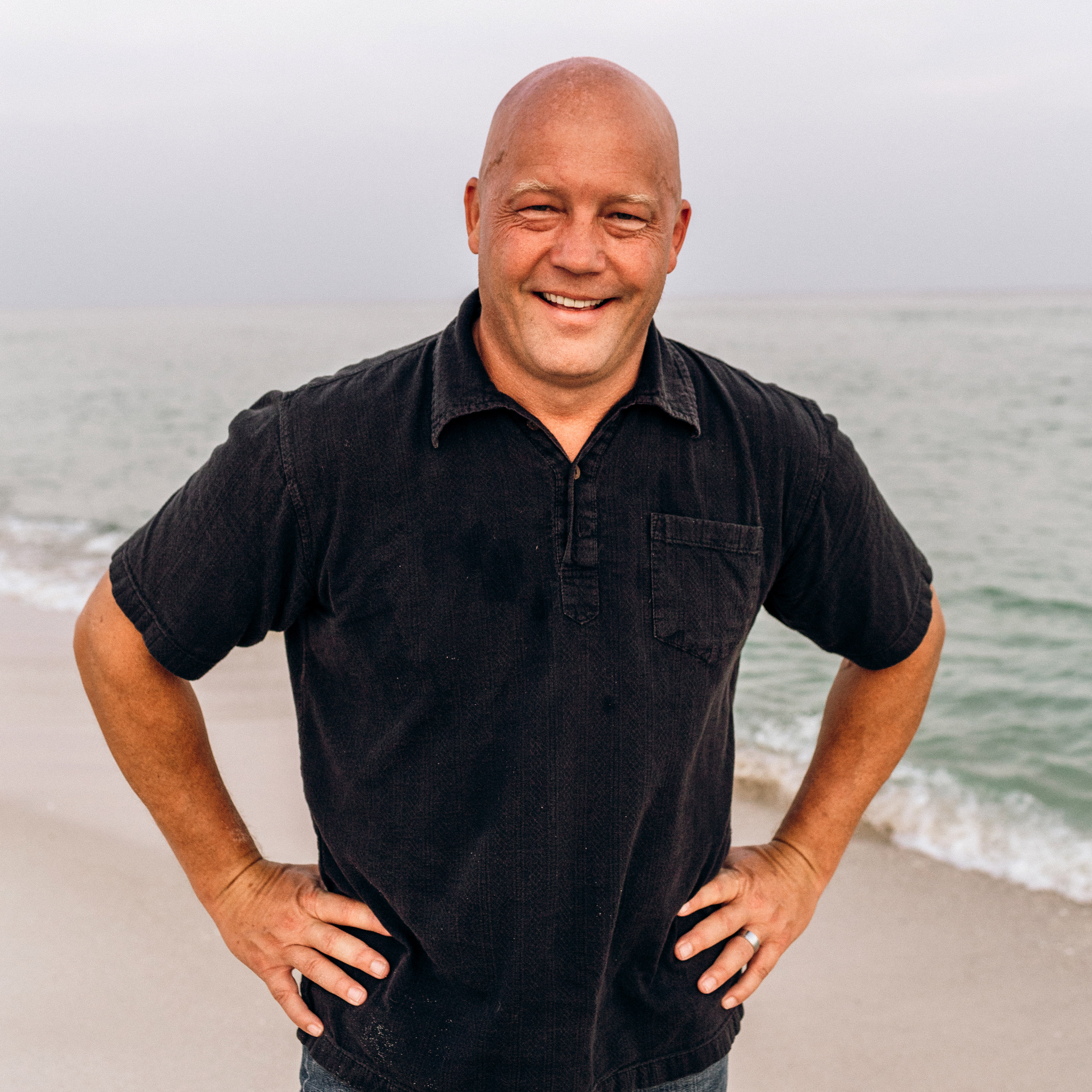
Allan Misner
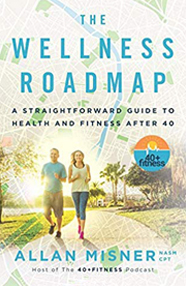
Allan Misner is a certified personal trainer and functional aging specialist, and the author of The Wellness Roadmap: A Straightforward Guide to Health and Fitness After 40. He hosts the 40+ Fitness Podcast and coaches clients over 40 through his 40+ Fitness community.
📚 Books by Allan Misner
Transcript
[0:00:33] CH: What’s up everybody, it’s Charlie Hoehn, the host of Author Hour where I interview authors about their new books. Today’s episode is with Allan Misner. He is the author of The Wellness Roadmap. Allan is a certified personal trainer, he’s also a certified functional aging specialist and he’s the creator of the 40+ Fitness Community which provides one on one and group fitness coaching, nutritional guidance and personal training for clients over the age of 40. He’s also the host of the 40+ Fitness Podcast where he’s interviewed hundreds of health and wellness experts and this episode is for people who are finding it harder and harder to stay fit as they get older. Harder to lose weight because they’ve had decades of mediocre or even poor exercise and eating habits. After they’ve hit 40 years old, they notice it’s substantially different from how they felt when they were healthy in their 20s. This episode is really for anybody who is tired of wasting time with fad diets and training programs designed for millennials. Allan has a really awesome system. I study mental health, emotional health, physical health. I’ve been sort of in this space myself for several years and it was almost uncanny how many topics Allan covered that I’ve seen not only work on a personal level but are also backed by science as some of the most effective ways to get healthy, get fit, both on a physical level and on an emotional and a spiritual level. This episode will help you along the path, it is your roadmap. Now, here’s our conversation with Allan Misner.
[0:02:39] Allan Misner: I was what I would kind of identify it with as extremely successful in my career for how far I thought I would ever go. I was a C-suite executive at a Fortune 500 company. I had income, I had stuff and I decided I really needed to take a break and go on vacation so I went back to Puerto Vallarta and I went out, there was a volleyball game and I love sand volleyball, it’s one of my favorite sports, I’ve loved playing it my entire adult life, since I was first introduced to it. But what I found was, that I couldn’t stay in the game. I had to sub out and was the first time in my life that I just felt like I had lost something important. I was sitting on the beach the next morning meditating.
[0:03:30] CH: Just a second Allen, were you running out of breath, were you physically exhausted? What was happening?
[0:03:36] Allan Misner: Yeah, I was exhausted, I thought I was you know, basically on the verge of having a heart attack and dying.
[0:03:40] CH: Gosh.
[0:03:42] Allan Misner: It wasn’t a call the hospital thing, it was just the exertion of trying to play in the sand, even when I knew I was moving really slow and missing points and costing my team - I’m uber competitive when it comes to those types of things. For me to lose a point, I was mad at myself as I would be at a professional player when you’re yelling at the TV. I’m yelling at myself, just basically the way I kind of put it, a fat bastard. Even to myself. You know, it was this frustration and so the next morning, I’m like okay, you know, I’m sitting down to meditate and I’m like, okay, what are the things I need to do to fix this to get myself back and I’m only 39 years old and suddenly I’m an old, fat bastard. It was just kind of one of those moments where I said okay, I have to change. I started down the path of this – I guess, for a lack of better word, rollercoaster of having some good times and some bad times over the course of the next 10, 11 years and it was just this huge struggle for me to figure out what I needed to do. Finally it all clicked into place and it wasn’t any just one little time where I said okay, I got it, I figured it out, it was a series of lessons over the course of about eight years where I was putting together the model which is now reflected in the book, The Wellness Roadmap and so it’s the roadmap that I used to get healthy and fit. Over the course of eight years, you had losing weight, gaining weight, getting a little bit more fit, losing fitness, gaining fitness, losing fitness. Over and over and over. It wasn’t until I kind of got to that point and I said, you know, this is what’s broken, this is what I have to fix, this is how I fix it and it all fell in place and I lost 65 pounds of fat, put on 10 pounds of muscle, got myself in one of the best shapes that I’ve been in my adult life. At least, since I was 29 and I was able to do all the things physically that I wanted to do. I could go back out and play volleyball and not have to sub out. I completed a Tough Mudder which is a 12 mile obstacle course race with my daughter who was at the time I think 20, 21. I was able to be out there competing at that level again. And so I had regained myself and at that point, I began to realize that I could have fitness and still not be well. I could have health and still not be well. What I needed was health, fitness and happiness. That meant eliminating the toxicity in my life that included a toxic relationship with my girlfriend. It included the toxic job and it included doing the things that my body needed me to do to be healthy and fit.
[0:06:48] CH: Let’s back up a little bit here because while I want to dig in to the toxic relationships and the toxic dynamics and get into the protocol that you outline in your book, I want to go back to the problems that you were saying you had of trying to put this stuff together. Can you break down like what all you were trying to do, what all you were experimenting with? Give an overview. Because I think a lot of people can relate to that frustration in trying their best at moving the needle and then being – feeling defeated when it slams right back the other way.
[0:06:48] Allan Misner: Sure, there’s a ton of stories like that in the book where you know, my efforts, my intention was there but it really just it came back to slap me in the face and probably one of the best examples was you know, I’m sitting there one Sunday and I was in pretty good shape at this point, you know? I was on what I would call an ebb. So I was on a pretty good upward momentum, were at that time. I felt pretty good about myself. I had a job where I was working about 90% of the time on the road. I had a weekend that I could literally just sit and watch TV and not do anything. So I’m watching infomercials and Face the Nation. I’m just going back and forth. This infomercial comes on that was for the Insanity Workout DVD with Shaun T. What I saw was, I saw them working out, I saw them uber fit and they were smiling and they were sweating and they were doing all of this without equipment and I’m like, you know, I could do that in my hotel room. This is perfect. I bought the DVD set, popped it in the DVR as soon as it came, said okay, now I’m going to sit down and do the first thing. The very first thing was this test and the test was a fitness test and you do these different exercises and you count how many you can do and that’s going to give you your baseline. I’m pushing myself through this test like he said, you know, do your best, I’m pushing myself pretty hard. The next morning, when I woke up, I felt like someone had strapped me to the bed and beat me with a baseball bat. I was just destroyed and I’m like laying there and I just didn’t want to move, I can’t get out of bed, I can’t move and I was like, what am I going to do? I can’t work like this, I’m hurting so bad. I literally wouldn’t be able to focus on work and I wouldn’t be able to work around the office. I had to call in sick. I’m lying there like why did I do this to myself, why did I think I could do something like this and you know, why did I push myself that hard? I knew that was how I was wired and it was going to take me a while to undo that wiring and so I gave up on it and I never did any of the workouts in the Insanity Series, I did that one thing and then pretty much just shelved - I probably have the DVDs around the house here somewhere because I tend to be a little bit of times a little bit of a pack rat with that kind of stuff but I’ve never opened them up again, I’ve never looked at the DVDs again. That was kind of a situation where because I let my ego overrule me, I broke myself. I think when we get older, a lot of times it’s very hard for us to realize how our mental age, 20, 29 whatever we want to call it is a lot younger than our physical age. In my case, even though I was in my 40s, physically, my body was probably in its 50s and I didn’t make that connection for a long time. There were a lot of instances in my life where I drove myself so hard that I broke. It wasn’t until recently that I’ve come to realize that okay, there’s a pace my body’s going to go and I need to work a certain way and then I have to recognize, there’s still going to be times when my body just lets me down. I tore a rotator cuff about two years ago, one and a half year’s ago. I knew I tore it when I tore it but I change what I did for my workouts, I didn’t stop moving, I just said I can’t do that kind of training that way, what can I do to still reach the health and fitness vision that I wanted to have. Now, I understand how to adapt to what my body needs. In the instance that there’s a setback which we all go through, I now know how to respond.
[0:11:28] CH: I want to dig in a little bit more to your mindset at that time, again, before we get into the protocol because I really think it’s important for listeners to know that it’s not just a matter of I want to move toward this better version of myself. It’s also having the fear of things continuing to get worse. That next day after that volleyball game, where did you see your future had things continued to stay the same? If you hadn’t made the changes that you ended up making.
[0:12:05] Allan Misner: Well, in my head, I had made the decision I was going to change. I asked one of the vendors, they have this vendors walking up and down the beach and I knew a few of them by name because they would play volleyball when we didn’t have enough people to play. One of them who had been playing. I knew who he was, he’d been on my team and was really a good volleyball player. I asked Luis, I said, Luis, take my camera and take a picture of me. I stood forward facing with no shirt on, and I turned to my side and if you’ve ever looked at your profile, you’ll know that if you don’t’ spend some time working on your fitness, you’re not going to look very well from the side. Most of us guys, we carry our bodyweight on our stomach and that’s going to show. It definitely did for me. I mean, I was a doughy mess.
[0:12:52] CH: What was your diet like back then by the way?
[0:12:54] Allan Misner: I drank all the beer, I ate all the bad food, I didn’t even – I’d never in my younger days, I’d never really ever had to worry about it.
[0:13:03] CH: Right.
[0:13:04] Allan Misner: I was always this thin, athletic guy. In fact, because I was a football player, I was actually underweight and never could put on weight. It wasn’t until like I got into my 30s that my weight even went over 200 pounds. But then, every year seemed to be piling on until by the time I was 39, I was probably well over 250, I didn’t weigh myself anymore. My thoughts towards health weren’t there. My thoughts towards fitness were actually not really there, other than I aspired to stay fit, I just didn’t do anything about it. All of my attention, 100% of my life force, what I did had been focused on my career for so long that I just really lost track of who I should really be. That focus was there and when I’m focused on something, I’m very intense on getting it done. If I tell you, I’m going to do something, I’m going to do it and so I was all focused on career and that’s why I ended up in the place I was. I was unfit, I was unhealthy and I was unhappy. I was the exact opposite of how I’d define well.
[0:14:20] CH: Did that affect y our relationships as well?
[0:14:23] Allan Misner: Well, yeah, because what I wanted was these low maintenance, I don’t want to have to bother with it, kind of relationships and you know. You have unconditional love from your mother, you have unconditional love from your kids but when you’re actually kind of seeking that from someone else, it typically comes with some other problems. You have to be active in your relationships, you have to be involved in their lives and really care about their day to day. I never put energy forth to do that and at that point in my life, that’s why I found myself in a toxic relationship that I really didn’t even want to apply any energy to, to end. I was comfortably, miserable I guess for a lack of a better word. I had stayed in this toxic relationship for years and I stayed in toxic jobs longer than I should have. I put toxic things in my body and I probably also toxic thoughts if you really want to kind of break it all down and so that’s really – at that point, I had done everything wrong.
[0:15:31] CH: Yeah, it takes those breakdowns to really see that and so thank you for breaking down what that period of your life was like. Now, let’s get into The Wellness Roadmap and this book, it fits with the analogy of a roadmap, the first part of the book is called the GPS. Setting your GPS. What is the GPS stand for in your book?
[0:15:59] Allan Misner: Okay. The wellness GPS is basically, you’re setting your coordinates, you’re getting everything organized before your trip. So you can have the most efficient and effective journey that you could possibly have and so if we don’t know where we’re going, I knew I wanted to drive from say here to Pennsylvania. I don’t know how to get to Pennsylvania, I don’t even know what interstate or highway I would use. I’d just start driving north because I know what’s north of here and I start driving north and when we start making decisions for our health and fitness that way, we meander and we don’t really get to where we want to be. The G stands for grounding and that’s where we really get an understanding of where we are today from a mindset perspective. I mean, we really have to have – I would have to have a pretty compelling reason to drive from here to Pennsylvania because Pennsylvania’s 17 hours away. What’s going to compel me to get in the car and do that drive? If I’m looking at my wellness from where I was at age 39 to where I ended up, that’s a lot more than 17 hours. I have to have a compelling why and I have to have a vision of what it looks like where I want to go. I know it’s filled Philadelphia and I know my why is I want to go visit a dear friend. That’s my why and so I’m now committed to this journey, I’m going to do this. That’s the grounding. The P is the personalizing. I need to know where I am today in a general sense, so what are my baselines? And 17 hours is a long way to drive so what are my pit stops, what are my milestones of where I want to go and where am I going to need to stop to get gas, those types of things because I don’t want to be in a bad part of Atlanta pulling off to get gasoline. You got to think through those little bits and pieces of what are my smart goals, my smart milestones that are going to get me along that path in a quick and easy way. The S actually stands for -
[0:18:03] CH: I got to pause you there, I just want to make sure I’m following this. Grounding is – what is your why, basically, what’s the ultimate motivation -
[0:18:12] Allan Misner: Your why and your vision of what this thing looks like. You know, my why was my daughter when I first started this journey. I realized that she was becoming an adult and the things that she was enjoying in her life were the things when I was her age, I would enjoy. We didn’t have mud runs and that kind of stuff, we didn’t have CrossFit. But I enjoyed that aspect of my life and I realized now, she was at that place and I wanted to be a part of that with her. What that meant was that I didn’t want to just be in the stands when she starts and finishes that race or when she goes to do a CrossFit workout, I didn’t want to be watching from the sidelines. I wanted to be in there with her. So my why was my daughter, my vision, then became, how do I get myself to a physical condition in health where I could do these things with her without injuring or killing myself. That was my grounding. Every step I take, every time I effectively maybe fall off the bandwagon, if I go back to that grounding statement, effectively commitment or vow, I literally can sit back and say, I know why I need this and I don’t need to let my one little slip up, the cookie I ate or the donut I had, I don’t need to say, well I screwed up so I may as well make this a cheat day or a cheat week or a cheat month or a cheat year. Which is what a lot of us do. I need to get back to that grounding statement and explain to myself, okay, you screwed up, you took a detour. It’s time to get back on the road and make this thing happen.
[0:19:54] CH: Yeah.
[0:19:55] Allan Misner: When you get into the P part of it and now I’m personalizing it, I’m saying okay, to do these things, I need to do, to have this vision, I need to lose body fat. I need to be stronger, I need more endurance and so I kind of know the condition of what my body and my head needs to be like when I finish this journey. Then, when you get to the S, that’s where you start the self-awareness. This is probably the hardest part of the GPS because you have to, at this point, be real with yourself. You got to be completely honest and say okay, physically, what am I capable of doing? I know I can’t do that, at that time I couldn’t do the Insanity workouts. I should have picked a different workout tape if I was going to do a workout. So having that understanding of your physical capacity and limitations and being real with yourself there and then the hard part again is the mental part of that. If I know when they bring the donuts on Friday which they bring on every Friday, I need to stay away from the break room all morning long and I need to bring a little bag of nuts so when I smell the donuts, I just start eating the nuts. I need to have that self-awareness to know, donut day is going to mess me up. When you put your why and you put that grounding there, you got this firm foundation and you know where you’re end point’s going to be and now you know all the – most of the things that would trip you up, you’ve now set a really good plan. Your GPS is loaded and you’re ready to drive. You’re still going to run into obstacles, you know, road construction, rainstorms, that kind of thing on your trip so you’re going to have to those as well but in a general sense, you’ve mapped out most of what you need to do to be successful.
[0:21:48] CH: I love that you started the book this way, it’s so important, it’s so easy to eat something, for instance, and just feel bad about it and be like, I shouldn’t have eaten that. Why, right? What are you trying to accomplish? Or are you just feeling bad? Are you just criticizing yourself? The same with exercise, I mean, I’d imagine the years before this started clicking in a place for you, that you would just feel bad about yourself if you didn’t do the Insanity workouts or if you didn’t exercise as much as you thought you should be exercising, right? There was no GPS back then.
[0:22:34] Allan Misner: No, that’s the whole point. I had made a decision that I wanted to be somewhere or do something or be somebody else but I didn’t have a plan, you know? I tried tactics, you know, the Insanity workout was a tactic. The drinking more water was a tactic and even working out and saying I’m just going to cardio this thing to death. Those are tactics. And don’t get me wrong, tactics are important but they’re sort of the third piece of this. You start with the commitment, you know, setting the GPS, then as we get into the next section, we’re going to set strategies. When we start knowing things that are going on with this, we’re going to start setting strategies to understand, okay, what are the things that would move the needle further. What are the things that are going to be the most important things for me to do? Then we can start selecting tactics. The tactics then are the – I’m going to do this particular workout, so I decided that you know, I need to improve my endurance, so I’m going to do high intensity interval training, as a part of my training. Because I know I work a lot of hours and it’s going to be really difficult for me to get out and run an hour, you know, six times a week so I’m not going to get my long runs in if I want to do that. I decide, okay, well some of my workouts can be shorter because I’m going to do this hit training and that will shorten my workouts on those days and still allow me to improve my endurance over time.
[0:24:01] CH: Yeah, so once we set our GPS, we have the intention, we have our mission so to speak and we know where we’re going. Let’s get into more of these tactics that you're talking about. You list out seven chapters in the book. We don’t have to cover them all but there are ones that really stand out to me as things people either tend to neglect or they just think aren’t a huge deal so one of them that screams out to me, I’d like to start with is rest.
[0:24:36] Allan Misner: Yes. The actual acronym I use is STREETS. That’s going to be strategy, training, rest, and then you’re going to have energy which is food and water, education and then there’s the last one is going to be time. Then the final S is stress. I wouldn’t necessarily have put them in that order if I didn’t need to spell out an acronym. You know, the strategy is the most important one and I want to have that in the front but when we get to the rest, I think, there’s two types of rest that I talk about in the book and that one is, we’re a little older now and I think people lose sight of the fact that we can’t work out seven days a week forever. Our bodies are going to need time to recover. The recovery time becomes even more important for us now but your body is actually doing more to improve your fitness while you're resting. Than it was, while you were working and I’ll kind of explain that. If I go to lift some heavy weights, I want to add some muscle. When I lift the heavy weights, what I’m effectively doing is I am damaging the muscle, I am stressing that muscle and it is effectively breaking down the muscle fibers to do what I’m asking it to do. If I try to go in the next day and do that same workout, my muscles won’t have recovered and therefore they won’t be able to produce the same amount of work and I could probably mentally push myself to do more work which you know in the past with the ego I had doing Insanity stuff I might have tried but I know now particularly as I have gotten older, I need more time rest and recovery, to allow my muscles to do the things you’re going to do. So I tend to take three days off between each workout for a particular muscle group and I could use the other time to work on other modalities that are just as important to me. It’s like I may care about balance because one in four adults over the age of 65 falls and that’s 29,000 deaths from falls every year and that is more than gun deaths. So people are worried about gun deaths in the United States and rightfully so every death matters but falls kill more people than guns.
[0:27:02] CH: Right, if we don’t engage that part of our brain nearly enough of balance. We had an author, Jim Klopman who wrote Balance is Power, who spoke about this extensively. So you focus on balance, you do – sorry go ahead.
[0:27:21] Allan Misner: Well no that’s what I am saying, during my rest time it is not that I am just laid up watching Netflix. I can do other things actively to improve my other fitness modalities. To blend that into a program. So that is one side of rest, it is just understanding what your body is capable of from a workout and how long it’s going to need before it is capable of giving me the maximum work the next time. And then the other side of rest is the sleep and I think that’s probably the more critical for most of us. Most of us aren’t over training so much as we’re under sleeping. It is hard because there are so many distractions. There is so much that is around us. TVs, screens, computers, Words with Friends. My wife cannot walk away from a game until it is over and then if they challenge her straight away she might do it again and Netflix has turned into the TV binging nation and I fall for it too. You know House of Cards new season is on and my wife and I think watched two or three episodes last night. But I don’t normally have that much screen time but I still told her. I said it is 8:15, it is time for me to go do my sleep ritual I’m done and so –
[0:28:37] CH: Sleep ritual?
[0:28:38] Allan Misner: Oh yeah, you need to have a sleep ritual. Right now for most of us our sleep ritual is brush your teeth and what I found is that’s typically not enough time for your brain to shut off.
[0:28:51] CH: Right, so what is your sleep ritual?
[0:28:54] Allan Misner: Typically what I like to do is I like to go through a process of while I am brushing my teeth, I am mentally writing my to-do list for the next day and I am unloading all the stuff that I need to do or feel I need to do or didn’t get done today because that’s always there. It is like a rolling list of things that you should have done, could have done, may do. And I just sit there and prioritize and I might say, “What is the one intention I want to have tomorrow? What is the one thing that’s going to be really, really important for me to do tomorrow?” And like today at the docks last night, I was thinking, “Okay well I know I have this morning an interview for a podcast. So I need to get up, I need to prepare myself for that.” I make sure I cleared everything else out, make sure I am in the right frame of mind to do and then it’s okay. Then after that I have a client call with one of my one on one clients and so I’m like, “Okay here’s some videos of his lifts, so I need to put away side time to make sure I do that one and watch his videos so I can critique him on his movements.” And then I could take his call and then my wife is affectively retiring today. So there is a party for her right after that. So I have those three intentions for my day and anything else I get done is cake. But I know in the morning because I thought about that while I was brushing my teeth that this is my intention for tomorrow. So I get that all off of my head. There is nothing for me to do on any of that until tomorrow, the three most important things. And then I go and when I go to lay down I make sure that my room is completely dark. So I am closing curtains and I am making sure everything – I am making sure the temperature in the room is going to be cool enough so that I could sleep well. So I am just setting my fortress of solitude and I put in my ear plugs, different things that I need to do. And then when I lay down I start through basically it’s a meditation and I know this is going to sound really weird but I envision myself digging in sand and I am digging from underneath a house. So we have some of our houses raised here and the sand has blown up against the side and I am just digging through the sand and I am waiting just to see what is on the other side and typically I will make it out and I will see the water and the surf and I will feel the warmth of the sun on my face. And that’s my meditation and typically I am asleep before I even get to the part where I am walking the beach. Sometimes I get to the point where I am walking in the beach, it is just one of those mental movies I put in my head to relax me, to remind myself of all the good and gratitude and things that I have in my life and that I am basically free.
[0:31:47] CH: I love it.
[0:31:48] Allan Misner: So it is a weird meditation, I know, I developed it just for me. You may have something that will work for you but it’s just those little bits and pieces that take me from watching the drama of Netflix to telling my brain, “Okay, you have accomplished everything you’ve set out to do today, you’ve got your intentions set for tomorrow and now it is just time to be grateful, relaxed and enjoy what you have in this life.”
[0:32:17] CH: I love it. Now again, we won’t necessarily have time to cover all these in depth but I want to talk about stress management because this is a topic that you brought up before we started recording. This is something very important to you and your wife. So talk to me about stress management.
[0:32:34] Allan Misner: Okay, stress was probably the hardest thing for me to deal with. You know as I said, I was working for Fortune 500 companies in the c-suite, an officer, a lot of responsibility, a lot of things were happening, a lot of angry and mad people around me most of the time because I worked in internal audit. And I can tell you that the only people that like internal auditors are the attorneys inside the company. IT sometimes like us but sometimes doesn’t. But in a general sense, we have no friends at work and a lot of people who would rather just stab us in the back and watch us bleed out. So as I went through my career, stress was always there and the acute stress was there, the chronic stress was there and it took me a long, long time to get a grasp of that and I am going to say saving grace of all of this was because I probably wasn’t strong enough mentally to do a lot of these things myself was that I did finally end that toxic relationship with the girlfriend. So my stress levels actually went down significantly after that but I still had the job so I was still peak stressed for what most people should ever have to endure and then I got laid off and it was at that point that there was this ‘whoosh’ and it gave me then the time and clarity to step back and say, “Okay, I had this stressful world and it’s now been taken from me. I can either choose to do what I love which is do the podcast and help my clients. You know the stories, the day to day of having a conversation with a client when they tell you that they – there’s a personal record on their deadlift or they got a compliment at work or now they’re feeling more comfortable in their clothes, those conversations are priceless and I would never ever want to give those up at all and I won’t. So I had the choice of continuing to do this and not really feel – not make the money or I could go back into the lion’s den and deal with it again. Now I had developed a lot of what I call short term fixes for the problem, breathing, meditation, those types of things. I developed some of those along the way but I was always going to be in that toxic stressful environment if I let myself. So my wife and I - I just said, “I think I am not going to go back. What do you think?” and she says, “Can we make it?” I said, “We’ll make it. One way or another we’ll make it.” And so now she and I are both going to move down to Panama and find a simpler easier minimalistic way to live and at that point, the only stress that will be there is the stress that I choose to allow in my life and that won’t be much.
[0:35:45] CH: Beautifully said. Yeah that’s great I think I relate more intensely to what all you just said that anything else. I am a very type A personality and I went through the exact same thing and I mean my previous book was on a very similar topic to my road map out and it sounds like we landed at very similar conclusions. One of my first recommendations beyond getting your head in the right place in the book was look at the vampires in your life. What are the things that are continually pulling you down into that state that is so undesirable that you hate being in? Because it is not in your head a lot of the times. It is not just – I mean yes, how we respond to the world is a choice and everything but there are people and there are circumstances that continually thrust you into a lower state and if you have those people around you, man, it makes you so hard to get well.
[0:37:00] Allan Misner: Yeah, I call it crabs in a bucket. I even talk about that a little bit and I have done a podcast episode on it. You know crabs won’t get out of a bucket. Many of them won’t because they are too busy trying to pull other crabs down to recognize it and some of those folks, I hate to say this, this is not just the jobs and the people in the jobs that might be those people, in many cases it is well meaning people in your life that just think what you’re doing is wrong. And you may want to try a particular way of eating, you may chose to go vegan or you may choose to go keto and they’re going to say, “Oh my god you can’t do that,” you know?
[0:37:41] CH: Oh yeah, I was doing extended fasting and you would have thought I was telling people that I am in the process of killing myself right now. The way that they reacted. Yeah, you have to keep some of the changes to yourself or find social workarounds because it’s threatening to the other person what you’re doing.
[0:38:03] Allan Misner: Seek out the team, seek out the people, they are going to understand what you’re doing and try to relate more with them. You know the Jim Rohn quote, “You are the sum of the five people you spend the most time with.” Make those five people in your life the ones that are going to support you and distance yourself from some of the other folks. Even if it is just for temporary. If your aunt or your mother or your sister just really can’t wrap their head around why you’re doing what you are doing and every time they see you they’re like, “Eat something, eat something.” No, this is a fasting day and you say, “Okay I can’t visit you for a few weeks because I’ve got to get this thing done and then I will probably be able to come over and see you.” So I know that is hard and the whole eliminating stress is really one of the hardest topics that you’ll deal with. I wasn’t strong enough to eliminate the job. I am proud of myself that I was actually able to eliminate the toxic relationship. Because for me that was maybe the hardest thing I had ever done for myself ever and you know as I go through this whole model and I look at all of it together, I am like that was one of the big things that helped me because it reduced my stress level at least to a point where I could somewhat tolerate it while I got the other pieces of my life together.
[0:39:29] CH: What made it so hard for you Allan?
[0:39:31] Allan Misner: You know one, at the time when we had been together, so as you’re sitting there talking to a longtime girlfriend of eight years, a live in girlfriend. Not that we had entwined our lives like a married couple but we’d gone pretty comfortable with how we were living our lifestyle and what we had together. And for me it was very low maintenance from the perspective of I could be me and not a lot of relationships are really that way. I have one of those now. I could be me and I have a wonderful woman and I adore her and I let her know that all the time. And so it is night and day and it’s not really so much about the relationship. Just realizing that I always found it very hard to do things for me. I found it hard to buy myself some things. I found it hard to take vacations.
[0:40:25] CH: You felt guilty?
[0:40:27] Allan Misner: Yeah, there was a, ‘I could be doing more for somebody else’ mindset with the people around me. You know if I actually had told the girlfriend and said, “Look I need to go take a weekend alone, a me time weekend,” I think she would have thought I was cheating on her or something, you know what I’m saying? “No I just really want to go fishing for a weekend and not think about anything.”
[0:40:49] CH: Yeah and gosh it is so funny. I just had this conversation with my wife months ago and I totally relate. I know so many guys who struggle with this and I don’t know about you but the problem for me was I felt that guilt and so I was bracing myself in my head for resistance to basically suggesting like, “Hey, I need some me time.” So I came into it with this energy of confrontation like, “Look, this is the way things are now,” and of course it’s met with resistance.
[0:41:24] Allan Misner: How did that go?
[0:41:26] CH: Right exactly. And so it’s so funny because you know conceptually like your oxygen mask goes on first before you can help others. But it’s very – I don’t know, it’s a hard habit to break out.
[0:41:45] Allan Misner: Women actually have it tougher than we do. Women have always been the caregivers and that is a lot of what I have been finding as I meet women that are in their 40s and 50s. Their kids now have grown up and where they’ve been the caregiver, they’re not required in the same way that they were before and so there’s this place that they’re in where now they have this time and they have this desire to change. But they really do struggle with that. Making an investment to hire a trainer or taking the time to go to the gym every day and saying, well that is time I could be spending with my husband or going over and babysitting my grandchild. They don’t want to invest the time in their own selves. And I get it because I had that same mindset of the time I am spending away is it doesn’t work because when you’re traveling 90% of the time or you are working 16 hour, 18 hour days that extra hour was the actual hour that I would be awake at home. Versus the hour I am asleep working out. So you look at that time investment and you are not really thinking in terms of the true value. As you said putting the mask on yourself first so you can be the better caregiver, so you can have the strength and the energy to do the things you want to do. So that is really a tough one and it further stresses us because we know we are not doing the right thing for ourselves but we’re just not comfortable making that position. Taking that line in the sand without getting really frustrated and like you said perhaps even approaching it in a way that’s not the most productive but way to approach it.
[0:43:35] CH: Right, gosh this has been so great, so valuable. We didn’t necessarily have time to cover everything. There is so much more in the book. Again you talk about the strategies, the training, energy or as you said food, drink, education, time and then the last part of the book is call ‘CARGO’. What is CARGO about?
[0:44:00] Allan Misner: So a lot of times when folks reach a fitness goal, so their goal was to say run a 5K, they were on the couch and now they’ve gone through a program and they just ran a 5K and there’s a solation and a lot of folks will then say, “Well okay let’s go out and have beers.” And you weren’t able to drink so let’s just go have some beers and so then they settle in and two months later they would struggle to finish a 5K. And so I talk in the book about you need to celebrate because celebration is an important thing but make the celebration align more so with what you’ve actually done for yourself. So when I was training for the Tough Mudder, my celebration was finishing the Tough Mudder with my daughter. And one of the things we did in that race was one of the last obstacles was this hanging wires that electrocute you and we are running up to this obstacle –
[0:44:57] CH: It just sounds hilarious.
[0:44:59] Allan Misner: Yeah this is great, you know? Doing this with your daughter and so we are running toward it and these grown men, I mean your 20 and 30 year old men all standing there with trepidation on their face just terrified. Because they’d seen guys run in get hit by a wire and just fall and then they try to immediately pop back up and get hit by another wire and they’re down again. So these guys were terrified. I told my daughter I said, “Don’t think about it just run around them.” We are not waiting for them, we’re going and we just ran around them, we re-met, we grabbed hands and we went into the wires together and we plowed all the way through and though yes, I was getting electrocuted and one time my leg felt like it was going to go to jelly and I was going to fall but I just kept moving, my daughter kept moving and we came out the other side, finished the race holding the hands. So that was my celebration that I am standing there and I have a picture of the finishing of the race and you’ll see the picture in the book and that is my celebration. So my celebration related to what I had as a vision it was the culmination of my vision was my celebration and then after you do your celebration you’ve got to start looking at yourself differently because you are different. You’ve changed some habits. You’ve changed some mindsets, you are a different person than you were when you started this journey. So take some time to get comfortable with that because people are going to look at you differently, they are going to call you skinny and you might not feel like you’re skinny but they are going to want you to eat something and they’re still going to have those saboteurs we talked about, the crabs in the bucket. They’re going to want to pull you down. So you’re still going to have those things in your life. You just need to get comfortable with the fact that you are a fitter, healthier, happier person and accept that. So this A is accepting who you are now, the new you and then the R is resetting your GPS. So you have climb this mountain and now you see across the peak that there are other mountains to climb. There is so many more opportunities for you now to go even further. So I said maybe you completed the 5K and you decide, “Well now I want to do like a mini triathlon with the swimming, the biking and a run. So you are going to start training for that because you always enjoyed swimming as a child and you like biking. So you want to put those together now and have a new vision, a new thing that you are marching towards. So reset your GPS and it is a little easier the second time and the third time because there will be pieces of you that you have learned along the way. You will be a lot more effective and efficient at setting your grounding and you’ll just know yourself better so it is easier for you to start putting these pieces together to set your GPS the second time and third time and fourth time and on and on and on. And then the final piece is go. You are the driver of your mission and you are the driver of this and if you don’t take the wheel and you don’t put your foot on that gas pedal and press you are not going anywhere. So this is all about you taking the driver’s seat and go.
[0:47:56] CH: Allan what is the best way for our listeners to follow you or potentially get in touch with you?
[0:48:03] Allan Misner: They can go to wellnessroadmapbook.com and that’s where they can learn all about the book. I am building the page out a little bit now so on and off there will be more and more material as I get it all together and figure that all out. And then of course, I have been doing the podcast, 40plusfitnesspodcast.com for three years. So there’s tons and tons of episodes out there well over 350 at this point and there they can get in touch with me, learn more about our Facebook group and other things that I am doing the programs but those are the two places I would send folks.
[0:48:41] CH: Love it and the final question I have for you is to give our listeners a challenge. What is the one thing they can do this week from your book that will have a positive impact? You have about 15 seconds, go.
[0:48:56] Allan Misner: Okay anything in life that you want to do, establish your why and set your vision. Put that together as a commitment, not a decision, not a resolution, not a goal, not a diet, a commitment and then once you have that commitment, write it down that’s your vow to yourself. So self-improvement comes from your desire that you’re either turning into a vision and a why, very emotional and deep why, when you put those things together there’s nothing that could stop you.
[0:49:29] CH: The book is The Wellness Roadmap. Allan Misner, thank you so much for being on the show.
[0:49:35] Allan Misner: Thank you, I appreciate it Charlie.
[0:49:38] CH: Thanks again to Allan Misner for being on the show. You can buy his book, The Wellness Roadmap, on amazon.com. Thanks for tuning in on today’s show. If you liked what you heard, here is what I want you to do next. Open up the podcast app on your phone or iTunes on your computer and search for “Author Hour with Charlie Hoehn” and then click “ratings and reviews”. Take 10 seconds to rate this show or leave a review. It is a small favor but it’s really the best way to show your support and give me feedback and if you know someone else who’d love Author Hour, take another three seconds to text them a link to this episode. We’ll see you next time.
Want to Write Your Own Book?
Scribe has helped over 2,000 authors turn their expertise into published books.
Schedule a Free Consult