Brandon Steiner: Episode 216
Read the full transcript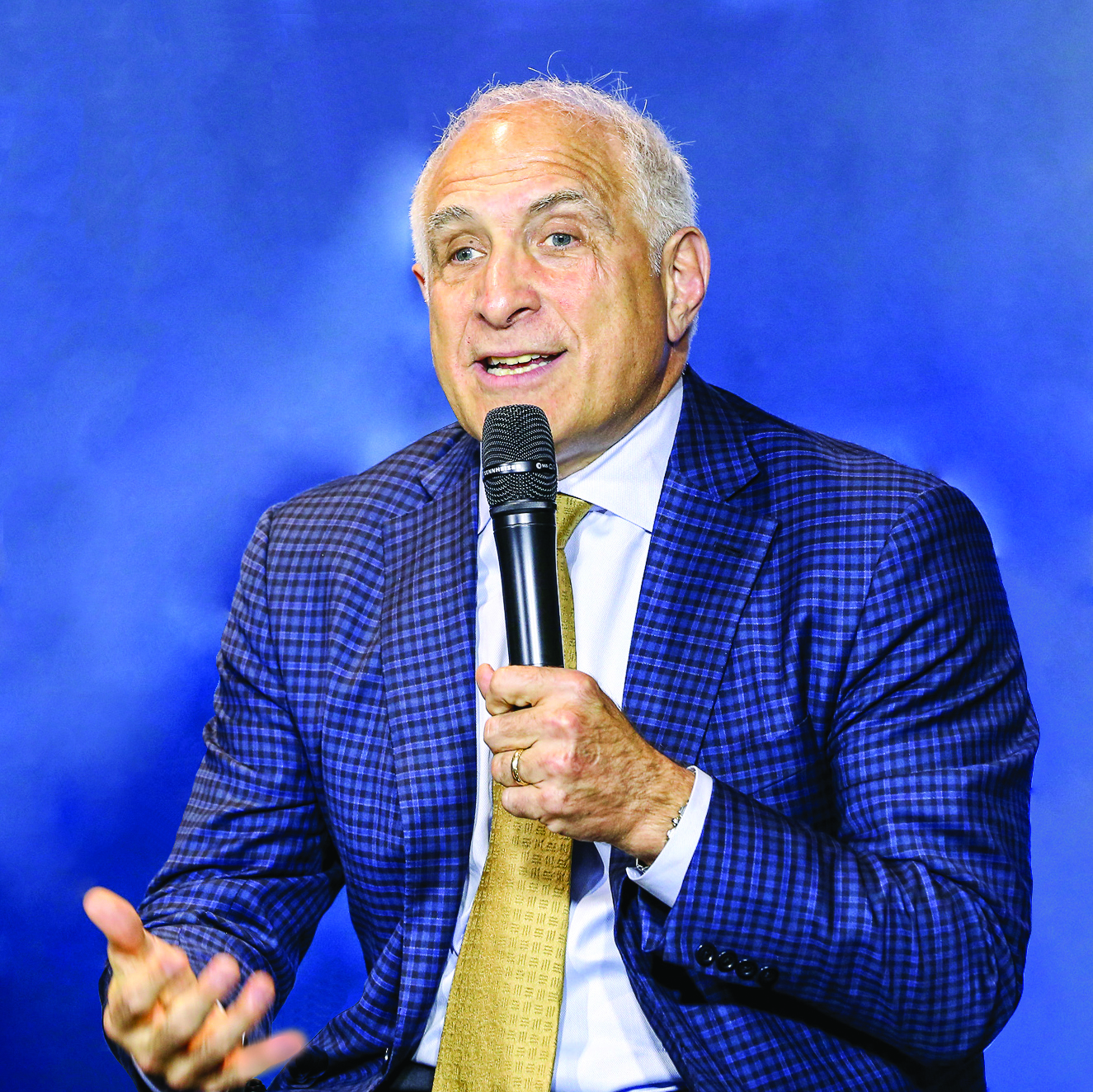
Brandon Steiner
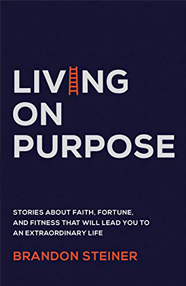
Brandon Steiner is an author, speaker, and media personality, and the founder and chairman of Steiner Sports Marketing and Memorabilia. Widely regarded as a pioneer in sports marketing, he built one of the best-known companies in the sports collectibles industry. In Living on Purpose, his third book, he draws lessons from some of the world's most remarkable people to explore three pillars of a satisfying life: faith, fortune, and fitness.
📚 Books by Brandon Steiner
Transcript
[0:00:14] CH: What’s up everybody, it’s Charlie Hoehn, the host of Author Hour where I interview authors about their new books. Today’s episode is with Brandon Steiner. He is the author of Living on Purpose and Brandon is the CEO of Steiner Sports, which is the country’s leading sports collectible and athlete marketing business. This episode really struck a chord with me and it will very likely strike a chord with you as well because this is about what happens after you’ve reached the top of the ladder and the pinnacle of achievements in your work, in your life. Because before you celebrate, Brandon believes you need to take a second look around. You might not be defining your triumph in the most stable or sustainable way. Because even though success is rewarding, you might be on the wrong ladder or the ladder that you're climbing up might be on the wrong building. In this episode, we talk about the pillars of a satisfying and fulfilling existence. Brandon shares some really valuable lessons and some really great stories from his own life. I took a ton of notes while I was speaking with Brandon like how he learned, how to sell because of a lesson that his mom taught him when he was a kid. Really great story that is applicable to anybody working in business. He also shares a great story about when he opened up a Hard Rock in New York and the lesson that he learned when he had to take someone’s watch as collateral for not paying for a meal. If you’ve ever experienced success or being rich but you felt bankrupt emotionally or spiritually or you knew that you weren’t the partner or the parent or the friend that you wanted to be. Well, this episode is definitely for you. Now, here is our conversation with Brandon Steiner.
[0:02:36] Brandon Steiner: People always ask me, how did you start Steiner Sports or what got you going? I hear the word purpose or finding your why. I find that you know, everybody’s throwing those things around but I think that sometimes people make that a lot more complicated than what it really is. For me, everything I’ve done that’s been good, great and extraordinary has usually started with a purpose. Even sometimes that purpose is not always the biggest one. I’m on the train and my mom had just passed away in 1994, June 17th. You know, it was a very tough day for me, it was one of my first days going back to work and the Rangers had just won the Stanley Cup and they hadn’t won a cup in 54 years. I’m a huge New York Ranger fan, I mean, I bleed Ranger blue and so it was very mixed emotions. I was trying to enjoy the fact that finally my team on and on the other hand I just lost one of the most pivotal people in my life, period. The main thing that was really bothering me on this particular morning was the fact that I was on this metro north train. One guy had his shoes off and another person talking on the phone, another person eating. Train was overcrowded, on the way to work, one of the people in the car that we shared took over the train, was having a fight with her spouse, she was crying because they were about to get divorced. It wasn’t working out for me and I just – got to get off this train. I just can’t go to work every day on this train, it’s just not for me, from the scheduling standpoint, the crowdedness standpoint. I looked down at this person’s newspaper on the back page of the Daily News, it was Mark Messier was the captain of the Rangers and just won the cup and he had the big Stanley cup in his hand, he had this incredible grin on his face. I’m just thinking, man, God, look how happy he is and look how unhappy I am. Boy, would I be happy if I can just get off this train. And I said to myself. Well, in order to get off this train, I got to buy a car and I said, you know what? I just got to figure out how I can make a lot of money. If I can make a lot of money, I go home and tell my wife, I got this extra money I’ve made and I’m going to buy a car and commute to work. I said to myself, my brain just started going a million miles an hour trying to figure out all these schemes and dreams, how I can make some money and again, I look back on that daily news page as it was incredible [inaudible] won the cup 54 years. I go I bet you I could sell 15,000 of those. I track, Mark Messier signs that we did it, all the Ranger fans, buy this photo and at the time I had a marketing company, I just marketed athletes, I didn’t do anything with autographs our collectibles. It took me about two, three months, I tracks Mark Messier down, convinced him to sign a contract, he’s going to sign these photos, we did it, Mark Messier. And sure enough, it was a home run, he was my first guy, started my second company which is Steiner Collectibles which I started with 10,000 bucks and end up being a pretty big company. Most importantly, at the time, I signed Mark, we did really well with that photo and I bought a blue Lexus SE400 and I didn’t have to take the train and a lot of times, people ask me, how did you start Steiner, it’s genius, Steiner Sports is amazing, that company. I’m like, I just want to get off the goddamn train. Trying to do anything to get off the train and that was the photo that hit me and I thought man, that’s a money grab. I said, that’s an opportunity to make a lot of money. One of the things I’ve learned is that you could do some really cool things and I hope that story somehow relates to many is, that listen, I think it’s great to have a purpose that’s much more worldly and much more fulfilling as far as the serving and helping of others. But Ii’s okay sometimes just to a purpose for the money grab or something you want selfishly. You could build off that, obviously I’ve helped a lot of people along the way since I started that second company. But it started with a purpose which was I want to get off that train like there’s no tomorrow. I think that the most important thing for me is that I’ve learned that when you have a purpose and you start dreaming a little, what ends up happening is you quickly move to try to come up with an understanding and an agreement of what needs to take place for that purpose to really happen. Then once you do that, you get committed and once you’re committed, you know, all kinds of things, imagination and diligence and creativity and there’s so many things that spark when you have a purpose. When you want something, even if it is something materialistic or a money grab, it’s tough to get in the way. What people don’t realize is what is the initiator of that purpose and a lot of times it’s just a dreaming big and something that you really want to have happen. I think for me, it’s always been about wanting to do good but sometimes, some of my purposes have been about doing well and about just getting into a car as opposed to taking the train.
[0:07:13] CH: Yeah, getting out of pain. I think pain is such an underrated motivator and I love that story because your purpose was simply to get out of, what was for you, a bad situation. And like you said at the beginning, people are so focused on the grandiose, you have to find your why, your one true purpose but if it improves your lot in life, it doesn’t have to be this make a dent in the universe type purpose. It can be as simple as just getting you into a car and off of a train.
[0:07:48] Brandon Steiner: Another just a quick story. I was literally 10 years old and I got called to the front of my class in school. Mr. [inaudible] gave me an envelope of money, my 5th grade teacher and he said, we put a collection for you to buy some clothes and I said, why do you think I need clothes. He says, well, you’ve been wearing the same pants for three weeks in a row, I say, well how do you know that. He goes, well, there’s a rip in the right knee. I went home, I was really upset, told my mom, of course my mom, you know, the pillar of my life. You're in between sizes, of course we’re going to get you more clothes. But I went to bed that night, I knew he just obviously it’s the first I realized we were really poor. You’re a kid, you don’t really don’t know better and especially when nobody tells you how poor you are. Later on as I got older, people reminded me how poor we were. You know, at that point, nobody had really woken me up to it and when in my mother’s room, I said mom, you don’t have to worry about me anymore. I’m 10, I can handle myself and I’m going to get a job. I went up and down the king’s highway and found a job. A couple of years later, I said, “Mom, I need a career change,” and she said, “I think you should go get a paper route,” and I think I was like 12 or 13. I wanted to have more free time after school as I was working after school, giving out circulars, delivering fruit and vegetables and my why and my purpose was I wanted to play with my friends, I know I needed to make money to help support the house and buy food and buy clothes. The paper route was a great solution and then when I got to the paper route stand, you could win a box of candy bars if you sold the most amount of paper and increased the size of your route. At the time, the route I took over was 29 dailies, 24 Sundays. My mother’s like, “Listen, if you want to expand that route, you got to go knock on doors and you got to get people to sign up.” So I’m knocking on doors, I got nothing, zero, nobody’s buying I not this thing. I go to this older woman, she’s probably way in her 70s and back in 1969, that was old. She’s like, “Son, I don’t want the paper delivered, I get it from the corner and it’s the same price as me as the corner store.” “But yeah, but then I got to tip you.” I go home, I said, “Mom, can you believe, we got to move out of this neighborhood, the people in this neighborhood are so cheap that they don’t even want to tip me.” I would bring that newspaper every day and the lady didn’t want it. My mother said, “Listen, I’m going to teach you a valuable lesson, I want you to listen to this, I want you to listen to it carefully. You got to stop selling, you got to start solving, you got to start serving. You’re selling something that everyone else is selling and people can get the same item somewhere else, you got to figure out how to differentiate yourself. The best way to start by doing that is to serve people and help them solve a problem.” I’m really starting to get my arms around that, 12, I’m going out and knocking on doors and I want that box of candy bars. I always tell people, I saw the light at an early age. Unfortunately, it was the refrigerator light because I was starving, we had no food and to bring home a box of candy bars was like man, it was like a home run, it was like winning the lottery. I’m knocking on doors, I got nothing, It’s like a Thursday night at 10:30 at night. I’m that desperate, I go back and knock on the lady’s door. I said, “Ma’am, I know you’re thinking about getting the paper delivered. You know something? If it’s torrential downpour, heatwave, snow storm, ice on the ground, it’s not safe for a woman of your age to be outside. If I bring you milk and bagels on Wednesday and Sunday mornings and if you need something else, I’ll get it. If the weather’s really bad, you shouldn’t be outside, you need stuff from the store, I’ll pick it up on the way while I’m delivering the papers. I’ll never be late that paper by your doorstep by 7:30 AM.” “You would do that for me sonny?” I said yeah, 100%. Not only did that lady change her mind to deliver the paper, and sometimes it pays to go back a second time and ask, you never know you could always change someone’s mind even though they said no the first time but she charm me out to everyone in the neighborhood. I went to 199 dailies and 234 Sunday’s. I learned about serving and selling and I learned about service and I learned also about, that if you want to fill yourself, you got to forget yourself, you go to be consumed about what the other person needs, more than consumed about what you need. That’s a little bit of an underlying theory about where Living On Purpose is about is that you want to do good and doing good will lead you to doing well. Most people want to do well and they figure, one day after I do well, well I’ll do some good. I think when you think initially and first off and foremost about doing good. The byproduct of doing good will enable you to do well and that’s exactly what happened that day and that time when I was delivering newspapers. A simple opening up a lot of papers and by the way, I won two box of candy bar. I just lit it up and you know, I will swagger, you know? When you got 199 dailies and 234 Sundays and the moral of that lesson for me was just you know, about serving people and it’s really been a corner stone for me in everything I do in life and business about thinking about servicing people and solving people’s problems. Really leads you to great relationships that will be long lasting because I think, nobody wants to get rid of someone that’s helping them with a problem or certainly is willing to serve.
[0:12:42] CH: Wow. That was awesome.
[0:12:45] Brandon Steiner: That’s a different story.
[0:12:47] CH: No, I’d love that distinction that you painted and I want to get into your book but would you delve just a little bit deeper there because that is an issue that I’ve struggled with, I know plenty of people who struggled with. Where they feel as though, “Hey, I am solving this person’s problem, why aren’t they buying?” But you clearly hit upon a nerve, you struck a nerve with that woman when you said that you would help her in all of these circumstances where, yeah, he’s right, these would be tough situations where I would need him. Can you just explain your process even more?
[0:13:28] Brandon Steiner: I think the process that I’ve grown especially started back then even when I was 12 man, was you kind of put yourself in the other person’s shoes. Whenever I would make a sales call, even when I started Steiner. I would try to picture and imagine where the other person was, what it would be like to be in her office, what they’re going through, what’s happening for them. In order to know that, you got to ask questions that aren’t about making a sale and aren’t about you. General questions, because the person you’re dealing with, in their mindset and what they’re going through certainly is going to have an effect on what’s going on for them and whether they can make a decision, whether they can buy something from you or use your services. It’s the stuff that happens outside the lines is sometimes usually creeps up inside the lines. My mindset always is to think about the other person, even negotiating as much as I’m thinking about myself. Because most people are most self-absorbed and are worrying about their sale, their situation, their quota, what they need, what they want and it’s a road to mediocracy, frankly. I think you know, when you can get self-absorbed on what the other person wants. More than even what you want yourself, you’re on the road to doing something extraordinary. People always laugh, when somebody calls me up for a favor, I’m following up with them as if I was asking them for a favor. I take the favor that they’re asking me as seriously as if I was asking them for a favor. That’s the difference, that’s an opportunity. My wife always says, “Well you’re doing that for that person?” Because it’s an opportunity to serve and helping people is not a burden, it’s an opportunity, it’s a joy.
[0:15:02] CH: The secret to happiness.
[0:15:04] Brandon Steiner: That’s what I’m hoping to get through with the book is that you know, that helping one another is why we’re here and true joy that should be an underlying common denominator in everything you do. What I have found and been lucky enough to do it and was grateful that my mom brought this and made this a very strong point in raising me which was, you know, the joy is in helping others and there is tremendous opportunity in doing so if you just have the faith to let it just play out. You got a double whammy as you’re doing something good or helping somebody and then double whammy is an opportunity then they lead you to doing well because may probably just come back to you. It’s not a guarantee but why not play it out? It’s playing the big, long game which is what I like to play every day. I know people are going to say, “Brandon, you have a big company, it’s easy for you to say that now.” But I’ve been playing this game since I’m 12. I’ve been playing the long game when I had nothing. People have said, “Well it’s easy, you have a big company.” No. It’s the only way to play if you want to go play at a high level, it’s the only way to play. It’s not because you're small. Don’t play small. That’s a big underlying tone in the book which is we are here, not to fill our pockets and fill our needs but we’re here for each other, we’re here to help each other and my hopes is that you know, I could change a few people’s minds in this book to understand what that means and there’s a lot of ways to go about it.
[0:16:33] CH: That’s so well said. I have a theory which is not really my theory, I think a lot of people see this but that depression and sadness are so pervasive because people aren’t serving each other enough. They’re so focused inward, that I think you hit it right on the head that serving others that we’re here for each other and the more you do that, the more joy you’re experiencing and the more you’re able to take care of others and yourself.
[0:17:05] Brandon Steiner: I certainly think so. I think there’s strength in joy. There’s a movie Oh God, with George Burns. I talk about it in my book and John Denver is this stock boy and obviously a guy comes down and he’s having conversations with him and John, at some point, John Denver says to him, “Hey, I don’t understand, we have all these problems you know? Hurricanes and disasters and all these travesties and what are you doing about all this?” And he basically says, “Listen, I don’t know if I have necessarily the solutions but I’ve given you is each other.” That’s I think is such – I think that these two things that I think about, one is that you know, God is listening and we should talk to God more. Not to give out tremendous religious direction because the book is not that, it does have a spiritual and faithful side, which will lead you to extraordinary results. You have to have faith and you have to have a spiritual connection. You can’t ignore it, you need to find it, it doesn’t have to – I’m not here to dictate one way or the other and you do have to respect the fact that a big part of great success is your ability to share and care with others.
[0:18:16] CH: Yeah, let’s dive into faith, that’s the first part of your book. How did you discover your faith and did you ever go through a period where you didn’t have any?
[0:18:28] Brandon Steiner: Yeah, my whole life. I mean, I had no idea what the hell faith was. I mean, I had to go to synagogue because you know, my grandfather paid for was after schools in spiritual school. The only reason I went to temple on Saturdays was that food afterwards that they gave you for free.
[0:18:45] CH: Right. What kind of food did they give you?
[0:18:48] Brandon Steiner: You know, they had all kinds of pastries and tuna and egg salad. Any food in those days was good food. I was starving, you know? I was a kid, didn’t have a lot of food and you know, there’s something about being hungry when you’re a kid is not something I’d definitely promote. But you know, when you are, you never lose that hunger but for me, you know, my faith was funny how it comes about because I really never had a lot of faith other than kind of rooting for Derek Jeter maybe get a hit in the big world series game or for my team to win or I said, “Please God, give him a hit.” Then you know, in 1998, I ran into a skinny little kid from Panama and he was Mariano Rivera and I got up to go see him because we needed some balls signed right before the World Series. He asked me, I had no idea about faith, he says, “Do you believe in God,” and I said, “Yeah, you know, I believe in God.” I didn’t think much about it and then he asked me if I believe in Jesus Christ and a couple of other quick little sentences and I was like, “Can I get back to you on that?” He stopped me – kind of looked at me and he’s like, you know, from that day on, we’ve become good friends and we’ve had so many discussions about religion and God and faith and what faith means. How important having faith is, how important it is to pray and you know, I never knew anything until I ran into a skinny little kid from Panama. And we go and do all these appearances and all these signings and different things we’d have this spiritual and religious discussions. And the two are different, you know, spiritual and religion, they were combinations from divine intervention to just history of religion and all kinds of things. And that was the beginning for me where I started thinking, you know, I do need to improve my faith. I think it is important and he always talked about his faith being such a big part of and been able to throw the cutter and being able to do all the things that he would be able to do on the field in front of 60,000 in the Yankee stadium and I started, you know, developing more faith and started like watching more spiritual and faithful programs. Not obsessed with it but it really did help me build confidence and find strength and sometimes, when things get a little rough. I mean, everybody has their own spiritual boundaries and their way to go - but zero spiritual, zero faith in something bigger than yourself. Something that you can’t see, you know, faith is something maybe you can’t touch but you believe in, you know it’s there and the right thing will happen. You know that when you do good, you get back good, when you put out good, and those are all faithful things that you can put into play and those are the things that I’ve learned in the last you know, 15, 20 years that have definitely helped me to live a much more extraordinary life.
[0:21:34] CH: That was so fun for me to hear, thank you for sharing that. I’ll tell you why. I was a pitcher for 12 years and Mariano Rivera was my favorite pitcher. I loved his style, I was blown - like many others just blown away by how cool he was under pressure and how effective he was and that’s amazing. That’s a really great story -
[0:21:59] Brandon Steiner: I mean, there’s a couple of stories about Mariano and I in the book and there’s some really great videos I’ve done on my social with Mariano, about the glove he used when he was a kid and about basically, you know, how he found his cutter and how important faith was. But you know, it’s one thing to talk about faith, it’s another thing to kind of just really break it down and try and check your soul, try to check where your head’s at and really put it into play and have the confidence to put in the play. For me, it took a little while, I definitely wasn’t thinking much about it for quite some time and then it really came into gear. Another time that faith came into play when I was back in the Hard Rock when I was younger. A lot of people don’t realize, I opened up a Hard Rock in 1984 and New York was the second Hard Rock and it was huge and I had this God wall and that was the first time love all, serve all was our mantra there. Most people think that Hard Rock was a rock and roll restaurant but it was really a spiritual religious restaurant about really serving people and really about making people feel comfortable with feel good food, feel good music and that was the first time that I got introduced to me. I understood it but I didn’t agree with it. You know, there’s a big difference I think a lot of times when – I think to get to real full commitment on something, it’s not only when you understand something but you have to agree with it. A lot of people either don’t understand it or they don’t agree. In order to get to commitment, you need to understanding and agreement and then you get the commitment and then you become passionate about it and that was my first introduction to Sai Baba which was Isaac Tigrett, the owner of the Hard Rock that was his guru that taught him all about love and about faith and about doing good and there was a lot of things that happened at the Hard Rock that when I look back on it, now, we’re a great learning lessons about doing the right thing and treating people right and giving people the benefit of the doubt. Not being so hard.
[0:23:57] CH: What story comes to mind?
[0:23:59] Brandon Steiner: I remember one night where there was a person that came in and they ordered a bottle of Dom Pérignon and ordered a swordfish and sure enough, he claimed there’s a piece of glass in the swordfish but ultimately he didn’t have any money to pay for it and I was having none of it. So I called the police and because he wouldn’t pay his bill it was 200 bucks and I ended up and the police didn’t know what to do with him and just put him in jail and he had a really nice watch on. So I made him take off the watch, I put the watch in the safe and apparently he was somewhat influential kind of kid. He was just a little lost his way and maybe he’s drunk or whatever and Isaac the next day was in the restaurant and apparently somebody had called him to explain what had happened and he pulled me aside. He said, “I don’t understand,” you know obviously this person was a little distressed that you really didn’t see that maybe he needed some help. He said, “We really have to take his watch?” I said, “Well, hey the ordered the food, he can’t pay for it. I need a collateral and that’s my job to make sure that he pays,” and he said, “You know not everything has to match up. Not everything has to be a dollar for a dollar, an eye for an eye. Sometimes you’ve got to give people the benefit of the doubt.” And it was a really valuable lesson there and I am not sure at that time I agreed with him because here I am running a restaurant that was very busy and big. The guy couldn’t pay but when I look back on it, it was a valuable lesson which is not everything has to be reoccurring revenue driven not everything that you do, do you have to get paid for, do you have to get reciprocation. I always say that what would you do for somebody that you know could never do anything back for you? And the answer to that question is the true joy. Like you being able to do something for someone with no – they’re definitely not going to give anything back. It’s not like I’d do this favor for you, you do it back for me. I think that is a big part of the book and a big underlying tone of Living On Purpose which is try to help as many people as you can as often as you can and expect nothing back and that’s the joy of it. I mean yeah, do I do favors for people knowing they’re going to do something back for me? Yes, it’s in business you are going to do that. But the real joy is when I am able to do stuff for people that never could do these things for themselves and there’s the joy of watching, I enjoy what I am able to do for them. It’s kickass, it’s amazing.
[0:26:20] CH: That’s wonderful. I was taking notes on all of that because it’s so well put and it is such a nice reminder. So thank you.
[0:26:31] Brandon Steiner: You’re welcome that is why I wrote the book because I think. Listen Charlie, I am the biggest money grabber and I know about it. I like making money. I am not going to sit in here and I like making money. I enjoy making money. I think you can make a lot of money and I am not going to be bashful or shy about it. But I think that most people don’t really see that side of it that you can be somebody who likes to make money and it’s cool. You don’t have to give it back and feel guilty but there is so much good you could do in the process as you are making it. Because what happens is you get so caught up with that money as oppose to getting caught up with the whole process of all the things that money can do bring that isn’t just money driven. You can do a lot of good and a lot of really cool things around the influence and the success you have with it and that’s what I wanted to translate. Because a lot of people look at me and I work with a lot of big name athletes and a lot of big name teams, The Yankees, Steiner, working with the Garden, Rangers, Knicks, Messier, UI Manning, whatever it is, Derek Jeter, Mariano but a lot of people don’t realize that it is not what happens to you. It is what do you do with what happens. How can you pay that forward? How can you share that with the most amount of people, is the true joy of it.
[0:27:51] CH: Yeah, absolutely and that brings us into the second part of your book which is on fortune. Talk to me about why this is in the book. What the overview is.
[0:28:04] Brandon Steiner: Because it’s real. I think making the money and developing whatever your view on having a fortune or making a lot of money is it varies with people and it is an important part of how we live. What I try to do in the fortune part of the book and why it is such an important element to leading an extraordinary life is that most people look at the fortune part of it. They don’t look at the road to getting to the fortune. They like the view on what’s going on at top of the mountain but they don’t really know about all the details in climbing up that mountain and all the kind of stuff you have to go through and the trials and tribulations. Which by the way, there is no question the most enjoyable part of it all. Which is the whole process and the trials and tribulations and even the anxiety and the failures. In this particular part of my book what I would try to do is be as transparent as I could about the failures and those trials and tribulations. Not just, “Oh look at me, I did this, I did that.” I’m like, “No look at me at how stupid I was. Look at me at how idiotic this particular sector in my life was or look at how much time I wasted.” And one of the emphasis in the book, in this part of the book is it is about time management and how serious you need to take the relationship with time and time can be misunderstood because you have so much of it and then when you realize you don’t have a lot left and you get all crazy about it. But the reality is whether you have an hour or a day, a year or a hundred years to live, you should take it with the same level of seriousness and there is an approach and there are some systems to put into play for you to maximize your most important asset which is time.
[0:29:41] CH: Sorry to interrupt you Brandon. I just want to pause there, I know a big thing right now is people like to obsess over daily routines, morning routines, that sort of thing and I am not personally that big on following other people’s routines because I think everybody needs to make up their own. However someone like yourself and also I mean you were laying out what you do every day before we started the recording. Could you talk about a little bit what you do to put yourself in the right state about this stuff?
[0:30:15] Brandon Steiner: Well it goes back to are you doing good to do well or are you doing well to do good and most people when I say, “You know why aren’t you working out more? Why aren’t you doing this and that?” And they say, “Well I just got to get through this month. I got to get to this quarter. When the kids graduate and then I am going to lose the weight, I’ll have more time.” But the reality is, all you have is time and it’s amazing, if I said to you, you mean to tell me eating better and you were in better shape and you are exercising off you wouldn’t be more productive at work? And you wouldn’t be even selling and making even more money? So what I say is you’ve got to make your most important thing your favorite thing. So you know my wife is not a sports fan and obviously I am a sports lunatic. And obviously we can get pretty carried away with the games, the big game watching the game, going to the game and everything else. But that is not what my wife is about and if my wife is important to me then I’ve got to figure out how to make what’s important to her important to me. So I make what’s important to her my favorite thing. I was never much on going to Broadway shows or whatever but that is her favorite thing, she likes going to concerts, she likes going to plays and those kinds of things. So I read up a lot more of it and I keep an eye on those sorts of things and I definitely go there with her regardless whether there is a big game or not because in my mind I now made that my favorite thing and I look forward to now doing that because that is something she likes to do. And I made her most important thing my favorite thing. I think what I try to do in my workouts is I never really like lifting weights and working out. I have always been somewhat of an athlete not anything spectacular or anything but I like playing sports. But as I am getting older, it becomes harder and harder to play sports but what I did is I found a great machine in my home that I like to work out in and that every day, I mean 365 days a year I like to do 45 minutes to 60 minutes of rigorous exercise. Meaning getting my heart rate up somewhere between 130 and 160 and making sure I do some stretching. Now I do workout with a trainer, I do some other things but seven days a week, I am always going to do that cardio. Now I have a lot of ADHD, so I need to work off that layer of anxiety and everything I have that goes into the day and I never thought that I would have an hour, somewhere between an hour and two hours every morning to workout. But now I would not think of it any other way. In fact I can’t live without it and it has made me ten times more productive. I mean I am so much more clearer, so much more efficient and effective, all day. I do twice as much as I do in a day than I used to do in a day. Because I am starting my day off so much clearer. I am starting off by the way I have my favorite music. So I am talking about having my favorite, my most important thing, my favorite thing. I got my best music, my best songs, I put a great sound system in my little gym that I have in my house. I have a nice little flat screen that’s got a DVR, it’s got all of my favorite movies and shows I want to watch. So I look forward to waking up to either watching the game that I taped or a movie or a show. I got my favorite songs and that’s where I get myself together. I think about what is important and I get my game plan for the day together and I look forward to doing that. So it is not like, “Oh God, I got to exercise again!” I can’t believe how much more productive I am on a day to day basis because of that initial early morning game plan. Which is taking my most important thing which is getting rigorous exercise in and then I made it my favorite thing and it’s become an extremely productive thing.
[0:33:36] CH: You talk about in the book the negative energy trap in the fitness section is that an anxiety that you mentioned of if you are not moving your body enough you kind of have pent up energy or is it something else?
[0:33:48] Brandon Steiner: It’s something else. You know the negative energy trap is I look at everybody here and I guess the question you’ve got to ask yourself, are we born a genius or are we all geniuses and it can be developed? And I think the answer probably is a little bit of both but the one thing is that I think we are all supermen, superwomen but the one thing that is kryptonite is disappointment and everybody faces it and disappointment is just simple. It is what you think, it’s what you forecasted or what you deserve or what you thought was going to happen and you see that happen on Wall Street, they forecast earnings of a billion dollars and they make only 800 million and it’s disappointment and now all of a sudden people are questioning the stock. They question the stock? They made $800 million. You know, “I thought we are going to get this $20,000 bonus and all I get is 18.” You know that’s what you thought and then that is what the world in what your company or whatever it is gave you and the gap is disappointment. And the problem is those disappointments start to linger and they become trapped and that is the negative energy trap. The negative energy trap is disappointment. It’s your boss firing you that you didn’t see coming. It’s the girl dumping you or the guy dumping you that you didn’t understand why. But when you really look back at all those situations of disappointments those are probably the best learning experiences, those are the things you’ve probably grown the most from and they’re the best learning lessons you can ask for. And I say you’ve got to take your disappointments and you got to turn them into gratitude. You’ve got to turn them into appreciation. You know, your disappointments have to be resolved. You have to settle up the score otherwise that negative energy strap that is hanging down inside you, if you have a boss that fired you that you thought was unfair, you will never trust another boss because you will think every time, “No this guy is just going to fire me just like all the other bosses. This woman, she’s going to dump me at some point because this other woman I know has dumped me.”
[0:35:45] CH: It’s self-fulfilling prophecy, yeah.
[0:35:47] Brandon Steiner: And you got to get back into owning up what really happened if need be even going back to the person and asking why you got fired or why you got dumped or even figuring out and go back to a parent and ask why you were left or why you didn’t get the attention you deserved or why you had that conflict. Because there may not be a story. It may be a story you’re thinking that is true just may not be true. So it is so important to resolve disappointment and not let disappointment linger. Because when disappointments linger it becomes this energy trap of all kinds of things going on. And what it does is it does not enable you to bring in other more positive growing experiences, it gets in the way.
[0:36:28] CH: There is so much good stuff in your book, Living on Purpose. There is a lot of gold here. There is a lifestyle game plan section at the very end of the book and I want to transition actually because I want listeners to check out your book, Living on Purpose. But I am curious, the principles in this book that you have shared with people over the years how have you seen that transform other people’s lives? How have you seen it ripple out into the people who have taken these principles and made then their own?
[0:37:05] Brandon Steiner: Well it is a work in progress I mean for me, it started, frankly the book is really not about me telling you what to do, what you should do or I say listen, I was standing in front of 437 Madison Avenue in the year 2000. My goal was to be an independently wealthy, never have to work a day for the rest of my life and I thought I hit the motherlode. I was in front of this building with my wife who have helped me with the transaction with a check bigger than anything I ever imagined. And I was rich financially and I was bankrupt emotionally, spiritually and certainly health wise and I just wasn’t feeling what I thought I was going to feel because I thought I hit the motherlode and everything was going to be easy peasy and it wasn’t. The question is what I was going to do about it and you have to recognize the situation you’re in and then realize whether you are going to accept it or whether you are going to be accountable for changing it. So I decided that the money was going to be the root of my happiness here and then I realized that I climbed up the ladder and unfortunately that ground underneath the ladder was a little wobbly. I am not even sure the ladder was against the right building. But I realize like I wasn’t a husband, a father, the friend that I wanted to be and I also thought I had learned a lot of different things along the way that maybe I hadn’t put into play and that is when I end up putting a blog together. I end up doing a pod and it was like listen, I want to go the same way I dug in and went to conferences, read sales books, sales conferences and to become a really good sales person, entrepreneur, business person. I want to get that in fact like about the other parts of my life. I want to learn about nutrition, I want to learn about health, I want to learn about having – I want to go to the best sexologist, maybe I am not having the best sex I can maybe have. I don’t know, I mean maybe I could have a better relationship with my wife, maybe I can be a better father. And what I decided was I was able to call the people that where on top of their games in all of those areas and interviewed them for my pod and my blog which I wouldn’t have gotten to see them and ask for the help it probably would have costs me thousands of dollars each time. Instead, some of these people came to New York. I took them to the game, I spend full days with. I spent a full day with John Gray who wrote Men are from Mars, a whole day and I mean I learned everything there is about relationships and nutrition. It was unbelievable. But I did it because I wanted to be better. I wanted to do more good with my life and at the same time I was sharing all of these incredible tips from these incredible widespread people especially people in sports they tend to be a little narrow focused. And I wanted to share all of these great tips about parenting and about being a better friend, be a better, healthier person. So as I am rolling, I mean I have done my 2,000 blogs so far, I’m like half illiterate by the way, I have done 175 pods. I’ve completely gone through a complete different level of education and what I learned was that and I think the most important thing I’ve conveyed is there is so many other people now through this live blogs and pods and everything else, is that if you spend 90% of your time between when you are younger and between the age of 40 figuring out how to do the money grab and learning how to make more money and learning how to sell and learning about your product and learning about your business and everything else and probably less than 10% of your physical health, nutrition, how to be a better husband, how to have a better faith, how to be a better husband, everything. It’s no wonder why all of a sudden you’re in your early 40s and you’re lost because the business thing is rolling along. You have probably done better than you thought and then everything else is somewhat suffering, you are not healthy. You are looking at your wife you are not sure where that relationship is going and maybe you are not the father or you are not the mom that you’re hoping you’d be. And what I am saying is forget about work life balance. I am all about the money grabbing and getting it down and deep into something you love doing and going all the way but you’ve got to respect the other parts though, you can’t ignore them. You know the balance of that, I don’t know, show me somebody working nine to five they’re probably suicidal, God knows. But you can’t ignore wanting to get better at being a better parent. You can’t ignore learning more about your healthy and working in a specific time. Where you don’t have your cellphone on, where you’re not distracted when you are with your kids and I think what I learned is that I could dig down deep into my business still and still like making the money. But there are times when this stuff has got to shut down and when I got to dig in deep, the same way I would by making the money. I go out on my way to visit my kids or do some stuff with my wife.
[0:41:39] CH: Yes, I feel like this conversation was such a gift, Brandon, because this is stuff I think about constantly. I am 32 and I just want to say I appreciate so much that you wrote this book and that you are sharing your story and I think this will make a really big impact in a lot of people’s lives who end up reading it. So thank you.
[0:42:03] Brandon Steiner: Well thank you, I appreciate it and I am open. So I mean I think this is my third book but I feel like this is a book that could probably help the most amount of people. The widest amount of people. And again, when I talk about is not what to do but what I did starting and when I got that check, I was outside 437, all the people I went to go, I wasn’t afraid to go ask for the help. I wasn’t afraid to admit and I wasn’t really living up to what I thought I was going to be. I wasn’t afraid to admit that I was obese and fatter and I wasn’t that skinny kid that I used to be and I was going to do something about it and I was going to do it the right way. I want to go on some crazy diet you know? If you want to lose weight really quick just cut off a limb. I mean it is not a smart way to go just like dieting isn’t. Change your lifestyle. And I think that’s all the great advice I learned about taking care of this most important asset which is your body and really respecting the time and just being the overall better person and it is doable like you don’t have to be born with it. You may not have grown up in a house with it but you can teach yourself and learn to be a better person, a more effective and efficient person.
[0:43:11] CH: Absolutely and I’ve got two more questions for you. The first one is, what is the best way for our listeners to connect with you, follow you? It sounds like you have a lot of stuff that they can consume that you’ve put out there.
[0:43:24] Brandon Steiner: Well one of the things I have done and I’ve got a bunch of kids that are mentoring me. I mean, I mentor a lot of people and I’ve got some young teenagers mentoring me about - with all my social media. So I am all over the social media. I respond to everything on LinkedIn, Facebook, particularly those are my two favorites and my blog. So if you go to my website I will answer all of those responses. There’s some really good valuable nuggets on brandonsteiner.com that you get for free. There are some different teaching tools and stuff if you want and I think social media is amazing because you can really communicate with a lot of people on different levels and share a lot of information with a lot of people and learn a lot of information from other people. If you use it right.
[0:44:03] CH: And the final question I have for you is give our listeners a challenge. What is the one thing from your book that they can do this week that will have a positive impact? You have about 15 seconds or so for the challenge.
[0:44:19] Brandon Steiner: The next time you are on your date night or you’re with your kids, leave your cellphone at home. Don’t take it with you, don’t say you are not going to look at it because I know you’re going to. Look at your wife or look at your husband and say, “I am leaving my phone home. I am paying attention to you tonight.” And see how that works out for you. You know don’t live through your phone. If you really want to be the husband and wife you want to be or the parent, leave your cellphone at home next time you do something with your kids or your wife or your spouse. And don’t pay attention to your cell and just pay attention to each other and watch. You don’t have to do that every day but do that on your date night and watch everything change.
[0:44:56] CH: The book is Living on Purpose. Brandon Steiner thank you so much for being on the show.
[0:45:02] Brandon Steiner: Well thanks for having me and I appreciate the time and I hope everyone out there is able to pick up a couple of tidbits from this book. Especially that there’s some really, really great advice and guidance I have gotten from a lot of great people and hopefully that some of this will trickle down.
[0:45:20] CH: Thanks again to Brandon Steiner for being on the show. You can buy his book, Living on Purpose, on amazon.com. Be sure to check out the transcript and show notes at authorhour.co. We’ll see you next time. Thanks for tuning in on today’s show. If you liked what you heard, here is what I want you to do next. Open up the podcast app on your phone or iTunes on your computer and search for “Author Hour with Charlie Hoehn” and then click “ratings and reviews”. Take 10 seconds to rate this show or leave a review. It is a small favor but it’s really the best way to show your support and give me feedback and if you know someone else who’d love Author Hour, take another three seconds to text them a link to this episode. We’ll see you next time.
Want to Write Your Own Book?
Scribe has helped over 2,000 authors turn their expertise into published books.
Schedule a Free Consult