Jeff Kuhn: Blue Sky Lightning
Read the full transcript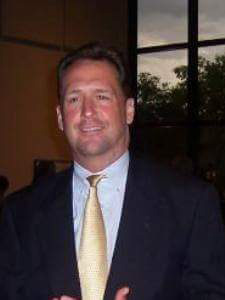
Jeff Kuhn
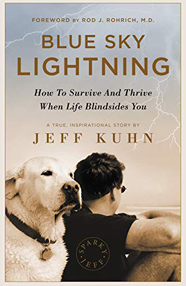
Jeff Kuhn is the author of Blue Sky Lightning: How to Survive and Thrive When Life Blindsides You, which chronicles his recovery after suffering burns over 80 percent of his body and battling a rare neuromuscular disease. He holds a bachelor's degree in economics from Dartmouth College, a Master of Business Administration from the Kellogg School of Management at Northwestern University, and a Master of Real Estate Development from the University of Southern California. He is the CEO of Blue Sky Lightning LLC and a motivational speaker focused on mental toughness.
📚 Books by Jeff Kuhn
Transcript
[0:00:24] CH: What’s up everybody, it’s Charlie Hoehn, the host of Author Hour where I interview authors about their new books. Today’s episode is with Jeff Kuhn. He is the author of Blue Sky Lightning. Now, all of us deal with trauma or as Jeff likes to call it, lightning bolts that disrupt our lives in often devastating ways. But no matter what you’re facing, Jeff believes you absolutely can recover. He knows this all too well. Jeff survived the unthinkable, burns on over 80% of his body and then a rare neuromuscular disease. In spite of it all, he found the courage to keep moving on and in this episode, he shares his journey through trauma in what those experience has taught him. If you feel that you might be alone or you wonder if you might not be as strong as you think, this is the episode that can give you a beacon of hope and proof that you can overcome even the most dire circumstances. Now, here is our conversation with Jeff Kuhn.
[0:01:48] Jeff Kuhn: The book starts with the first lightning strike, that was a fire at my home. I had gone to bed the night before on a Friday night. I was married to my first wife at the time, she was out of town and we had a dog, Sparky, a yellow lab and she was there but she was outside and what I remember is because things get pretty hazy as you might guess. The only thing I can remember and it’s all in the book but the first lightning strike happened early in the morning on a Saturday in October and the first thing I remember was a brief period of time where a couple of men are looking at me and it’s hazy and I’m sure I’m not doing very well at that point and they said, “We’re here to help you.” They looked like fire men and well, indeed, they were and then that memory, that little clip, that’s all I remember and then the next thing I remember is being loaded into an ambulance because if you’ve ever been loaded in to an ambulance which I hope you haven’t but if you have, the wheels underneath the gurney come flying up and bang into the bottom as they load you into the back of the ambulance and I think that’s sort of woke me up a little bit for a second and then I was back where I don’t remember anything. The third thing I remember was the ambulance going down the freeway to the hospital and all I remember is what’s funny is I’m sure the siren was on but I don’t remember any noise, I just remember trees flying by, it appeared as though we’re obviously going at a very quick rate of speed. In my memory, it seemed like a hundred miles an hour and the last thing I remember is looking up and there was a guy whose face was right above me and he was a paramedic and he just said, “You’re going to be fine” and that’s the last thing I remember before they – Because once I got to the hospital, they put me in a medically induced coma that I didn’t actually come out of for another month so just those three little memories are all I remember for the next month. Except for a few moments in the hospital but that’s weeks later. The first lightning strike just to be honest and is probably good, I don’t remember. It’s obviously was a very painful traumatic thing to happen to you to be badly burned but fortunately, I don’t remember all that happening. I just – when I came out of the coma like a month into the hospital stay. I had no memory of being burned or the fire and that’s probably a blessing because you know, I was thinking, if I did remember all that really clearly, that could lead to post traumatic stress disorder, having to relive that. The fortunate thing for me is yes it was traumatic but I don’t have any memory of it which I think is a blessing because it was probably so bad and then I think the brain actually as a defense mechanism shuts down a lot of your memory of what happened.
[0:05:10] CH: Yeah. Wow, what did your family and friends say to you when you came out of the coma? Were you just bewildered?
[0:05:18] Jeff Kuhn: Well, you know, I was still in a fog, you know, they still had me on a lot of pain medication and when I first came to, you know, you’re in a daze. I’m just kind of looking around and I was in the Parkland hospital in Dallas is the second largest civilian burn unit in the United States which I didn’t know. It was actually fortunate for me to get burned that close to one of the best burn centers in the world. I was in a small part of the burn unit which was quite large. I was in an ultra-intensive care section where the people who were at most risk for not making it are housed and I remember just kind of coming to but you’re in such a fog that the doctors really have to sort of tell you where you are and what happened. You know, they’re very careful not to give you every single detail because they don’t want to overflow your system, they kind of give you information a little bit at a time. They don’t want you to know just how bad it is because you know, they want you to mentally stay with them, you know, stay positive as much as positive as you can and so you realize, you were badly burned but you’re in a – “we’re taking care of you, you’re doing well," and first question I asked is, “How is my dog?” Honestly, the first thing I thought of was, “How was Sparky.” They said, “Sparky’s fine, she’s home and didn’t get hurt, the dog is fine” and so they, you know, when you go through something like that and it kind of realized that I had a huge memory block and since I didn’t remember what had happened, they slowly gave you information because I was still in a pretty precarious state at that point, you know? They’re not exactly sure that you’re going to make it still and even if you do, the road to recover is going to be so long and so painful, they don’t even want to get into that with you, it’s just like – they’ll just say, “Here’s what we’re going to be doing today” and they try and just keep it calm and relaxed and you know, you’re getting constant care and I was in that unit I think, before I went to the main burn unit, I think I was in there for a week and then they realized that that I was stable enough to go into the burn unit with everyone else, that doesn’t mean you’re doing well. It just means you’re doing better where you don’t need someone watching you 24 hours a day every second. They could put you in the burn unit where, you’re still getting a lot of attention and you’re not so critical that they need to be watching you like a hawk. They’re still keeping an eye on you very carefully but it’s not as intense as it is in the acute unit. I just remembered how nice the people were and you know, in the book, I go on about the people – it was part of the University of Texas South Western Medical Center which is a whole group of hospitals and medical school and so over 10,000 people work there if you can believe it. It’s very big and even though I lived in Dallas for about six years before this happened and I had heard of Parkland Hospital, I had never seen it, I didn’t even know where it was and well, now, I’m a resident and I’m lucky I was by such a great medical facility but honestly, I never even seen it, it was in a different part of town that I had never gone through. Even in six years, I had never seen this huge medical complex. I wasn’t really sure, I knew I was in Dallas but I had no idea where. I had no idea where this hospital was. I didn’t really ask, I just knew I was somewhere in Dallas, that’s all I knew.
[0:09:23] CH: It took you a while to recover, right? I took two years and 18 major surgeries. Holy cow. What were the surgeries for? Was it for skin or.
[0:09:38] Jeff Kuhn: Yes. I was burned over 80% off my body and usually, this is you know, actually, was just talking to Dr. Rourke who wrote the forward for the book and he – we were talking about – he said, because we went over, he said, “Really, people who got burned over 80% of their body” and we’re going back 25 years. “The odds of survival were essentially zero because a third of the burned area was third degree, another third was second degree and another third was first degree.” In the book, we explained all that, you know, not – we don’t overdo it because you know, you’re not getting a medical degree but we explain enough so you can follow the story. But yes, to answer your question, two of the surgeries, the first two surgeries were done while I was in – I don’t know how they do all this you know? Because you’re in a medically induced coma and then they have to do anesthesia but I had two major – when I say major, I’m saying like six hours. I had two major operations that I don’t even remember. When I came to, a month into my hospital say, I had already had two major operations and a lot of that, especially in the beginning, they’re doing skin grafts, they have to cover the third degree burns with skin grafts. I explained in the book, a lot of people might not know this but the skin for the skin graft has to come from you. You, being me. They have to – a 30 year body, well not a third but a third of the burned area which is still a huge part of your body has to be graphed. Which means, they have to find skin that hasn’t been burned, it’s only 20% of my body that’s left. They have to find skin from that area to cover all the third degree burns and when you take skin to make a graft, you create a second degree burn. When you take skin off, to put on a third degree burn, what you leave behind is the equivalent of a second degree burn. I mean, this is – you’re talking about a Rubrics cube that – yeah, you’re grafting a third degree burn but then you’re leaving behind a brand new second degree burn that has to be treated so it’s unbelievably complicated so you’re solving one problem but creating another one at the same time. The problem you’re solving is more dangerous than the one you’re creating so it’s – They’re both bad but you know, that’s the only way out. I mean, that’s the only way to recovery was to do it that way. That’s why it takes so many surgeries but I had two before I even knew it. Actually, when they told me I was about to go in for my third, what was funny is, I thought it was my first because honestly, in my life, up to that point, because I was 29 years old. I had never had surgery for anything, I never broken a bone, I had never had a tonsil out, I had never had appendicitis. Literally, I had never even – didn’t know anything about like a bad injury or surgery. I was actually nervous. They said, “Well actually, this is your third surgery and the first two went really well” and I said, “Third?” They told me about the first two and then what they were going to do in the third but I was – to be honest, you know, since to me, this was the first surgery I was actually conscious for to be rolled in and you know, I was pretty nervous. Then, after the third, the fourth and the fifth, then you know, you become a veteran and you know, I got to know my doctors really well and I trusted them and they were very good and so after really the third surgery, I don’t think I was afraid ever again going into surgery because the talent of all the people. Not just the doctors but the staff, they were so good at what they do, I had absolutely no fear. Yes, I knew there was going to be pain for when it was over and this and that. It was just part of your road to recovery but I was not afraid that anything was going to go wrong in the surgery just because of the talent level of the University of Texas staff. The first one, yeah, because I still didn’t really know my doctors and the whole hospital situation was new and no matter what they said to you to calm you down, you know when they tell you you’re going to be in there for six hours, you know, your brain is like, “My goodness, this is – “
[0:14:35] CH: Yeah, it’s scary.
[0:14:37] Jeff Kuhn: Yes it was. But then once you see that when it goes well, yes, it’s painful when it’s over and this and that but it – they accomplished what they wanted to and they tell you what they’re trying to do each time. You know, but they never – your obvious question after like – if you’re me, after the third and the fourth it’s like, “Well, how many of these are we going to have to do?” They said, “We don’t know.” They were being honest and so mentally I’m thinking, “Okay, I’ve had four – I’m sure like six,” you know, if they had laid out 18, I’m almost glad I didn’t know the number just because that would have seemed, “You got to be kidding.” They honestly didn’t know, they said it just depends on how each one goes and they were being honest but I’m sure they knew it was going to be a lot more than two or three but either there’s no reason to tell a patient that because if you’re about to go in for a surgery, you don’t want them thinking about the next 10, you know? That could be a little overwhelming.
[0:15:41] CH: You know, I’m still trying to process the fact that you got struck not once but twice.
[0:15:48] Jeff Kuhn: Yeah, that was the amazing part. We could fast forward roughly about two years almost to the day after the burn injury, you know, I had had all my 18 surgeries, and I had gone down from 185 pounds to 140 and through working out and stretching and you know, the whole rehabilitation process, I had actually – my weight had gone up 215 and most of that was muscle mass just from all the working out and so when the whole burn injury, two year period ended, I was probably in the best shape of my life. I was an incredible shape, you know, physically, mentally and so you know, now, it was time to go back in the workforce and from that point, for the next year and a half, I was in tremendous health. I mean, never better, I was strong, I was young, I could do anything. Literally, a year and a half after the whole burn injury was done and I was in perfect health, I was in great health for a year and a half and then just out of nowhere, once again, here’s lightning strike number two. I started getting pains in my thighs. I thought, you know, I was still doing a lot of working out, I walk my dog every day and you know, I did long distance cycling so I thought, “Okay, I’m overdoing it.” You know, the thighs were a little sore from working out. It started out that way but then, the pain started getting more severe and they sort of spread to my calf, then they started to, over the course of the next few weeks, I mean, literally, the lightning analogy just like with the burn, it happened very quickly and very hard. Within the next 30 days, I was essentially incapacitated with pain and what was happening after that, I saw a lot of neurologist was my muscles and nerve endings were all self-destructing for no apparent reason. It’s basically – the pain was – I mean, if you looked at me from the outside, you would think there’s nothing wrong with me but on the inside, my muscles and nerve endings were all self-distracting and I can’t even describe the pain, it was as bad as a third degree burn and then I started bouncing between neurologist and they thought it was Lou Garrick’s diseases for a while. They thought it was multiple sclerosis. I mean, all of them were either going to be terminal, meaning, I’m going to die or it’s going to be a lifetime of being handicapped, maybe confined to a wheelchair. I’m thinking, you know, "I went through this whole burn ordeal, made it out with a lot of hard work from a lot of different people and here I am again – now, I’m about to, what appeared, I was going to die from some sort of neuromuscular disease” and I couldn’t believe it. I honestly like, seriously, you know? I just went through a one in a million type event and made it through that and then I’m healthy for a year and a half and believe it or not, the two aren’t related because the neurologist, they said, “You were healthy for a year and a half to where this came from,” they were never able to determine but you know, they kept sending me to different neurologists because no one could figure out. For example, you know, they thought it was Lou Garrick’s disease but it wasn’t quite Lou Garrick’s disease, you know? Then they thought it was Gian Barrett and “no, but it’s not quite” and in the beginning, I wanted an answer because I thought, then they could give me some sort of help for the pain or some medication to help this go away but they were like you know, “Honestly, if this is what we think it is, you’re probably” – you know, they were just being honest, they said, “you’re probably going to die, it’s not going to be quick.” “We don’t know how long it’s going to take.” So I’m like, “Oh so this is great.”
[0:20:02] CH: How many years ago was this?
[0:20:04] Jeff Kuhn: This is about 25 years ago and I’m sure, a lot of people are like, “Why are you writing it now? Why didn’t you write it at the time” and well, as you might imagine, once I did obviously – spoiler alert, I lived because you and I are talking. I did make it through, I realize I’m ruining the – “Did Jeff make it?" “Yeah, he did.”
[0:20:26] CH: You gave away the ending.
[0:20:29] Jeff Kuhn: He had two life threatening events, we figured one of them would get him, spoiler alert, Jeff does live.
[0:20:36] CH: Turns out he’s a cat.
[0:20:37] Jeff Kuhn: I did make it out and – but the thing is as you might guess, once you go through something traumatic, the thought of like writing it down, you’re that close to it, you really don’t want to relive it all and even when I met people like my wife and I had been married almost 20 years and I met her two years after the whole neuromuscular – that took two years to recover from. Two full years. I met her two years after that recovery was over and I had been back in the workforce and this time I’m healthy for good. You know, she asked me about it and I would politely talk about it a little bit but then she said, “You always stop at a certain point and not want to go any further” and even friends would ask and I’d always stop the story, I was always polite about it and friendly and joking and – but there’s this – they could tell there was a limit to how much I wanted to talk about it. She said, “There were years that went by where you didn’t even want to go near the story” but then, you know, it kind of came to the point, you know, once 25 years went by, I thought, this story, it’s not, like I told the publisher, I’m not trying to write an autobiography where everybody can just marvel at how incredible I was to make it through all of that. That’s not the point of the book. The point of the book is that all of us as part of being human beings at some point or another and I hope in everyone else’s case it is never severe as mine but we are going to run into hardships, it could be mental. It could be physical, it could be economic, you know a job that we all run into bumps in the road and I thought my story could help people realize don’t give up hope. I don’t want people to quit, hopefully my story could give people hope and you’re not alone. There are people out there that will understand your story. I definitely will so the whole purpose of the book is to reach out to people who were suffering or have suffered or know someone that is and they can see it from the perspective of the person who its happening to and how some of the mental strength techniques I had to adopt to get through to all of this and maybe there’s something in there that you can find useful because I just don’t want people to quit because I didn’t quit and it is not easy but it is worth it because there is a good life ahead of you. It may be a long road but I just want to show to give them an example of why sticking it out, it will be okay in the end.
[0:23:29] CH: I feel like every burn unit in the world ought to have your book on hand.
[0:23:36] Jeff Kuhn: Yeah I think obviously the first group of people I think of burn survivors and there’s a lot of them out there but I think I was fortunate as badly burned as I was, if I was sitting in front of you right now if we are doing this in person, I am wearing shorts and a t-shirt and you’d look at me and if I was telling you this burn story you would think I am totally making it up because I used to joke. I said, “You can’t, I don’t think you could possibly be burned as badly as I was and come out of it as fortunate as I am”. Because there are a lot of people where they have terrible burns on their face. Now I had second degree burns all over my face but that all clears up. If its third degree it’s always going to be there, you know? So I was fortunate because I have a crazy sense of humor so I think my humor got me through a lot of this and I said, “You know if you are going to get burned luckily the burn missed all the good spots” you know? I mean I was fortunate, yes I got burned very badly at the top of my head. With a third degree burn but Dr. Rohrich kind of help put that back together so I am very lucky. I mean I fell into the hands of very capable people and nobody wants to be burned but considering how badly burned I was, I am extremely fortunate. It wasn’t my feet, it wasn’t my hands. Yes, my face was second degree but that cleared up and they were able to fix my scalp and so if I was sitting in front of you and I was telling this story you would think that I was making it up. You would just go, “Jeff that’s a great story but I am not a sucker. You know if you really burned that badly there would be evidence” and yeah, sure. If I wore swim trunks then you’d be like, “Whoa okay! there’s all the skin graphs and okay now I get" but fortunately for me if I just go out even in shorts and a t-shirt you know there’s a few scars here and there that you might pick up and only someone with a really trained eye and that’s very few would come up and go, “Were you burned?” you know? And I will go “yes.” Most people always get some scars here and there but they don’t know where it’s from. It’s nothing that that’s bad but like I said, if I walked around without a shirt maybe with some basketball shorts you’d be like, “Okay something bad happened to this guy” you know?
[0:26:07] CH: Yeah so Jeff a burning question on my mind is – sorry, we have been using the word burn so much I –
[0:26:16] Jeff Kuhn: Yeah, I know. No pun intended.
[0:26:19] CH: Right, the question I have on my mind is I’ve had family member pass away from neuro muscular diseases like Lou Gehrig’s.
[0:26:27] Jeff Kuhn: You have? Oh, wow. I’m sorry.
[0:26:28] CH: Yes, I’ve had two. Yeah, thank you and what I’m wondering is what was it really like surviving that? What had changed in your routine, what changed in your life for your mindset?
[0:26:43] Jeff Kuhn: Well you mean after I recovered or during the recovery?
[0:26:46] CH: Yeah, I mean during the recovery like getting into the specifics because I’d imagine there are some listeners who have that in their life in some way, shape or form and it is really terrifying.
[0:27:00] Jeff Kuhn: It is, actually it’s funny you would ask this question because I just read this morning an article on LinkedIn and the woman who wrote the article, there is a picture of her and she’s a beautiful young woman, you look at her and she called it, the title of the article was called Invisible Enemy and I actually call my part of the book Invisible Adversary and so we are experiencing the same thing and she said even though she looked fine on the outside, I won’t go into all the detail. But she has a neuro muscular illness one I have never heard of and there quite a few more than I even dreamt there could be and she talked about all the medication she has to take and all the surgery she’s had and in her case, she’s going to have to deal with this for life and it’s probably good Google wasn’t around when I had this illness because if you Google neuro muscular illness you have no idea how many there are and just how bad they can be and the suffering people have to endure. And so I learned about them mainly from the doctors who told me about them because a lot of them I never even heard of but yeah, when I read her article I could actually, I had so much empathy for her because I was in the exact same situation where I looked fine but on the inside and she even said, “I’m in excruciating pain a lot of the time but people look at me and they don’t see it and you know with the burn injury you know you’re wrapped up like a mummy. And people are like, “Okay he is badly hurt” but with a neuro muscular illness like in her case, a beautiful young woman, you have no idea how much she suffered because I went through the same thing where you know I am in incredible pain, my muscles and nerves were self-destructing and then when I read about her, it is an invisible adversary because people who are looking at you can’t see that there is anything wrong with you yet you are suffering quite a bit. Now in her case, she knows exactly what she has and you know she is going to have a lifetime of fighting and I just felt for her because mine fortunately yes, it took two years of my life but when it ended it was totally healed and the doctors to this day they don’t know how I got it, they don’t know what it was and they don’t know why I recovered and I remember at the very end of it, this was about the two years were about off and I was to go back into the work force. And my last meeting was with a neurologist and he was an older gentleman, he was actually head of the Texas Neurological Society. So he had seen it all and he said, “Jeff I can tell you this now because we know you’re in the clear” but he said, “What happened to you scared the hell out of all of us” and I was like taken aback a little bit and then I said, “Well what do you mean?” and he said: “Because we thought there was a chance that you were patient zero for a new neuro muscular illness that no one had ever seen and it was just arriving and maybe you were the first one to get it and that pretty soon our waiting rooms were going to be full of people with the same disease that you have and what scared us is we don’t know what to do about it and we couldn’t help you and we’re like what are we going to do when all of these people start coming in our office with the same symptoms Jeff has?” “We don’t want all of these people suffering and we don’t know what to do about it but yours fortunately cleared up. We don’t know what you had. We don’t know why it cleared up” but he told me, “I want you to go forward in life just knowing that what happened to you, the odds of it coming back are zero” and he was right. Nothing has come back but he told me, obviously they are not going to tell you this in the middle of the whole trauma that they are scared to death. That you might be patient zero with a brand new neuro muscular illness but I was like, “Wow, I’m glad I wasn’t” because it’s just the humorous side of me I said, “I really don’t want to be the guy that was patient zero and I passed away and now there is a terrible disease that has my name attached to it” you know? So for the rest of eternity, “Oh you have Jeff Kuhn disease? I’m so sorry” and I’m glad I –
[0:31:49] CH: Yeah that is not a good name sake.
[0:31:50] Jeff Kuhn: No and I wouldn’t want to be remembered for bringing misery on a lot of people because my name would be associated with that but so I was fortunate. It was terrible. It’s a terrible experience but I have a ton of empathy for anyone that’s going through any kind of burn injury but then I also have a lot of empathy for people that you have a personal experience with folks that have suffered with Lou Gehrig’s disease and you know I feel for those folks as well. Especially you know I was fortunate enough to make it out and get back to perfect health and so I feel terrible for the people like the woman I read about this morning. They have to deal with it for the rest of their life but I hope that the people, it could be any kind of adversity that you’re facing. It doesn’t have to be neuro muscular illness or a burn, you know trouble comes at all sorts of shapes and sizes but I want to give people the idea is meant to be a hopeful inspiring book. You know we’re in the end there and we’ve talked about my two lightning strikes but there is a lot of the book, you know there’s good times and the nice people I met and if you like dogs, my dog Sparky is my sidekick through the whole both of the medical events and Sparky was there the whole time. So if you love dogs it’s a great dog book. Well seriously, I mean if you’re –
[0:33:24] CH: Oh I know, it just sounds funny given the heaviness of some of what we talked about is Blue Sky Lightning these serious traumas. Hey, if you love dogs you might like Blue Sky.
[0:33:41] Jeff Kuhn: What we did is, the way we wrote it –
[0:33:43] CH: I’m just giving you a hard time Jeff.
[0:33:45] Jeff Kuhn: No you’re right though but the thing is, what we tried to do is you know I have a great sense of humor and that the doctors even said that it probably had a lot to do with making through all of this but the book, we were very careful like we would talk about – you know there’s some tough times that we needed to talk about but then we would balance it with good stories as well. So it is not a whole dark story. There is a lot of uplifting parts but you have to talk about some of the tough parts but there’s a lot of fun, happy moments along the way that people will enjoy.
[0:34:24] CH: Sorry to interrupt but I mean that’s the way the book is structured. I love how these chapters are these alternating headings of – so for instance, chapter one is when you’re alone in the fire. Chapter two is you find you’re not alone. So it’s when you are faced with adversity basically you find that there’s a silver lining of some sort that’s the structure of every chapter and I love that and you know there is so much in Blue Sky Lighting. That people, whether they are going through these situations or not are going to find helpful and incredible and you have such an amazing story that I am so glad after 25 years you’ve decided to share it and so while we don’t have the chance to cover everything in the book, I’d encourage everybody to grab a copy of Blue Sky Lightning if this is something that you want to read Jeff’s entire story and Jeff, I have a couple more questions for you. The first one is, what is the best way for people to get in touch with you or follow you?
[0:35:35] Jeff Kuhn: Yeah, I recently set up a website that is for the book and it’s one word and it’s blue sky bolt, bolt being synonymous with lightning. So if you put in “blueskybolt” all in one word dot com, it will take you to the sight. There’s a link there to the LinkedIn article I wrote a year ago which is a four page summary that I wrote before I decided to do the book. So you can get an idea of exactly what the book is about and there is also a link to my Twitter side and my LinkedIn side if you want to know anything about me personally. And so if you go to the blueskybolt.com, there’s all sorts of information about the book and about me and there’s also and the most important thing is I’m glad you brought it up is at the end of the book I am hoping that this book brings hope and in my article did. Actually a thousand people read my article on LinkedIn and I got feedback from so many people that that prompted me to write the book because I said you know if I can help this many people with a short article, a book can reach a lot more. And at the bottom of the website, there’s a spot where if you want to write me and ask me a question or tell me about your experience, please do. It is right there at the bottom of the website and you can contact me and I will definitely get back with you because everyone that wrote me about the article and I’ve heard some amazing stories. I mean there were stories that make mine – I even told their people they should be writing a book not me. Because they were telling me how inspirational and helpful my story was for them and they told me about the tough times that they had or are going through and their stories were amazing but I am thinking there are people out there Charlie that they will not talk about their trauma unless they feel like they are talking to someone that will get it and when they read my story, they know that if they share it with me, I will totally get it. I had some people, I am pretty sure it was the first time they had ever shared their story with anyone. Now I’m a complete stranger but after they read the article, they’re like, “Jeff will get it” and I got some amazing stories sent back to me that I still am thinking about right now and I’m thinking with the book, I am really looking forward to hearing from people and I hope it’s helpful and I’d love to hear about other people’s successful journey through their tough times because that gives me strength. That gives me satisfaction, the whole purpose of the book is to help other people. It is not to talk about me and how and what I went through. It’s only to give people the courage to want to talk about it and reach out and get help and if they want to talk to me, I love it. It is very rewarding to hear from other people about their stories and I actually thought if I wrote a second book, it would be about all the stories of the people that came to me after I wrote my book because I already have a lot. And I can’t even imagine what’s coming when the book comes out but there is so many brave strong people out there that have stories that I hope will come out if I put my story out there that they’ll feel comfortable talking about theirs because it’s difficult. It really is hard.
[0:39:30] CH: Yeah, it is. It absolutely is and there’s a great quote from Peter Levine that says, “Trauma is not what happens to us but what we hold inside in the absence of an empathetic witness” and you, by sharing your story are becoming that empathetic witness for so many who go through these difficult traumas and when life blindsides them. So for them, I know they’re going to be so grateful. So again, for anybody interested, Blue Sky Lightning on Amazon. And the final question I have for you Jeff is in about 15 seconds or so of an answer, what is the one challenge you would give to our listeners, the one thing they can do from your book this week that will have a positive impact on their life?
[0:40:26] Jeff Kuhn: As we go through each day, I think it’s so easy to forget this but it is also easy to do and that’s do something nice for a stranger each day if you can. You hold the door for someone coming out at Walmart who has too many shopping bags, I mean there’s ways you can be kind to other people, doesn’t take a lot of effort but you’d be amazed at what it does for their day and you will feel good as well but it’s amazing. You do something for someone and they look at you almost in shock because I think when I was younger, people were more civil to one another and I think we’ve kind of lost that and if you’re kind and polite to other people just out of the blue and especially someone that doesn’t know you, they’re almost in shock that someone is actually kind that that still exists. So just do something nice for someone you don’t know. If you find a stray dog and you get it back to its owner, you won’t believe the satisfaction you’ll get out of doing something like that and I have done that quite a few times and it’s just amazing, you know? Do something for someone else. It is much better than doing something for yourself.
[0:41:40] CH: Yeah and I love those suggestions. The book is Blue Sky Lightning. Jeff Kuhn, thank you so much for being on the show.
[0:41:48] Jeff Kuhn: Okay Charlie, my pleasure.
[0:41:51] CH: Thanks again to Jeff Kuhn for being on the show. You can buy his book, Blue Sky Lightning, on amazon.com. Be sure to check out the show notes and the transcript of this episode at authorhour.co. We’ll see you next time. Thanks for tuning in on today’s show. If you liked what you heard, here is what I want you to do next. Open up the podcast app on your phone or iTunes on your computer and search for “Author Hour with Charlie Hoehn” and then click “ratings and reviews”. Take 10 seconds to rate this show or leave a review. It is a small favor but it’s really the best way to show your support and give me feedback and if you know someone else who’d love Author Hour, take another three seconds to text them a link to this episode. We’ll see you next time.
Want to Write Your Own Book?
Scribe has helped over 2,000 authors turn their expertise into published books.
Schedule a Free Consult