Nick Dinardo: The Game of Adversity
Read the full transcript
Nick Dinardo
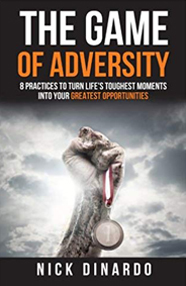
Nick DiNardo is an entrepreneur, consultant, and public speaker focused on adversity, personal growth, and education. Over his career he has interviewed hundreds of experts on overcoming adversity, dealing with trauma and stress, and the role adversity plays in cognitive development and learning. He has faced adversity throughout his own life, going from a comfortable childhood to sleeping on the floor of a one-room apartment after his parents separated when he was seven. He is the producer and host of two podcasts, the Meet Education Project and the Sweet Adversity Podcast. In his book The Game of Adversity: 8 Practices to Turn Life's Toughest Moments Into Your Greatest Opportunities, he lays out a practical approach to turning hardship into opportunity.
📚 Books by Nick Dinardo
Transcript
[0:00:21] CH: What’s up everybody, it’s Charlie Hoehn, the host of Author Hour where I interview authors about their new books. Today’s episode is with Nick DiNardo, he is the author of The Game of Adversity. Nick believes that we’re too comfortable growing up, we’re all taught that the best situation is the one where everything goes according to plan and that adversity is something to be avoided or to protect our kids from. Nick is here to tell you the opposite. He believes that adversity is the ultimate opportunity to learn and grow. In fact, it’s the key to unlocking success. If only we learn to embrace it and apply its lessons constructively. Nick himself has gone through adversity as an entrepreneur and he also helps other entrepreneurs perform at their best by building their resilience. By the end of this episode, adversity is not going to be something that you fear or worry that will destroy you, but you’ll know how to use it and leverage it so that you can thrive. Now, here’s our conversation with Nick DiNardo.
[0:01:43] Nick Dinardo: The basis of my interest in adversity is really personal and it goes back when I was seven years old, I had kind of the typical, kind of, American upbringing, right? I had a younger brother, my father built our house, it was a 3,000 square foot house, you know, living life really well and comfortably middle class. Within months, that all came kind of crashing down. My mother had a bipolar episode that put her into a mental institution, my father pretty much spent all of the money from the business that he sold and lost our house, went into foreclosure, my parents separated. And instantly, when my mother got out of the mental hospital months later, she was in almost the – it was an apartment building with 14 other families, she had one room with a bed that my brother and I ended up sharing time, either on the floor or in the bed with her and we shared a kitchen with these 14 other families. Within months, at seven, eight years old, I went from kind of this absolutely normal kind of upbringing to boom everything flipped on its head. I remember thinking to myself, what does this all mean? This can’t be the way that things are kind of going to go down for us. That was my first kind of interest in understanding what adversity was, I didn’t know it at the time. Obviously I didn’t know what struggle was, adversity, obstacles, all that but I started to really search for people who were successful or people who had achieved great things from my perspective at that point and I gravitated towards sports. Specifically baseball and football and basketball. Specifically, I remember thinking about, and really gravitating toward this model who was Barry Sanders, he was the running back for the Detroit lions at the time, this is the early 90s. And the reason I gravitated towards him was he was the successful running back, successful football player, probably the best at his position, definitely at the time, maybe ever. He was the most humble, quiet player that was focused really on character and not being this egotistical, kind of – number one person to think about in football. He’d score touchdown and give the ball right to the referee, it was really about showing that you’ve been there before. I gravitated towards that and it ended up being something that really spurn me into hoping to be that type of person but also really dedicating myself to understanding what adversity is, what the science behind it is and how people can build resilience and that’s kind of the basis for the book.
[0:04:32] CH: This is a topic that is super fascinating to me and I’ll tell you why. I have a number of very close friends, like an unusual amount who have been through hell. Like the amount of adversity they have faced is unfathomable to me that - they’re my close friends because it seems like they have so much compassion for both themselves and anybody who has gone through it because they had to basically reconstruct themselves after getting just decimated emotionally or physically or whatever. At the same time, I have other friends who have been through adversity and they have crumbled. I mean, I can count times in my life where I’ve definitely been in that boat as well. The reason this is interesting to me is like, obviously it affects all of us but it plays out so differently for people. I mean, there are people who have been through the worst stuff imaginable and they’re some of the strongest people. There are other people who have been through less and have absolutely crumbled and won’t recover on their own or don’t know how. Let’s define adversity first and what exactly are we talking about here?
[0:06:01] Nick Dinardo: Yeah, I think the definition, if you look up the Webster’s Dictionary definition, it pretty much encompasses the problem I think with how we address adversity in our lives, whether or not we’re able to learn it to adapt from it and be able to respond to it. The definition is a couple of things, I’ll just read it off. “Adverse fortune or fate, a condition marked by misfortune and calamity or distress, an adverse or unfortunate event or circumstance.” And the synonyms are catastrophe, disaster, trouble, and misery, also see affliction. While obviously that definition is dead on, think about just kind of the tone of it in my opinion and I think what you just hit on, Charlie, is exactly what fascinates me too. Because the fact that adversity creates opportunity I think is pretty well known but there’s a gap between understanding it and being able to do something when it happens to you, right? I think it comes from education. I mean, we all know adversity is the key to pretty much all story, the hero’s journey, right? You look at Rocky, you look at Harry Potter. I mean, this is all part of our lives and we know it’s there. But, from the time we’re young, you’re a father, I’m a father, I have a two-and-a-half-year-old son. I think it’s our natural inclination to try and protect our kids and that then models behavior to our kids to protect, to avoid, you know, confrontation, to avoid high stress environments and then when it actually happens to us, we’re not self-aware enough to really understand how to deal with it. There’s this big gap between actually knowing what adversity is and being able to do something with it. Which is exactly why I wanted to write the book was try and develop - use a set of principles that were important to me and being able to deal with my own adversity and potentially help somebody take all the principles, use one or two principles but use something to be able to develop perspective, reflection, rumination and be able to use adversity to their advantage because that’s the difference between high performers and the average, in my opinion.
[0:08:22] CH: One of the things that I’ve always wondered on this topic is how much of this is instilled from our parents, our caretakers versus how much is like – this is just how we are or the culture that we grew up in like, where do people fall on the spectrum? How much is within our control, really?
[0:08:49] Nick Dinardo: I don’t have an answer to it but it is something that II talk about in the book, the nature versus nurture or kind of nature and nurture aspect of it. In the people that I researched and the science that I’ve looked into. You know, it’s really a combination of both, I think you mentioned some of your friends who have really responded well to it and some who have just crumbled on to the pressure. I mean, I think it’s a combination of being able to, number one, you know, have some genetic disposition to adaptation or evolution when trauma hits. I think number two, you know, they’ve done studies on this and the Center for the Developing Child at Harvard University about kids in disadvantaged backgrounds who have you know, in poverty and just bad circumstances. The ones who are able to respond and get out of those circumstances and learn from them and grow from them, it’s because they have a community around them to lift them up. It’s not just about the skills that you develop, it’s about having the people around you to help you out of it and I can certainly attest to that my own circumstances, you know, a small or large as they may be. I think it’s a combination of exactly what you said, it’s nature and nurture and then I think it’s just about where you fall on that spectrum and I feel like it’s more nurture and nurture, not just like in the moment, the adversity moments that we go through but nurturing ourselves and being able to develop the skills to be able to sit in it and be self-aware and be able to think about how are we going to respond. And then that leads to a better response the next time and it ends up being kind of this quickening kind of you know, circle, momentum as you go through your life.
[0:10:42] CH: Yeah. I’m so glad you said nurturing ourselves because when you think of nurture, you tend to think of how you were raised, your parents, but you know, the person that comes to mind as we’re talking about adversity, I think of David Goggins, are you familiar with David?
[0:10:58] Nick Dinardo: I’ve heard the name but I can’t pinpoint him. He’s a retired navy seal and an ultra-endurance athlete, he held the world record for most pull-ups. He did 4,000 pull-ups in a day or something crazy like that. He started off being almost 300 pounds and he grew up in – he’s a black man, grew up in the home town where the head of the KKK was, you know, to put it lightly, hazed every single day of his life, right? He said, “The best thing I learned was that no one was going to help me and so I had to do this on my own.” And so he signed up for the navy seals to be handed the worst forms of suffering and adversity on a frequent basis to prepare him for life. Now he’s like, probably the toughest person in the world but I just – he went through abuse, he went through all sorts of hell and I think about like literally no one was nurturing him until he made the decision to put himself in the worst adversity that he could come across. That was his nurturing. Like you said, we have this conflict of, as parents, to protect and nurture in the sense that we think of as we’re helping our child, we’re protecting them. How do you know as a parent Nick, where to draw the line and say, “You know what? They need to be thrust into this adverse situations.” How do you parent knowing what you know from this book?
[0:12:48] CH: Yeah, I don’t know. I mean, it’s funny, writing the book, I thought I would have more answers but it really just kind of opened up more questions. I became much more humble about the book, I’m certainly not an expert in it. But to answer your question, I’ll point to kind of a study that I thought was just fascinating to me, as I was really digging into the research. It was a multi-year study, journal of personality and social psychology, 2,400 subjects and what they found was those who experienced negative life events reported better mental health and overall wellbeing than those who didn’t. It was almost like a U-shaped distribution, so if you didn’t, on the left end let’s say, you didn’t have any adversity and then on the right end, you had too much of it. Both sides you would crumble but in the middle, there was a sweet spot and they couldn’t point to exactly the sweet spot. I think it probably depends on the person, the events that they looked at, the 2400 subjects, it was serious illness, violence, bereavements, disasters like floods. I mean, what we’re experiencing obviously in California now. I’m not experiencing, but they’re experiencing. Social stress, relation stress, these are serious events. But I just thought that fascinating and kind of U-shape curve, exactly what you just mentioned with David Goggins. Putting yourself in the position to experience some stakes and develop and evolve but maybe some people wouldn’t be able to take that sort of high stakes kind of environment. Maybe it’s a low stake. I guess going back to your question with my son, I think he’s just getting to the point where you know, my wife and I try and do as much as we possibly can to not give him everything that he wants. But I think it’s trying to put him in kind of these low stakes, low risk types of environments where he’s going to figure things out, he’s got to problem solve and hopefully, eventually, over time, it makes us better parents by doing that because it’s challenging us to want to comfort him, to hold them, to nurture him. But at the same time, it pushes him outside of his comfort zone to really experience self-awareness and those problem solving things and building that resilience that you’re going to need down the road. Now, two and a half years old maybe a little too young to do that but I think once you get to five, six, seven years old, developing that foundation in kindergarten, first and second grade. I mean, I don’t see how – we’re not doing it at schools right now, at all.
[0:15:22] Nick Dinardo: Right.
[0:15:25] CH: Yeah. In tribes, how humans evolved in hunter gatherer type tribes from the age of four basically onwards, they were allowed to play freely 24/7, basically. Like go, you’re old enough to experience all the adverse stuff that you need to survive, go figure it out. Which is in our culture, every parent is so scared that their kid will face adversity. If you let your kid walk down the street, you are liable to have the police called on you. So it is very frustrating to be both a parent and a kid these days, especially knowing what your book talks about, the importance of adversity. So you have a chapter in the book called ‘Respect the Process’. Now the process of adversity is what? And how are we potentially disrupting it.
[0:16:29] Nick Dinardo: Yeah and so this is probably one of my favorite chapters and it came from a lot of my research when I dig into leadership in sports specifically to leaders that I focused on, Bill Walsh and Bill Belichick and when I dig into the success that they’ve had and I’ll talk about Bill Walsh specifically. When I dug into it and the consistent sustained excellence that they had, it broke down into a system or a set of principles that they had that they then used consistently over days, weeks, months across the entire team and not just the football team itself. But the organization that the management of the organization itself. So for example, Bill Walsh, he took over the San Francisco 49ers in 1979. There were two and 14 team, by 1981 they won the Superbowl. The first of the three that he won specifically and then two more were the residuals of his leadership philosophy. But a lot of people think of the west coast offense with Bill Walsh. Which he developed out of necessity because when he was back with the Cincinnati Bengals he had a backup quarterback. Who took over for an injured player, Greg Cook, this gentleman named Virgil Carter who was a quarterback of below average arms strength but had tremendous accuracy, so instead of asking Virgil Carter to fit into the existing system he rebuilt the system to fit what Virgil Carter strengths and weaknesses were and what came out of it was really this system that was focused on short and intermediate passes that really made those into almost like a quicker - they have all the same capabilities and benefits that you would get out of a running game but you are using the perimeter game to really take advantage of Virgil Carter’s accuracy. And what they did was they went up winning the division with Virgil Carter who was a backup kind of journeyman quarterback there. So he took that and said, “If I can be successful with that then I am going to build a system out of it and put the right players in place.” So add that with the 49ers, he not only took the system and perfected it with better players but he also had this set of I think it was 17 different standards that he called his standards of performance and you can look them up, I can send a link for the shownotes as well but essentially it was this set of 17 core values that he wanted everyone in the organization to do on a daily basis going from his quarterback, Joe Montana to his secretary and he expected them to do it and he held them accountable, he celebrated them when they did it well.
[0:19:22] CH: Could you give a few examples?
[0:19:24] Nick Dinardo: Yeah, so one would be being open to failure instead of thinking that you are just focused on quick wins, quick successes, being open to take risks and fail and he would celebrate that rather than persecuting somebody for doing that and it was this set of 17 standards of performance that really, over time, over that two year period ended up turning them into a champion. And it didn’t happen overnight, in fact he didn’t have a successful season the first year. He started to turn it around the next year and then boom, they turned into a successful team and everybody started to buy into it. And it is those types of things that made me think that if you are able to breakdown and deconstruct what success looks like for you as an individual and then start to execute on that process, whatever that process is in developing a system. James Clear talks about it too all the time about systems over goals, right? I just find that goals can be overwhelming and I think we have an over reliance on goals in society in my opinion. I think that if you can set it and forget it so set your goal and then develop what that process will be and then forget about the goal and just execute on the process that is going to make sure that you don’t overwhelm yourself that you are prepared and that you are able to execute on a growth mindset on a day to day basis. So hopefully that makes sense.
[0:20:53] CH: Yeah, totally. So yeah, I completely agree. You get fixated on the goal - and you work with a lot of entrepreneurs so I imagine they get fixated on the revenue goal of however much money and then that is all they are focused on and their efforts are sort of scatter shot and all over the place where you are really emphasizing like set the goal and then what is the system that will automatically get you there and beyond? Which is not to say it is not without effort but it is the process that guarantees you’ll get there.
[0:21:33] Nick Dinardo: Yeah and I’ve been a sales person and I have worked with some sales people as well, that’s a good example too because you have let’s say an annual goal, say it is a $1 million and people will fixate on that goal and become overwhelmed with the daily activity they need to do to actually get to that goal. Whereas the consistent high performers are the ones that say, “Okay every single month I need to sell a $100,000 worth of business which means that I have to make X amount of calls per day.” And they’ll do the math working backwards and backwards designing what success looks like for them. So that’s what it is and sometimes it can be overwhelming thinking about that but once you do it, take the time upfront to do it. I think it helps you almost put up just a smooth layer over any sort of adversity you have to deal with because you know what the day to day looks like.
[0:22:24] CH: I love that and so you work with a lot of entrepreneurs actually and you have them perform at their best by building up their resilience so they can handle the adversity. What kind of results have you seen with the clients you have worked with?
[0:22:42] Nick Dinardo: Yeah I think number one, even before we get to the results, when they really take the time to develop their core values, figure out what results they want that align to those core values and then we start to look back and reflect on, “Hey were you able to meet the results based on the systems you’ve put together?” It is pretty fun. It’s pretty fun to look back and say, “This is what we are able to accomplish.” So I’ve had plenty of entrepreneurs who - every entrepreneur goes through that ebb and flow of success and failure and I think it is evening that out. I think there is a Rudyard Kipling quote that man, if I can find that quote, it is an unbelievable – in fact I think I have it right here. Well here it is, “Meet with triumph and disaster and treat those two imposters the same.” Which I just find – because we can get in our own heads about our successes and we definitely get into our own heads about disasters and failures. It is about smoothing that out, that ride out that journey out to make sure that you’re successful. I think if I am to look back at the successes that these entrepreneurs have, it is about evening out the emotional ride throughout the process. So there are certainly, entrepreneurs who I have worked with who haven’t met the goals that they have wanted. But they were secure and grateful and had perspective on what that journey meant. So they could have still been successful despite not meeting the goals and objectives that they had or they blew out the goals and objectives that they had because they were able to develop a system that worked for them. So I guess it was just shifting their perspective a bit on being grateful and being self-aware about what was really important.
[0:24:26] CH: Yeah and you know that Kipling quote reminds me of the, “Nothing is ever good or bad as it seems.” And the work that you do in helping smooth out that journey I think is so important to entrepreneurs because so many of them share the same symptoms as bipolar disorder or they have straight up bipolar disorder. And so you are going to go - and it’s nothing wrong with you. There is nothing wrong with the entrepreneur that’s just how they operate. Their strength is also their weakness. And so if you expect to go through this ebbs and lows then you need to have some sort of system in place to prevent you from sinking low because you need to just plan for the fact that you are going to sink. And so that can be a year of you being in a funk or it can be two months.
[0:25:23] Nick Dinardo: That’s right.
[0:25:23] CH: But you have to decide. So working with somebody like you is a great way to mitigate against those long spells of being in the dirt.
[0:25:33] Nick Dinardo: Yeah, so it seems like such a soft skill-y thing to be doing instead of focusing on revenue generation, marketing, all of that but if you are able to develop, if you are able to use these skills to your advantage I really think there is a significant return of investment to it and it may not be measurable, at first, but over time and using it consistently just makes for a much more fruitful journey.
[0:26:00] CH: Yeah and there is so much more great stuff in the book. We don’t have time to cover all of it but of course, people can get your book on Amazon. The Game of Adversity, has nearly 50 5-star reviews out of 49. So it is really well received by everybody who’s read it. Nick, I’ve got two more questions for you. The first one is where can people find you? What’s the best way for them to get in touch?
[0:26:30] Nick Dinardo: Yeah, you can go to nickdinardo.com, write me a note there. You can find me on twitter @ddinardo33. Those are probably the two best places to find me. You can find out more on Amazon about the book and thegameofadversity.com as well.
[0:26:44] CH: Perfect and the final question is, give our listeners a challenge. What is the one thing they can do from your book this week that will have a positive impact?
[0:26:54] Nick Dinardo: Yeah, this is tactical but I think a pretty cool exercise to go through. So this comes from Dr. Carol Dweck’s work with growth mindsets. It is called finding your fixed mindset voice. It is a combination of her work and Dr. Martin Seligman who is one of the founders of positive psychology. But essentially let’s say this is a self-awareness exercise. If you were able to go on your phone, whether you have an iPhone or you have an app on your Android, go to your audio app on the phone. And actually at the end of your day, give yourself a one minute, 30 second to one minute summary of your day and be completely honest, as honest as you can possibly can. You know, “I had a great day today. I closed this piece of business. It was really, really great.” Or “You know, my day started off on a bad note because I was caught in traffic that I wasn’t expecting. I had a 9:00 meeting that didn’t go well.” Just be very, very honest with yourself. Do that over the course of seven to 10 days and then at the end, listen to all. Don’t listen to them after you’ve recorded them. Listen to them after seven or 10 days. Take out a notepad and take some notes on what you listened to and what you are listening for is anything that is a fixed mindset type of response whether or not it is focusing on something that is outside of your control. Whether it is focusing on “I can’t get better at X, Y and Z because that is just who I am.” Any types of those fixed mindset type things where you are not focused on, “Hey I can learn from this. I can grow from this.” And what you are doing is just giving yourself – it is almost like working out your biceps and triceps and going to the gym. You are just trying to figure out where you maybe struggling in certain areas and how you can improve. So you are shifting yourself out of certain fixed mindset responses and telling yourself how else can I respond with more of a growth mindset type of response. I think it is a nice easy – doesn’t take too much time but you know just like you’re developing a morning ritual, develop this at the end of the day and do it for seven to 10 days and you’ll probably be surprised, even if you say that I definitely have developed a growth mindset. You are going to find some areas that you still get yourself stuck into. So that is a great exercise, finding your fixed mindset voice.
[0:29:20] CH: I love it. The book is The Game of Adversity. Nick DiNardo, thank you so much for being on the show.
[0:29:27] Nick Dinardo: Thanks Charlie, thanks for having me.
[0:29:30] CH: Thanks again to Nick Dinardo for being on the show. You can buy his book, The Game of Adversity, on amazon.com. Be sure to check out authorhour.co for show notes and the transcript of this episode. We’ll see you next time. Thanks for tuning in on today’s show. If you liked what you heard, here is what I want you to do next. Open up the podcast app on your phone or iTunes on your computer and search for “Author Hour with Charlie Hoehn” and then click “ratings and reviews”. Take 10 seconds to rate this show or leave a review. It is a small favor but it’s really the best way to show your support and give me feedback and if you know someone else who’d love Author Hour, take another three seconds to text them a link to this episode. We’ll see you next time.
Want to Write Your Own Book?
Scribe has helped over 2,000 authors turn their expertise into published books.
Schedule a Free Consult