Alex Barseghian: Local Motion
Read the full transcript
Alex Barseghian
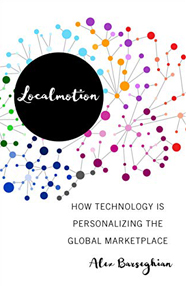
In this indispensable guide, Alex Barseghian, a leader in connecting companies to their customers, gives an insider’s look at this new commercial terrain and offers tips and techniques on how to successfully shift business models.
📚 Books by Alex Barseghian
Transcript
[0:00:18] CH: What’s up everybody, it’s Charlie Hoehn, the host of Author Hour where I interview authors about their new books. In today’s episode, is with Alex Barseghian. He is the author of Local Motion. Alex is the group vice president of sales and marketing for United States retail at Black Hawk Networks. He is responsible for driving over 15 billion dollars in revenue for products and services through retail and digital channels. Before that, he headed up original content for Black Hawk where he was in charge of new products and he launched Happy Cards in over 50,000 retail locations. He actually – true story, had to reschedule this recording of our podcast because he was on the Ellen Show talking about Happy Cards which is really cool. Alex again has an amazing background as an entrepreneur. He founded Samba Connects which became the fastest growing company in the United Kingdom and it was a top 50 fastest growing company in Canada two years in a row and today, we’re going to be talking about how technology is personalizing the global market place and the lessons that Alex has learned in his career. See, Alex believes that the global marketplace is booming and as it grows, brands that are aligned to the individual needs in community thinking will be the biggest winners in the future. Whether you’re in an industry from food or tech or healthcare, the bottom line is that customers just want high quality products in personalized experiences rather than one size fits all solutions. If you’re in a traditional company, and you know that you need to stay afloat in this rapidly changing landscape, this is the episode for you. Now, here is our conversation with Alex Barseghian.
[0:02:28] Alex Barseghian: About 10 years ago, when my wife was – and I were pregnant, one of the things that came up was, we wanted to move from Montreal back to Toronto, we wanted to have the baby with the family. The side, in 2008, which is probably the worst time to launch a business because of the financial crisis. Move from Montreal to Toronto to start Samba which is my new business at the time. It was difficult because I had no clue what I was getting myself into. It was like looking at a diver, looking at a bottomless ocean that never ends, that’s how it felt in the beginning, I was worried, when I have a baby coming to life in a few months, I’m launching a business that probably in 2008 wouldn’t be the right time to do it. That was the mindset and looking into what it is today, I am so glad for many different reasons, I did it.
[0:03:23] CH: Yeah, what are some of the reasons why you were super glad you did because I’ll tell you a few years ago, my wife and I were pregnant and a book that I’d been working on for three years was set to come out a few weeks before we were due and I felt the exact same way you did of like I feel like I’m staring into the abyss, I’m supper stressed out, looking back, I’m glad I did it but why were you glad you launched Samba during that time?
[0:03:53] Alex Barseghian: Well, for a bunch of different reasons, the biggest one is that, I love to test myself just to try something new whether it’s jumping off planes or something, going to a new country that I’ve never been to, putting myself in awkward situations because I think that’s how you learn a lot about yourself. You know, doing a new business from scratch, not knowing the business at all was for me the ultimate test of, “can I actually do this?” It’s a great thing to do because you get to know yourself, you get to know who really supports you and who doesn’t. I’m not just talking about family, I’m talking about friends and more importantly, to bring an idea to life, kind of like this book.
[0:04:30] CH: Yeah. What happened after you launched Samba? What happened in your career?
[0:04:36] Alex Barseghian: We grew this company to go from about zero to just under 50 million dollars in six years, we launched in the UK as well, we were the fastest growing company in the UK and a couple of things that really came out of this, I love rooting for the underdogs. I think a lot of people do and I was an underdog at the time. We had a lot of competition in the space and we were competing with companies that had a lot deeper wallets than I did, much bigger than I did. For me, just cutting through the clutter, to get to where we are to the point that it got sold, you know, seven years after it launched is pretty cool. It taught me that business taught me a lot about Localmotion. It taught me that there is the underdogs and the new underdogs are not what we think of as a small guy who has little funding. I think to me, the underdogs are the traditional companies, like the General Motors, the Fords and Honey Wells and Budweiser and McDonalds and you would intuitively think, they can’t be the underdogs, they’re the big dogs. Who else is bigger than McDonalds? To me, these are the folks, the traditional companies who are getting so disrupted, the probably would have never thought about how to even define Uber or Netflix or Tesla or Airbnb, these are the new companies, not the underdogs. For me, I almost feel for the traditional companies and my book hopefully will try to help those businesses that A, are disrupting the landscape but also the traditional companies who kind of have to pull up their socks because they’re getting redefined daily on what’s going on.
[0:06:13] CH: Before we get into your book Localmotion and the principles in the book. I’m curious, how did you decide on launching Samba? How did you know you wanted to get into gift experiences?
[0:06:28] Alex Barseghian: yeah. The market at the time, when people are buying gifts, I felt that you have to give it more of a meaningful gift, right? When you give a gift or either giving a sweater or some kind of physical item and you usually give a gift to see just because you’re a little unsure or you give cash where people don’t give cash anymore. Or you give a gift card and II think, I believe that you want people want to leave an impression. When you’re actually giving a gift, you want to specially to loved ones, you want to give something that they’ll remember and use. More importantly, the secret in Samba or any kind of gift experiences is, it’s sharable. You know, when you think about all the things you’ve done that you remember, it’s usually not with yourself, it’s with somebody else. You share that moment whether it’s as simple as a perfect steak dinner or seeing a really scary movie with somebody, it amplifies that. Samba’s whole philosophy was, don’t just give a regular gift, a physical gift, give something that is meaningful and memorable for the couple or to loved ones. That’s the whole premise. Just after that, one of the things that I – we’ll get to the key premises of the book but personalization and something that is unique is so important to Samba and everybody has their own, I’m going to go to the Latin team again but everybody dance to their own beat. Samba is the only dance in the world that doesn’t really have any steps, you kind of dance to the rhythm however you want. That was my whole philosophy of you know, you’re going to give a gift to somebody and everybody has their own rhythm or like somebody might not like wine, somebody might like jumping off planes or white water rafting. We want to create a business that they can gift something that’s meaningful for that individual, that’s very important.
[0:08:11] CH: Yes. All right, let’s talk about Localmotion books. The book is divided into three parts, you talk about the individual, the community, is part two and then part three is the technology. Let’s start with the individual, what is local mean to the individual, why does it matter to them?
[0:08:32] Alex Barseghian: Yeah, one of the things in the book, as soon as you use the word local, everybody thinks of locally sourced foods and you know, hundred mile diet and that is important within a local dogma out there. It’s much more than that, right? Local is about personalization, it’s about giving relevant product and services to the individual. When we think about traditional businesses versus business that are new and upcoming, the more personalized you are, the more relevant you are to that person, the more successful you will be. Again, I’ll just talk about a simple thing that we did at Samba. Samba in itself is a gift card of what we did is we put it in a box and we took a - almost like postcards about the experiences into this box so when you’re giving it to somebody, they actually feel something tangible, it’s not just a gift card. Then, when we did this digitally, people buy things online, we were one of the first companies to ever adopt this notion of a digital gift. The reason why I did it, not just because it’s easier and I don’t have to worry about fulfillment is really so you can personalize, you can actually put somebody’s name and address on it. Wire giving the gift. Companies who have embraced local in that level have succeeded and the ones that have not have failed. Amazon, we always think about Amazon as one of the ideal candidates but they are, Amazon has taken this notion of putting the individual consumer in the center of every single thing that they do and is transformed their business in how we consume. Key commerce. So much so that now, whenever we have an ecommerce experience, we compare it to Amazon without even knowing, the shopping experience, the purchase path, the way it recommends products and so when companies do this, it goes a long way. Another great example is Pandora. Pandora for the folks who subscribe to Pandora at the – they spent a few years doing the DNA, music DNA, the took thousands and thousands of songs and pieced them together to see what the matching code was. When a person sat down and said, “I like flamenco guitar,” it would actually find flamenco guitar songs and with time, the AI would pickup, he likes flamenco songs but guess what, they’re not from Spain, they’re from Israel or from Morocco. That type of personalization for companies like Pandora, really work well. We see it all the time with Netflix as well, getting the recommendations on movies that you’ve seen before.
[0:11:12] CH: Could you give an example Alex? A company that you see that’s not doing this and maybe you don’t have to call out their name I guess and just say what they do, what they offer but I want the listener to get a clear picture of what the failure looks like or what the problem really is when you don’t do it.
[0:11:32] Alex Barseghian: Yeah, let me talk about the traditional, let me set the stage on – this is important. You brought up a really good point. Traditional companies typically grow the same way and these are the big Fords, Honey Well, Budweiser. They grow by either opening more locations, launching a new version of the same product or buying to acquisition to get market share, they’re not innovating at all and this is not sustainable. This is a fairly large blanket statement but if you think of mid-market retail in the US, they are failing in a big way because they are doing what they were doing before and then not thinking about the individual or community and how they stay relevant. You know, we saw what happened with Toys R Us going bust. There’s others that are on the horizon like JC Penny. Sears is going bust, there’s a lot of examples who do what they did before but not change their way. By the way, one of the things, this is very important is that it’s not that you have to be relevant to millennials. Millennials have nothing to do with this, right? It’s about understanding your audience, first and foremost. Speaking to them in a language they understand and getting more personal and understanding which groups they work with. There’s probably a list of a hundred companies I could just think of some in my head in various different industries that if they don’t think about growing, not in a traditional way, they’re going to hit a wall because there are very few companies around that have lasted long periods of time, that’s because they keep on –
[0:13:02] CH: Yeah, I’m sorry to interrupt. Let’s use Toys R Us as an example because they’re great, they’re a great example so how would you have maybe applied Localmotion to them or put another way. What were they missing, that Localmotion could have served them.
[0:13:20] Alex Barseghian: Yeah, there is nothing more fun that being in the toy business I would imagine, right? You’re there creating products that – marketing products that both adults remember and love and kids love. It’s about putting people’s smile on people’s face. Localmotion has two key premises, one is it needs to be around the individual so they have to understand who the customer is and what they do on a daily basis and how can you provide relevant offers to the individual. They didn’t do that. They would put a discount to drive traffic and volume fairly randomly or selected by the actual company who wants to do the promotion but not targeted to the individuals. Email would go out and it will be mass to everybody and not be targeted to me on the content that I would want. They should know how my child is, they should know who I’m buying it for, is it a niece or not, there’s a purchase path there that they just do this two. Opening more and more stores as an answer to that problem. That’s what they were trying to do. The second biggest miss in my opinion is, toys all revolve around a community and there is no bigger community or endearing community than parents. Or just moms. I think tapping in to a community in which they could be part of the dialogue, asserting themselves in a positive way to not just sell products but be part of the conversation, they missed that completely. There is again, like I say, there’s nothing more endearing than a new parent and they were absent and so, they were absent, other people took that on their own. Amazon did a beautiful job speaking to their audience and if they’re not talking to their audience, somebody else is. That’s exactly what happened to them is Amazon did a great way to start talking to that community and by the way, another retailer did a pretty good job as Target. Target has got a pretty good initiative in getting local and community into that world. To help them with the toy sector, they’ve really stepped up and what Toys R Us couldn’t do, Target is doing and Amazon is doing.
[0:15:32] CH: Sorry to interrupt again but just, could we paint more of a picture of what Target and Amazon are doing well because on the surface, it sounds like they just know more about their customers, they know more the data, they know more the specifics so they can target them with relevant messages better. Is that what you’re saying or is it deeper than that?
[0:15:55] Alex Barseghian: It is. Another good company is Costco. I’ll use that as an example because this is what Costco, Target and Amazon are doing. On the digital side, it’s very easy to customize product, right? If I’m in Cincinnati or if I’m in Toronto. If there’s no relevant product around me, I don’t have to show it or if there’s no local product, I don’t have to display it. The Amazon, it’s very easy to – on a digital world to kind of curate something that some people want and the physical world, it’s much more difficult because you have a chain of stores, you got to get the product out, the logistics of creating a variety of different products and each store is very difficult. Target does that and so does Costco. They have a really strong local minded plan. You can go to a Costco, they know the demographics of the city, they know how many kids there are. They will bring in toys and baby food in one store while in another store, they will not because the demographics isn’t there. They get that amount of nitty gritty detail to drive sales. It’s about they have access to better data, they can communicate better but really, it’s trying to curate that store or merchandise that store so it works really, really well. By the way that is the success of the US Target. Target when they came to Canada did none of the above. They came in, they said, “Okay Canadians are just like Americans. We will have American product and the pricing will be a little bit more” and so they missed the boat on that completely. They didn’t have enough relevant merchandise, in stock merchandise when you enter a market like Canada. You can’t assume it is the 51st state and that is what Target did. Target in their own plane, in their own background of the US do a great job at understanding the sensitivities between California and New York but the completely missed the bus on Canada. They assumed it is just like New York.
[0:17:43] CH: And that is a super common mistake that a lot of corporations have made whenever they go to a new country.
[0:17:50] Alex Barseghian: Yeah all the time or new state, right?
[0:17:52] CH: Yeah or even I think of HEB actually which is a grocery chain here in Texas and it is one of the biggest grocery chains in the United States and what fascinates me about HEB is they are regional. We have several HEB’s in Austin and they are all different depending on the socio economic rung that the neighborhood that they’re in. So my first impression of HEB was, “Man this is a crappy store” because I walked into one that was a lower income neighborhood. And then I went into a few more and was blown away with how nice they are and they had different products, they really applied what you are talking about here I believe.
[0:18:43] Alex Barseghian: Oh yeah you’ve got it and then there’s this – So HEB is a really good example. Kroger is another really good example of that. Safeway not so much. So the grocery store category in itself is a testament not just retail but that is another one that there’s going to be a lot of failures in the US of these companies who don’t change and they are not talking to that individual on that local area or more importantly, don’t reach out to the community of likeminded individuals.
[0:19:08] CH: So Alex I am curious, what is the impact you’re hoping that this book really has? What would be a dream come true for you if certain companies applied this. What is the ultimate vision?
[0:19:23] Alex Barseghian: You know I would say that if companies don’t change, they are going to be forced to change. They are going to get eaten up and they’re going to get eaten up by the likes of Amazon or the likes of Netflix and so what I am trying to do is create a spark. So companies who feel that their traditional that they are going to what they are doing and keep on going with that exact same path are going to be doomed and not to be a naysayer and be sad about it. But it is the reality that these traditional companies have to move very quickly to understand how you personalize something to the individual, how you communicate to a group of likeminded people that are in their community. Coke a traditional company, new Coke was probably not a great new product but it was them trying to grab market share and create a new product. Most revolutionary thing they’ve done is having Coke with your name on it. The personalization of Coke that has been so successful for Coke because for me, they have embraced Locomotion with a notion of personalization. So to me that is a great brand to say they’ve been around for a long time. We know what it is, it’s not good for people but what they have done is make it much more human, much more personable with just getting the ability to put their name on something as iconic as a Coke bottle.
[0:20:45] CH: Yeah, I have seen those. I didn’t know they were such a success. That’s cool to hear but what I am curious about on a personal level is this is a two part question, first of all what is your maybe favorite traditional business that you would most want to get this message to?
[0:21:02] Alex Barseghian: I think that there’s some of them that are hearing it like I think when Budweiser and the beer companies heard that they sell more craft beer than they do the traditional beers, I think they woke up. I would say retail is the biggest one. Retail currently, yeah I would say it is the most amount of help.
[0:21:18] CH: Which of the retail stores would you most want to work with in an ideal world and help them with this?
[0:21:25] Alex Barseghian: Yeah, so within that vertical of retail is just so big. There’s two that I would think would be phenomenal. One was in grocery so I consider that within the retail. So grocery channels in itself, there is going to be no middle ground. You are either going to be a big whale like the Kruger’s of the world or you are going to be very small. So unless you’re sitting in this middle which there’s a lot of regional players as you know in the US and around the world for that matter. You have to be able to understand what data is doing, you have to be able to understand what food delivery is doing. You need to understand the dynamics of renting kit meals are doing and you have to do that very quick. Now you can’t wait because customers will decide for themselves. I am not saying they’re fickle. They are loyal but they are loyal to price, they are loyal to convenience. They are loyal to their friends and family, which is their community and they are loyal to themselves.
[0:22:17] CH: So let’s pick an example here of let’s say 7/11 would they be a good example of a company that needs to apply this or are they doing a good job?
[0:22:26] Alex Barseghian: No, I think 7/11 is actually a good example. With that being said on a global level, 7/11 are so different, right? So 7/11 Japan or Korea is so different than 7/11 in Canada and the US, right? So what 7/11 has done well is applied their local mentality to in country. So 7/11 in Japan it is like a mini supermarket and you can actually buy a whole load of different types of food not just Big Gulp, Slurpee’s. I think in the US they have not changed with the times. So although they are ahead in Japan and the US the opportunity for them is not just to go after big sugary drinks, it’s to really adapt to what customers are doing. I don’t know loyalty program isn’t very data driven. There’s people who go there in terms of frequency quite a bit. Are they targeting them properly or well? I don’t believe so. There’s a lot of the ring rate is very low and is there an opportunity for them to become a little more? Yes. If they introduce new products like a dollar store yes. Could they not just to rely on one product on sugary drinks to sell? Yes, right? So I think there is a lot of opportunity for them and now here is the big – we are talking about 7/11, KFC. You go to KFC, the notion of the American franchise system has been to replicate something to the tee and that’s the success of any franchise organization. We’re going from McDonalds to KFC to Pizza Hut. It is the same exact taste, flavor, the full stop so that worked but I think that is not as relevant as it used to be and it’s not about McDonalds having a royal with cheese in France to make it French right? It’s totally different. Restaurants, restaurant chains that are much more locally minded, flavor minded are going to be much more successful. If McDonalds wasn’t as successful, they are successful because of the sheer size but when you think of burgers, you might think of McDonalds. But you don’t think it is the best burgers and they should be serving the best burgers and so what it did was allowed the burger movement to happen. So there’s hordes. There is probably more independent burger shops serving local communities than there are McDonalds now if you add them all up. Why? Because it is the local chef, the local butcher, locally sourced meat, no hormones. So the whole local food movement really impacted that business considerably and McDonalds is not going anywhere, they’re trying to adapt but you know, it is not easy.
[0:24:58] CH: Yeah, myself and JT McCormick have wondered when more of these burger chains are going to start going out of business. There is so many of them now.
[0:25:09] Alex Barseghian: There’s hundreds. It’s unbelievable. I agree.
[0:25:11] CH: Yeah.
[0:25:11] Alex Barseghian: I think they’re at their peak now.
[0:25:13] CH: Oh yeah, there can’t be that many more. So again your book covers the key components which are the individual, the community, the technology, I want to save the technology part for listeners who are interested in wanting to dive into actually how to implement this stuff on a technological level but let’s touch briefly on the communal part in creating a tribe in experience. How do businesses go about building a community, creating an experience and creating a tribe of customers?
[0:25:47] Alex Barseghian: Yeah, I would say the good examples of this is fashion brands have done a really good job at this, good and bad, right? So you think of brands like Supreme which is a street wear brand and that is seen as a cool brand. Why? Because it is limited edition. It speaks to an audience that wants scarcity. So they do this stuff doesn’t go on sale that often. There is line ups to get the products. So they have created like a ritual of around Supreme. You know there is always line ups on a Thursday morning because that is when they release new products. So they have created this interesting following on Supreme products that is pretty amazing because now at Supreme fashion brand, street wear brand, it still has the street credibility because of the scarcity but what they have done is they have translated that brand to other businesses. So Louise Vuitton will do a Supreme product. So they will have a Supreme luggage distributed on a very limited basis. Not available for a long period of time. So that scarcity they have done a great job in doing and Supreme is you can get anything from a Supreme toothpaste to toothbrush to comb, hat even a car. It is always limited and so they have done a really good job at that and Louise Vuitton is another on the other end of the spectrum with working with their one of the most traditional products. Their pattern hasn’t changed for decades but what they have done is taken that pattern, elevated it with a wool work with local artists to paint a pattern or unique pattern on that car, on their bags. Another example is a Japanese brand Uniqlo which is like the Gap of Japan just entering into the market. So what they’ve done, you know Gap is an example of one who hasn’t adopted community or local at all. Uniqlo which is probably the same size. What they have done is whenever they go to market they have the staple products like the t-shirts and jeans but they work with a local A designer or pattern. So when they launched in the UK, Uniqlo went and work with the fabric company called Liberties and they created limited edition product with Liberties of London, shirts, tops and pants and so they’ve got an increased following whenever Uniqlo store opens up. You know it is not going to be the same everywhere. It is going to be different in that local environment which is pretty astonishing when you think about a company of that size doing something so well like reaching the community and adapting to the local environment.
[0:28:21] CH: Oh I did mention that I wanted to save the technology part for listeners who wanted to get the book. Do you feel it is important that we touch upon that?
[0:28:30] Alex Barseghian: Well I will just going to highlight that the key thing within the technology part of the book is that you should be seen as an enabler of a personalized side and the community side. It is not the be-all-end-all. So the internet of things, a device in itself doesn’t make it more unique and interesting. It is how it is being used within the community or how it is being used at home whether it is a nest device, who would have thought that somebody would have thought of a thermostat? It wasn’t Honeywell who would have measured your home readings and have it plugged into the controls on your phone. So technologies are an enabler of getting you closer to your customer in a much more local way that we haven’t seen before because of mobile phones, because of the internet of things and because of artificial intelligence. Artificial intelligence can now detect patterns and drive purchase behavior that is important to that individual or that community member.
[0:29:27] CH: Oh yeah, well this has been really fascinating with Localmotion which is available on Amazon. Alex, what is the best way for people to either follow you or get in touch with you?
[0:29:42] Alex Barseghian: LinkedIn is probably the best right now.
[0:29:44] CH: Okay, so LinkedIn and the final question I have for you is what is one thing that listeners can do from your book this week that will have a positive impact? Give them a challenge.
[0:29:58] Alex Barseghian: So I think part of it is the challenge, this is the 101 of marketing but it is to really think about the customer first and to bring the consumer within their world and to test to see if they are actually servicing them as best as they can. The best companies in the world who have done a good job at doing this had been Apple and the new disruptors because they think the customer journey is first. Airbnb shouldn’t exists if giants like Marriott are around. Tesla shouldn’t exist if there’s Mercedes Benz around but they put the customer first. So that is what I would challenge a reader to think about. Okay, what are we doing the most? And it could be as simple as if I am an app developer, do I have the best customer journey on that app or if I am an IT person working at IBM, at the end of the day they are servicing something for the customer, am I doing the most I can for that customer?
[0:30:50] CH: So revisiting the customer journey and seeing if it really is the best possible for your customer.
[0:30:56] Alex Barseghian: And this is an age old truism but people forget it, right? The guys who focus’s on the customer always win.
[0:31:03] CH: Man that’s simple but so true. So again, the book is Localmotion. Alex, thank you so much for being on the show.
[0:31:11] Alex Barseghian: No problem.
[0:31:12] CH: Thanks again to Alex Barseghian for being on the show. You can buy his book, Locomotion, on amazon.com. Be sure to check out authorhour.co for show notes and the transcript for this episode. Thanks for tuning in on today’s show. If you liked what you heard, here is what I want you to do next. Open up the podcast app on your phone or iTunes on your computer and search for “Author Hour with Charlie Hoehn” and then click “ratings and reviews”. Take 10 seconds to rate this show or leave a review. It is a small favor but it’s really the best way to show your support and give me feedback and if you know someone else who’d love Author Hour, take another three seconds to text them a link to this episode. We’ll see you next time.
Want to Write Your Own Book?
Scribe has helped over 2,000 authors turn their expertise into published books.
Schedule a Free Consult